
Crocodiles are found in tropical areas throughout North and South America, Asia, and Australia. Three species are native to these regions: the American crocodile, saltwater crocodile, and freshwater crocodile. While different, they do share one significant similarity: each has the potential to grow to enormous proportions. Of all the crocodiles ever measured in the world, these are among the largest known as of 2025.
What Are the Largest Crocodile Species?
Modern-day crocodiles are impressive in size, but prehistoric species were even larger.The largest prehistoric crocodile was Sarcosuchus, which has also earned the name “SuperCroc.” This crocodile could grow to lengths of 36-40 feet, making it twice the size of the average school bus. Two other prehistoric crocodiles include Purussaurus and Deinosuchus. Purussaurus could grow up to 41 feet, while Deinosuchus was slightly smaller at 33-39 feet.
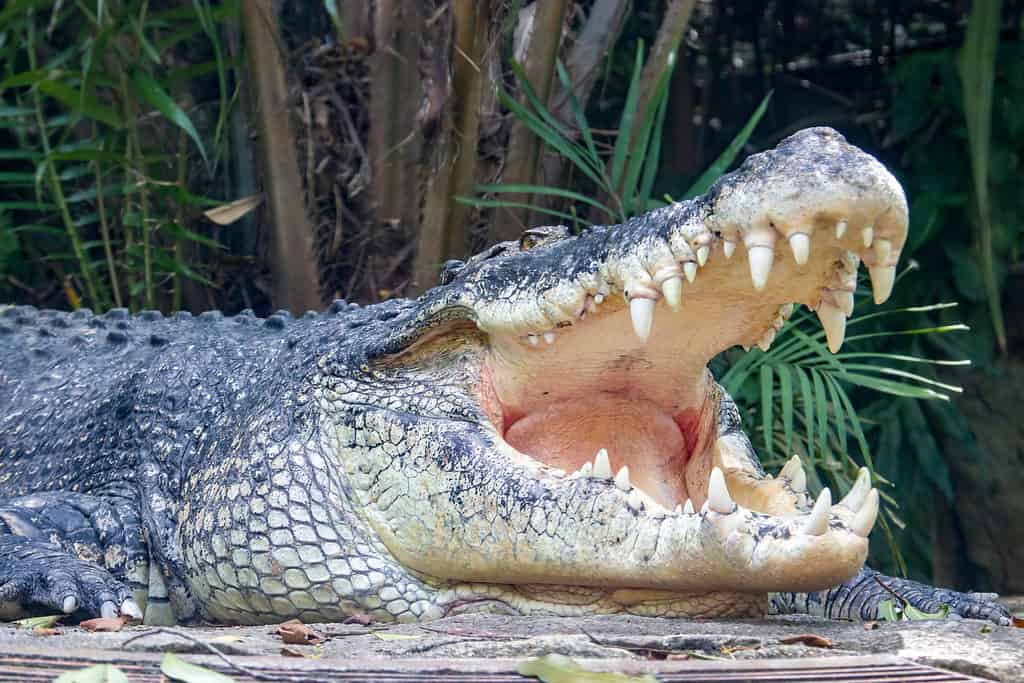
Saltwater crocodile (Crocodylus porosus) typically lives 70 – 100 years.
©Danny Ye/Shutterstock.com
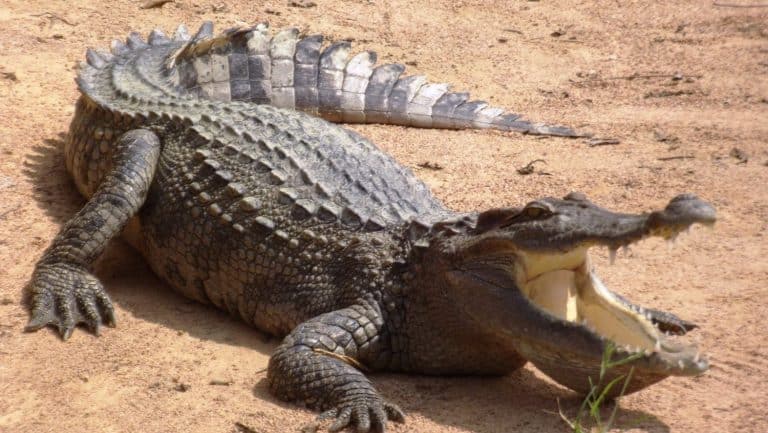
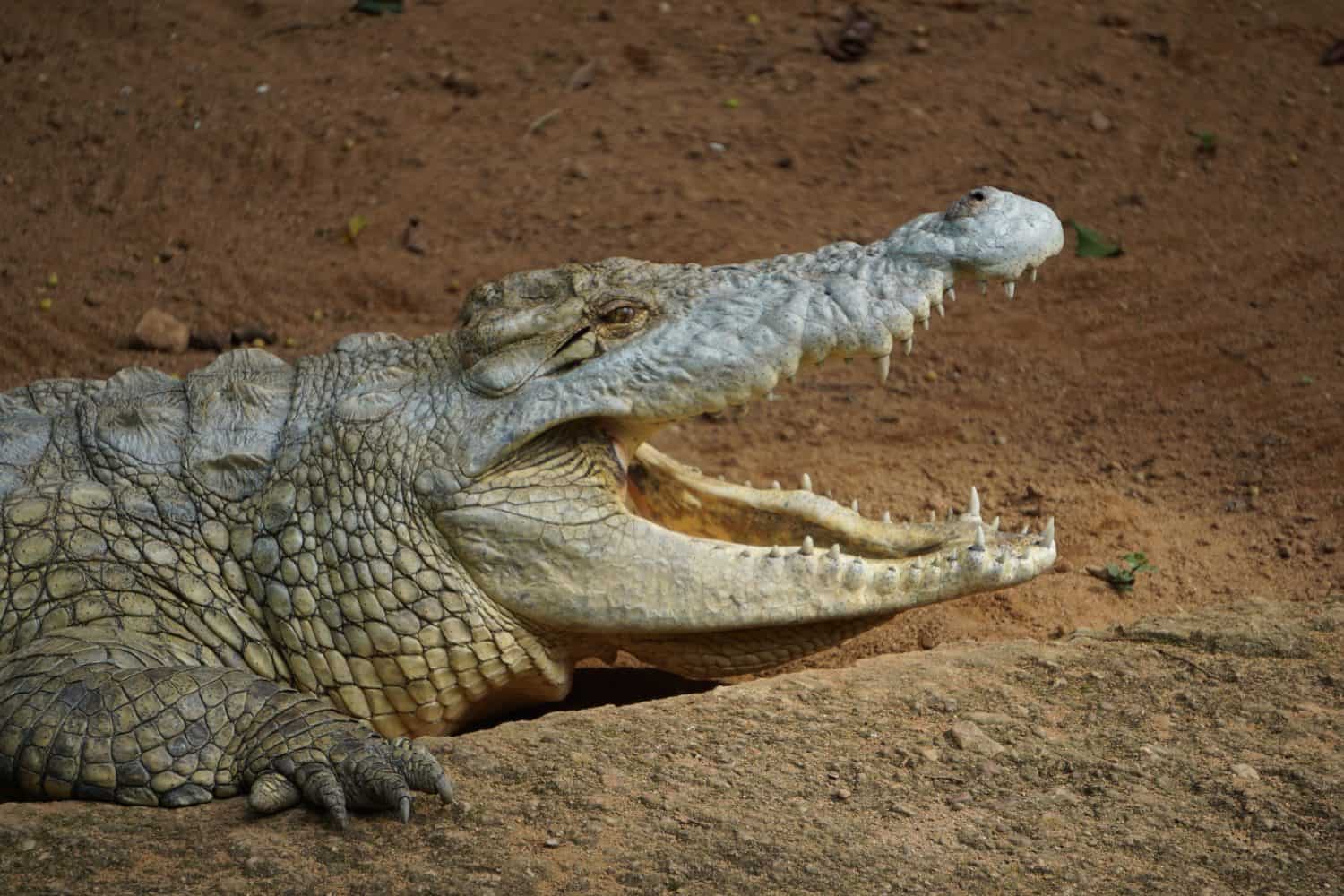
Today, the saltwater crocodile holds the title of being the largest crocodile species. The largest crocodiles, which are typically males, can grow up to 23 feet. This also makes them the largest reptile species in the world. The Nile crocodile is a close second and can reach lengths of 18 feet. The largest modern-day crocodiles ever recorded are well within this range, and some push the limits of your average croc.
Cassius, Found in the Finniss River, Australia
Cassius earned the Guinness World Record title of the largest crocodile in captivity in 2011. He was captured in 1984, and experts say he may have been 120 years old when he died. In the wild, Cassius was known for being a troublemaker. He caught the attention of the locals after attacking boats and cattle along the Finniss River in Australia.
He was brought to the Marineland Melanesia Crocodile Habitat in 1987. There, he was cared for by Australia’s Center for Crocodile Research until his death in November 2024. Cassius was a massive crocodile, measuring 17 ft 11.75 in. However, since his last measurement was taken in 2011, there’s a chance he could have grown even larger in captivity.
Gomek, Found in Papua New Guinea
Gomek was captured in 1968 by George Craig. After his capture, the saltwater crocodile was sold to another crocodile hunter. The St. Augustine Alligator Farm Zoological Park eventually rescued Gomek, providing a permanent sanctuary for him in 1989. Visitors learned of Gomek’s story and also learned to love him and his relatively docile nature.
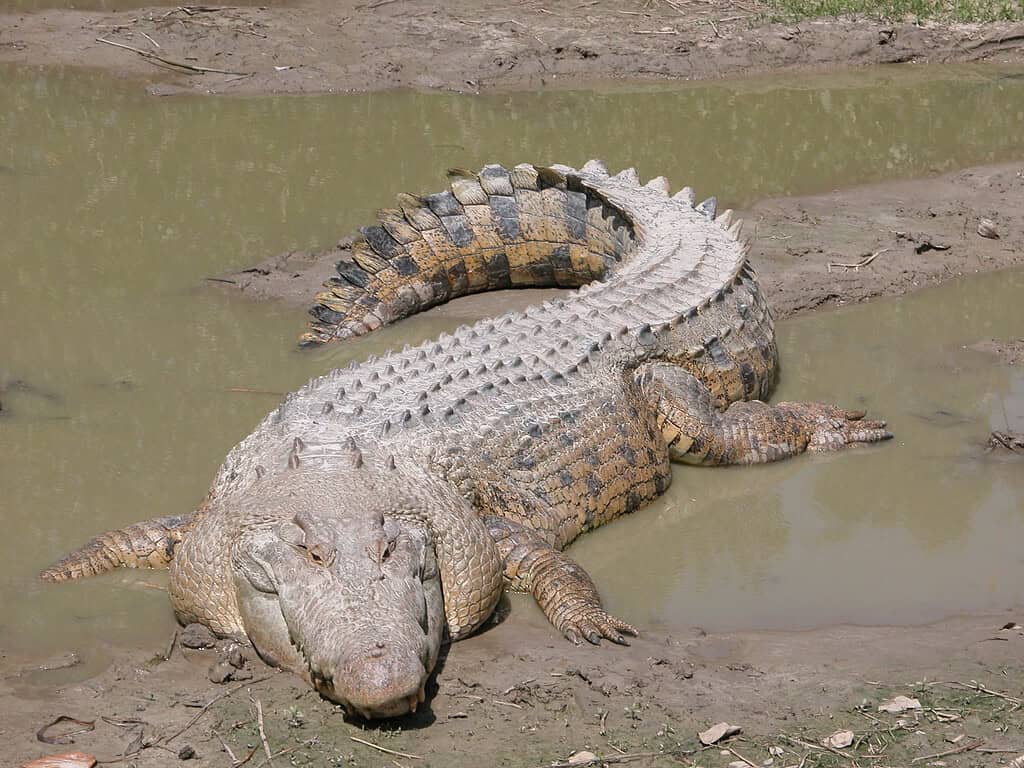
Crocodiles can have brown scales that blend in with mud.
©Molly Ebersold of the St. Augustine Alligator Farm / Public Domain – Original / License
The saltwater crocodile lived a long life and died at the age of 70. After his passing in 1997, he gained a reputation as one of the gentlest crocodiles ever kept in captivity. Gomek had a mate named Sydney and a successor, Maximo, who now live in his old enclosure. Visitors can find a tribute to Gomek just outside his former exhibit, where they’ll learn that he was 17.9 feet long at the time of his death.
Brutus, Found in the Adelaide River, Australia
As his name implies, Brutus is known for causing trouble in the Adelaide River. He took an interest in river boats, causing havoc due to his extreme size. This saltwater crocodile is also known for being a brazen fighter. Those who have seen him can attest to a missing front leg, allegedly lost during a fight against a bull shark.
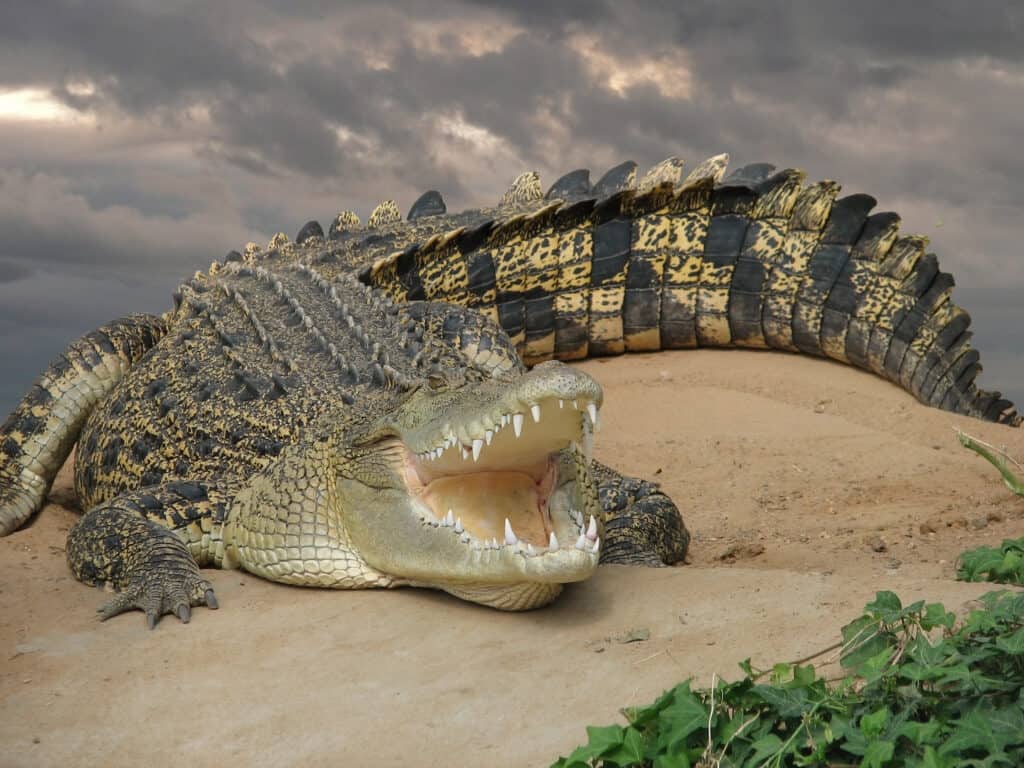
This croc is hard to miss.
©Susan Flashman/Shutterstock.com
The rest of his body is impressive, bearing the battle scars of many face-offs. Brutus likely won many fights in his day. Based on the number of missing teeth, he is estimated to be between 80 and 105 years old. Participants on Adelaide River’s crocodile watching tours can sometimes observe Brutus sitting just beneath the surface of the water. He’s hard to miss, with experts estimating he’s between 15 and 18 feet long.
Bujang Senang, Found in Sarawak, Malaysia
Bujang Senang is known as the world’s fourth-largest crocodile ever recorded in modern times. This saltwater crocodile terrorized villagers living along the Batang Lupar River in the 1940s. Bujang Senang took the lives of several locals during this time, striking fear into the hearts of many. Local legend held that the crocodile was cursed and was the reincarnation of an Iban warrior named Simalungun.
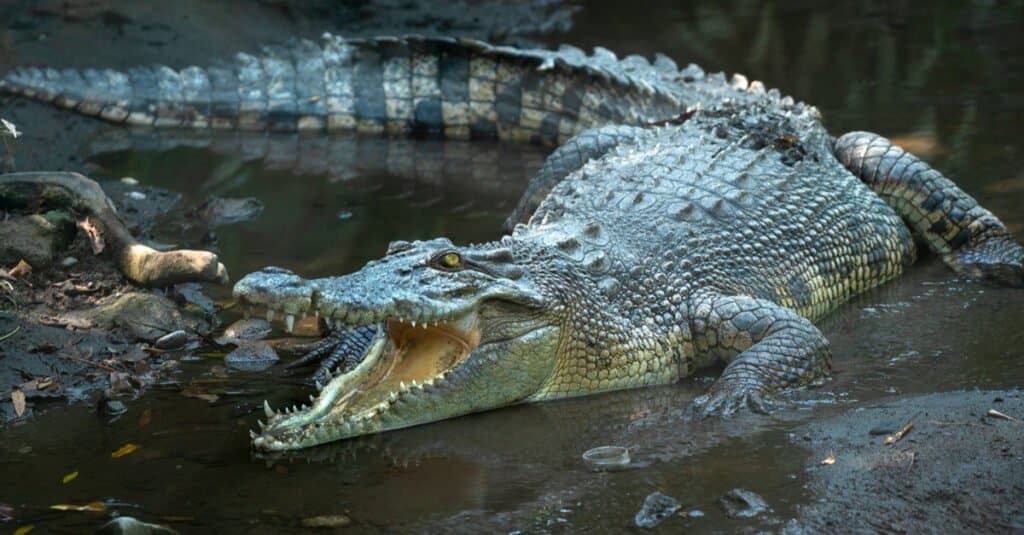
The largest living reptile documented by science, the saltwater crocodile, ambushes its prey before drowning it or swallowing it whole.
©Pius Rino Pungkiawan/Shutterstock.com
It took four hours for village hunters and police to kill Bujang Senang. This collaborative effort was no easy feat, and the crocodile’s skull is now on display at Jong’s Crocodile Farm in Sarawak. The crocodile was said to be “the size of a bus,” and measured nearly 20 feet long.
Gustave, Found in Burundi, Africa
Another man-eating crocodile is Gustave, who hunts in the waters of the Ruzizi River. This Nile crocodile was never killed, and its whereabouts have been uncertain since the last sighting in 2009. He was a frequent visitor to Lake Tanganyika, where he was rumored to have killed hundreds of people. While locals fear him, there is no evidence to confirm the number of victims attributed to Gustave.
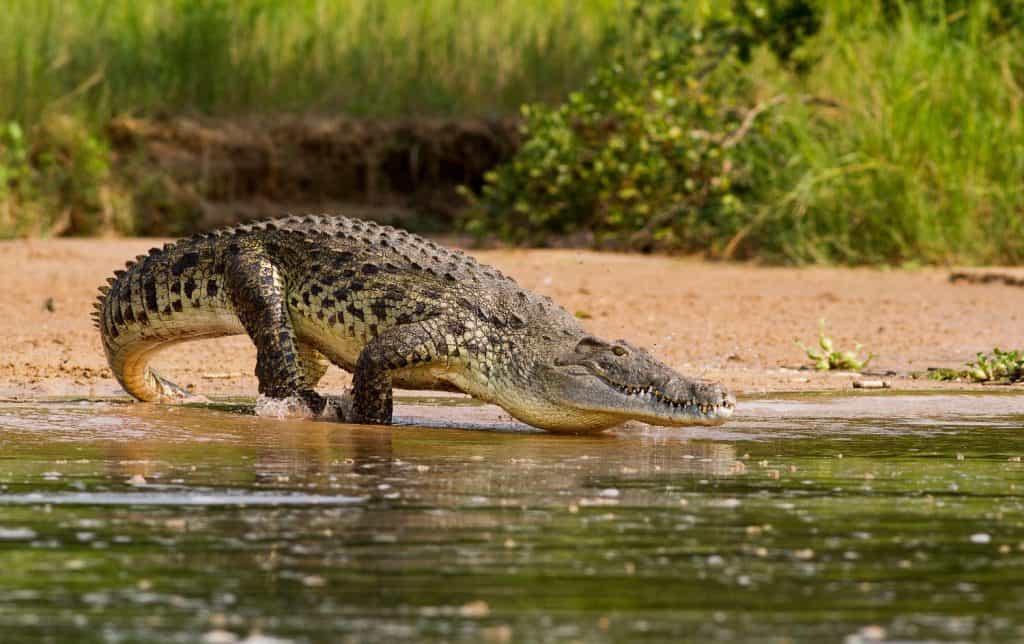
Gustave is an elusive creature.
©diegooscar01/Shutterstock.com
Gustave’s reputation is so prominent that he inspired a documentary on PBS called Capturing the Killer Croc. While not much is known about Gustave, observers have noted bullet wounds and deep scars on his body. No official measurement has ever been taken, but based on expert witnesses, Gustave is estimated to be between 18 and 20 feet long.
Dominator, Found in the Adelaide River, Australia
While Brutus might be the reigning king of the Adelaide River, he’s not the only king. Dominator is another saltwater crocodile that makes frequent appearances during river boat tours. He’s younger than Brutus, but stands on equal footing regarding size and hunting ability. His age is estimated to be about 85 years old, but no one knows for sure.
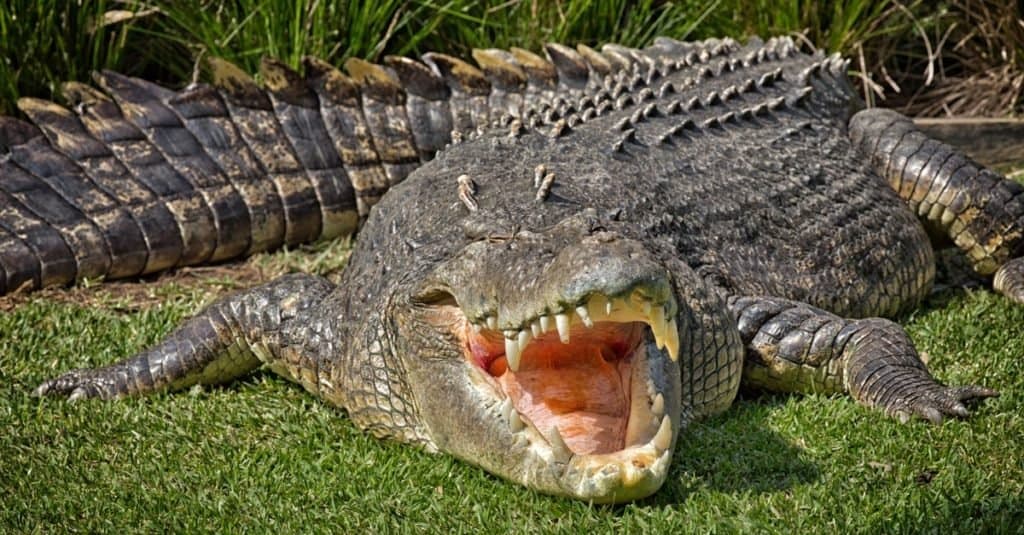
A huge Saltwater Crocodile basks in the hot Australian sun. Saltwater crocodiles are the largest crocodile species and also the largest living reptile in the world.
©PomInOz/Shutterstock.com
According to Jumping Croc Cruises, though they share the same territory, Dominator and Brutus rarely, if ever, compete against one another. They each defend their area of the river and are known to fight other males in the area. To this day, they remain undefeated, with Dominator measuring roughly 20 feet long.
Kalia, Found in Bhitarkanika National Park
Bhitarkanika National Park is known for its monstrously-sized crocodiles. The river conditions are ideal for these animals to grow up to 20 feet or more, like a well-known croc named Kalia. This saltwater crocodile can sometimes be seen sliding into the water while on the hunt. It’s currently known as the “undisputed king” of Bhitarkanika National Park, still unrivaled by any other.
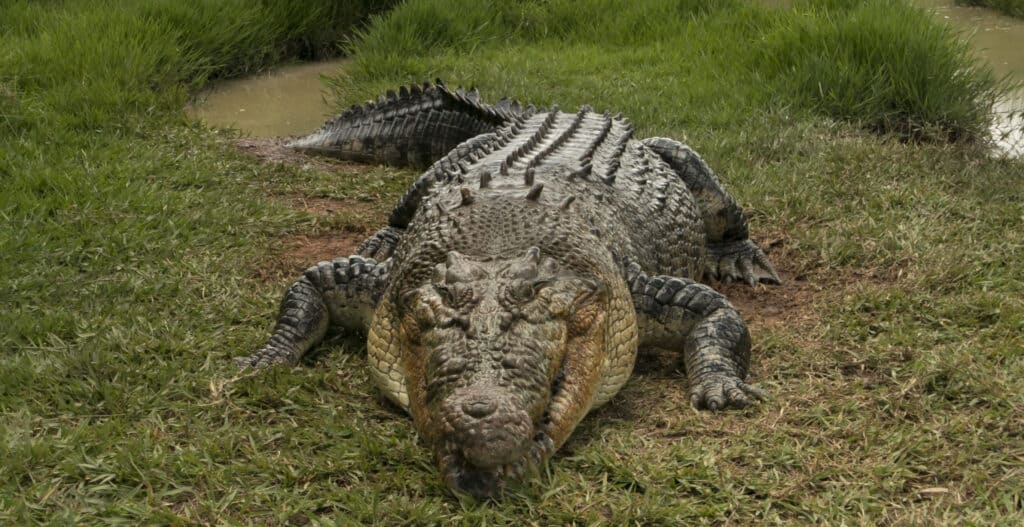
This saltwater crocodile looks otherworldly.
©Firepac/Shutterstock.com
Kalia is often confused with Don Kalia, a larger crocodile that inhabited the same area in the early 1900s. This crocodile was measured to be between 23 and 24 feet long and was tragically shot and killed in 1926. Today, Kalia is estimated to be one of the largest crocodiles in Bhitarkanika National Park at 17.5 feet, but no exact measurement has been taken.
Lolong, Found in the Philippines
While the other modern-day crocodiles are big, Lolong outweighs and outmeasures them all. He’s the largest crocodile ever kept in captivity. The saltwater crocodile was captured in the Philippines in 2011 and was relocated to an eco-tourism park in Bunawan. Tragically, he only lived for two more years before dying in captivity in 2013.
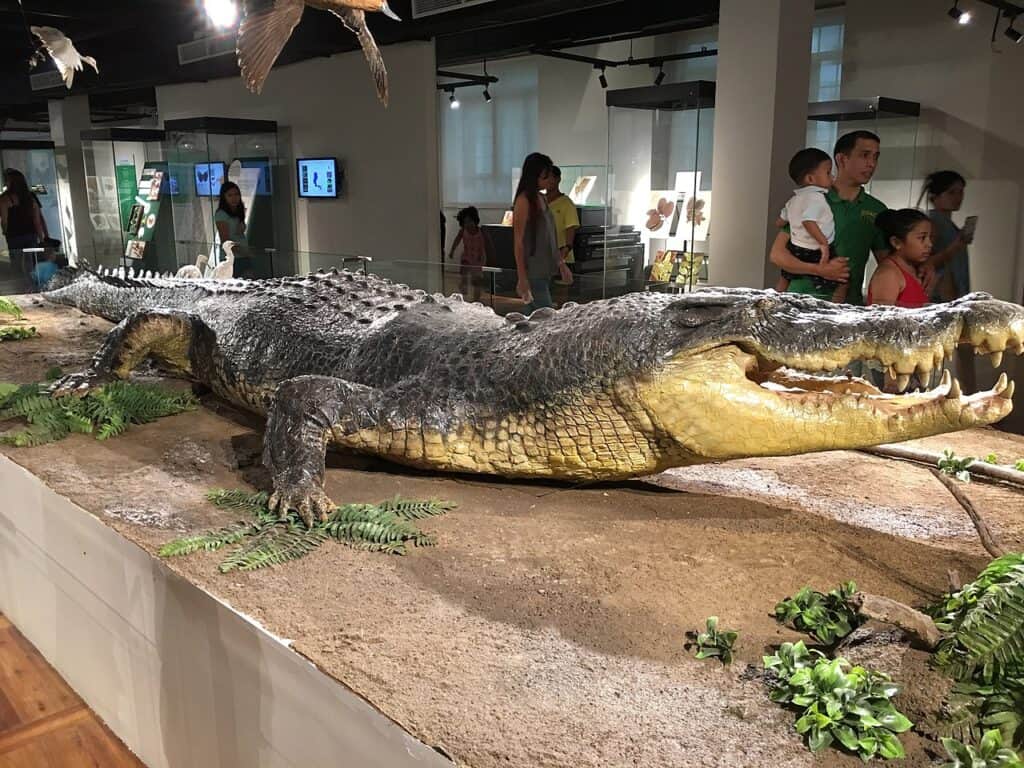
Lolong was a saltwater crocodile in the Philippines who weighed a massive 2,370 pounds and measured 20 feet from snout to tail
©Julan Shirwod Nueva / Creative Commons – Original / License
His captors took three weeks to hunt her down, which was a group effort with more than one dozen people. It’s believed that his death was a combination of things in captivity: pneumonia, fungal infection, and captivity-related stress. While he was rumored to have killed at least one person, this has never been proven. The real tragedy is his short time in captivity and death that might have been avoided. At the time of his death, he measured 21 feet, making him the largest known crocodile to date.