
Quick Take
- The American goldfinch is a small, bright yellow bird found throughout North America.
- They are exclusively vegetarian, eating a diet of seeds.
- Their favorite seeds are sunflower and Nyjer.
There are goldfinch species found around the world, including the American goldfinch, European goldfinch, lesser goldfinch, and Lawrence’s goldfinch. Each has its own distinctive appearance and typical range. And while you may see more than one goldfinch species in a single geographic area, the most common goldfinch to see throughout North America is the American goldfinch.
The American goldfinch, often called a “wild canary” due to its bright yellow feathers, is an eye-catching bird in any environment. Beyond their colorful feathers, the birds’ gregarious nature and airy flight patterns make them hard to miss.
And while one goldfinch might not cause too much of a stir, their tendency to gather in flocks — called “charms” — helps these small birds take center stage whenever and wherever they visit. Their agility, singsong chirps, and unusual feeding habits help keep all eyes on them.
Read on to discover more about the American goldfinch and the dietary habits of goldfinches around the world.
Get to Know the American Goldfinch
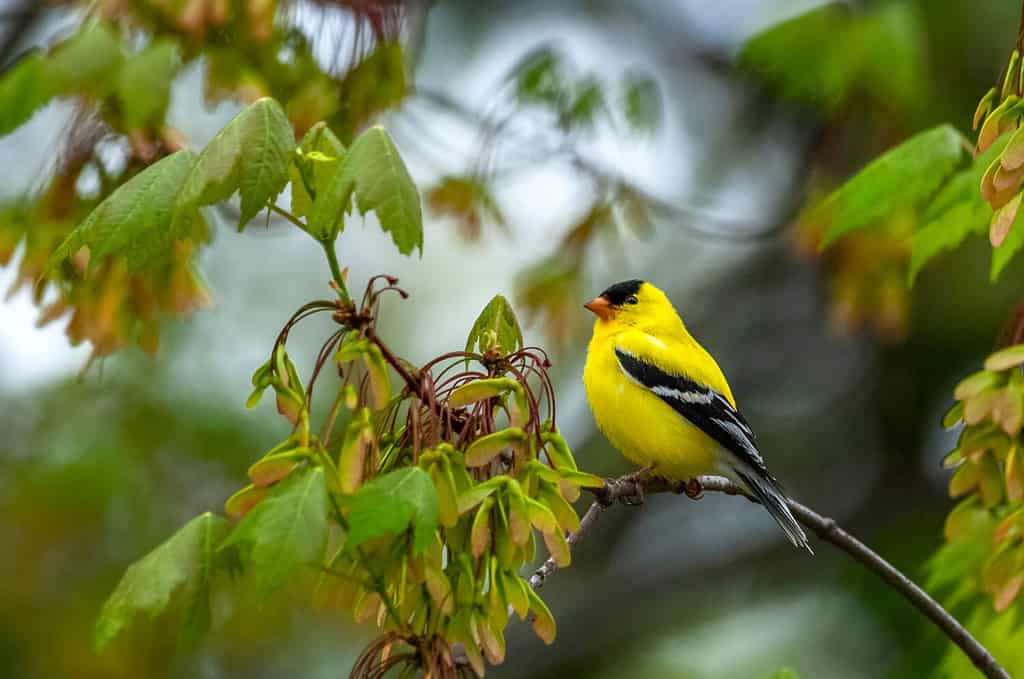
Adult American goldfinches sport a black cap, bright yellow bodies, and yellow and black wings.
©Alan B. Schroeder/Shutterstock.com
Measuring about five inches long and weighing less than half an ounce when fully grown, the American goldfinch is one of the most common birds in North America. You’ll find them in virtually every habitat except dense forests. They gather in open fields, urban gardens, forest edges, and even along roadsides.
American goldfinches, like all goldfinch species, are sociable birds that are usually seen in flocks, especially during the colder winter months when food sources are scarce. As a songbird, the goldfinch emits a distinctive series of twitters and chirps that is instantly recognizable to anyone who has spent time outdoors in areas where these small birds gather.
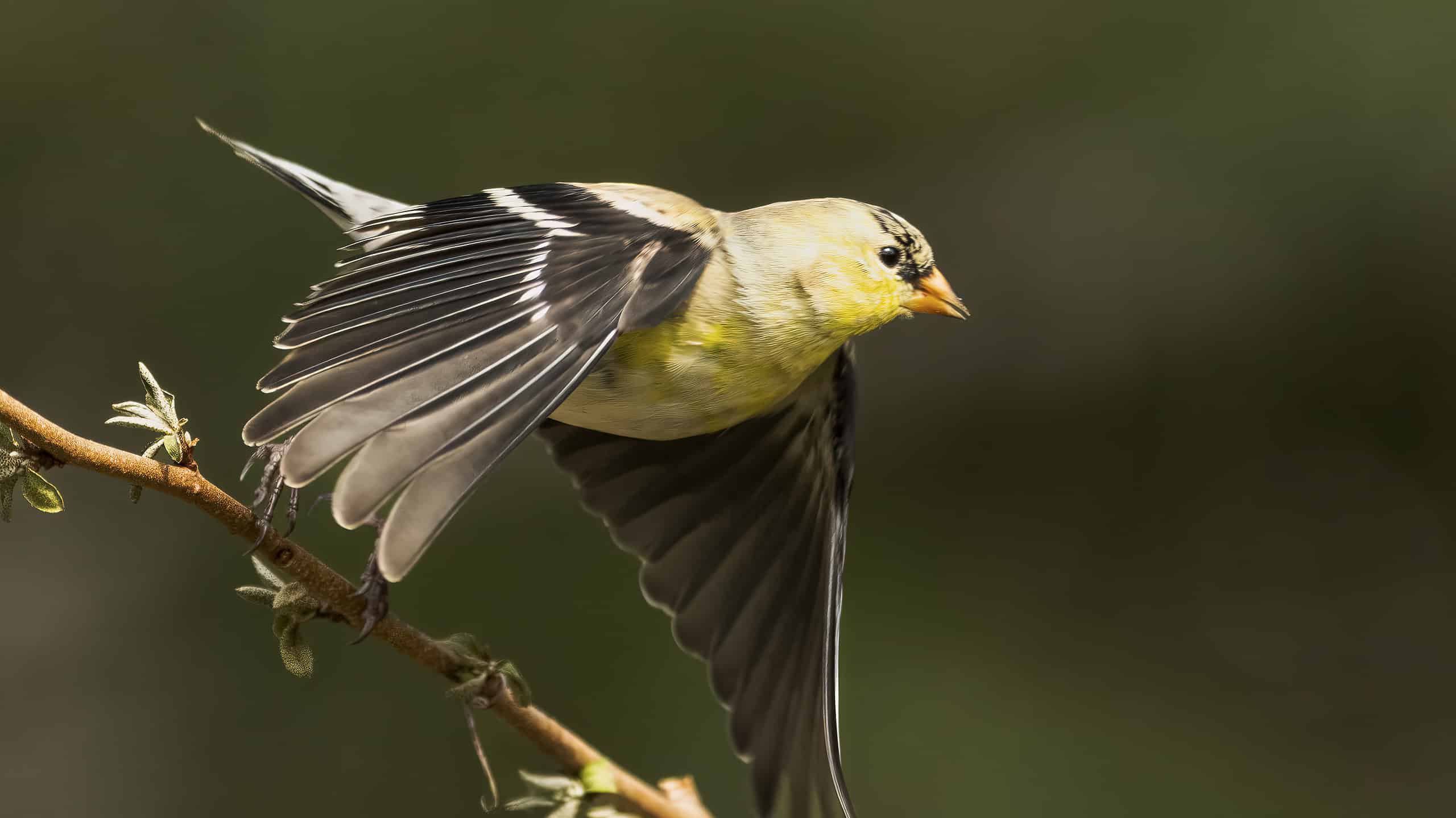
Adult male American goldfinches are adorned with the bright yellow feathers that give the bird its name. Juveniles and females have a duller shade of yellow feathers but share the same black and yellow wing patterns as adult males. The American goldfinch is one of the few goldfinch species that molts its body feathers twice a year: once in late winter and again in late summer.
When winter arrives, all American goldfinches become a bit duller in coloration. However, you can still easily identify them by their conical bill and striped wings. As spring arrives, male goldfinches begin to regain their bright yellow color. This is an excellent indicator that summer and warmer temperatures are on the way.
The American goldfinch is quite popular, too. It’s the official state bird of Iowa, New Jersey, and Washington.
American Goldfinch Behavior
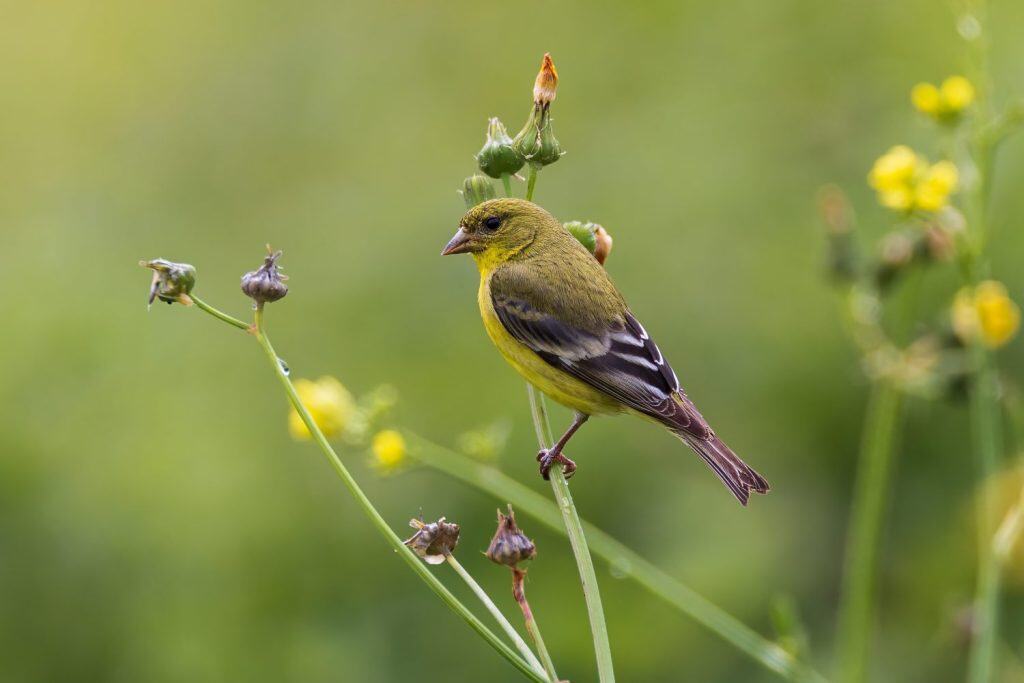
Juvenile and female American goldfinches are not as brightly colored as the adult males.
©Matt Krofcheck/Shutterstock.com
One fun fact about the American goldfinch has to do with their mating routine. Once a male and female pair up, they begin to sing identical songs together while in flight. Once they have mastered synchronized singing, they turn their attention to their primary duty — raising the next generation.
American goldfinches begin nesting in June and July, which is fairly late for songbirds. They wait because the fibrous seeds of milkweed, thistle, and other plants, which they use to line their nests and feed their young, are not available until early summer.
The female is responsible for nest building and egg incubation. She typically lays four to six eggs each season. It takes about two weeks for the eggs to hatch, after which the male takes over by bringing food to the nest until the chicks are ready to fledge, which occurs about 11 to 17 days after hatching.
Some experts note that American goldfinches are more likely to migrate south when winter temperatures drop significantly, but their migration is also strongly influenced by the availability of food. If food sources are abundant, they may remain in colder areas, even when temperatures fall below freezing.
What Do Goldfinches Eat?
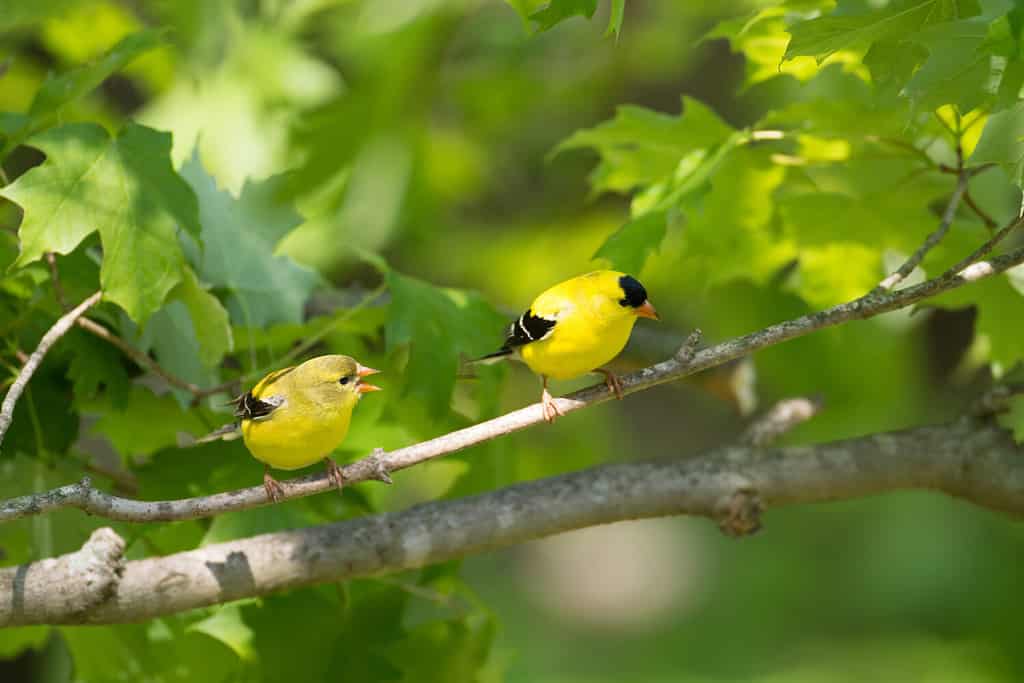
The male goldfinch is easily distinguishable from the female due to its brighter yellow feathers.
©Tony Campbell/Shutterstock.com
The American goldfinch is one of the few strictly vegetarian birds in the animal kingdom. They enjoy a diet consisting exclusively of seeds. If they happen to ingest an insect while foraging for seeds, it is purely accidental. Seeds are simply their preferred food. While they aren’t picky about seed type, they do have some favorites, such as sunflower and nyjer seeds.
This makes it incredibly easy to attract these pretty yellow birds to your garden. Simply fill a bird feeder with a seed mix and watch the goldfinches flock to it. They don’t really care what kind of feeder it is, either. They’re content with any feeder that dispenses the seeds they crave. These birds are incredibly acrobatic; you will often see them hanging upside down to extract seeds from feeders. They’re also quite happy to roam the ground below feeders to devour fallen seeds.
However, you don’t have to rely solely on bird feeders to attract American goldfinches. They are excellent foragers and enjoy seeds from a variety of plants. Purple coneflowers and sunflowers are a sure hit, as are asters, goldenrod, black-eyed Susans, and zinnias. They’ll also happily eat the seeds of elderberry and dogwood bushes.
If you want to attract goldfinches year-round, plant a variety of seed-bearing flowers and shrubs that bloom at different times. This ensures a continuous food source that will keep goldfinches returning, no matter the season. In the wild, the American goldfinch cannot resist thistle, milkweed, and cattails. They not only eat the seeds but also use the fluffy parts from these plants to line their nests.
Unlike their vegetarian cousins, other goldfinch species are quite happy to eat things other than seeds. Some species, such as the lesser goldfinch and Lawrence’s goldfinch, consume insects like flies, crickets, and grasshoppers. Some goldfinches also enjoy worms, termites, and maggots. There are even goldfinches that crave nectar, tree sap, berries, and other fruits. But for the American goldfinch, seeds are the main attraction.