Quick Take
- The bulbs aren't being unscrewed, and what's left on the wire shows how the thief really works.
- Why would an animal chew something it can't eat? The answer lies in its mouth.
- Twenty-four bulbs vanished, yet no pile has turned up anywhere. Where did they go?
- Walking a swinging cable takes a body built for it, and one odd feature makes the trick possible.
At dusk on Bainbridge Island, something was moving along the string of patio lights stretched across a backyard. It had a tail, and it was walking the cable like a wire-walker. When it reached the next bulb, it leaned down and took the bulb off the line.
The family first noticed a few bulbs mysteriously missing at the end of summer, then caught the culprit one evening. Their Blink wildlife camera filled in the rest. According to KING 5, which first reported the story, the footage appears to show the same squirrel coming back and doing it again, not once or twice but about two dozen times. The running total the homeowner gave the station: 24 bulbs. She asked around on the island’s community Facebook page and found nobody else with the same problem.
It Isn’t Unscrewing Them
The squirrel bites the bulbs off the line, black socket base and all, and it does it fast. “If they were unscrewing them, you would just see the bulb,” Joe Ellen O’Reilly, who owns the lights, told KING 5. What she keeps finding instead is a bare wire with the fittings sheared away.
©Anna-Carina Nagel/Shutterstock.com
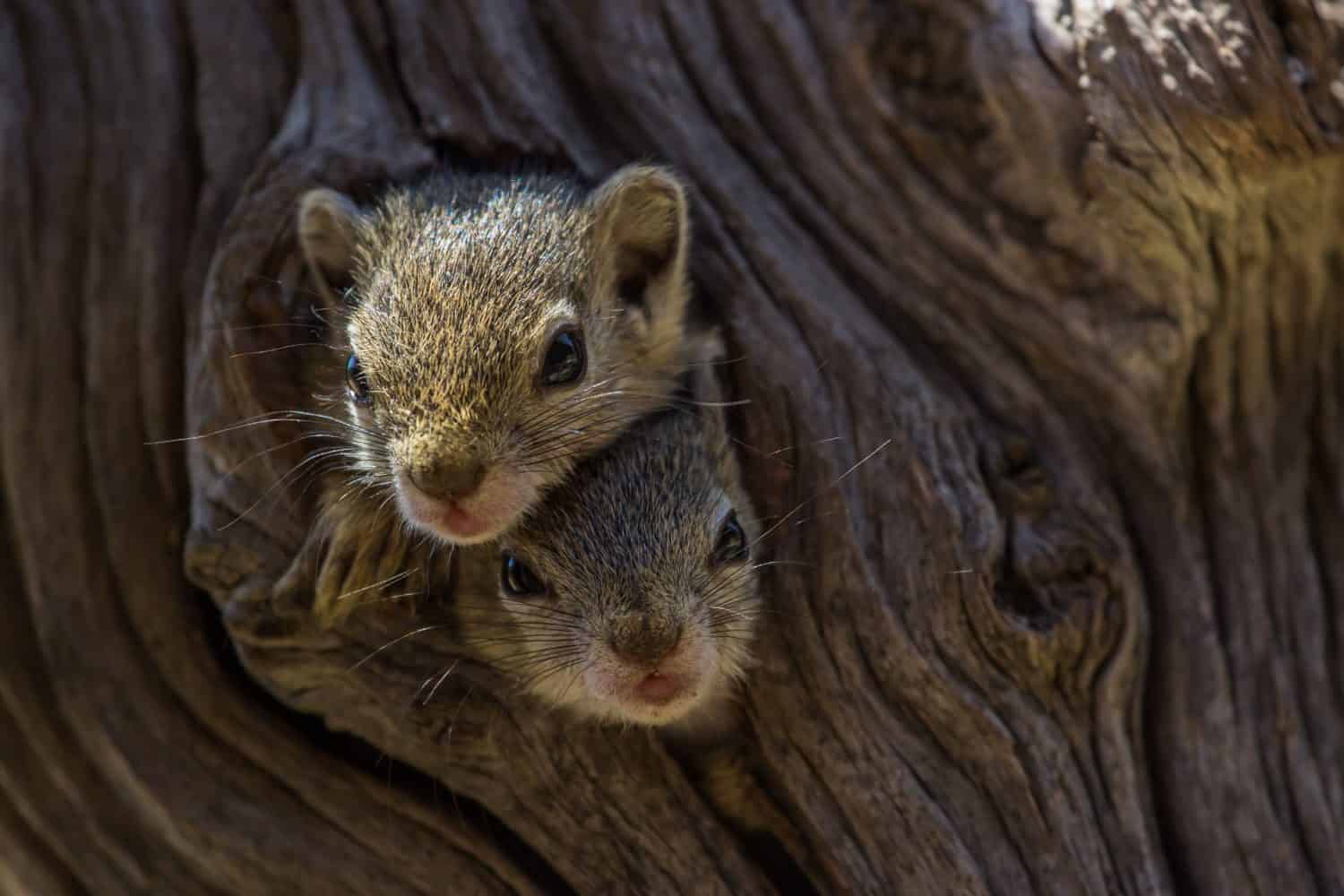
Doing that from a swinging cable takes a specific kind of body. Squirrels manage small wires, poles and fences without much trouble, using the tail as a counterweight, and they can rotate their hind feet a full 180 degrees to grip on the way down. The family called the animals “the big gray squirrels,” and the likeliest candidate is the eastern gray, introduced to the West Coast and now common in Washington. A big one weighs about 21 ounces. That’s a pound and a third of animal balanced on a lighting cable, biting hard enough to shear a fitting off it.
Why Chew Something You Can’t Eat?
A squirrel’s front teeth never stop growing. The four incisors are thin, chisel-shaped and open-rooted, with enamel laid down below the gumline so the animal can wear them away its whole life without losing them. Wearing them away isn’t optional. An incisor that doesn’t meet its opposite number keeps growing anyway, and an overgrown one can stop a squirrel from eating altogether.
So gnawing is maintenance as much as feeding, and squirrels aren’t fussy about the material. Where they live alongside people they chew through wires and other man-made objects, which is ordinary tooth care rather than vandalism. They’ll work on things with no food value at all, down to the hard outer layers of bone. A hard plastic socket on a taut wire is, in those terms, a reasonable thing to bite.

©Andrew Swinbank/Shutterstock.com
Why There’s No Pile of Bulbs
The part nobody on the island can solve is where 24 bulbs went. A pile would be easy to find, but gray squirrels don’t make piles. They’re scatter-hoarders, hiding things one at a time in many separate spots across their range and coming back for them later, guided by smell and a sharp spatial memory. Researchers timing gray squirrels at a nut patch found they carry food away from its source before storing it so that the cache survives, and they travel farther to hide it when food is scarce. An animal doing that with lightbulbs would leave two dozen separate hiding places scattered through the yards and woods around the house, and no trail at all. The timing fits as well: the bulbs started vanishing at the end of summer, when the drive to stash things ahead of winter ramps up.
O’Reilly has two more boxes of lights from Costco sitting in her garage. She won’t hang them until the thief is dealt with, and she’s floated putting a GPS tracker on a bulb to see where it ends up. Until then the wire across her yard stays as the camera found it: picked nearly clean, still strung, still perfectly walkable.