
Quick Take
- Sharing a nest sounds like pure teamwork, but female anis have a ruthless trick they use against each other before cooperation even begins. See the egg-sabotage behavior →
- A nest holding over 30 eggs sounds like more chicks, but most of those eggs are doomed from the start for a counterintuitive reason. Discover why eggs are doomed →
- Five-day-old ani chicks are capable of something almost no hatchlings can do, and it could be the key to the whole group's survival strategy. Learn about chick survival →
- Cooperative breeding costs each female something real. So why do anis keep doing it season after season? Explore the cooperative benefits →
Raising a family is hard work for any bird, but the smooth-billed ani (Crotophaga ani) has a unique workaround: up to five breeding pairs share a single nest and raise their chicks as a team. These clever black birds take cooperative breeding to a new level, as multiple adults lay eggs in and defend the same nest, and older offspring stick around to help feed their younger siblings. Together, the entire group shares the duties of incubating eggs, guarding against predators, and feeding hungry chicks.
This impressive avian team also comes with some surprising complications, however — especially among females fighting to hatch their own eggs first — but the joint effort pays off, allowing anis to raise up to three broods in a single season.
The Smooth-Billed Ani
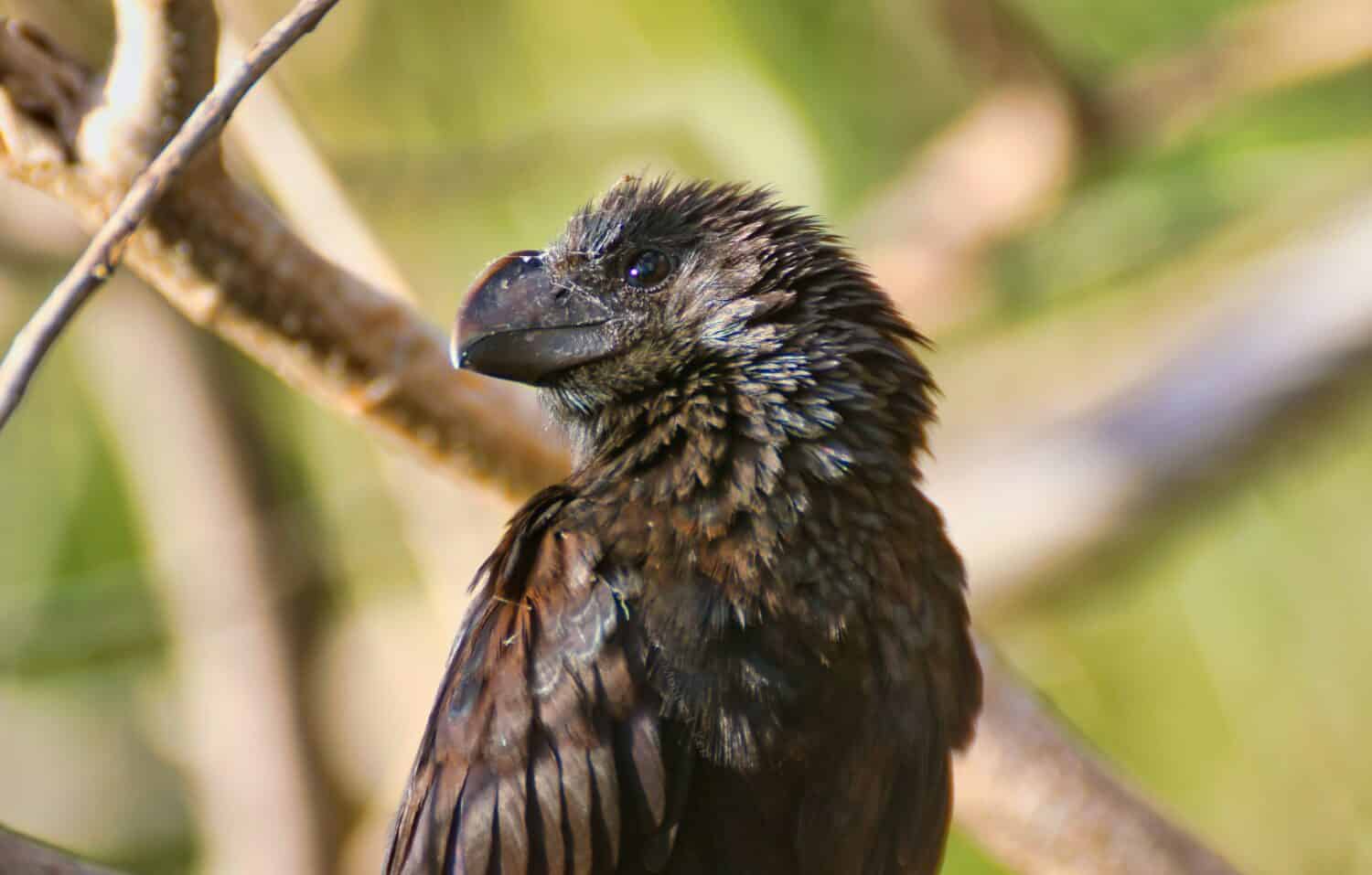
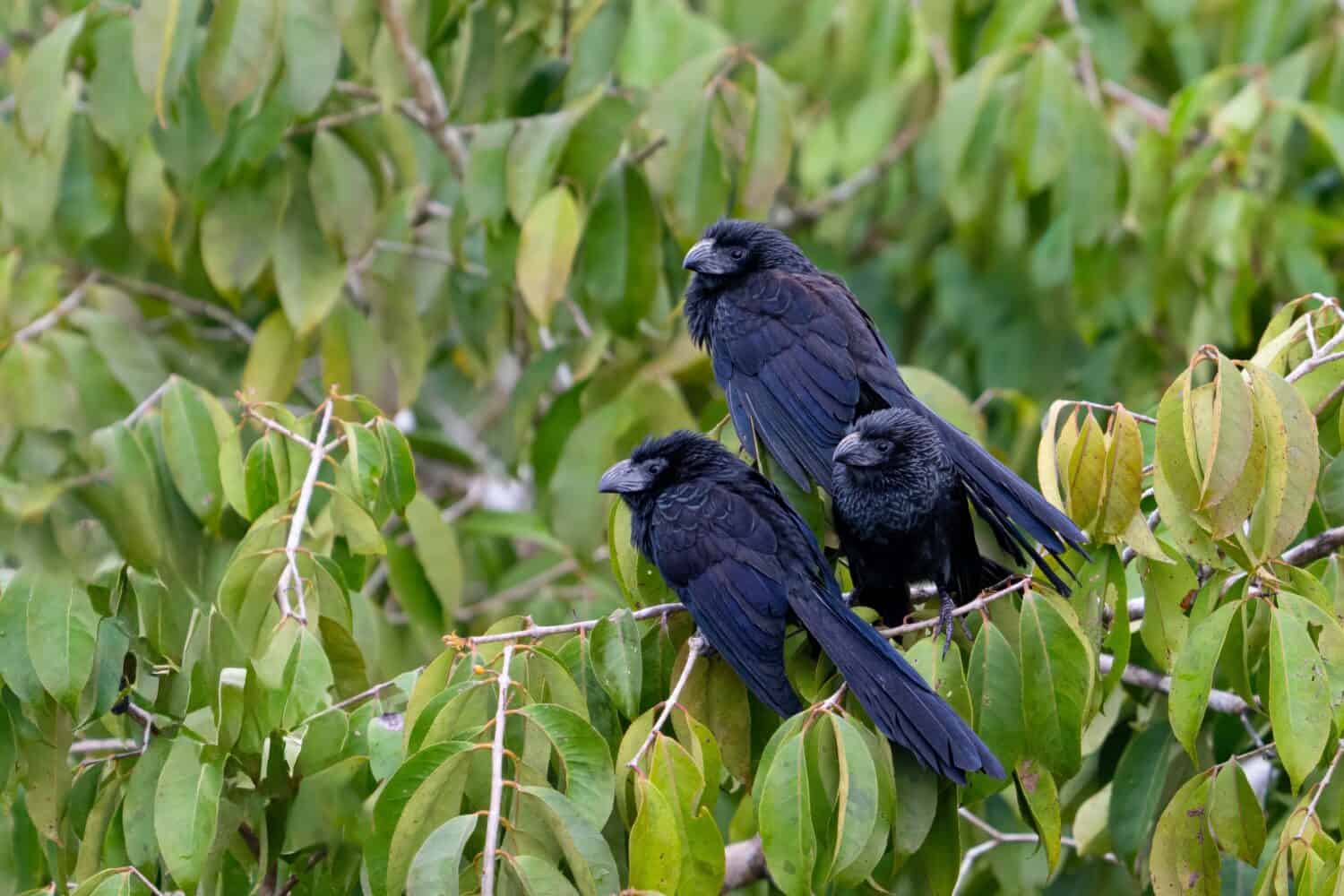
The smooth-billed ani is a member of the cuckoo family, and in good light, its glossy black feathers show subtle bronze and silver tones, with an oversized bill and long, tapering tail. It lives in tropical lowland open areas, such as scrublands, pastures, grasslands, and forest edges in Central America, South America, and the Caribbean.
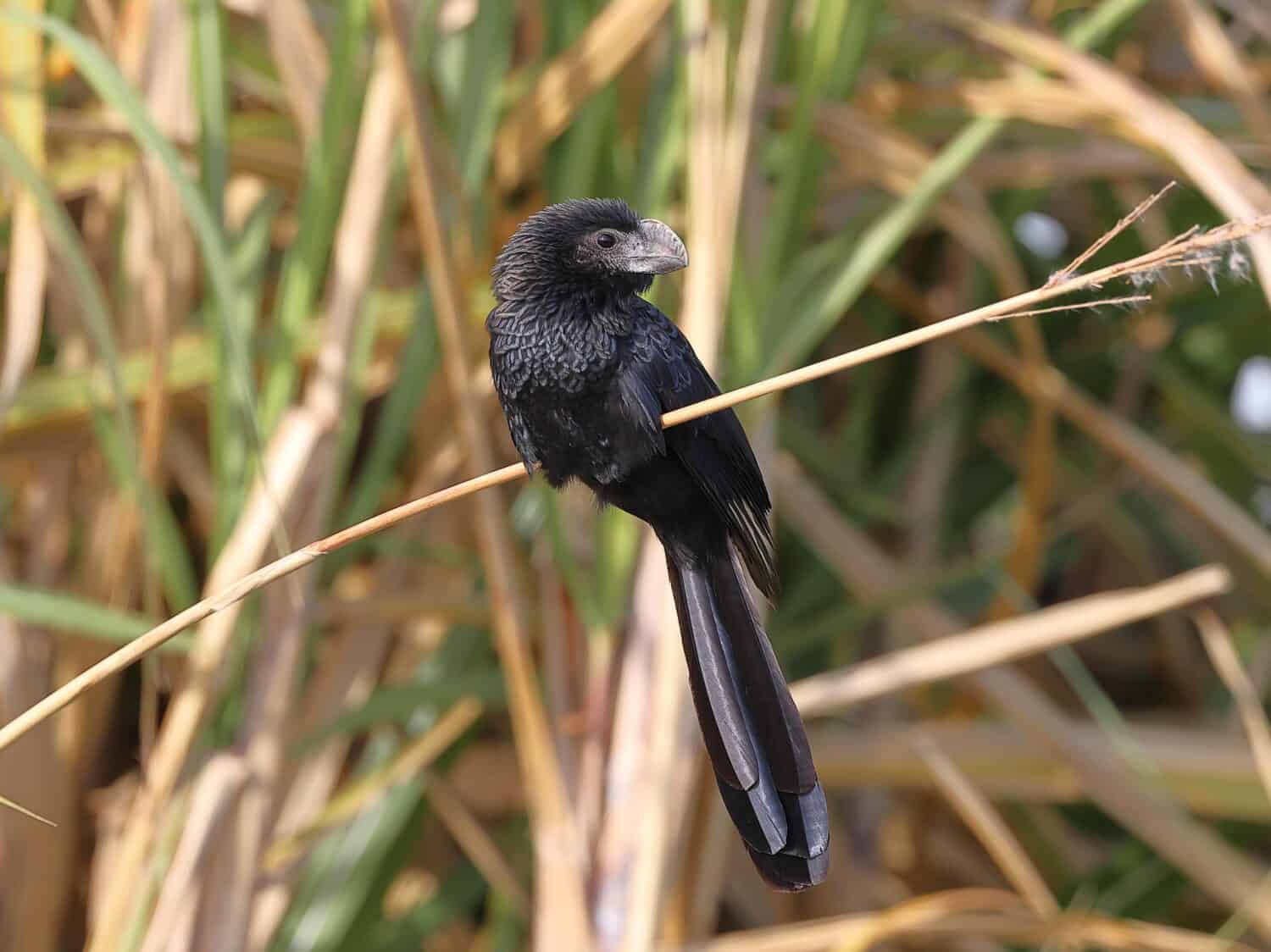
Smooth-billed anis are typically 12 to 14 inches long.
©Robert Shupak/Shutterstock.com
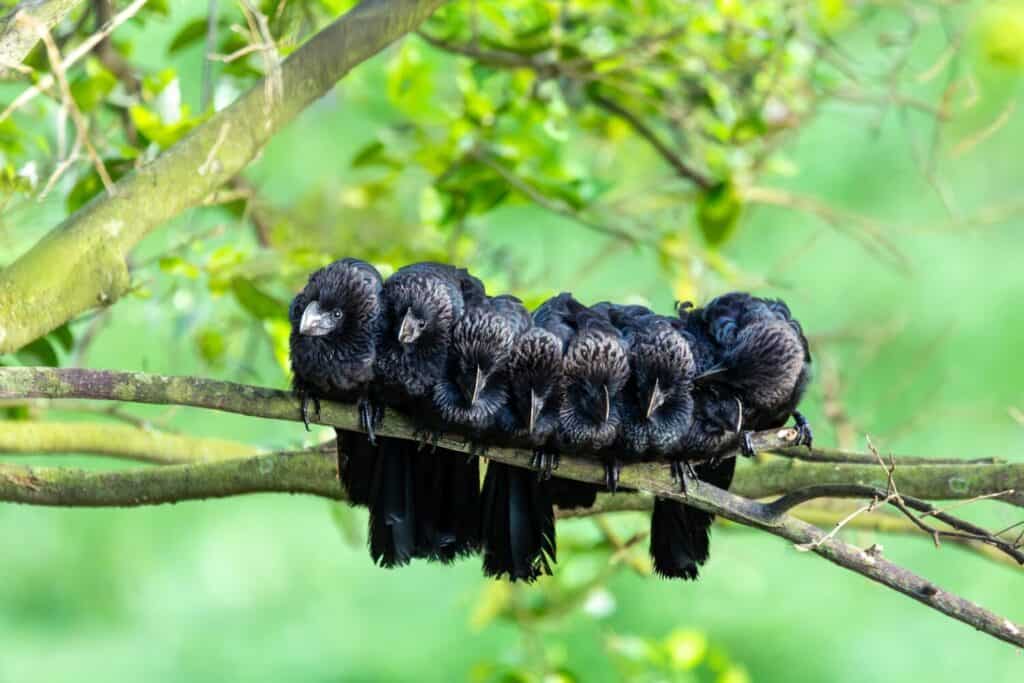
Anis are deeply social throughout the year, traveling, feeding, roosting, preening, and often huddling together for warmth in tight-knit groups. These close bonds become especially important during the breeding season.
Why Not Share?
Smooth-billed anis rarely breed in single pairs, instead forming large social groups of up to five breeding pairs. A single group sometimes grows to 17 or more members, including older offspring and non-breeding helpers.
Smooth-billed anis are social birds and can be quite noisy.
©Jiri Vlach/Shutterstock.com
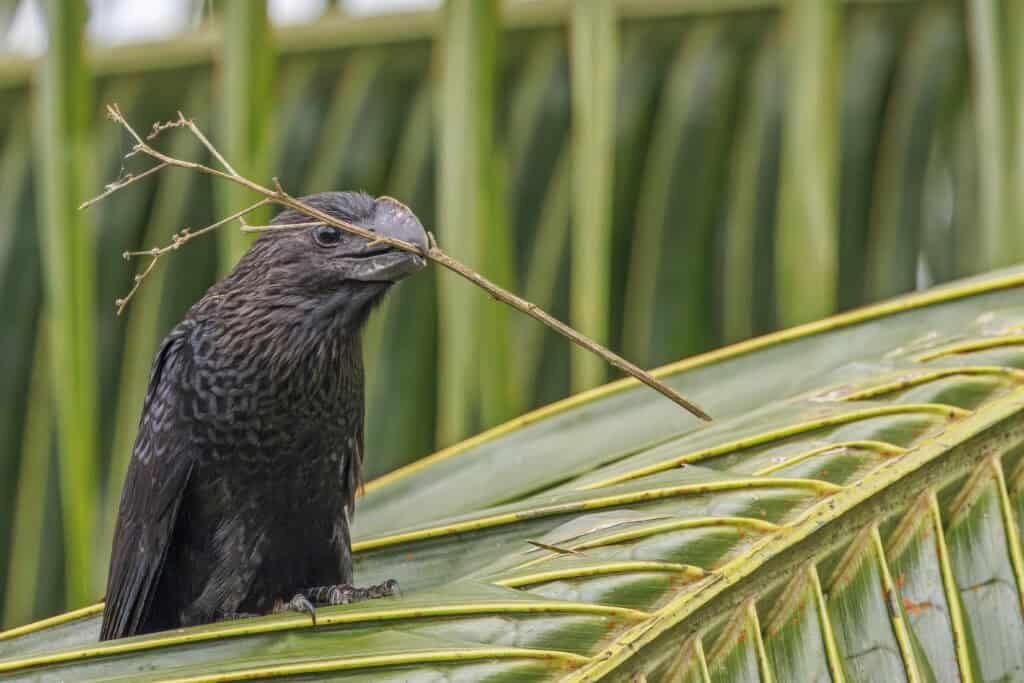
Instead of building individual nests for each breeding pair, the entire group works together to create a single, bulky nest from twigs and weeds, lining it with green leaves and hiding it in dense vegetation. Group members divide all nesting duties, including incubating eggs, defending against predators, and feeding chicks. Older offspring also step up to help feed younger generations.
When foraging, group members often follow grazing cattle and horses through pastures to snag insects as they are flushed out by the livestock. They also eat berries, seed pods, lizards, and frogs. The birds use loud whistle-like calls to coordinate with one another when hunting for food.
Competition and Teamwork
While smooth-billed anis raise their young together in communal nests, their cooperative lifestyle also comes with a darker, competitive reality. Multiple females lay eggs in a single nest — typically about four eggs each — creating massive clutches that can reach over 20 or even 30 eggs. To give her own offspring the best chance of survival, a female will actively sabotage eggs laid earlier in the nest. A late-arriving female often ejects existing eggs or buries them under twigs and leaves before laying her own. Because only the top layer of eggs receives enough warmth to hatch (usually around 10 eggs), many of the hidden eggs do not survive.
Female smooth-billed anis typically lay around four blue eggs.
©Charles J. Sharp / CC BY-SA 4.0 / Wikimedia Commons – Original / License
Despite this fierce competition, cooperation becomes crucial once incubation begins. Adults share the work of warming eggs, protecting the nest, and feeding the chicks — with older offspring often helping out to lighten the load for breeding adults. The group’s dominant male takes charge of incubation at night, while females take turns incubating the eggs throughout the day. Eggs hatch in approximately 13 to 18 days, and new chicks are surprisingly agile. By just five days old, they can scramble out of the nest and climb into nearby branches to hide from danger.
Why Cooperative Breeding Works
Sharing a nest comes at a cost — females risk losing eggs to rivals, and group living doesn’t eliminate the struggles of raising young. However, the benefits of teamwork often outweigh these costs.
Smooth-billed anis live in Central and South America and along the Caribbean.
©Artush/Shutterstock.com
Larger groups are much better at defending their territory, watching for predators, and sharing the workload of feeding hungry chicks. Group members are often closely related, so helpers are usually assisting their family. By distributing the energetic toll of raising chicks across multiple adults in the group, individual birds can conserve energy and retain their body condition. This shared energy load allows the colony to raise up to three broods each year — an impossible task for a single, isolated pair of birds in the tropics. Ultimately, the Smooth-billed Ani shows that raising chicks doesn’t always take a single pair — by balancing fierce competition with close cooperation, these cuckoos thrive together.