
Quick Take
- Despite their tendency to spread dangerous diseases, cockroaches keep themselves clean by grooming immediately after physical contact.
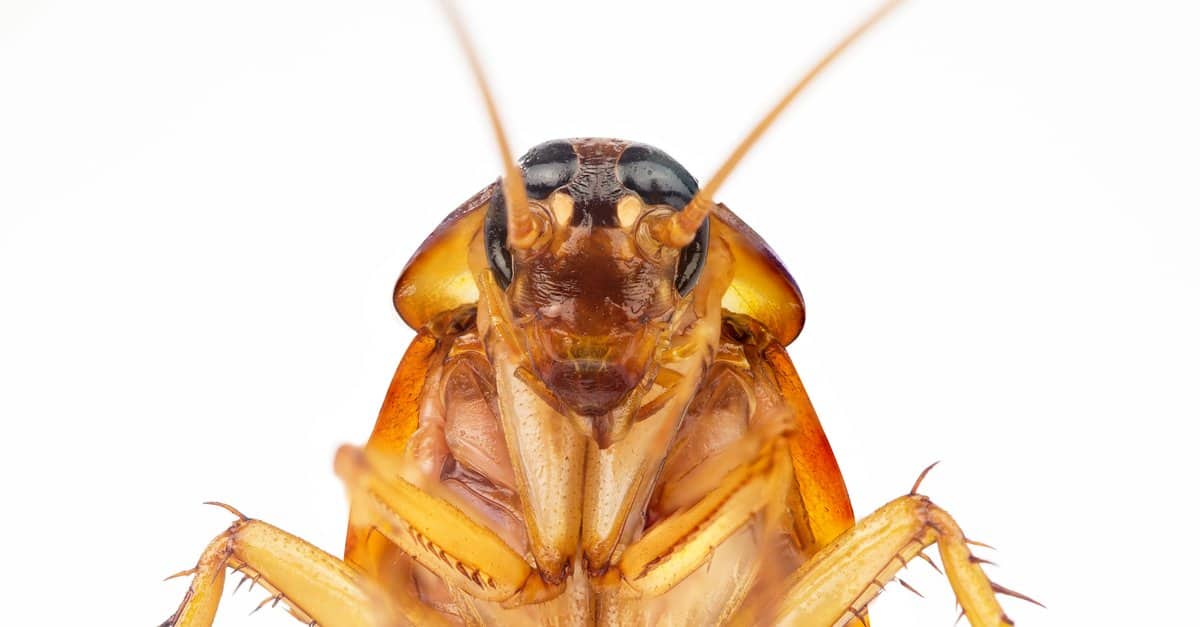
- A cockroach’s antennae—which are particularly long—help them scan their environment for threats, food sources, and even mates.
- Executing a grooming ritual is necessary for cockroaches to restore critical olfactory receptors.
Though we know them to be dirty insects, cockroaches are actually incredible self-groomers. In fact, their grooming behavior helps keep them safe and alert, aiding their resilience.
These critters begin grooming almost instantly after physical contact, especially focusing on their antennae. Oils, dust, or other residues transferred during contact can interfere with their signals. Grooming helps restore sensory accuracy, making it a critical survival behavior rather than a reaction to humans specifically.
But does this behavior actually make them more sanitary and less of a risk to humans? In this article, we speak with experts about the grooming habits of cockroaches and the threat of infestations.
Why Do Cockroaches Groom Themselves?
Cockroaches primarily groom themselves to preserve their sensory function and prevent diseases. This adaptation is a form of survival for the little pests. Their resilience is a testament to their intense grooming habits.
“These guys groom almost immediately after most physical contact,” says Ed Dolshun, VP of Business Development and Tech Director at Catchmaster. “Their survival really depends on this, as they rely heavily on their sensory capabilities.”
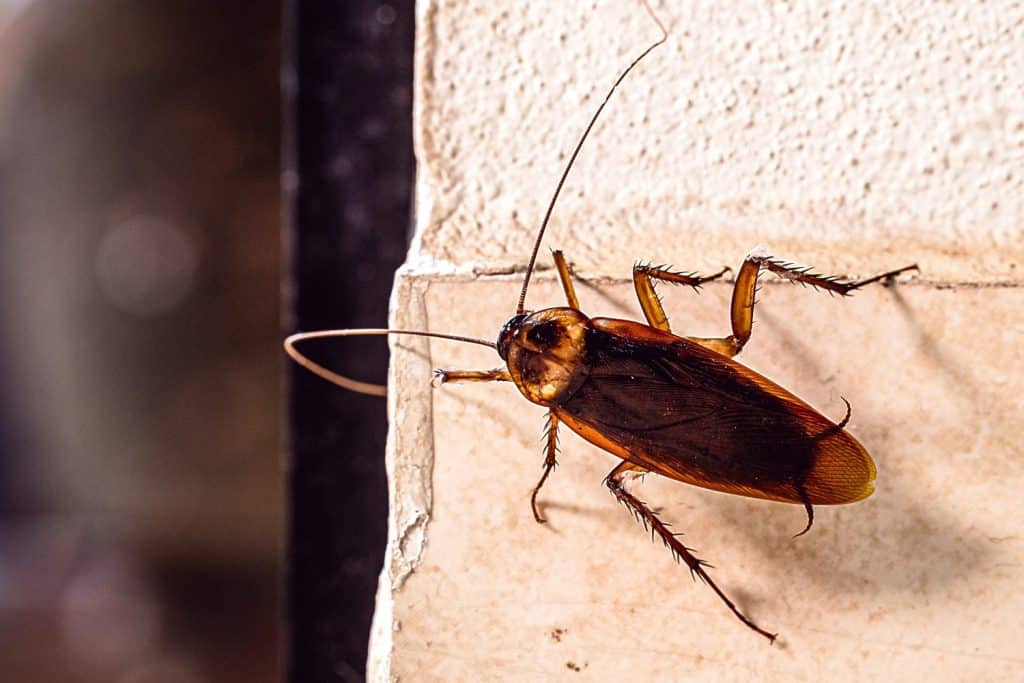
The cockroach’s long antennae must be clear of debris to fully function.
©RHJPhtotos/Shutterstock.com
Additionally, according to Shannon Sked, National Technical Director at Orkin, a cockroach’s antenna is their sensory organ. In other words, it’s covered with tiny pores that help the insect navigate their environment, sensing food, danger, and even mating opportunities.
“As cockroaches make physical contact with people, surfaces, or objects, they pick up oils, debris, or other residues on their bodies and antennae, which can clog those pores,” says Sked. “Grooming allows the cockroach to quickly remove anything that could disrupt how it detects food, movement, or potential threats.”
Why Cockroaches Specifically Groom Their Antennae
As mentioned above, cockroaches will often focus on their antennae when grooming themselves. This is arguably one of their most important organs, as it helps them safely navigate their environment and detect threats.
“Their antennae are full of receptors that can keep them safe,” says Dolshun. “It is difficult to detect threatening odors, humidity, or even harmful chemicals if the receptors are thrown off by oils or dirt. These receptors are so delicate that even the thinnest layer of dust can compromise them.”
Not only are the antennae crucial for the insect’s survival, but they’re also highly prone to picking up dust, dirt, and residue, says Sked.
“Grooming the antennae helps cockroaches ensure these highly exposed and critical structures remain clean and functional,” he says. “It is analogous to humans blowing our noses.”
Grooming allows the cockroach to quickly remove anything that could disrupt how it detects food, movement, or potential threats.
Ed Dolshun, VP of Business Development and Tech Director at Catchmaster
What Drives a Cockroach’s Grooming Behavior?
The cockroach is one of the most resilient creatures known to man, in large part due to their grooming behavior. This instinctual act is driven by biology, not emotion: cockroach antennae are densely packed with sensory receptors essential for detecting food, mates, and threats. Grooming keeps the insect safe and alert, ensuring their antennae are free of detritus.
“They often live or pass through what we would consider dirty and gross places,” Sked explains. “If their antennae become clogged or coated with debris, cockroaches might have trouble sensing things around them. Grooming is a behavior that helps the cockroach’s ability to respond quickly to changes or threats.”
Risks of Cockroach Infestations
Despite their grooming habits, cockroaches can spread dangerous diseases. These critters groom for their own survival, not sure the health of humans. They still carry dangerous pathogens that could harm humans and other animals.
“Cockroach infestations can pose a health risk to people, as they can contaminate food, trigger allergies and asthma, and spread bacteria,” Sked says. “Many of the pathogens that can make us sick will not make cockroaches sick, which is why it is important to control roach problems to protect public health.”
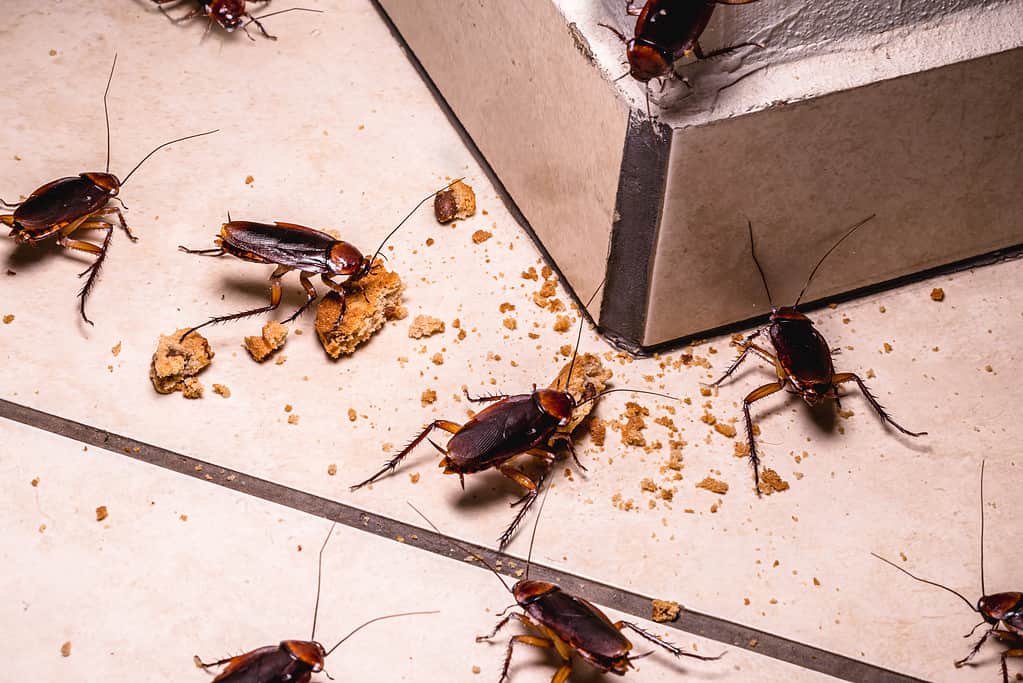
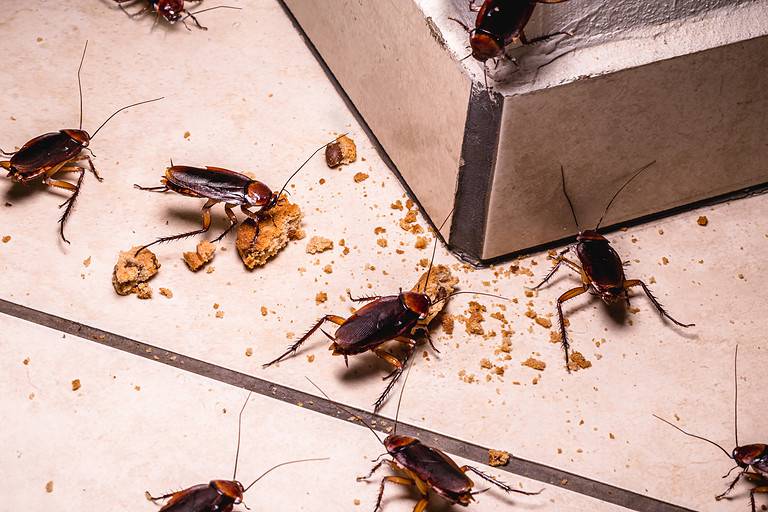
Cockroaches are opportunistic eaters, often drawn to food sources like crumbs.
©iStock.com/RHJ
According to Sked, you can prevent cockroach infestations by cleaning up crumbs and spills, properly storing your food in sealed containers, sealing cracks and gaps, fixing leaks, and reducing moisture in your home. Of course, if you notice an infestation, seek an exterminator immediately.
“This conversation is a humble reminder that cockroaches are not random movers,” Dolshun points out. “They are actually highly tuned in organisms that respond constantly to their environment. Getting rid of these guys when you find them in your home should never be taken lightly.”