
Quick Take
- Snow flies are able to survive and remain active in subzero temperatures, which is unusual for insects.
- New genomic studies have revealed that they use a combination of strategies, including a protein that acts like an antifreeze and mitochondrial thermogenesis, to produce their own heat.
- Snow flies are also much less sensitive to the cold than most other insects.
Insects show a remarkable ability to adapt to a huge range of temperatures. This is even more impressive when you remember that they are cold-blooded and therefore at the mercy of external temperatures. A new study of snow flies has revealed that they have a multi-system approach to thriving when temperatures plummet, and one of them involves generating their own heat in a similar way to a mammal! Meet the insect that’s blurring the boundaries between cold-blooded and warm-blooded metabolism.
How Do Insects Normally Survive Cold Temperatures?
It’s true that insects are found in fewer numbers in extremely cold habitats and that you don’t see so many insects around in the winter. However, they do have strategies for surviving cooling temperatures. Many will simply migrate to warmer climes, and the Monarch butterfly is a classic example. Others overwinter in a more robust life stage, such as the larva, nymph, egg, or pupa. They hide away in sheltered locations, such as under leaf litter (where the woolly bear caterpillar hides) or deeper in the soil. Mayfly nymphs can survive underwater in frozen ponds, and many moths form pupae that overwinter while clinging to branches.
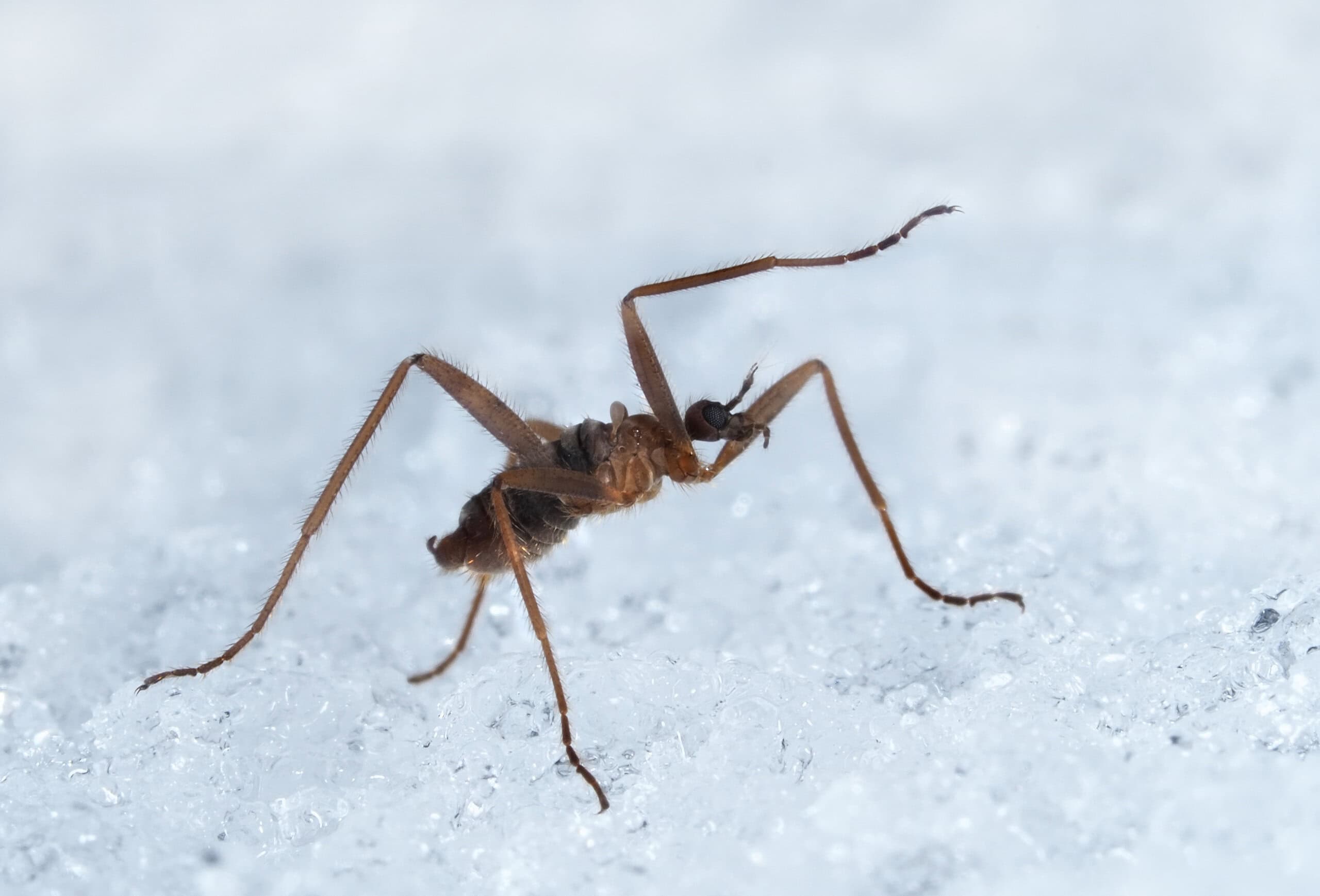
Snow flies can remain active at sub-zero temperatures.
©Ari Kekki CC BY-SA 4.0 , via Wikimedia Commons – Original / License
Finally, some insects hibernate as adults and may congregate in large numbers to do so. This is why you may spot aggregations of ladybird beetles. They may reduce the water content of their bodies and build up substances such as glycerol that act as antifreeze. The dormant condition allows them to survive the harsher temperatures. But there are a few insects that remain active even when temperatures fall. One is the snow fly.
Meet the Snow Fly
Snow flies are in the insect genus Chionea and are a type of crane fly. They are flightless creatures with no wings and long, spindly legs. Generally, they range from 0.12 to 0.32 inches in length. These flies are distributed across the northern hemisphere and have been recorded in countries such as the USA, Canada, Europe, Russia, Japan, and Korea. You are most likely to find them in montane, forested habitats on snow or in cave systems. As you might have guessed from their name, most people spot them on snow, where their dark bodies stand out. However, they are also found in leaf litter, under stones and logs, and in animal burrows.
Experts believe that adult snow flies do not eat and survive by simply drinking snow melt. The diet of the larvae is not well documented, but they are thought to feed on decaying organic matter, such as animal droppings. Most significantly, they are adapted to thrive as adults in temperatures below freezing without hiding away or hibernating. We already knew that they would self-amputate a limb to prevent ice from fatally spreading to the rest of their body. New research has revealed much, much more!
How Snow Flies Survive the Cold
It is not unusual to see snow flies wandering on the snow surface in temperatures as low as -6°C. If the weather becomes too unfavorable, however, they will enter the subnivean zone—the space between the snowpack and the ground. Even though they prefer sub-freezing temperatures and hide away when the snow melts, they have a limit to what they can cope with, which seems to be around -7 °C.

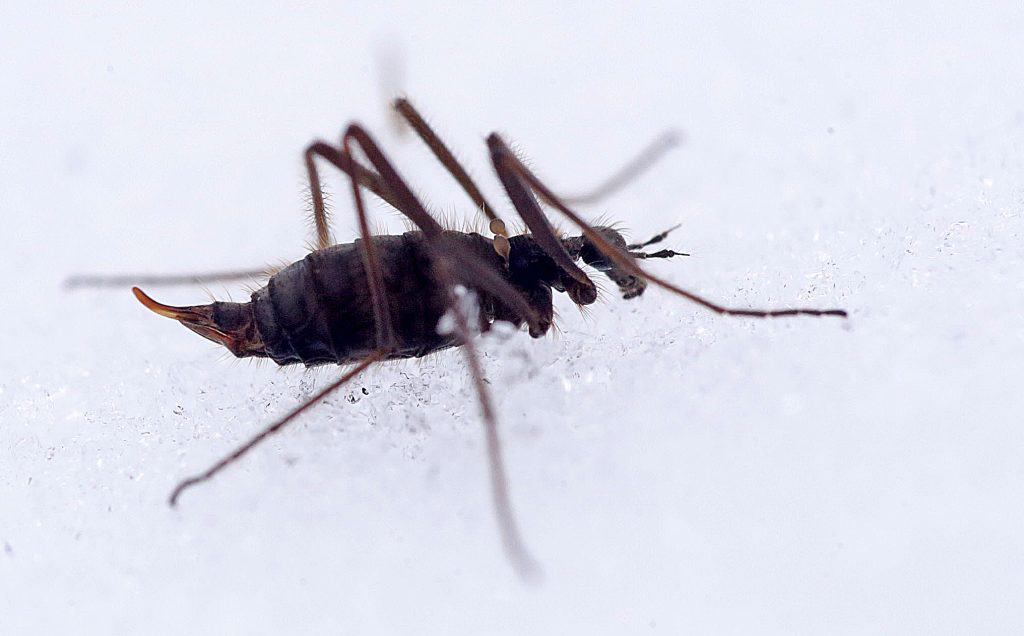
Snow fly genomic studies revealed fascinating adaptations.
©Gio.tto/Shutterstock.com
A new study has looked at the molecular adaptations that make this possible. Scientists from Northwestern University sequenced and annotated the genome of one snow fly species, namely Chionea alexandriana. They compared it to that of the cold-adapted midge, Belgica antarctica. The findings revealed a mix of biological tools that help these insects stay alive.
Snow Fly Antifreeze and Heat Production
The genetic analysis revealed some surprising findings: the snow fly appeared to have genes that had not been recorded before. Further research showed that these genes were responsible for making a type of protein that acts like an antifreeze. The proteins are also found in Arctic fish and protect cells from freezing damage. Further experiments showed that these proteins act as barriers, preventing ice from spreading.
There were also genes linked to the production of heat at the cellular level, similar to what is seen in warm-blooded animals. This process, called mitochondrial thermogenesis, occurs in brown adipose tissue and is observed in polar bears.
In laboratory experiments, snow flies were able to maintain internal temperatures slightly warmer than their environment. However, they did not use shivering, as moths and bees do, suggesting their mechanism is more similar to that seen in mammals.
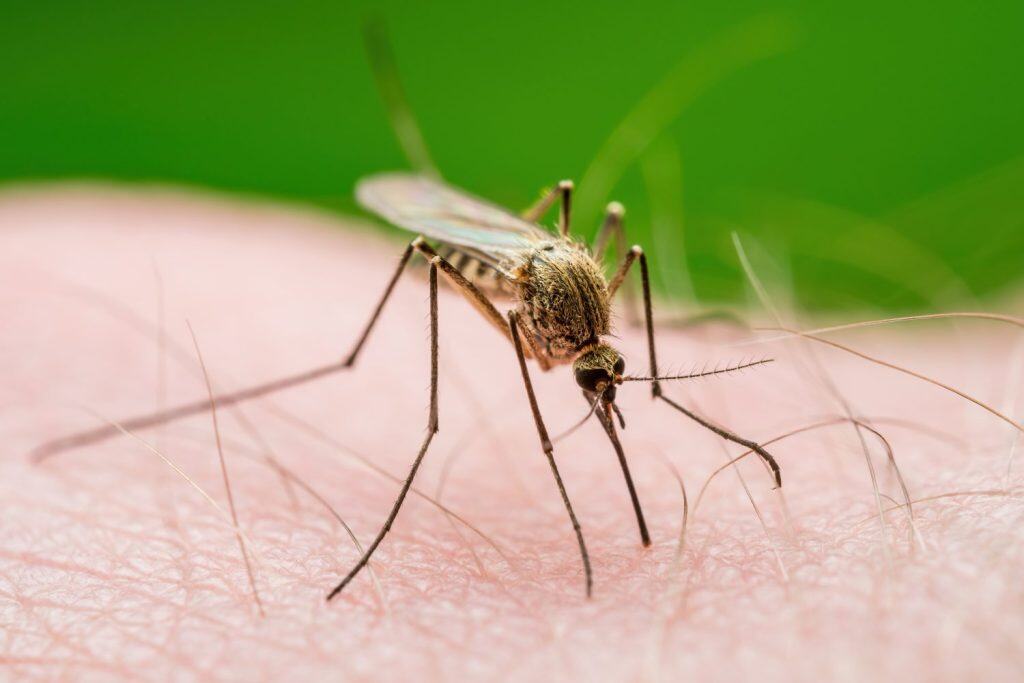
Mosquitoes feel the cold 30 times more than snow flies.
©nechaevkon/Shutterstock.com
Can Snow Flies Feel the Cold?
There was also evidence that snow flies do not feel the cold as acutely as other insects. Creatures feel the cold due to reactive molecules in their cells, known as ‘irritant receptors.’ In snow flies, however, this response is significantly reduced. This is because the sensory protein involved in detecting cold stimuli is less responsive than in other insects. For example, it was actually 30 times less sensitive than in mosquitoes!
Taken together, these genetic adaptations have allowed snow flies to exploit an ecological niche where very few other insects are found.