
Quick Take
- The medicine farmers use to protect their cattle may be quietly destroying the insects that protect that same cattle from pests, and the resulting feedback loop is even worse than you would expect. See how chemicals harm beetles →
- Dung left sitting on the surface isn't just unsightly. It actively works against the pasture in ways that go far beyond what most farmers realize. Explore the ecological damage →
- One type of dung beetle does something underground that can actually help prevent flooding, and this ability has nothing to do with water management equipment. Discover how tunnelers prevent flooding →
- Not all dung beetles do the same job, and the differences between the three types matter enormously for what actually ends up in your soil. Meet the three beetle types →
Dung beetles may not have the most glamorous name or lifestyle, but they are essential for the ecology of agricultural habitats. Their contribution to nutrient recycling and biodiversity is significant and extends beyond just cattle pastures.
The Science of Feeding on Dung
Nature wastes nothing, and that includes piles of dung. What looks like an unpleasant pile of poop to you is a valuable resource for many creatures. Animals that feed on poop are called coprophages, and dung beetles are, perhaps, the most famous. However, they don’t just eat it; they also use it to reproduce and raise their young.
There are around 9,500 described species of dung beetle found all over the world except for Antarctica. The beetles all belong to the scarab superfamily (Scarabaeoidea). However, not all scarab beetles eat dung. Although dung beetles have existed since the age of the dinosaurs, their populations flourished after mammals—and, importantly, their poop—became more abundant following the extinction of the dinosaurs.
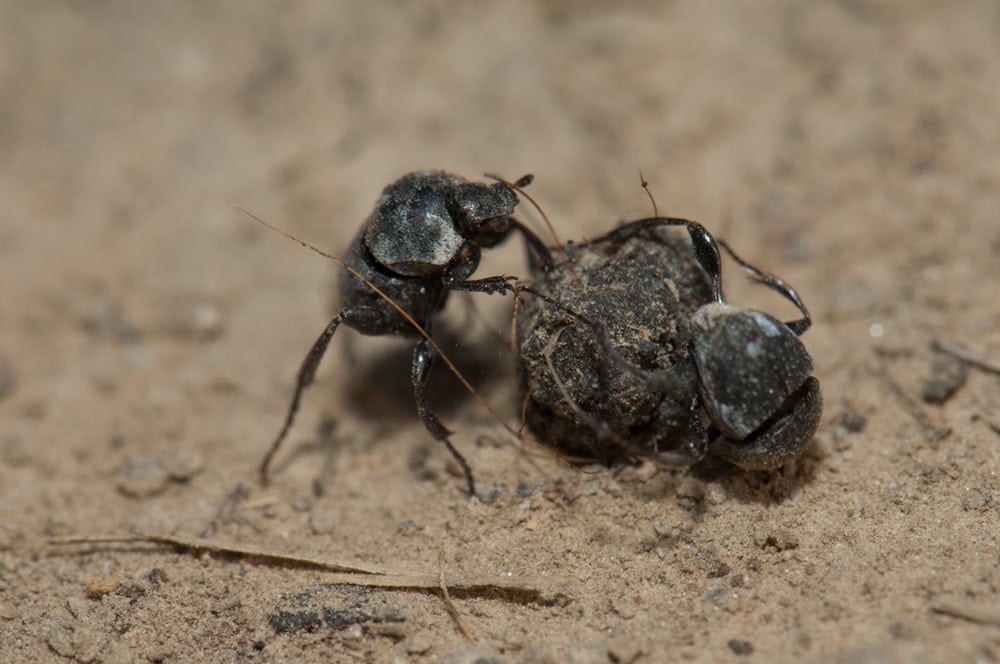
There are thousands of species of dung beetles.
©Victor Suarez Naranjo/Shutterstock.com
Dung beetles are not found only on farmland; they also inhabit a variety of other landscapes, from forests to deserts. Some species will utilize almost any type of dung, but most prefer dung produced by large herbivores such as cattle.
Some species of dung beetle can detect a freshly deposited dung pat from several miles away using chemical receptors on their antennae. Most dung beetles have wings, allowing them to reach the dung quickly. Once they reach the poop, they use it in several different ways.
How Do Dung Beetles Use Poop?
Dung beetles eat dung, and research has shown that they specifically target the nitrogen-rich particles in droppings. However, that is only part of their ecological role.
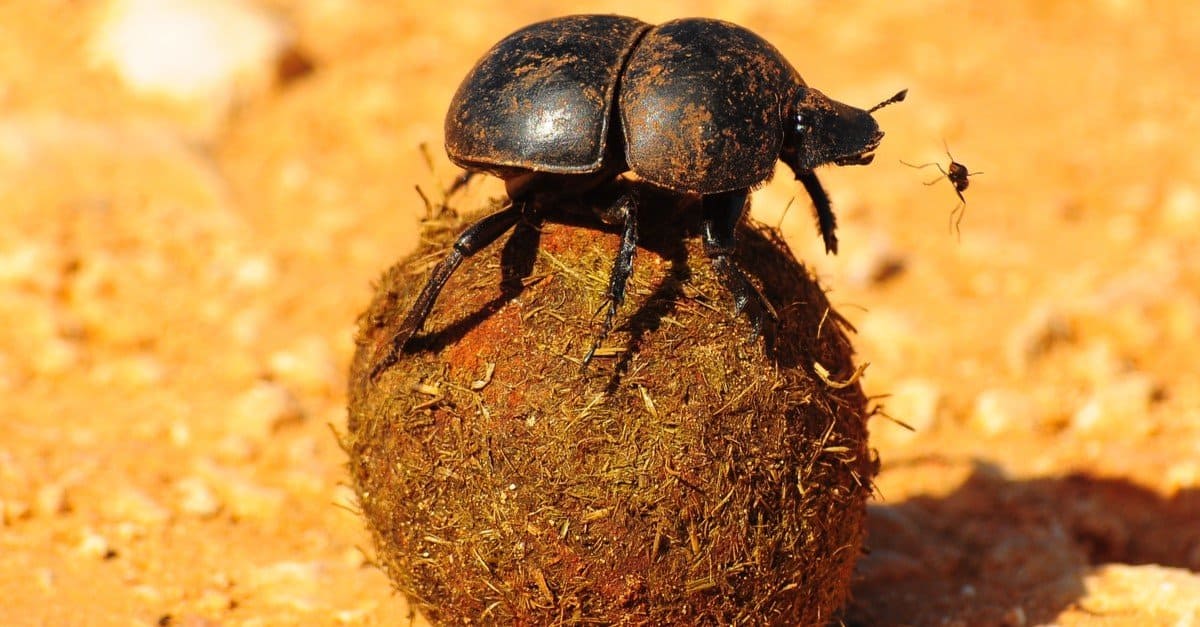
Some dung beetles are ‘rollers’ (telecoprids); they create a ball of dung using their saliva, roll it away from the dung pat, excavate a shallow tunnel, lay eggs in the ball, and then bury it. Their offspring feed on the dung until they emerge as adults.
Tunnelers (paracoprids) also lay eggs in the dung, but they dig directly beneath the dung pat, taking some of the dung underground with them.
Finally, dwellers (endocoprids) lay their eggs within or around the dung pat, and their larvae tunnel into the dung to feed on it.
Why Are Dung Beetles Essential for Ecology?
The answer is simple: dung pats left lying on the soil surface are not very useful, but when dung is integrated into the soil, it becomes a valuable resource. The longer a dung pat remains on the surface, the more likely its nitrogen will escape into the atmosphere instead of being mixed into the soil and absorbed by plants. Also, it attracts pests and parasites that are harmful to animals.
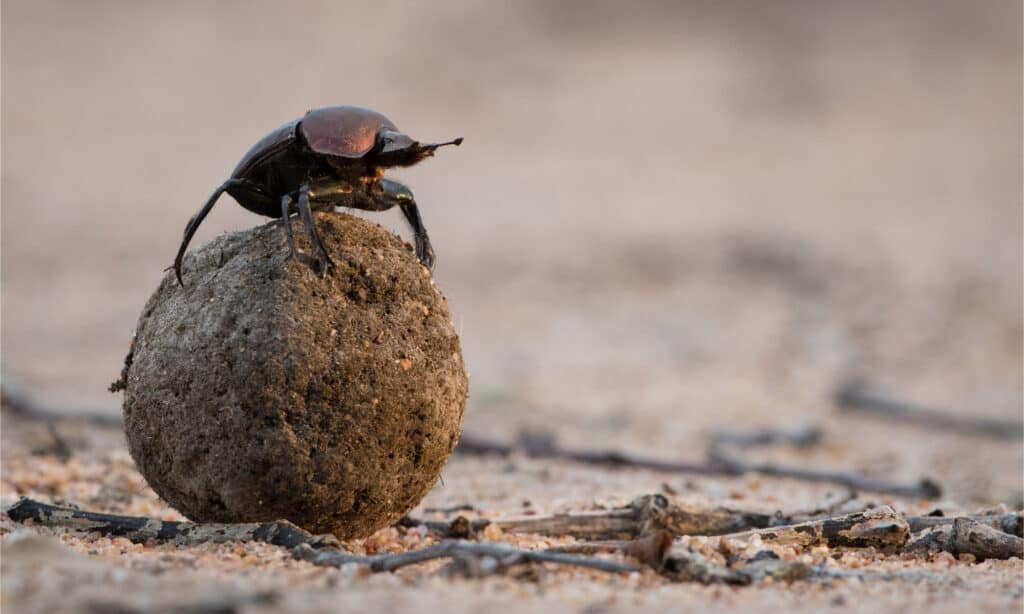
Dung beetles are essential for the ecology of pastures.
©Villiers Steyn/Shutterstock.com
‘Roller’ dung beetles distribute the nutrients in the dung some distance away from the original pat, but only just below the soil surface. This also greatly aids seed dispersal, as many seeds pass safely through a herbivore’s digestive system and are deposited with their dung. As a result, seeds and nutrients are spread several hundred feet away from their original location.
Tunnelers, on the other hand, transport nutrients deep into the soil, with some of their tunnels reaching depths of up to two feet. Meanwhile, dwellers consume the dung and serve as an important food source for vertebrates such as birds, which feed on them.
Dung beetles also help loosen compacted soil and create natural channels for water to drain deeper into the ground. This prevents water from running off the surface and carrying nutrients away, which could otherwise overwhelm local watercourses and harm aquatic life.
Finally, dung beetles compete with pests such as face flies, horn flies, and gastrointestinal parasites for manure in cowpats on pasture. By removing manure, dung beetles reduce the ability of these pests to develop.
Threats to Dung Beetle Populations
Sadly, the very dung that these beetles rely on to survive is now a threat to their health. De-wormers, such as ivermectin, pass through cattle and are expelled in their dung, where residues can be toxic to dung beetle larvae and reduce beetle populations. Without dung beetles, livestock are at greater risk from threats such as horn flies, which dung beetles can effectively control. Recent studies indicate that feed-through insecticides can significantly reduce both dung beetle populations and their diversity.
Some farmers who have stopped using feed-through insecticides and de-wormers have reported that they can control horn and face flies, as well as gastrointestinal parasites, through good pasture management and by encouraging dung beetle populations to thrive. However, most experts recommend incorporating these practices into an integrated pest management strategy.
One of the best management practices for enhancing dung beetle populations on pasture is to use short-interval rotational grazing and to concentrate manure in a specific paddock. If de-wormers are necessary, farmers are encouraged to keep treated animals in a separate or sacrificial pasture for several days to weeks after treatment to minimize dung beetles’ exposure to residues.