
Quick Take
- If an elephant moves away from a mouse, fear has nothing to do with it. Discover the real reason →
- The anatomy of an elephant's trunk makes the classic cartoon scenario physically impossible. See why it's impossible →
- This myth is nearly 2,000 years old, and one ancient writer may be entirely to blame for it. Trace the myth's ancient origins →
For centuries, the idea that elephants fear something a fraction of their size has been ingrained in our minds. The belief is so widespread that it’s made its way into movies and literature and has been popularized in Dumbo and even in Looney Tunes cartoons. Despite its ability to garner a laugh, this belief is completely inaccurate.
It’s possible that an elephant could be afraid of mice on an individual basis, but not for the reasons most people think. Elephants are not afraid of mice because of their trunks, feet, or even the rodent itself. Instead, the real reason is much simpler.
The Tall Tale of the Elephant and the Mouse
While Disney might be the most well-known for immortalizing the tale of elephants and mice, it’s not the first. This myth dates back centuries to the Ancient Greeks, who had their own theories about these majestic animals. In their fables, it was a common theme for mice to get stuck in an elephant’s trunk. Stories were told and passed down through generations, detailing the elephant’s struggle against something a fraction of its size. These fables likely began with Pliny the Elder in A.D. 77, according to MythBusters.
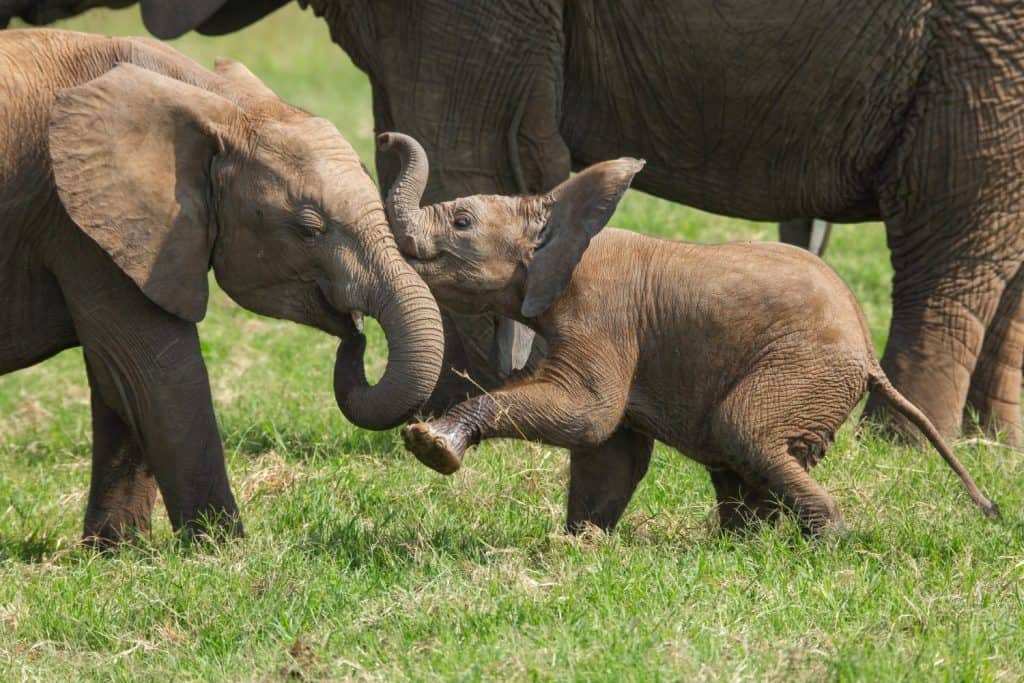
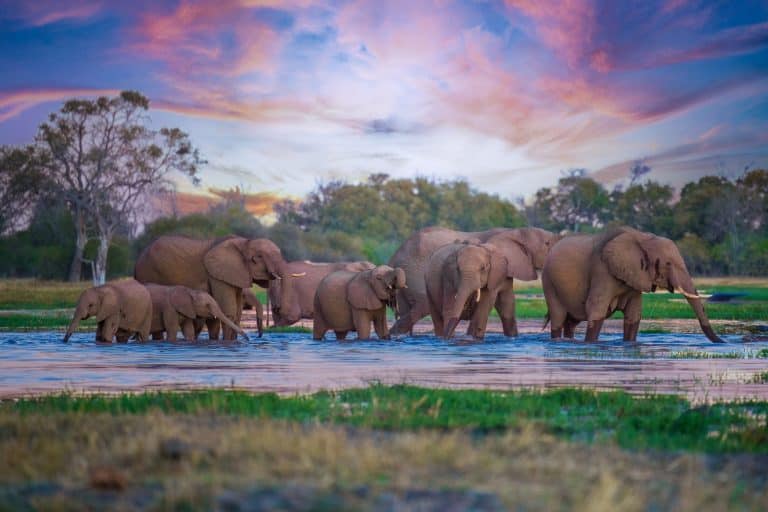
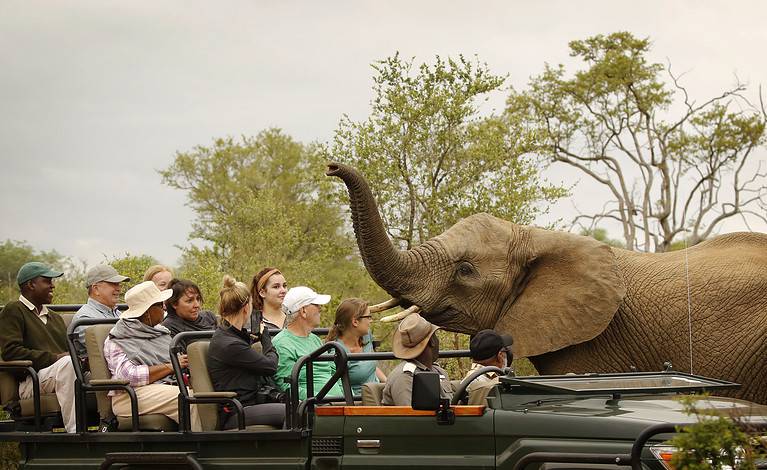
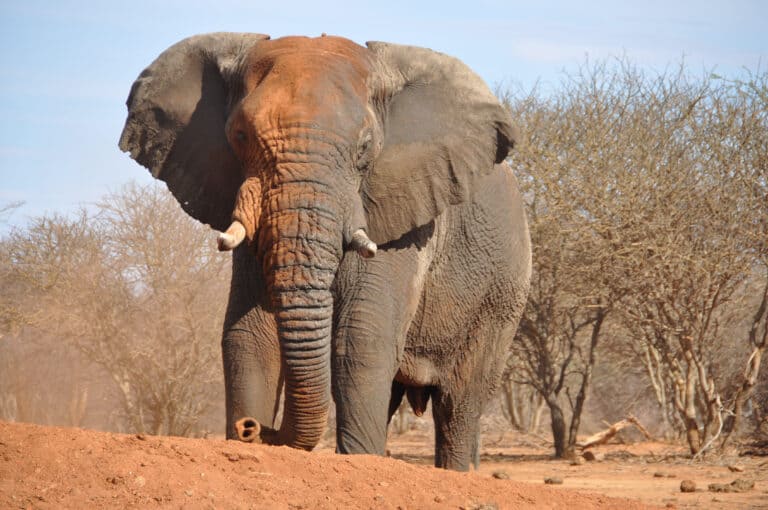
Elephants have poor eyesight, but that doesn’t make them fearful of mice, only cautious.
©Chedko/Shutterstock.com
In this episode, the theory was tested with what Adam and Jamie referred to as the “Dung of Doom.” They tied a piece of string to this dried-up piece of excrement before hiding a mouse underneath. When the elephant neared the dung, the string pulled back, releasing the mouse. As the mouse crossed paths with the elephant, the results were shocking: The elephant backtracked and walked the other way.
However, this does not mean that the elephant’s response was motivated by fear. Several details, including an elephant’s blind spots, influence its reactions to smaller animals. In fact, most of these reactions aren’t fear-based at all.
Elephants Are Self-Aware
Despite their tremendous size, elephants are still acutely aware of the space they occupy. This is observed in how they carry themselves and conserve energy. Because of this, they’re also aware of their surroundings. When the mouse was revealed on MythBusters, the elephant showed signs of caution. Its movements were the opposite of fear: Slow, intentional, and with purpose.
The elephant also shows no signs of concern about its trunk. It does not lift it out of the way, nor does it make warning noises to alert the rest of its herd. Therefore, this supports the conclusion that elephants are not concerned about mice sneaking up their airways. Some researchers suggest that elephants may avoid small animals out of caution to prevent accidental harm. However, there is no evidence that this behavior is specific to mice
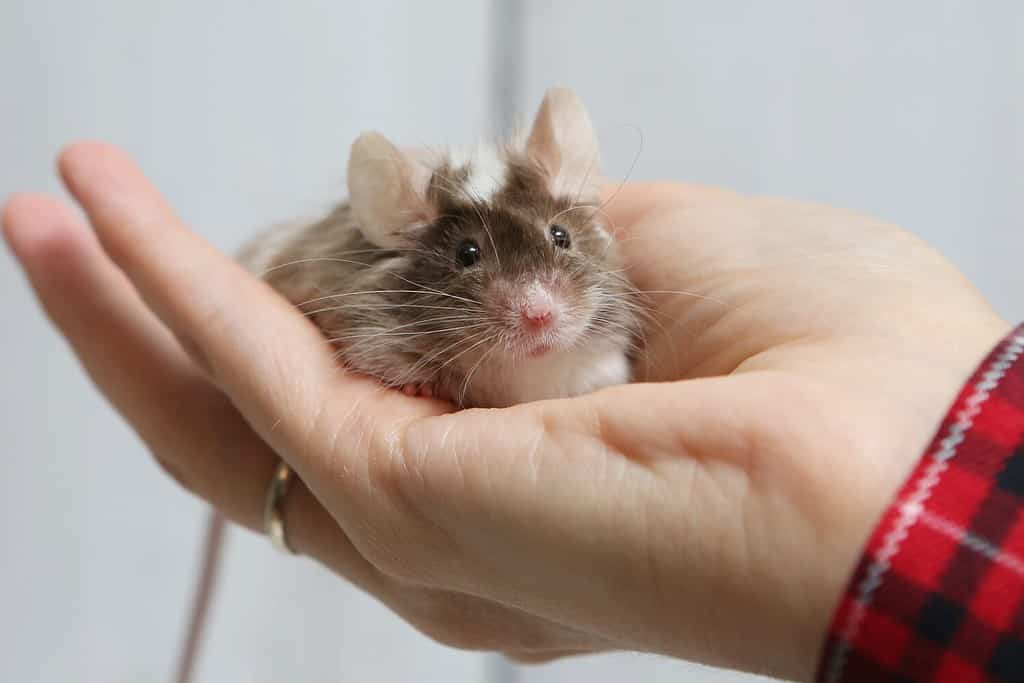
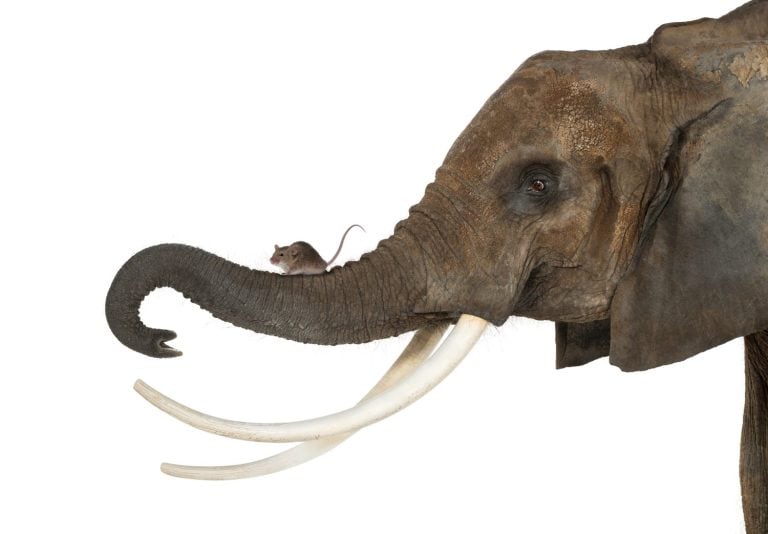
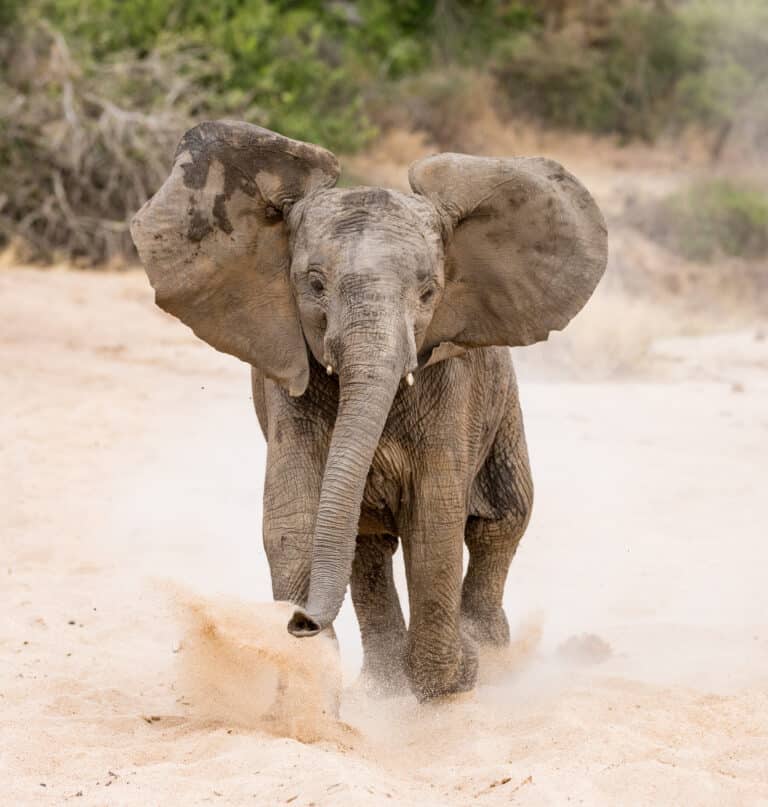
Mice have nothing against elephants and are only able to climb up trunks in cartoons.
©Sergey Bezgodov/Shutterstock.com
In the case of the test elephant, its movements were likely motivated by a desire not to hurt another animal. Elephants have very poor eyesight, which makes them especially careful about their movements. This caution also comes from a long history of avoiding ground-dwelling animals, such as snakes. If an elephant moves away from a mouse, it does so to avoid stepping on it or out of caution because of its quick, unpredictable movements.
Elephants Don’t Worry About Their Trunks
Another reason a mouse getting stuck in an elephant’s trunk is implausible is due to the force behind their blows. An elephant could easily blow a small rodent out of its trunk, along with anything else that gets caught in there. If a mouse were to enter an elephant’s trunk, the force of the elephant’s breath would quickly expel it. Therefore, elephants have no reason to fear small creatures entering their trunks.
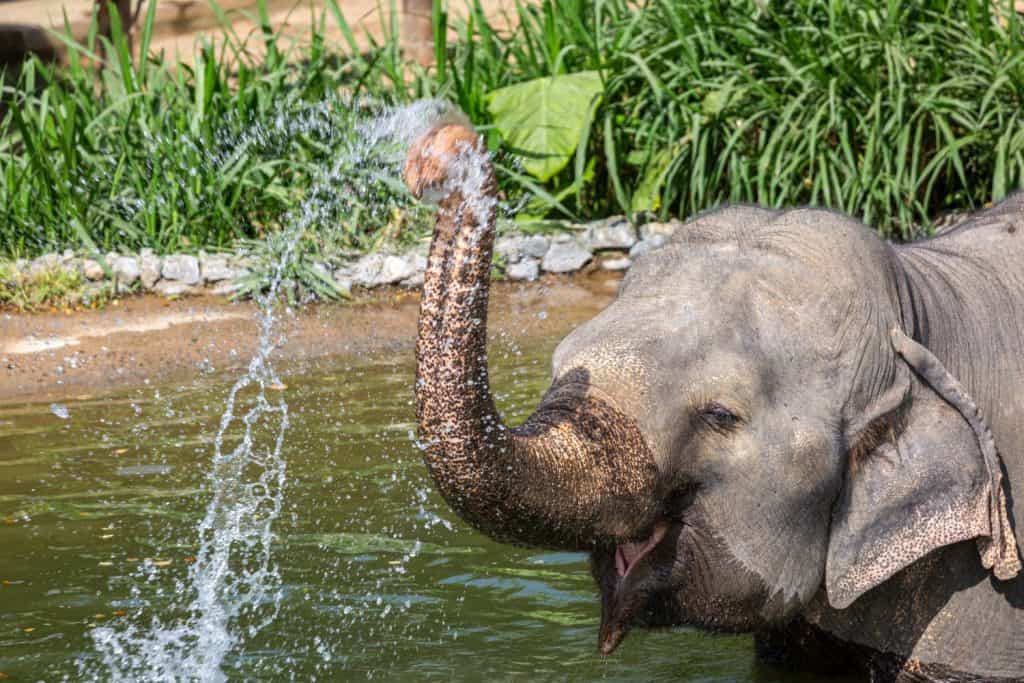
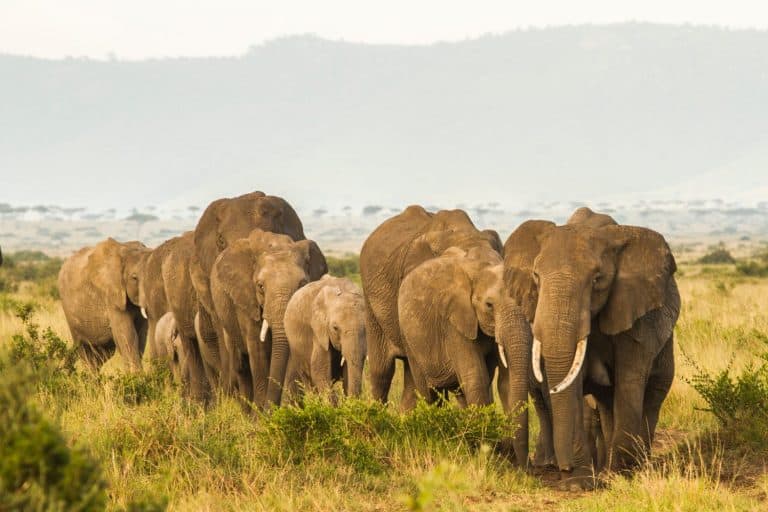
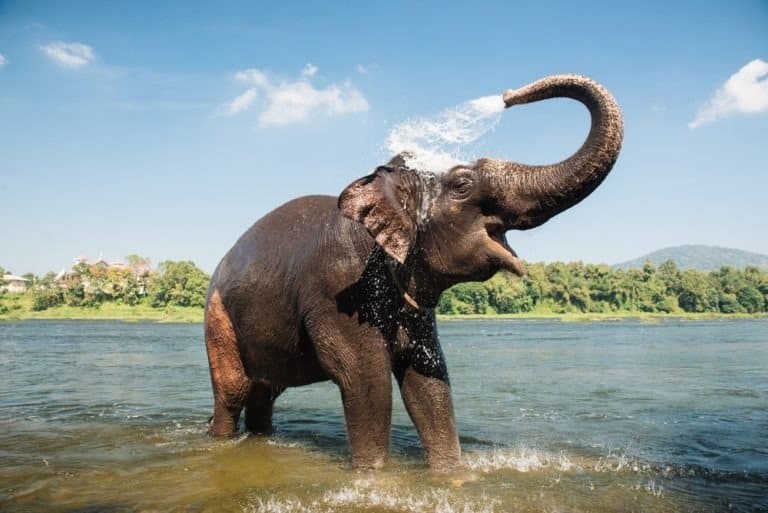
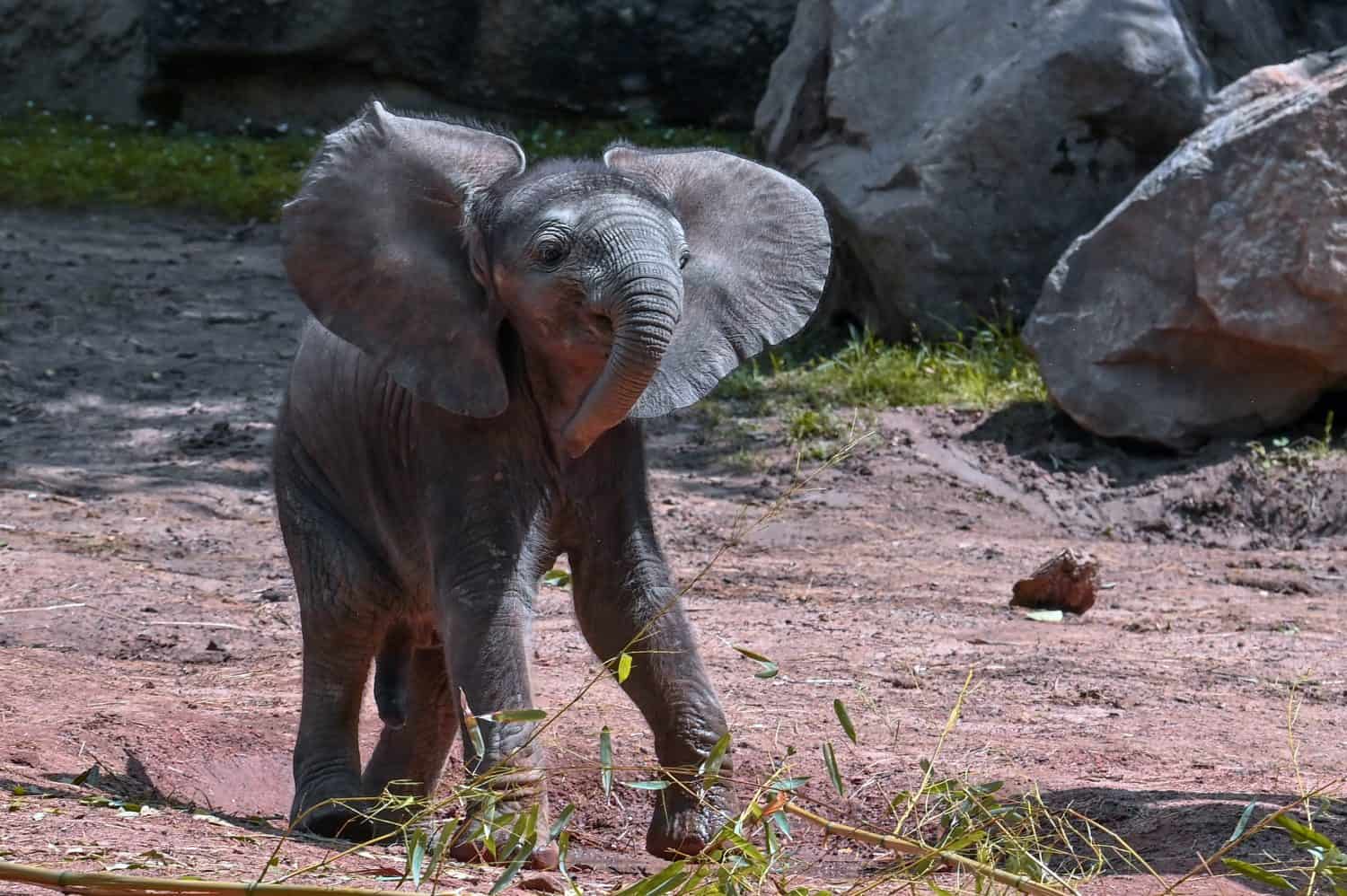
The anatomy of an elephant’s trunk prevents things, such as mice, from making their way inside.
©JW.photography31/Shutterstock.com
Their trunks also function as an extra limb. This means elephants have incredible control over where it goes, and they could easily move away from a mouse. Within the trunk, elephants also have a fleshy epiglottis. This soft tissue protects the nasal membranes from dust and dirt and keeps larger objects out. It also prevents food, water, and, subsequently, mice, from entering an elephant’s lungs.
Similar to the nose of a human, if anything irritates an elephant, it will huff a big puff to dislodge it. This works just like a sneeze, clearing the trunk of any blockages. Unless you’re watching Saturday morning cartoons, the mouse-elephant vendetta is a work of fiction.