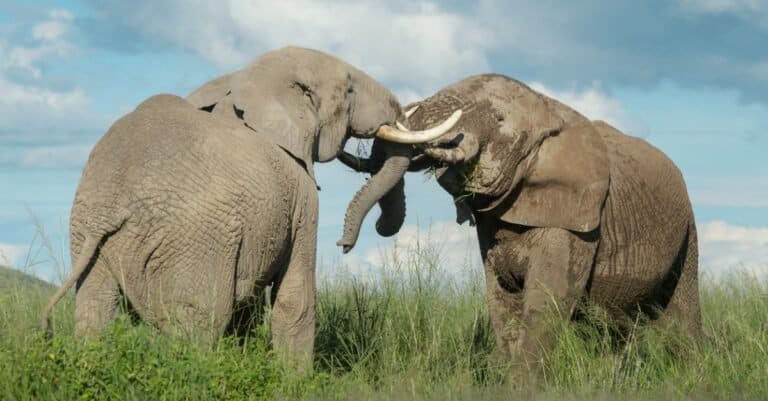

The majestic Asian elephant has a place of honor in the cultures of South and Southeast Asia. In addition to their role in the natural environment, for millennia, these powerful but sensitive animals have worked alongside human beings. In some areas, people still use elephants as they have for centuries: for clearing land and for dragging or carrying heavy loads. Today, tourism is one of the most financially profitable ways people make a living based on elephants. Tourists from the region and around the world flock to national parks and rural roadsides to encounter an animal that many people have loved since childhood.
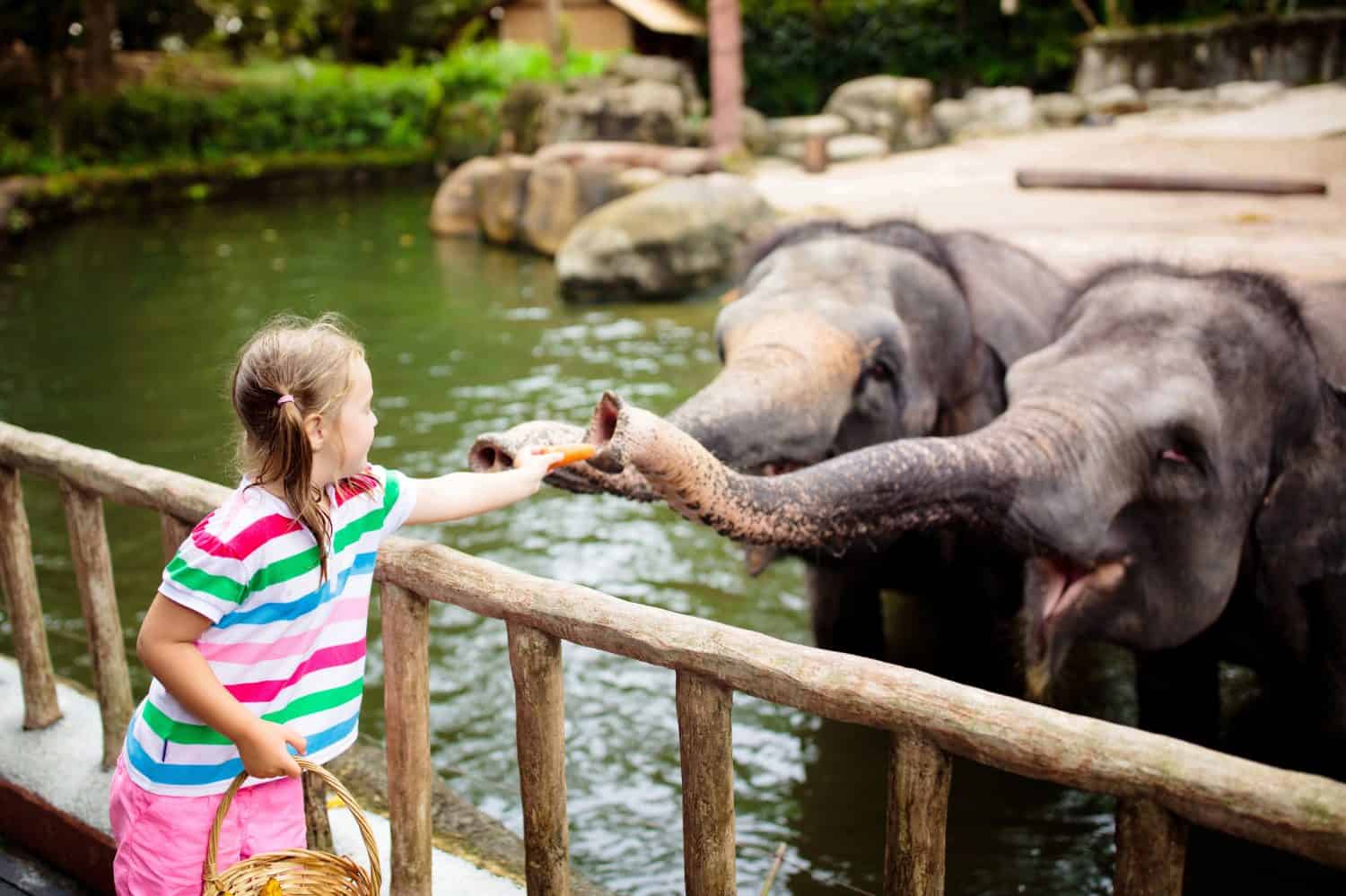
But new research reveals a troubling truth: those seemingly innocent moments—offering snacks, petting, or posing for selfies—are fueling a crisis that endangers both elephants and people.
A Beloved, But Endangered Species
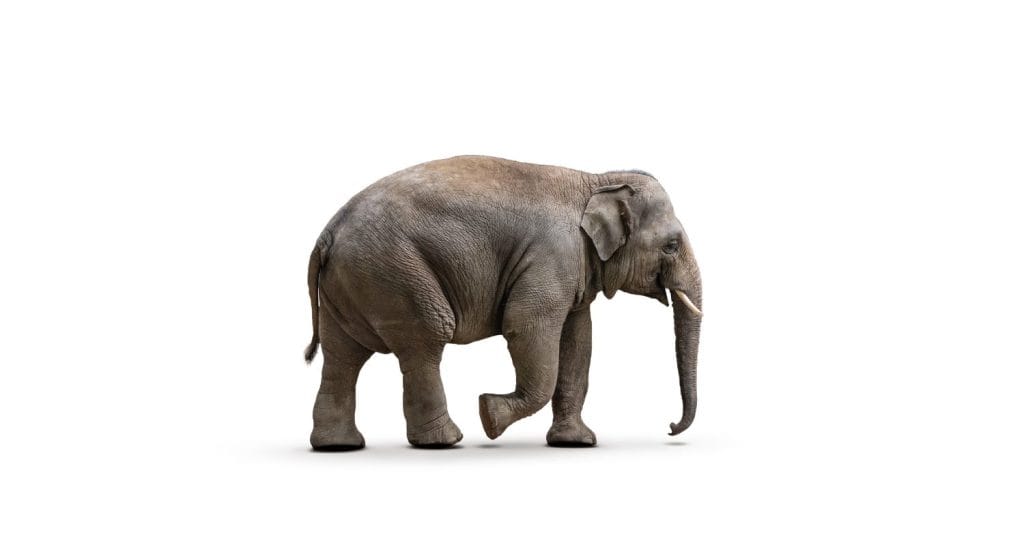
One of the distinguishing characteristics of Asian elephants is the smaller size of their ears compared to the African elephant.
©Nancy Pauwels/Shutterstock.com
Asian elephants (Elephas maximus) are classified as endangered, with only 40,000 to 50,000 left in the wild across 13 countries. India and Sri Lanka have the world’s largest and second-largest Asian elephant populations, with 29,000 and 6,000, respectively. Their numbers are shrinking due to habitat loss, human conflict, poaching, and slow reproduction. As forests disappear, elephants are forced into human spaces, often with deadly consequences.
A Landmark Study

University of California, San Diego.
©tokar/Shutterstock.com
In July 2025, results were published from a groundbreaking 18-year study of the interactions of wild Asian elephants and people. Led by Assistant Professor Shermin de Silva from the University of California, San Diego, the study observed elephants in Sri Lanka’s Udawalawe National Park and India’s Sigur region. Their goal: to track the long-term effects of human-elephant interactions, particularly where food was involved. The study revealed that repeated feeding of wild elephants by tourists is disturbing elephants’ diets and behavior in alarming ways. It is leading to dangerous dependencies and deadly encounters on both sides.
Elephants Losing Their Wildness
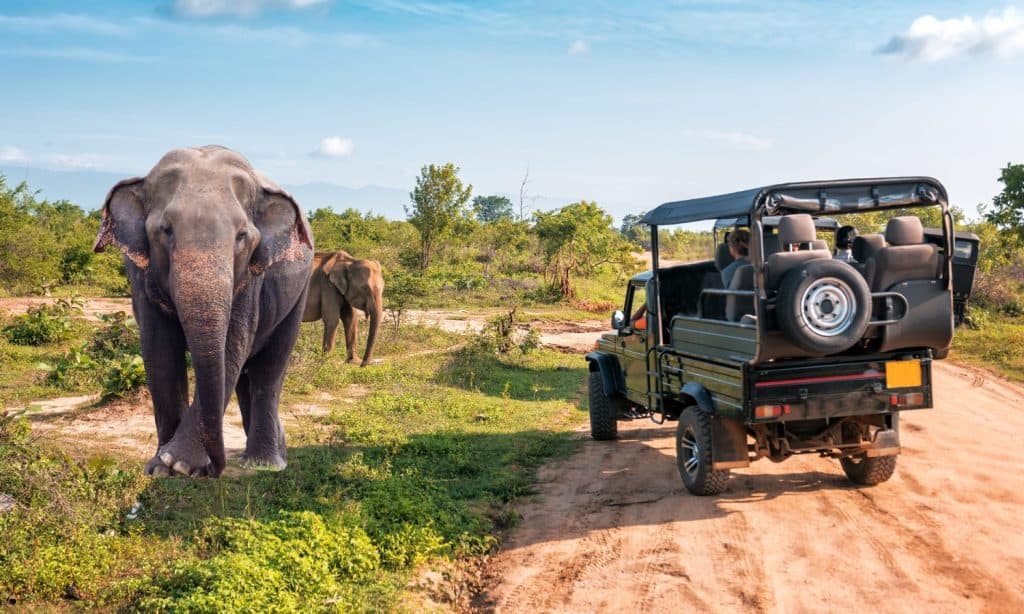
Elephants that get in the habit of getting easy meals from people become more bold about approaching vehicles, leading to accidents.
©Naveen Kosala Photography/Shutterstock.com
What they found is both eye-opening and heartbreaking. In Udawalawe, 66 individual male elephants—about 9 to 15 percent of the local male population—were regularly seen approaching roadsides and tourist vehicles in search of food. One male, known as “Rambo,” became so famous for his roadside begging that he was recognized by name.
Elephants conditioned to human food began abandoning natural behaviors. Rather than foraging across wide territories, they lingered near fences and parking areas, waiting for snacks. Over time, they altered their movement patterns and grew increasingly bold. In India, 11 male elephants were observed soliciting food from people. Of those, four later died—victims of human conflict or accidents linked to their risky new behaviors.
How Human Food Harms Elephants
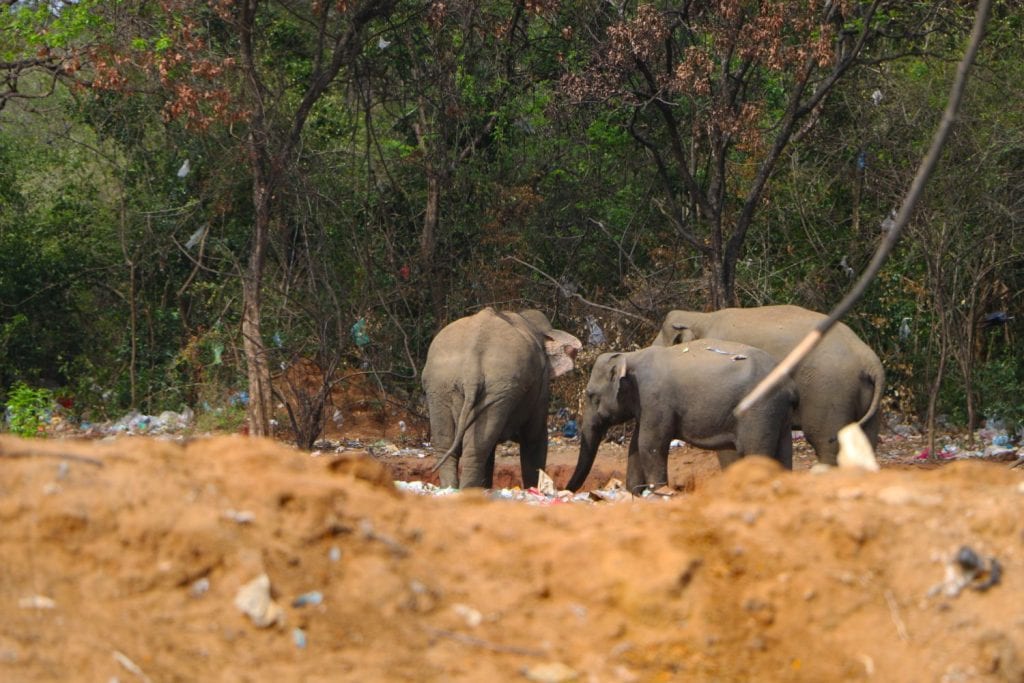
These elephants are eating garbage, indiscriminately consuming plastic along with scraps of food that make it smell tasty.
©UMESH MADUWANTHA/Shutterstock.com
One of the problems is that people are feeding elephants highly processed human food, like chips, candy, or bread. Processed food isn’t just unnatural for these animals—it’s dangerous. Elephants have complex digestive systems evolved to handle roots, grasses, and fruits. Sweets and packaged snacks cause digestive issues, malnutrition, and even long-term internal damage.
Plastic is an even greater threat. Elephants often greedily snatch candy bars or bags of snacks from tourists’ hands, eating the packaging along with the food. This can lead to intestinal blockages or poisoning. The problem is compounded as elephants eat trash from dumps or along the side of the road, having come to see it as food. The study recorded multiple cases of elephants dying from ingesting plastic waste. One collapsed near a park entrance, its stomach filled with undigested trash.
How Feeding Elephants Harms People
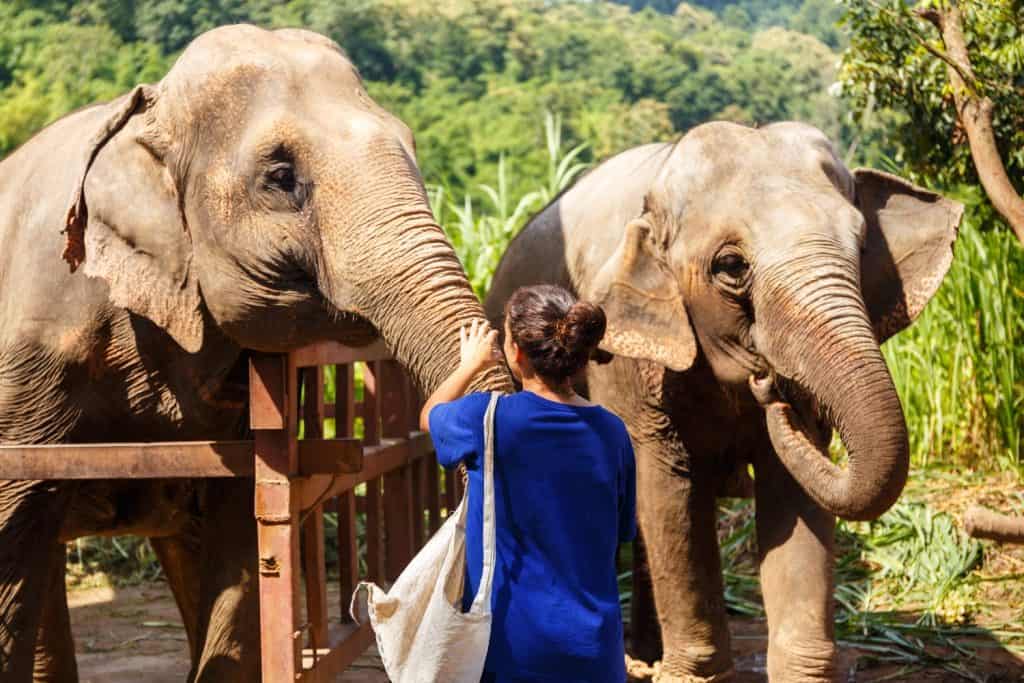
Tourists can become too complacent and forget that elephants are wild animals, leading to injuries.
©LAMBERTO JESUS/Shutterstock.com
People have suffered, too. Tourists, misjudging an elephant’s calm demeanor, sometimes approach too closely. Sometimes the animals react unpredictably—even fatally. Injuries don’t always happen deliberately, either. An elephant can accidentally step on a person or crush them against an obstacle like a car or fence. A careless swipe of a trunk from an elephant eager to grab food can carry the force of hitting a person in the head with a baseball bat.
The problem doesn’t stop at feeding sites. As elephants grow more accustomed to human presence and handouts, they begin entering villages, farms, and other populated areas in search of food. This escalation turns simple interactions into full-blown human-elephant conflict. In agricultural regions, elephants may raid crops or break fences, leading to retaliation from fearful or angry locals. Elephants can be injured or killed by people who find them wreaking havoc on their carefully tended farms, which are essential to their families’ livelihoods.
Shrinking Wild Spaces Make Things Worse
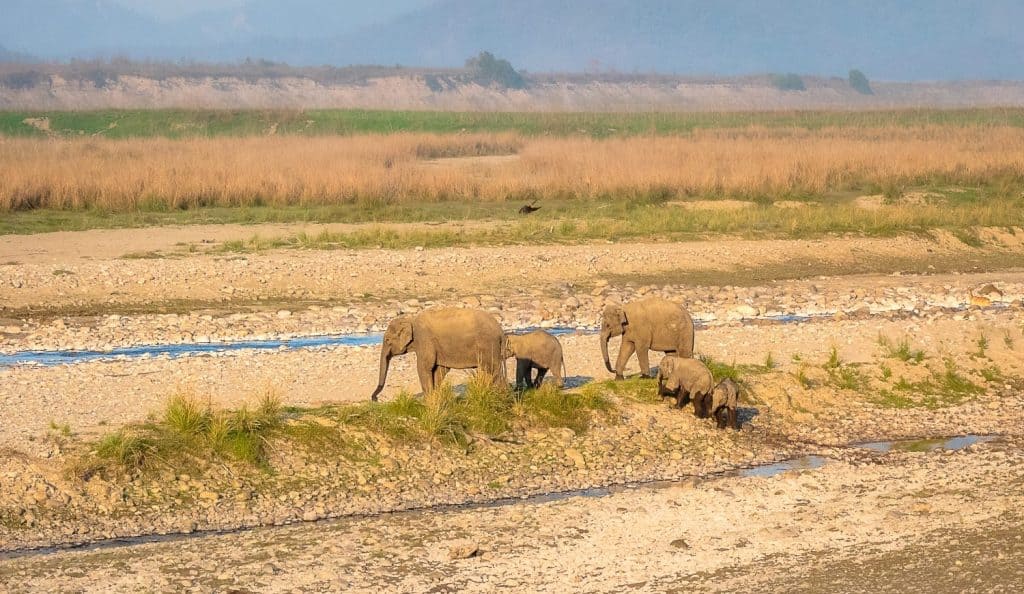
Deforestation prompts hungry elephants to wander toward human settlements to find enough to eat.
©ABIR ROY BARMAN/Shutterstock.com
Underlying these problems is a more systemic issue: habitat loss. Expanding agriculture and infrastructure are eating into elephant territory. As their natural food sources disappear, elephants are forced to venture closer to human settlements. Feeding accelerates this displacement. Elephants learn to seek out people instead of avoiding them, bringing them into more frequent—and dangerous—contact with human communities.
Disease Risks from Close Encounters
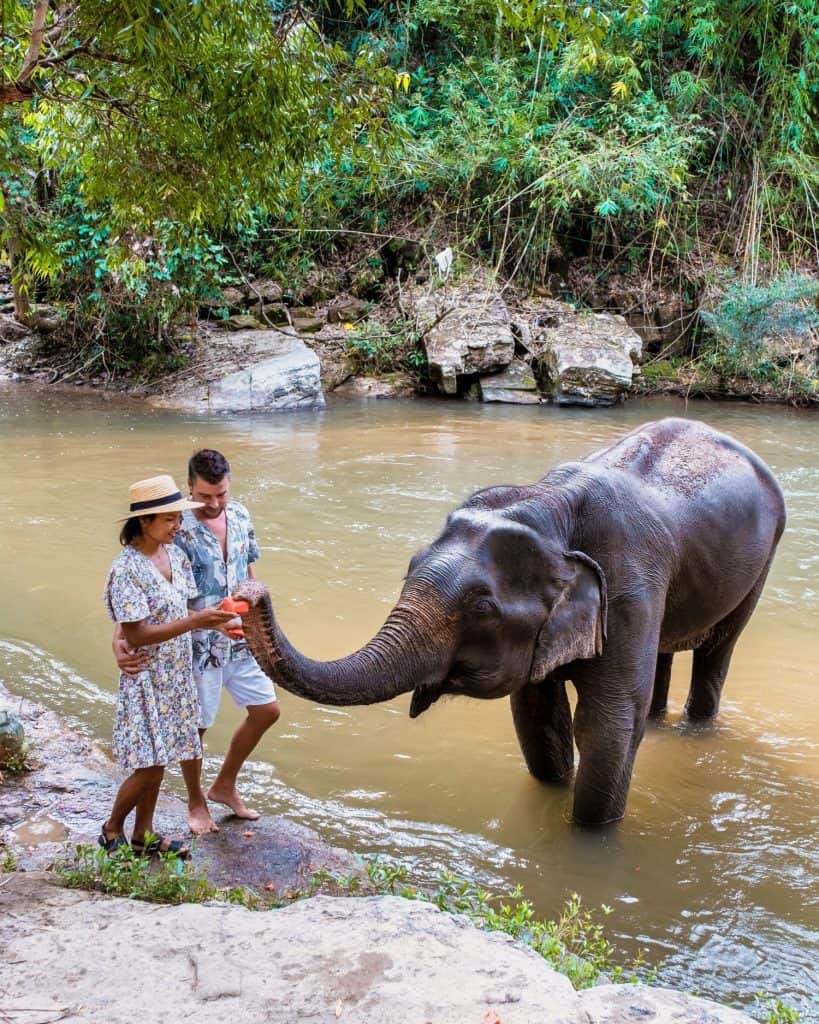
These tourists in Thailand are enjoying a truly beautiful moment. But the potential for waterborne illness transmission is high.
©fokke baarssen/Shutterstock.com
Close contact between people and elephants also opens the door to disease transmission. Zoonotic illnesses can spread through saliva, feces, or contaminated food, affecting both local communities and wildlife populations. Tuberculosis, leptospirosis, and salmonellosis are examples of infections that can pass between people, elephants, and livestock. Feeding interactions are especially risky as they are opportunities for bacteria to pass to the animals via unwashed food and to people from elephant saliva. It’s essential that tourists who feed elephants wash their hands thoroughly and not snack on themselves during the elephant encounter. (Note that infants in India are vaccinated against TB but not in the United States, where this disease is rare and the vaccine is not part of the standard immunization schedule.)
What the Researchers Recommend
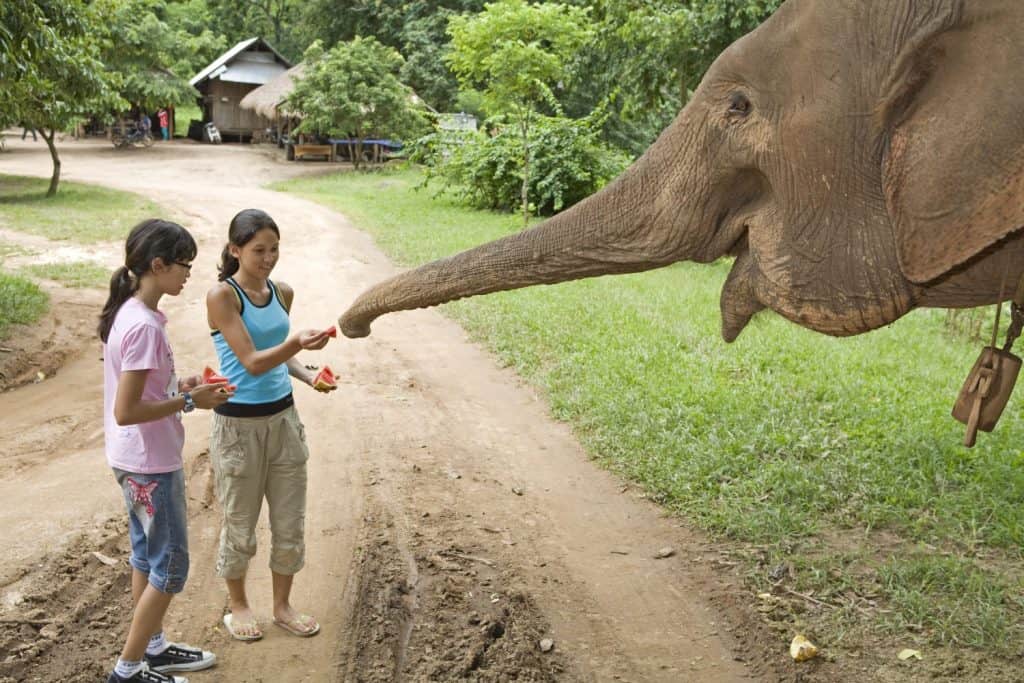
People find it irresistible to feed elephants. Stopping this requires widespread public education campaigns and strict enforcement of feeding bans.
©Muellek/Shutterstock.com
De Silva and her team don’t mince words: the practice of feeding wild elephants must stop. Their findings call for strict enforcement of feeding bans, along with widespread public education.
Enforcing the Rules on the Ground

Police patrol car in a wilderness area of India.
©Melnikov Dmitriy/Shutterstock.com
Some parks are stepping up. In Udawalawe, officials have increased patrols, posted clear warning signs, and trained guides to discourage feeding. Parts of India are adopting similar measures, with expanded fines in sensitive areas. But enforcement remains patchy, especially in remote regions or at unmonitored road crossings where elephants frequently appear.
Educating Tourists and Communities
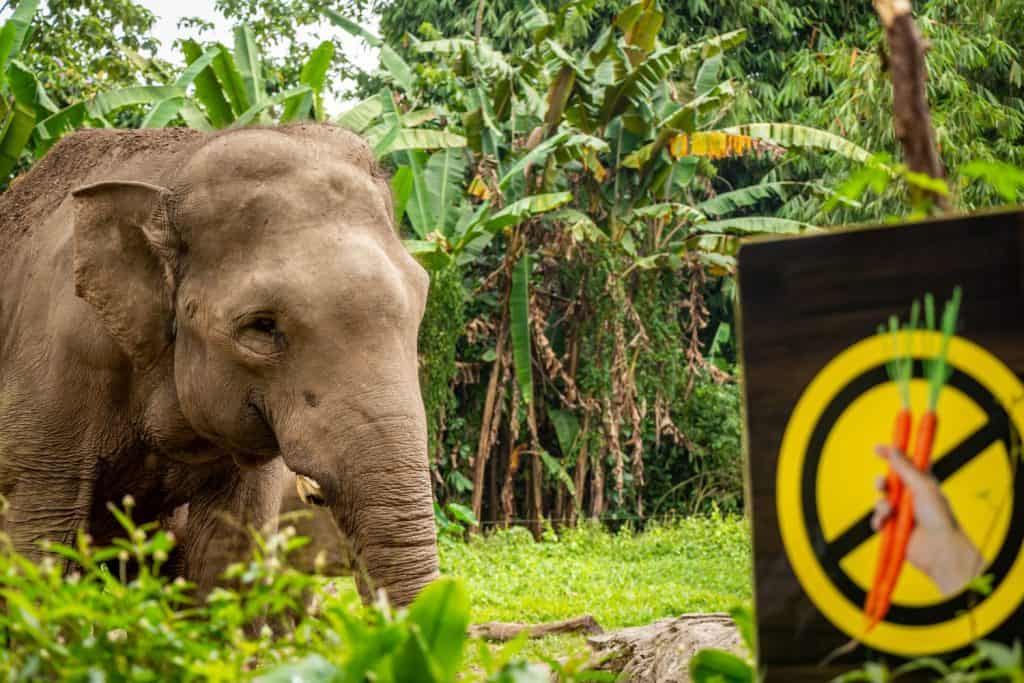
A “Don’t Feed the Elephants” sign in Indonesia.
©SnapTPhotography/Shutterstock.com
Public awareness campaigns are crucial. Conservation groups are using social media, park signage, and guide training to spread a unified message: don’t feed the elephants. These efforts aren’t just aimed at visitors. Local residents can engage with responsible elephant conservation through education programs, workshops, and partnerships with community leaders. When locals understand the dangers and are included in conservation solutions, they’re more likely to support protective measures.
Tourism That Helps, Not Harms
Importantly, this doesn’t mean that tourism must disappear. On the contrary, responsible elephant tourism can be a force for good. It raises awareness, funds conservation, and inspires visitors to become lifelong advocates. Elephants have shared space with humans for thousands of years—as workers, cultural icons, and symbols of wisdom. It’s only natural that travelers want to see them. But the cardinal rule remains: do no harm.
Ethical tour operators now promote observation-only experiences, where visitors view elephants from a respectful distance without feeding, touching, or riding them. Travelers are encouraged to choose operators that follow wildlife-friendly guidelines and avoid venues offering direct elephant interactions. Responsible tourism reinforces better practices and helps shift the industry toward more sustainable norms.
Empowering Communities for Long-Term Solutions
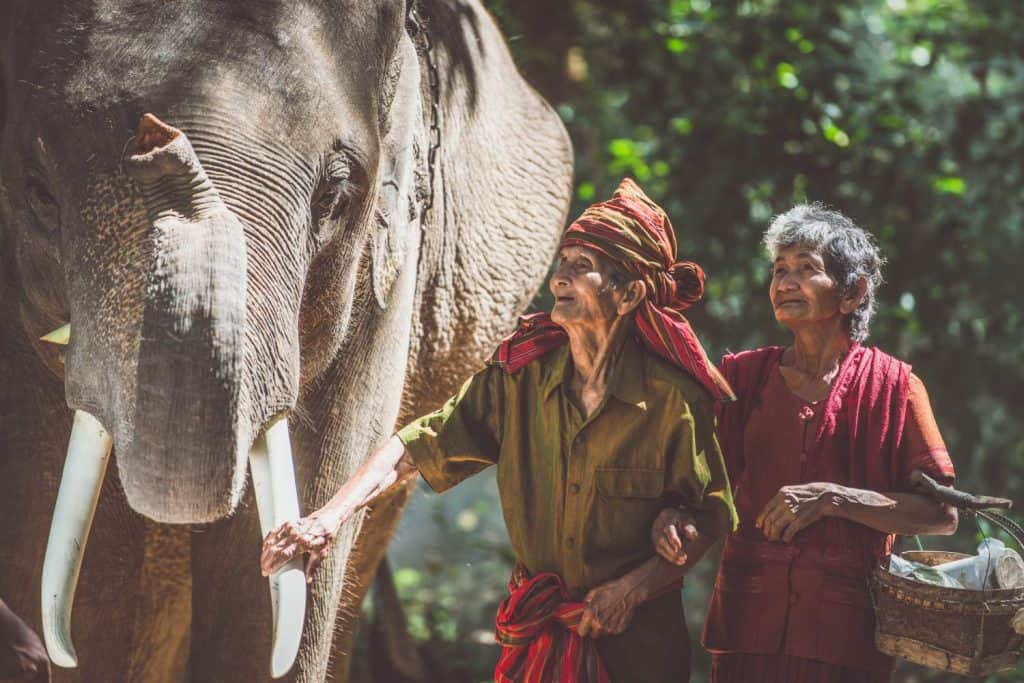
An elderly couple walks with a domesticated elephant.
©oneinchpunch/Shutterstock.com
Conservation works best when local people are partners, not outsiders. Programs offering alternative livelihoods, such as eco-tourism or conservation-based agriculture, give communities a vested interest in protecting elephants. This shift turns potential conflict into collaboration.
Innovative tools are also helping reduce direct human-elephant clashes. Solar-powered fences, motion-sensor alerts, and planting crops that elephants don’t like give residents practical ways to coexist with wildlife. These efforts allow people to feel safe and economically secure without resorting to harmful measures against elephants.
Restoring Habitat and Natural Corridors
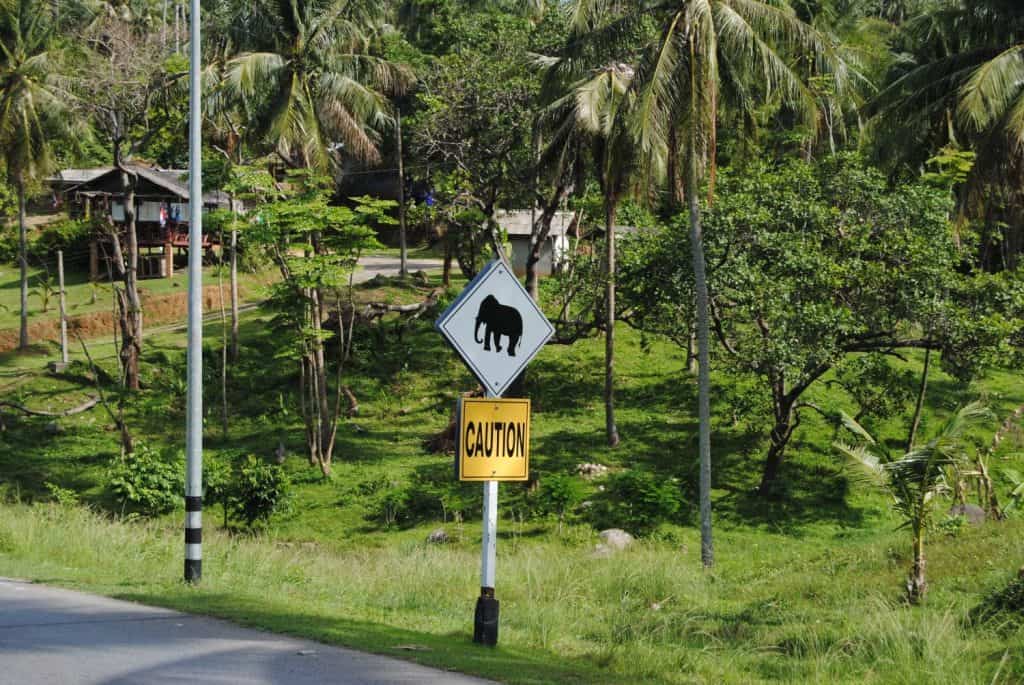
An elephant crossing warning in Thailand.
©chriscasey/Shutterstock.com
Ultimately, long-term success in elephant conservation depends on restoring elephants’ natural habitats. The issue is not only the destruction of elephant habitat, but its fragmentation, which means elephants have to cross areas of human development to get to other areas of their range. Conservation groups are working to establish protected areas and migration corridors that allow elephants to move freely and forage safely without entering human zones. When elephants have enough space and food in the wild, the temptation to seek out humans—and their snacks—declines.
Tracking Elephants to Guide Policy
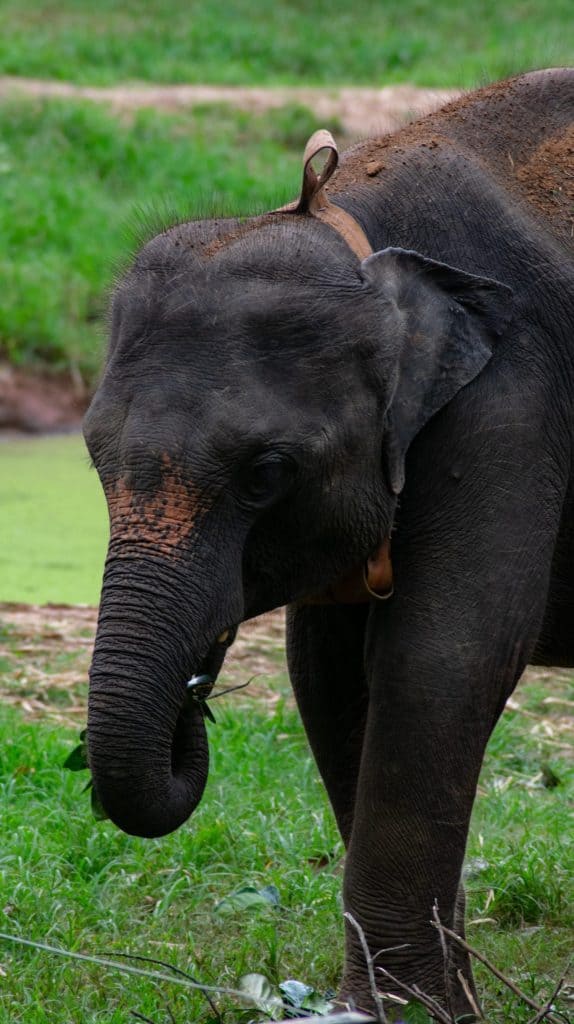
This elephant in Udawalawe National Park is wearing a GPS tracking collar.
©sans-photography/Shutterstock.com
With elephants, it’s possible to take a personalized approach to conservation by tracking them with GPS collars. This helps scientists build profiles of individual elephants to identify those that are most prone to risky behavior. Those who are developing a habit of hanging out around roads or settlements can get targeted interventions to lure them or relocate them to wilder areas.
The Takeaway: Respect from a Distance
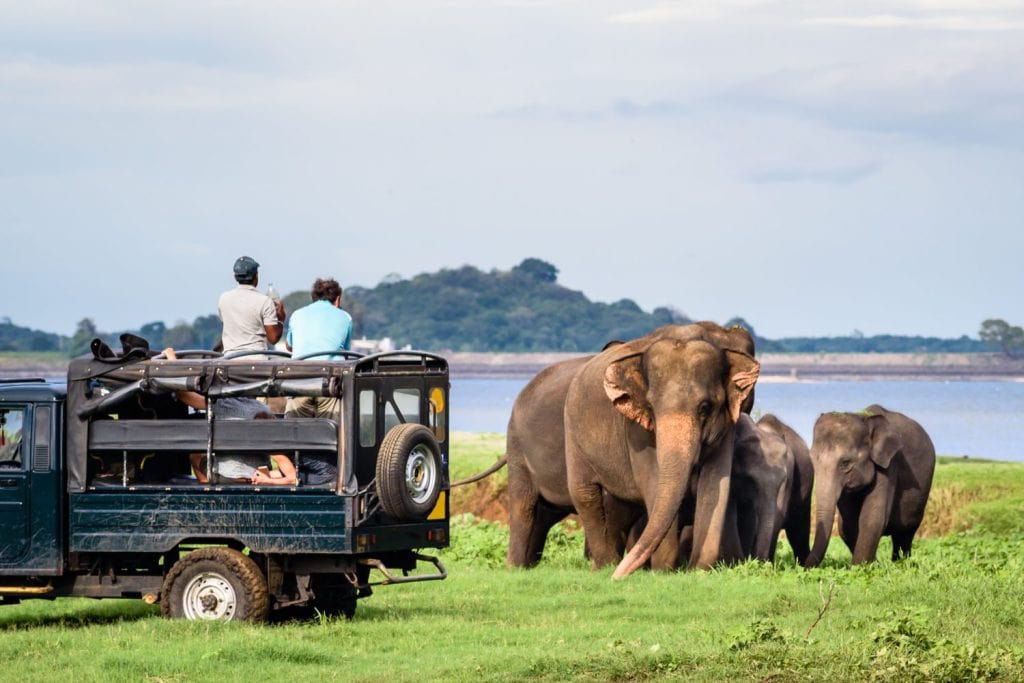
Tourists enjoying elephants from a distance and a safe enclosure in Sri Lanka.
©Thomas Dekiere/Shutterstock.com
Offering food to a wild elephant might feel like a moment of magic—but the reality is far more dangerous than it seems. That one snack can contribute to a lifetime of altered behavior, risk, and ultimately tragedy. Most people are well-intentioned and simply need to understand the reasons for not feeding elephants in order to comply. For those who don’t, strict enforcement of rules is needed. This is all the more vital since Asian elephants are an endangered species that we would like to keep around for many years to come.