
At one time, poaching was the biggest threat to elephants in Africa. As these majestic creatures were slaughtered by the thousands for their tusks, it became abundantly clear that African elephants would go extinct in the absence of conservation action.
After several protections surrounding African elephants have been implemented throughout the years, poaching is no longer the biggest threat to these animals. Today, the greatest threat they face comes from the fragmentation of their migration routes. But what is blocking these ancient elephant migration routes?
Ancient Elephant Migration Routes Are Being Blocked in the Name of Progress
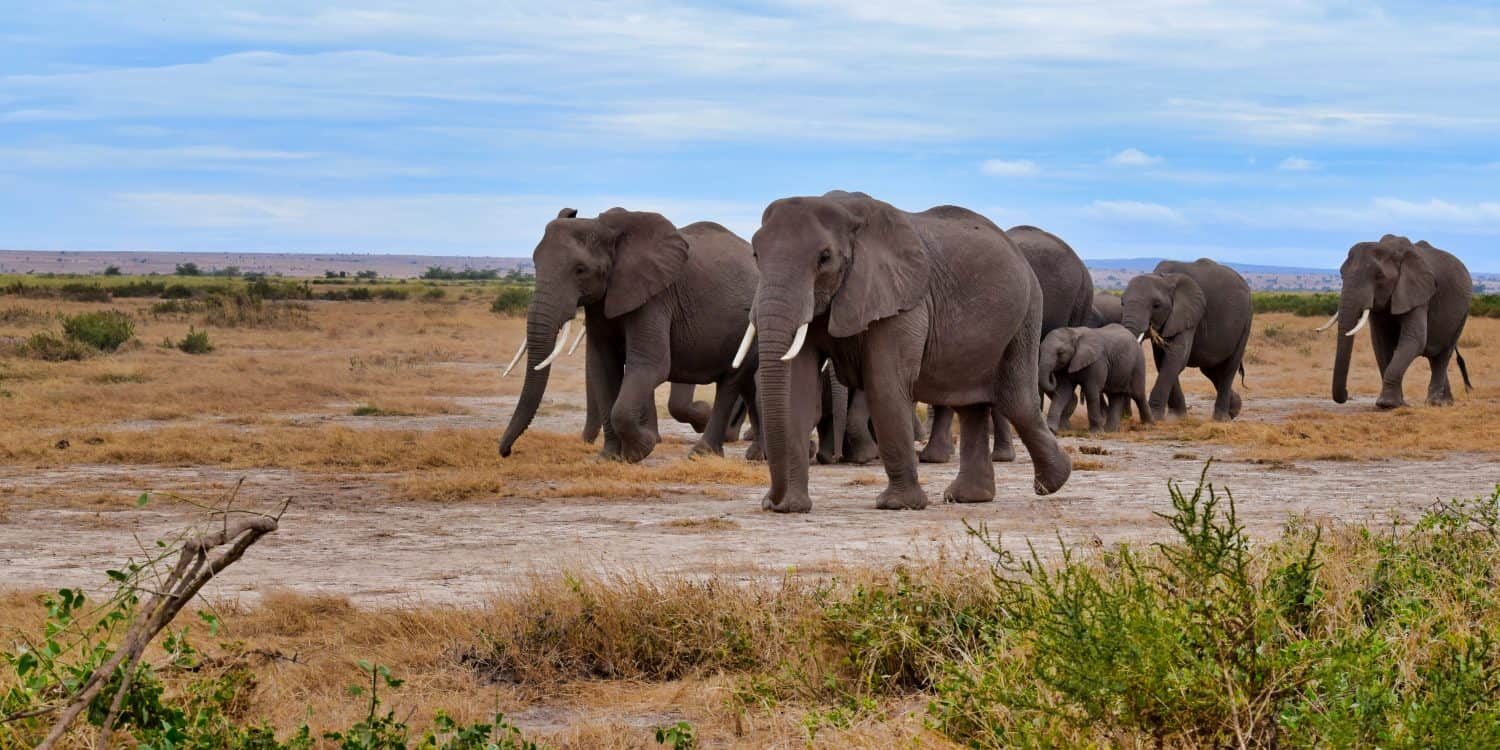
Elephant migration routes are being fragmented at alarming rates.
©NAEPHOTO/Shutterstock.com
It is no exaggeration to say that Africa’s elephant migration routes are ancient. Elephants have traveled these same paths for thousands of years. Information on where to find the best watering holes, food, and breeding places is passed down from one generation to the next, with the youngest elephants learning from their maternal leaders how to navigate the routes. Elephants need to travel these migration routes to survive, but so-called “progress” is making their journey more difficult to achieve.
Today, towns, cities, and roadways run parallel to the elephant migration routes, blocking certain areas. In some instances, the routes have been fragmented to the point that they create “bottlenecks” of hundreds of elephants attempting to make their journey.
Expansion in Africa has taken its toll on the species. To avoid coming too close to human populations, elephants must take detours of several miles to get back on track. Work arounds are not always possible, however, forcing elephants to walk through cities and towns, consuming water and food along the way. This has led to tension between humans and elephants.
As more of these vital migration routes are destroyed or fragmented, the future of elephants in Africa remains uncertain.
Corridors are a critical lifeline for elephant movement and survival. When blocked, elephants have no choice but to navigate a human-dominated landscape, which often results in human elephant conflict.
Benjamin Loloju, Save the Elephants Corridors Manager
Why Ancient Elephant Migration Routes Are Necessary for Elephants
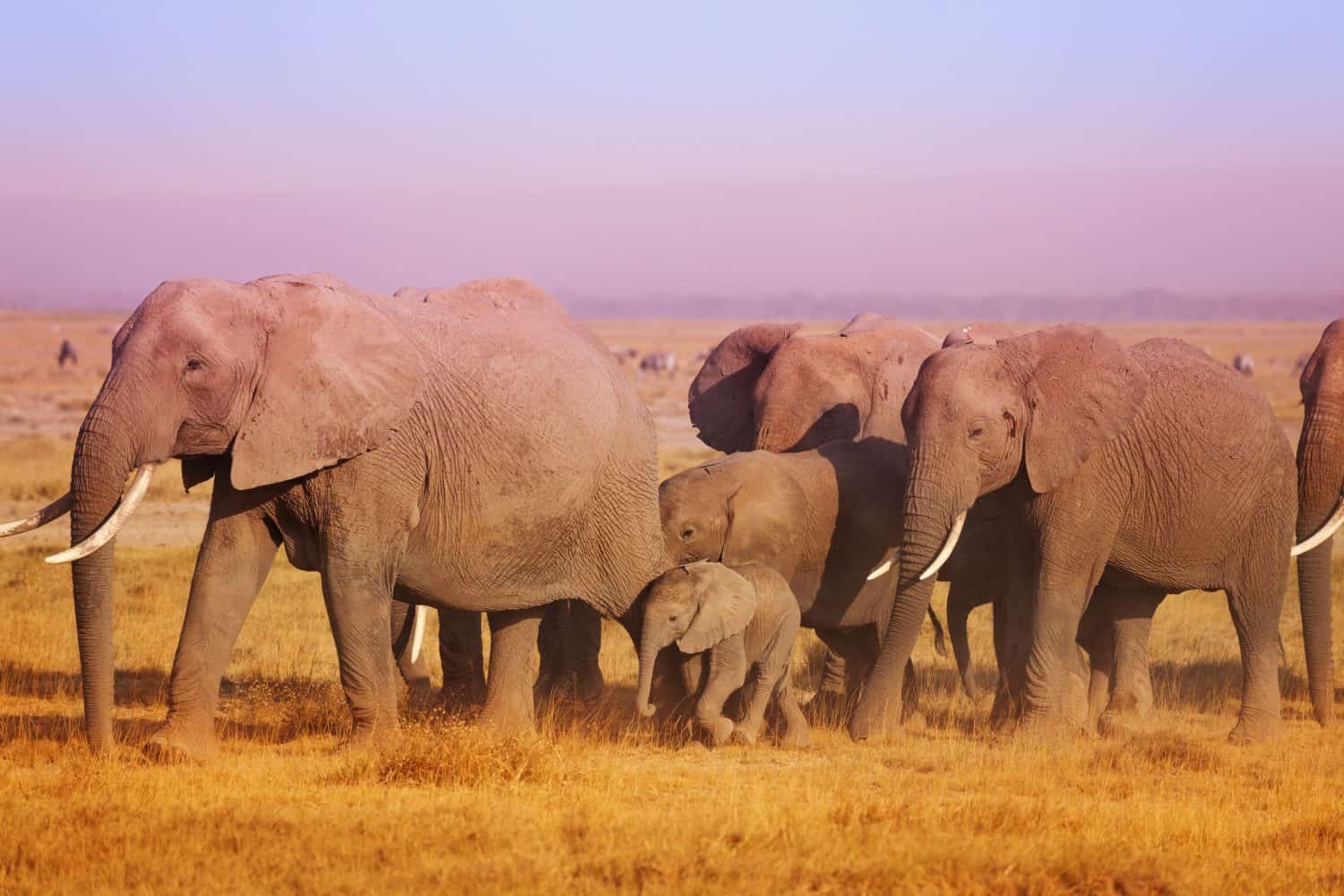
Elephants need to migrate for more abundant resources.
©Sergey Novikov/Shutterstock.com
Elephants need their ancient migration routes for survival. While there are reports of elephants traveling incredible distances outside of their migration routes to find enough food and water for survival, the routes used for generations are the most frequently traveled and where the majority start their migratory journey.
Each year, many elephants travel the same paths back and forth as the seasons change, offering them better access to watering holes, food, and, for females, breeding opportunities. Given that elephants can retain knowledge for up to 60 years, they do not have difficulty remembering the migratory routes they need to access resources. The problem now arises from obstructed routes surrounded by cities and towns.
When elephants cannot use their migratory routes, they are forced to make longer journeys to find resources, leading to elephant deaths due to starvation or dehydration. Blocked paths have also led to elephants raiding crops and consuming water intended for farm animals, contributing to human-elephant conflict rising to levels not seen in modern times.
Human-Elephant Conflict and Why It Is at an All-Time High
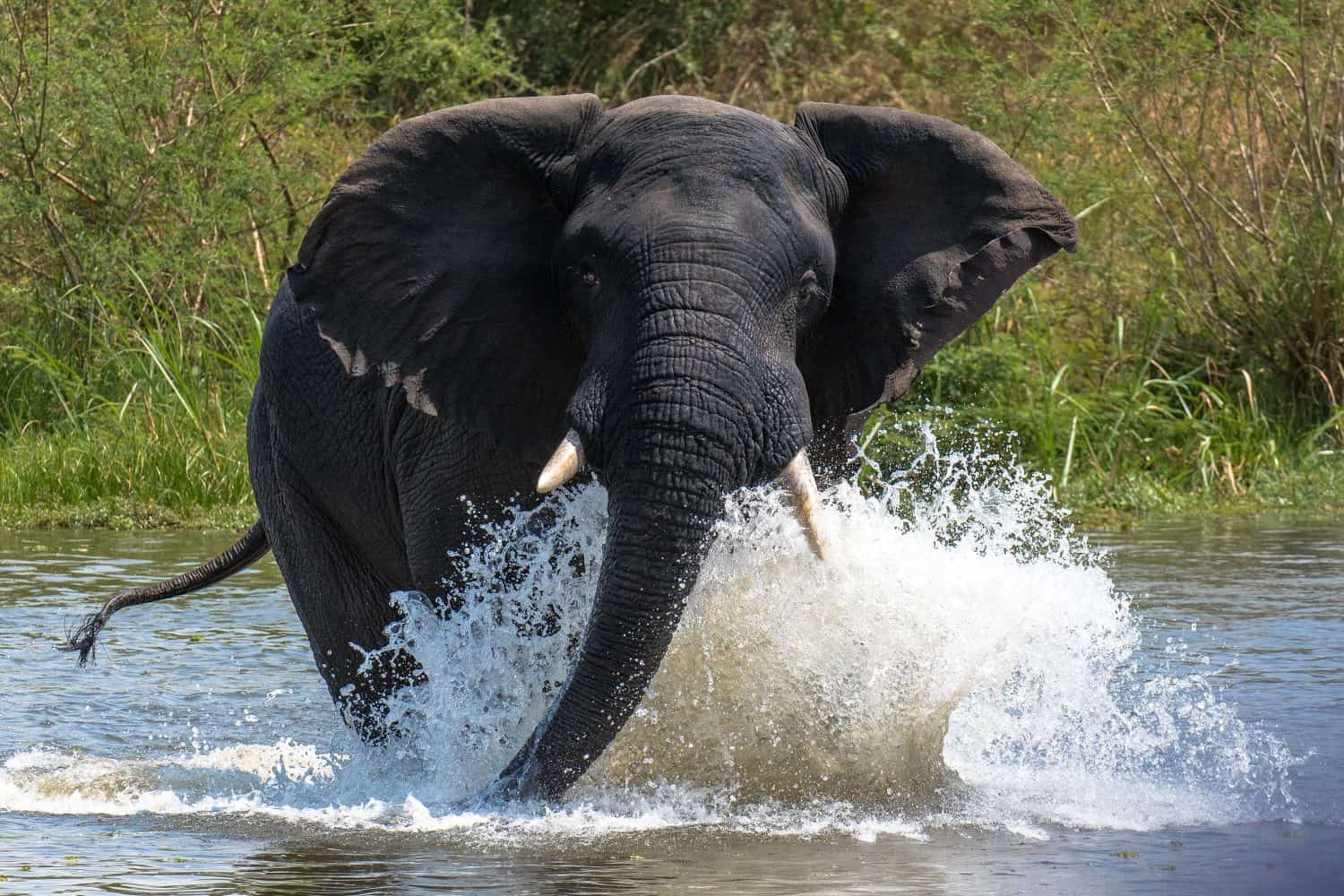
People are killing elephants and elephants are killing people in Africa at higher rates than at any other time in modern history.
©Robert Harding Video/Shutterstock.com
As people encroach on elephants’ migratory routes and climate change exacerbates drought in Africa, the human-elephant conflict is at an all-time high.
Human-elephant conflict occurs when people feel threatened by elephants or believe their livelihoods are at risk due to the animals. Such conflict leads to people taking action against elephants by killing them. However, it is not only humans who are feeling threatened. Elephants feel vulnerable when in close proximity to people. Consequently, elephants trample people to death out of fear.
As infrastructure continues along or near migration routes and elephants are forced to roam farther for resources, human-elephant conflict will only continue, causing the suffering of both people and elephants.
Human-Elephant Conflict Has Resulted in More Elephant Deaths Than Poaching
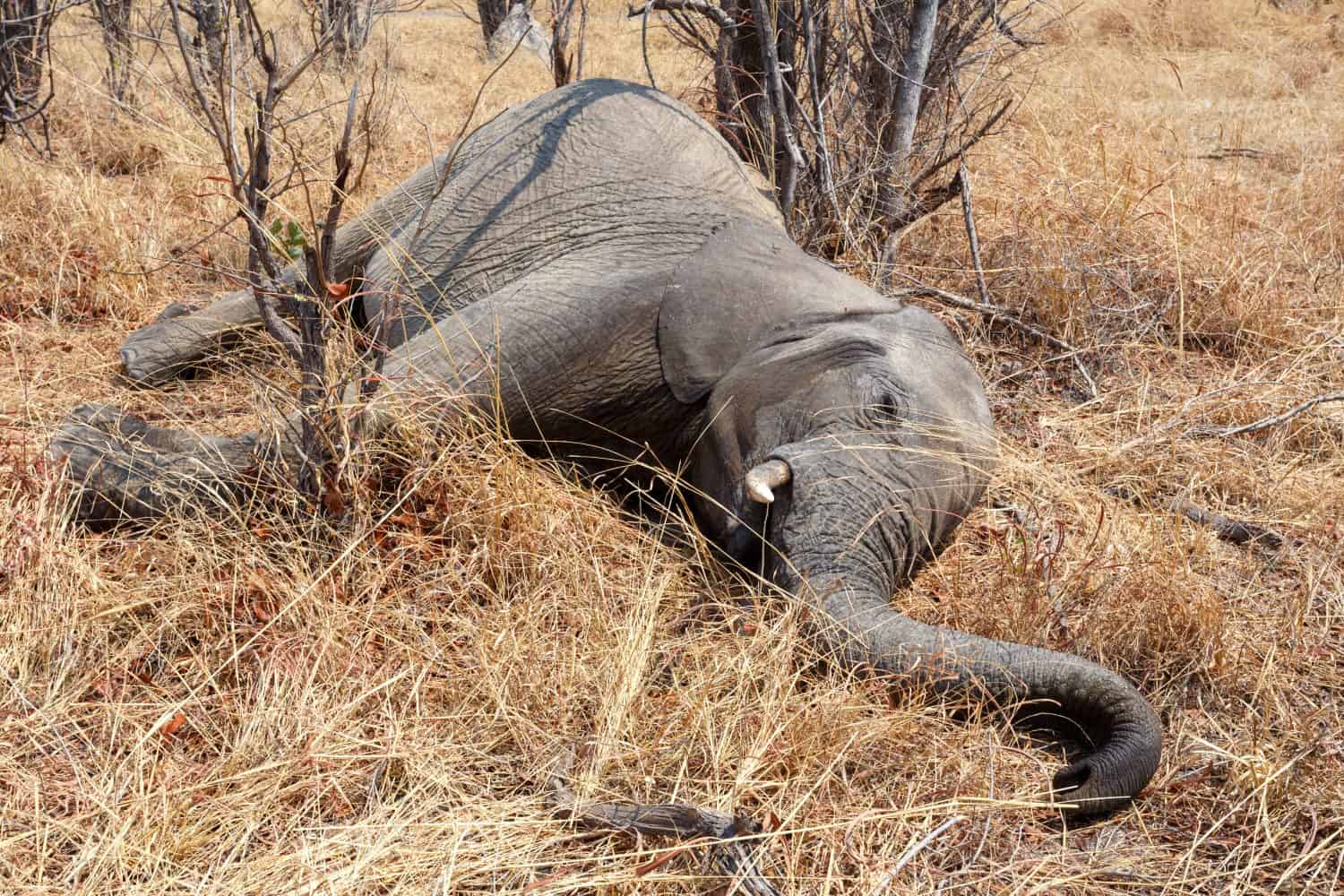
Human-elephant conflicts have led to more elephant deaths over the past decade than poaching.
©Artush/Shutterstock.com
Though Africa is home to the world’s largest elephant population, data regarding the scale of human-elephant conflict is lacking throughout the region. In Kenya, however, records of the impact of fragmenting elephant migration routes are sobering.
There has been a significant increase in human-elephant conflict due to crops, urbanization, and livestock occupying portions of traditional migration routes. As locals attempt to keep elephants away from water sources or planted fields, they kill more elephants than poachers. Approximately 120 elephants die every year in Kenya alone as a result of human-elephant conflicts.
However, it is not only elephants that are dying. As more people live near or on elephant migration routes, elephants are becoming increasingly agitated. Roughly 200 people were killed by elephants between 2010 and 2017. If nothing changes, more unnecessary deaths of both people and elephants will be the result, all of which could be avoided if migratory trails were left for elephants to roam.
What Is Being Done to Help Elephants and People Live in Harmony
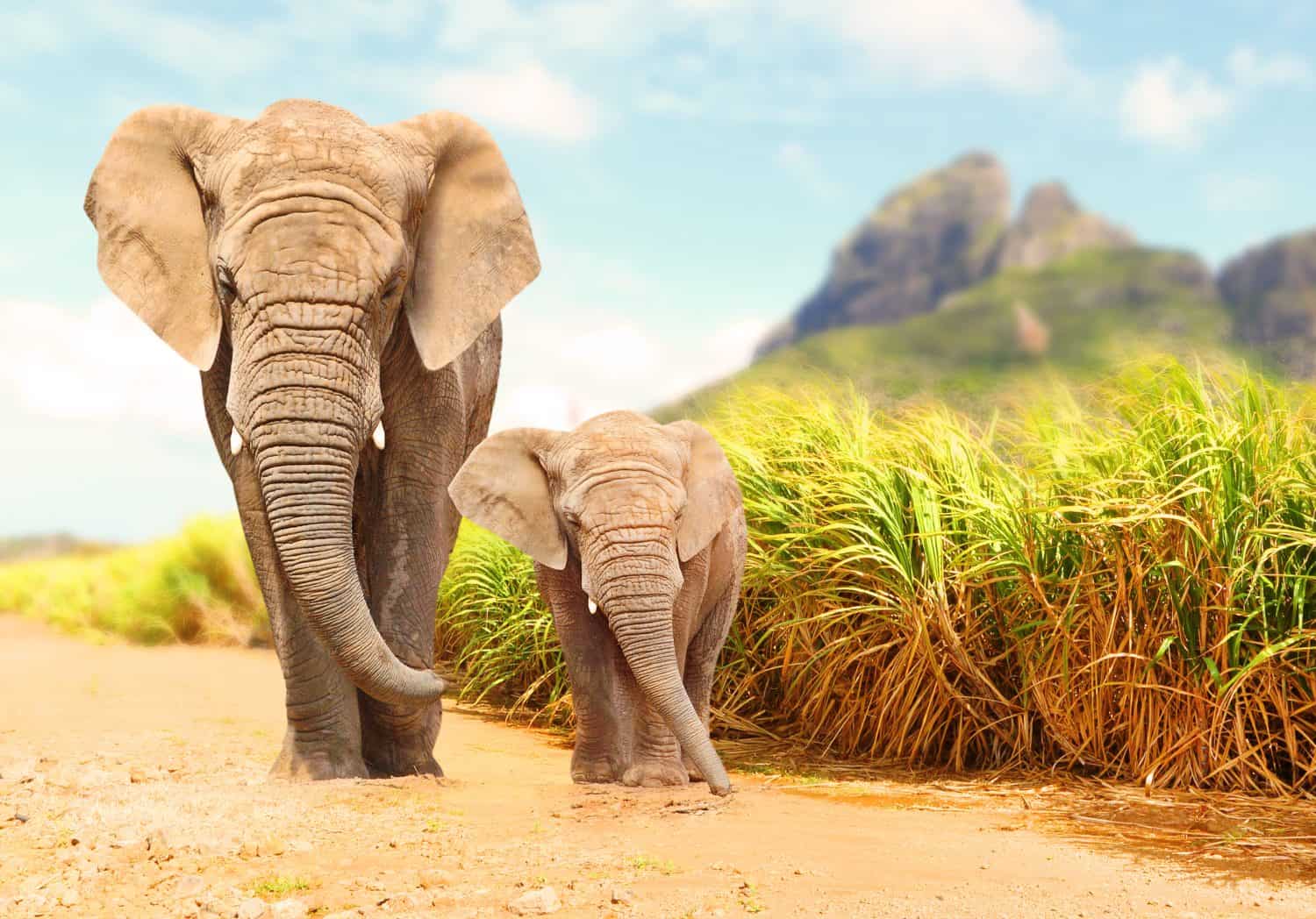
Corridors for elephants can enable people and elephants to live in harmony.
©Kletr/Shutterstock.com
As elephants are pushed into towns, they feed on and destroy crops, according to Focusing on Wildlife. They have attacked people at increasing rates because humans are now in their environments in numbers never before seen. Many wonder if there is a way for elephants and people to coexist peacefully now that they share habitats.
In Northern Kenya, elephant routes have been monitored for 20 years, helping researchers pinpoint the migration corridors elephants return to most often. According to Save the Elephants Corridors Manager, Benjamin Loloju, the answer is simple. Elephants need open spaces to avoid feeling threatened, which would decrease the conflict between humans and elephants.
“Corridors are a critical lifeline for elephant movement and survival,” Loloju explains. “When blocked, elephants have no choice but to navigate a human-dominated landscape, which often results in human elephant conflict. But, when elephants can roam freely between landscapes in search of food, water, and mates, there is peace.”
In addition to proposing that towns be built away from migration routes, farmers are devising inventive ways to keep elephants away from crops. They are using beehives to keep the elephants at bay.
Elephants are notoriously afraid of bees. With beehives surrounding crops, there have been fewer attempts by the elephants to eat crops. Additionally, the farmers are able to sell honey for profit.
Programs like Room to Roam, sponsored by the International Fund for Animal Welfare, have identified sustainable African habitats for elephants away from people. The goal of the project is to “connect habitat within 12 critical landscapes in East and Southern Africa, where more than 330,000 elephants can roam freely by 2040.”
As elephant migration routes continue to be encroached on by civilization, life becomes much more difficult for elephants. Given their population declines, action must be taken to avoid potential extinction in the future.
What Would Happen If Elephants Went Extinct
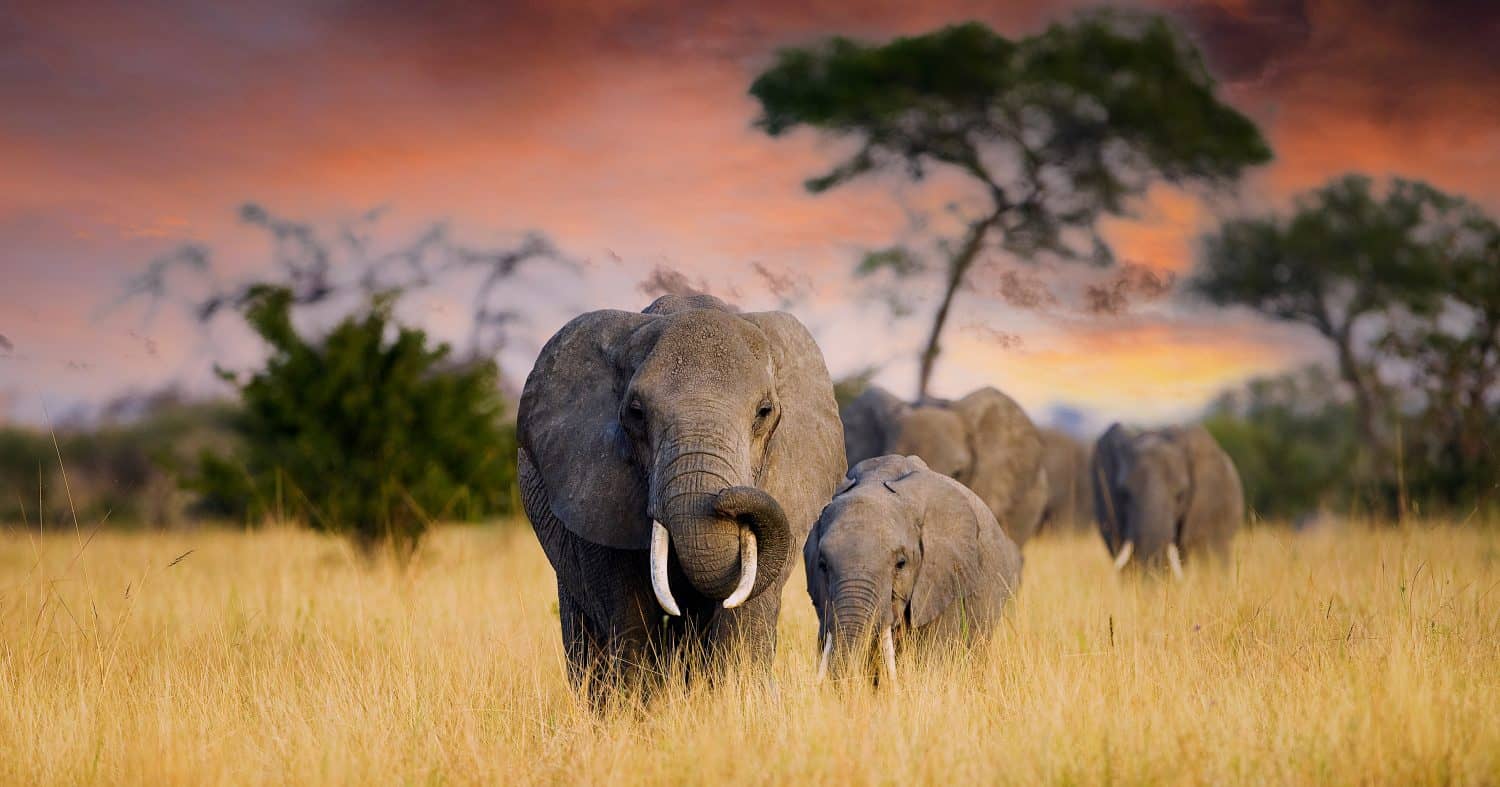
If elephants went extinct, entire ecosystems would collapse.
©MPH Photos/Shutterstock.com
Elephant populations in Africa have experienced significant declines over the last decade. While poaching rates have decreased significantly since 2011, when they were at an all-time high, species decline persists, in large part due to disrupted routes.
Today, there are an estimated 400,000 African elephants left in the wild. While this is significantly more than the Asian elephant, whose numbers are estimated to be between 50,000 and 100,000, the fact that the population has declined by 62% since 2015 and is anticipated to drop by another 30% by the end of 2025, is deeply concerning.
Given these numbers, African elephants are now endangered, including the African savanna elephant and the African forest elephant, with the latter reaching Critically Endangered status.
Elephants are a keystone species, meaning no other species play the same roles within the ecosystem to keep it healthy and functioning. Consequently, elephant extinction would result in a collapsed ecosystem. Multiple flora and fauna species would decline or go extinct.
The roles elephants play in their environments include:
- Foraging, which creates microhabitats for other animals
- Uprooting trees, creating both grasslands and environments for animals
- Digging watering holes, which become accessible for other animals
- Dispersal of seeds that are too heavy for other animals to move
Elephant extinction would cause disaster for other animals in their ecosystem, and people would ultimately be affected as well. As ecosystems fail, clean water disappears and air becomes less healthy to breathe. The distribution of animals that some rely on for sustenance is no longer available, leaving people to go hungry.
The migration routes must remain open to end the growing number of human-elephant confrontations, and to ensure that elephants and the diverse ecosystems that rely on them stay healthy.