
Quick Take
- Metabolic rate doesn’t increase proportionally with body size. It scales to body mass raised to the three-quarter power, a relationship known as Kleiber’s Law.
- Larger animals use more total energy but less energy per pound than smaller animals, making them metabolically more efficient.
- This scaling rule influences feeding behavior, population density, growth rates, and even lifespan across many animal groups.
Many of us would probably like to forget sitting through math classes in school. But let’s briefly travel back, just for a moment, to sixth grade, when you were likely introduced to ratios. A ratio compares two quantities. When the ratio between two quantities remains constant among different totals, we call it a proportional relationship. For example, there are 12 eggs in 1 carton, 24 eggs in 2 cartons, 36 eggs in 3 cartons, and so on. Is it coming back? Good. Math lesson over. (And if you haven’t gotten that far in school yet, now you have a headstart!)
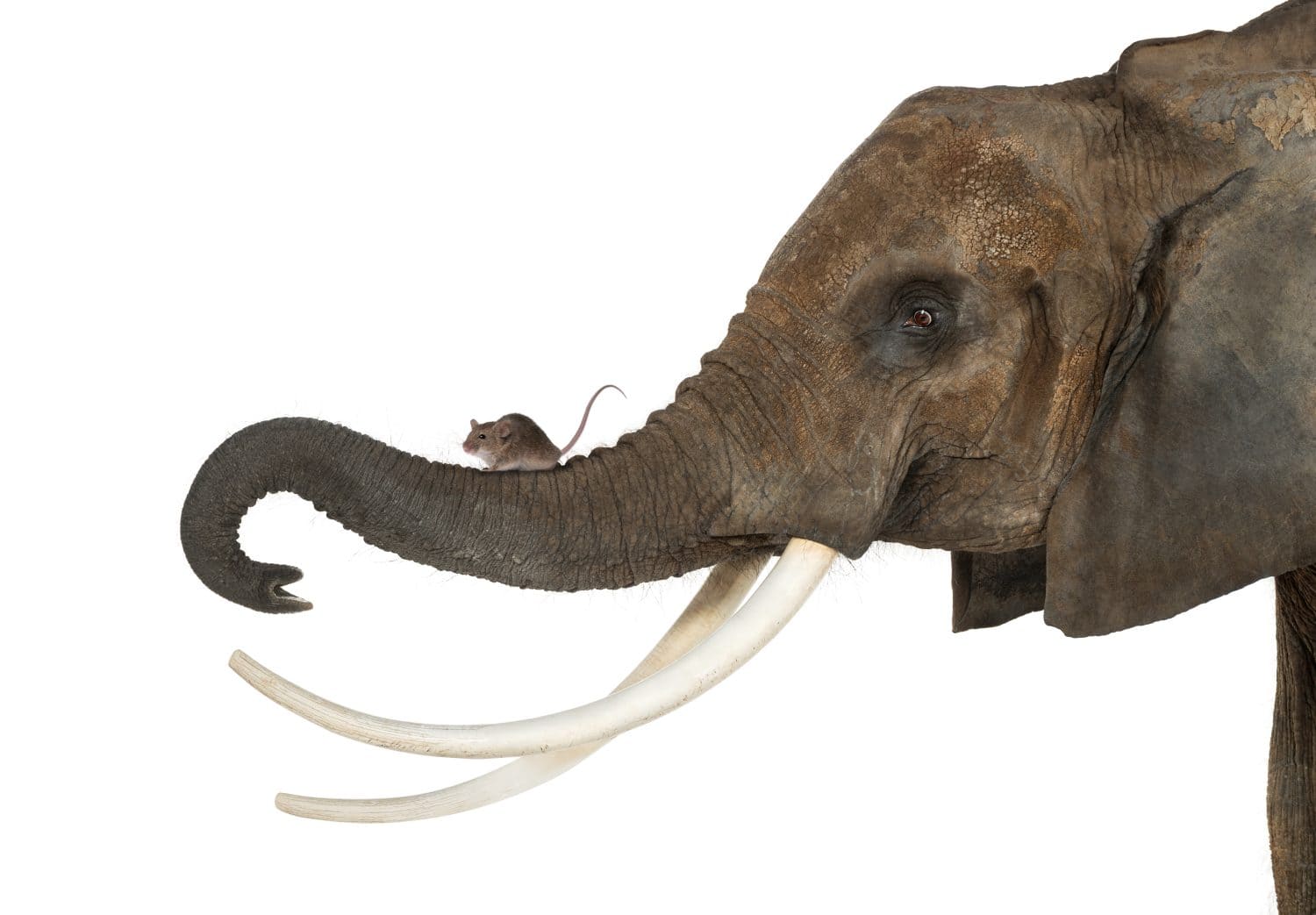
Now that we know everything we need to know about ratios and proportional relationships, it stands to reason that if an elephant is 1,000 times as heavy as a mouse, then the elephant should use 1,000 times as much energy as the mouse, right?
Well, Swiss agricultural chemist Max Kleiber would disagree—at least when it comes to mice and elephants. In the 1930s, Kleiber uncovered a mathematical pattern that flew in the face of that reasonable mathematical assumption. After measuring how much oxygen different animals consumed at rest, he found that metabolism doesn’t increase in simple proportion to body size. Instead, metabolic rate scales to body mass raised to the three-quarter power. Today, that relationship is known as Kleiber’s Law.
From the tiny house mouse to the African elephant, animals of vastly different sizes follow this surprisingly elegant rule. And once scientists realized that, it reshaped how we understand feeding, growth, lifespan, and even the pace of life itself.
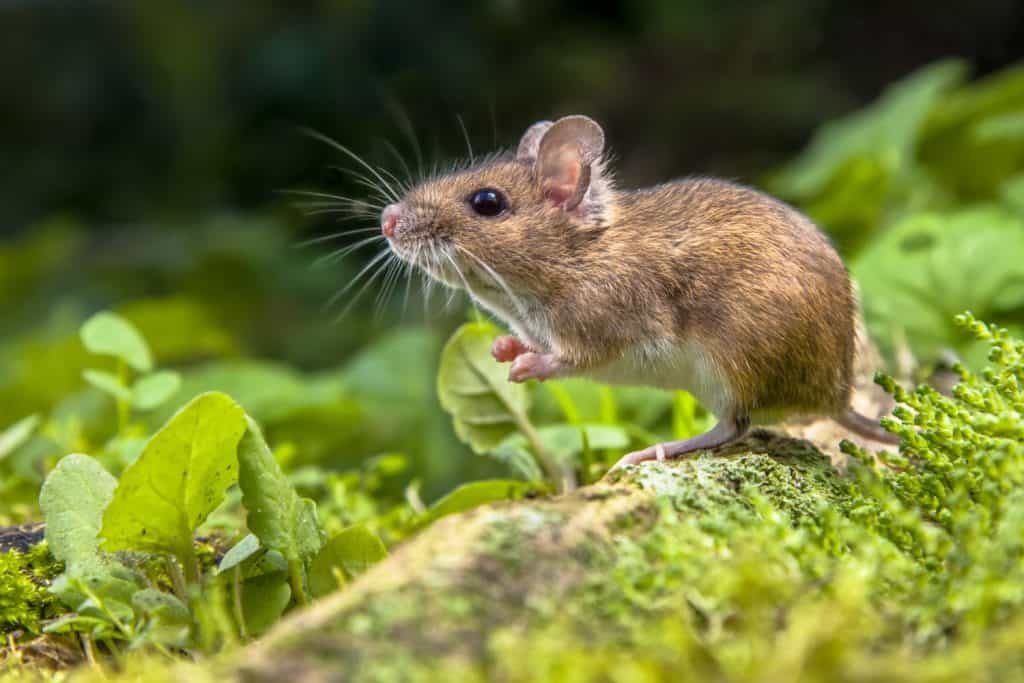
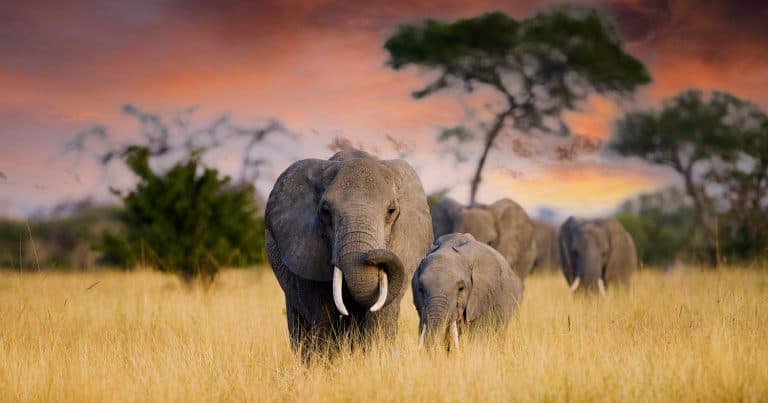
A mouse burns far more energy per ounce of body weight than an elephant, even though the elephant uses more energy overall.
©Rudmer Zwerver/Shutterstock.com
A Discovery That Defies Common Sense
Before Kleiber’s work, many scientists assumed metabolism scaled directly with size. Double the weight, double the energy use. Simple logic.
Kleiber wasn’t satisfied with assumptions. While working at the University of California, Davis, he measured basal metabolic rate in a wide range of mammals. Basal metabolic rate, often shortened to BMR, is the energy an animal uses while at rest, not digesting food, and not regulating temperature beyond normal conditions. Basically, the cost of simply staying alive.
He plotted metabolic rate against body mass on a graph. If metabolism scaled proportionally, the line would have had a slope of 1. Instead, he consistently found a slope of about 0.75. Consider it like this: if you increase an animal’s body mass by 16 times, its metabolic rate doesn’t increase 16 times—it increases by about 8 times. Bigger animals use more energy overall, but less energy per pound of body weight.
This relationship was formalized in 1932 and later summarized in Kleiber’s influential 1961 book, The Fire of Life: An Introduction to Animal Energetics. The pattern held across mammals and, with some variation, across birds and many other groups. It wasn’t a fluke.
Why Bigger Animals Are More Energy Efficient
To see how dramatic this is, compare a mouse and an elephant. A house mouse weighs roughly an ounce. An African elephant can weigh around 12,000 pounds. That’s about 190,000 times heavier. Yet the elephant’s metabolism isn’t 190,000 times higher than the mouse’s. It’s closer to about 20,000 times higher, consistent with the three-quarter power rule. Per pound of tissue, the mouse burns far more energy than the elephant.
That’s why mice have to eat constantly. They lose heat quickly because they have a high surface area relative to their body volume. To maintain body temperature and basic functions, their cells work at a furious pace. Elephants, on the other hand, have relatively low energy use per pound. Their cells run at a slower pace. They don’t need to eat proportionally as much food as a mouse would if scaled up to elephant size.
This scaling principle explains why small animals tend to have faster heart rates, faster breathing rates, and higher body temperatures. Their entire biology runs “hotter.” Large animals run “cooler,” at least metabolically speaking.
The Mathematics Behind the Pattern
Why three-quarters? Why not one-half or two-thirds? For decades, scientists debated the answer. One early explanation suggested that metabolic rate should scale with surface area, since heat loss happens at the surface. Surface area increases roughly to the two-thirds power of body mass. But data consistently showed the metabolic exponent was closer to three-quarters.
In 1997, scientists Geoffrey West, James Brown, and Brian Enquist offered a possible explanation for Kleiber’s Law. They suggested the answer might come down to plumbing. Inside every animal is a vast network of branching tubes, like blood vessels, that carry oxygen and nutrients to cells. These networks branch over and over again, from large arteries down to tiny capillaries. The researchers argued that the way these branching systems are built follows certain physical rules. They’re designed to move energy and materials around the body as efficiently as possible.
When they ran the math, they found that this kind of branching system naturally leads to the three-quarter power relationship that Kleiber discovered. Could that number be a coincidence? Sure. Maybe. But it would be a pretty wild one. It’s likely that the way bodies are wired automatically produces this pattern. Their idea sparked a lot of excitement and debate. Some scientists questioned parts of the math or the assumptions. But even though the details are still debated, the overall pattern remains the same. Across many kinds of animals, metabolism still scales close to the three-quarter power of body size.

Small animals like shrews must eat constantly because their fast metabolisms leave little room for missed meals.
©Thitiwat.Day/Shutterstock.com
From Feeding to Fasting
Once scientists understood Kleiber’s Law, it became clear that it governs much more than oxygen consumption in a lab. It shapes how animals feed.
Small animals, with their high metabolic rates, have to eat frequently. A shrew, for example, can starve in a matter of hours. Many small birds need to feed throughout the day just to maintain energy balance. Large animals have more flexibility. A lion can gorge on a kill and then rest for days. An elephant can travel long distances between meals. Their lower mass-specific metabolic rate gives them a wider energy buffer.
The law also influences ecological patterns. Because larger animals require more total energy, even if they’re more efficient per pound, ecosystems can support fewer of them. That’s one reason large predators are rare compared to small rodents or insects. Energy use, body size, and population density are all linked through scaling relationships. Once you know an animal’s size, you can make surprisingly accurate predictions about how much it eats, how often it feeds, and how many individuals an area can support.
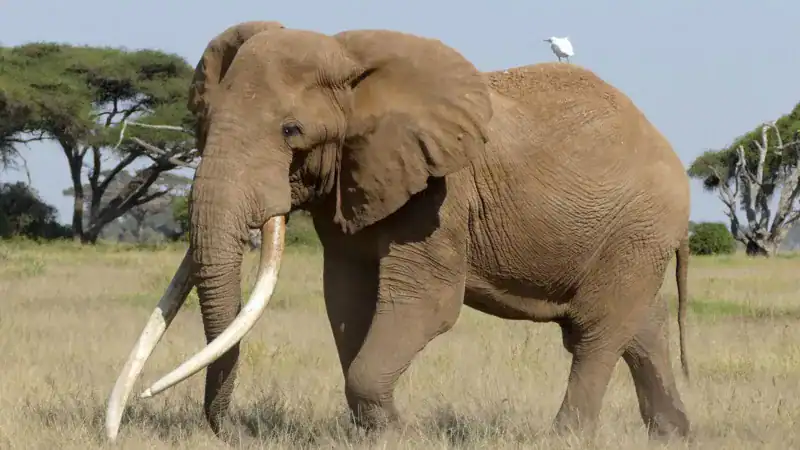
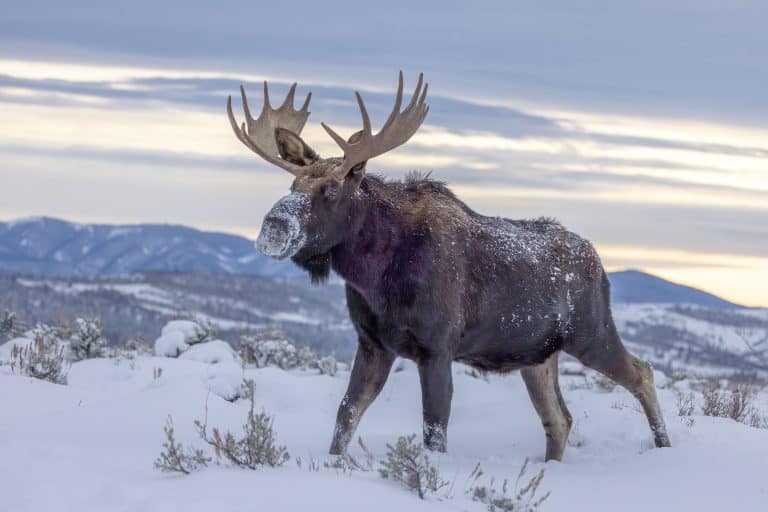
Larger mammals generally live longer than smaller ones, partly because their bodies run at a slower metabolic pace.
The Pace of Life and Lifespan
Kleiber’s Law also connects to one of the most fascinating patterns in biology: the relationship between size and lifespan. Small mammals like mice typically live just a couple of years in the wild. Elephants can live 60 years or more. In general, larger animals tend to live longer than smaller ones.
Part of this pattern may relate to metabolic rate. The “rate of living” theory, popular in the mid-20th century, proposed that organisms have a fixed amount of metabolic energy to expend over a lifetime. Faster metabolism would mean faster aging.
Modern research shows that aging is more complex than that, but there’s still a broad correlation between body size, metabolic pace, and lifespan. Smaller animals have faster heart rates and shorter generation times. Larger animals grow more slowly, reproduce later, and often live longer. Kleiber’s Law doesn’t dictate lifespan directly, but it does set the tempo. It defines how fast energy flows through an organism, and energy flow underlies nearly every biological process.
Beyond Mammals
Although Kleiber’s original work focused on mammals, researchers have tested the scaling law across birds, reptiles, fish, and even some invertebrates. Birds, for example, generally have higher metabolic rates than mammals of similar size, likely due to the demands of flight and their higher body temperature. But when scientists compare bird species to other bird species, metabolism still increases at roughly the three-quarter power of body mass.
In fish and reptiles, temperature plays a larger role, since they’re not regulating body heat internally in the same way mammals and birds do. Even so, when temperature is accounted for, similar scaling patterns emerge. Scientists have even explored metabolic scaling in plants and single-celled organisms. While the details vary, the broader concept that biological rates scale predictably with size has become a central principle in ecology and evolutionary biology.

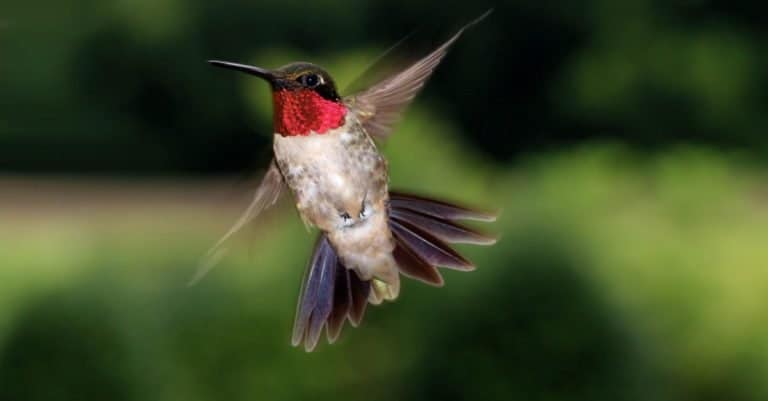
Even among birds, metabolism increases with body size at roughly the same three-quarter power pattern.
©TAUFIK ARDIANSYAH/Shutterstock.com
It’s All Math
Whether it’s a mouse darting across a kitchen floor or an elephant sauntering across the African savanna, energy is the currency of life. Every heartbeat, every breath, every step costs something. Kleiber’s Law tells us that those costs scale in a predictable way. Bigger animals use more energy overall, but they’re more economical per pound. Smaller animals burn hot and fast. Life doesn’t follow the clean, straight lines we learned to draw on graph paper in middle school.
But in fairness to your 6th-grade math teacher, biology actually does use math to work its magic—just not the proportional relationships one would expect, where doubling something means doubling the result. Nature, as it turns out, prefers exponents. But we won’t get to those till 7th grade.