
Quick Take
- Social wasps build nests from chewed wood fibers mixed with saliva, creating a durable, paper-like structure made up of tightly packed hexagonal cells.
- Each cell houses a developing wasp — starting as an egg, then a larva, and finally an adult — and cells are often reused after new wasps emerge.
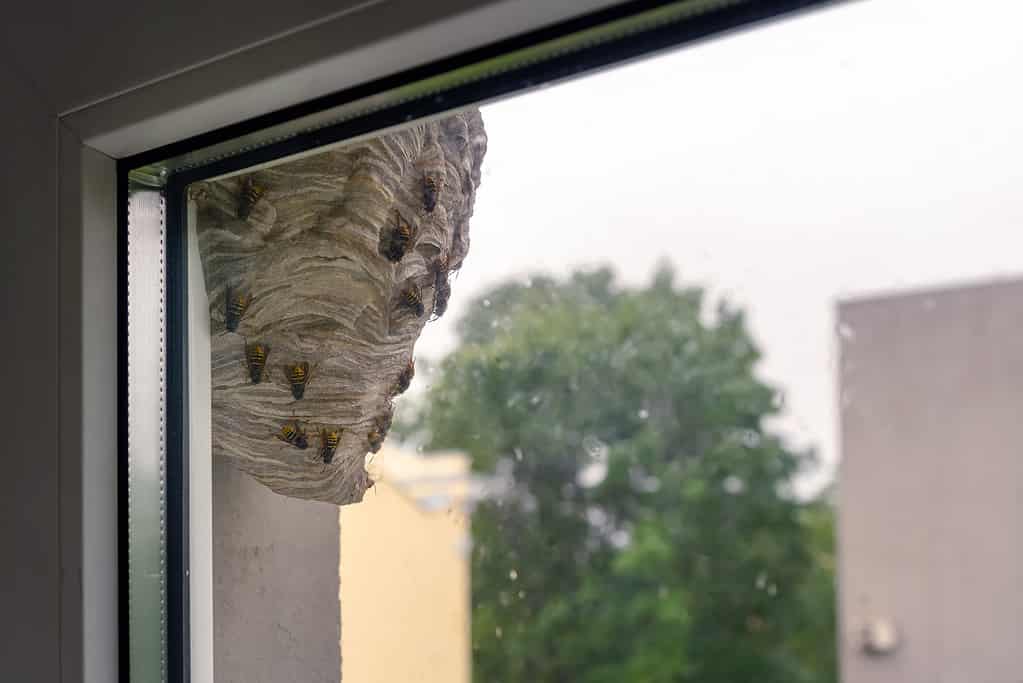
- Wasps may build nests on or near windows because these locations provide shelter and elevation, not because windows themselves are specifically preferred.
Even though most people back away quickly when they see a huge wasp’s nest, you can’t deny that these are amazing creatures. The video below captured one of the more elusive intricacies of wasp behavior in a unique way. This video shows a wasp’s nest that was built right against a window. This allows the viewer to see the inner workings of the nest without having to remove it or disturb it. We’re guessing they may have wanted it removed in order to safely access that part of their home. Fortunately, they were able to see exactly what they were dealing with (and marvel at these animals) before they tackled the job.
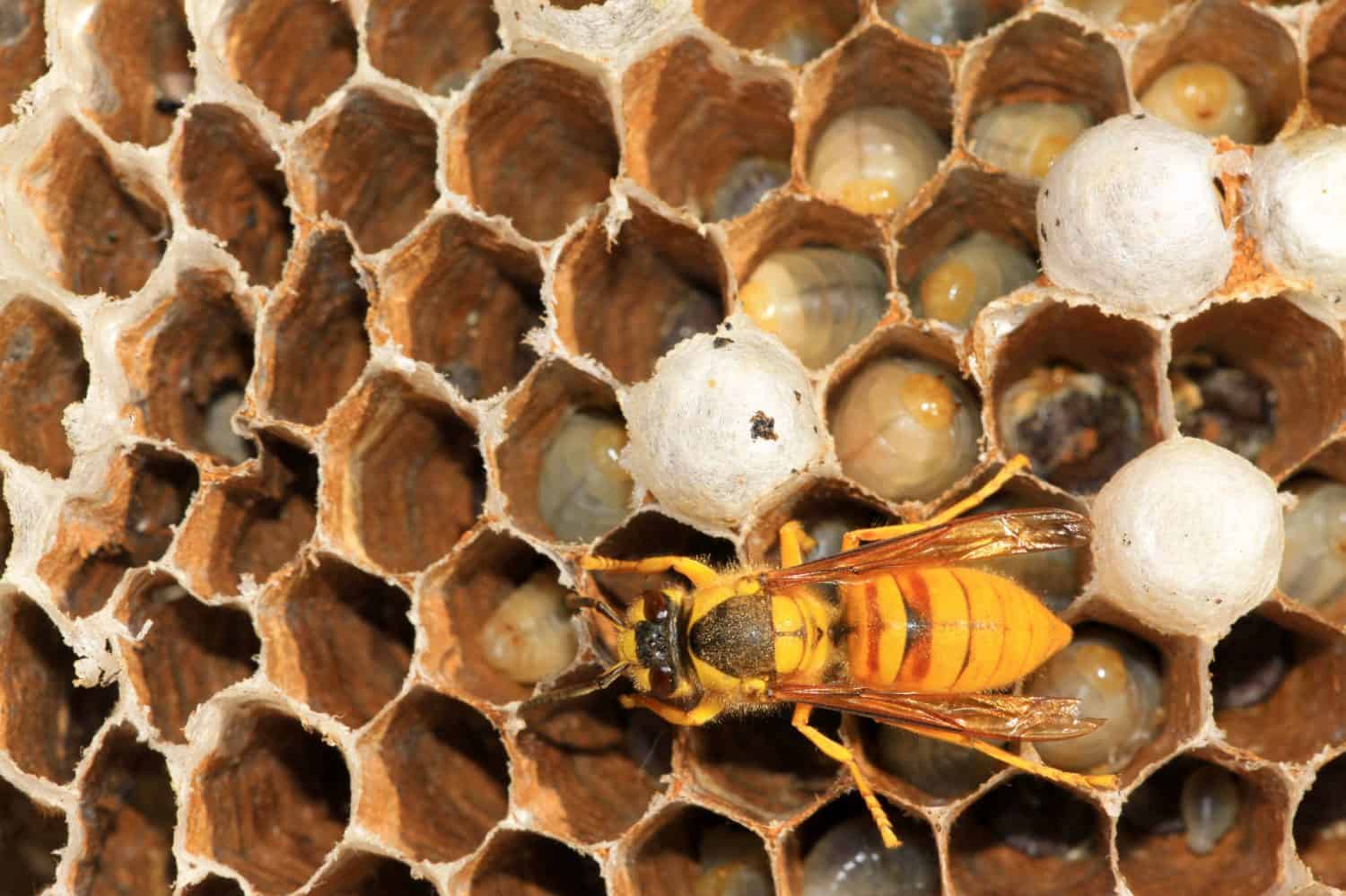
The close-up shots show the wasps busy inside the nest. Individual cells house wasp eggs, which will develop and eventually hatch. Zooming out, the video shows the overall size and structure of the nest. It appears to be sandwiched between the clear glass of the window and a door or other solid structure behind it.
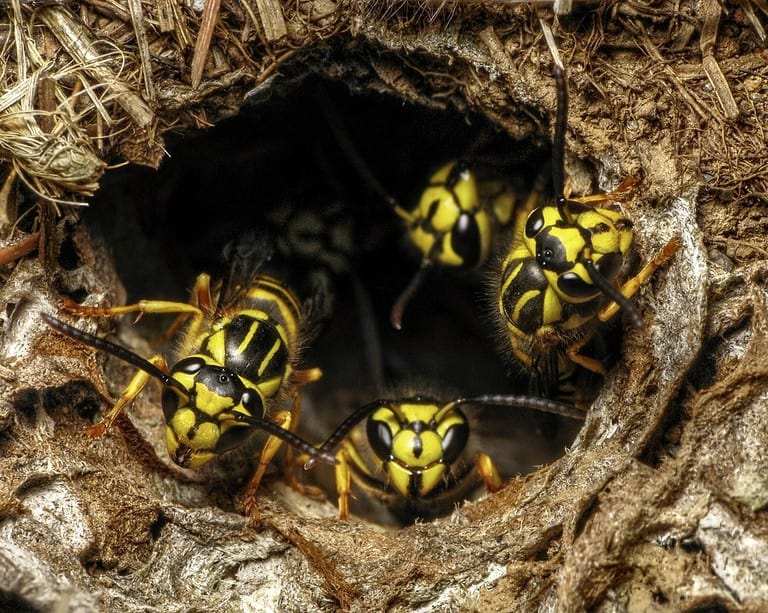
Wasps fly into and out of the nest, but the majority of the activity takes place in the nest itself. Worker wasps divide their energy between building the nest, foraging for food, and caring for the eggs and larvae inside. In some species, nests contain layered combs separated by air spaces that allow workers to move between levels and care for developing larvae. The cells house wasp eggs, which hatch into larvae and later pupate before emerging as adults. After a new wasp emerges, the empty cell is often cleaned and reused.
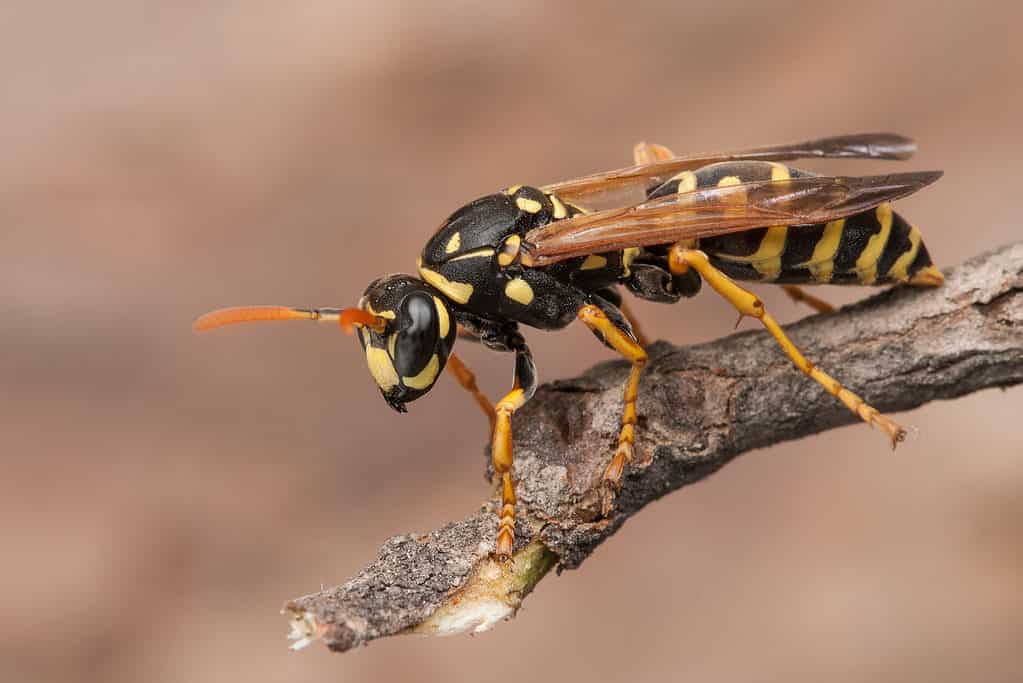
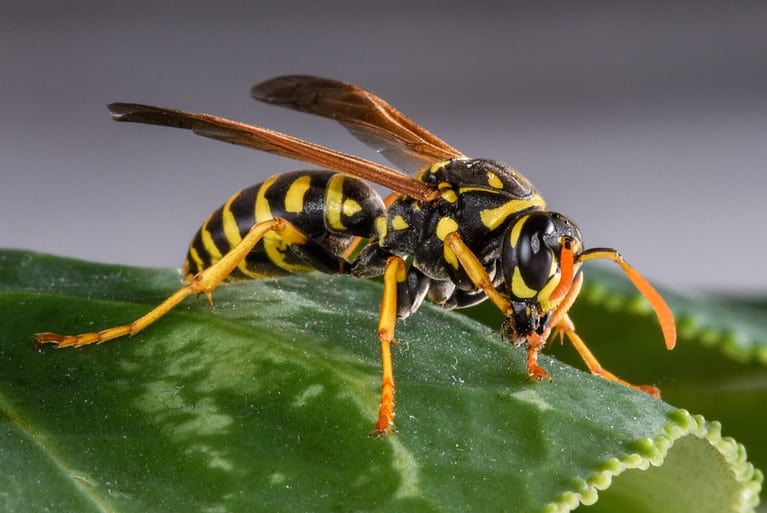
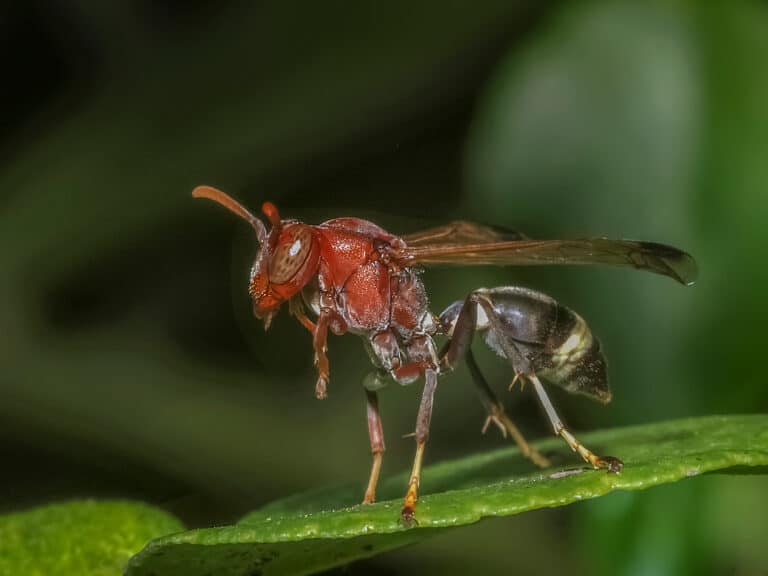
Paper wasps have slender bodies with long legs and a narrow waist, giving them a more delicate appearance than stockier species like yellowjackets.
©Pavel Krasensky/Shutterstock.com
How Do Wasps Build Their Nests?
Wasps’ nests are built of a papery substance that is actually chewed-up wood. From the outside, they look almost like papier-mache. The pulpy substance is dried and creates a solid outer barrier. We often don’t get such great views of the internal workings of a wasp’s nest, especially while the wasps are still moving around inside.
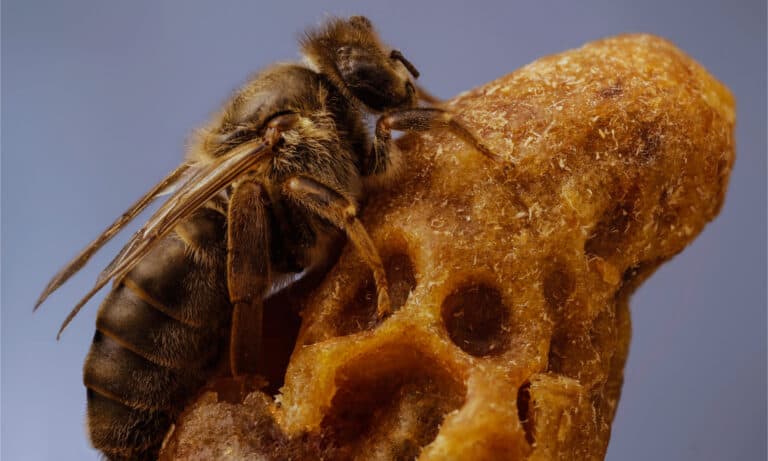
The interior of the nest contains hexagonal cells, a highly efficient shape that maximizes space and structural strength. The nest includes spaces for the adult wasps to move around and work. They chew up bits of wood and stick them together to build the structure of the nest. One of the amazing things about wasps and similar insects, such as bees, is that they work together seamlessly to build structures like this one. The queen begins the process, and worker wasps continue until the nest is fully formed. As they mature, the baby wasps become new workers. There are also new queens in the offspring, who will continue the life cycle in nests of their own.
Is it Normal for Wasps to Build Nests on Windows?
Wasps prefer more remote locations as well as areas that are dry and have warmth and light.
©Ja'Crispy/iStock / Getty Images Plus via Getty Images
Wasps sometimes build nests near windows, window sills, and other sheltered areas around homes. They may build near windows because these areas can provide shelter from rain and wind and are often elevated off the ground. A window, especially a second-floor window, or even a window set higher off the ground, is typically a protected area, and isn’t easily accessible to intruders – both human and animal.
Wasps prefer sheltered, dry locations that are protected from weather and predators. They often choose structural features such as eaves, door frames, window frames, and overhangs because these areas provide protection. In some cases, window frames or ledges meet these shelter requirements, which is why nests are occasionally found there.