
Quick Take
- The North American beaver is the largest native US rodent, 2-3 ft long with a tail nearly 1 ft.
- Beaver pelts fueled early New York wealth, traded as ‘soft gold’ with Indigenous nations and Dutch settlers.
- The beaver appears on the NYC city seal between flour barrels, signaling trade and industry.
- Stay with us to see when the beaver was named New York’s state animal.
New York has no shortage of well-known wildlife, from white-tailed deer to black bears, but the state’s official animal is a hard-working rodent with orange teeth and a paddle-shaped tail. The North American beaver appears on New York City’s seal and coat of arms and has left its mark on ponds, wetlands, and waterways across the state. How did a quiet, mostly nocturnal animal become so closely tied to New York’s identity? To understand that connection, it helps to follow the beaver’s role in the state’s history, economy, and environment over the past four centuries.
The North American Beaver
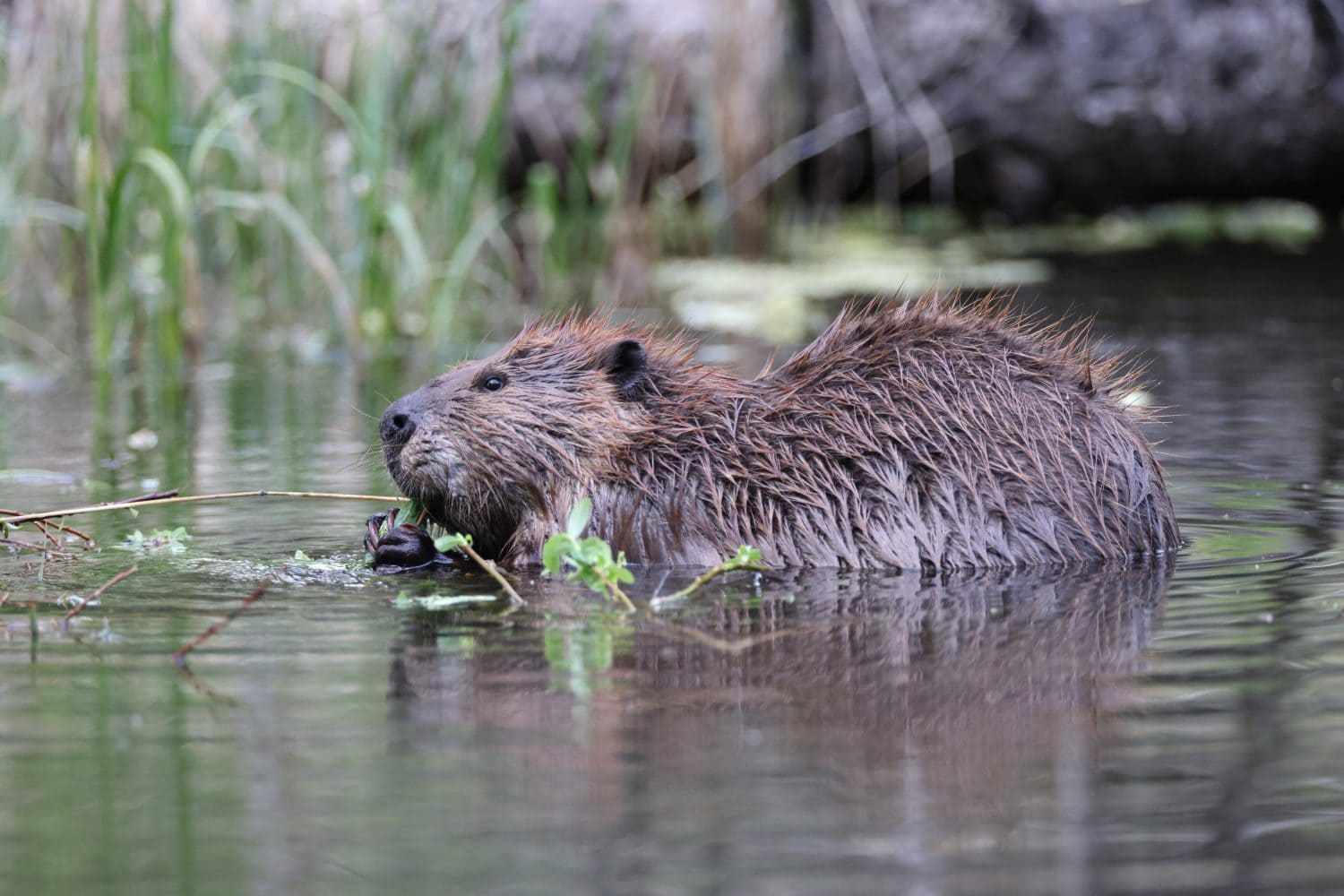
The North American beaver (Castor canadensis) is the largest native rodent in the United States. Adults usually measure two to three feet in body length, and their broad, flat tails can add nearly a foot to their total length. Their dense, waterproof fur helps them survive long northern winters and once made them highly valuable to traders. Beavers are known for their strong orange incisors, which grow continuously and are reinforced with iron-rich enamel. These teeth allow them to cut down trees that are sometimes wider than a dinner plate.
Their bodies are well adapted for life in water. Webbed hind feet provide strong propulsion while swimming, and their tail works as a rudder and a support when sitting upright. Smaller front paws are surprisingly dexterous and are used to handle sticks, mud, and food. Beavers are also capable of holding their breath underwater for extended periods, which helps them move safely between lodges and food caches beneath ice. Together, these traits make the beaver a skilled builder and survivor.
Beavers and the Early Fur Trade
Long before the beaver became a symbol, it was an economic engine. In the early seventeenth century, Dutch traders arrived in the region that would become New York and quickly learned that beaver pelts were in strong demand in Europe. Felt made from beaver fur was prized for hatmaking because it was dense, durable, and water-resistant. Indigenous nations in the region already hunted beavers and understood their habits well. They soon became central partners in the fur trade.
Native trappers exchanged pelts for European goods such as metal tools, cloth, and firearms. Trading posts developed along major waterways, including Fort Nassau and Fort Orange near present-day Albany. These sites grew into lasting settlements in part because of the steady flow of beaver skins. The pelts were sometimes referred to as “soft gold,” a phrase that reflected their value. In New Amsterdam, beaver skins could function as a medium of exchange, reinforcing their importance in daily colonial life.
The beaver’s influence extended beyond commerce and into visual identity. During the Dutch colonial period, proposed coats of arms for New Netherland and the town of Beverwyck included beavers to signal prosperity tied to the fur trade. This imagery continued after English control. When New York City adopted its official seal, a beaver was placed between two flour barrels. The design referenced trade and industry, linking the city’s growth to its early economy.
That image remains in use today. The city seal and flag still include the beaver, though most residents rarely see the animal itself. Artists and officials used the animal as shorthand for persistence, labor, and the colony’s origins. Over time, the image became part of the state’s civic language.
Trapping Pressure and Population Collapse
The same demand that brought wealth to early New York nearly erased the beaver from the landscape. Intensive trapping continued under Dutch, British, and later American control. By the nineteenth century, beaver populations had been pushed to the edge. Large areas of the state had no beavers at all, and only a few small colonies survived in remote Adirondack locations.
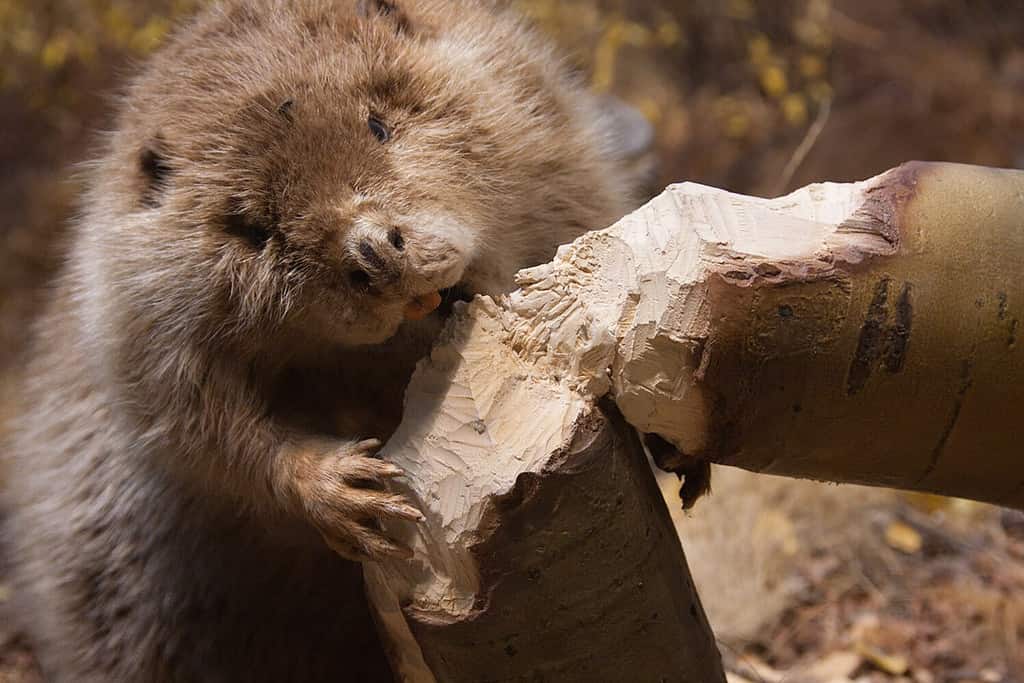
Beavers are able to chew down quite large and healthy trees.
©Procy/Shutterstock.com
Several factors slowed the slaughter. Changing fashion in Europe reduced demand for beaver felt hats, lowering prices. At the same time, attitudes toward wildlife began to shift. Overhunting of many species led to early conservation thinking. New York started to restrict trapping seasons and limit harvests in the late nineteenth century. These early laws were unevenly enforced, but they marked a change in approach. The beaver’s decline served as a lesson in how unchecked exploitation can damage natural systems and threaten future livelihoods.
The beaver’s recovery did not happen by accident. In the early twentieth century, New York began deliberate efforts to restore populations. State officials and private landowners imported beavers from Canada, particularly Ontario, and released them into suitable habitats in the Adirondacks. Only a small number of animals were introduced at first, but the landscape provided ideal conditions. Forested watersheds, quiet streams, and limited human disturbance allowed beavers to reproduce quickly.
Within a decade, beavers had spread far beyond their initial release sites. Their dams created new ponds that supported additional colonies. By the 1920s, populations were strong enough that the state cautiously reopened regulated trapping seasons. This approach balanced economic use with long-term survival. This effort became an early example of scientific wildlife management, demonstrating that with careful planning and restraint, a species could recover from near extinction and once again become part of daily life.
Beaver Management in the Twentieth Century
As the beaver population expanded, New York refined how it managed the species. Agencies that later became the Department of Environmental Conservation monitored numbers, adjusted trapping limits, and studied habitat effects. Beavers were no longer viewed only as resources or pests. They were recognized as animals with a significant influence on water systems and forests.
By the mid-twentieth century, beavers were once again common in many rural and suburban areas. Their return brought benefits and challenges. Wetlands increased, but so did conflicts with roads and farmland. The state responded by combining regulation with research. Management plans aimed to keep populations stable while reducing damage. This period helped shape modern wildlife policy in New York, emphasizing balance rather than elimination or unchecked growth.
Making the Beaver the State Animal
In 1975, New York lawmakers made official what had long been symbolic. The legislature passed a bill naming the beaver as the state animal, and Governor Hugh Carey signed it into law that August. The decision reflected the animal’s role in colonial history and its recovery through conservation. It also recognized the beaver’s continued presence in the state’s landscape.
The choice sparked some lighthearted controversy. Oregon had already adopted the beaver as its own state animal and objected, mostly in jest, to sharing the symbol. Some Oregonians jokingly suggested that New York choose another species, such as the muskrat. New York legislators were unmoved. The statute itself is brief, formally designating Castor canadensis as the state animal. With that act, centuries of informal symbolism were written into law.
By the time of the 1975 designation, the beaver already carried cultural meaning. It was often used to represent steady labor, cooperation, and persistence. These qualities matched how many New Yorkers liked to see themselves and their state. School lessons, children’s books, and museum displays highlighted the beaver’s building skills and its role in shaping waterways.
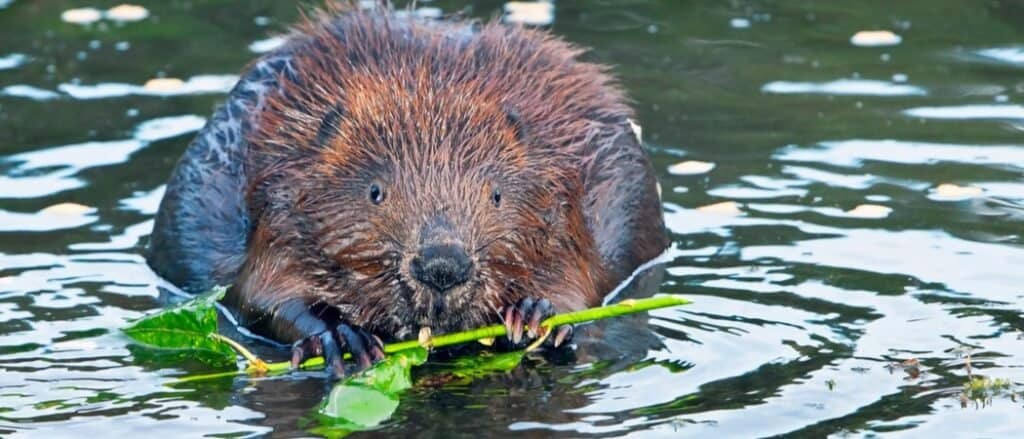
Beavers are excellent swimmers.
©SERGEI BRIK/Shutterstock.com
The animal also appeared in logos, mascots, and local place names, reinforcing its place in the public imagination. The friendly rivalry with Oregon added humor to the story. While the beaver’s image sometimes leaned toward caricature, it kept attention on an animal that had once been nearly lost. In that sense, symbolism helped support awareness and continued protection.
Ecologists often describe beavers as ecosystem engineers, a term that reflects their ability to alter environments in lasting ways. When beavers build dams, they slow water flow and create ponds and wetlands. These changes can reduce erosion, trap sediment, and improve water quality downstream. The ponds also provide habitat for fish, amphibians, birds, and insects that rely on shallow water.

Over time, beaver ponds silt up and can become meadows.
©O Brasil que poucos conhecem/Shutterstock.com
In New York’s forests, beaver wetlands increase habitat diversity. Standing water and wet meadows support species that cannot thrive in fast-moving streams. Beaver activity can also help maintain stream flow during dry periods by storing water on the landscape. In recent years, some scientists and land managers have looked to beavers as partners in watershed restoration. Their natural behaviors can support goals related to flood control and drought resilience when carefully managed.
Despite these benefits, beavers can cause real problems for people. Dams sometimes flood roads, fields, and basements. Culverts may become blocked, leading to costly repairs. Trees along shorelines and in parks can be cut down, frustrating landowners and municipalities. These conflicts are common in a state as developed as New York.
Modern management focuses on coexistence where possible. Flow devices can be installed to regulate water levels without removing dams. Wire cages can protect valuable trees from gnawing. In cases of serious damage, regulated trapping or relocation may still be used. These methods reflect an effort to respect the beaver’s ecological role while addressing human needs. The ongoing tension highlights how state symbols are not just decorative. They represent living relationships that require work and compromise.
Beavers Return to New York City
One of the most visible signs of the beaver’s recovery came in 2007, when a beaver was filmed swimming in the Bronx River. It was the first confirmed sighting of a beaver in New York City in more than two centuries. The animal, nicknamed Jose, became a local celebrity. Its presence was widely seen as proof that long-term river cleanup efforts were paying off.
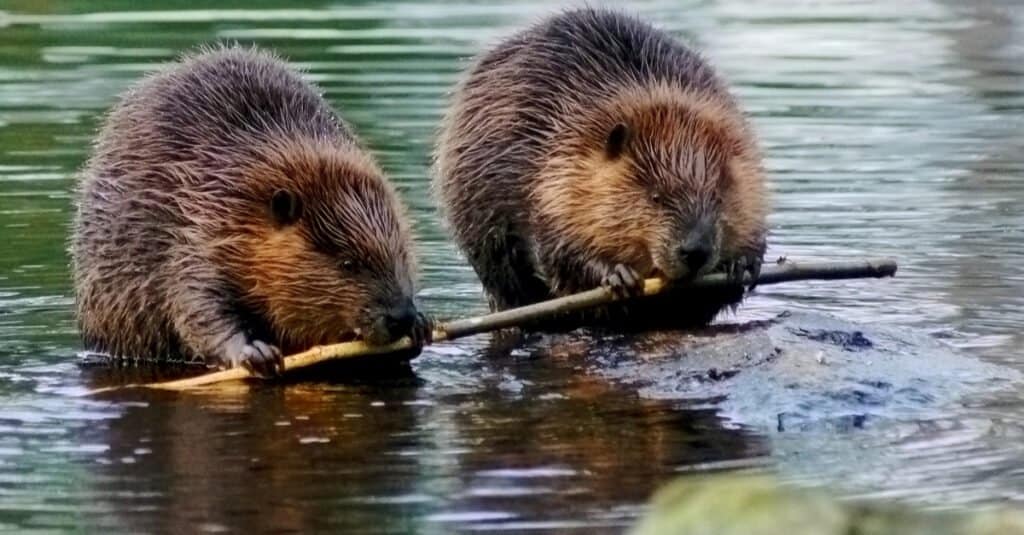
Beavers know a thing or two about teamwork.
©P Harstela/Shutterstock.com
Since then, beavers have also been observed in other city waterways, including parts of Staten Island. These appearances show how adaptable beavers can be when water quality improves and basic habitat needs are met. For city residents, seeing a beaver at work close to dense neighborhoods brings the state animal out of textbooks and onto the evening news. It connects urban life to the broader natural history of the region.
The beaver was chosen to honor New York’s fur trade past, its conservation success, and its reputation for industry. That symbolism still holds meaning today. Beavers continue to shape landscapes, sometimes in ways that surprise or frustrate people. Their story mirrors broader patterns in the state’s history, such as exploitation, decline, and recovery through deliberate action.
Modern debates over flooding, land use, and wildlife management show that the beaver is not just a nostalgic emblem. It remains an active participant in New York’s environment. The animal reminds residents that history and ecology are ongoing processes. State symbols are not static images. They represent relationships that change as landscapes and values change.