
Quick Take
- Scientists dismissed evidence of crocodile parenting for generations, despite the fact that humans had recorded it in rock art 10,000 years ago. History of skepticism →
- Crocodilian babies communicate with their mother before they've even hatched, and she won't open the nest until they do. How hatchlings signal →
- Remove the American alligator from its wetland habitat, and the entire ecosystem begins to unravel. This happens not because of its role as a predator, but because of something far less obvious. Alligators as keystone species →
- The saltwater crocodile produces one of the most extreme bite forces ever recorded in any living animal, yet those same jaws are also capable of performing a task requiring extraordinary precision and delicacy. Bite force and precision →
Crocodilians — which include crocodiles, alligators, caimans, and gharials — have a lineage that stretches back roughly 200 million years, with modern crocodilian groups emerging around 80–95 million years ago. And science shows us that their long-term survival is no accident. They even survived the mass extinction event that wiped out the dinosaurs. Highly intelligent and behaviorally complex, these remarkable survivors are vital to their ecosystems and deserve our recognition, respect, and protection. June 17, 2026, marks World Crocodile Day, the perfect time to celebrate one of nature’s greatest survival stories.
The Secret to 200 Million Years of Survival

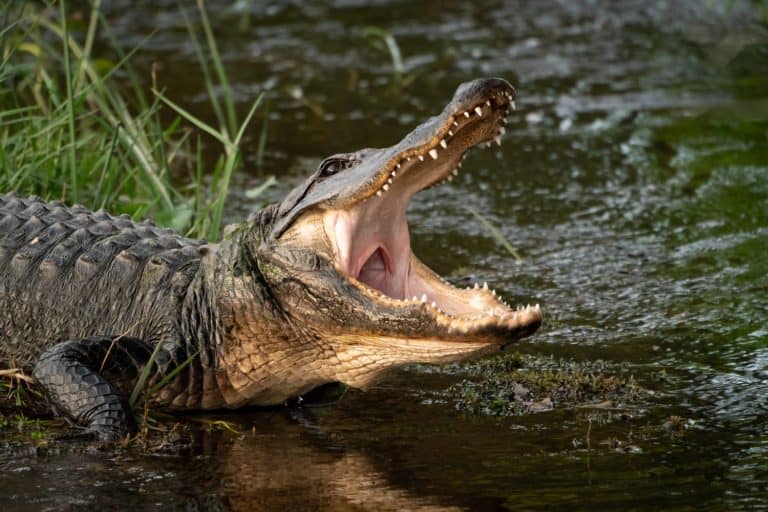
Alligators typically live in freshwater environments.
©meunierd/Shutterstock.com
Crocodilians employ a powerful dual strategy: evolutionary stability combined with behavioral flexibility. Their lineage has also relied on complex parenting behaviors, such as guarding their nests and protecting their hatchlings. By balancing a time-tested physical design with adaptable behavior, crocodilians have proven themselves to be ultimate survivors rather than evolutionary leftovers.
Predators Perfected by Time
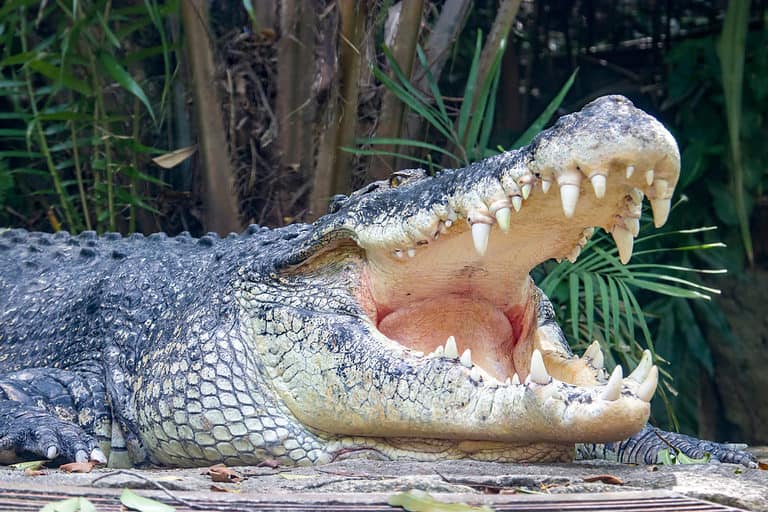
Crocodilians are among the most formidable apex predators on the planet, armed with some of the most powerful bite forces ever recorded in a living animal. In a landmark study, researchers measured a saltwater crocodile (Crocodylus porosus) generating more than 16,000 newtons (3,700 pounds-force) of bite force — enough to crush bone and overpower large prey. Their teeth also concentrate that force into an incredibly small area, creating immense pressure at the point of contact and allowing them to puncture and grip even the toughest hides and armor. This extreme power isn’t a recent development; it evolved millions of years ago and has helped crocodilians remain successful predators since the age of dinosaurs.
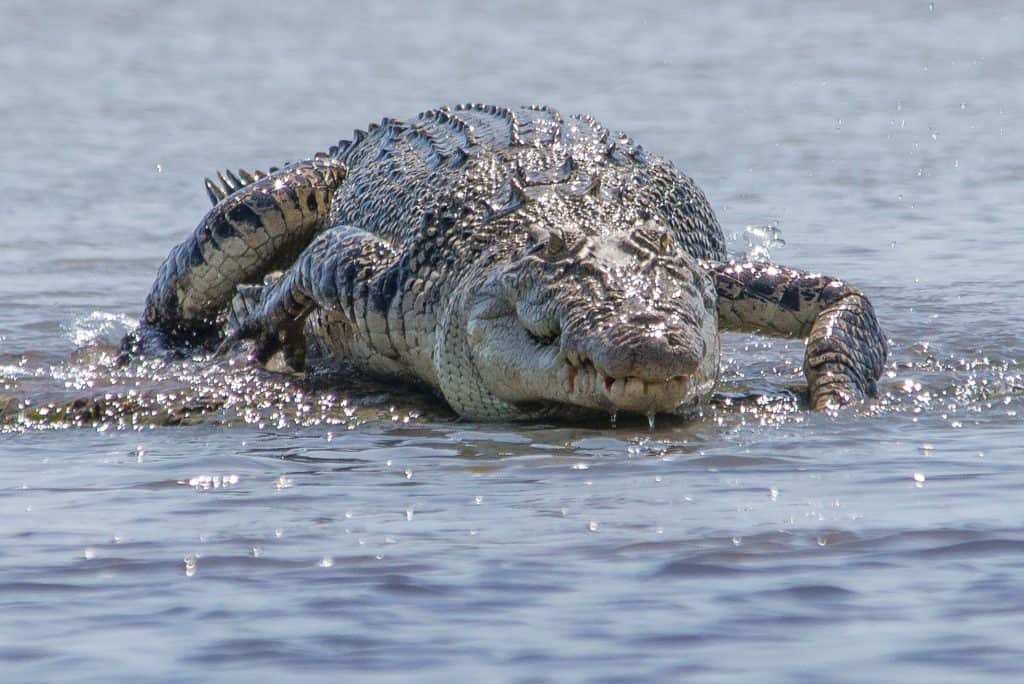
Saltwater crocodiles can grow 16.5 feet long and weigh over 1,000 pounds.
©Shane Bartie/Shutterstock.com
The saltwater crocodile (affectionately known as the “saltie”) is a standout member of the crocodilian family and is the largest living reptile on Earth. As a highly specialized aquatic predator, it relies on an advanced built-in toolkit to hunt underwater. Salties have dermal pressure receptors along their jaws that detect even the tiniest vibrations in the water. This allows them to hunt with pinpoint accuracy, even in pitch-black darkness or muddy water. They also have a translucent third eyelid, called a nictitating membrane. This protects their eyes underwater while allowing them to see clearly. A throat flap — the palatal valve — blocks water, allowing them to grab and hold prey underwater. As highly effective hunters, fully mature individuals can take down large land animals, such as deer or feral hogs.
The Surprising Side of Crocodilian Life
For centuries, Western scientists refused to believe that crocodiles and alligators cared for their young, even though evidence dates back further than written history. In Wadi Mathendus, Libya, a Neolithic rock carving dating back at least 10,000 years depicts a baby crocodile closely following an adult — suggesting that prehistoric humans were aware of the animals’ protective behavior. Yet eyewitness accounts from 18th-century naturalists like William Bartram were rejected for generations. Even well into the 20th century, researchers like Wilfred T. Neill systematically questioned and doubted these stories.
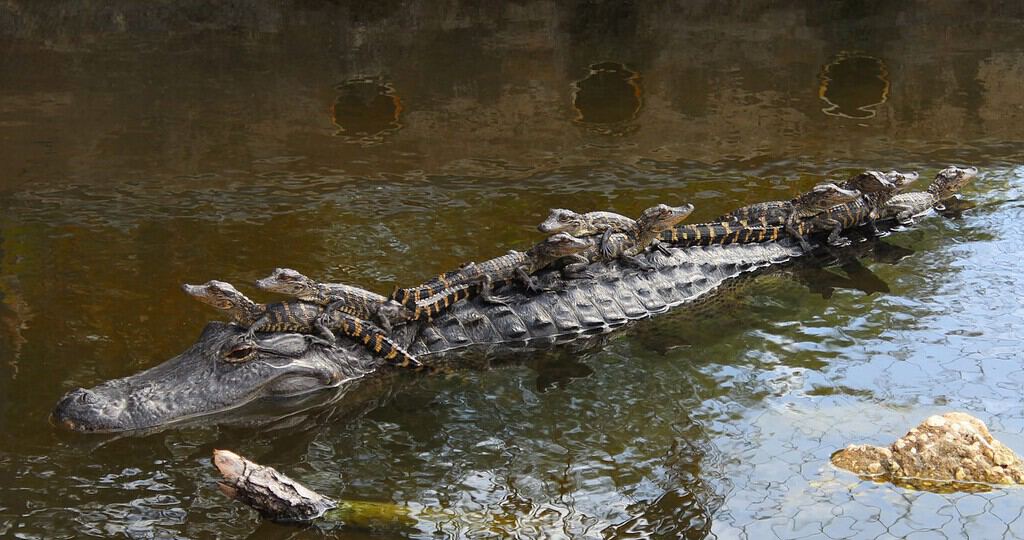
Mothers protect their young for several months after they’ve hatched.
©Marc Pletcher/Shutterstock.com
Now modern science has fully confirmed what those ancient artists saw. Today, crocodilians are recognized as archosaurs — they are more closely related to birds and extinct dinosaurs than to lizards or snakes. This family connection explains their complex parenting habits, which they likely inherited from a shared ancient ancestor.
Unlike many reptiles that lay their eggs and leave them unattended, female crocodilians are fiercely devoted mothers. They aggressively defend their nests from predators for the entire time it takes the eggs to hatch. Saltwater crocodiles lay 40 to 60 eggs during the tropical wet season (November to March) and guard their nests for up to three months. American alligators (Alligator mississippiensis) lay 35 to 50 eggs in late spring and guard their nests for about 65 days.
Fiercely Protective Families
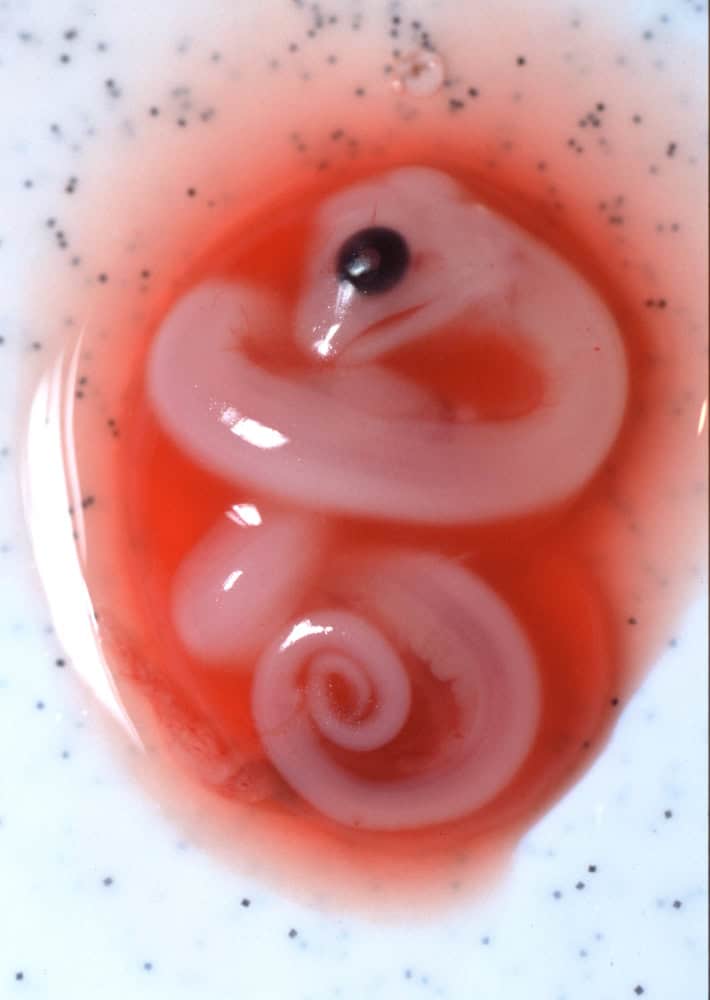
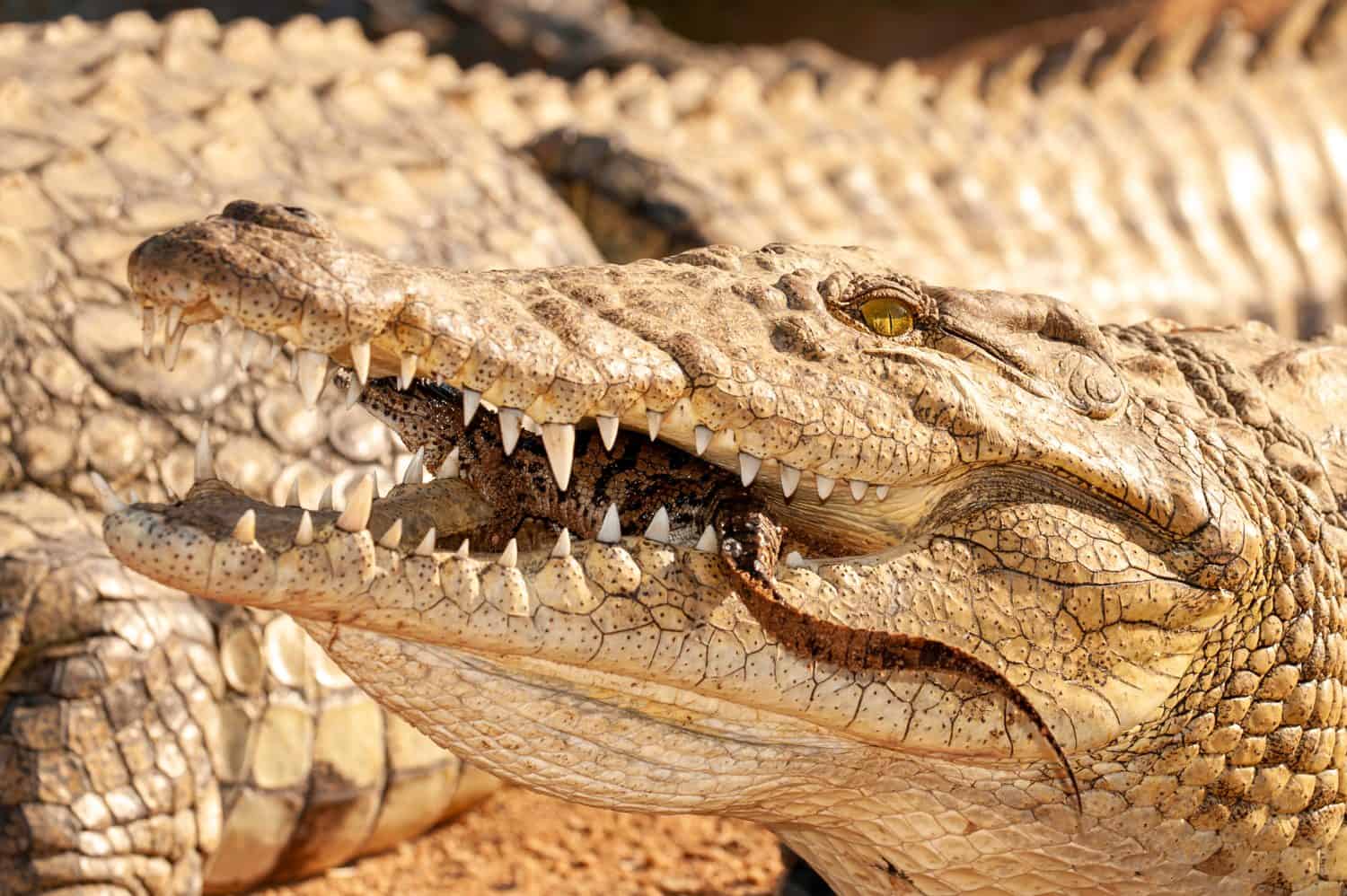
Communication between a mother and her unhatched babies is critical to their survival. When the babies are fully developed and ready to break out of their shells, they start making synchronized chirping sounds from inside the eggs. The mother will only dig open the nest if she hears these calls in sustained, continuous bursts, alerting her that all of her babies are ready. Once the eggs and hatchlings are uncovered, she uses her mouth to gently pick up the tiny babies and carry them safely to the water. Despite having some of the most powerful jaws on the planet, her handling of the babies is incredibly precise, delicate, and controlled.
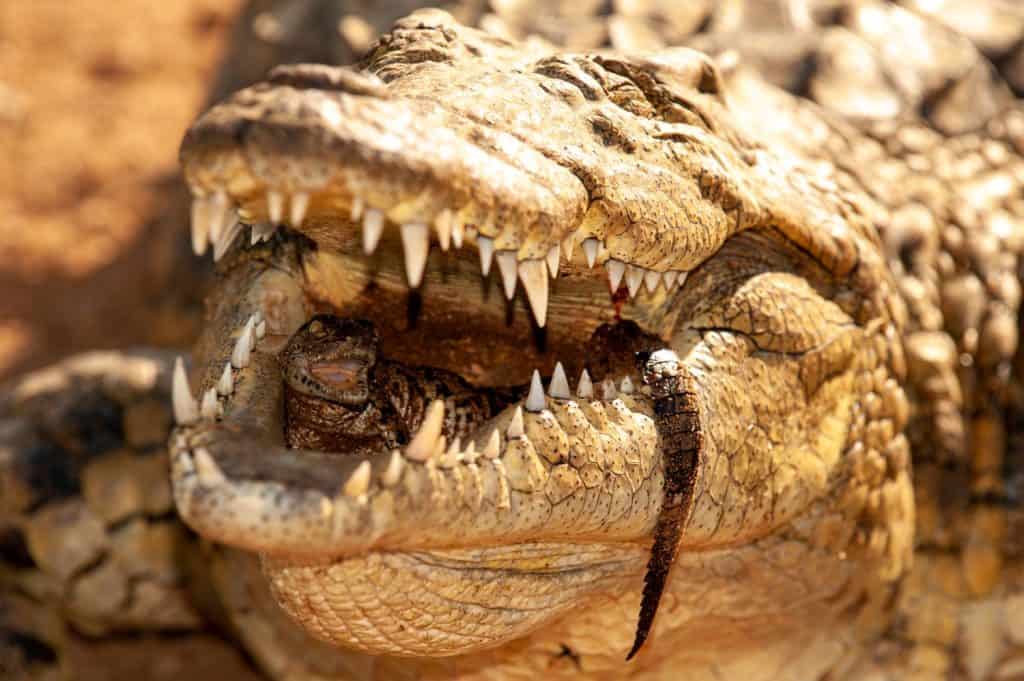
Despite their strength and powerful bodies, crocodilian mothers are incredibly gentle with their young.
©Catchlight Lens/Shutterstock.com
When American alligator babies hatch, they are only 6 to 8 inches long. To survive, they immediately form tight-knit groups called pods or crèches. The babies are born with distinct stripes that help them blend into the surrounding vegetation, providing camouflage from predators. The young alligators use constant vocalizations to stay connected with their mother. If danger approaches, they let out specific distress calls that instantly trigger a fierce defensive response from her. Mothers prioritize the smallest, highest-pitched cries. They know these younger, tinier babies are the most vulnerable to predators. Depending on the environment and how much food is available, this maternal protection can last for months or even years.
The Architects of Wetlands
The American alligator is a keystone species — an organism that fundamentally shapes and holds its entire ecosystem together. Without alligators, freshwater wetlands would be dramatically altered. During dry seasons, alligators dig out depressions in the mud, clearing away choking vegetation. These “alligator holes” retain water long after the surrounding wetlands dry up, creating life-saving water traps for fish, frogs, birds, turtles, and mammals. The elevated mounds of mud and plants built by mothers stay intact after babies hatch and provide safe nesting sites for other wildlife that need to stay above the water level.
Crocodilians play two entirely different roles in the food web depending on their age. Young hatchlings provide a major food source for many different animals, while the few that survive to adulthood help regulate prey populations and maintain a healthy balance across the entire wetland system.
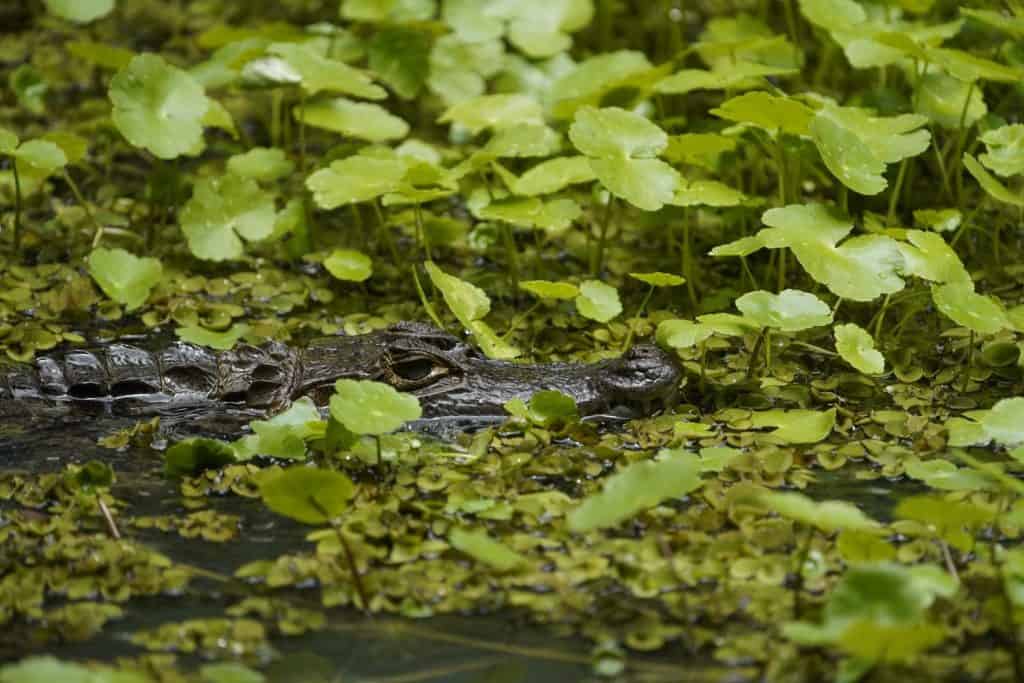
Caimans live mainly in South and Central America.
©guentermanaus/Shutterstock.com
A Future at Risk
Crocodilians are currently facing a severe global survival crisis. Out of the 24 recognized species, more than one-third are classified as threatened or vulnerable. The biggest threats to their survival include habitat destruction and fragmentation, illegal wildlife trade and poaching, and human-wildlife conflict driven by fear and persecution.
A major focus of modern conservation is changing public perception. Conservationists are working hard to replace the fear-based “monster” stereotype with the reality that crocodilians are highly intelligent, ecologically essential animals. Educational platforms can make a tremendous difference. Attractions such as Australia Zoo’s Crocoseum allow people to watch natural crocodilian behavior safely and up close, replacing fear with curiosity and respect.
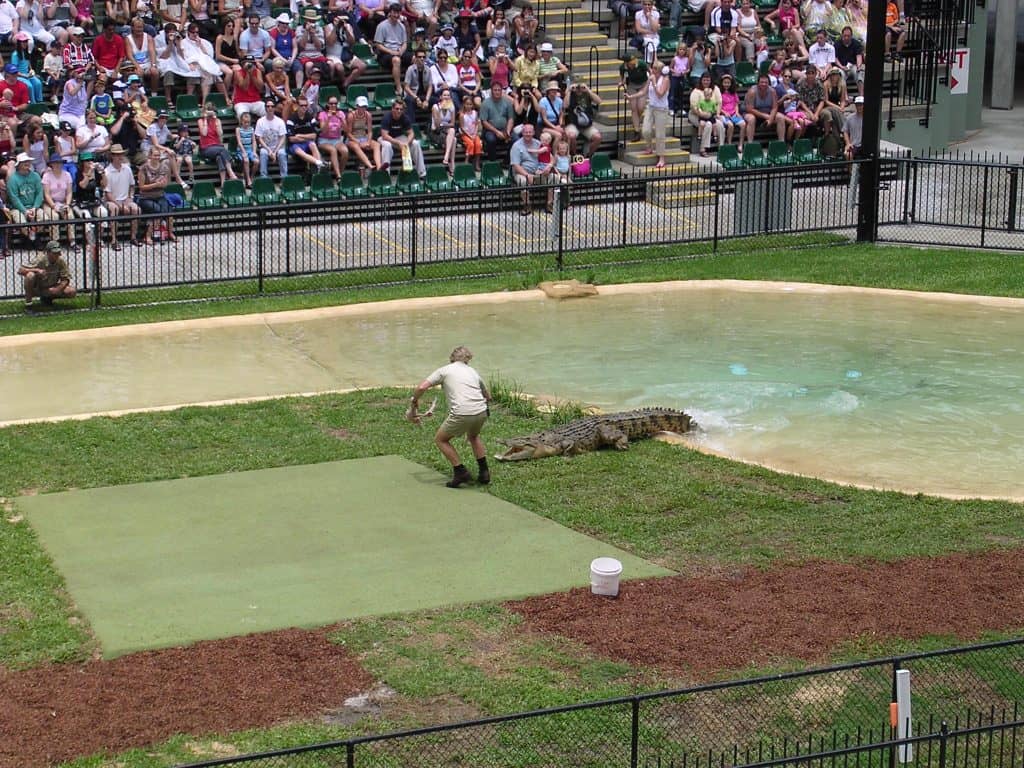
The Crocoseum is run by members of the Irwin family in Australia.
©Biatch2 / CC BY-SA 3.0 / Wikimedia Commons – Original / License
Several specialized international organizations lead the fight to protect these reptiles and their habitats:
- The IUCN Crocodile Specialist Group (CSG) coordinates international research and conservation policies.
- The Tomistoma Task Force (TTF) focuses specifically on saving the False Gharial.
- The Mabuwaya Foundation is dedicated entirely to the recovery of the Philippine crocodile.
- The Gharial Conservation Alliance (GCA) supports river restoration and captive-rearing programs across South Asia.
Modern tracking technology has completely transformed how scientists study these ancient predators. By using satellite telemetry (space-based tracking) and acoustic tagging (sound-based tracking), researchers have discovered complex movement patterns, revealing that some crocodilians travel long distances and can even cross open ocean waters.
A Conservation Success Story
Conservation history shows that these animals can bounce back if given a chance. The American alligator, for example, was once pushed to the brink of extinction. After receiving protection under the Endangered Species Act, the American alligator population rebounded dramatically.
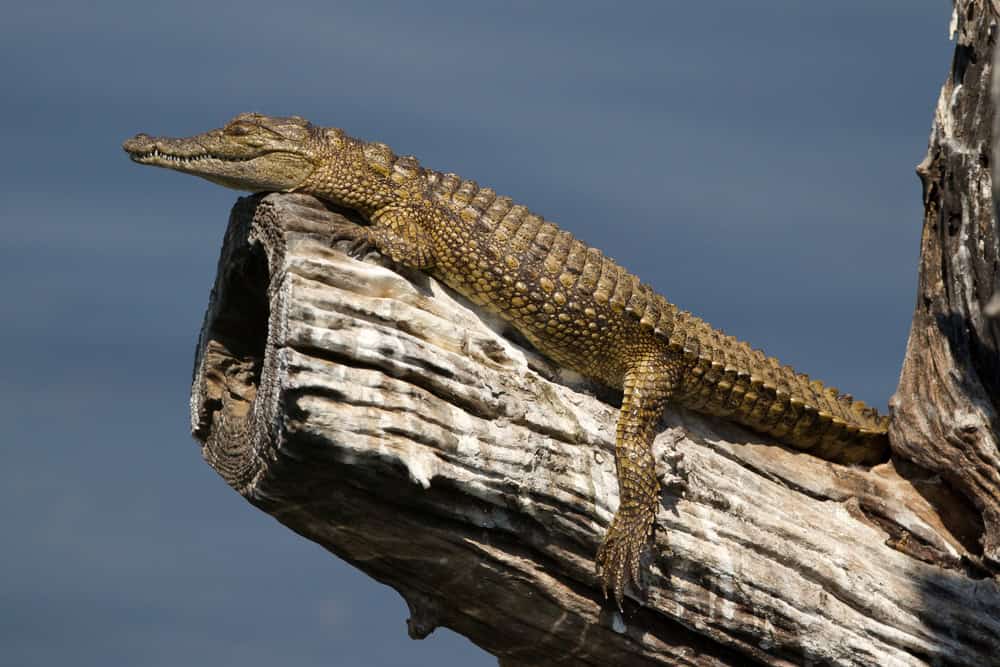
Crocodilians are found in over 90 different countries.
©Marcel Auret/Shutterstock.com
Programs like Australia’s “Wildlife Warriors” are also teaching communities how to coexist and interact safely with crocodilians. These initiatives prove that humans and crocodilians can successfully share the same landscapes through proper awareness and smart management.
Their Future Is Our Responsibility
Crocodilians are not relics of the past, nor are they mindless monsters. They are evolutionarily refined apex hunters, deeply attentive parents, and vital ecological engineers whose presence keeps wetlands alive around the world. Their incredible survival stems from a rare winning strategy: maintaining a time-tested physical design while retaining the behavioral flexibility needed to adapt to changing environments and survive mass extinctions.
Today, the survival of these ancient reptiles depends entirely on human action. To ensure they continue their 200-million-year legacy, we must replace fear with understanding, support global conservation initiatives and breeding programs, and protect critical wetland habitats so that humans and crocodilians can safely coexist.