
Quick Take
- Chesapeake Bay's osprey population was already in serious trouble before Freedom 250 launched. The display may have pushed it to a new crisis point. See the wildlife concerns →
- The real threat to nesting birds wasn't the noise. The danger lay in what greeted them when they returned. Explore the osprey disruption →
- The Code Red air quality alert cleared by the next afternoon, though one chemical pathway keeps the contamination cycling long after it lifts. See how chemicals persist →
The use of fireworks has been heavily criticized by animal rights activists for decades. Fireworks have a significant impact not only on wildlife but also on the environment. However, the fireworks set off in Washington, D.C., for the Freedom 250 celebration have attracted more scrutiny than in past years.
While most air pollution dissipates quickly, this year’s fireworks caused poor air quality to persist beyond safe levels. If the noise from roughly 850,000 fireworks wasn’t enough to disturb wildlife, the Code Red air quality alert the following morning certainly raised concerns.
Concerns Grew Over Freedom 250 Fireworks
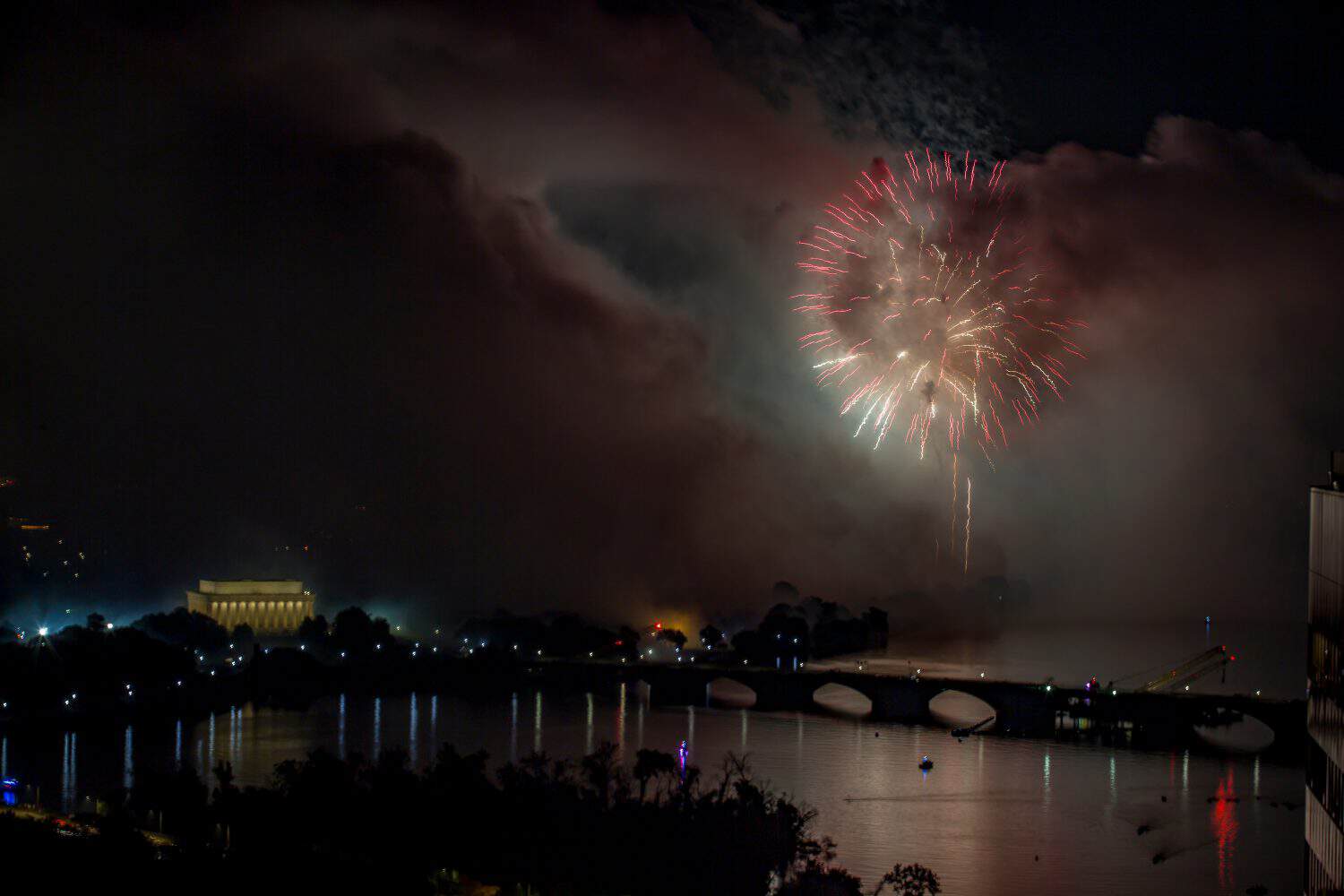
The Freedom 250 Fourth of July celebration was slated to be historic, and it was, with hundreds of thousands of fireworks set to go off in just 40 minutes. During this time, 354 fireworks were launched per second across ten different sites. In comparison, previous fireworks displays only set off 7,000 fireworks in 40 minutes. Given the size of the anniversary display, additional launch locations were used at the Lincoln Memorial Reflecting Pool and on barges in the Potomac River.

Fireworks give off high levels of carbon monoxide, sulfur dioxide, and perchlorates, which can be harmful to wildlife.
©Botond Horvath/Shutterstock.com
While many were excited for the Guinness World Record-attempting display, many wildlife organizations voiced concerns about its ramifications. One of the biggest fears, voiced by The Dodo, was for Virginia’s osprey, raptor, and songbird populations. This concern extended to the Smithsonian’s National Zoo, where zookeepers work tirelessly each year to prepare and protect the animals from fireworks.
How Wildlife Reacted to the Freedom 250 Display
As fans on the ground watched in awe of the tremendous light show, those soaring above experienced the display very differently. The Chesapeake Bay, which is roughly 35 miles from the National Mall, is home to approximately 20% of the world’s osprey population. In 2024, researchers raised the alarm about dwindling reproductive rates. Many of the nests they tracked were empty, a result of declining fish populations and other pollutants.
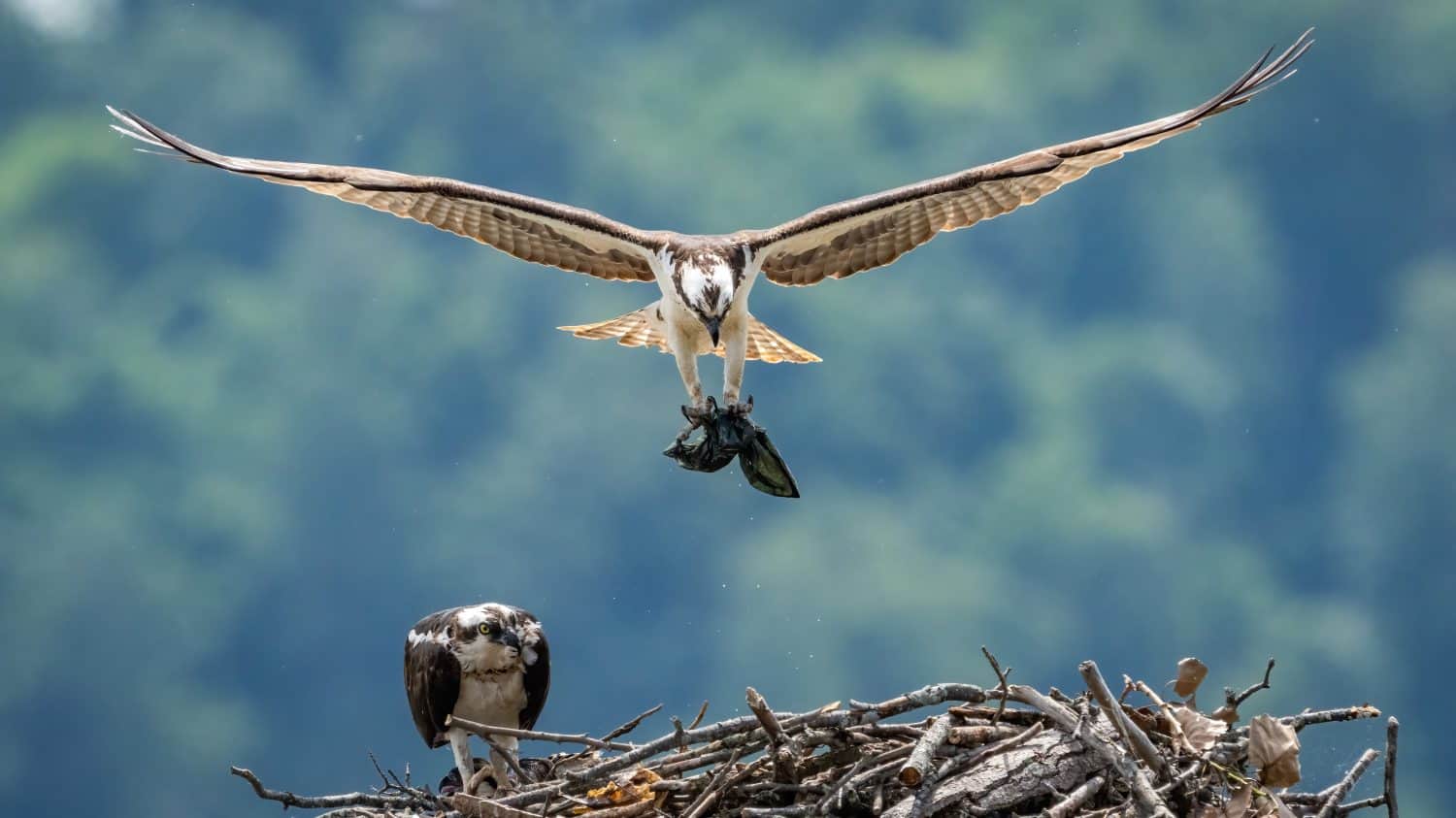
The proximity of the Freedom 250 fireworks to the Potomac raised concerns about its osprey populations.
©Krumpelman Photography/Shutterstock.com
Now, established and mature osprey populations may also suffer from the Freedom 250 fireworks display. Combustion noise from the fireworks can easily drive ospreys and other birds from their nests. This, combined with the noxious smoke from the display, can quickly disorient them. Studies show that loud noises trigger fight-or-flight responses in birds, some of which may never return to their nests.
As birds flee their nests to find safer places, they may leave behind chicks, mates, and other family members. During their frantic flights, the birds also risk colliding with objects, buildings, or trees. If they return to their nests, they might find that the hatchlings they left behind have fallen prey to predators. Even worse, their nests may be contaminated due to firework byproducts.
Air Quality Hit a Code Red Following the Display
Air quality was also heavily affected by the Freedom 250 fireworks display. For ten hours following the final launch, the air quality alert remained in effect. Weather alerts were issued for “Very Unhealthy” particle levels on the EPA meter, which peaked at 3 AM at 212.8 micrograms per cubic meter. This level did not decrease significantly until 1 PM the following day.
This poor air quality affects humans, but it also significantly impacts wildlife that live above ground. As birds fly through the airspace over D.C., they are inhaling PM2.5. These are particles so small that they can enter the bloodstream and lungs. An additional factor was the heatwave, which created a “dome” over the city. This trapped small particles, making it impossible for wildlife to escape the air pollution.
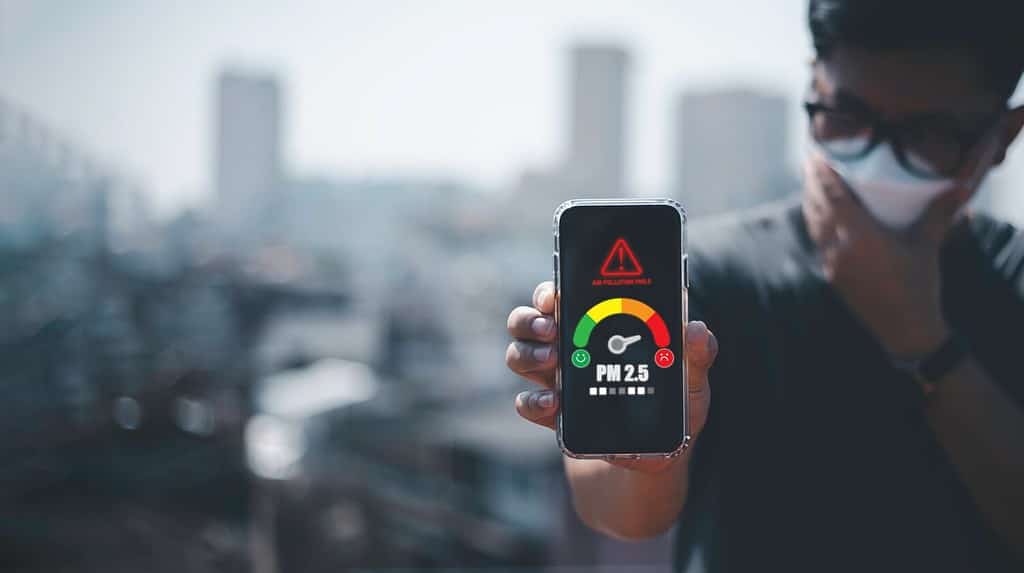
N95 masks are often recommended during high-air-quality alerts, such as those in D.C.
©Borri_Studio/Shutterstock.com
Another significant concern is the state of D.C.’s waterways following the fireworks display. With barges setting off additional combustibles in the Potomac River, chemicals rained back down directly into the water. The Potomac River ecosystem faced concerns from chemical runoff and debris from the display, with contaminants such as perchlorate, which can severely damage animals’ thyroid glands. For nearby waterways, such as those around Theodore Roosevelt Island, the chemicals have nowhere to go due to the lack of outflow. As a result, they remain, turning into a sludge-like compound that breaks down slowly.
The Effects Could Be Seen For Weeks
The pollution doesn’t end when the air quality alerts are lifted and the waterways appear clear. As chemicals rain down from firework displays of this size, they are absorbed by the ground below. While airborne particles tend to dissipate after about 14 hours, chemicals in the soil can persist for years or even decades. This harms wildlife that burrow beneath the soil, such as rodents, squirrels, birds, and other mammals.
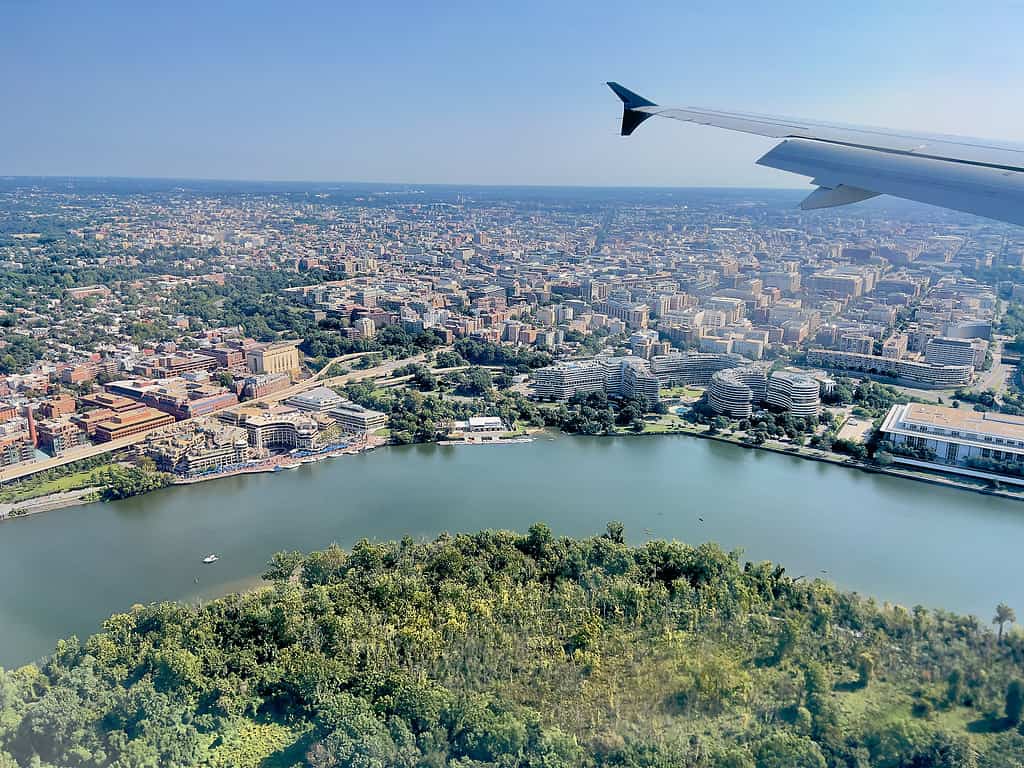
Theodore Roosevelt Island is only three miles from where the National Mall fireworks were launched.
©Kiyoshi Tanno/iStock via Getty Images
When it rains, any lingering chemicals are also absorbed into the water cycle. When they return to the ground, it’s typically via rain. This not only recirculates heavy metals from fireworks but also spreads them further, returning them to waterways and perpetuating the cycle. As the ground is watered with heavy-metal-laden rain, plant life absorbs these compounds, retaining them in their cells. For animals that feed on these plants, this could cause significant health problems that last much longer than a 40-minute fireworks display.