
Quick Take
- Achieving optimal gliding becomes impossible for birds once turbine wakes trigger a 30% reduction in efficiency.
- A large-eddy simulation reveals destabilized flight for birds soaring over wind farms.
- Wind farms represent an aerial habitat change that triggers constant wing corrections, leading to less efficient flight.
- Site evaluation with wildlife in mind is mandatory to preserve predictable air flow for migrating species.
Wind turbines may seem innocuous enough, but they have the potential to reshape the air birds fly through. In a recent Scientific Reports paper, researchers found that a gliding bird’s lift-to-drag ratio, which is a standard measure of aerodynamic efficiency, can drop by about 30% in the most disrupted parts of a turbine wake. In fact, wake turbulence can add real energy costs to species that survive by gliding efficiently, especially migrating species.
While wind turbines are an advancement necessary for the future of renewable energy, wind turbine farms affect birds flying overhead. Is there a solution? We take to the skies and science to investigate this little-known harm, caused by something that is otherwise beneficial to our environment.
We’ll take a closer look at the effect turbine wakes have on birds flying nearby, whether traveling long distances or short. Even the briefest of encounters with turbulent air can matter, especially when wind farms create repeated wake corridors across a landscape. Here’s what’s happening to birds that use wind farm areas as their typical flight paths.
What is a Turbine Wake?
A turbine wake is described as the disturbed shadow of airflow that forms downwind after a turbine’s rotor extracts energy from the wind. This can occur in airplane turbines as well as those found on wind farms. In basic terms, two things happen at once to the air surrounding turbines:
- The wind behind the turbine slows because the turbine took energy out of the flow.
- The air becomes more chaotic, with stronger turbulence and swirling structures tied to the rotor’s rotation and blade vortices.
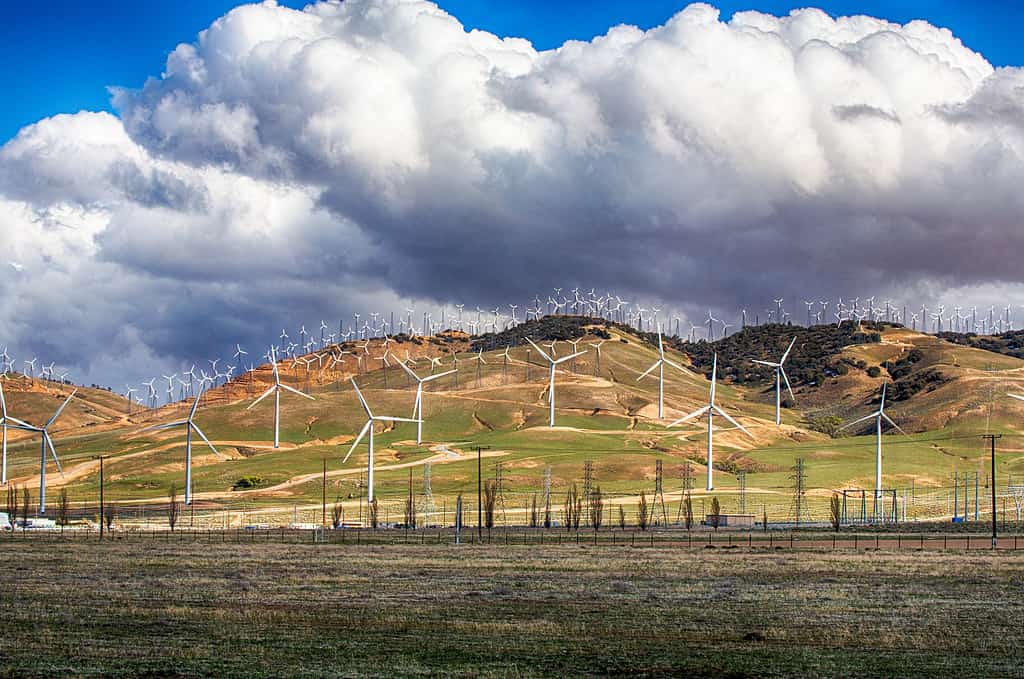
Wind farms are fantastic renewable energy options, but they can greatly affect bird flight.
©Gary Tognoni/iStock via Getty Images
For a bird, this process can be tricky to navigate, because a wing is tuned to a stable incoming flow of air. When wind speed and direction both fluctuate quickly, the wing’s effective angle of attack is constantly changing, which forces continual micro-corrections; these continual adjustments can have more consequences than expected.
What a New Study Revealed About Turbine Wakes and Bird Navigation
In the aforementioned Scientific Reports paper, the scientists involved used a large-eddy simulation wake model and ran 62 bird-glide simulations through different parts of the wake field. They focused on how wake wind speed and turbulence intensity translate into changes in lift-to-drag ratio for birds.
Some of the most valuable findings included:
- The largest efficiency losses appeared near the top blade-tip level, where the simulated lift-to-drag ratio values were lowest and where they report a maximum reduction of about 30% compared to no turbine conditions.
- During the experiment, the wake effect wasn’t actually uniform with distance. In fact, the wake influence on flight was found to vary with distance downstream, with significant effects persisting farther behind the turbine than previously assumed.
- They also reported a height-dependent pattern, with the region below the bottom tip being less disrupted in their simulations.

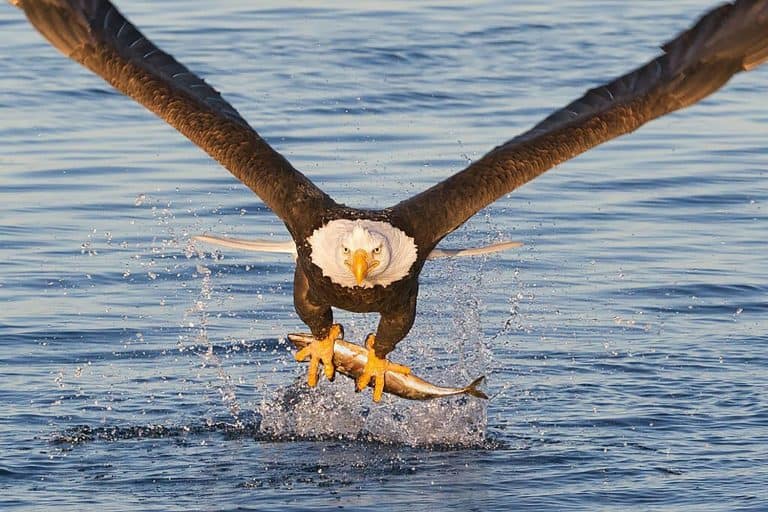
Eagles soar on updrafts and are greatly disrupted by wind turbines.
©FloridaStock/Shutterstock.com
Ultimately, birds moving through a wind farm are often forced to jeopardize flying safety. Avoiding blades and the worst patches of turbulence in order to find usable lift is incredibly difficult, especially when it alters flight paths unexpectedly.
Why Soaring Birds Are Sensitive to Wake Turbulence
Soaring birds are able to travel such great distances by protecting their energy levels in flight. However, any drop in lift-to-drag ratio is essentially a tax on the overall distance they can travel.
With more altitude lost per unit distance, birds have to make up for this loss later by finding a thermal pocket or flapping more, which can exhaust them faster. More frequent control corrections lead to energy loss, as turbulence pushes the body and wings around without remorse. Finally, route changes may also occur, because birds may simply take a detour around areas where the air is consistently rough.
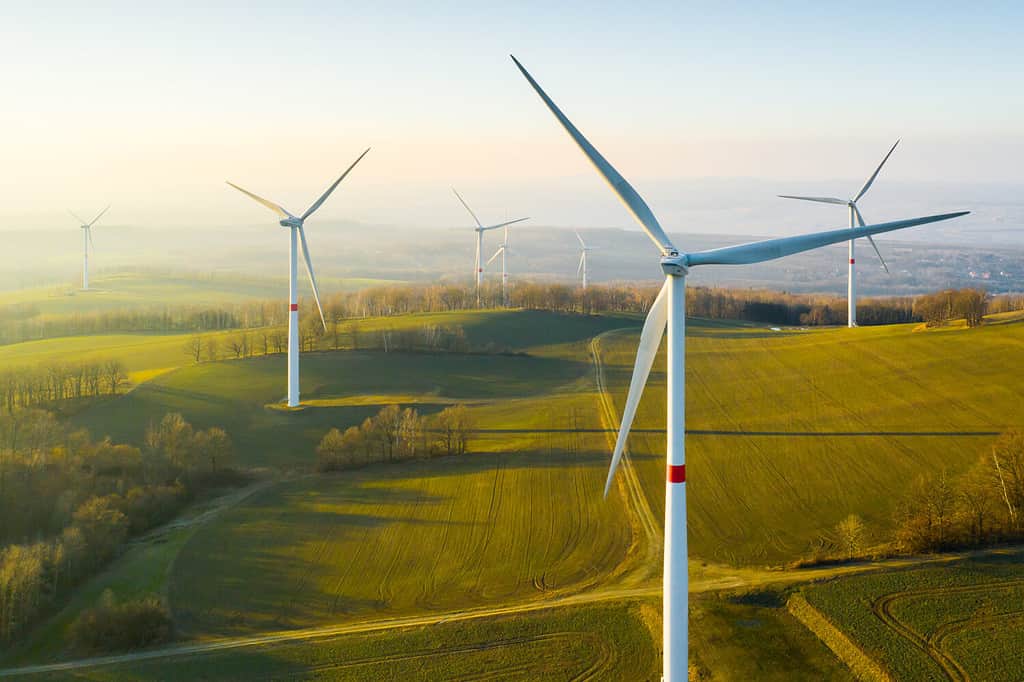
Wind farms cause air turbulence, making it extremely difficult for birds to fly through these areas.
©Vladimka production/Shutterstock.com
A 2021 PNAS study about eagles and turbulence showed a clear relationship between atmospheric turbulence and the bird’s measured accelerations at short timescales that overlap with real flight behavior. While turbine wakes don’t necessarily cause harm, turbulence is not trivial for a large soaring bird and is something they take into account every flap of the way.
What Changes When Turbines Are Built in Arrays
Wind farms utilize arrays of turbines to make the greatest impact and return on renewable energy. However, if a single turbine makes a wake, an entire wind farm of turbines creates overlapping wakes, making it even more difficult for birds to find a safe, efficient path forward.
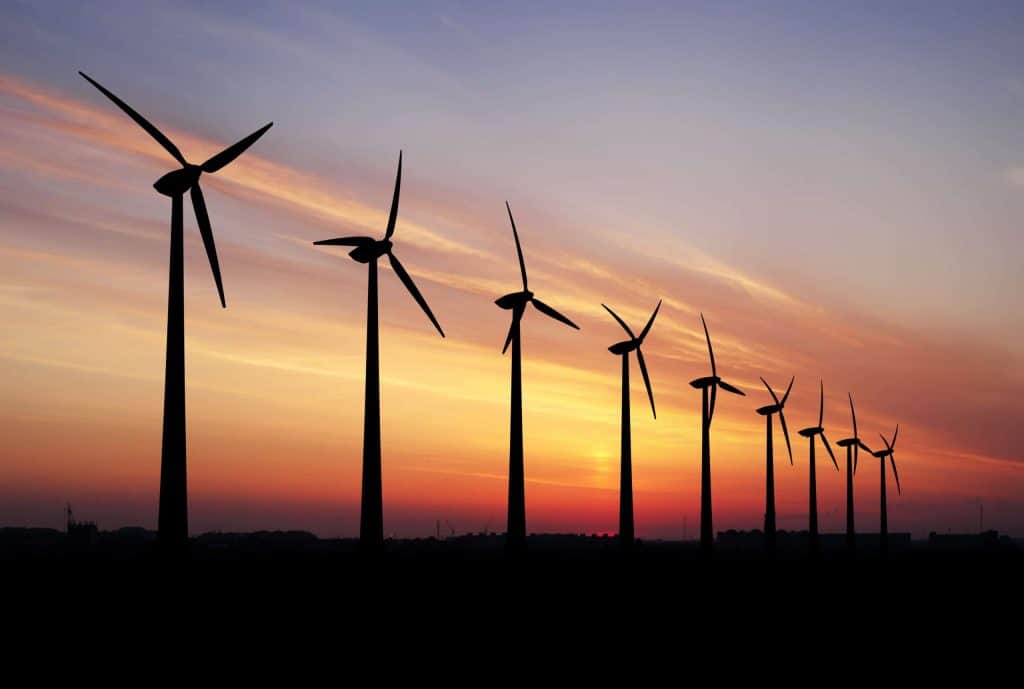
Turbines built into staggered arrays can help birds find more favorable flight paths.
©TebNad/Shutterstock.com
In the same Scientific Reports study on eagles, scientists uncovered that, when wakes stack in a turbine array, the most affected area becomes larger, and the more favorable passage or path for birds becomes much narrower, largely because wake overlap further increases turbulence intensity. There isn’t a clear and easy way to fly through most wind farms, unless the farm built their turbines in a particular layout.
How Placement and Layouts Can Reduce Wake Impacts on Birds
The good news is that wake-aware wind farm design already exists as a concept for energy production, as developers also want to reduce wake losses between turbines (not necessarily for bird flight, but the benefits remain nonetheless). Here are some of the ways in which wind farms are attempting to help birds flying overhead.
Staggered Layouts
Staggered turbine placement with increasing lateral offsets progressively reduces the coverage of the higher-hazard wake zones, with the biggest staggering showing the smallest remaining high-risk regions in simulated wake maps from the aforementioned eagle study.
While a real-world site likely won’t or can’t match this model perfectly, the guidance is practical; by reducing wake overlap, the spatial footprint of the roughest air is also reduced.
Site Evaluation Treating Airspace as Habitat
U.S. wildlife guidance currently pushes developers toward early risk screening and project design choices that reduce harm to animals before turbines ever go up. A tiered approach to site evaluation, including impact minimization and future monitoring, help to reduce wildlife impacts.
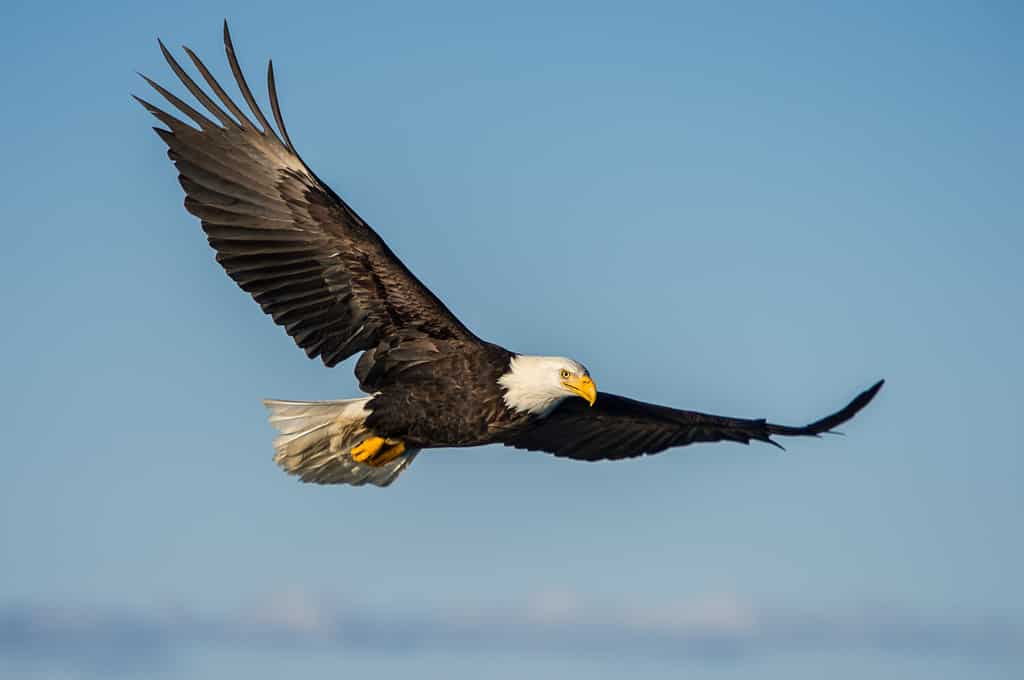
Migrating and soaring birds should be considered whenever a new wind farm is being constructed.
©FloridaStock/Shutterstock.com
These guidelines were written with collisions and overall habitat impacts in mind, but wake effects fit naturally into them, too. For example, if a ridge or corridor is heavily used by soaring birds because the air is predictably usable and safe, then altering that air can function like an aerial habitat change, making it unwise and likely to bring consequences to bird populations.
Matching Turbine Planning to How Soaring Birds Actually Fly
One reason turbines and soaring birds overlap is that both prefer and need the same landscape features, including windy ridges and places that generate predictable air flow. Eagles flying on updrafts are one such example, with many other raptor species also enjoying landscape features that allow for more wind.
If planners know a site has ample bird traffic at certain heights and along certain terrain lines, then wildlife-friendly design can involve avoiding layouts that place persistent wake corridors across those exact flight lines. It’s a simple enough prerequisite to consider, but many companies don’t before building.
What Wildlife-Friendly Wind Farms Could Look Like in the Future
While turbine wakes aren’t necessarily a dominant threat to soaring birds, reduced efficiency in flight can shape birds’ overall behavior and energy budgets, and perhaps even their historic flight paths.
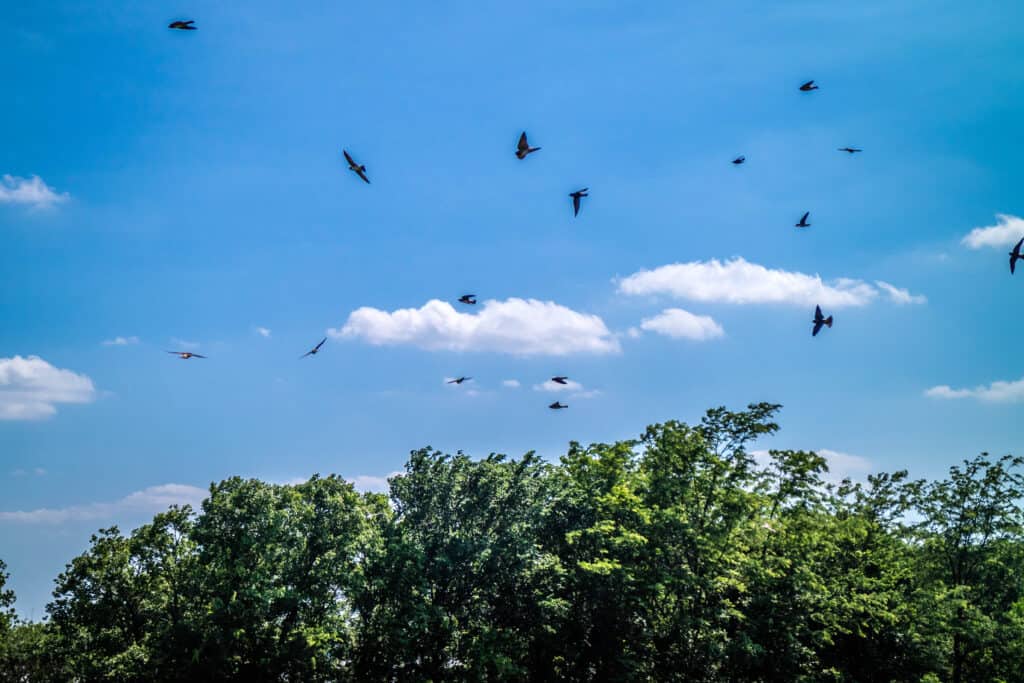
Wind farms are valuable resources, but only if they consider the wildlife they might impact.
©iStock.com/Cheri Alguire
Better integration is necessary for wildlife-friendly wind farms to consider, including:
- Adding wake exposure to risk assessments in places with heavy soaring traffic, especially where turbines sit along ridge systems or known migration routes.
- Treating layout decisions as a mitigation tool, using strategies like staggering to reduce turbulent wake corridors.
- Combining wake modeling with bird tracking in high-risk areas to identify when and where birds are most likely to encounter the roughest air.
Wind energy can be a fantastic win for climate and biodiversity, but only if the buildout is designed with wildlife in mind. Wakes are part of that picture now, which is why mapping rough air and designing appropriately is one of the best ways to ensure these habitats and animals remain safe.