
Quick Take
- Feral pigs are expanding into suburbs, tearing up lawns, parks, and golf courses, and unnerving residents.
- Urban rules restrict traditional control tools like night shooting, aerial hunts, and some toxicants.
- Agencies now push cooperative trapping, outreach, and science-based planning with cities and HOAs.
- Public safety, vehicle collisions, and disease risks make proactive management urgent.
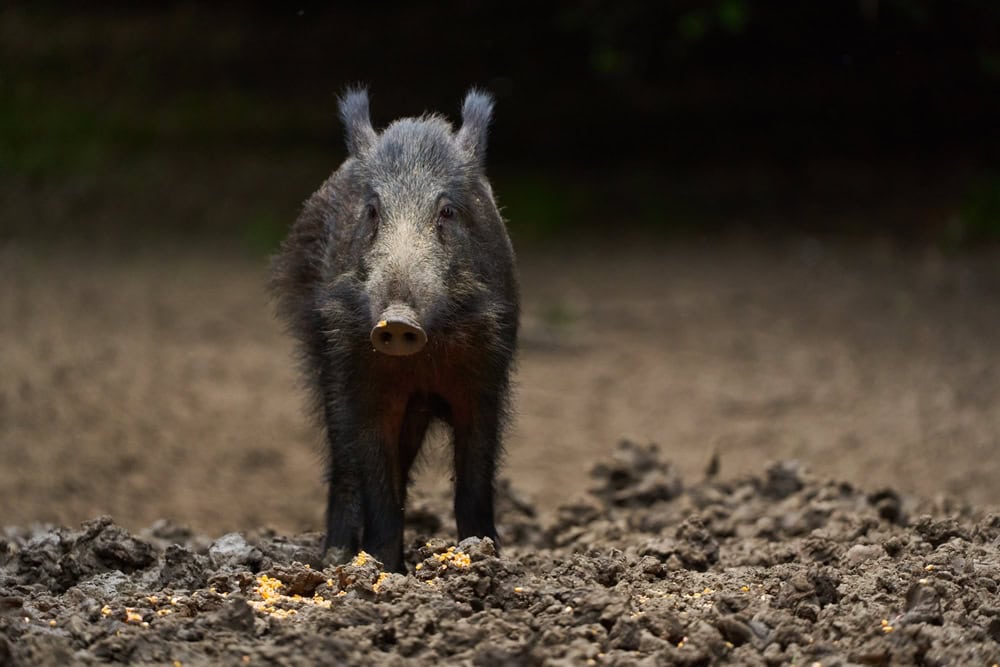
Imagine sipping coffee at your kitchen window and spotting a 200-pound hog rooting through your flower beds. For many Texans and other Americans living near expanding cities, that scene has become increasingly common. Feral pigs, also known as feral hogs or wild pigs, are moving beyond farms and ranches into exurban neighborhoods and suburban communities.
Researchers with Texas A&M AgriLife estimate that 2.6 million of these animals roam Texas alone. As development expands into former ranchland and wildlife habitat, people and pigs are coming into closer contact. When feral pigs settle near neighborhoods, the issue goes beyond messy lawns. It creates a complicated challenge that involves wildlife behavior, property damage, public safety concerns, and community planning.
Origins of the Feral Pig Population
Feral pigs in the United States descend from escaped domestic hogs, European wild boar introduced for hunting, and hybrids of the two. Over centuries, these animals adapted to wild conditions and expanded across much of the country. Today, feral swine populations exist in at least thirty-five states.
These animals thrive in forests, wetlands, farmland, and brushy landscapes. They eat roots, crops, insects, carrion, and small animals. Because they can travel several miles in a single night searching for food or water, suburban areas with irrigated lawns, ponds, and gardens offer attractive resources. Housing development in former agricultural land has placed subdivisions directly in areas where feral pigs were already living. As a result, neighborhoods sometimes become part of the pigs’ nightly feeding routes.
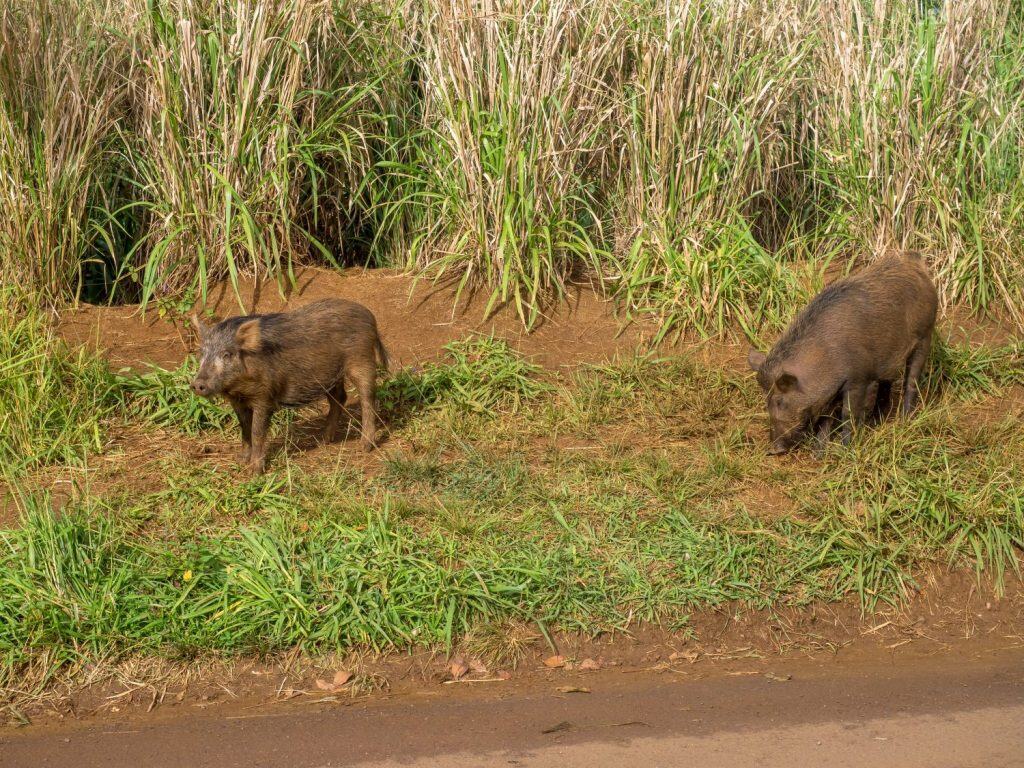
Feral pigs thrive in brushy landscapes.
©Jeff Whyte/Shutterstock.com
Rapid Expansion Near Cities
Urban growth in states such as Texas has pushed housing developments outward into rural land. This expansion creates a transition zone known as the exurban fringe, where wildlife habitat overlaps with residential communities. Feral pigs are especially successful in these areas because they adapt quickly to new environments.
Greenbelts, drainage corridors, parks, and golf courses provide cover and water while still allowing pigs to move undetected between neighborhoods. Landscaped yards also supply an easy food source. Lawns with irrigation soften the soil, which makes rooting easier. Compost piles, fallen fruit, and pet food left outdoors can attract pigs as well. Once animals learn that a neighborhood contains food and shelter, they often return repeatedly.
Damage to Lawns and Public Spaces
Feral pigs are infamous for their rooting behavior, which involves digging into soil with their snouts to search for food. In suburban settings, this activity can quickly destroy carefully maintained landscapes. Pigs may tear up lawns, athletic fields, parks, cemeteries, and golf courses in a single night. Their digging leaves holes that damage irrigation systems and create hazards for people walking or playing outdoors. Community maintenance crews often spend significant time and money repairing these areas.
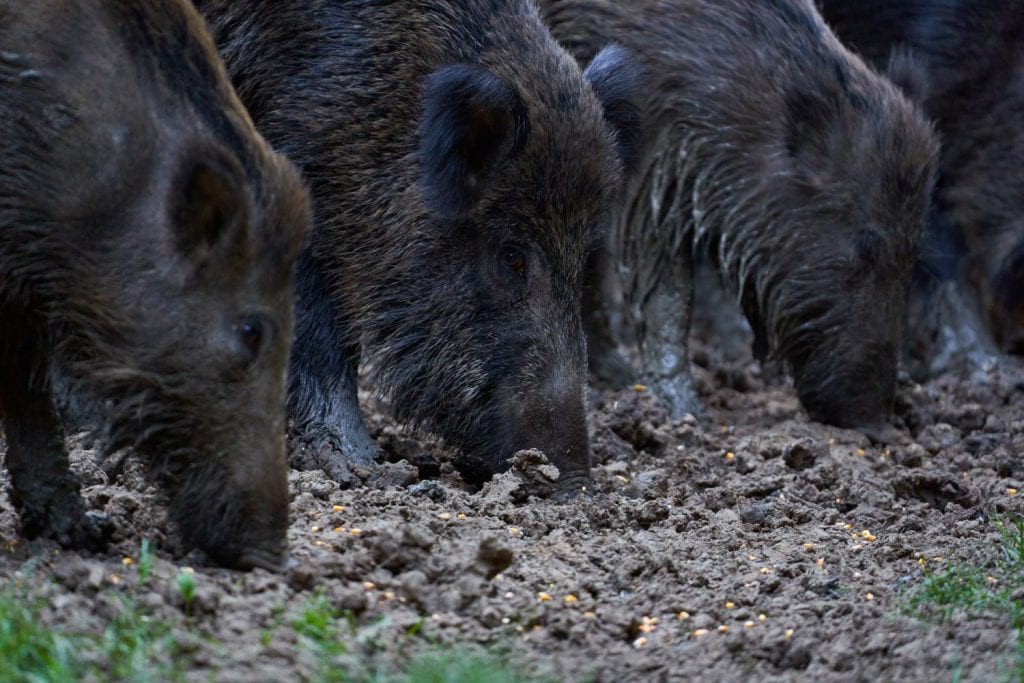
The wallowing of feral pigs churns up manicured turf, but it also damages habitat for ground-nesting birds and destroys plant biodiversity.
©Slatan/Shutterstock.com
In Texas, agricultural losses from feral pigs have been estimated at over $100 million annually. When these animals enter suburban areas, homeowners and local governments begin to face similar repair costs for turf, landscaping, and damaged infrastructure.
Risks to People, Pets, and Vehicles
Feral pigs usually avoid people, but they can become dangerous if they feel threatened or cornered. Adults commonly weigh between seventy-five and two hundred fifty pounds, and some individuals grow larger. Their size and strength make encounters risky.
Wildlife agencies have documented incidents where pigs chased runners, golfers, or park visitors. This risk increases in locations where people feed wildlife, which can reduce pigs’ natural caution. Vehicle collisions with feral swine are another concern. When pigs cross roads at night, drivers may have little time to react. Such collisions can damage vehicles and cause serious accidents.
Feral pigs also carry diseases and parasites that may affect livestock, pets, and sometimes humans. Brucellosis and pseudorabies are two examples found in feral swine populations. Pseudorabies can be fatal to dogs that consume infected raw meat.
Why Rural Control Methods Are Difficult in Suburbs
Traditional feral pig control strategies developed for rural landscapes often do not work well in suburban environments. In agricultural areas, land managers may use night shooting, helicopter removal, or large trapping systems. These approaches require wide open spaces and clear lines of sight.
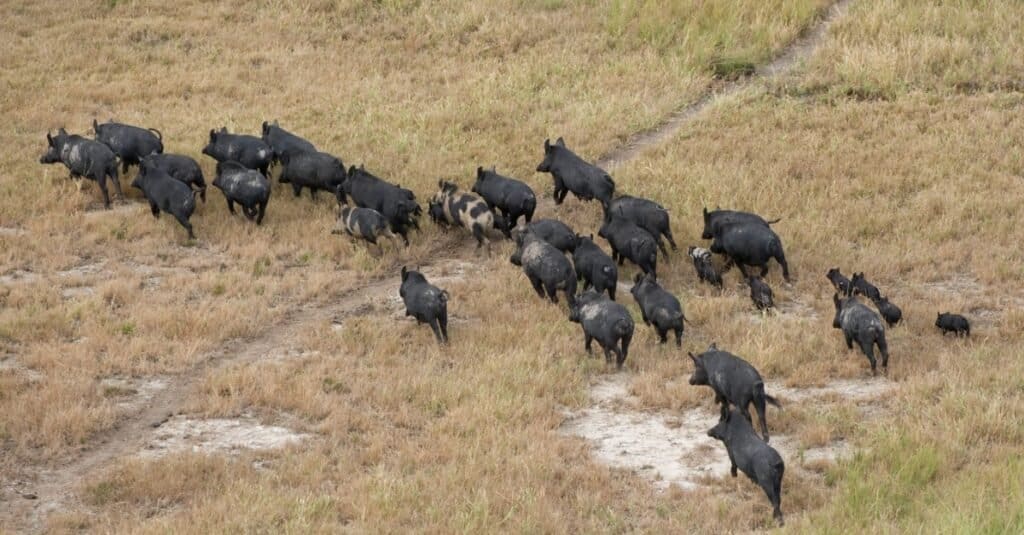
Shooting pigs from a helicopter can be effective, but it is not practical for suburban environments.
©iStock.com/JohnCarnemolla
Suburban neighborhoods present different conditions. Firearms use may be restricted by city ordinances. Homes, roads, and parks create safety concerns that limit where removal activities can occur. Properties are divided into many smaller lots owned by different residents, which complicates access for wildlife managers.
Noise, lighting, and the possibility of trapping pets or other animals also influence which techniques are acceptable in populated areas. For these reasons, feral pig management near cities requires specialized planning.
Research Guidance from Texas A&M AgriLife
Texas A&M AgriLife researchers have recognized the growing challenge of feral pig management in urban and suburban settings. Their educational resources now include guidance tailored to small-acreage properties and metropolitan regions.
These materials explain how landowners and community leaders can address hog problems in fragmented landscapes. Recommended strategies may include coordinated trapping programs, partnerships with professional wildlife removal services, and the use of strong fencing in sensitive areas.
The guidance also stresses that no single effort eliminates a pig population. Effective management usually requires repeated actions over time. Monitoring pig activity and adjusting strategies helps communities respond as animals shift their movement patterns.
National Efforts to Reduce Feral Swine Damage
Local projects often receive support from broader state and federal programs. One example is the National Feral Swine Damage Management Program operated by the United States Department of Agriculture Animal and Plant Health Inspection Service.
This program provides funding, research support, and field personnel to reduce feral swine populations and limit their spread. Activities include monitoring pig populations, testing animals for disease, and conducting removal operations where needed.
In areas where pigs have recently appeared, agencies sometimes focus on eliminating small populations before they expand. In long-established regions, the goal may shift toward reducing damage and protecting sensitive habitats or agricultural areas.
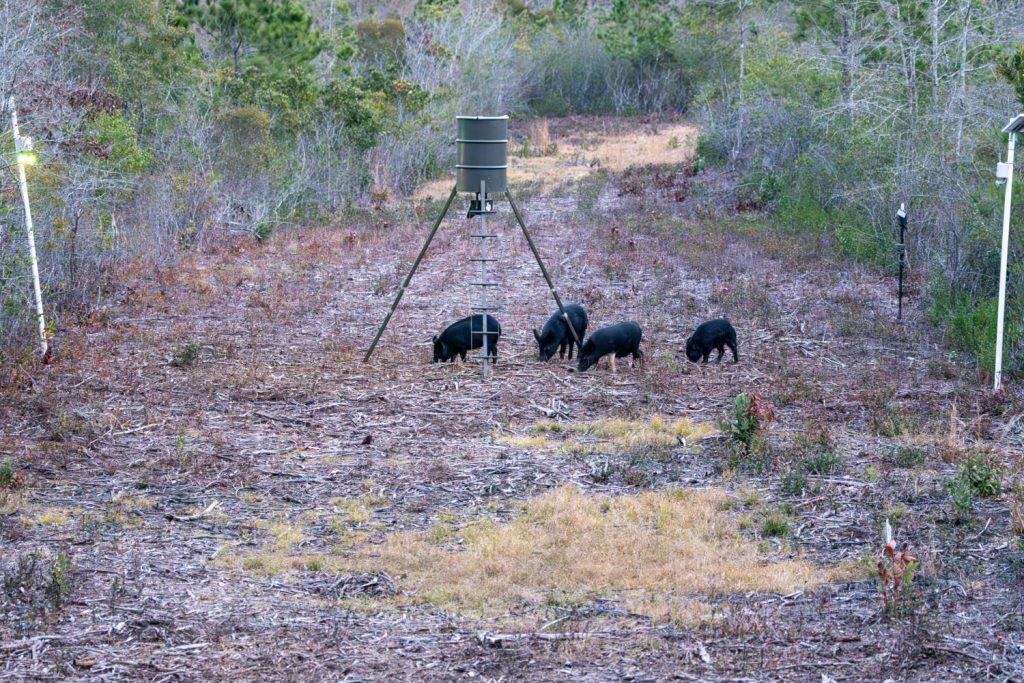
Wild hogs forage at a game corn feeder at dusk in Texas.
©Gchapel/Shutterstock.com
Neighborhoods Confronting the Problem
Suburban communities across Texas have already experienced the impact of feral pigs. Residents in parts of San Antonio have reported groups of hogs roaming the streets at night and rooting up newly planted lawns. Families sometimes become cautious about letting children play outdoors after dark.
City officials in such areas may work with wildlife contractors to trap hogs in nearby greenbelts and drainage channels. Residents are often advised not to feed wildlife and not to attempt hunting pigs themselves.
Neighborhood associations sometimes organize reporting systems that track sightings and damage. Sharing information helps communities identify where pigs travel and which locations require management efforts.
Trapping and Professional Removal
Trapping remains one of the most effective tools for reducing feral pig populations in suburban settings. Corral traps are commonly used because they can capture an entire sounder, which is a family group of pigs. Removing a full group prevents survivors from learning to avoid traps.
Modern systems often include remote cameras and electronic gates that allow operators to trigger the trap only when the whole group has entered. This reduces the chance of capturing non-target animals.
After capture, wildlife professionals follow state regulations for humane removal and disposal. Many states restrict transporting live feral swine because moving them may spread disease or expand populations.
Non-Lethal Strategies and Their Limitations
Some communities prefer to focus on non-lethal approaches. Strong fencing can protect high-value locations such as community gardens, playgrounds, and sports fields. Improved waste management also helps by removing food sources that attract pigs.
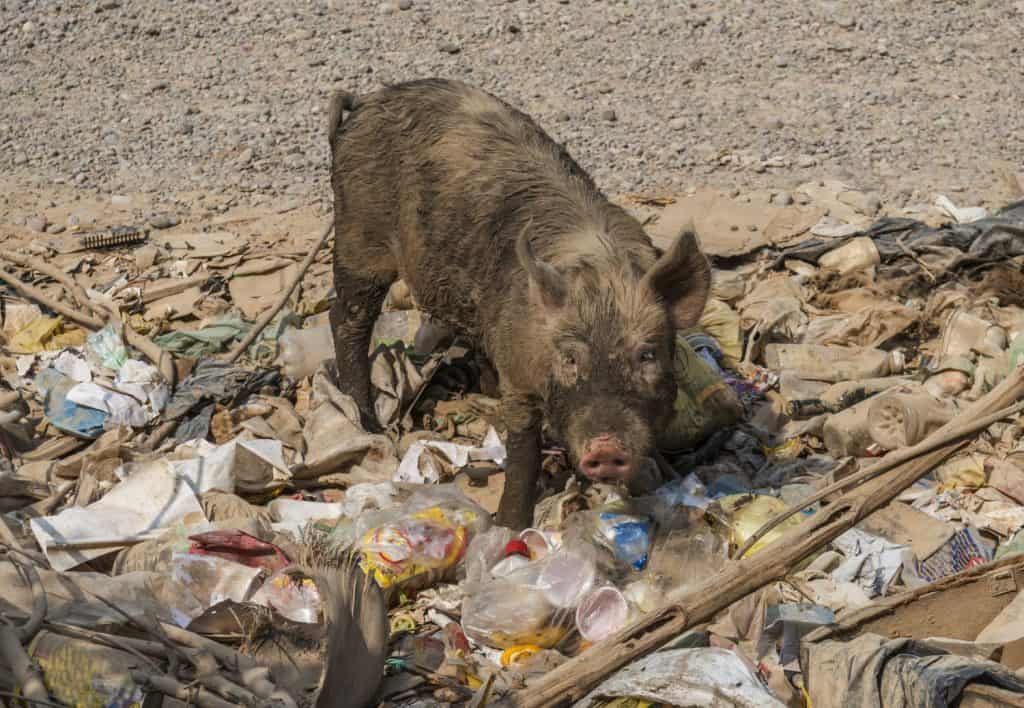
Removing food sources that attract wildlife is an important part of controlling feral pigs.
©PhotoMagicWorld/Shutterstock.com
Devices that create noise, light, or water sprays may discourage pigs temporarily. However, these deterrents often lose effectiveness as animals grow accustomed to them. Education campaigns can still play an important role. Encouraging residents to secure garbage, avoid feeding wildlife, and report sightings early helps reduce opportunities for pigs to settle in a neighborhood.
Community Cooperation and Policy Changes
Managing feral pigs near suburbs requires cooperation among residents, local officials, and wildlife professionals. Municipal governments sometimes need to adjust ordinances so trained removal teams can operate safely in greenbelts, drainage areas, or public land.
Homeowners’ associations may also create guidelines about wildlife feeding, trash storage, and access for management crews. Public meetings and educational workshops help residents understand how pigs behave and why coordinated action is necessary. When communities work together, management strategies become more effective because they address the entire area rather than isolated properties.
Living With Wildlife at the Edge of Cities
Feral pigs are unlikely to disappear from North America in the foreseeable future. As cities continue expanding into rural landscapes, encounters between people and these animals will remain common in exurban and suburban areas. The challenge lies in reducing damage while protecting public safety.
Research from institutions such as Texas A&M AgriLife and federal wildlife programs shows that coordinated removal, informed policies, and community participation can make a significant difference. By understanding how feral pigs move through suburban environments and responding early, neighborhoods can limit damage and maintain safe public spaces while managing one of the country’s most adaptable invasive mammals.