
Ladybugs are famous for their black spots and red wings, but can you tell the difference between males and females? The differences between males and females become more apparent when observing their reproductive behaviors and organs. If you’re interested in learning about these differences, keep reading below!
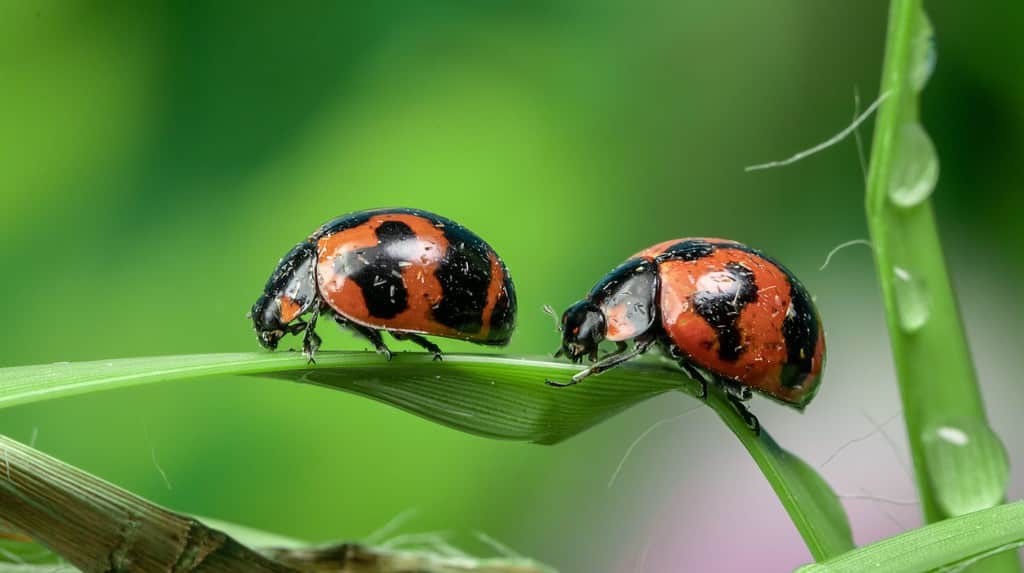
Ladybugs are found all over the world.
©Md Rahtul Islam/Shutterstock.com
About Ladybugs
Ladybugs are insects that are part of the Coccinellidae (beetle) family. Similar to other beetles, ladybugs have a hard exoskeleton. They have rounded backs topped with shell-like forewings called elytra. The elytra protect their delicate wings that are underneath. While they are most famous for their red and black colorings, they come in a variety of other colors such as yellow, orange, and pink. Ladybugs get their iconic name from a European legend. At that time, farmers would pray to the Virgin Mary to prevent their crops from being destroyed by pests. When ladybugs ate the pests, they became known as “lady beetles.”
Ladybugs are cosmopolitan, meaning they can be found all across the world. They inhabit a variety of environments, including gardens, forests, grasslands, meadows, and cities. They prefer temperate and tropical climates and are common in agricultural areas. Farmers like having ladybugs around to feed on small and damaging pests like mites and aphids.
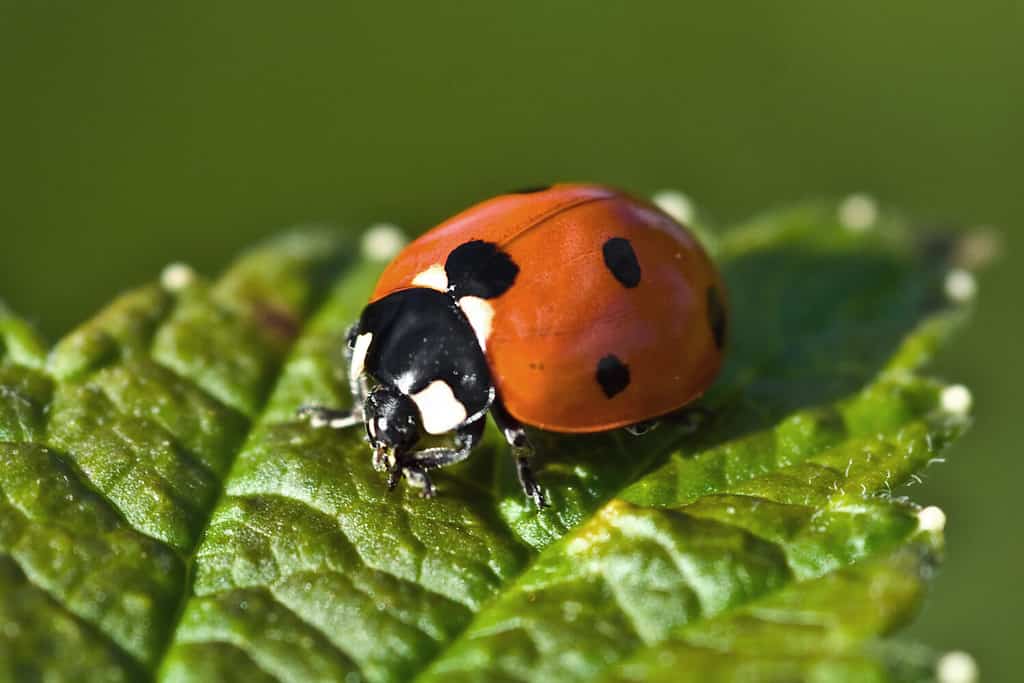
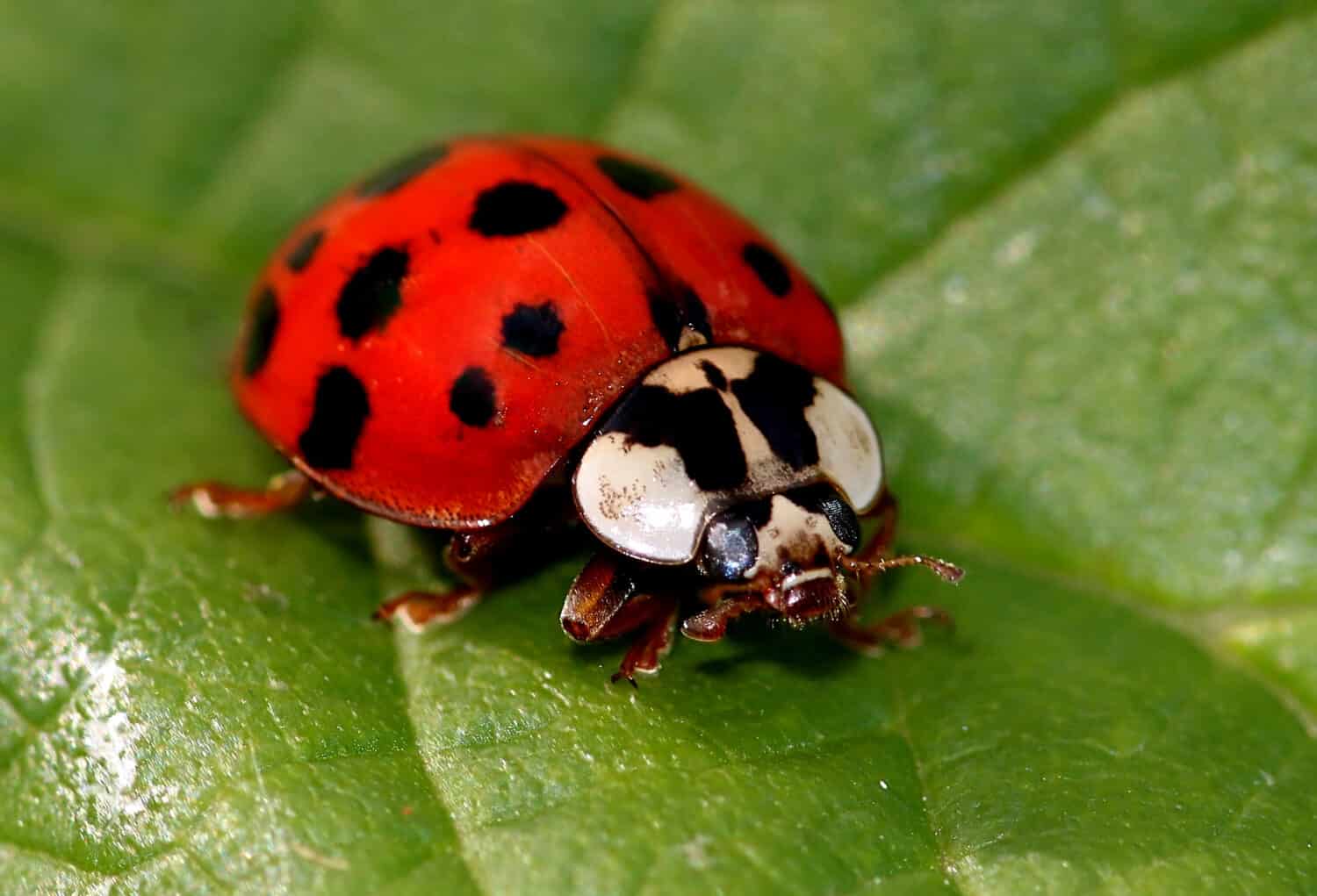
Can you tell if this ladybug is male or female?
©denlog82/Shutterstock.com
How To Spot the Differences
While at first glance ladybugs may look the same regardless of sex, there are a few differences that can help you spot which is which. The first is size. On average, males are slightly smaller than females. Their abdomens are also different. Males have narrower abdomens, while females have rounder, wider abdomens. The differences between males and females become more apparent when observing their reproductive behaviors and organs. Females have ovipositors (internal reproductive organs), while males have an aedeagus (external reproductive organ). Male ladybugs are more likely to initiate mating, while females are often approached. To really tell the difference, it’s best to have a magnifying glass, as it’s hard to see with the naked eye.
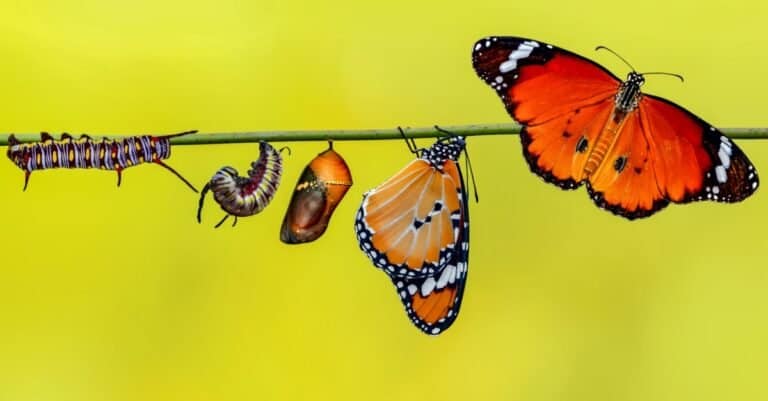
Ladybug mating occurs in the spring and early summer and can last several hours. The male transfers sperm through the aedeagus to the female, fertilizing her eggs. Females will lay 10 to 50 eggs at a time in clusters. They lay their eggs on leaves near aphid colonies, because aphids serve as a food source for the larvae. After about 3-10 days, the eggs hatch into larvae, which feed on aphids for about 2-3 weeks before becoming pupae. After about 5-7 days as a pupa, the adult ladybug emerges and lives for about a year. Hopefully, after reading this, you know how to spot the differences between a male and female ladybug.