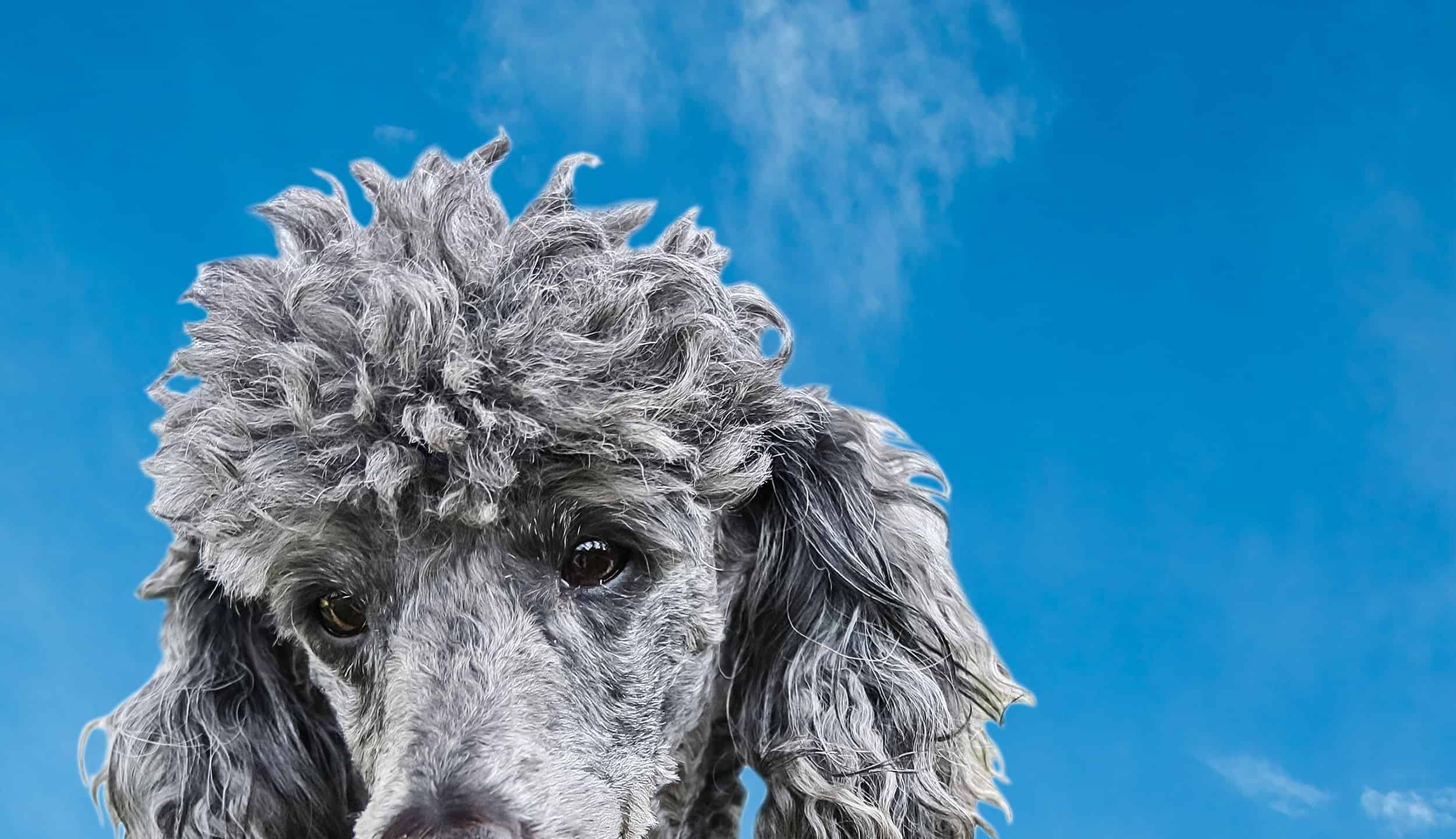

What do John Steinbeck, Elvis Presley, Walt Disney, and Sir Winston Churchill all have in common? As well as having the ability to entertain, it has been noted that they all loved the Poodle breed. John Steinbeck traveled with his Poodle, “Charley,” documenting their time on the road. Likewise, Elvis Presley had one he called “Champagne.” Elvis loved his dog so much that he empathetically bought his wife Priscilla one. Who to point out was a toy Poodle that she called “Honey.” Even Walt Disney owned one named “Dee Dee,” and Sir Winston Churchill fed one named “Rufus.”
What’s more, is the French war dog named “Moustache.” He was born in 1799 and served in the French and Napoleonic Wars. A British Army dog named “Boy” also belonged to Prince Rupert of the Rhine, Duke of Cumberland. Both of these dogs were listed in history as “Battle Dogs.” Battle dogs had grown popular in the time of war.
The Entertainment Industry also joined the poodle trend with “Chloe and Waffle the Wonderdog” to support the breed. First up, there is Chloe, a supporting character to Clifford the Big Red Dog, an all-time American favorite children’s cartoon. Secondly, the BBC had its own puppy-friendly show called Waffle the Wonderdog, a red toy Poodle.
With this in mind, seeing the breed in so many different households and treasured by their owners speaks so well of the species.
What Are Poodles Like?
Without a doubt, they are a brilliant breed. Historically, they were once used as battle dogs and service pets. Known for their active personalities, they make great companions.
It is hard to believe there is not one in every household. Not only that, but how has the golden retriever beat them out as the family pet each year? Amongst all these positives underneath all that curl of their fur, I am sure there are other accounts. Words that fall on a more negative side of things.
I have done some research and compiled a list of thirteen of the most significant complaints of this breed. After reading through, you can decipher the outcome of the species and if it suits you. Or not.
13 Poodle Traits
1. Four Different Sizes
Poodles can be four different sizes.
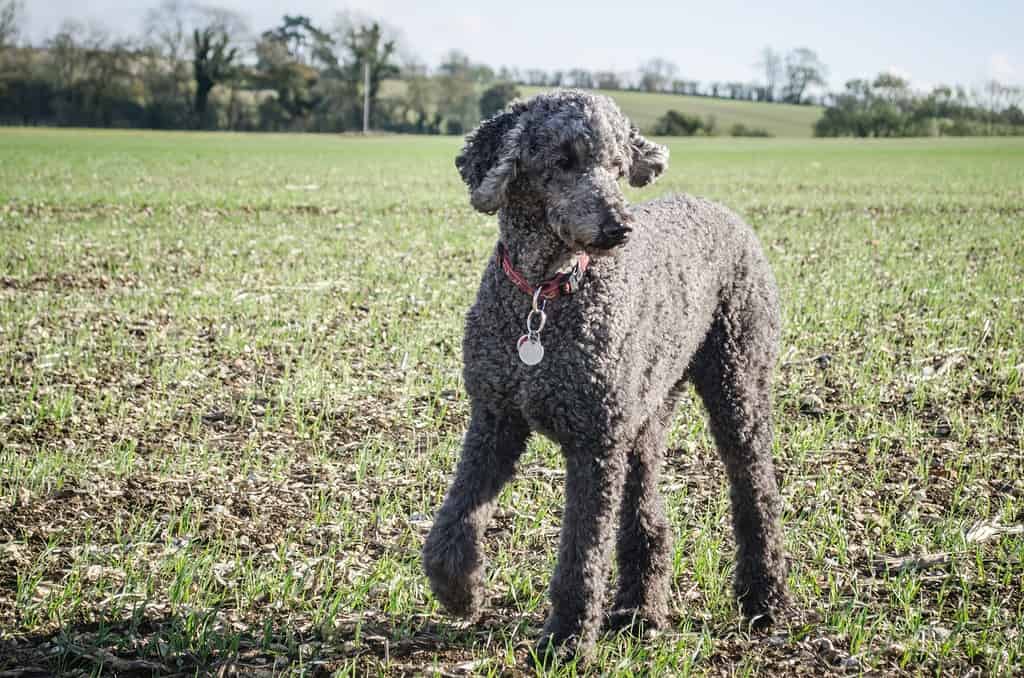
Standard
©iStock.com/OneToRemember
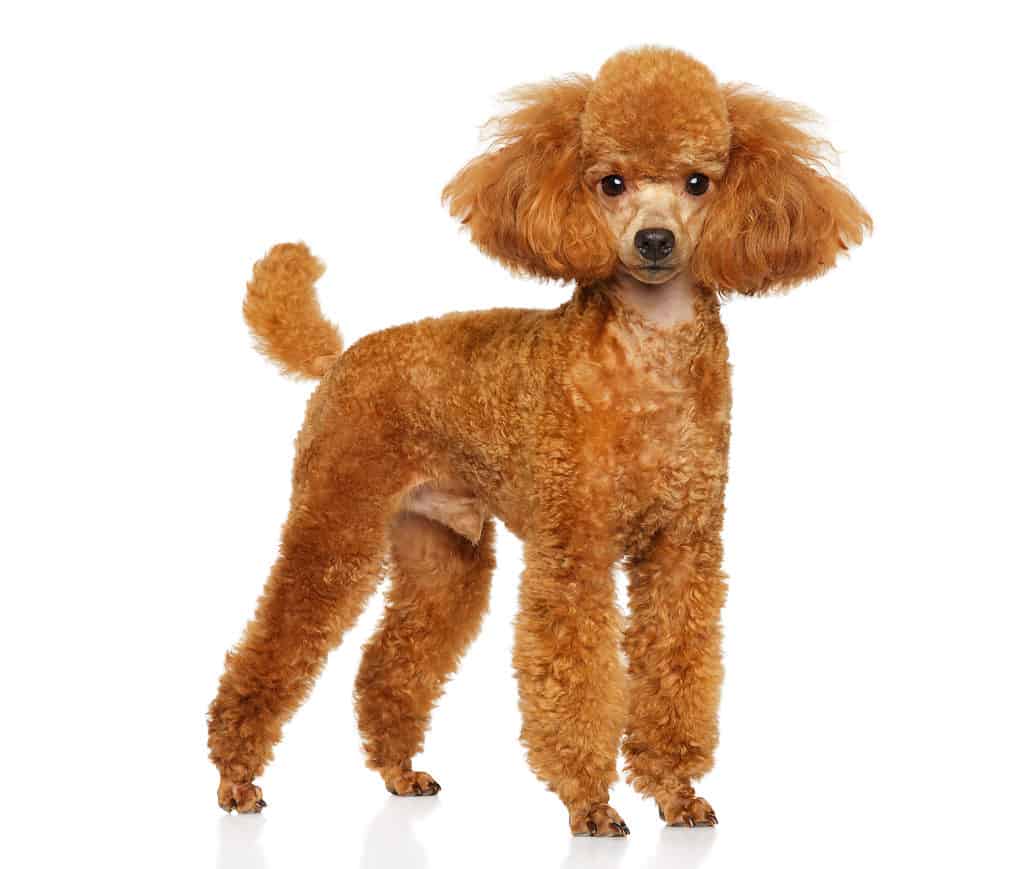
Miniature
©Jagodka/Shutterstock.com
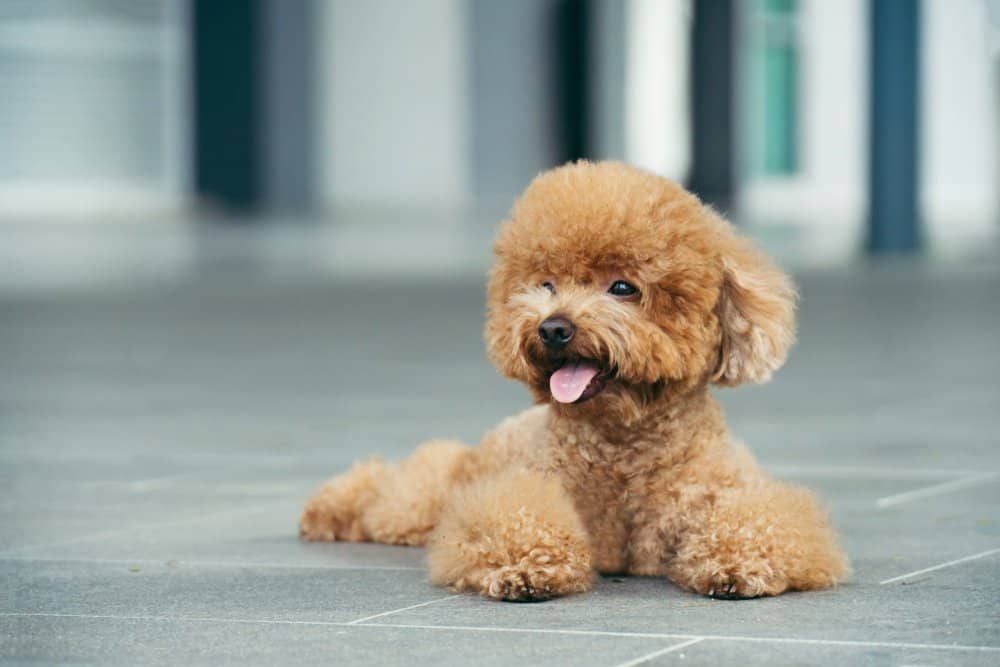
Toy
©Lim Tiaw Leong/Shutterstock.com
- Standard- 18-24 inches in height at the shoulder
- Medium-14-18 inches in height at the shoulder
- Miniature-11-14 inches in height at the shoulder
- Toy- 9-11 inches in height at the shoulder
2. Five Different Colors
Poodles come in a variety of colors. Their primary colors are black, white, grey, brown, or fawn. In addition to those, the color then alters in terms of shading. The options are nearly endless. For example, there is an apricot-colored Poodle, a version of the brown, with a more red hue.

Poodles come in many different colors.
©Chendongshan/Shutterstock.com
3. Two Different Forms of Fur
The fur comes in only two forms: curly and corded. If their hair is just curly, then it is usually soft. If it is corded, then it is coarse. Being corded makes it hard to groom, particularly if they have longer fur.
4. Grooming REQUIRED
Frequent grooming is needed due to the fur’s consistency. The curls of their hair often trap dirt deep down by their skin. In the long run, after their skin has been in close contact with the ground, this undoubtedly can cause skin infections on your dog’s body. To avoid this from happening, give baths frequently.
Speaking of brushing your canine. Be sure to brush out their fur before the bath. This will help open up their curls. That way, you can clean right down to their skin. It also helps to use the recommended shampoos and different available hair products. To help detangle and clean their curly fur.
In the same fashion that people with curly hair have to put in the work, people with dogs with curly hair must do the same. The hair can become untamed quickly despite you spending time getting it just right.
For further grooming needs, check out our article Do Poodles Shed? Where we discuss further in detail the characteristics of a poodle’s fur.
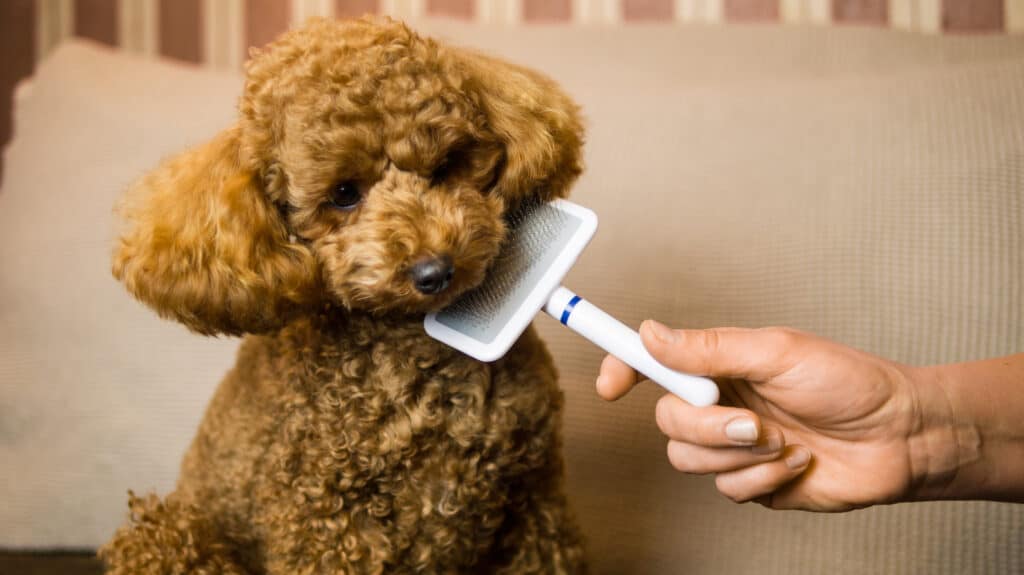
Weekly grooming routines are needed.
©Kristina Arba/Shutterstock.com
5. Consistent Health Concerns
In short, skin infections are not your only medical concern. There are several others. Comparatively, like many other breeds, hip dysplasia and bloat is something this breed sees. According to Lucy Pet Products, other ailments more familiar to this specific breed are Addison’s Disease, Thyroid Issues, and Epilepsy. Be that as it may, I have found a resource from DogMD that lists health concerns per each size of Poodle. I have built a chart out of that information.

VET CARE is necessary.
©Happy monkey/Shutterstock.com
6. Very Intelligent, They NEED High Levels of Mental Stimulation
The IQ level of a Poodle is much higher than that of other dogs, so it should be of no surprise that The American Kennel Club thinks they are the “smartest dog breed.“ Stating how “Their intelligence and eagerness to please make them great service dogs. Poodles are also employed as guide dogs, assistance dogs for people with other physical disabilities, and therapy dogs.”
With a brain as powerful as theirs, keeping them busy is crucial. Laying around on the couch is not going to be fulfilling for them. Providing them with activities will be needed.
We are constantly processing a jam-packed brain.
©Zontica/Shutterstock.com
7. Large Exercise Regime
Running concurrently with their high levels of intelligence, high levels of mental stimulation will be helpful. Exercise will be a massive part of a Poodle’s life. There is no other way around it. Ultimately, the need to keep busy is vast, think cardio. Therefore, exercising will be a great way to give the dog the mental and physical workout it needs.

Running is a MUST.
©BIGANDT.COM/Shutterstock.com
8. Hyperactive
By comparing the high need for mental stimulation, this type of dog is known to be very hyperactive. In conclusion, they need constant interaction, something to do consistently. If their brain is not moving, their bodies need to be. Hence, Poodles would be an excellent pet for someone who travels or enjoys outdoor adventures. Hiking is a great way to mentally and physically satisfy your pet.
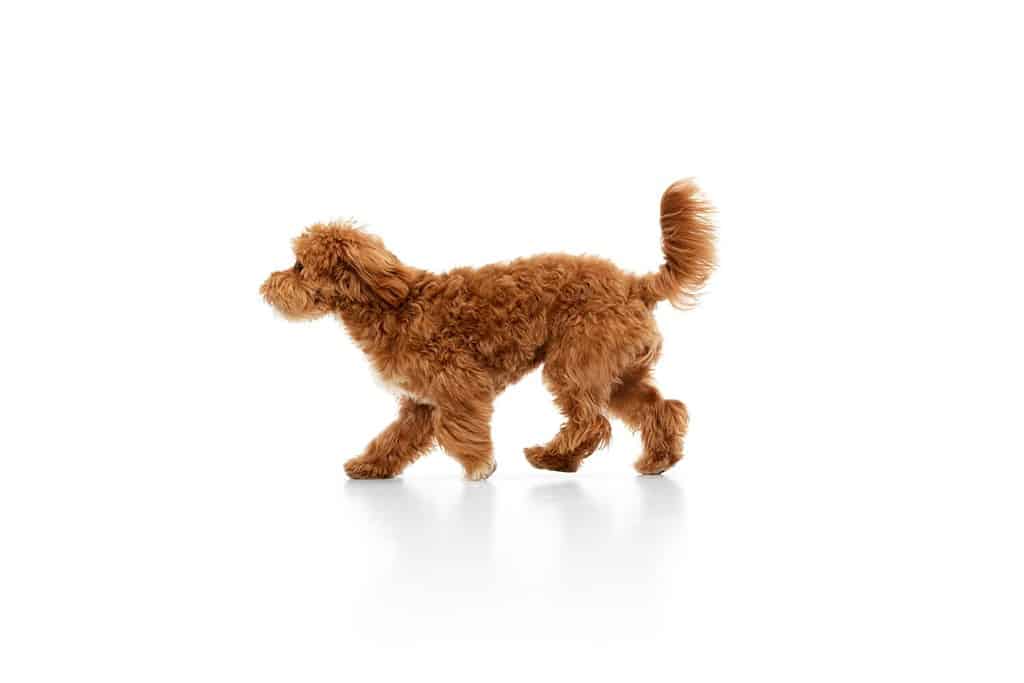
They are always on the move.
©Anton Vierietin/Shutterstock.com
9. High Anxiety
Coincidentally, they are found to have high anxiety levels because they have a hyperactive personality. I found several articles discussing stress and things to look for to check in with your pet. We are aware that high levels of anxiety can cause aggression. You will also find several articles on fear-based aggression in these dogs. This is a ubiquitous trait the breed carries. Fear-based aggression is what it says it is. Their aggression is based on the fact that they are scared of something.
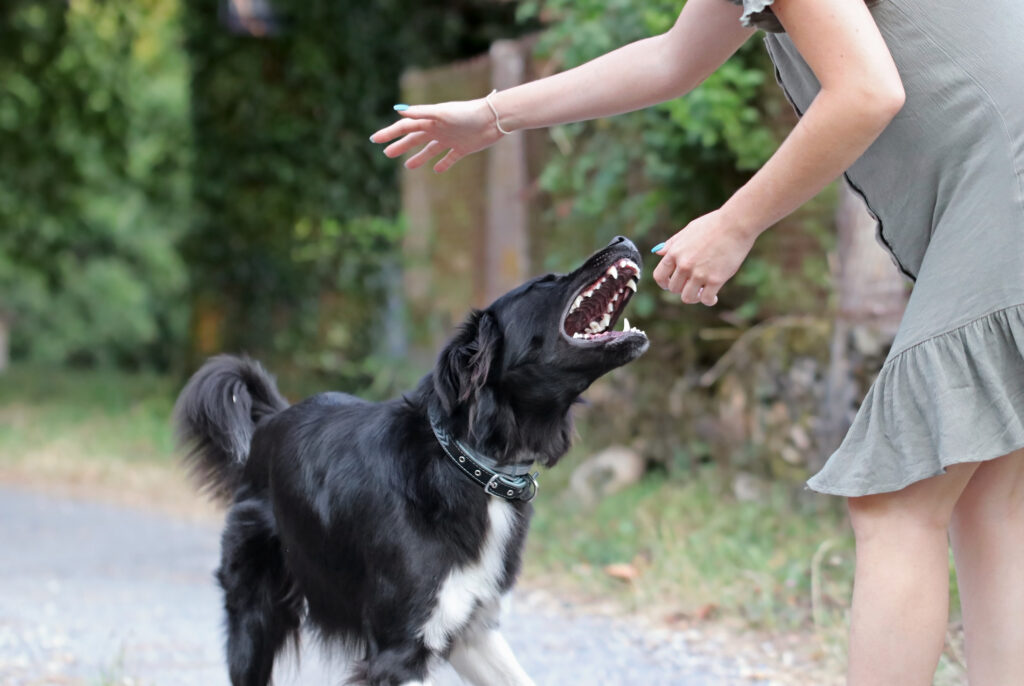
They are nervous nellies!
©Fercast/Shutterstock.com
10. Very Sensitive/Emotional Breed of Dog
Since they have high levels of intelligence, it is easy for them to pick up on our human behavior. A site I checked out called All Poodle Info comments on this: “Poodles are amazing canines, capable of high intelligence, strong loyalty, and having a range of emotions…can feel sad, depressed, excited, happy, bored, overwhelmed…even jealous.” Suppose they can feel all these different emotions. Then, I am sure they can notice these emotions in someone else. `
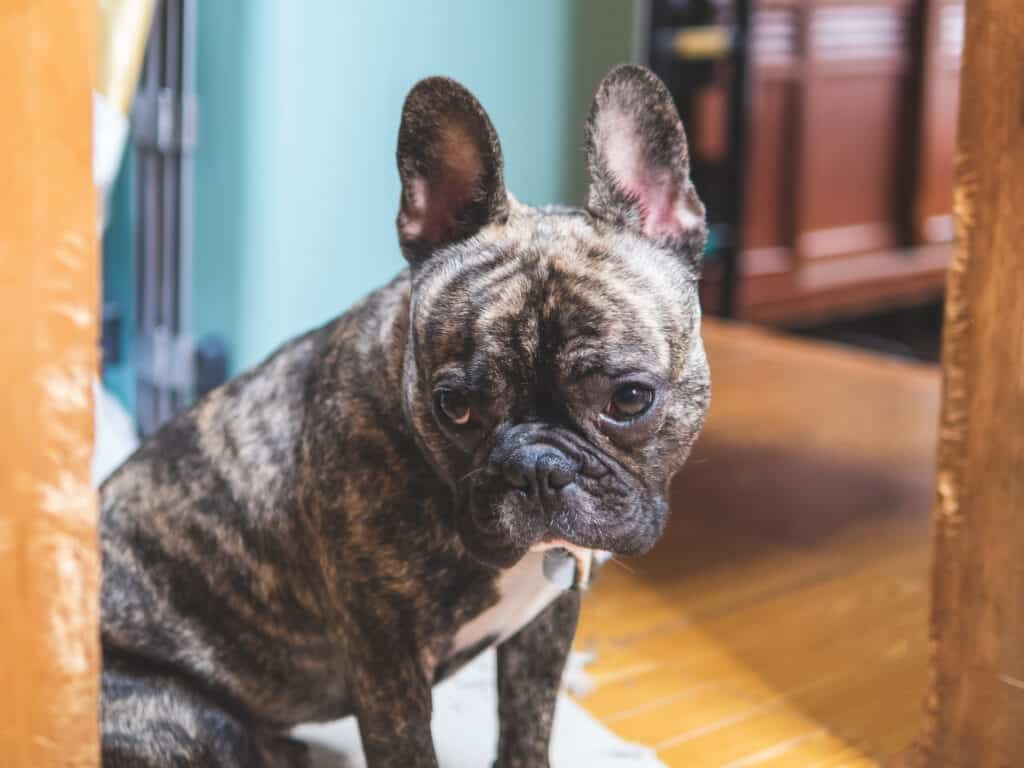
They can have the same emotions we do.
©Lee waranyu/Shutterstock.com
11. Need to Be Socialized
This breed is hyperactive and requires a lot of stimulation. With this being said, does your work keep you away from your home for a whole 8-hour time period? Due to their need for attention, consider looking into a doggie daycare. Another option is getting another pet a companion while you are away from home.
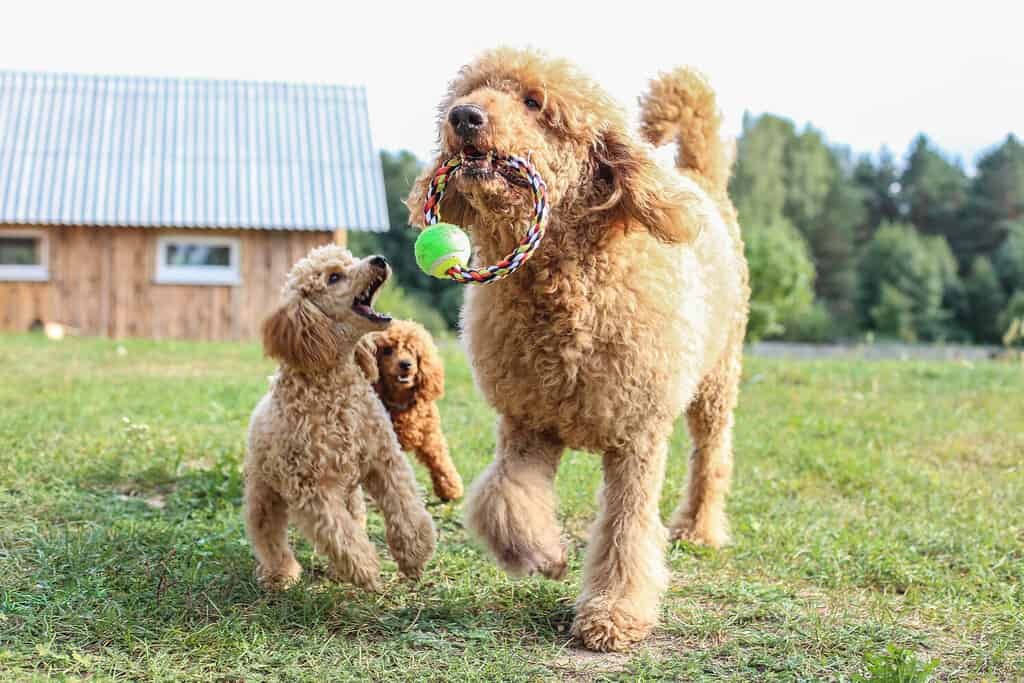
MUST learn to play with others.
©Velimir Zeland/Shutterstock.com
12. Hard to Train
Intelligent well beyond their need, you would think that training would go smoothly. Although that is not the case, it is not that easy. You see that they have a significant level of intelligence and the ability to have their own emotions. This does make training them harder than you would think.
This is not to say it cannot be done without the right enforcer. Poodles are very food-motivated, which helps when training a pet. Some breeds of dogs are not food-motivated. This makes training twice as hard.
You then also need to take into consideration their hyperactive personality. Even though this would make for a fun dog, I would only assume training a Poodle would take a lot of time and patience.

Training a poodle can take some time.
©Romvy/Shutterstock.com
13. Life Expectancy
Taking on a Poodle is a considerable commitment. Temperament aside. The point that is often overlooked is that it could take at least a decade or more! DogMD has a listing of their life expectancy on its site. Their article shows a Poodles’ life expectancy as
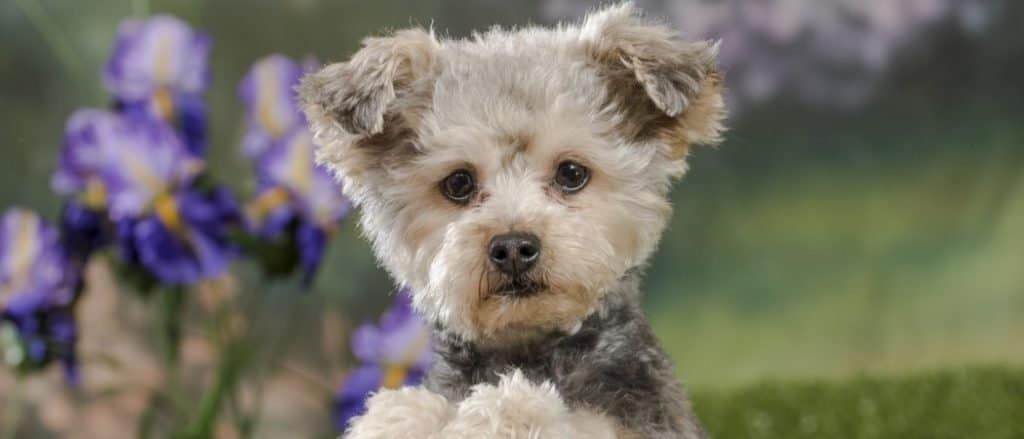
Poodles live a decade or more.
©Tom Feist/Shutterstock.com
- Standard (average life expectancy: 12 – 15 years)
- Miniature (average life expectancy: 13 – 15 years)
- Toy (average life expectancy: 15 – 17 years)
If you want information on the lifestyle of a Poodle, check out our article Poodle Lifespan: How long do Poodles live? This article talks of the breed’s personality traits at different stages in its life.
Summary of the 13 Poodles Traits
To begin with, a complete evaluation of the Poodle and what we think of their breed. Let us go ahead and take a look at the information as a whole. You carefully consider each aspect of their breed (as you should before you get any pet) to determine if they will be a good fit. You view your lifestyle and the lifestyle needed to meet the dog’s needs. This helps to sum up whether a Poodle might be right for you.
| Traits of Poodles | Examples |
|---|---|
| 1. Four different sizes | Standard Poodle, Medium Poodle, Miniature Poodle, and Toy Poodle |
| 2. Five different colors | Black, white, grey, brown, and fawn |
| 3. Two different forms of fur | Curly and corded |
| 4. Grooming is REQUIRED | Need frequent grooming |
| 5. Consistent health concerns | Several different health issues |
| 6. Very intelligent | Need to be challenged and stimulated |
| 7. Large exercise regime | Exercise will be a massive part of a Poodle’s life |
| 8. Hyperactive | Active personality |
| 9. High anxiety | Stresses easily and is fearful of lots of things |
| 10. Very sensitive/emotional breed | Can feel an array of emotions |
| 11. Need to be socialized | Can get aggressive |
| 12. Hard to train | Stubborn but responds to food |
| 13. Life expectancy | A little over a decade |