
All goods are unique, with different attributes and characteristics that set them apart from others. Depending on your preference for a pup, you might choose a more large, social, active dog, while someone else prefers a small, more introverted breed. Regardless, each dog breed has its perks and downfalls.
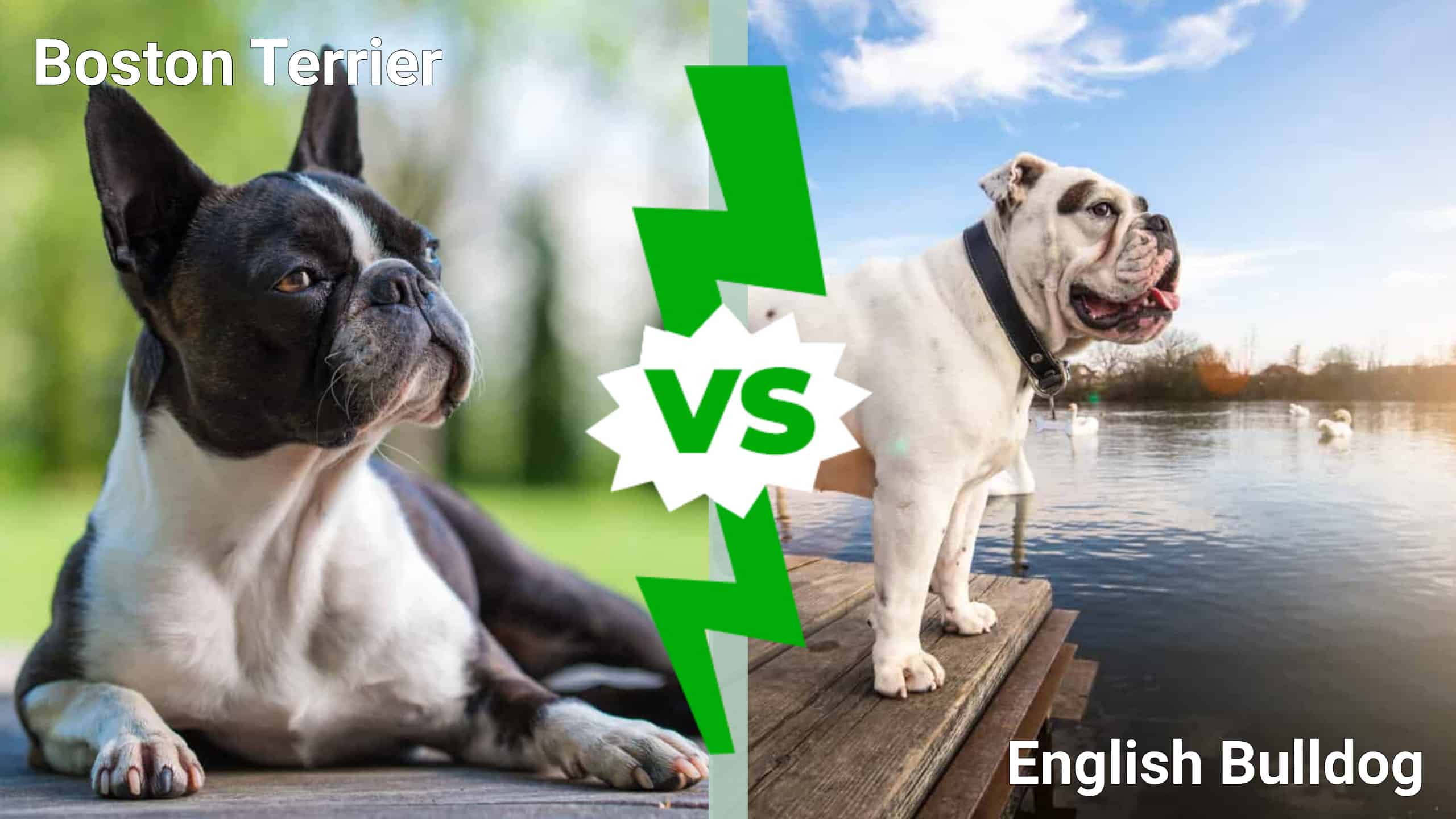
In this article, we want to explore the differences between Boston Terriers and English Bulldogs. These two breeds make adorable and friendly companions, and they share many similarities. They’re both great family dogs who are excellent with children and enjoy being around people. However, they also have some key differences to consider when deciding between which is best for you and your family, as well as the environment you can provide for them.
From their sizes and social needs to health problems and life expectancy, here are the eight main differences between Boston Terriers and English Bulldogs.
Boston Terrier vs. English Bulldog: A Comparison
Here is a summary of the eight main differences between a Boston Terrier and an English Bulldog.
| Comparison | Boston Terrier | English Bulldog |
|---|---|---|
| Height | 15-17 inches | 12-16 inches |
| Weight | 10-25 lbs. | 40-55 lbs. |
| Coat type | Smooth, fine, short | Smooth, glossy, short |
| Colors | Black, brindle, or seal (with white) | Fawn, red, white, brindle, black, blue, chocolate, seal, and lilac |
| Temperament | Friendly, lively, affectionate | Friendly, loving, gentle |
| Social Needs | High | High |
| Life Expectancy | 11-13 years | 8-10 years |
| Health Problems | Glaucoma, dental disease, joint problems, patellar luxation, skin allergies | Breathing problems, skin and ear diseases, poor body temperature regulation, and eye disorders |
Appearance
Boston Terrier vs. English Bulldog: Height
Full-grown Boston Terriers reach a height of 15 to 17 inches when measured at the shoulder. These compact dogs are proportional and often deemed “American Gentlemen,” as their markings make them look like they’re modeling a fancy tuxedo.
The English Bulldog stands at a height of between 12 to 16 inches. These dogs are extremely stocky and muscular with thick skin folds, especially around their heads and shoulders. They also have “smooshed” faces, which, as you’ll learn later, impact their health and breathing.
Boston Terrier vs. English Bulldog: Weight
Weight is one of the main differences between Boston Terriers and English Bulldogs. Ranging between 10 to 25 pounds, Boston Terriers are relatively lightweight dogs, with males typically weighing heavier than females.
On the other hand, despite being the slightly shorter breed, English Bulldogs are quite heavy, weighing between 40 to 55 pounds, with males on the heavier side when compared to females. This is because English Bulldogs have more muscle on their contact bodies. Even though they aren’t as tall as other breeds, they make up for it in their muscle density.
Of course, many factors play into a dog’s weight, such as diet, exercise, age, and genetic factors. If you’re concerned your pup is overweight (or underweight!), visit a veterinarian to get a professional opinion on how you can better care for your four-legged loved one.
Boston Terrier vs. English Bulldog: Coat Type
Boston Terriers and English Bulldogs both have smooth and short coat types. However, Boston Terriers tend to have finer hair, while English Bulldogs have glossier hair. Both breeds require regular grooming to maintain healthy skin and coats. Frequent brushing (at least once weekly) will also help reduce shedding, which is a common goal for most dog owners. Additionally, bathe your pup at least once every six weeks to keep their skin and coat healthy and clean.
Boston Terrier vs. English Bulldog: Colors
Another major difference between Boston Terriers and English Bulldogs is their coloring and markings, making it easy to tell the difference between the two dogs.
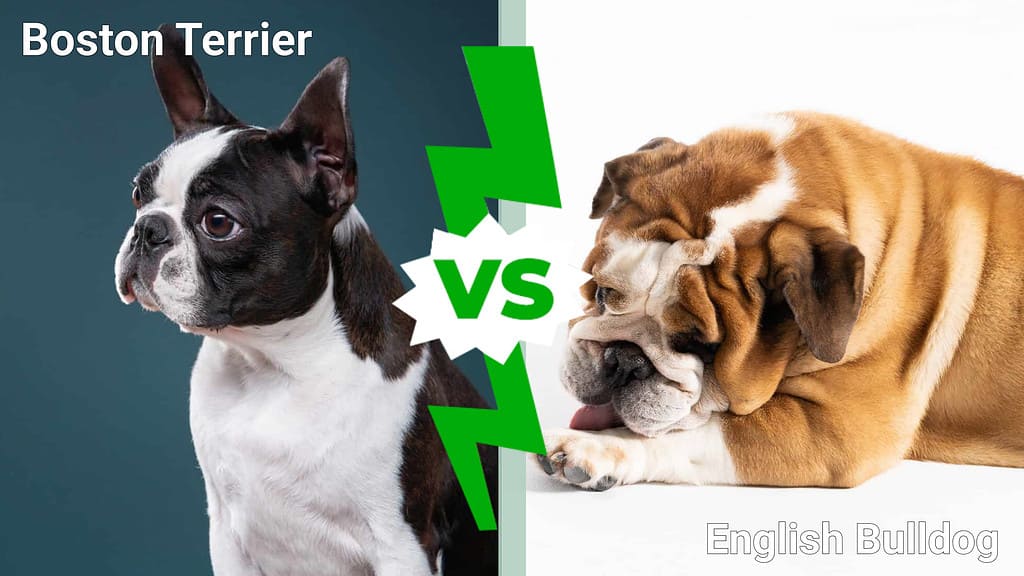
Boston Terriers have a more distinctive appearance with black, brindle, or seal. They also have a white marking between their eyes and on their chests and muzzles, which makes it look as though the pup is wearing a mini “tuxedo.”
On the contrary, English Bulldogs boast a range of colors, including brindle, fawn, black, blue, chocolate, white, seal, and lilac. They’re also known to have merle markings, which are irregular blotches of dark fur against lighter fur.

Boston Terriers have white markings that give them a sophisticated “tuxedo” look.
©bubutu/Shutterstock.com
Characteristics
Boston Terrier vs. English Bulldog: Temperament
Both Boston Terriers and English Bulldogs are friendly, family-oriented breeds. They love being around people and are great with children and other pets.
In particular, Boston Terriers are especially outgoing and social. They enjoy attention and are sensitive to harsh tones or punishment. While they are easy to train, they thrive best in loving environments with patient and loving owners.
English Bulldogs are also social pups. Despite their often intimidating, muscular stature, they are known to be one of the most gentle breeds. However, they can be needy and require a lot of love and affection — which they will give back tenfold. English Bulldogs are also known to be a bit stubborn and aren’t as trainable as Boston Terriers.
Boston Terrier vs. English Bulldog: Social Needs
Boston Terriers and English Bulldogs both have high social needs, as they prefer being around people (especially their owners/family members). They’re great with kids and other pets, and they thrive off love and affection.
The minor difference between the two breeds is that Boston Terriers typically require someone to be with them 24/7. If left alone for long periods of time, they might grow anxious and irritable, causing them to act out. This is why these pups are perfect for those who work remotely and don’t travel too often.
English Bulldogs also do best when they’re with humans, but they’re a bit more independent and self-reliant when left alone.
Health Factors
Boston Terrier vs. English Bulldog: Life Expectancy
The life expectancy of any dog breed can range based on various factors, such as genetics, veterinary care, diet, exercise, and any underlying health conditions.
Boston Terriers have a life expectancy of 11 to 13 years, but some can live up to 15 years with good care. On the other hand, English Bulldogs have a slightly shorter lifespan of 8 to 10 years, with the ability to live up to 15 years. However, they typically show signs of aging as early as five or six years old.
Boston Terrier vs. English Bulldog: Health Problems
Boston Terriers are relatively healthy dogs, but they are still prone to certain health conditions. Specifically, these pups often struggle with cataracts, patellar luxation (knee dislocation), deafness, and allergies. Like English Bulldogs, Boston Terriers also struggle with heart diseases and breathing issues. The three leading causes of death for Boston Terriers include cancer, heart disease, and infectious disease.
With a shorter life expectancy, you can expect English Bulldogs to have some (more serious) health conditions when compared to Boston Terriers. Because of their short muzzles, protruding lower jaws, and smooshed face, as well as their compact, stocky figures and extra skin, these pups are prone to issues like breathing problems (like Brachycephalic Airway Syndrome), skin and ear diseases, eye disorders, and difficulty regulating body temperature. Additionally, the leading causes of death for an English Bulldog are cardiac-related issues like heart attacks and heart failure.
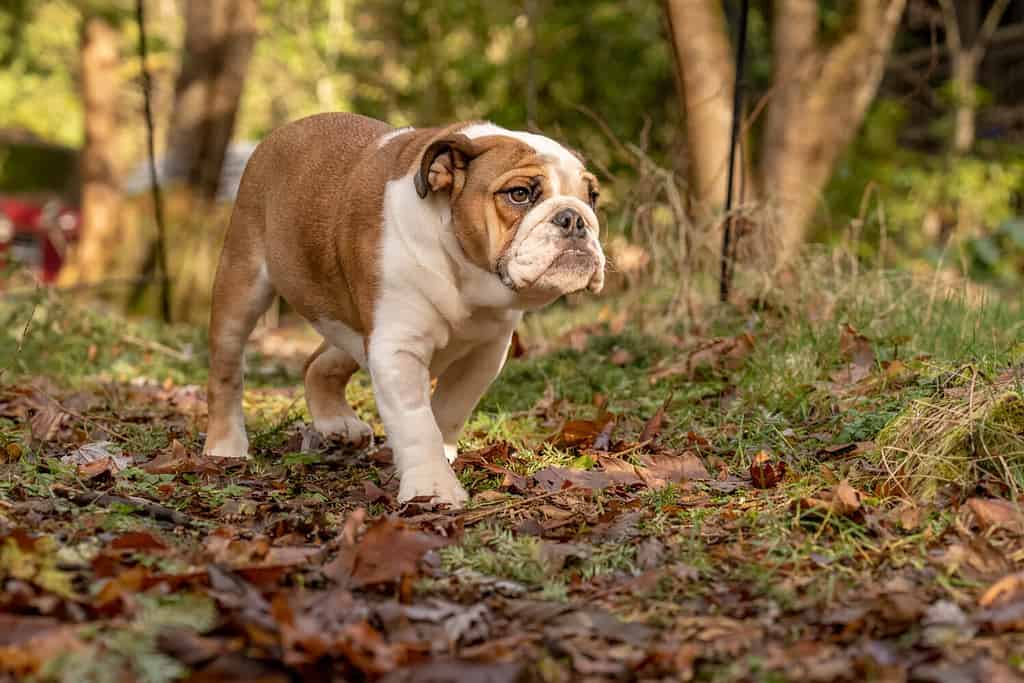
The English Bulldog, unfortunately, has a lower life expectancy than the Boston Terrier.
©Danita Delimont/Shutterstock.com
Wrapping up Boston Terrier vs. English Bulldog
Boston Terriers and English Bulldogs are lovable pets who make great family dogs and companions. Though they have their differences in appearance and health concerns, they’re similar in many ways, such as their social needs and temperament. With the right veterinary care and supportive environment, these pups can lead long, happy, and healthy lives — and contribute greatly to your life as well.