




E
Species Profile

English Bulldog

Canis lupus familiaris

Big-hearted, wrinkle-faced icon
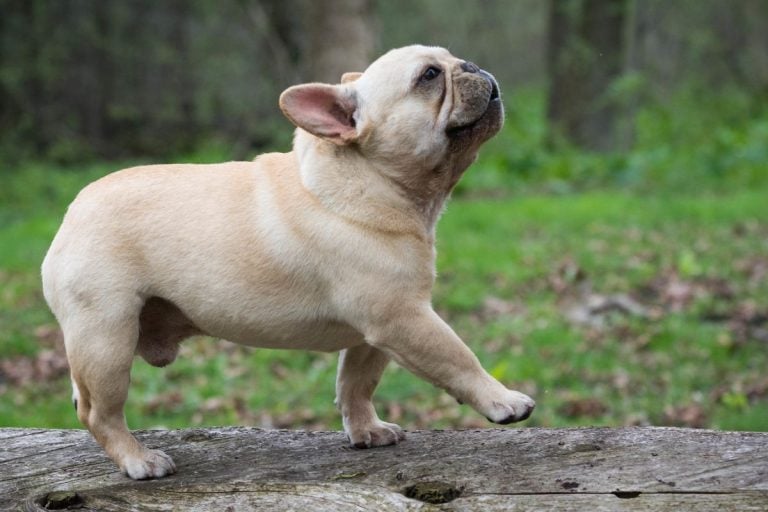
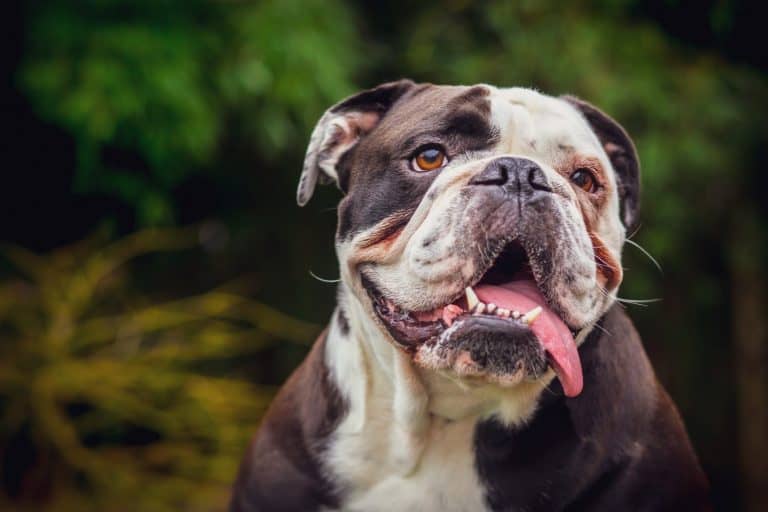
Willy Mobilo/Shutterstock.com

English Bulldog Distribution

Click a location to explore more animals from that region

Origin Location

This map shows the native origin of the English Bulldog. As a domesticated species, they are now found worldwide.

Loading map...

Size Comparison

Human 5'8"
English Bulldog 1 ft 2 in

English Bulldog stands at 20% of average human height.

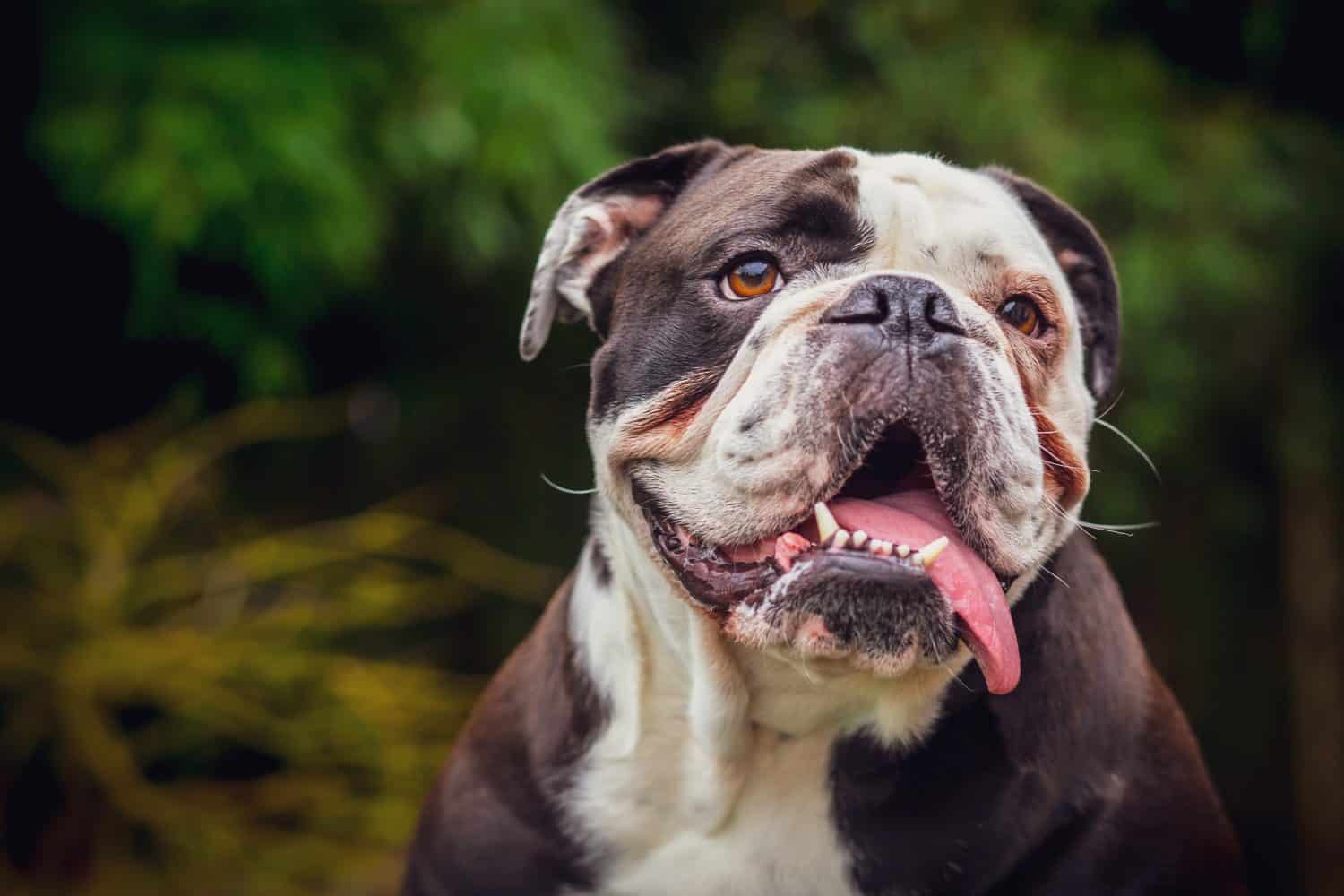
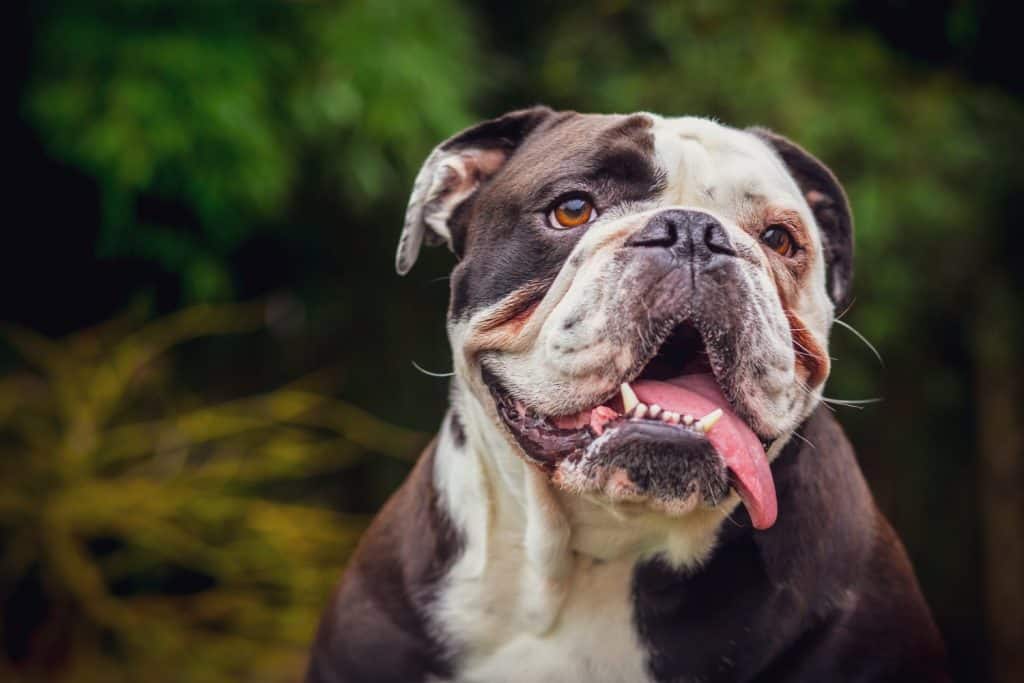
An adorable Olde English Bulldogge in nature

At a Glance

Domesticated
Also Known As Bulldog, British Bulldog
Diet Omnivore
Activity Diurnal+
Lifespan 4 years
Weight 25 lbs
Status Not Evaluated
Did You Know?

Despite the name, the English Bulldog is a domesticated dog breed (Canis lupus familiaris), not a wild canid.

Scientific Classification

The English Bulldog is a brachycephalic, medium-sized companion dog breed developed in England, historically associated with bull-baiting and later selected primarily for companionship. Modern English Bulldogs are characterized by a stocky build, broad head, and distinctive facial wrinkles.

Kingdom
Animalia
Phylum
Chordata
Class
Mammalia
Order
Carnivora
Family
Canidae
Genus
Canis
Species
lupus

Distinguishing Features

  • Stocky, low-slung body with wide chest and short limbs
  • Brachycephalic head with very short muzzle and nose leather set back
  • Prominent facial wrinkles and loose skin around head/neck
  • Undershot jaw (mandibular prognathism) common
  • Small, folded 'rose' ears (typical breed standard)
  • Short, smooth coat; various color patterns (e.g., brindle, fawn, pied)

Physical Measurements

Males and females differ in size

Height
♂ 1 ft 3 in (1 ft 2 in – 1 ft 4 in)
♀ 1 ft 1 in (1 ft – 1 ft 3 in)
Length
♂ 1 ft 12 in (1 ft 10 in – 2 ft 2 in)
Weight
♂ 53 lbs (51 lbs – 55 lbs)
♀ 46 lbs (40 lbs – 51 lbs)
Tail Length
♂ 2 in (1 in – 2 in)
♀ 2 in (1 in – 2 in)
Top Speed
15 mph
Slow, short bursts

Appearance

Primary Colors
Secondary Colors
Skin Type Short, smooth coat with notably loose skin and pronounced facial/body folds. Skin is prone to fold-related moisture retention; routine cleaning/drying of wrinkles and tail pocket is a key breed-care requirement.
Distinctive Features
  • Domesticated dog breed (Canis lupus familiaris), not a wild species; appearance and function are products of intensive human selection.
  • Brachycephalic head: very short muzzle, broad skull, and large nasal leather; contributes to reduced heat tolerance and exercise limitations versus the base species (wolf).
  • Undershot jaw (prognathism) with prominent lower jaw; characteristic 'bulldog' bite and facial profile.
  • Heavy facial wrinkles, deep stop, and pronounced nose roll; requires frequent wrinkle hygiene to reduce dermatitis/yeast infections.
  • Stocky, low-slung, medium-sized build with wide chest, heavy bone, and strong forequarters; markedly different from the wolf's athletic, long-limbed cursorial form.
  • Barrel ribcage and compact topline; movement often rolling/side-to-side rather than the efficient trot typical of wolves.
  • Short, often screw/curled tail; tail pocket can trap moisture and debris and may need regular cleaning.
  • History: developed in England; originally associated with bull-baiting, later selectively bred for a companion temperament and distinctive appearance.
  • Common health concerns linked to conformation: brachycephalic obstructive airway syndrome (BOAS), stenotic nares, elongated soft palate; watch for noisy breathing, overheating, and exercise intolerance.
  • High heat sensitivity and poor thermoregulation: requires cool environments, limited strenuous activity, and careful monitoring in warm/humid weather.
  • Orthopedic risks: hip dysplasia, elbow issues, patellar problems, and spinal anomalies; maintain healthy body condition and avoid excessive jumping/stairs when possible.
  • Dermatologic issues: skin-fold dermatitis, allergies, and recurrent ear infections; routine skin care and veterinary guidance often needed.
  • Ocular risks: cherry eye, entropion/ectropion, corneal irritation; wrinkles and shallow orbits can predispose to eye problems.
  • Care requirements: moderate, low-impact exercise; weight management; harness use preferred over collars to reduce airway strain; regular dental care due to crowded teeth/underbite.

Sexual Dimorphism

Sexual dimorphism is present but modest. Males are typically heavier and more heavily built with broader heads and thicker necks, while females are usually slightly smaller and less bulky. Both sexes share the same hallmark brachycephalic, wrinkled phenotype.

♂
  • Generally larger body mass and more pronounced musculature through shoulders and forequarters.
  • Broader head and thicker neck; heavier jowls may appear more prominent.
  • Often wider chest and more substantial bone.
♀
  • Typically slightly smaller and lighter overall with a somewhat finer (though still stocky) outline.
  • Head and jowls may be a bit less massive while retaining the same breed-typical wrinkles and underbite.
  • May mature with a slightly less heavy forequarter compared to males.

Did You Know?

Despite the name, the English Bulldog is a domesticated dog breed (Canis lupus familiaris), not a wild canid.

The breed's historical association with bull-baiting influenced its low-slung, muscular build and wide stance.

Modern Bulldogs were heavily re-selected in the 19th century for a calmer, companion temperament.

Their signature "undershot" jaw (mandibular prognathism) is a defining head trait of the breed standard.

Bulldogs are typically poor swimmers due to a heavy front end and relatively short legs-water safety matters.

Facial wrinkles are iconic but require routine cleaning to prevent skin irritation and infection.

Heat is a major risk factor: brachycephalic airways make Bulldogs far less tolerant of high temperatures than many other dogs.

Unique Adaptations

  • Brachycephalic skull shape: a shortened muzzle and broad head distinguish the breed from the ancestral wolf-like canid form; it contributes to the iconic look but reduces airflow efficiency.
  • Undershot jaw and wide mouth: a hallmark of the breed's head type, distinct from the more scissor-like bite typical of wolves and many working dogs.
  • Compact, muscular build: a low center of gravity and heavy forequarters, historically selected for strength rather than endurance.
  • Thick skin folds: especially on the face; visually distinctive but functionally require human care to avoid dermatitis.
  • Lower athletic heat tolerance: compared with many dogs and especially wild canids, Bulldogs are less capable of thermoregulation during exertion because effective panting is compromised.
  • Short coat with variable colors/patterns: easy grooming compared with long-coated breeds, but skin health is often a bigger focus than coat maintenance.

Interesting Behaviors

  • "Snort-and-snooze" routine: many Bulldogs alternate short bursts of play with long rest periods, reflecting a lower endurance profile than many canids.
  • Noisy breathing and snoring are common behavioral "tells" of brachycephalic airway anatomy.
  • A comedic "bulldoze" gait: the breed's broad chest and shorter limbs can produce a rolling, determined walk.
  • Strong people-focus: many Bulldogs prefer staying close to family members and may shadow owners from room to room.
  • Stubborn streak: they can be slow to respond if training is repetitive; they tend to do best with short, reward-based sessions.
  • Face-rub and wrinkle-wipe seeking: some Bulldogs solicit rubbing around the muzzle/face, where folds can itch if mildly irritated.
  • Play style often favors tug and short, low-impact games over distance running or long fetch sessions.

Cultural Significance

English Bulldog (Canis lupus familiaris) became a British symbol of strength and calm in cartoons and war pictures and an American college mascot (e.g., Yale's Handsome Dan). The breed changed from fighting dogs to gentle family pets.

Myths & Legends

Bull-baiting origins (England): early bulldogs were celebrated in accounts and popular lore as dogs that would "hold" a bull with fearless tenacity-stories that fed the enduring symbolic link between "bulldog" and grit.

The "John Bull" association: in 18th-19th century British satire and political cartoons, the bulldog was paired with the national personification John Bull, reinforcing a folk-political legend of the bulldog as Britain's steadfast guardian.

Wartime British symbolism: during the Second World War, the bulldog image (often linked in public imagination to Winston Churchill's pugnacious resolve) circulated as a cultural story of national defiance and endurance.

Handsome Dan (Yale): the long-running mascot tradition, beginning in the late 19th century, spawned campus folklore-tales of the bulldog as a lucky charm for teams and a living symbol of school spirit.

"Bull dog" as a metaphor: in English-language idiom and popular storytelling, the bulldog became a character archetype-stubbornly loyal, unyielding, and brave-reflecting cultural narrative more than biological reality.

Conservation Status

NE Not Evaluated

Has not yet been evaluated against the criteria.

Population Stable

Life Cycle

Birth 3 pups
Lifespan 4 years

Lifespan

In the Wild
1–8 years
In Captivity
6–12 years

Reproduction

Mating System Polygynandry
Social Structure Managed Domestic
Breeding Pattern Serial
Fertilization Managed Selective
Birth Type Managed_selective

English Bulldog (Canis lupus familiaris) breeding fits polygynandry but is mostly controlled by humans. Breeders choose mates and timing, use progesterone tests and artificial insemination with vets. Pairings are occasional; other dogs do not help raise pups.

Behavior & Ecology

Social Pack Group: 2
Activity Diurnal, Crepuscular
Diet Omnivore Meat-forward, highly palatable foods (e.g., beef or chicken-based diets/treats); many English Bulldogs are especially food-motivated.

Temperament

Affectionate, people-centered companion; typically enjoys close physical contact (leaning, cuddling) and prefers being indoors near family.
Calm-to-moderate energy with short bursts of play; compared with the broader domestic dog population, English Bulldogs have lower endurance and tire quickly, especially in heat/humidity due to brachycephalic airway limitations.
Stubborn/independent streak: responds best to short, consistent, reward-based training; harsh corrections can increase shutdown or defensive behavior.
Generally friendly and tolerant, but can be dog-selective; frustration (e.g., on leash) can appear as barking/lunging-structured introductions and controlled exposure help.
Breed-distinguishing welfare/behavior link: brachycephaly and heavy build increase risk of overheating and respiratory distress; this shapes social behavior by limiting long, vigorous group play and requiring careful monitoring during excitement.
Common health-related concerns that affect behavior and care: brachycephalic obstructive airway syndrome (snoring/stridor/exercise intolerance), heat stress risk, skin-fold dermatitis (facial wrinkles), allergies/otitis, orthopedic issues (hip/elbow dysplasia, patellar luxation), and eye issues (e.g., corneal injury).
Care requirements influencing social routines: temperature-controlled environment, short low-impact walks, frequent rest breaks, harness over collar (to reduce airway pressure), routine wrinkle/ear cleaning, weight management, and supervised play with calmer dogs.
Most English Bulldogs are calm, loving, and low-energy. Some are more playful or more shy, or picky with other dogs. Early socializing and matching play styles matter.

Communication

Low-to-moderate barking; often used for alerting or demand Attention/food
Grunts, snorts, and heavy breathing sounds are common and breed-typical; intensity can increase with excitement or respiratory compromise.
Growling and rumbling vocalizations during play or discomfort; important to read alongside body language.
Whines/sighs for attention, mild frustration, or separation-related discomfort.
Snoring during sleep is common Can be normal for the breed but may also reflect airway obstruction
Body-leaning, pawing, and nudging to solicit attention; Bulldogs frequently use physical contact as an affiliative signal.
Facial expressions are prominent; however, facial wrinkles and brachycephalic structure can make signals subtler-watch the eyes, mouth tension, and overall posture.
Tail signaling is limited due to short tails in many individuals; rely more on whole-body posture (stiffness vs. loose wiggle) and movement.
Licking, nuzzling, and following/hovering near family members to maintain social proximity.
Scent marking (urination) and sniffing as typical canine social information gathering, though many Bulldogs show less exploratory range due to low roaming drive and stamina limits.
Play signals include brief bows or shoulder dips, bouncy steps, and exaggerated mouthy play; careful supervision is advised because overexertion/overheating can occur quickly.

Habitat

Biomes:
Temperate Forest Boreal Forest (Taiga) Tundra Temperate Grassland Desert Hot Desert Cold Mediterranean Savanna Tropical Dry Forest Tropical Rainforest Alpine Wetland Freshwater Marine +8
Terrain:
Plains Coastal Island
Elevation: Up to 16404 ft 3 in

Ecological Role

Domesticated, human-associated omnivore; primarily a companion animal rather than an ecological predator in modern settings (contrast with feral/landrace dogs that may hunt/scavenge more).

Companionship and social support to humans Deterrence/alerting (watchdog behavior) Opportunistic waste removal/scavenging in human environments (species-level tendency; limited in well-managed pet contexts)

Diet Details

Main Prey:
Complete and balanced commercial dog food Veterinary-prescribed or specialized diets Meat-based treats
Other Foods:
Fruits Vegetables Cooked grains and starches Grasses

Human Interaction

Domestication Status

Domesticated

English Bulldog (Canis lupus familiaris) is a fully domesticated dog bred in England. Once used for bull‑baiting, it was reshaped into a companion. Brachycephalic and stocky with a short muzzle, it is popular in homes, shows, and social media but has breathing, skin and joint problems and needs frequent vet care and welfare oversight.

Danger Level

Low
  • Bite risk exists (as with any dog), typically linked to poor socialization, pain, fear, or mishandling; jaw structure can still cause injury
  • Accidental knocks/scratches from a heavy, stocky body during play
  • Zoonotic risks common to dogs (e.g., parasites, dermatophytes) if hygiene/vet care is poor
  • Allergen exposure (dander/saliva) and skin/ear infections that can be irritating to handle if untreated

As a Pet

Suitable as Pet

Legality: Generally legal as a pet in most jurisdictions; may face housing/insurance/breed-policy restrictions in some rentals/HOAs, and some airlines restrict brachycephalic dogs for cargo travel due to heat/airway risk.

Care Level: Experienced

Purchase Cost: $1,500 - $5,000
Lifetime Cost: $20,000 - $60,000

Economic Value

Uses:
Companion animal (primary) Professional breeding and stud services Dog shows/conformation and related events Veterinary and specialty care demand (airway/dermatology/orthopedics) Pet products and branding/mascot use Therapy/visitation work (individual-dependent)
Products:
  • Puppy sales and adoption fees
  • Stud fees and breeding services
  • Conformation/show handling, training, and grooming services
  • Veterinary services (BOAS evaluation/surgery, dermatology, orthopedics, allergy management)
  • Pet insurance policies and wellness plans
  • Breed-specific gear (harnesses, cooling vests, wrinkle/skin-fold care products)
  • Media/marketing appearances and licensing (mascot/brand imagery)

Relationships

Quick Take

  • The English Bulldog looks like a fighter but behaves like something completely unexpected, and that surprising contrast reveals a lot about what actually makes them tricky to own. Explore their true temperament →
  • A short, smooth coat sounds low-maintenance, yet English Bulldog grooming has one daily requirement most new owners aren't prepared for. See the daily wrinkle care →
  • Walking your English Bulldog on a warm day seems harmless, but there's a temperature threshold where it becomes genuinely dangerous for the breed. Check the heat safety threshold →
  • English Bulldogs need surprisingly little exercise, though skipping one specific type of early training can turn that easygoing nature into a real problem. See why early training matters →

The English Bulldog is full of love and cuddles for the entire family, but don’t expect much more out of them. Although this dog breed was created to participate in a spectator sport called “bull-baiting,” they now have a much tamer role — the family favorite. They seem quite aggressive from their physical appearance, but they’d be happy to simply lie around and love their family. English Bulldogs are a low-energy breed and often tire after short periods of activity, with many needing a break after about 15 minutes of moderate exercise. Even though they are rather close to the American bulldog, the English bulldog can be distinguished from the American bulldog by two main differences: agility and size.

The English bulldog is simply a working-dog-turned-lapdog at its finest.

An infographic about English Bulldogs detailing their size, weight, common health problems, and temperament traits like being affectionate yet possessive.
From fierce bull-baiter to lazy lapdog, this low-energy breed rules the couch—but owning one means managing a high-stakes health checklist. © A-Z Animals

3 Pros and Cons of Ownership

Here are a few facts that may help you decide if a purebred English bulldog is the right pet for you.

ProsCons
Loving and loyal: Despite their appearance, one of the most interesting facts about English bulldogs is how loving they are. They are perfect for a family.Many health issues: Even with a reputable breeder, this bulldog is prone to many health concerns, including cherry eye and entropion.
Calm: These dogs normally don’t become aggressive. In fact, they have been known to simply walk away if the energy in a room becomes too much for them to handle.Requires complicated grooming: Most dogs need only to be brushed and bathed on a regular schedule. The English bulldog, however, must have its wrinkles cleaned and dried daily to prevent irritation.
Quiet: If you want a dog that won’t wake the neighborhood with its barking, the English bulldog is an ideal choice.Can be territorial: You need to start training this dog breed as soon as possible to prevent aggression towards humans and animals.

Size and Weight

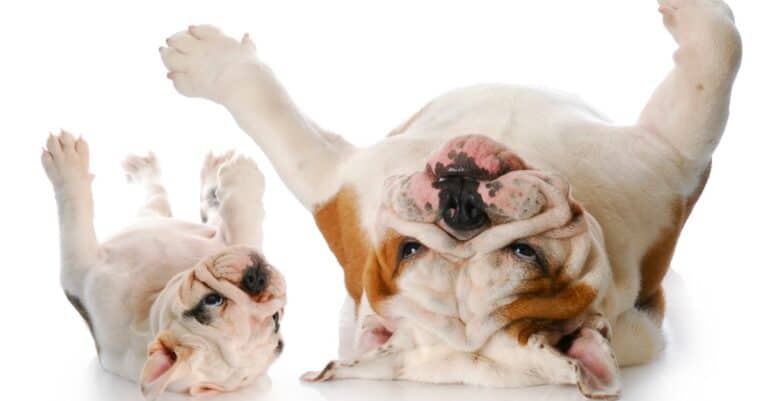
English bulldogs can weigh over 50 pounds, but that doesn’t stop them from crawling into your lap for a cuddle.

English bulldogs range between 12 and 16 inches tall for both males and females. However, their weight is slightly different. Males tend to weigh more at 53 to 55 lbs. when they are fully grown. Females, on the other hand, are 49 to 51 lbs. An English bulldog puppy is nearly 75% of its adult height by the time it is just six months old.

Common Health Issues

For the most part, breeders focus on creating the healthiest puppies possible, though dogs adopted from a rescue may not have the same health guarantees. Due to their history of genetic diseases, the English bulldog can be hard to take care of without the right medical care. For instance, mothers with the Demodex mite can pass it down to their puppies, causing demodectic mange.

When adopting from a breeder, check for health clearances from the Orthopedic Foundation for Animals and the Canine Eye Registry Foundation. These clearances aren’t provided to any dog under two years old because some of the issues they face will take that long to arise.

The eyes of an English bulldog have many possible complications. Cherry eye — or a protrusion in the corner of the eye — is the most common, but the gland that causes it can be removed. If the dog’s tear production is inhibited, they may also suffer from dry eyes. Entropion, which causes the eyelashes to turn towards and rub against the eye, is also common, requiring surgery to fix.

Because of their short head, long soft palate, and narrow nostrils, English bulldogs commonly suffer from brachycephalic syndrome, which can obstruct the airway. Their build also puts them at risk for hip dysplasia and patellar luxation.

Temperament and Behavior
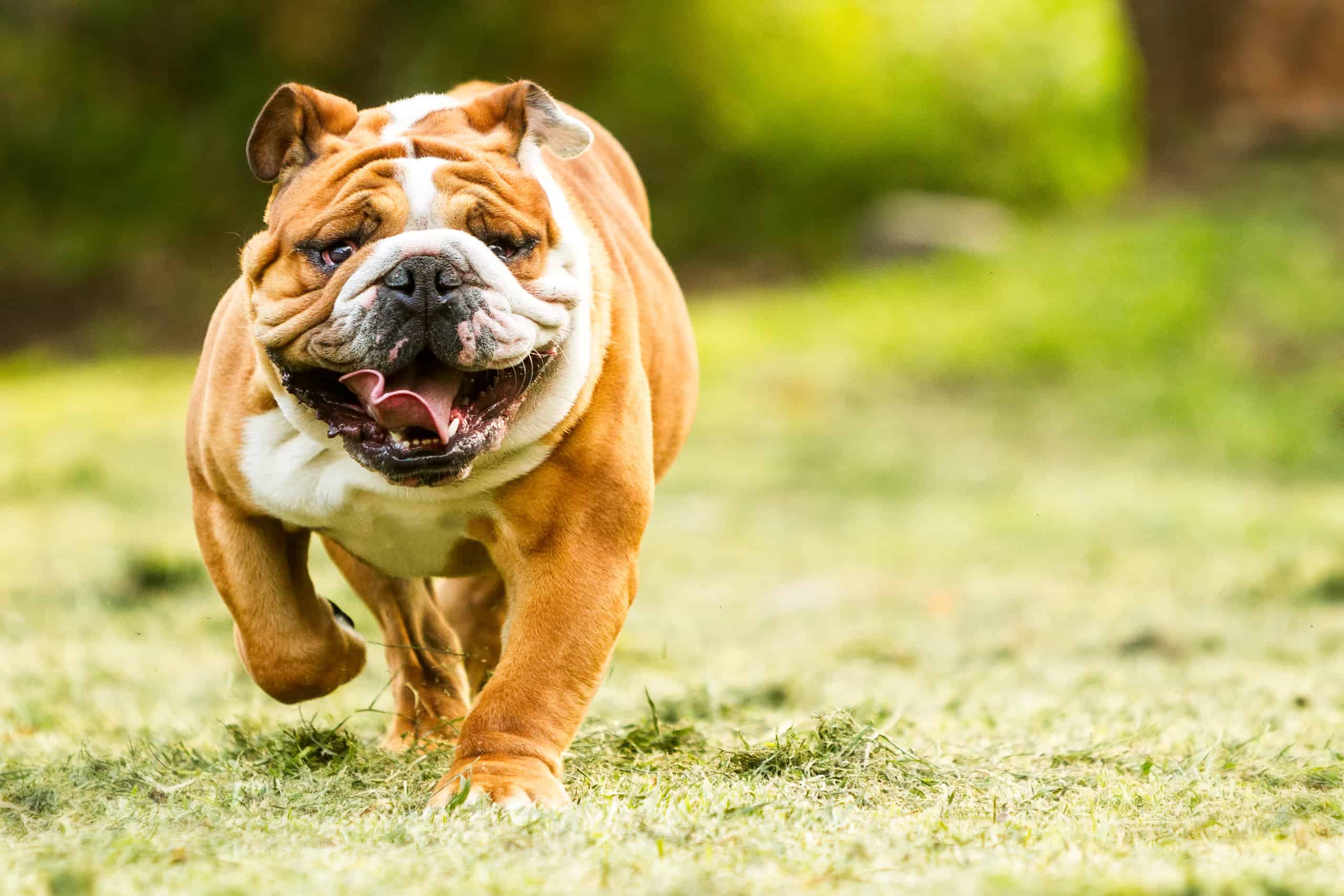
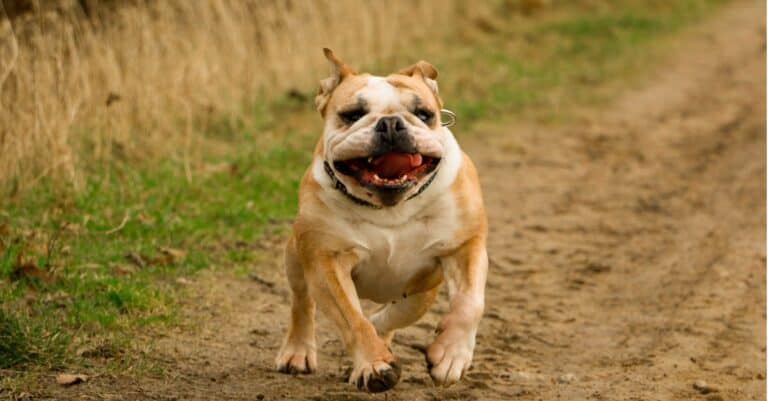
bulldog running

The English Bulldog is loving, loyal, calm, and quiet, but it looks intimidating.

The temperament of the English bulldog is rather gentle, despite their intimidating physical features. With their affectionate nature, these pets are a great fit for families, especially considering how they use their physical appearance to their advantage to protect their family. They are persistent, and they aggressively defend their family from intruders.

This dog breed thrives on attention from their humans, and they have quite a dominating personality. This can lead the dog to assert dominance over its family, which is a behavior that needs to be trained out. The only way to prevent this issue is through early training that establishes the owner as the dominant one in the house. Without this assurance, dogs will start to guard furniture, toys, and food as their own, becoming aggressive with anyone who comes near them.

One of the most well-known traits of these bulldogs is their tendency to snore. They also have messy eating habits and tend to drool and slobber. They also tend to become lazier as they get older, so this messiness may worsen.

Care

There are many considerations that you need to make to keep your English bulldog healthy. Their activity level, breeding, and age all play a role in the type of care you provide, even while your bulldog is still a puppy.
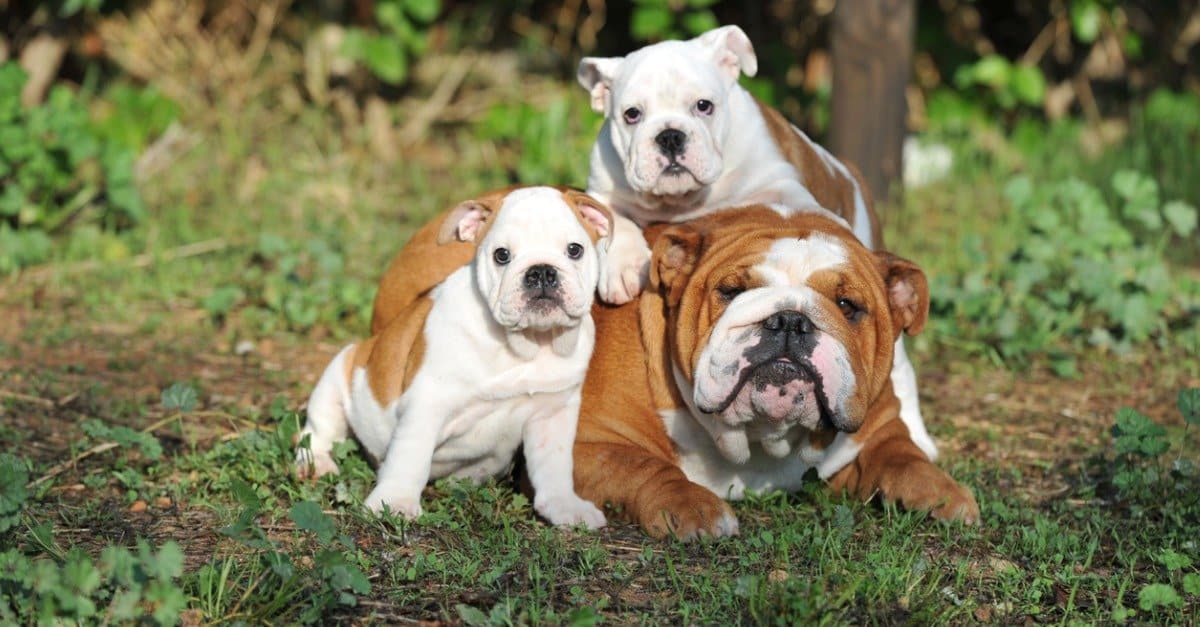
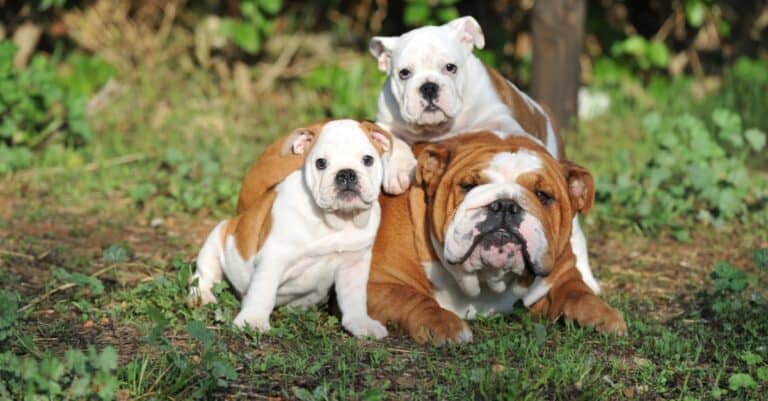
English bulldog family

For an English bulldog family, feeding has a similar routine for adults and puppies, but puppies need a special food meant for them.

Food and Diet

The English bulldog is a stocky animal, requiring a diet that offers between 1.5 and two cups of high-quality dog food a day. To manage their intake, separate this total amount into two smaller meals. Still, this amount is simply a guideline — their metabolism, size, age, and amount of activity will play a role in the diet they require. Dogs that use more energy will need more food than lazier pups. Since this dog breed is at risk of obesity, don’t leave food out for them to graze on throughout the day.

Puppies have about the same routine in their diet, though you should seek out a dog food meant for puppies.

Maintenance and Grooming

With a smooth and glossy coat, you should need to brush them only once a week, using a firm bristle brush that can remove the excess fur that they shed. They don’t shed much, but brushing an extra time or two during the week will reduce this issue significantly.

Another notable feature in their identification is their wrinkled body. Despite minimal brushing, cleaning inside the wrinkles daily is crucial, including drying completely afterward. Using a wipe with lanolin and aloe vera can make this task much easier. They’ll also need to have their nose washed, moisturizing it with petroleum jelly to prevent dryness.

If you can’t brush your dog’s teeth every day, make sure to brush their teeth at least three times a week.

Training
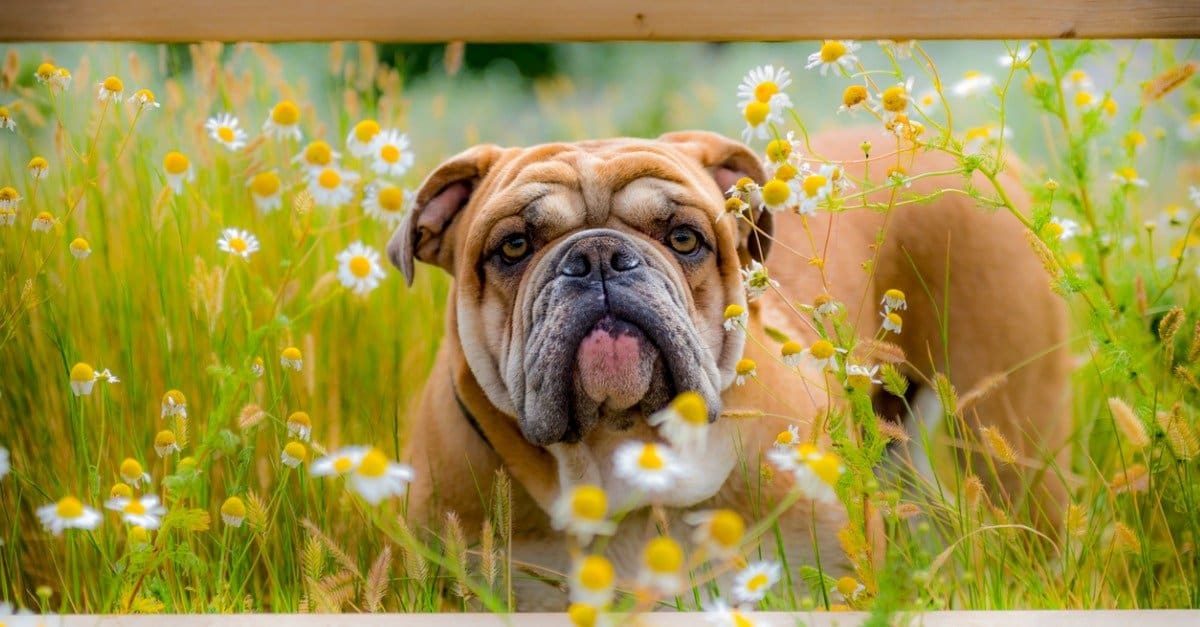
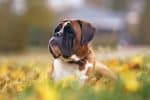
English bulldog in flower field

Early socialization and consistent, positive training are important to prevent unwanted behaviors and ensure your English Bulldog is well-mannered.

You must establish yourself as a pack leader for your dog as soon as possible. Without proper socialization and training, English Bulldogs may develop behavioral issues, including aggression toward other animals or humans. They take a little time to learn commands, but it is worth the effort. Have a little patience and make sure to socialize them with other animals and humans to prevent conflict.

Exercise

Although many dogs require a lot of physical activity to keep them from becoming restless, that is not true of the English bulldog. It would much rather remain inactive indoors, relaxing the day away indoors. Even just 15 minutes of activity is sometimes enough to exhaust it for its frequent naps. Since it doesn’t require much area for play, this dog breed is ideal for families in smaller living spaces like apartments. Even if you just take it on a walk around the block, it will be perfectly content.

Don’t take your dog outside for a long walk when weather conditions are uncomfortable. The heat is not its friend, and even half an hour of walking in temperatures of 85°F or higher can be potentially fatal for this breed. The English Bulldog is generally unable to swim well due to its body structure, including a broad chest, short legs, and brachycephalic (short-nosed) head, so it should always be supervised near water.

Puppies

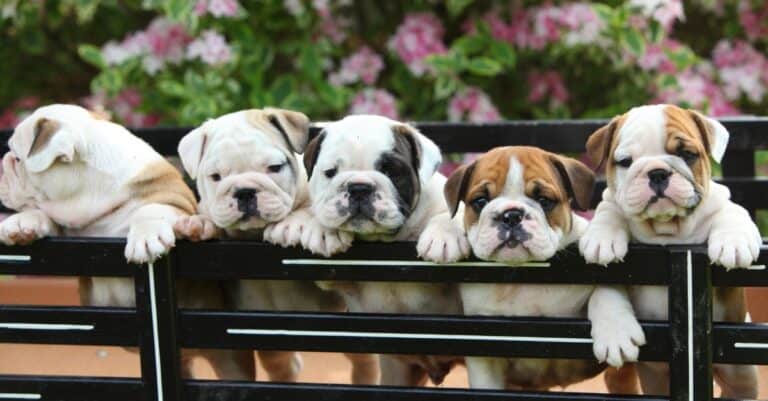
Make sure to start grooming these puppies at an early age to get them used to brushing teeth, wiping wrinkles, and other tasks. A puppy cannot leave its family until it is eight weeks old, but it is never too soon to socialize them. To ensure a positive adoption experience, look for a puppy that is outgoing but not rough with littermates.
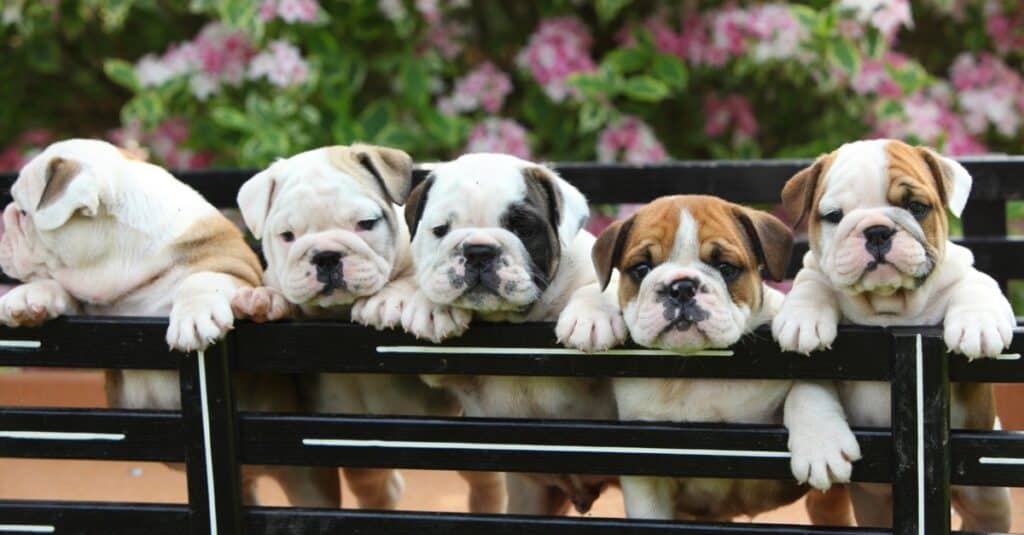
It is important to help English bulldog puppies get used to having their wrinkles wiped at an early age.

Children

Part of the reason that English bulldogs are so popular is that they love children and are quite gentle with them. Although every breed should be supervised with young kids, their maternal instincts make them patient with young children. Socialization plays a major role in how comfortable the dog is with a child, but they will be wary of any stranger.

Similar Dogs

If the English bulldog doesn’t have the temperament or size that you want from your pet, there are always other options. Some of the alternatives you might consider include the Staffordshire bull terrier, the American pit bull terrier, or the American bulldog.

  • Staffordshire Bull Terrier: The Staffordshire bull terrier — also known as a Staffie — is incredibly intelligent and loves children.
  • American Pit Bull Terrier: The American Pit Bull Terrier is very loving and social. Although it is a bit bigger than the English bulldog, it is very gentle.
  • American Bulldog: The American Bulldog has much greater speed and girth than the English Bulldog.

Famous

English bulldogs have easily found their way into the hearts of celebrities as their own pets and as companions on-screen. Adam Sandler, Olivia Wilde, Brad Pitt, Joe Jonas, and Ozzy Osbourne have all adopted English bulldogs for their families.

The presence of an English bulldog is so welcomed that they’ve been featured in many movies and television shows. They’ve made appearances in Van Wilder as Colossus, Sherlock Holmes as Gladstone, Mannequin as Rambo, and The Game Plan as Spike.

View all 185 animals that start with E

Sources

  1. AKC / Accessed January 5, 2022
  2. Hill's Pet / Accessed January 5, 2022
  3. Wikipedia / Accessed January 5, 2022
  4. Dog Time / Accessed January 5, 2022
  5. Dog Breed Info / Accessed January 5, 2022
  6. Daily Paws / Accessed January 5, 2022
Thank you for reading! Have some feedback for us?


English Bulldog FAQs (Frequently Asked Questions)

English Bulldogs come with a higher price since they are a purebred dog breed. The average price falls between $1,600 to $2,500 from a reputable breeder. If you don’t want to pay this high price, check local animal shelters or rescues.