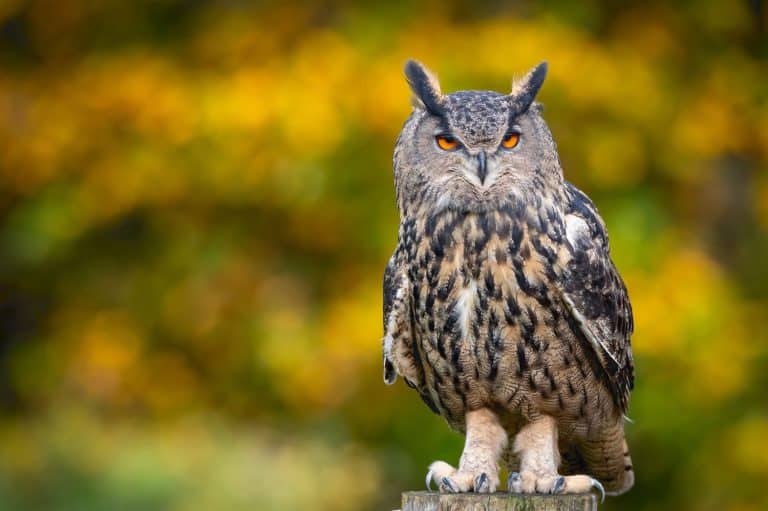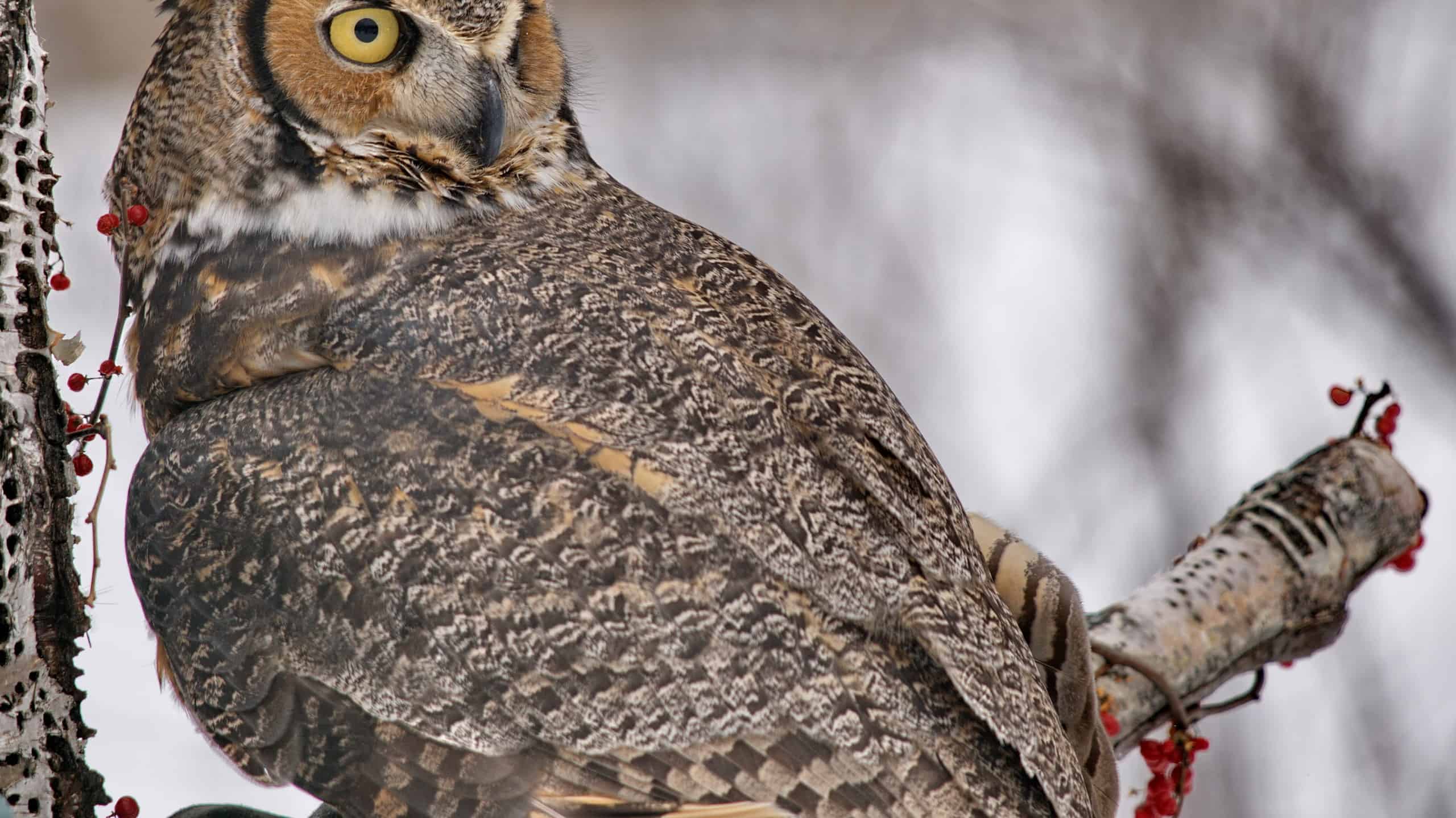

If you’ve ever seen an owl looking at you with its head turned directly behind its body, you may feel like you’ve stumbled into a scene from The Exorcist. However, there’s no need to worry about demonic owls. Their extremely flexible necks allow them to turn their heads around dramatically, without any supernatural help. But just how far can owls turn their heads? Let’s take a look at whether or not owls can turn their heads all the way around.
Can Owls Turn Their Heads All the Way Around?
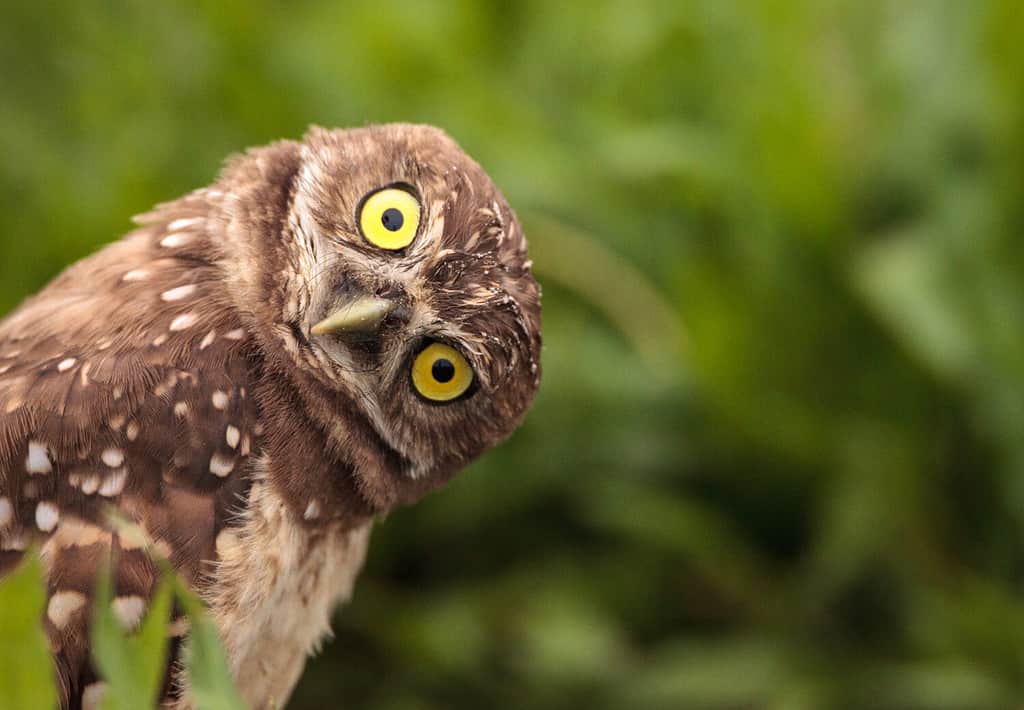
While owls cannot turn their heads 360 degrees, they can pivot 270 degrees in either direction.
©SunflowerMomma/Shutterstock.com
The simple answer is no, owls cannot turn their heads all the way around. But while they don’t have 360 degrees of rotation, they can turn their heads about 270 degrees in either direction and 90 degrees up and down without tearing ligaments or damaging blood vessels. This means they can go about three-quarters in either direction, which, when added together, allows them a 360-degree view. In comparison, a human’s range of rotation is only 180 degrees.
How Can Owls Turn Their Heads So Far?
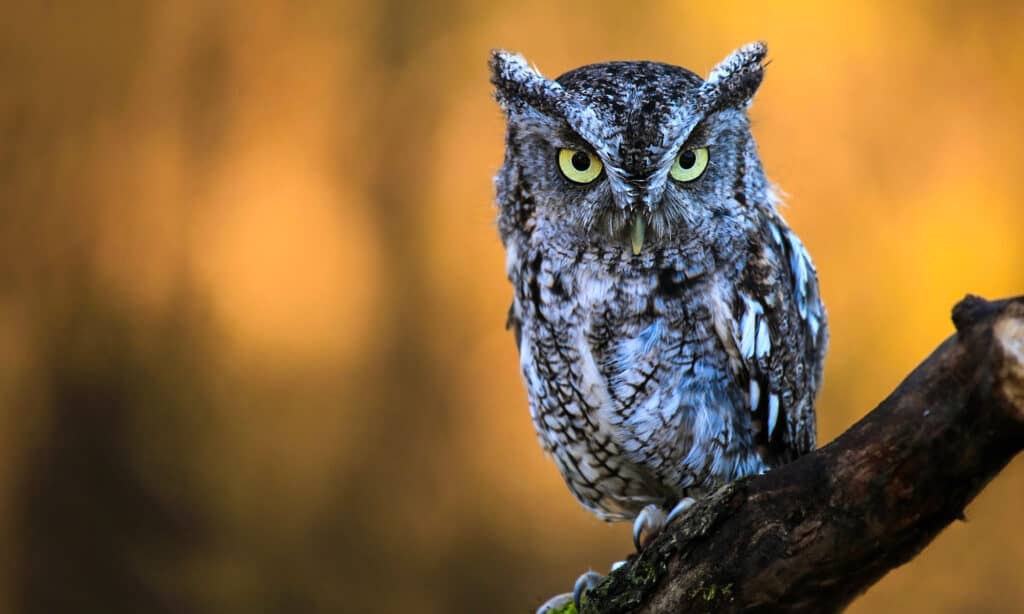
Eastern screech owls are one of the smaller owl species in North America.
©mlorenz/Shutterstock.com
The neck is the most flexible part of the human spine and has the most mobility. However, humans are limited to only 180 degrees of rotation because we have seven cervical vertebrae in our neck. In contrast, owls have 14 cervical vertebrae, which gives them more range of motion.
Another contributing factor to the owl’s enhanced neck mobility is their blood vessels. In humans, the vertebral and carotid arteries are prone to minor tears and scratches from sudden or harsh movements. These tears can sometimes result in clots that can lead to strokes or embolisms. While human arteries get smaller during head rotation, which can lead to reduced blood flow and dizziness, owls’ arteries actually expand to preserve consistent blood flow.
Researchers have discovered that owls also have large traverse foramina (hollow cavities in a vertebra that allow arteries to pass through the bone). In humans, the traverse foramina fit closely around arteries, but in owls, the openings are nearly 10 times bigger than the artery within it. This creates air pockets that cushion the artery to preserve blood flow, even while twisting dramatically.
Why Do They Need to Turn Their Heads?
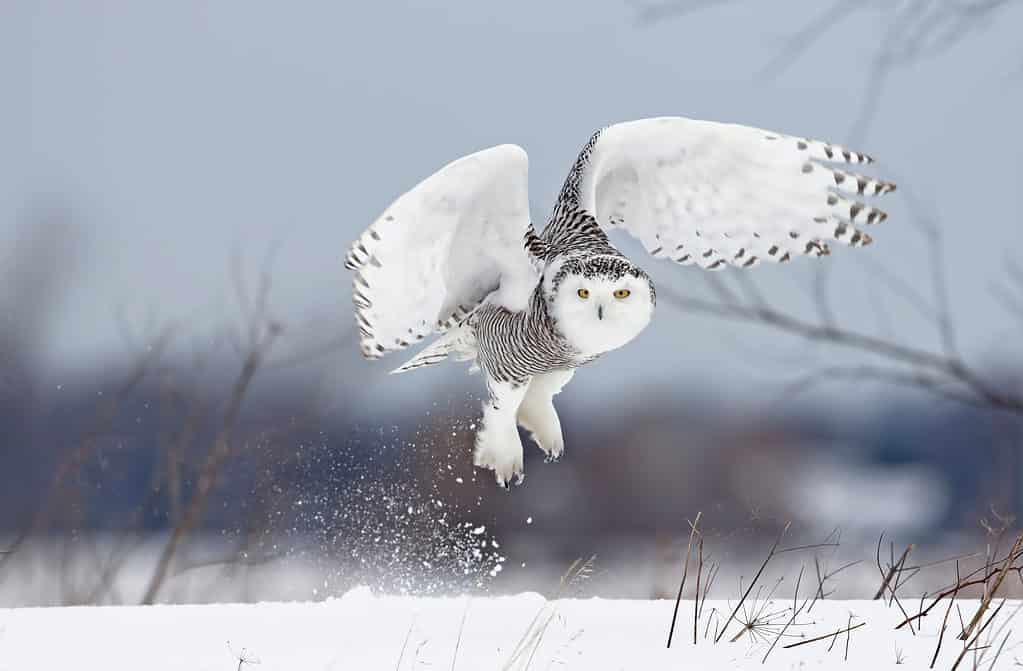
Snowy owls eat a variety of food and swallow their prey whole.
©Jim Cumming/Shutterstock.com
While it would be cool to be able to turn our heads 270 degrees, humans don’t really need to. A human’s field of vision— what you can see just by moving your eyes — is around 180 degrees, with 140 degrees of binocular vision. (Binocular vision is the range in which you can see an object ahead of you with both eyes at the same time.) However, owls only have a field of vision of around 110 degrees, and 70 degrees of that is binocular. Their field of vision is compromised by the fact that they cannot move their eyes.
Humans have six muscles (called the extraocular muscles) that control the movement of our eyes. In contrast, an owl’s eyes are held in place by bony structures called sclerotic rings. Because they lack eye muscles, they can only look straight ahead. However, owls need to be able to look around them, to sight predators, prey, and other objects. To compensate for their lack of eye movement, they are able to move their entire heads instead. They also turn their heads to triangulate sounds, helping them identify the sounds of prey — a critical first step in hunting.
So, while owls can’t turn their heads 360 degrees, their neck flexibility is still impressive, and an important adaptation for their survival.