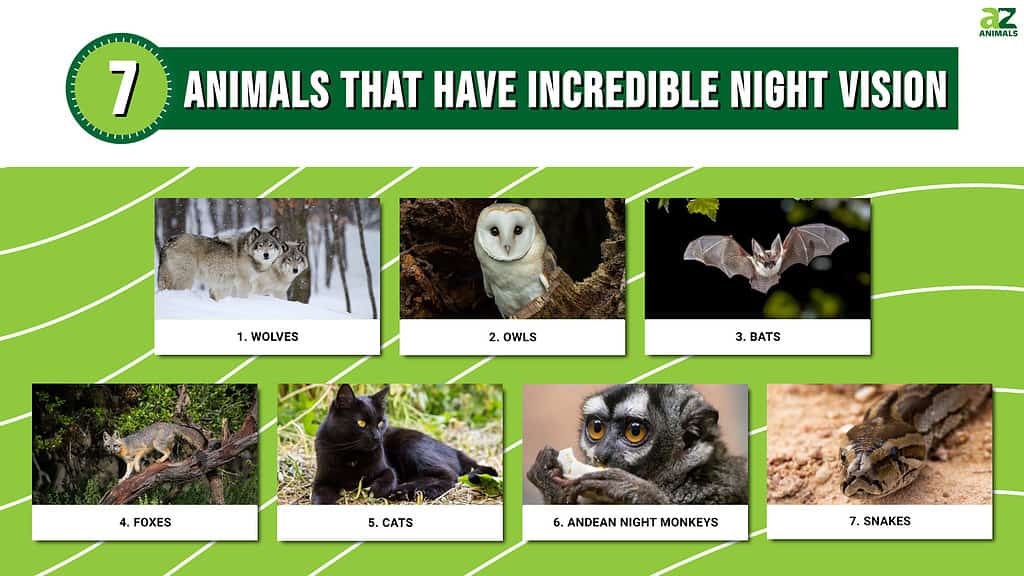

An assortment of animals active after dark have evolved remarkable night vision, giving them a clear advantage when the sun goes down. Their eyes are often larger in proportion to their heads, with specialized structures such as the tapetum lucidum, a reflective layer that enhances available light. Still, even the best-adapted nocturnal animals don’t see in complete darkness; they rely on low light, other senses (smell, hearing, echolocation, heat detection), or a combination.
The animals listed here do not rank in any particular order. The only criterion for making this list is a heightened ability to see or perceive the world in low light conditions that would leave humans nearly blind.
This post was updated on September 27, 2025 to clarify wolves’ daytime vision when compared to that of humans, owls’ reliance on hearing, bat sight, cats’ vision in bright light, and the nature of snakes’ night “vision”.
1. Wolves
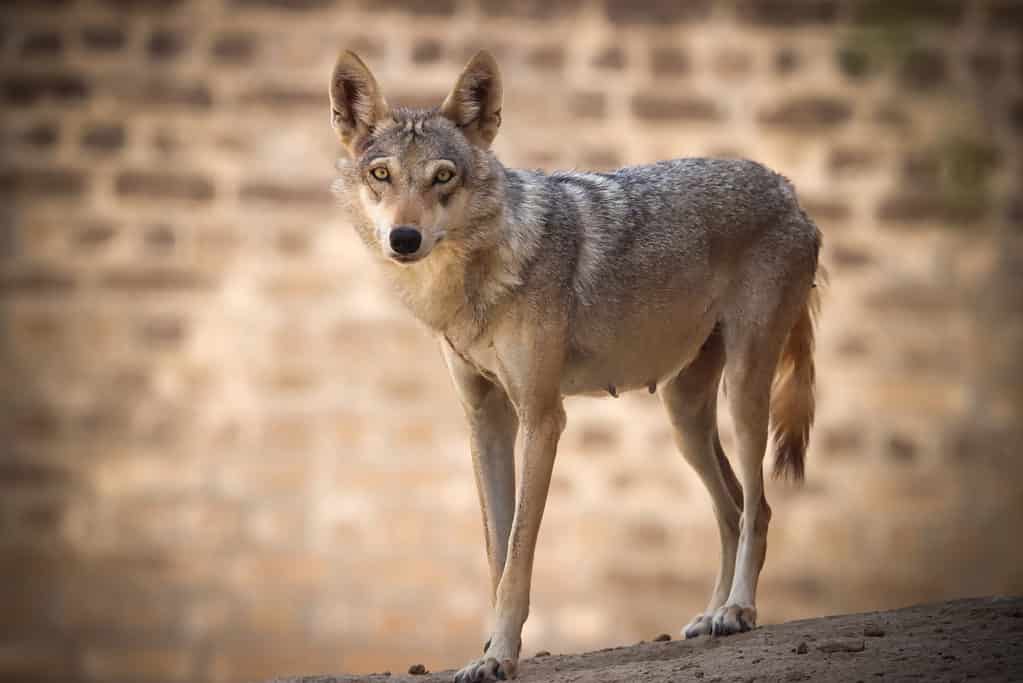
Wolves do not rely solely on their eyesight for their nocturnal hunts.
©Jrs Jahangeer/Shutterstock.com
The wolf is the largest member of the dog family. At a point, certain sub-species almost went extinct, especially the larger gray wolf native to North America, Canada, and Europe.
Though their daytime visual acuity is not especially strong compared to humans, wolves have better night vision than humans (and most other animals) thanks to their tapetum lucidum. However, they do not rely solely on their eyesight for their nocturnal hunts.
Wolves have a strong sense of smell, making them excellent predators. Their whiskers act as receptors, thus helping them detect their surroundings.
2. Owls
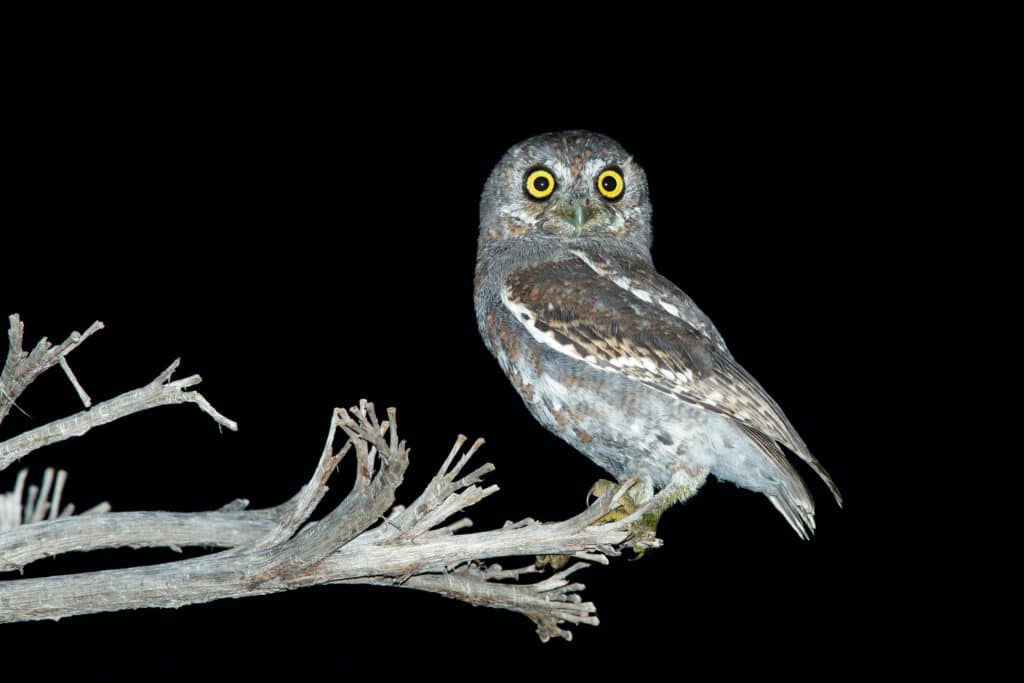
Owls are solitary creatures and prefer hunting alone.
©Agami Photo Agency/Shutterstock.com
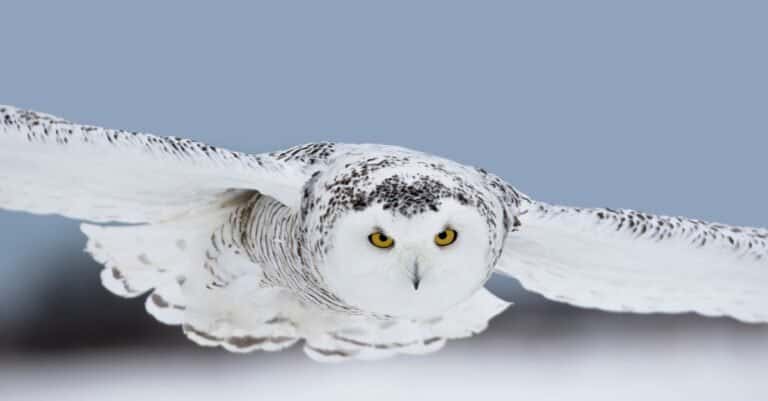
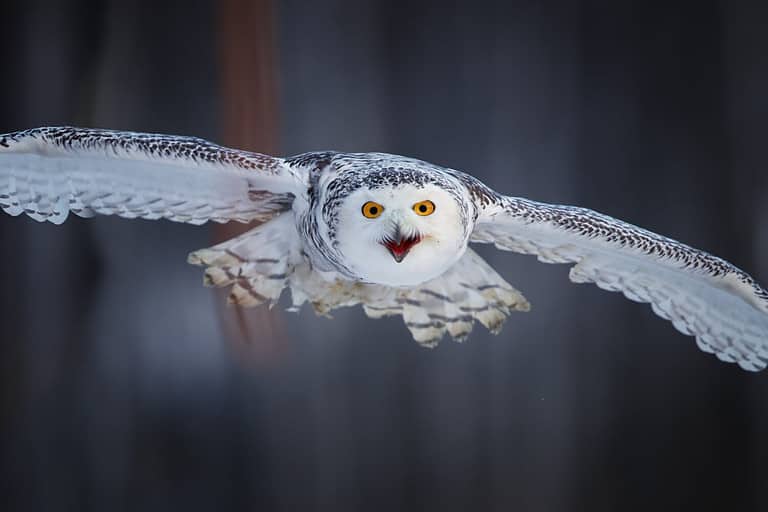
Owls have excellent night vision, in part due to the size of their eyes. However, owls’ biggest edge is their hearing combined with vision. Their sharp talons, ability to fly silently, extreme night vision, and binaural hearing makes them excellent birds of prey.
There are over 200 owl species. They have flexible vertebrae that allow them to turn their heads about 270 degrees without breaking their necks. With that level of flexibility, they can keep track of their prey without missing a beat.
Owls are solitary creatures and prefer hunting alone. In certain regions, folklore dictates that owls represent dark warnings. The barn owl, for example, can be a sign of death.
3. Bats
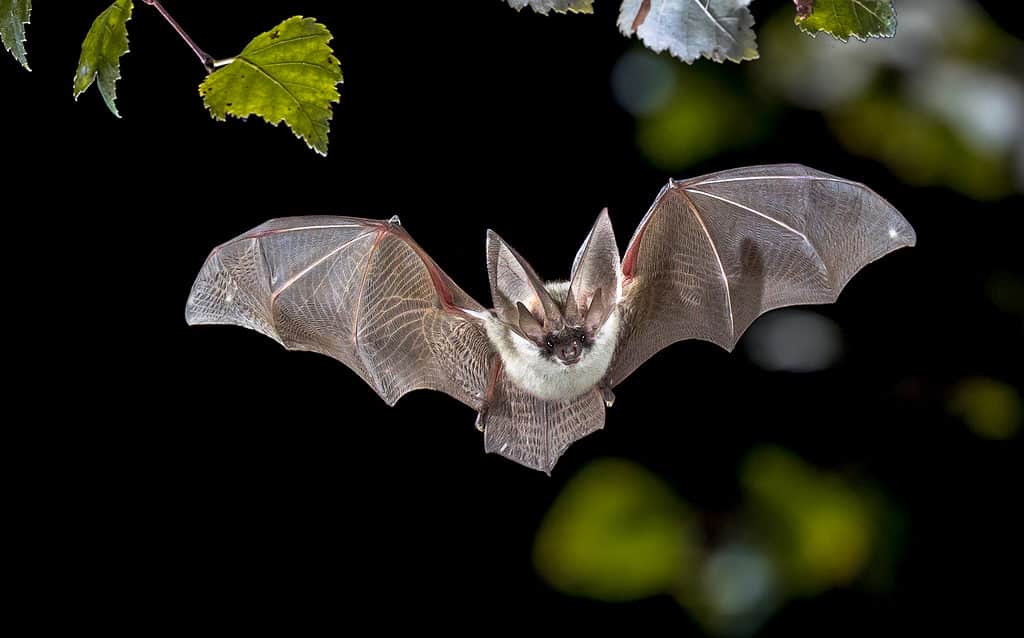
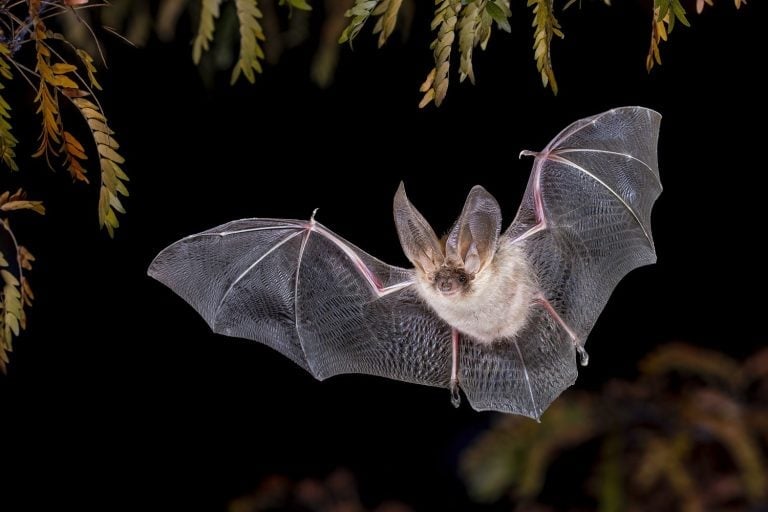
At night, bats see better than humans.
©Rudmer Zwerver/Shutterstock.com
You’ve probably heard the adage “as blind as a bat.” Contrary to what we think we know, bats are not blind. However, their perception of the world around them differs from that of humans.
As of 2025, there are roughly 1,460 species of bats, and their eyesight abilities vary depending on the species. This variation has a lot to do with evolution and needs. Some bats have decent low-light vision, but their real edge is echolocation. Many species don’t rely on vision at night at all.
4. Foxes
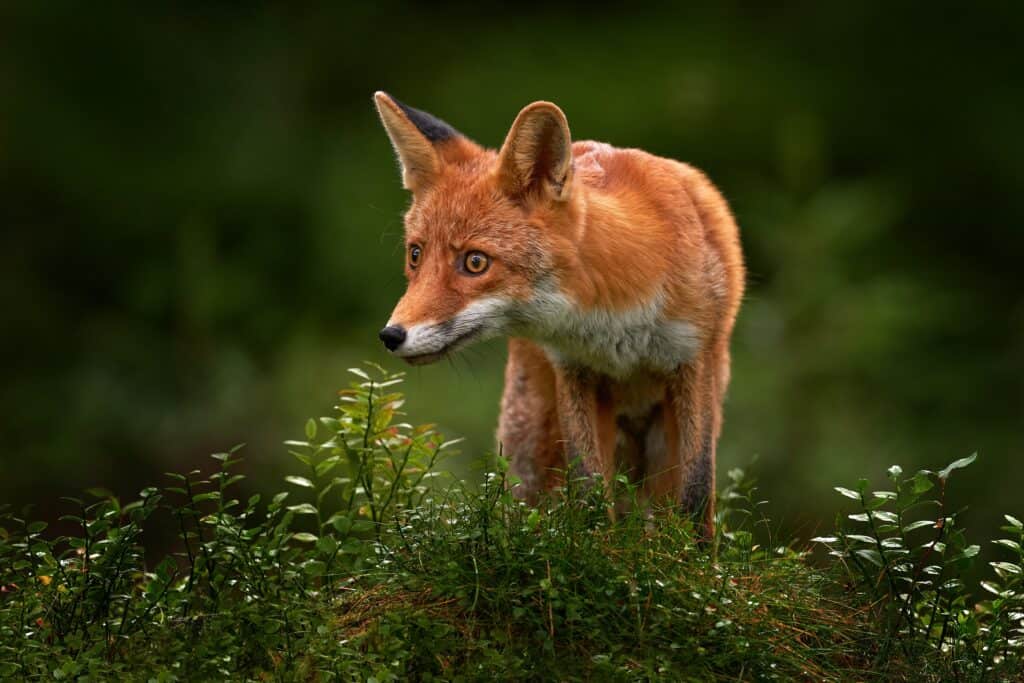
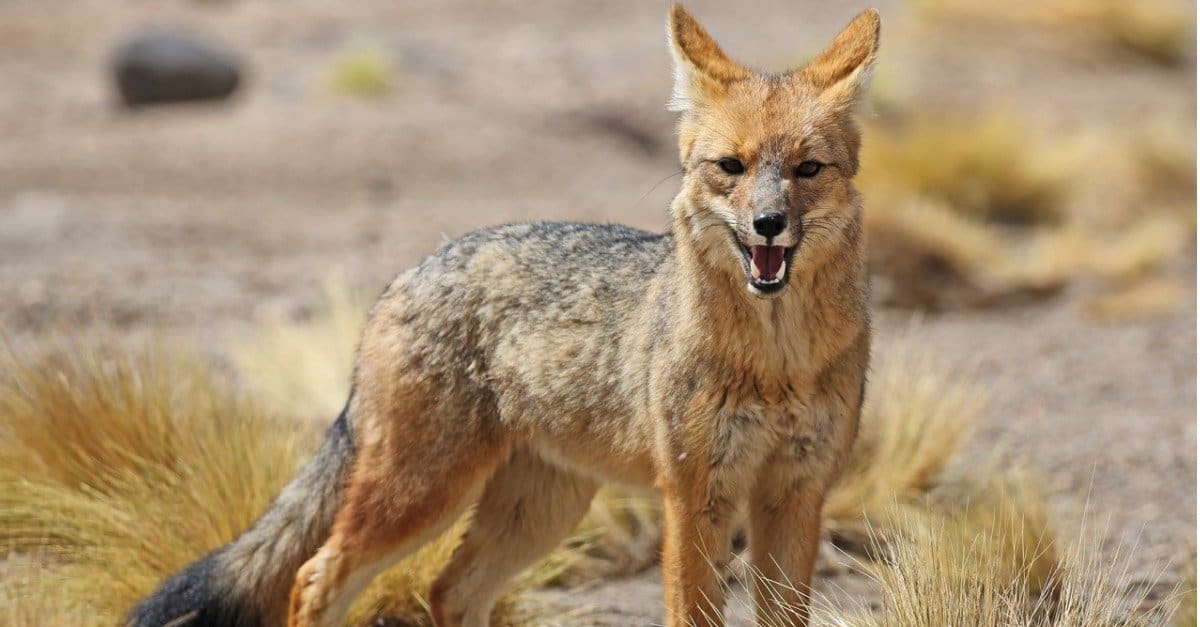
Foxes are crepuscular or nocturnal, and their excellent night vision makes them great hunters at night.
©Ondrej Prosicky/Shutterstock.com
Foxes are among the smaller members of the Canidae family. They are known for their cleverness. Of all species, the red fox is the most famous. These mammals inhabit every continent except Antarctica.
Foxes are omnivores. But certain species, like the crab-eating fox, have a very exclusive diet. As humans encroach on wildlife territories, foxes have learned to adapt to urban living.
Many species are crepuscular (active at dawn/dusk) rather than strictly nocturnal. Their excellent night vision makes them great hunters at night.
5. Cats
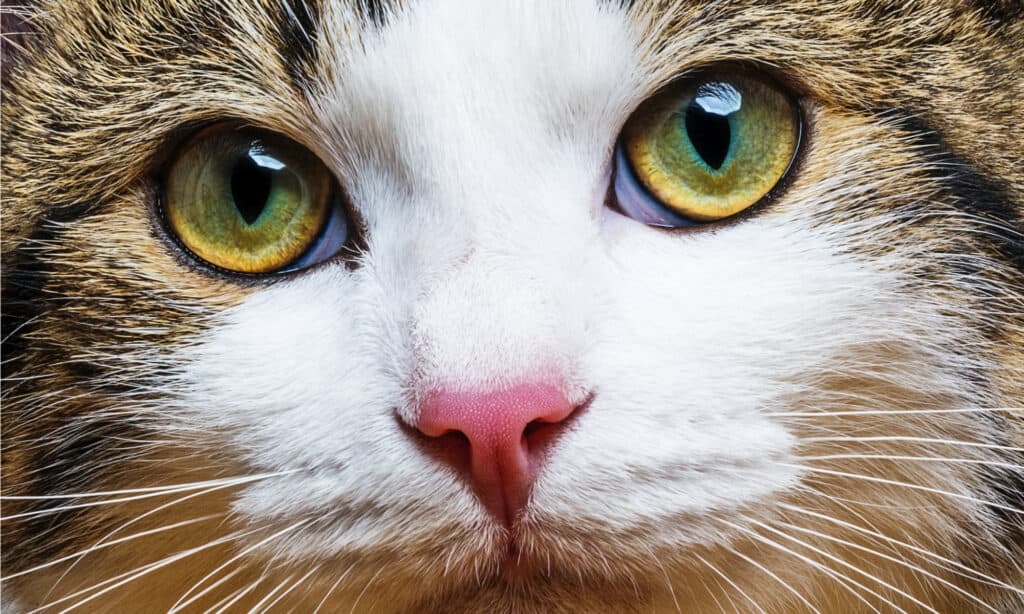
In the dim light, cats see better than humans.
©Kuttelvaserova Stuchelova/Shutterstock.com
Cats are the only members of the Felidae family that have been successfully domesticated. There are over 60 different cat breeds.
Cats’ eyes adapt less well to very bright light, but their vision is still effective in brightly lit environments. They trade daytime color detail and fine acuity for superior low-light sensitivity. Their vision is remarkable in low light due to a layer of eye tissue known as tapetum lucidum.
6. Andean Night Monkeys
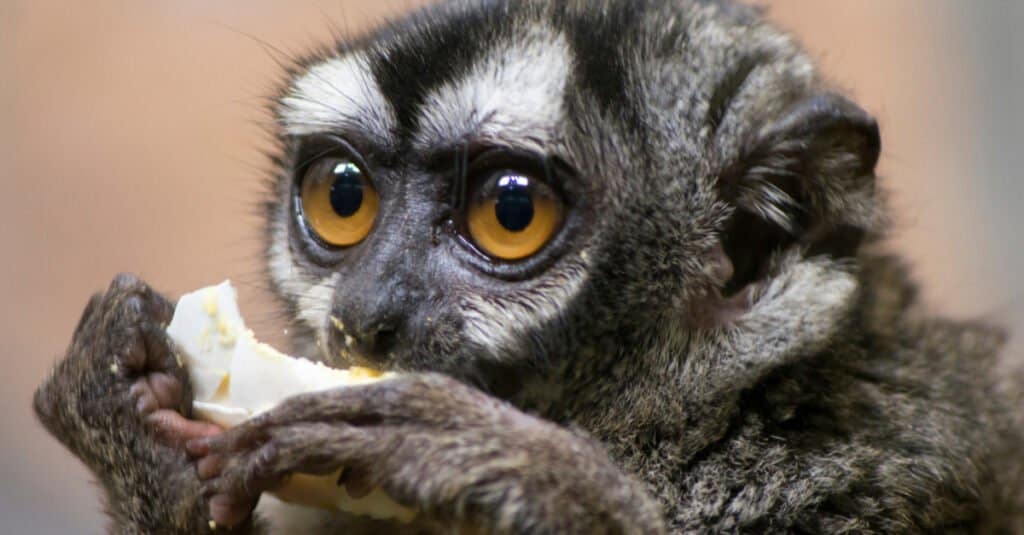
Andean night monkeys are an endangered species possessing impressive nighttime vision.
©Korovko Gleb/Shutterstock.com
As their names suggest, these little monkeys are nocturnal natives of the Andes mountains of Peru. They are an endangered species possessing impressive nighttime vision. Unlike other animals we’ve discussed, these monkeys lack the tapetum lucidum, which is unusual for nocturnal mammals.
Andean night monkeys can see well at night thanks to the specific anatomy of their eyes. Due to their larger corneas and retinas adapted to low light, they have better vision than other diurnal species of monkeys.
Since they are not predators, these monkeys spend their time looking for food, eating, and resting.
7. Snakes
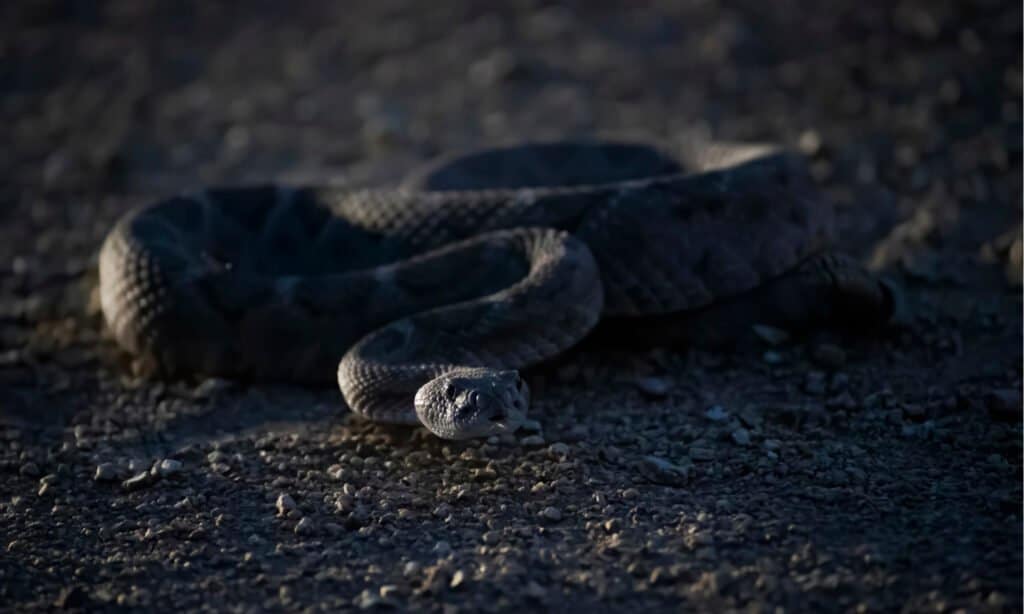
The pit organ (in some snakes) leads to visual cues of living organisms that produce body heat.
©Erin Donalson/Shutterstock.com
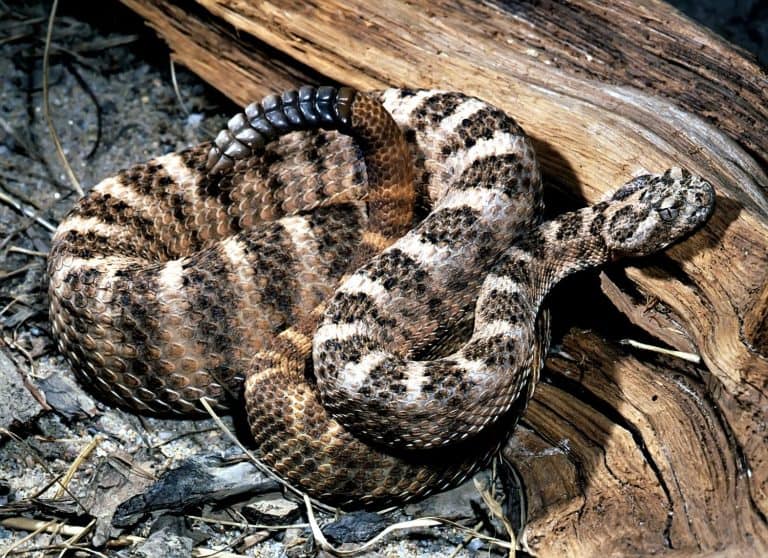
Some snakes are able to detect their surroundings in the dark, but this rare ability isn’t traditional eyesight; it’s a specialized sense that lets them “see” heat rather than visible light. Snakes with this special ability have something called a pit organ. This organ detects infrared radiation (heat) from living organisms and the brain integrates it with visual cues. Boas, pythons, and vipers are snake species that have pit organs.
This helps them spot potential prey, “triangulate” their position, and then hunt. Of all the snakes with pit organs, the pit viper has the most evolved form. Thanks to this cool adaptation, their hunting precision is swift and vicious, making them one of the most powerful predators.
Summary of 7 Animals That Have Incredible Night Vision