
Quick Take
- The anatomy that lets owls pull off their head-flipping trick would kill a human, and the deadly part is not the one you'd expect. See the deadly anatomy →
- Owls lack an ability that every other sighted animal takes for granted, and that limitation is exactly why the head spin exists. Discover why owls spin →
- That cute head bob toward the camera isn't what it looks like. Researchers say it signals something far more calculated.
- Burrowing owls break nearly every rule you'd associate with owls. Their lifestyle is almost the opposite of what you'd imagine. Meet the rule-breakers →
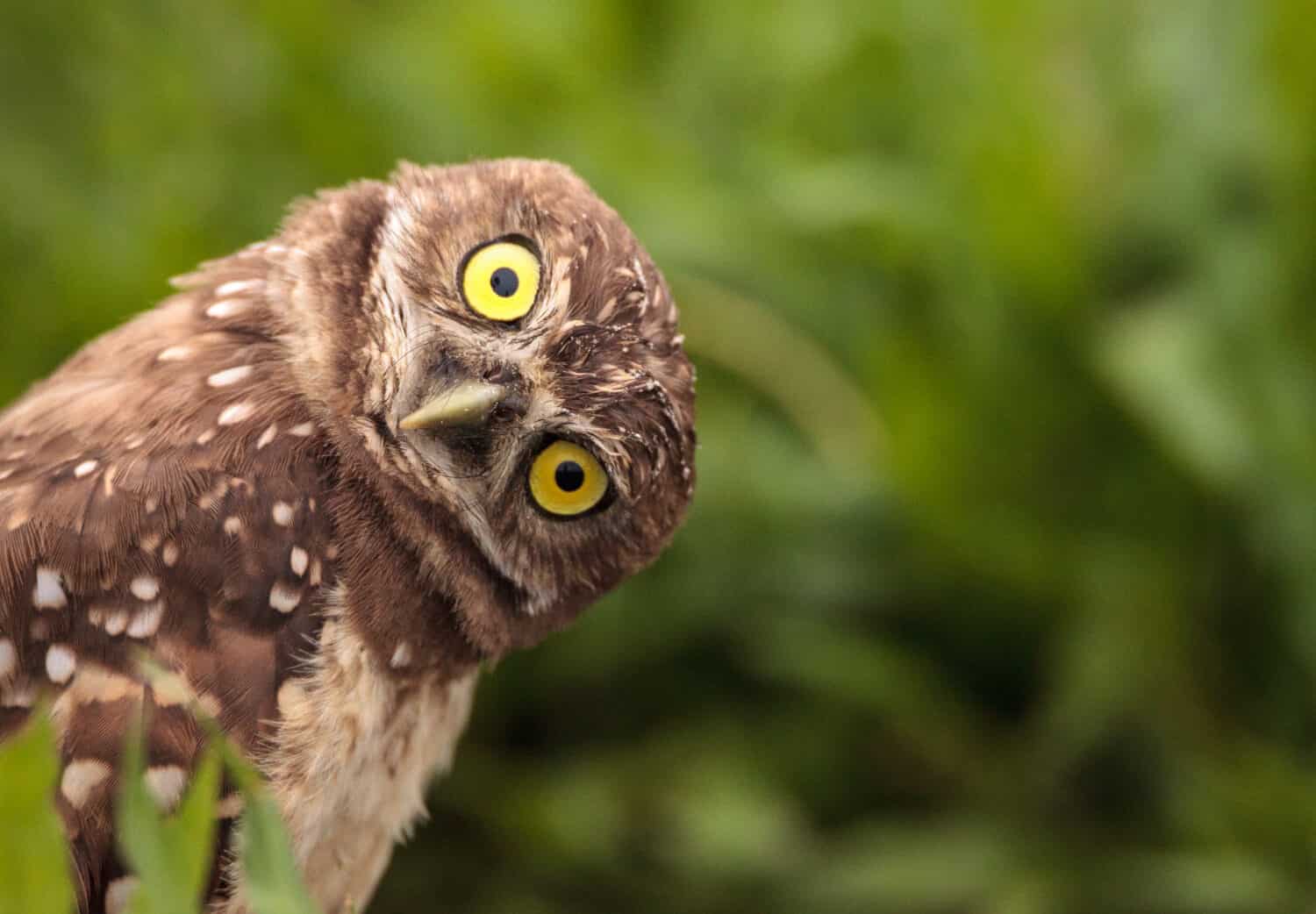
One type of owl can do something special that almost no other animal can. Burrowing owl chicks can turn their heads upside down, creating a striking and unusual appearance that seems more like a magic trick than a real-life occurrence. A video uploaded to Instagram by @nathoutsidethebox captured a burrowing owl seemingly defying physics as it turns its head, and the feat is incredible to see.
“Burrowing owl chicks don’t just do the dramatic head tilt for the memes, they’re basically tiny, feathered detectives,” read the post’s caption. “Tilting, bobbing, and twisting their heads helps them size up distances, spot movement, track snack deliveries from mom and dad, and keep tabs on anything sketchy nearby.”
Viewers were in awe of this cute creature in the video. “That’s quite the head tilt…so cute, love it! 😍😍” one person wrote. Another commented, “😂😂😂 I love these floofs. Haha.”
All about burrowing owls
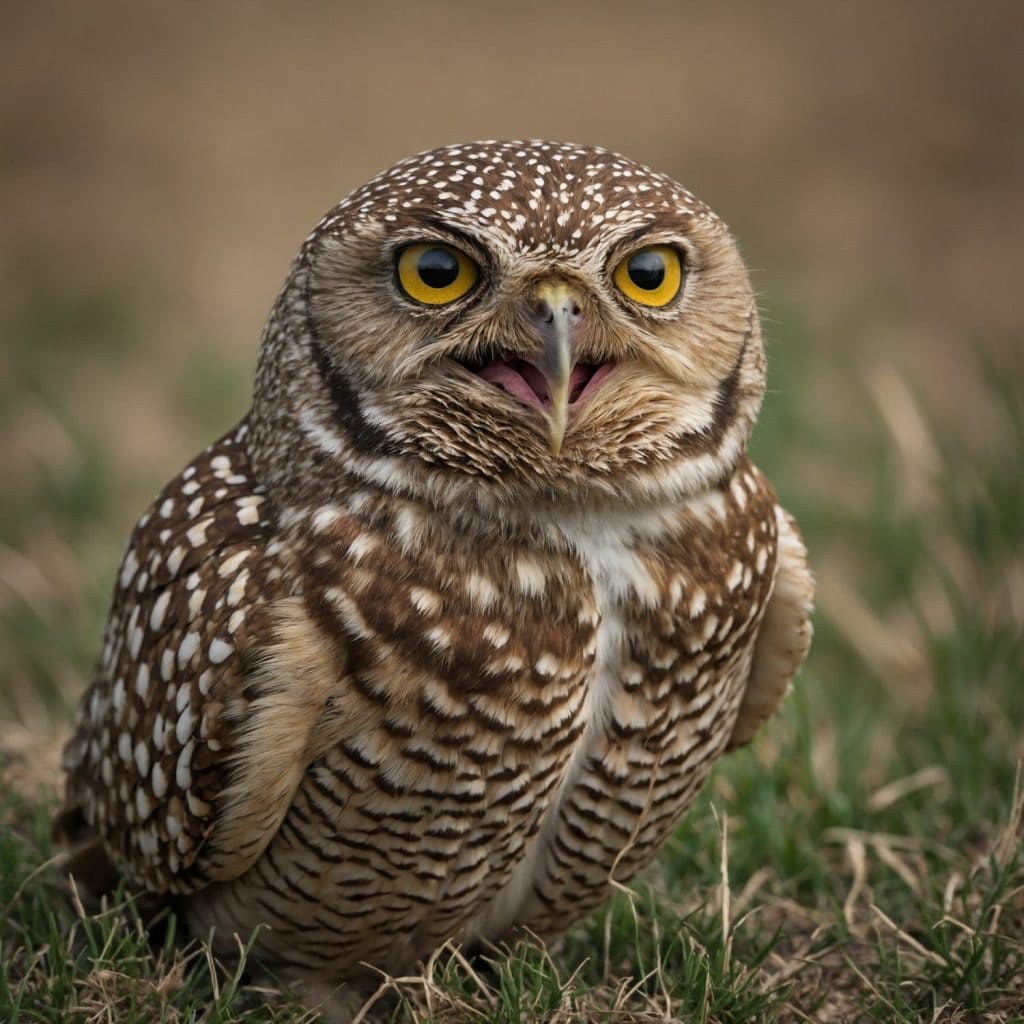
A burrowing owl (Athene cunicularia) is a type of owl that lives underground. Unlike most other owls, burrowing owls are more active during the day (diurnal), especially during the breeding season, and tend to live in open areas rather than forests throughout the Western Hemisphere. Burrowing owls are up to 10 inches long, with a wingspan of around two feet. They typically have brown plumage with white spots, and a white chin and eyebrows. With a compact body, long legs, and large, round eyes, burrowing owls have a charming, curious appearance.
These owls make their nests in abandoned burrows left behind by other wildlife like badgers or coyotes, and some even dig their own burrows (hence their name). They will often sit at the mouth of their burrow to scan for both predators and prey.
Burrowing owls primarily eat insects and arthropods, such as grasshoppers, but their diet also includes mice, ground squirrels, lizards, snakes, amphibians, and other small animals. Predators of burrowing owls include bobcats, cougars, coyotes, foxes, hawks, and eagles.
How can burrowing owls turn their heads upside down?
©Qasimphotographer/Shutterstock.com
Burrowing owls can turn their heads not just upside down, but — like all owls — they can rotate their heads about 270 degrees in either direction. Owls can do this because they have 14 cervical vertebrae in their necks, which gives them more flexibility than humans, who have only seven. Another feature that allows owls to move their necks in odd ways is their blood vessels.
Unlike humans, whose vertebral and carotid arteries might tear from such extreme head turns (potentially leading to blood clots or strokes), an owl’s arteries are more resilient. They expand during head movement, allowing for continuous and proper blood flow.
Biologically, it’s more important for owls to move their heads in this way than it is for humans. Because owls can’t move their eyes independently, they must turn their heads to see their surroundings. This ability not only helps them see better, but it also triangulates sounds to determine where noises are coming from, which could save their lives if they are hiding from predators.
The owl in the video above also bobs its head when approaching the camera. According to the National Audubon Society, this behavior is a sign that owls are working to identify the exact location of their prey. The Owl Research Institute says that this movement is an indication that owls consider the camera holder a threat, as it could be bobbing its head to gather information before an attack.