
Quick Take
- One animal on this list looks harmless and even adorable, yet it carries a bite powerful enough to cause serious injury and may even carry rabies. Meet Ohio's deceptive otter →
- A fish Ohio anglers handle constantly is venomous, and the smaller ones are actually the more dangerous ones to grab. See why small catfish sting →
- At least one of Ohio's venomous snakes actively hunts in the water, and the answer might surprise most people. Discover Ohio's swimming rattler →
- One reptile found in nearly every Ohio lake is docile in the water but transforms into something far more dangerous the moment it's on land. Learn about snapping turtles →
The waterways of Ohio are home to a wide variety of wildlife. With over 240 million tourists in the state each year, many people make their way to the rivers and lakes to enjoy the natural beauty, catch glimpses of wildlife, and bask in the sun. While most of the animals you’ll see in the water are non-threatening to humans, there are a few that can be harmful. Discover some of the most dangerous animals that may be lurking in Ohio’s lakes and rivers.
Eastern Massasauga Rattlesnake (Sistrurus catenatus)
The eastern Massasauga rattlesnake rarely attacks humans unless provoked or threatened, but when they do, their venom can be deadly without treatment. This rattlesnake prefers damp lowlands in the forests and wet prairies. They can swim and are often found in swampy areas, bogs, and marshes near major waterways throughout Ohio and eastern North America. These snakes have grey to light brown skin with dark, rounded blotches bordered by white. Adults typically measure 18 to 30 inches in length.
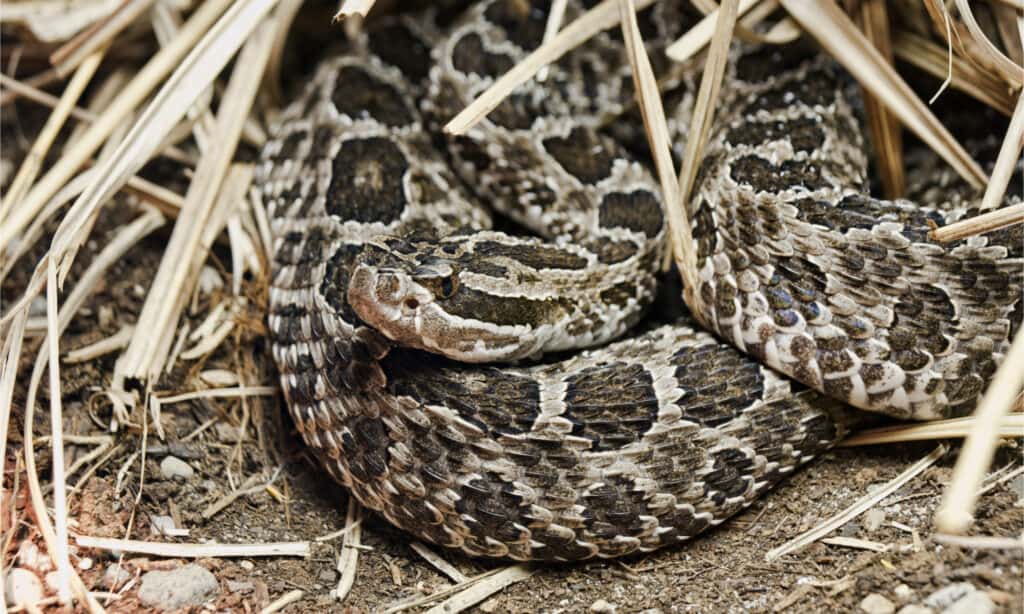
The eastern Massasauga can be found in swampy areas, bogs, and marshes near major waterways throughout Ohio.
©DnDavis/Shutterstock.com
Timber Rattlesnake (Crotalus Horridus)
The Eastern Massasauga rattlesnake isn’t the only venomous reptile in Ohio. It’s not even the only rattlesnake. You’ll also find timber rattlers here. These venomous snakes frequently swim in and live around fishing ponds, lakes, and rivers of Ohio. These snakes can be grey, yellow, tan, or dark brown with a darker chevron pattern on their backs and sides. Timber rattlers also frequently have a brown or rust-colored stripe down the center of their backs. These snakes can reach 3 to 5 feet in length. They are primarily found in heavily forested areas in the southern and southeastern regions of the state. However, they are good swimmers and can also be found in forested wetlands, river floodplains, and riparian edges foraging for amphibians and other prey.
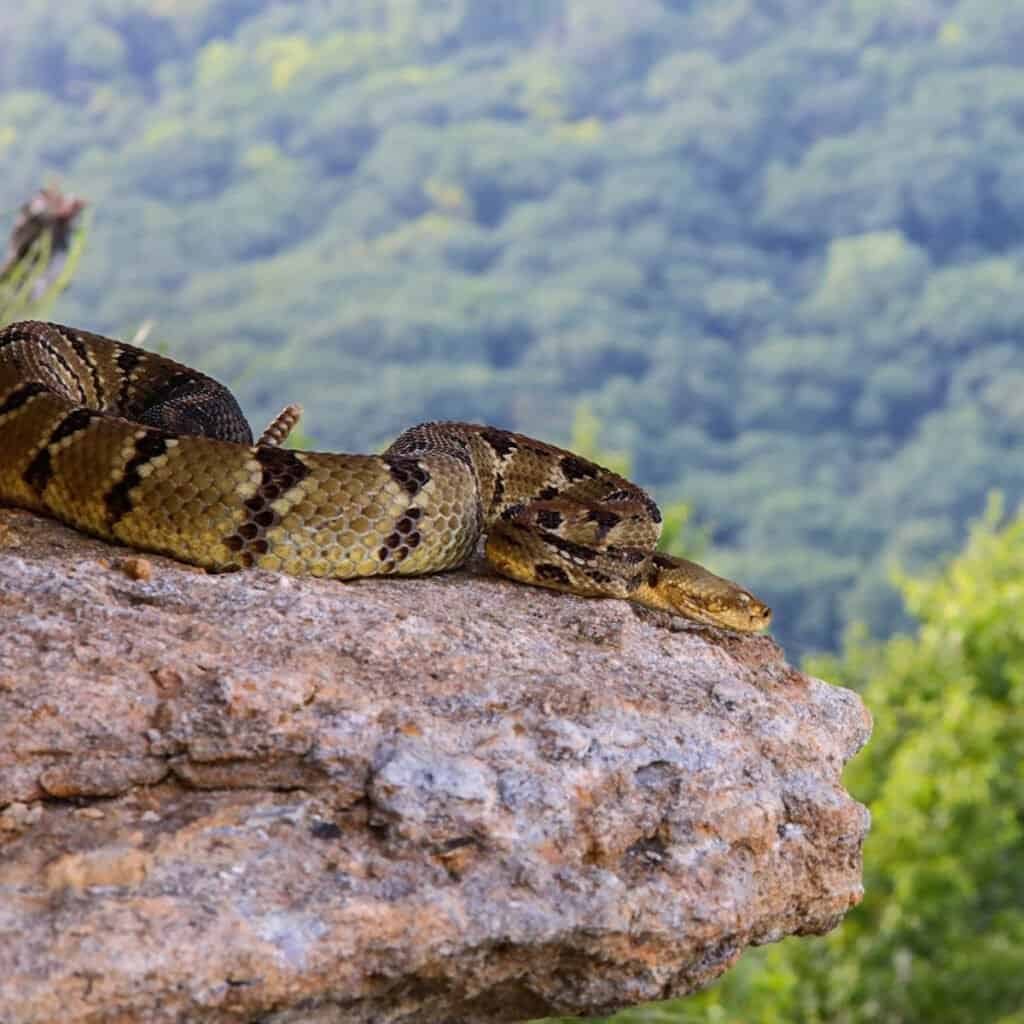
Timber rattlesnakes are most commonly found in the southern and southeastern regions of the state.
©bradenjalexander/Shutterstock.com
Northern Copperhead (Agkistrodon contortrix)
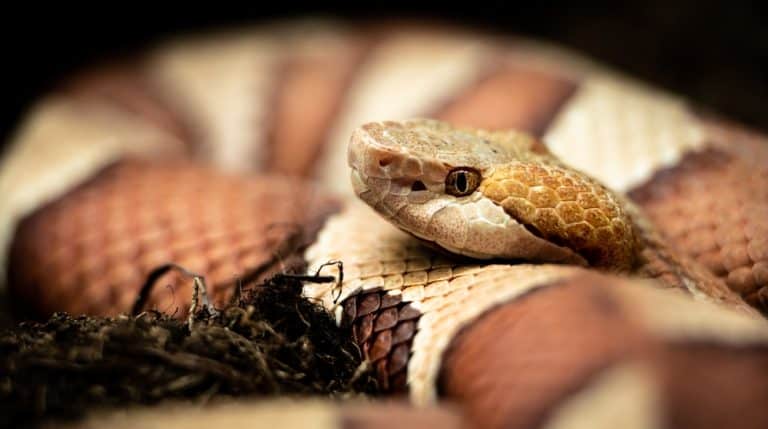
Another venomous snake frequently found near or in bodies of water is the northern Copperhead. They swim to hunt for prey, move to new areas, or cool off. They are often found basking or hunting on the edges of streams, ponds, or rivers in southern and southeastern Ohio, although they prefer rocky outcrops, wooded hillsides, and forested ravines. These stout-bodied snakes grow 2 to 3 feet in length. They are covered in beautiful, hourglass-shaped designs, with the narrowest part usually along the spine. Their coloration is brown to orange, helping them blend into their natural environment. Their heads are a uniform copper-red color.
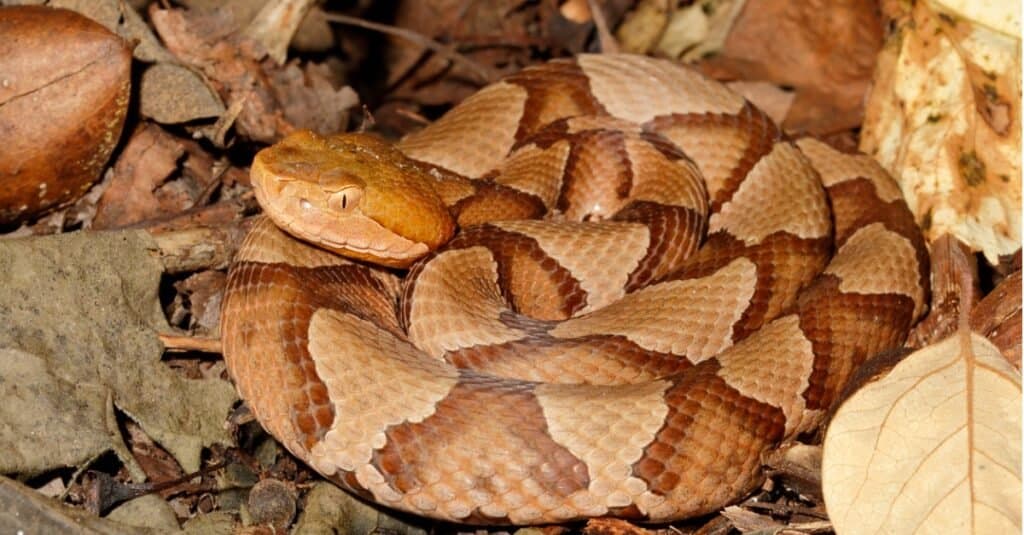
Northern copperheads are often found near or in water and are sometimes mistaken for water snakes.
©iStock.com/David Kenny
Common Snapping Turtle (Chelydra serpentina)
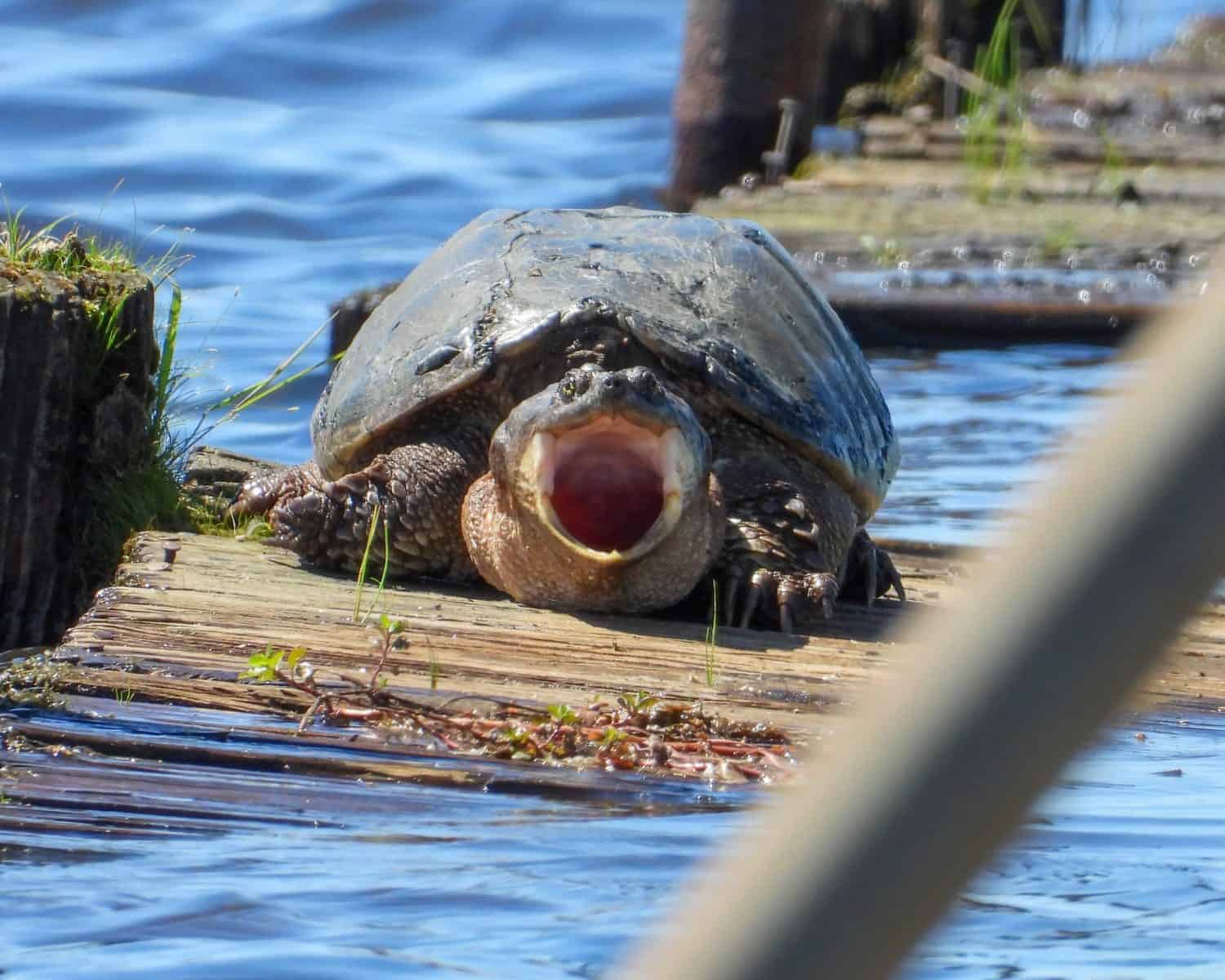
The common snapping turtle can be found in the waterways throughout the entire state of Ohio. These reptiles have a carapace measuring up to 20 inches in length and weigh up to 35 pounds when fully grown. These turtles have rough, dark brown to black shells, a powerful beak-like jaw, and a long, saw-toothed tail covered in bony plates. Snapping turtles are not generally aggressive in the water, but they are highly defensive when out of the water. They favor ponds, lakes, marshes, and slow-moving rivers with muddy bottoms and plentiful aquatic vegetation.
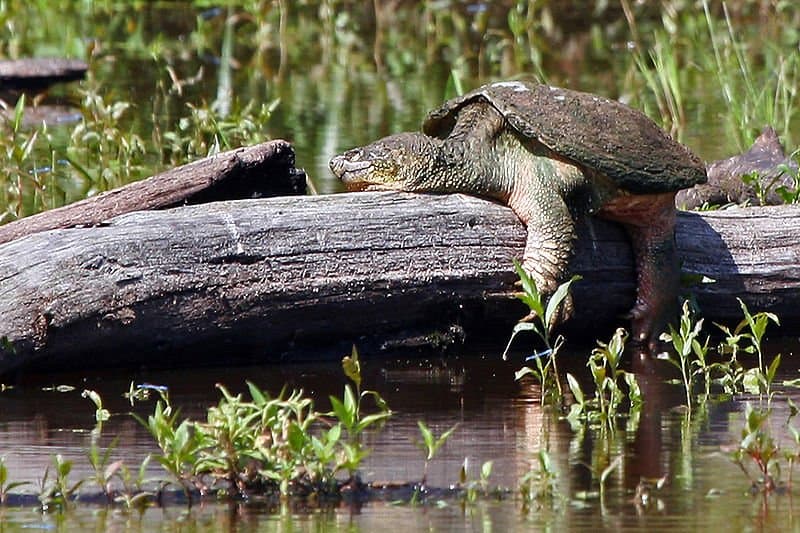
Snapping turtles can be found in nearly every permanent body of water in Ohio.
©https://www.flickr.com/people/sherseydc/, CC BY 2.0, via Wikimedia Commons – Original / License
Channel Catfish (Ictalurus punctatus)
Channel catfish are extremely common in the waterways of Ohio. They are greyish-blue or olive colored on the back with dark spots on the sides and pale undersides. They have been recorded to be as large as 37.65 pounds in Ohio, but the smaller catfish are actually more dangerous. Channel catfish venom is not found in the whiskers, or barbels, but in a thin coating along the sharp, serrated spines on their dorsal and pectoral fins. Smaller channel catfish have much sharper, more needle-like spines, making them more likely to puncture the skin to deliver venom. A puncture wound can cause localized swelling, throbbing pain, and muscle spasms. The spines also have bacteria that can cause infections if the wound is not treated.
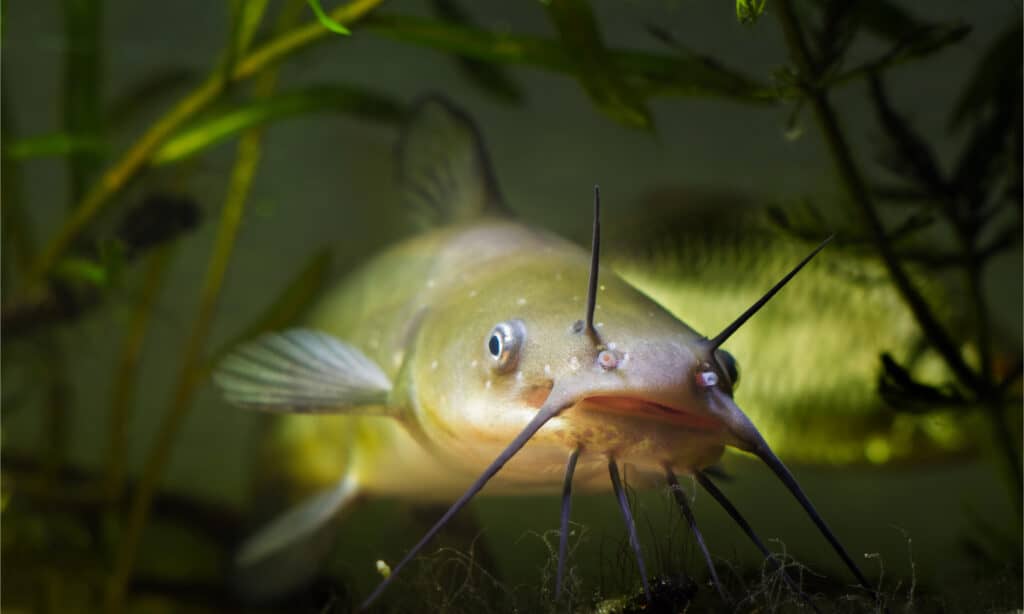
Channel catfish have venom in the three sharp spines on their back and sides.
©Aleron Val/Shutterstock.com
North American River Otters (Lontra canadensis)
North American river otters are found in or near permanent water sources like rivers, lakes, streams, and wetlands all throughout Ohio. They can weigh from 10 to 33 pounds and measure 2.5 to 5 feet in length, with males being 25% to 30% larger than females. Otters look playful and adorable, but they are predators and can be dangerous, especially when cornered or defending pups. Otters can also carry rabies. Fatal attacks are extremely rare, but otters have powerful bites and sharp claws that can cause serious injuries.
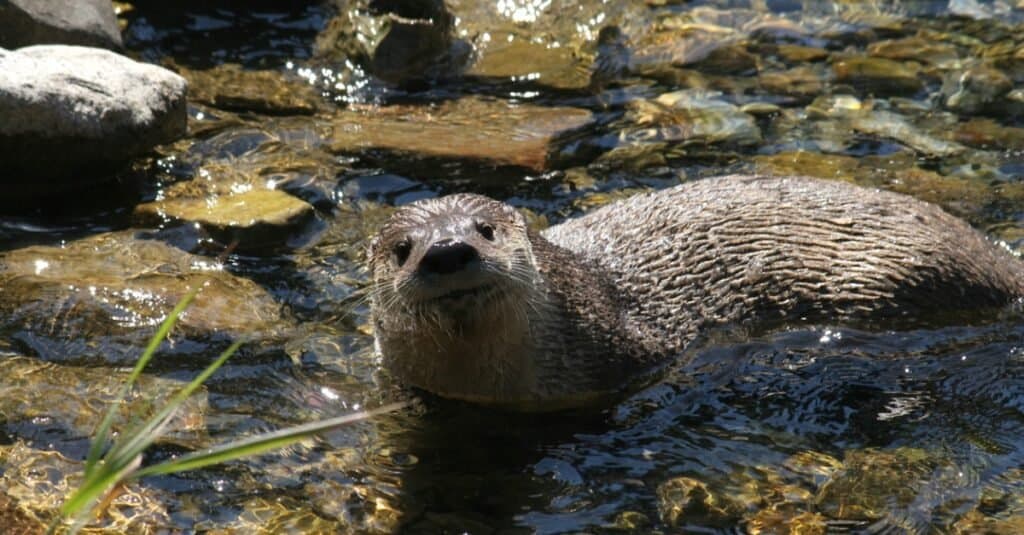
North American river otters are predatory animals and can be dangerous when cornered or defending young.
©iStock.com/MarcQuebec