
Pennsylvania has no shortage of man-made lakes as there are more than 2,500 statewide. Most of the lakes in the state artificially exist, so which one was the first?
Discover the oldest man-made lake in Pennsylvania as we discuss the Keystone State and some of its water resources.
What is a Man-Made Lake?

Man-made lakes, also called reservoirs, only exist because humans artificially made them.
©Sean Xu/Shutterstock.com
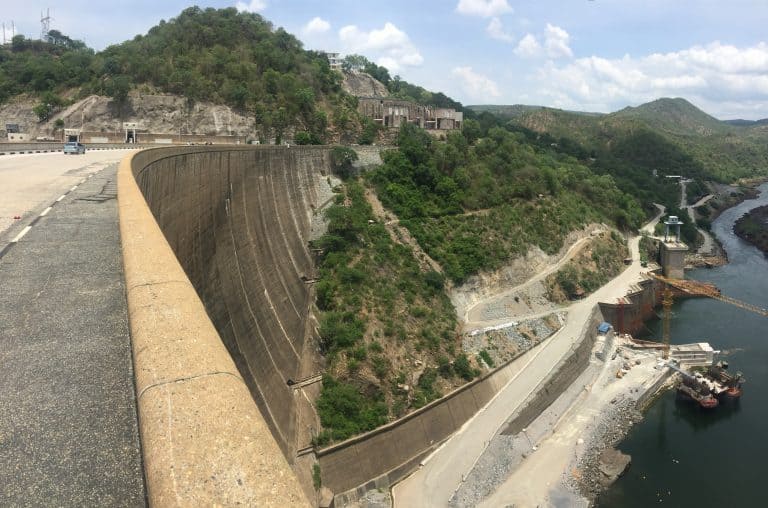
A man-made lake is a reservoir that is created by a dam in a river valley. A reservoir refers to the water collected behind a dam. Dams are large obstructions built across waterways to trap water for flood control and storage purposes.
Different kinds of dams are built to restrain water in specialized ways. Each dam must be specially built for its location as well. Since structures are purposefully built to alter the environment to create a lake, all reservoirs are man-made lakes even though they trap naturally flowing river water.
Sometimes, debris from industry or flooding clogs a major waterway creating a temporary lake. In modern times, most of this debris is human detritus. However, since it wasn’t intentionally placed to collect water, these instances do not count as man-made lakes in this article.
What is the Oldest Man-Made Lake in Pennsylvania?
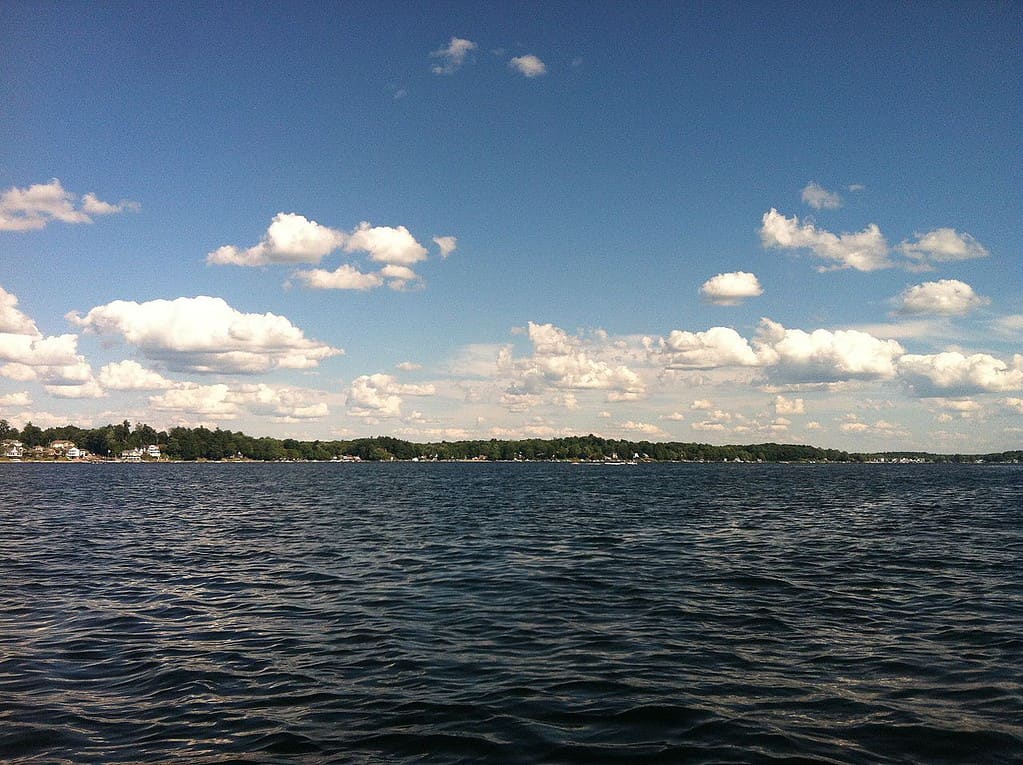
While Conneaut Lake is artificially altered, it is a natural glacial lake.
©Darowles / CC BY-SA 3.0, via Wikimedia Commons – Original / License
The oldest man-made lake in Pennsylvania is the Kittanning Point Reservoir. While most of Pennsylvania has direct access to a major water source, the community of Altoona had no direct freshwater access in the early 1800s.
As a result, a reservoir capable of storing 65 million gallons of water was built. The Kittanning Point Reservoir was constructed in 1888, though it was quickly augmented because it proved to be too small for the booming population that relies on its water.
Today, the Kittanning Point Reservoir is the smallest of three reservoirs, and it’s part of the series that ultimately creates Lake Altoona. Combined, these 3 man-made lakes store a little less than 3 billion gallons of water for human use.
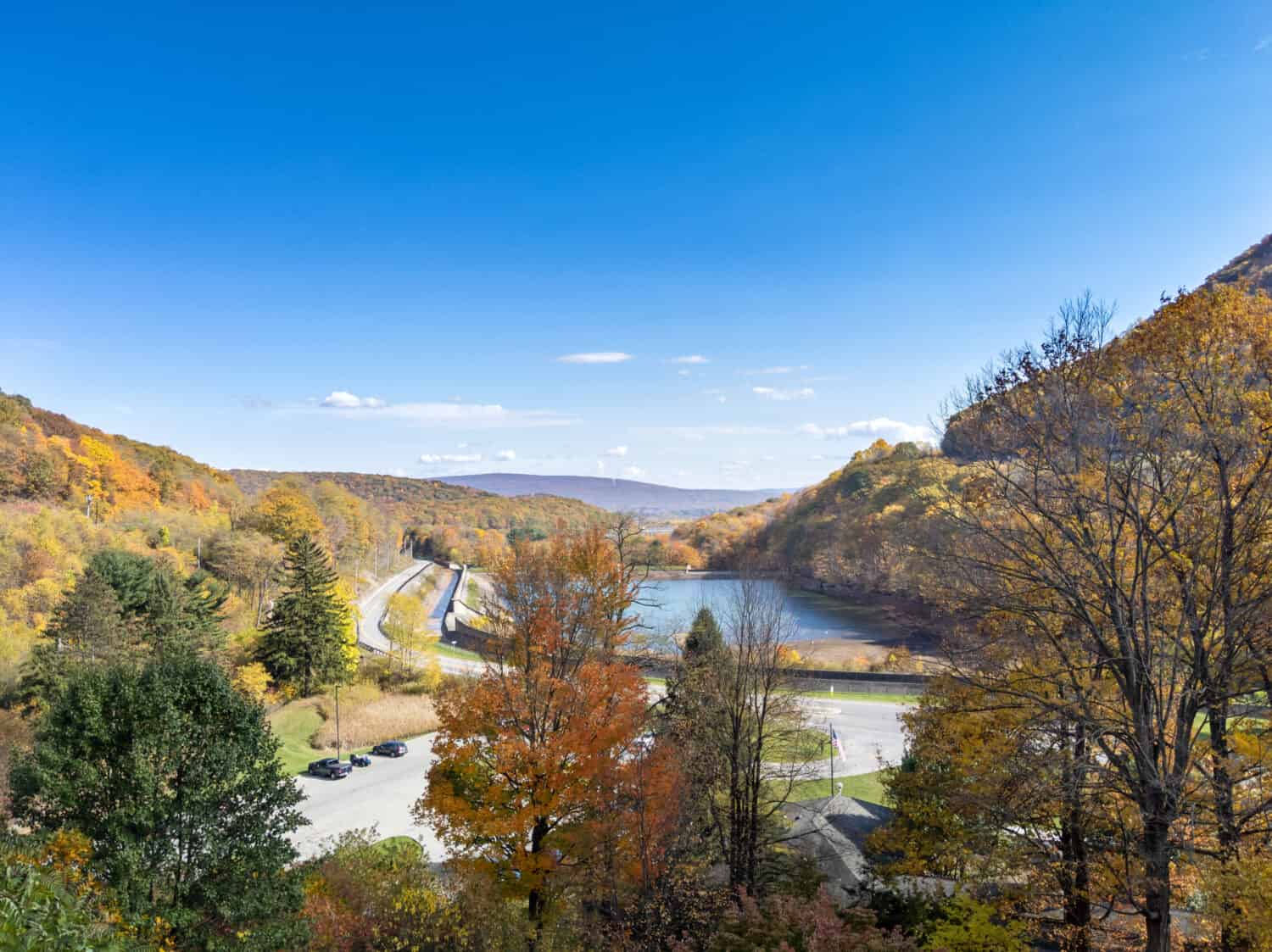
Kittanning Point Reservoir is part of three Reservoirs of the Horseshoe Curve.
Image: GenOne360, Shutterstock
©GenOne360/Shutterstock.com
Lake Altoona is a popular recreation spot that offers a venue for a variety of water-based activities. Fish up for grabs by anglers include bass, walleye, muskie, and panfish.
While Conneaut Lake is a natural glacial lake, canals are connected to it that change its natural level. If these alterations to a natural lake make it man-made, then the Conneaut Lake is the oldest man-made lake in Pennsylvania because it was altered in the 1830s. However, for this article, a man-made lake does not exist at all without human intervention.
Bonus: The Second Oldest Man-Made Lake in Pennsylvania
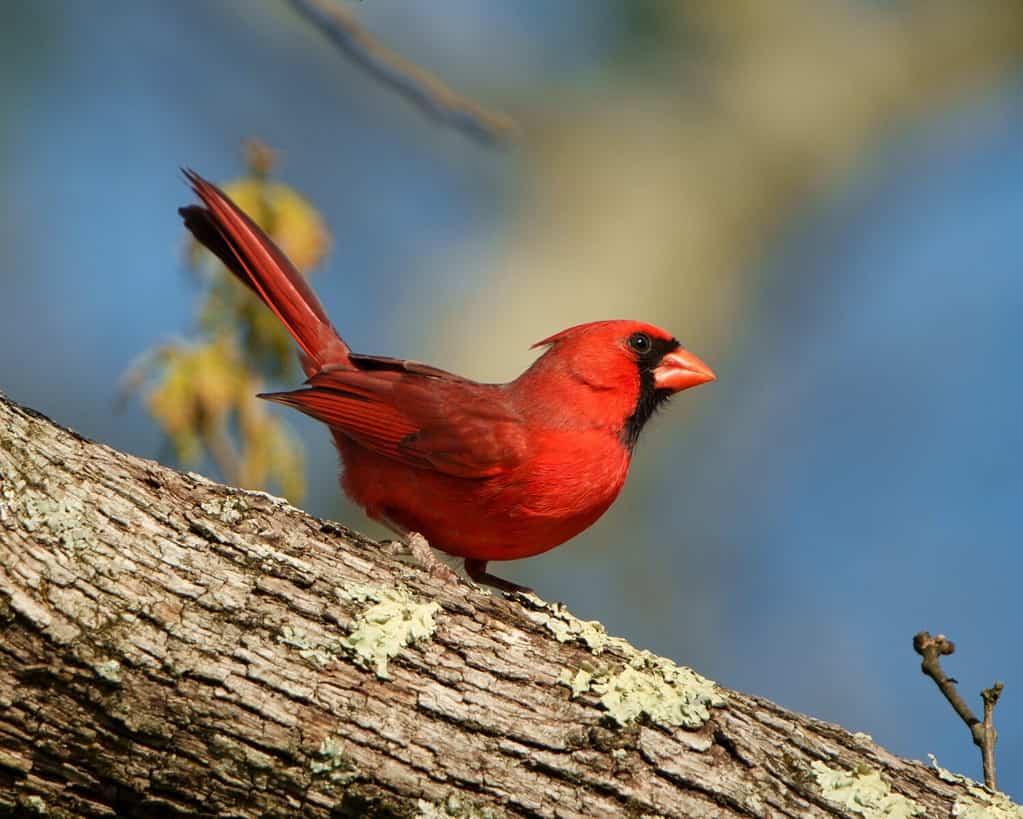
Northern cardinals appreciate the reclaimed East Park Reservoir as it acts like a natural habitat.
©peter weiler/Shutterstock.com
The second oldest man-made lake in Pennsylvania is the East Park Reservoir located in Philadelphia. In 1889, the East Park Reservoir becomes operational. It was a popular recreational spot for locals until part of was decommissioned in 1970.
At its peak, it stored 700 million gallons of water. By the last decade of the twentieth century, only the Northeast Basin was in use. This area is still operational today, and the other 3 are now vital intercity wildlife refuges. They are especially important to local birds.
Today, the area making up the West Basin is now a Discovery Center created in collaboration with the National Audobon Society and Outward Bound. Outward Bound is an organization partnered with schools, and it aims to teach kids about nature through experiences like hiking. The National Audobon Society is interested in conservation and education, and it will also host public tours.
Wildlife at the East Park Reservoir in Philadelphia
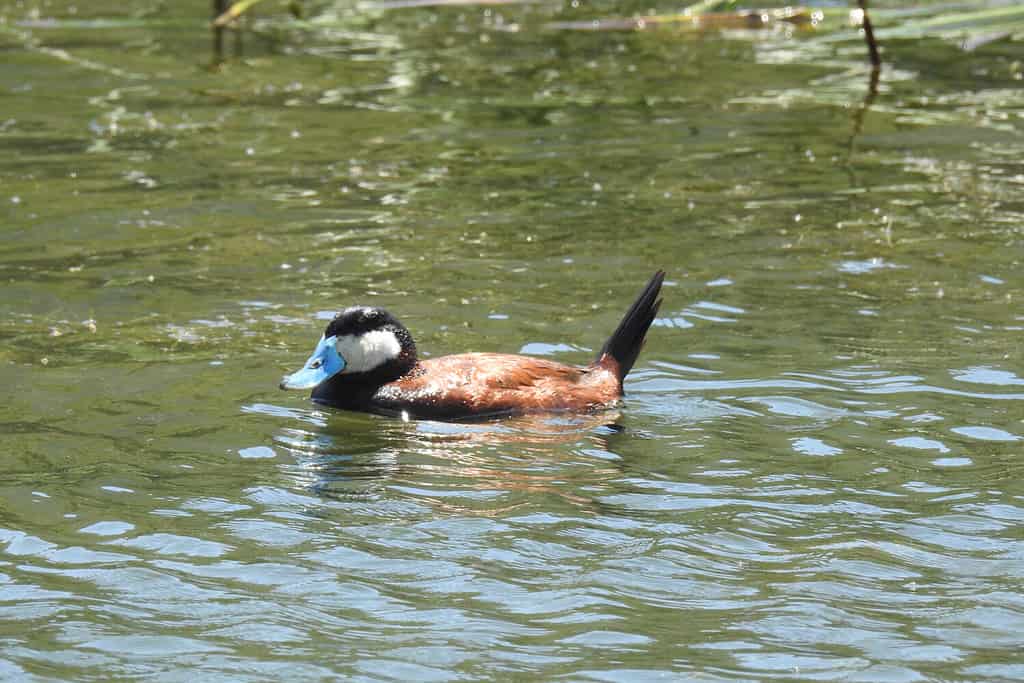
Ruddy ducks visit the West Basin in Philadelphia.
©Scenic Corner/Shutterstock.com
The West Basin, which has reverted into a natural lake after over 60 years of disuse, attracts animals that like deeper water. On the other hand, birds that like shallow water hang out in one of the eastern basins. A third area is drained, and it has become an urban forest that attracts over 100 species of birds every year.
Birds that use the habitats offered by the East Park Reservoir include hooded mergansers, pied-billed grebe, blue jays, canvas-backed ducks, red-throated loons, northern cardinals, and ruddy ducks. Other small animals like foxes also make their home in the area.
There are also fish in the West Basin even though it’s a decommissioned man-made lake and not originally a natural habitat. This is because the original water pumped into the reservoir contained these fish. Sunfish, catfish, and perch continue to thrive in the waters of the West Basin.
Why Are There So Many Man-Made Lakes in Pennsylvania?

By the 1790s, Pennsylvania was creating reservoirs and canals.
©bogdanhoda/Shutterstock.com
Europeans settling in Pennsylvania during the eighteenth century found a swampy land that was hard to navigate. This was compounded by the need for freshwater storage for growing population centers. As a result, by the 1790s, Pennsylvania started creating canal systems and reservoirs.
There are no clear records indicating exactly when work first began on the waterways around Pennsylvania. However, major water projects began in the nineteenth century in response to industrial needs. Also, reservoirs were needed to store enough fresh water for businesses and residents in the state.
Natural lakes are a rarity in Pennsylvania because most of the state missed out on recent glaciation. As glaciers scrape their way over a landscape, they leave behind holes that become lake basins. The nearest glacier, the Wisconsin Glacier, missed most of the state during the last Ice Age.
What is the Oldest Dam Failure in Pennsylvania?
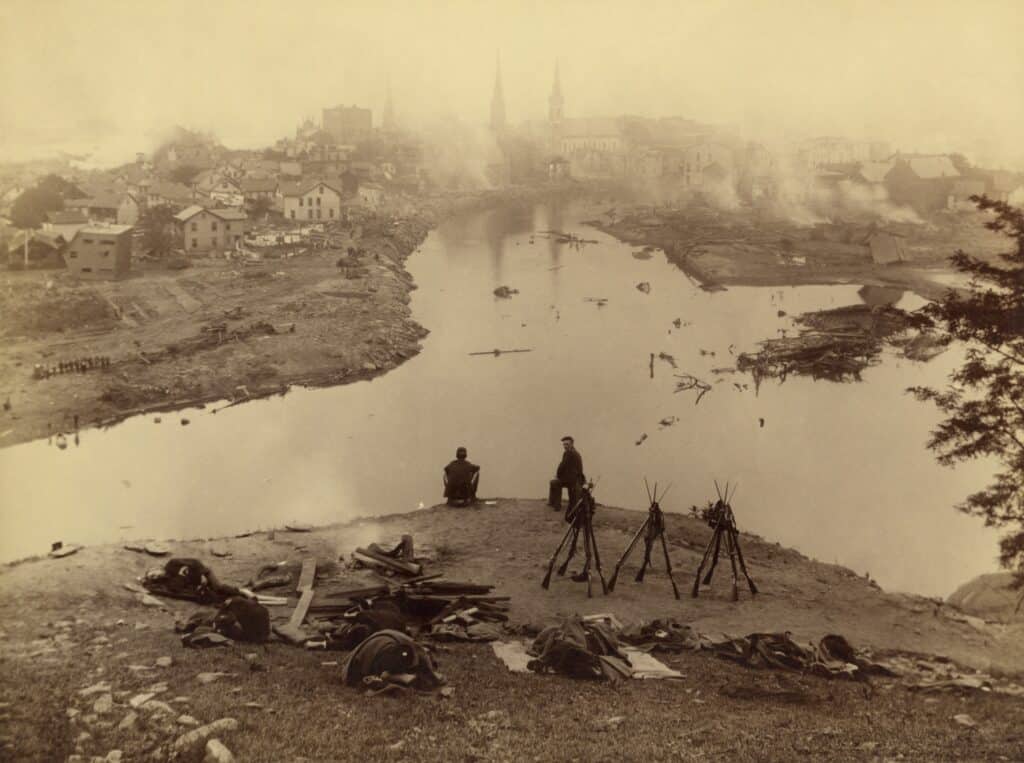
On May 31, 1889, Johnstown in Pennsylvania was the victim of a catastrophic dam failure.
©Everett Collection/Shutterstock.com
The catastrophic failure of the South Fork Dam on May 31, 1889, is the oldest dam failure in Pennsylvania. This earthen work dam was constructed between 1838 and 1853. The dam created Lake Conemaugh, and when it went down, the Johnstown Flood occurred.
The South Fork Dam was 931 feet long and 72 feet tall. Several leaks appeared before 1889, but they were quickly patched with straw and mud. The dam had changed owners a few times, and one of those owners sold the discharge pipes meant for water release as scrap metal.
The days preceding the catastrophic failure saw an extraordinary amount of rainfall. This caused the dam to give way and the water in Lake Conemaugh to barrel downstream. The flood destroyed several towns and killed over 2,200 people.
Where is Kittanning Point Reservoir Located on a Map?
Kittanning Reservoir, located in Pennsylvania, is situated in close proximity to the hamlets of Mill Run and Coburn.
Here is Kittanning Point Reservoir on a map: