
Quick Take
- The giant breed secretly earns a reputation as the ultimate couch dog, which surprises most people for an unexpected reason. Discover the couch dog surprise →
- One of these breeds carries a nickname so heartbreaking it hints at a serious hidden health risk owners rarely see coming. See the heartbreaking nickname →
- Both breeds share a life-threatening condition that strikes without warning, and one is far more vulnerable than you would expect. Explore the bloat risk →
- Choosing the calmer breed to save yourself training headaches could backfire badly if you overlook one critical factor. Understand the training tradeoff →
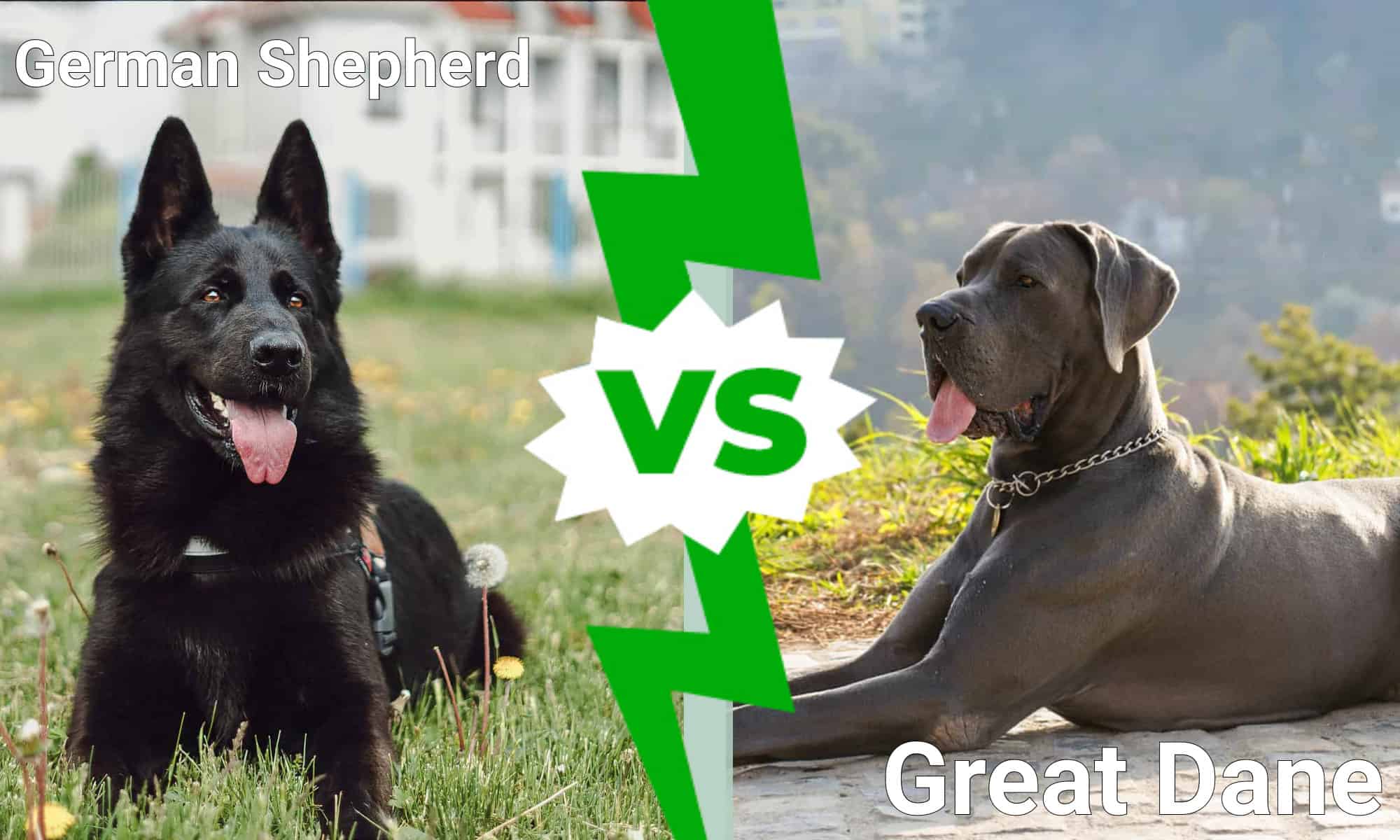
Both Great Danes and German shepherds originated in Germany. Great Danes originated in Germany, where they were bred from English Mastiff and Irish Wolfhound ancestry to be fierce, long-legged hunters. They were later used as aristocratic watchdogs and bodyguards. The Great Dane was introduced in the U.S. in the late 19th century, where it quickly gained official recognition when the Great Dane Club of America (GDCA) was founded in 1889. The German shepherd was developed by Max von Stephanitz, a German cavalry officer, who sought to create the ultimate, versatile working dog by crossing various traditional German herding breeds. The breed made its U.S. debut at exhibitions in Newcastle, Delaware, and Philadelphia, Pennsylvania, in 1907. The American Kennel Club (AKC) recognized the breed the following year, closely followed by the establishment of the German shepherd Dog Club of America in 1913. Key differences between Great Danes and German shepherds include their size, coat, temperament, exercise needs, trainability, and health issues. Which of these classic breeds is the right fit for your family?
Size
Great Danes are considered a giant breed, while German shepherds are considered large-breed dogs. Both can be difficult to handle due to their large size, especially if they pull on their leash or you need to pick them up during an emergency.
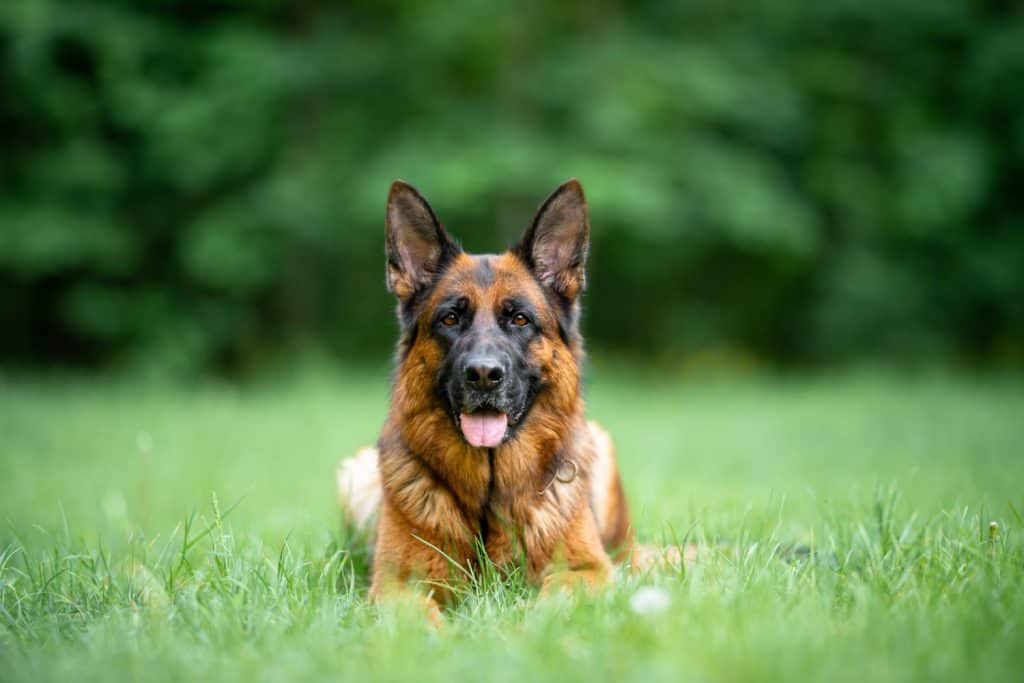
German shepherds are much smaller than Great Danes.
©Mariya Kuzema/Shutterstock.com
Great Danes are larger than German shepherds. Great Dane females stand 28-30 inches tall at the shoulder and weigh 110-140 pounds. Male Great Danes stand 30-32 inches tall and weigh between 140 and 175 pounds.
Female German shepherds are 22-24 inches tall at the shoulder and weigh 50-70 pounds. Males of the breed stand a bit taller at 24-26 inches, and weigh between 65 and 90 pounds.
Coat Type
Great Danes and German shepherds have very different coat types. Great Danes have a single, short, sleek coat that lies close to the skin and requires minimal maintenance, such as weekly brushing and occasional baths.
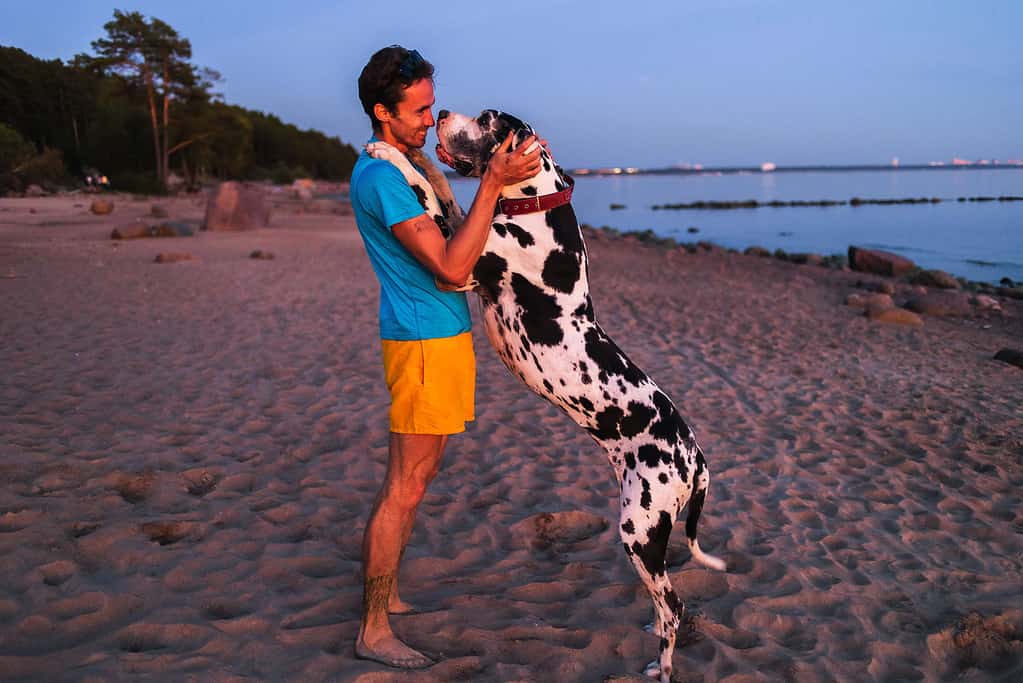
Moderate year-round shedders, Great Danes experience heavy shedding during bi-annual shedding blow-outs.
©iStock.com/Aleksandr Zotov
German shepherds have a thick double coat that protects them from the elements and helps regulate their body temperature. The outer coat is made up of dense, straight, water-resistant guard hairs that repel dirt and moisture, while the soft, thick undercoat provides insulation to keep them warm in winter and cool in summer. German shepherds are notorious shedders. They shed moderately year-round and blow out (heavily shed) their undercoat twice a year, usually in the spring and fall.
Both Great Danes and German shepherds display a wide range of coat colors and patterns, thanks to their genetic diversity. Official kennel clubs recognize many distinct coat patterns and shades in both breeds, from solid colors to complex combinations.
AKC acceptable Great Dane coat colors include:
- Black
- Black and white
- Blue
- Brindle
- Fawn
- Harlequin
- Mantle
- Merle
- White
- Silver
Great Danes may also have a black mask or black or white markings throughout their bodies.
German shepherd coats are available in a similar array of colors, including:
- Black
- Black and cream
- Black and red
- Black and silver
- Black and tan
- Gray
- Sable
- White
- Liver
- Blue
- Bi-color
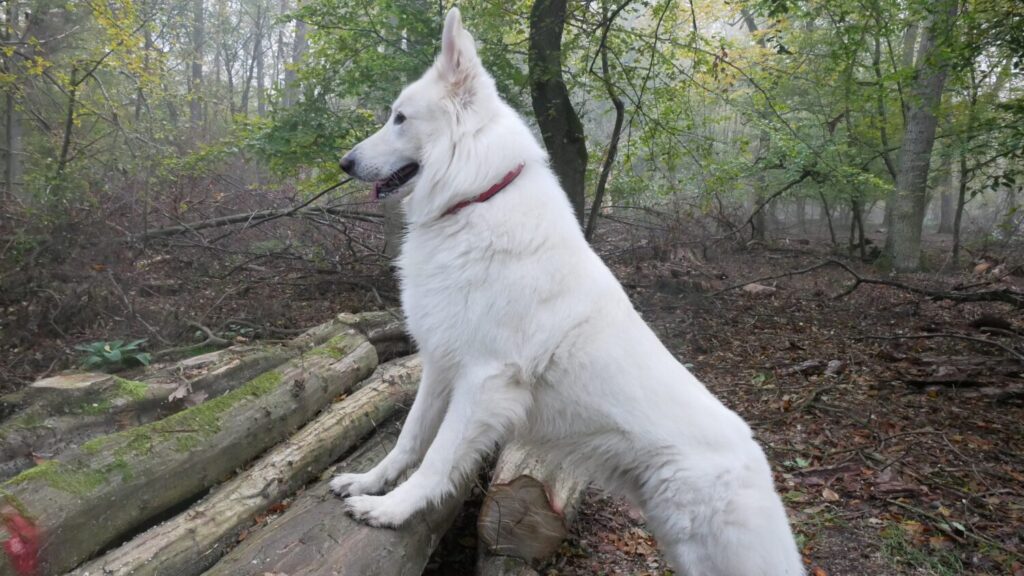
German shepherds come in a wide array of colors, including pure white.
©Ofenhesse/Shutterstock.com
Temperament
Both Great Danes and German shepherds are protective and may be wary of strangers. Socialization is important early in life so that they learn not to over-guard their people in public, while they grow into confident adult dogs.
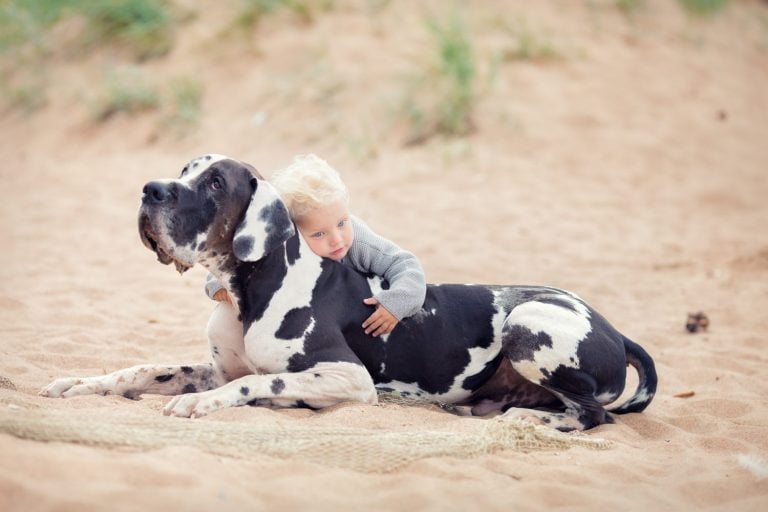
Great Danes are renowned for their docile nature. Despite their towering size, they are typically calm indoors and crave being close to their families, frequently acting like oversized lapdogs. When properly socialized, they are generally patient and gentle with children. However, because of their massive strength, early obedience training and socialization are critical.
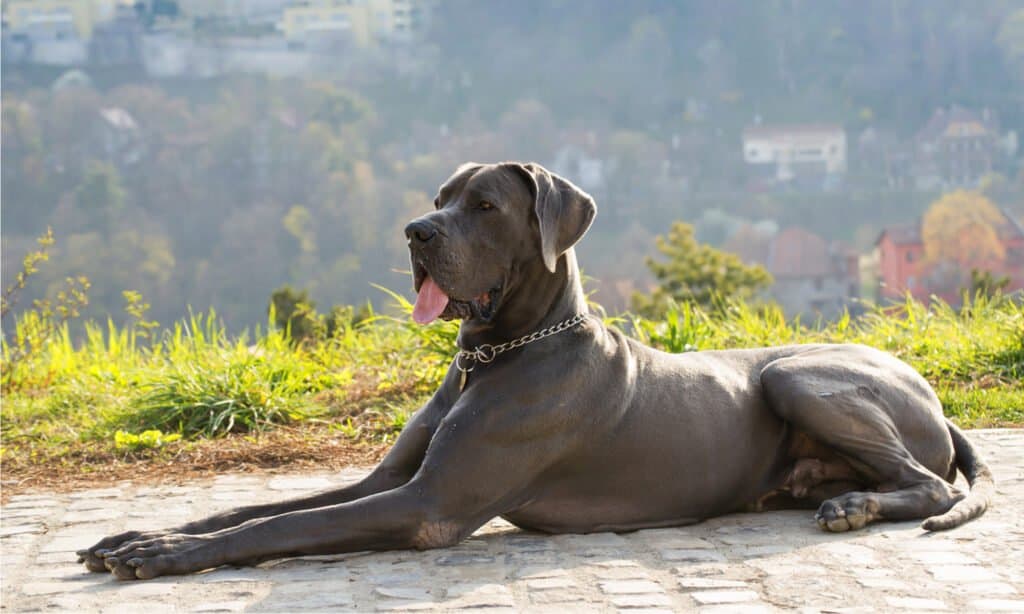
Great Danes are energetic outdoors, but tend to be calm and relaxed when indoors.
©belu gheorghe/Shutterstock.com
German shepherds are deeply affectionate and playful with their families. They form intense bonds with their families and are happiest when directly involved in household activities. However, they are naturally reserved and watchful around strangers. German shepherds are not typically aggressive, but their instinct to protect means they are highly alert and often wary of unfamiliar people. Because of their working heritage, they thrive on mental stimulation, require consistent training, and make exceptional watchdogs.
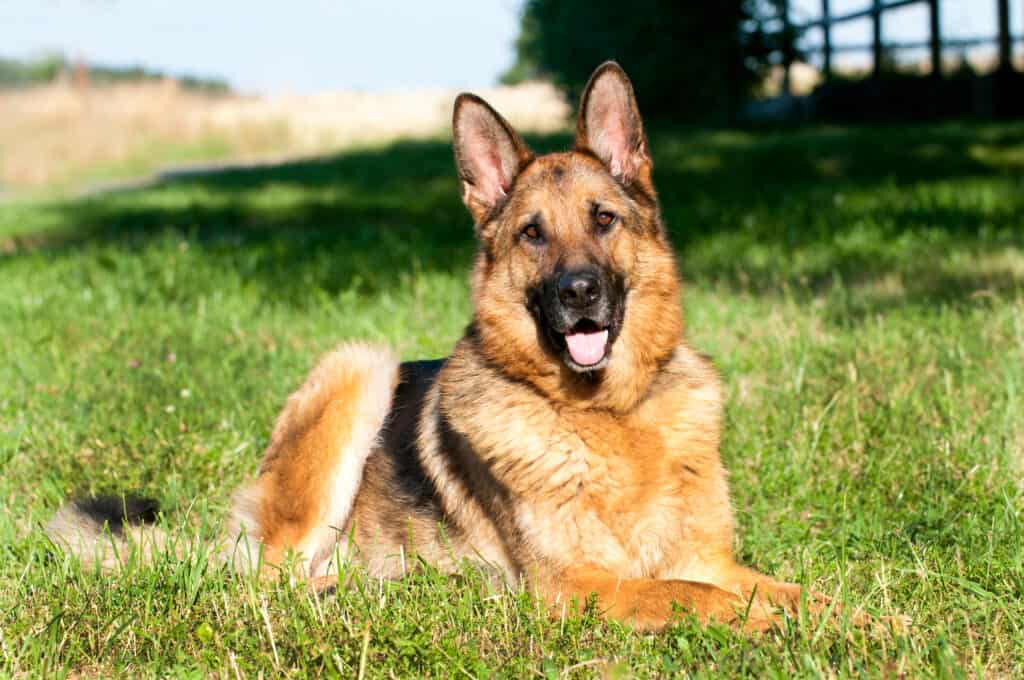
As working dogs, German shepherds need plenty of exercise and mental stimulation throughout the day.
©Dora Zett/Shutterstock.com
Exercise Needs
Both Great Danes and German shepherds are high-energy breeds, but Great Danes are generally calmer indoors and require slightly less exercise.
Great Danes have surprisingly moderate exercise needs. Despite their massive size, they are notorious couch potatoes. They need daily activity to stay healthy and maintain a proper weight, but should avoid high-impact, strenuous exercise that can stress their bones and joints—especially as puppies. Because of their size, high-impact activities should be avoided until they are fully grown.
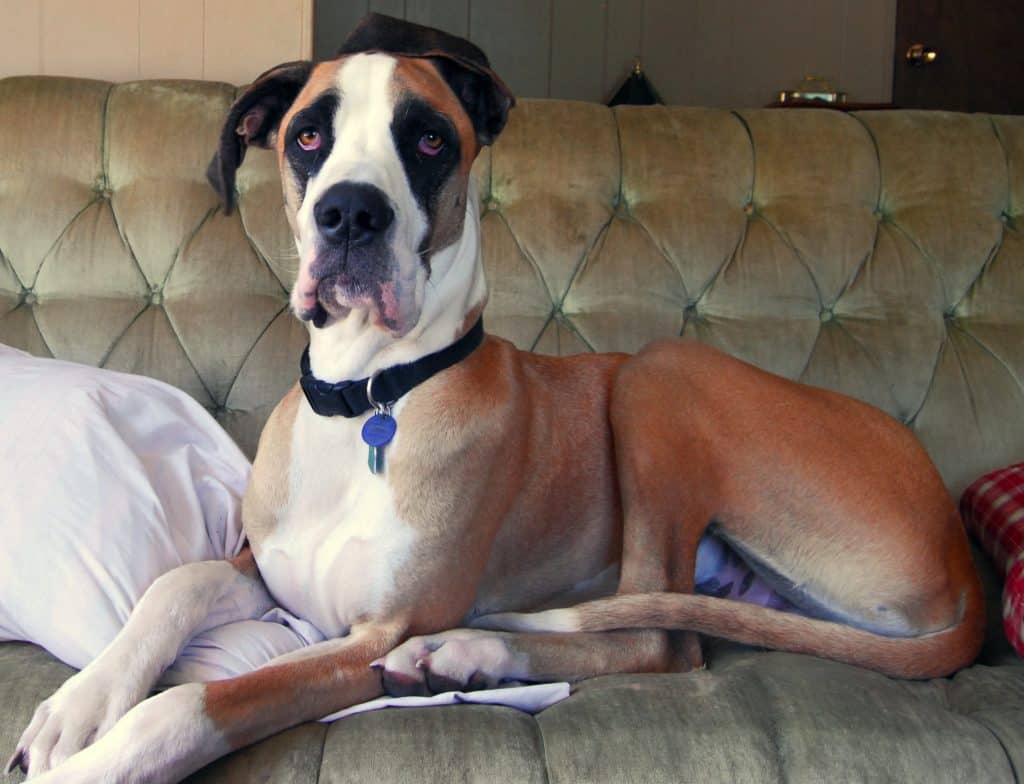
Great Danes require daily physical activity, but they are just as happy lounging on the sofa.
German shepherds are are high-energy, intelligent working dogs that require 1 to 2 hours of daily exercise. Because they thrive on purposeful work, their routine should include both physical activity and mental stimulation. Without enough activity, they can easily become bored, leading to anxious or destructive behaviors.
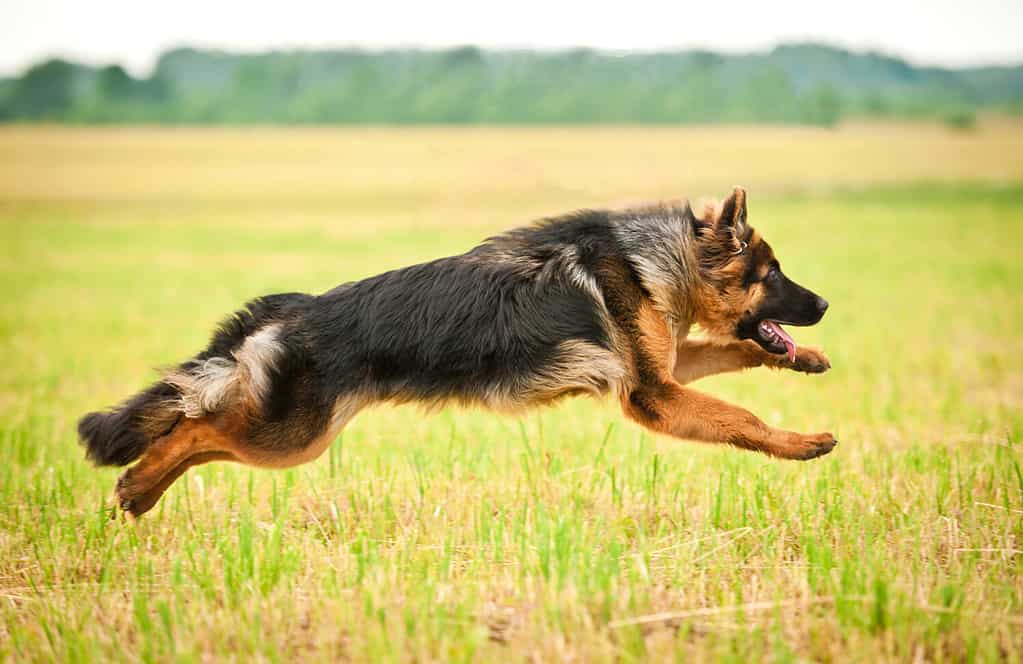
German shepherds are working dogs that require hours of exercise daily.
©Rita_Kochmarjova/Shutterstock.com
Trainability
Great Danes are moderately easy to train. They are intelligent, sensitive, and eager to please. Because of their large size, it’s important to begin training, especially basic manners and leash walking, during puppyhood, so they learn boundaries before becoming too strong to handle.
German shepherds are among the most trainable and intelligent breeds in the world. With a strong work ethic, they excel at advanced obedience, agility, and protection work. However, their intelligence and energy require consistent training and early socialization. They may test boundaries, so firm, consistent leadership is essential.
Health
Both Great Danes have a life expectancy of 7 to 10 years.
Their rapid growth and deep chests make Great Danes prone to severe health issues, including life-threatening bloat (GDV), dilated cardiomyopathy (DCM), bone cancer, and joint/neck conditions like wobbler syndrome.
GDV (bloat) is one of the leading causes of death in Great Danes. In GDV, the stomach fills with gas and twists, cutting off blood flow. It is a critical emergency, but with prompt care, survival rates are generally between 70% and 87%.
Due to their large size and rapid growth as puppies, Great Danes are susceptible to hip and elbow dysplasia, as well as bone stress injuries and joint pain.
Great Danes are also prone to DCM, a progressive heart muscle disease that weakens the heart and reduces its ability to pump blood. This condition is so common in the breed that Great Danes are sometimes referred to as the heartbreak breed.
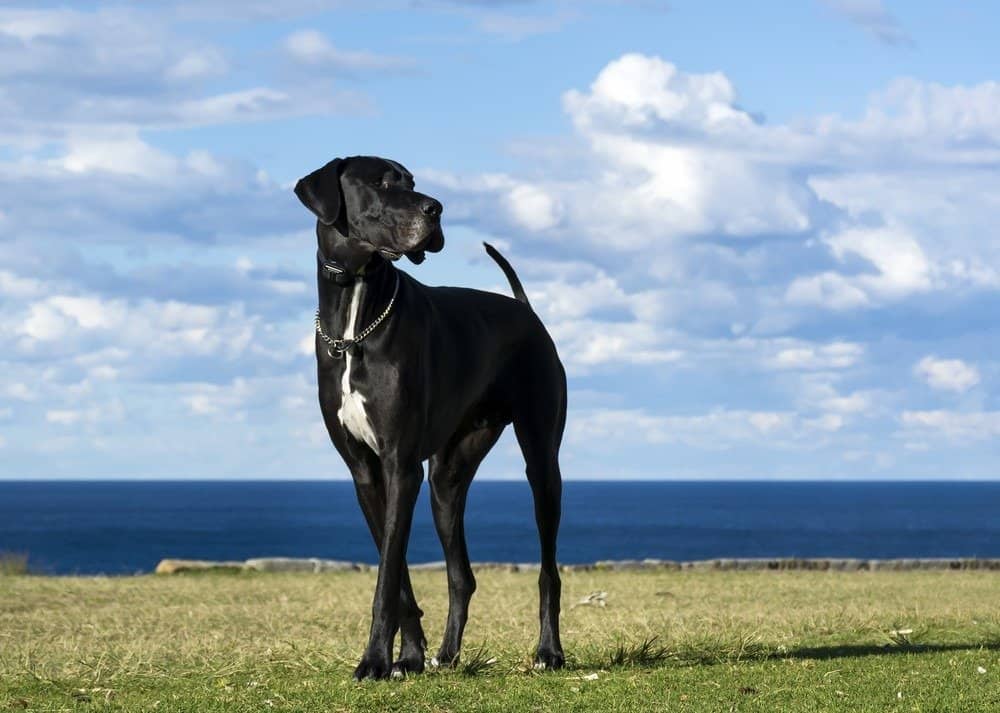
Because of their massive size, Great Danes have a relatively short lifespan and are often considered seniors by age 6.
©RugliG/Shutterstock.com
German Shepherd Health Issues
German shepherds typically live 9 to 13 years.
Like many large breeds, German shepherds face these serious conditions due to genetics and their physical build. German shepherds are prone to Hip and Elbow Dysplasia, Degenerative Myelopathy, Gastric Dilatation-Volvulus (GDV), commonly called bloat, and Exocrine Pancreatic Insufficiency.
Degenerative myelopathy is a progressive, non-painful disease affecting the spinal cord that causes hind-leg weakness and eventual paralysis.
Like Great Danes, German shepherds are highly susceptible to bloat, which is a life-threatening medical emergency.
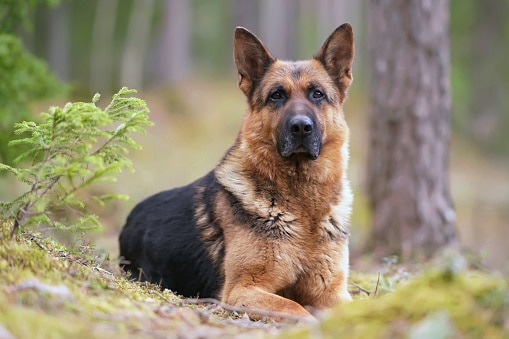
German shepherds are prone to a variety of medical conditions.
©Eudyptula/iStock via Getty Images
German shepherds are also susceptible to exocrine pancreatic insufficiency, a condition in which the pancreas fails to produce essential digestive enzymes, leading to severe weight loss and poor nutrient absorption. However, it is easily managed with lifelong dietary supplementation.
Wrapping Up: German Shepherd Vs. Great Dane
When it comes down to it, both Great Danes and German shepherds make great family dogs.
German shepherds are ideal for active families who want to spend plenty of time training and engaging with their dog. Great Danes are better suited for those who enjoy being active but also appreciate relaxing at home after a walk or run.