
Quick Take
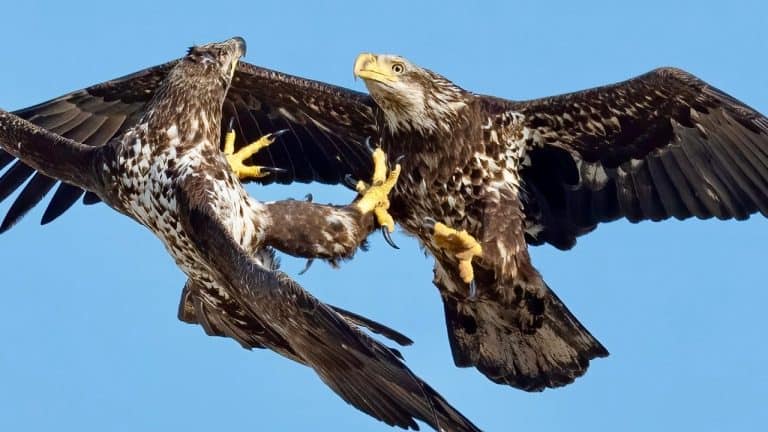
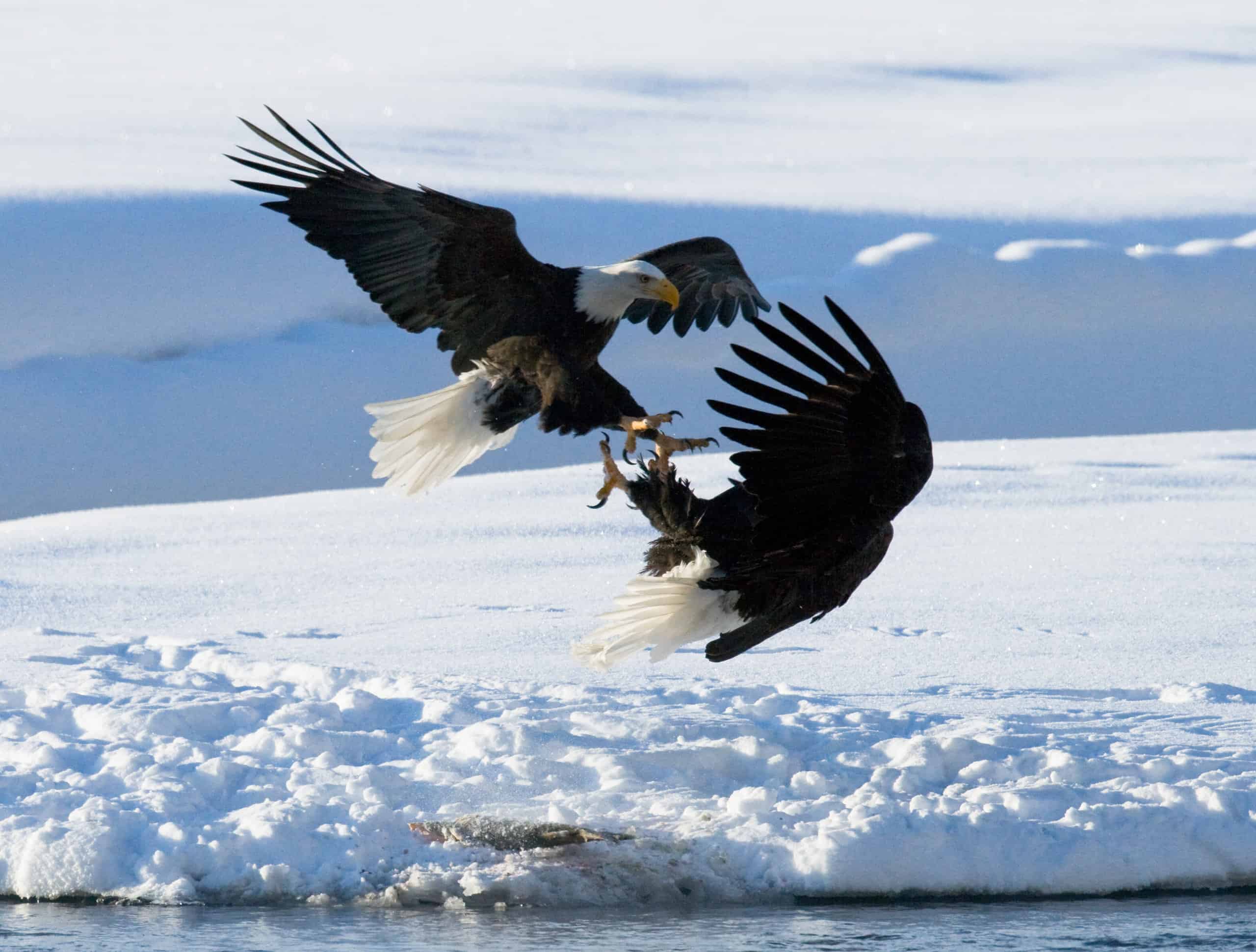
- Two eagles locking talons and plummeting toward the ground looks terrifying, though it might not mean what you think. Watch the talon lock →
- Bald eagles steal food in mid-air from other birds and sometimes from people, using one surprisingly bold technique. See the food-stealing tactics →
- Despite being a symbol of American strength, bald eagles have a feeding habit that most people would call lazy or even cowardly. Discover their lazy feeding habit →
- Six bald eagles were once observed doing something in mid-air that had nothing to do with hunting or fighting. See the six-eagle behavior →
These bald eagles lock talons and spiral toward the ground in one of the species’ most dramatic aerial displays. Bald eagles are known to do this during courtship, in a maneuver often called a cartwheel display, but they can also grapple during aggressive encounters. From a short clip alone, it is not always possible to tell which is happening. Either way, the birds break apart before reaching the ground, and the clip ends before we see what happens next.
Watch the Action Now
Where Do Bald Eagles Normally Live?
The bald eagle has been a national symbol of the United States since it was incorporated into the Great Seal in 1782. In 2024, Congress formally designated it as the national bird. Bald eagles live across much of North America, including most of Canada, the continental United States, and northern Mexico. Eagles in northern parts of the range generally migrate south or toward open water during winter, while many southern populations remain in their territories or make different seasonal movements. Bald eagles typically nest in forested areas near large bodies of water, although they are increasingly found in other settings as well. When nesting in trees, they usually choose large, sturdy trees that provide good visibility. They tend to avoid heavily developed areas when possible, but they can tolerate people around reliable food sources. That is why bald eagles may gather near fish processing plants, dumps, and below dams where fish are concentrated.
Cool Bald Eagle Facts
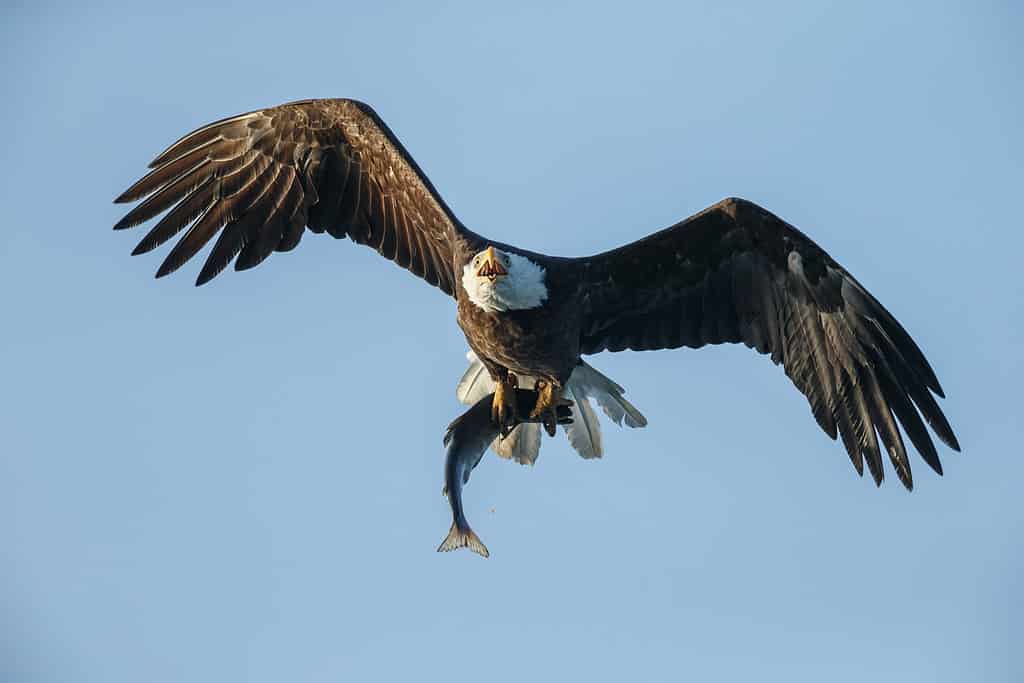
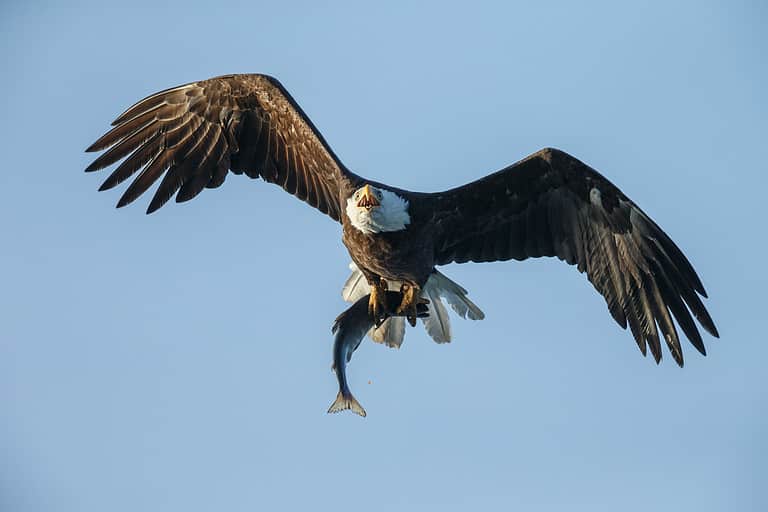
The bald eagle’s diet is made up mainly of fish.
©iStock.com/Schaef1
Bald eagles are iconic North American raptors, and eagles have long held important spiritual and cultural roles for many Indigenous peoples and Tribal communities. Despite the name, bald eagles are not actually bald. Adult birds have a bright white head and tail that contrast sharply with their dark brown body and wings. Here are some more cool bald eagle facts.
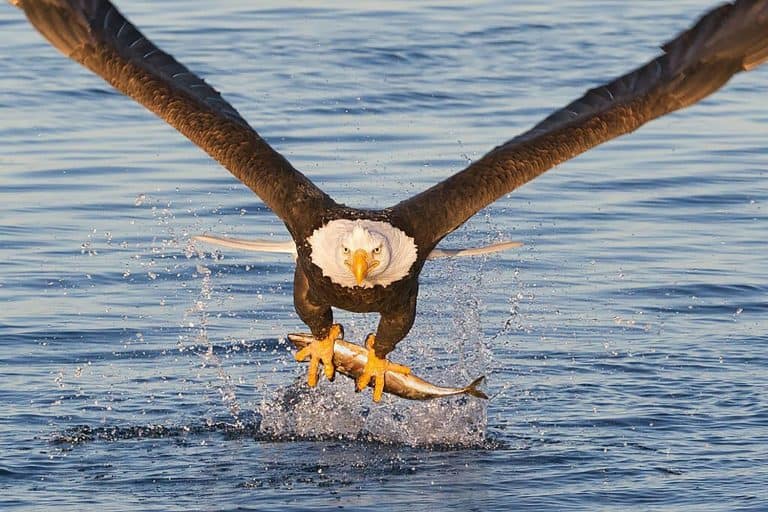
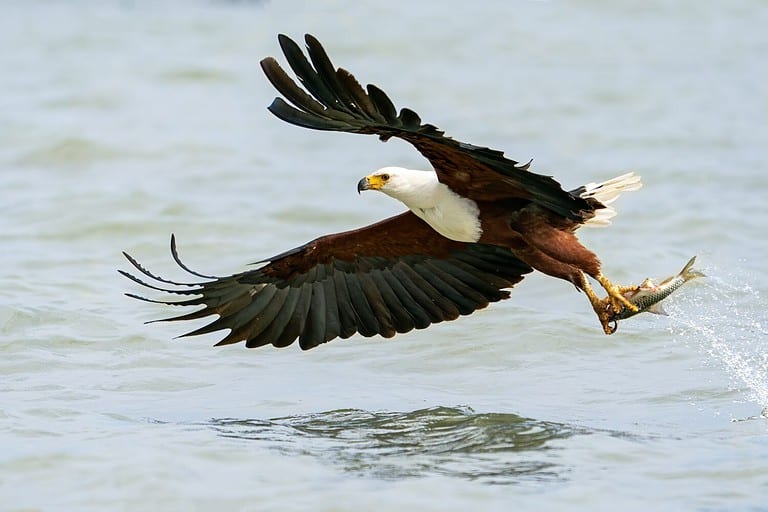
- Fish make up the largest part of the bald eagle’s diet. Their diet includes salmon, herring, and shad, along with many other fish species. Bald eagles are opportunistic feeders, though, and will also eat birds, reptiles, amphibians, mammals such as rabbits, and carrion.
- Bald eagles do not necessarily eat on a strict schedule. When food is plentiful, they can gorge on a large meal and spend the next several days digesting it.
- These birds do not always catch their own fish. Bald eagles frequently steal food from other animals, including ospreys. An eagle may harass an osprey until it drops its fish in midair, then swoop in to grab it. Bald eagles have also been observed snatching fish directly from an osprey’s talons and even taking fish from people.
- Although bald eagles are often solitary, they sometimes hunt cooperatively, with one bird flushing prey toward another. They also show behavior that looks a lot like play. One observer documented six bald eagles passing sticks to one another in midair.