















Quick Take
- What most Americans think they know about the bald eagle's species classification is actually wrong. See the classification details →
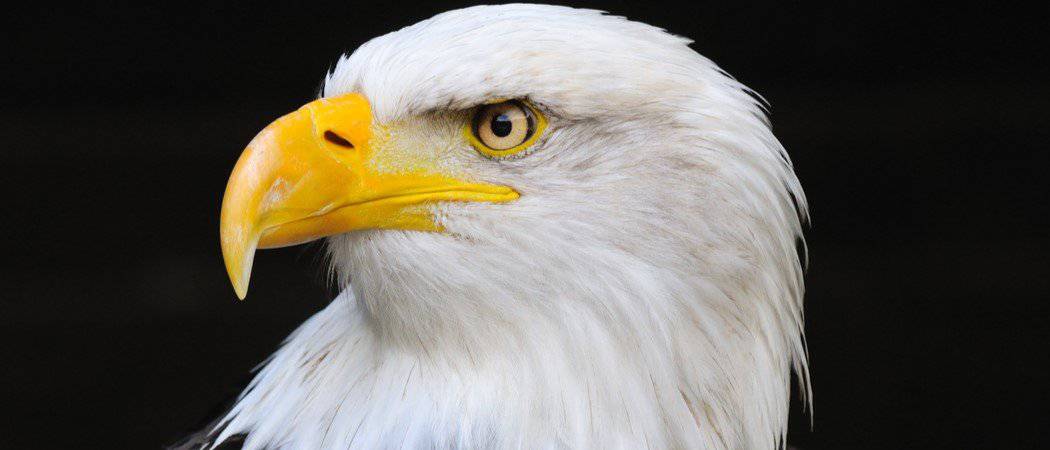
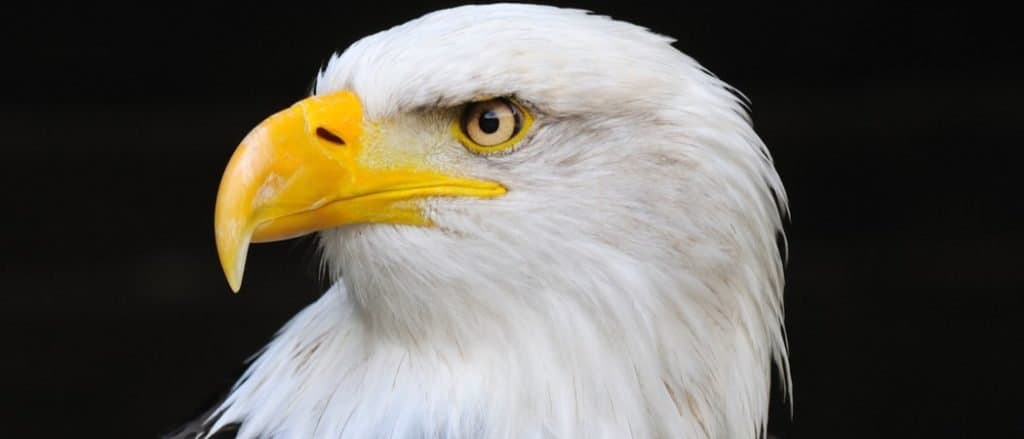
- Despite being far smaller, an eagle carries something exactly the same size as yours, and that something is the key to one of their most extraordinary abilities. Discover the eye size fact →
- Eagles practice a dark survival strategy with their own offspring that sounds cruel but is remarkably effective. Learn about chick survival →
- An eagle's grip strength compared to a human's produces a number that's hard to believe. See the grip strength numbers →
Nicknamed the “king of all birds,” eagles are large and powerful birds of prey that appear to soar majestically in the air, searching for their next meal.
Although not the most agile fliers, their remarkable speed in the air certainly belies their enormous size relative to other birds.
Most species are well-protected by governments, conservation organizations, and international acts around the world, but a few of the more obscure species are in danger of extinction.

6 Incredible Eagle Facts
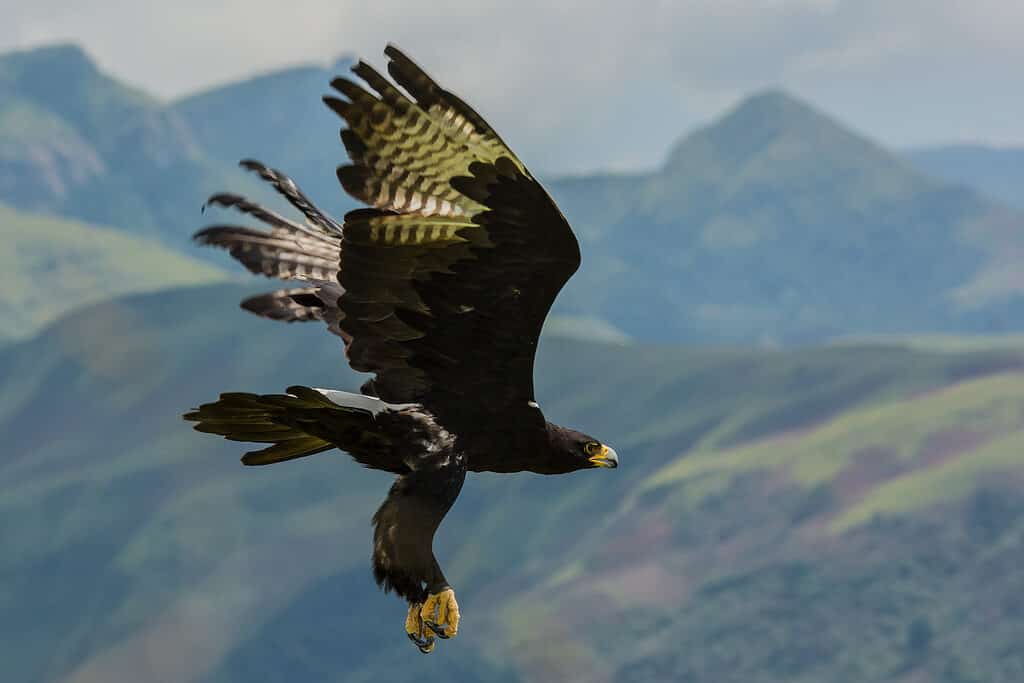
Black eagle soaring, showing its yellow bill and talons.
©Eleanor Esterhuizen/Shutterstock.com
- The eagle probably first evolved from kites some 36 million years ago.
- The eagle has served as a very common symbol of strength and power in many human cultures. They adorned the national emblems of Rome/Byzantium, Russia, and many Germanic states. The unusual-looking double-headed eagle is a common historical motif that may stretch back to the time of ancient Mesopotamia.
- The grip of the bald eagle is actually 10 times stronger than that of a human.
- Despite their much smaller body weight, the eye of an eagle is about the same size as a human eye.
- Eagles undergo a process called molting in which they gradually lose their feathers one at a time and grow completely new ones about every year. Some species will lose feathers equally on both sides to maintain proper balance.
- Eagles can carry roughly one-third of their own body weight, making them one of the strongest birds in the world.
Classification and Scientific Name
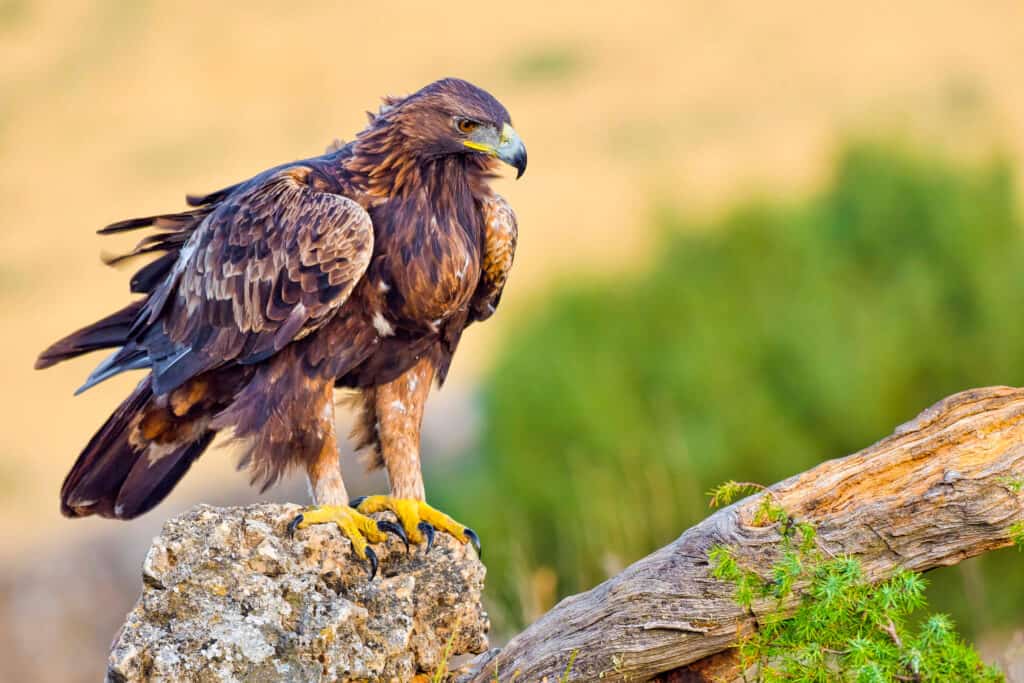
There are around 60 different species of eagles.
©Al Carrera/Shutterstock.com
Eagles are a group of particularly large birds that belong to the family Accipitridae (this scientific name is derived from the Latin word accipiter, which means hawk). Many different types of birds belong to this family, including vultures, kites, and hawks. What distinguishes the eagle is its larger size and massive beak.
There are some 60 species of eagles still living in the world today. They can be divided into several main groups: fish or sea eagles, serpent eagles, forest eagles, and booted eagles. These are informal groupings and not necessarily taxonomic ones. What many Americans may not know is that the bald eagle (scientific name Haliaeetus leucocephalus) is actually a type of sea eagle.
Evolution and Origins
Tens of millions of years ago, there was an ancient group of birds that were eventually named Kites. These birds resembled today’s bald eagles in their development. As far as we know, early kites were thought to have scavenged and hunted fish. Somewhere around 36 million years ago, the first eagles descended from kites.
Eagles belong to several different groups of birds. Most of the 68 species of eagles are from Eurasia and Africa.
Common Types of Eagles
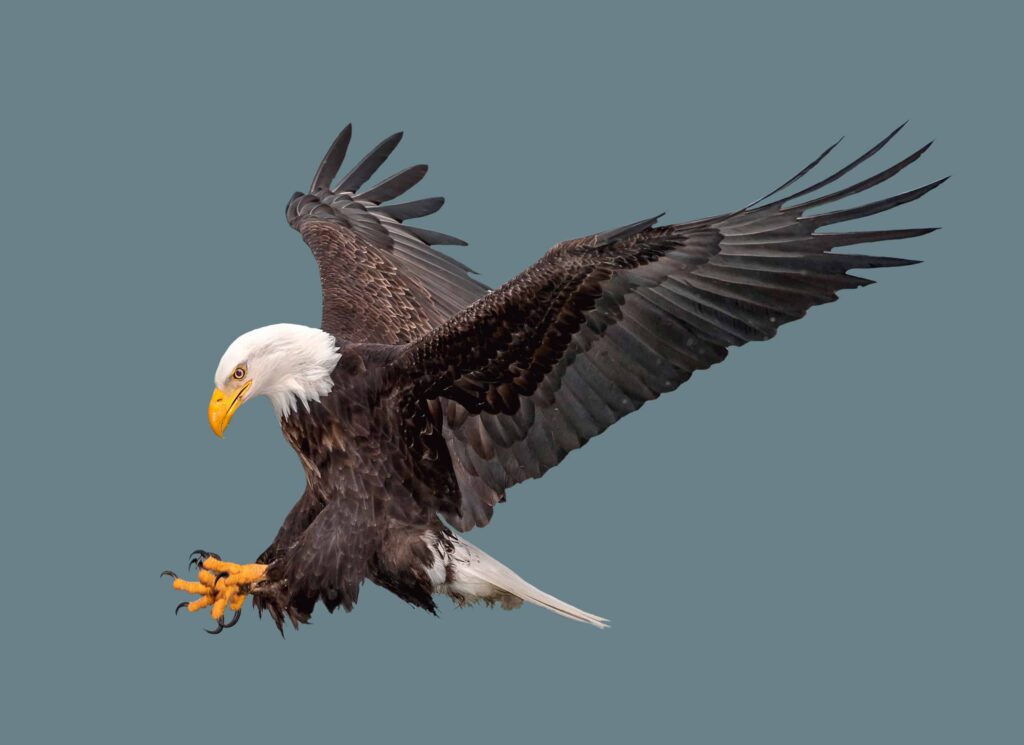
Bald eagles are large flying birds and fierce predators.
©PHOTOOBJECT/Shutterstock.com
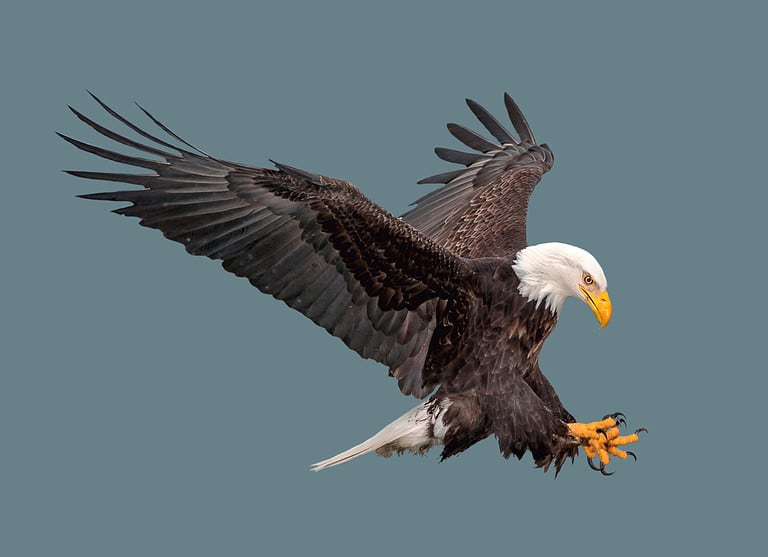
- Bald Eagle: The bald eagle is the national bird of the United States. These birds have white heads and tails with brown bodies and are found near open bodies of water with old-growth trees that they use for nesting.
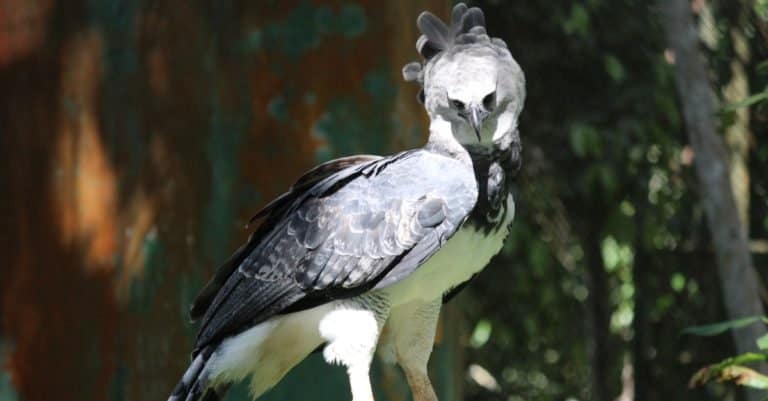
- Harpy Eagle: Harpy eagles are found in tropical rainforests in Mexico, Central America, and South America. These birds have dark grey feathers with white undersides, a black band across their necks, and grey feathers on their heads.
- Golden Eagle: Golden eagles can be found in Europe, Asia, North America, and parts of Northern Africa. Adult golden eagles are dark brown with slightly paler wing feathers and golden napes.
- Steller’s Sea Eagle: Steller’s Sea Eagles live in coastal habitats of northeastern Asia. These birds can be identified by their dark bodies, white shoulders, foreheads, tails, and thighs, and bright yellow bills.
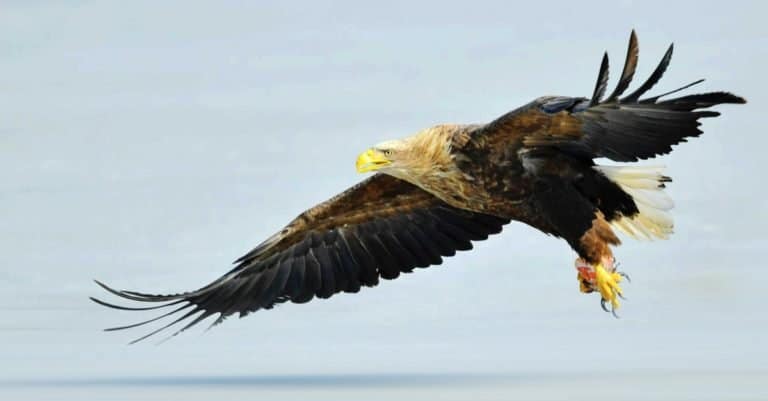
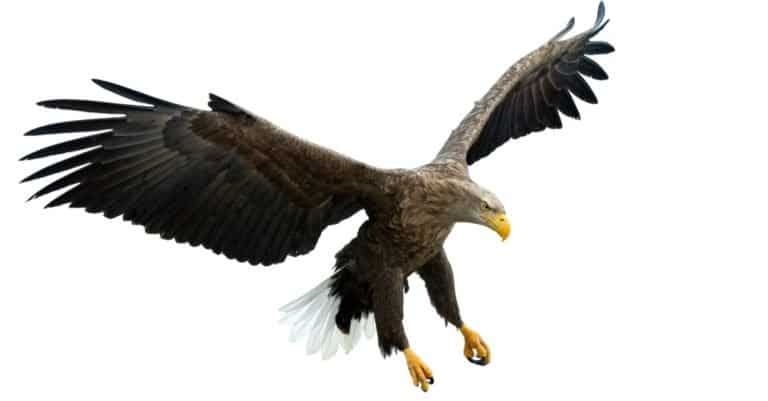
- White-Tailed Eagle: White-tailed eagles breed in Northern Europe and northern Asia and generally live near open bodies of water. They have brown body feathers and pale heads and necks with white tail feathers.
Appearance
The eagle is among the largest of all birds; only some condors and vultures can rival it in sheer size. The largest species of eagles, such as the harpy eagle and Steller’s sea eagle, can weigh up to around 20 pounds or more in the case of the largest individuals, and display a wingspan of around 7 or 8 feet from tip to tip. Females actually tend to be larger than males on average, but it’s not entirely clear why; perhaps it’s to protect the chicks from danger while the male is away.
In addition to their size, eagles are further distinguished by their sharp, heavy beaks (which end in a downward-sloping point) and four big talons on each foot. They also have small projections on the bottom of their feet called “spicules” to grasp prey.
Unlike the scavenging vulture, eagles also have a fully-feathered head, sometimes capped off in a luxurious-looking crest.
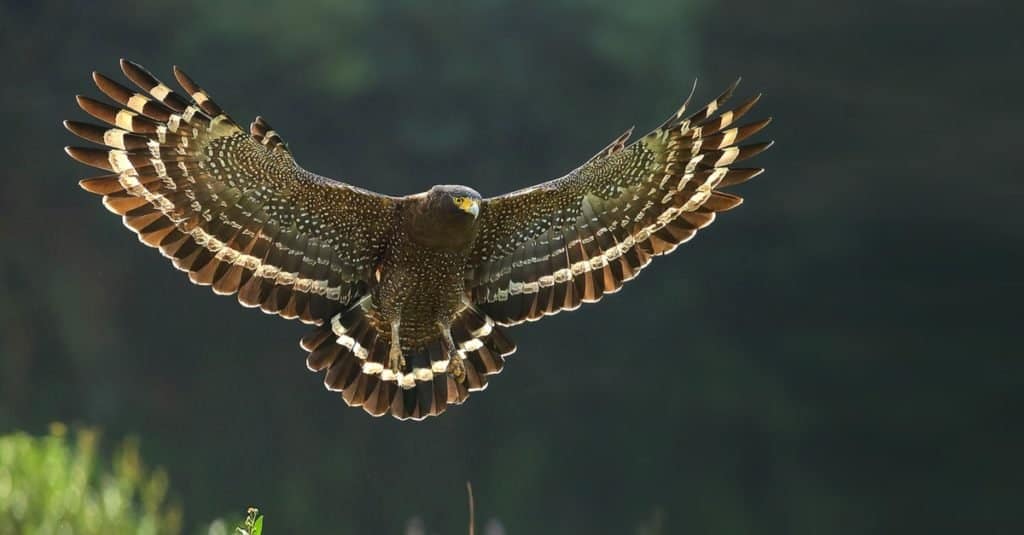
A Crested Serpent Eagle in flight.
©Wang LiQiang/Shutterstock.com
Eagle vs. Hawk
Eagles and hawks are very similar in their behavior and physical characteristics. Some 15 species are even called hawk eagles due to their mixed intermediary features. But in general, hawks are much smaller in size; in North America, their wingspan rarely exceeds more than 5 feet.
Behavior
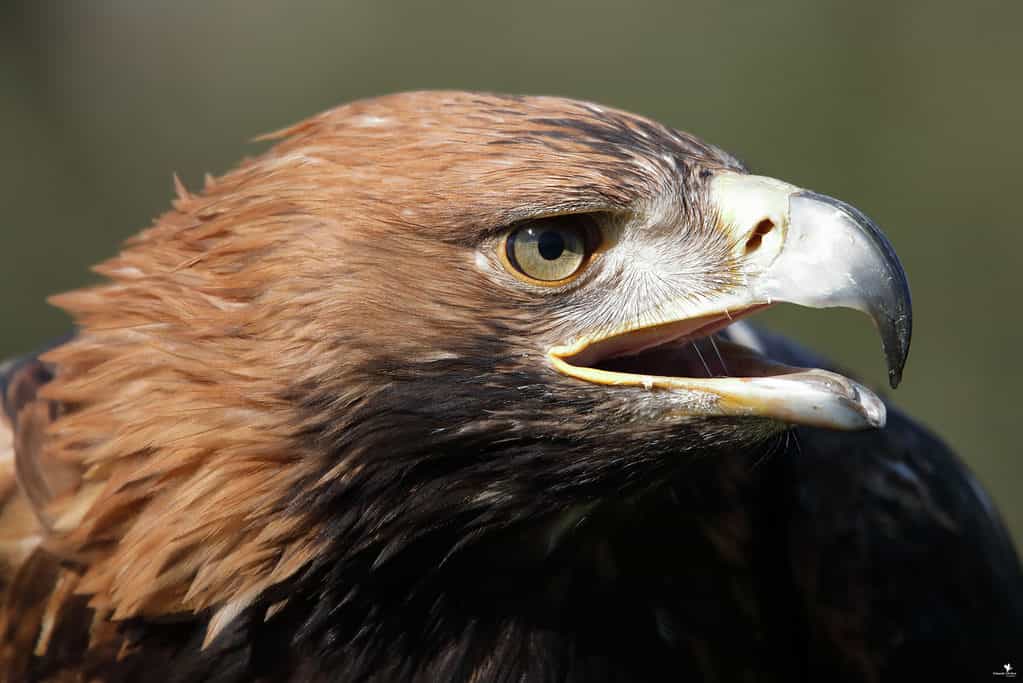
Eagles have exceptional vision that ranks among the best in the Animal Kingdom.
©Eduardo Medina/Shutterstock.com
These birds have exceptional vision that ranks among the best in the Animal Kingdom. Translated into human terms, an eagle would have 20/5 or even 20/4 eyesight. There are a few reasons for this: the enormous size of the pupils, the density of light-detecting cells in the retina, and the shape of the fovea (a small pit in the back of the eye which is responsible for an animal’s sharp central vision). This confers enormous visual advantages.
First, an eagle can see four to eight times farther than the average human, allowing it to spot small prey from up to two miles away, even while in flight. Second, it can also see in a wider range of colors, including ultraviolet. Finally, it can shift focus quickly to zoom in on prey.
But to focus on a specific spot, the eagle usually has to turn its entire head in that direction. Fortunately, the eagle also has 14 vertebrae in its neck compared to only seven for humans, enabling it to have a greater degree of rotation.
When the bird finally spots prey, it usually swoops down and snatches up its unsuspecting victim in its feet and talons. In this action, it acts with remarkable speed. The common golden eagle can dive down at speeds of around 150 to 200 miles per hour, which is nearly equal to the peregrine falcon, the fastest animal in the world.
In flight, the golden eagle can only maintain speeds of around 28 to 32 miles per hour, which still allows it to cover much of its hunting ground quickly in a day. Most of these birds are sedentary (which means they maintain a strict territory all year round), but a few species and subspecies may undertake a partial or full migration for the cold winter months.
When several eagles gather together in groups, it is called a convocation, congregation, or aerie. But these birds are not really one for large social gatherings. Instead, each bird tends to maintain a close family unit with a single mate and their chicks. It has few other social contacts besides that.
Except for the breeding season, many eagles don’t actually make many sounds. The bald eagle is one exception. It emits a harsh call to communicate with others of its kind or warn away intruders.
Habitat
These birds are found all over the world in almost every single type of habitat, from the far northern tundra to tropical rainforests and deserts. Only two species, the bald eagle and golden eagle, are common to North America, while nine species are endemic to Central and South America.
The Eastern Hemisphere contains the greatest concentration of them, particularly in Africa. Many of the islands dotted throughout the Indian and Pacific Oceans even have their own distinct species as well.
Diet
These birds are apex predators in every ecosystem where they’re found. This is specifically reflected in its anatomy: they have sharp beaks and talons specifically adapted for ripping and tearing flesh.
It is also not shy about scavenging for food left behind or killed by other animals. In fact, the bald eagle’s tendency to steal the kills of other birds once prompted Benjamin Franklin to say that it was a bird of “bad moral character” (though, despite common belief, he did not propose that the turkey should be the national symbol of the United States instead).
These birds are also a feast-or-famine type of bird since they can sometimes go several weeks between meals.
What does the eagle eat?
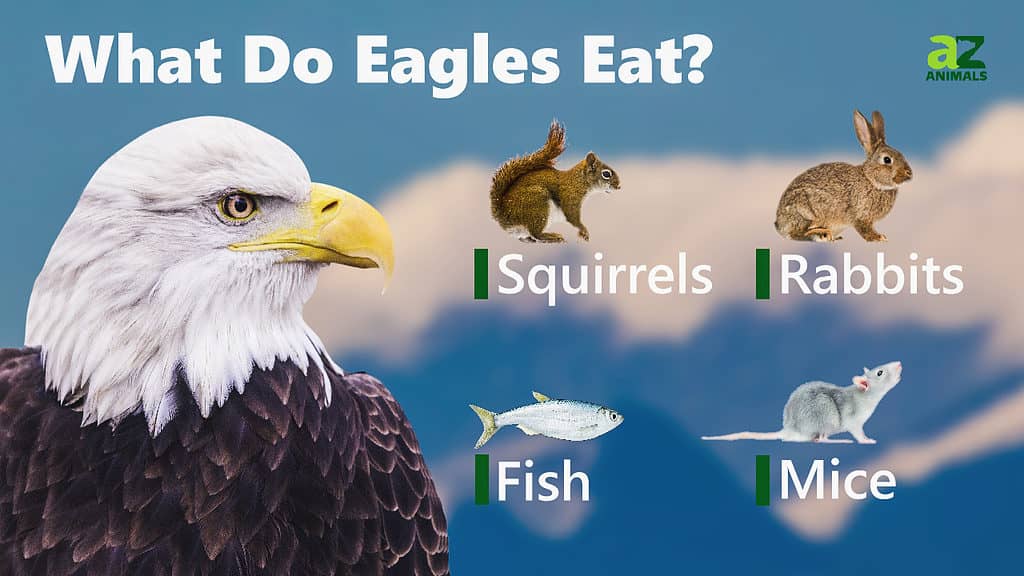
These birds’ preferred diet depends mostly on where they live and what they’re adapted for. The most common prey includes fish, crabs, snakes, amphibians, small birds, rodents, and other mammals, sometimes as large as a deer or pig. However, these birds rarely just stick to a single type of food.
Although they may have a single preference (fish eagles obviously consume fish), they will also eat a wide selection of other foods based on what’s available at the time. If the meal is too large to carry in its talons, then the bird will eat it directly where the animal was killed.
Predators and Threats
Until the 19th and 20th centuries, these birds historically faced few threats in the wild. But the combined effect of overhunting, habitat loss, and pesticide use (which leached into the environment and water supply) threatened many species with extinction. In places where hunting and pesticide use are tightly regulated, eagle numbers are quickly recovering.
What eats the eagle?
An adult has no other natural predators in the wild. But eggs and chicks may be preyed upon by hawks, owls, raccoons, bobcats, and other carnivorous animals.
Reproduction, Babies, and Lifespan
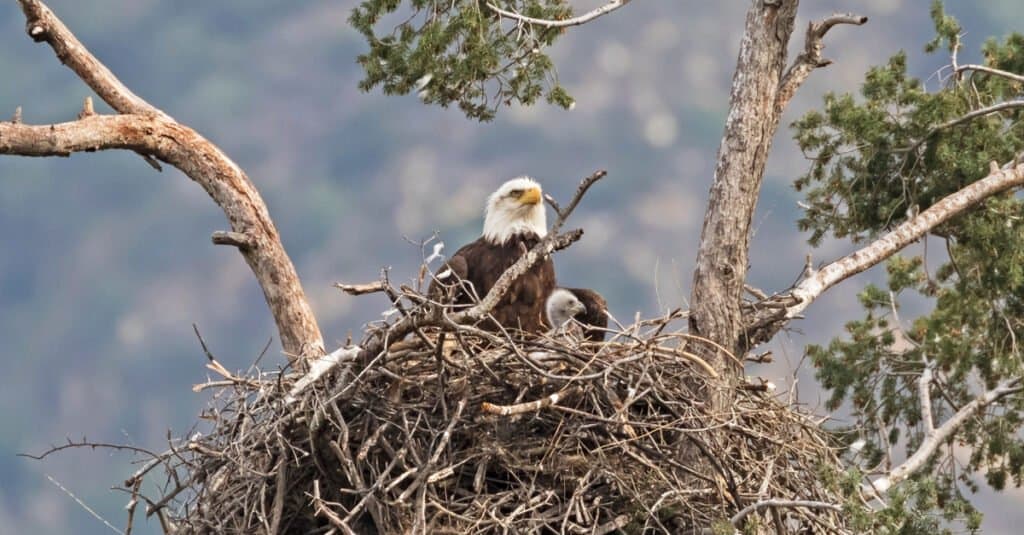
Eagles use the same nest year after year.
©KGrif/Shutterstock.com
Following a brief courtship display, which can include an impressive aerial performance and synchronized behavior, these birds form exceptionally strong pair bonds and mate for life.
This allows them to create and keep building upon the same nest year after year, usually in a high and inaccessible cliff or tree.
These nests, which also go by the name of eyries, are usually composed of sticks, moss, lichens, and other plant material. However, most of these birds only use the nest when they are actually raising their young and abandon it temporarily for the rest of the year.
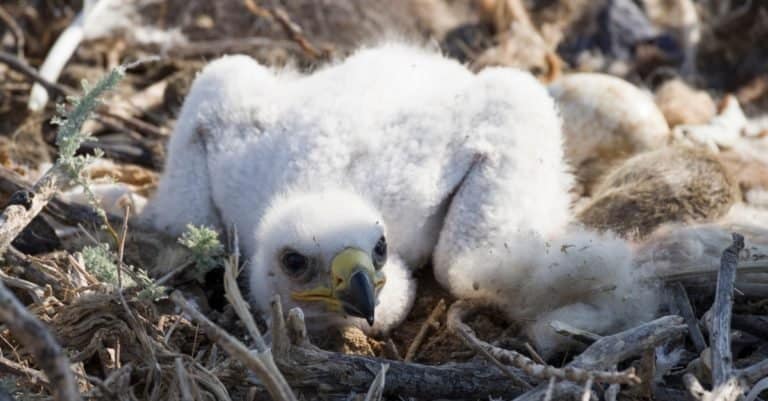
Once the female lays her eggs, she incubates them for a month or two, while the father hunts and provides most of the food. These birds can produce anywhere between one and four eggs, but the larger, dominant chick may end up killing or out-competing the smaller one.
While this may seem cruel, it is an effective strategy for ensuring that one chick almost always survives, especially since mortality rates are already quite high among the young.
They will usually grow their flight feathers after a few months, but since they have such long maturation periods, it may take up to three or four years before they become adults. The life expectancy of the typical species is around 20 to 30 years in the wild. As it ages, the bird begins to lose some of its hunting edges. In captivity, where they always have a guaranteed meal, these birds can sometimes live to around 50 years of age.
Population
Most but not all species around the world appear to be in excellent health. The bald eagle is considered to be the species of least concern by the IUCN Red List, with perhaps more than 100,000 individuals remaining. This is a remarkable bounce-back from the 1980s and 1990s, when it was still on the endangered species list.
The golden eagle is likewise a species of least concern, with more than 100,000 individuals left. By contrast, the harpy eagle of Central and South America is Vulnerable and in decline. The steppe eagle of Central Asia is likewise in decline. Although there are some 50,000 to 75,000 adults remaining, it is listed by the IUCN Red List as an endangered species.
Eagles in the Zoo
The bald eagle is one of the most popular exhibits in American zoos. The San Diego Zoo, along with many other zoos, also has a golden eagle, a crowned eagle, a Steller’s sea eagle, and a harpy eagle.
Eagle Pictures
View all of our Eagle pictures in the gallery.

visuelldesign/Shutterstock.com
Sources
- Britannica / Accessed March 15, 2021
- Live Science / Accessed March 15, 2021
- San Diego Zoo / Accessed March 15, 2021
- Nature / Accessed March 15, 2021