Quick Take
- The rarest Jack Russell color is the one the breed is most famous for, and the reason why is more complicated than you'd expect. Discover the rarest color →
- Jack Russell coat colors weren't chosen for looks. Hunters engineered them for a specific tactical reason that still shapes the breed today. See the hunting logic →
- Two all-white Jack Russells can look practically identical but have drastically different health outcomes, and that difference comes down to one subtle physical trait. Albino vs. all-white health →
- Black patches on a Jack Russell trace back to a breed that no longer exists, and that extinct lineage still influences what you see in the coat today. Trace the extinct lineage →
The Jack Russell terrier is an energetic, highly intelligent working dog developed in 19th-century England by the Reverend John “Jack” Russell. Originally bred to track and flush out foxes, this compact terrier is renowned for its athleticism, tenacity, and strong prey drive. Jack Russell terriers have three distinct coat types: smooth, rough, and broken. Their base coat is typically white, with tan, black, or brown patches most often appearing on the head and tail. Continue reading to discover more about Jack Russell colors, presented from the most common to the rarest.
Standard Jack Russell Terrier Coat Colors
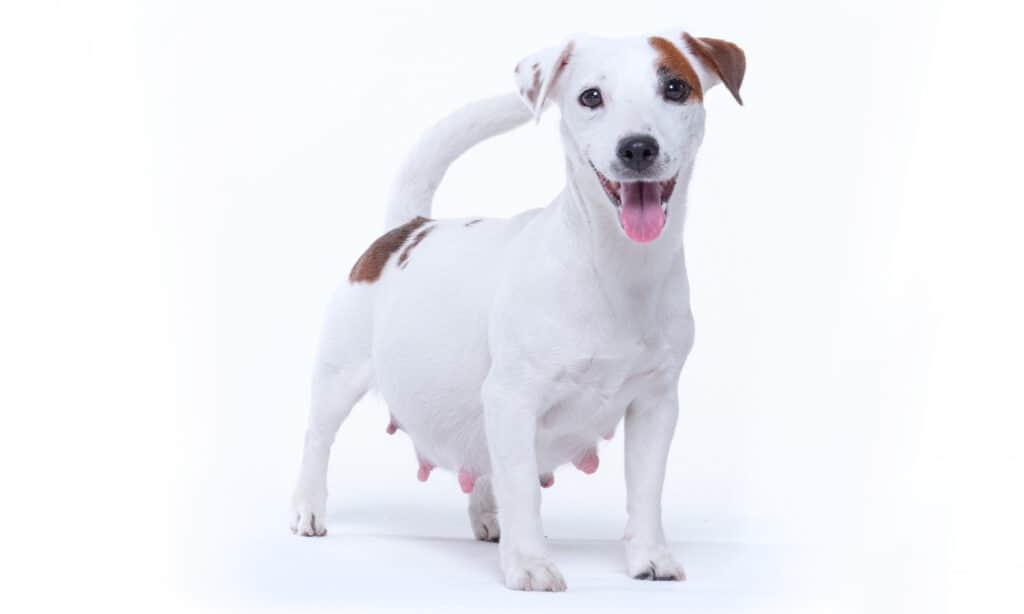
An average Jack Russell terrier stands between 10 and 15 inches tall and weighs 11 to 17 pounds.
©Pavel Shlykov/Shutterstock.com
The American Kennel Club (AKC) does not officially register dogs under the Jack Russell name. Instead, the AKC recognizes and registers the Russell terrier, while the Parson Russell terrier is recognized by the United Kennel Club (UKC). Russell terriers have shorter legs and longer backs; Parson Russell terriers have longer legs and more proportional bodies, which lowers the risk of certain spinal issues.
Both breeds have the same standard coat colors. Their base coat is white and may include patches of black, brown, cream, tan, or a combination of two or more colors.
Their coats are either smooth, rough, or broken. The smooth coat is short and sleek and lies flat against the pup’s body. The rough coat consists of longer, coarser, wiry hair with a distinct beard and eyebrows, while a broken coat is a blend of both, with smooth body hair and longer, wiry fur on the face or legs.
Most Jack Russell terriers have markings, and the AKC breed standard specifies that they should be at least 51% white.
Tricolor
The most common coat color seen in Jack Russell terriers is tricolor. They’re a mix of brown, black, and white. The white base coat is the predominant color. This is what most people think of when they envision a Jack Russell terrier. The prevalence of the tricolor coat comes down to a mix of genetics and historical preferences.
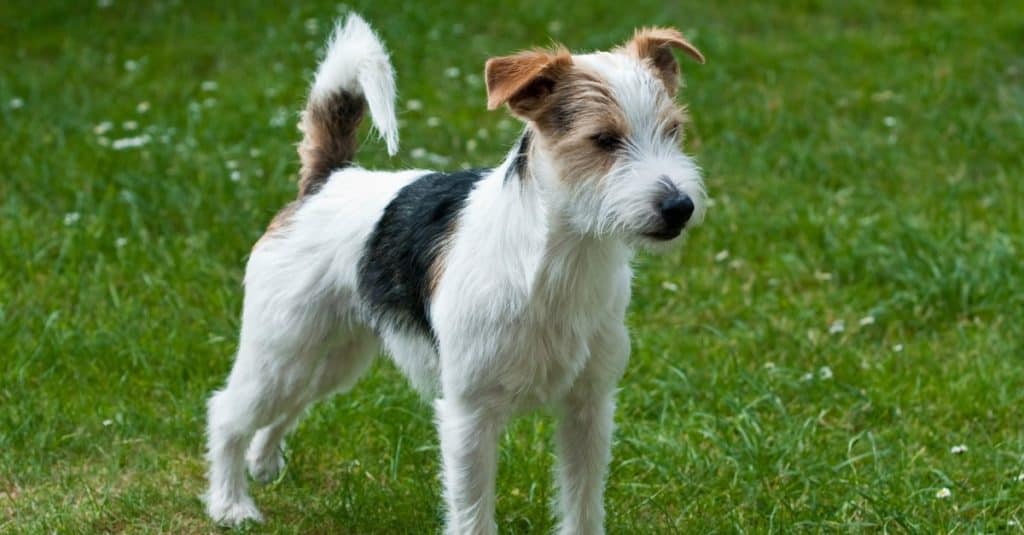
The Parson Russell terrier has longer legs and a shorter spine than the Jack Russell.
©Bildagentur Zoonar GmbH/Shutterstock.com
A tricolor coat results from specific pigmentation pathways combined with centuries of deliberate, human-led selective breeding.
Historically, hunters favored tricolor patterns because high-contrast markings made dogs easier to track visually through dense brush and in low light. Consequently, breeders selectively bred tricolor dogs, refining the iconic look of scent hound breeds like the beagle and the basset hound.
White and Tan
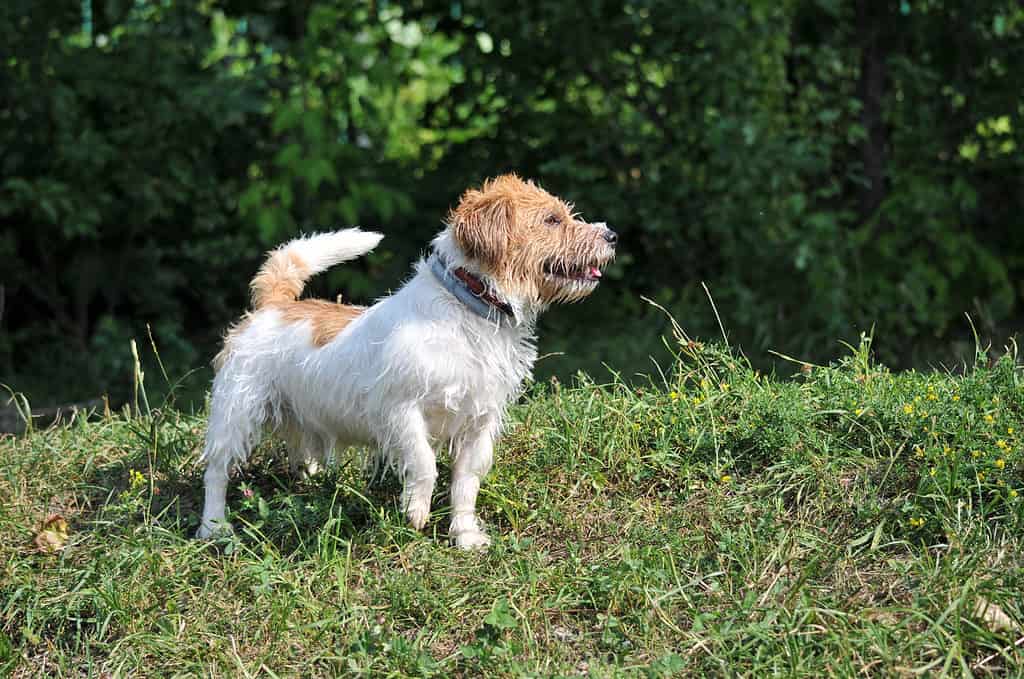
Tan Jack Russells can range widely in patch color.
©iStock.com/NATALIA ANDREEVA
White and tan Jack Russell terriers have white base coats with tan-colored patches.
White and tan Jack Russell terriers are common because the breed was originally developed for fox hunting. Hunters intentionally bred dogs with mostly white coats so they could be easily seen in the underbrush and distinguished from the red or brown fur of a fox
White and Black

Black and white Jack Russells are relatively rare to see, as most dogs with black in the coat are tricolor.
©MeganLeigh Photography/Shutterstock.com
White and black are a relatively common and standard color combination for Jack Russell terriers. However, they are not as common as the classic white and tan or tricolor coats.
The breed standard explicitly requires that more than 51% of the dog’s body be white. The accompanying black markings are remnants of the terriers originally bred into the line, such as the extinct English black and tan terrier.
White and Brown

White and brown Jack Russell terriers are fairly common.
©BIGANDT.COM/Shutterstock.com
Often referred to as chestnut and white, brown and white Jack Russells have medium-light brown patches on white coats.
White and Red

Some Jack Russells have mahogany, or red, patches.
©Valeriya Dzyuba/Shutterstock.com
Red and white Jack Russells are white with dark orange-brown patches. These are most commonly seen over the eyes and ears and on the back.
When registered with the AKC, these dogs would likely be considered to have tan or brown patches. The Russell terrier breed standard specifies that tan patches can range from lemon to mahogany, so some may also call these pups mahogany and white.
White and Lemon
White and lemon Jack Russell terriers have very light, cream-yellow patches on white fur. They may be very light or a bit brighter in color.
These dogs may be registered to the AKC as tan or cream, and some may refer to them as such since these are what the colors are called under the breed standards.
Solid White
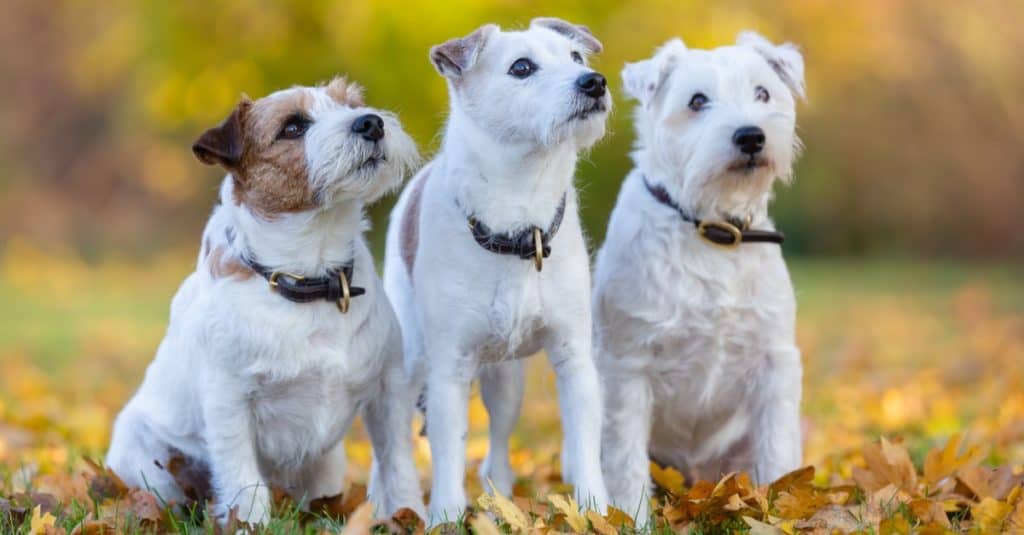
The rarest Jack Russell color is pure white!
©Christian Mueller/Shutterstock.com
Jack Russell terriers were bred with white base coats to make them easier to see while doing their job–hunting.
However, all-white Jack Russell terriers are very rare. Most of them have at least a few patches of color in their coats.
Healthy white Jack Russell terriers will have black noses and dark paw pads. They are just as healthy as those with colored patches.
However, dogs with pink noses and paw pads (indicating a lack of pigmentation in their skin) are albino. Albinism can cause a variety of health issues, including deafness, sensitivity to light, blindness, and an increased risk of sunburn and skin cancer.
Albino dogs should not be purposefully bred, and reputable breeders will not do so.