Quick Take
- Colossal Biosciences made a record-breaking 20 edits across 14 genes in gray wolf cells by adding extinct dire wolf DNA.
- This was the first time ancient DNA has been used to bioengineer an extinct species.
- Scientists disagree that gene-altered gray wolves are actually de-extinct dire wolves.
- De-extinct species may negatively impact conservation efforts more than they help them.
In April of 2025, headlines across the world announced that the dire wolf had been brought back from extinction. This 130-150 lbs wolf species, about 25% heavier than modern-day gray wolves, had not roamed the planet for over 10,000 years, yet was now reported to be back from the dead thanks to genetic advancements from a company called Colossal Biosciences.
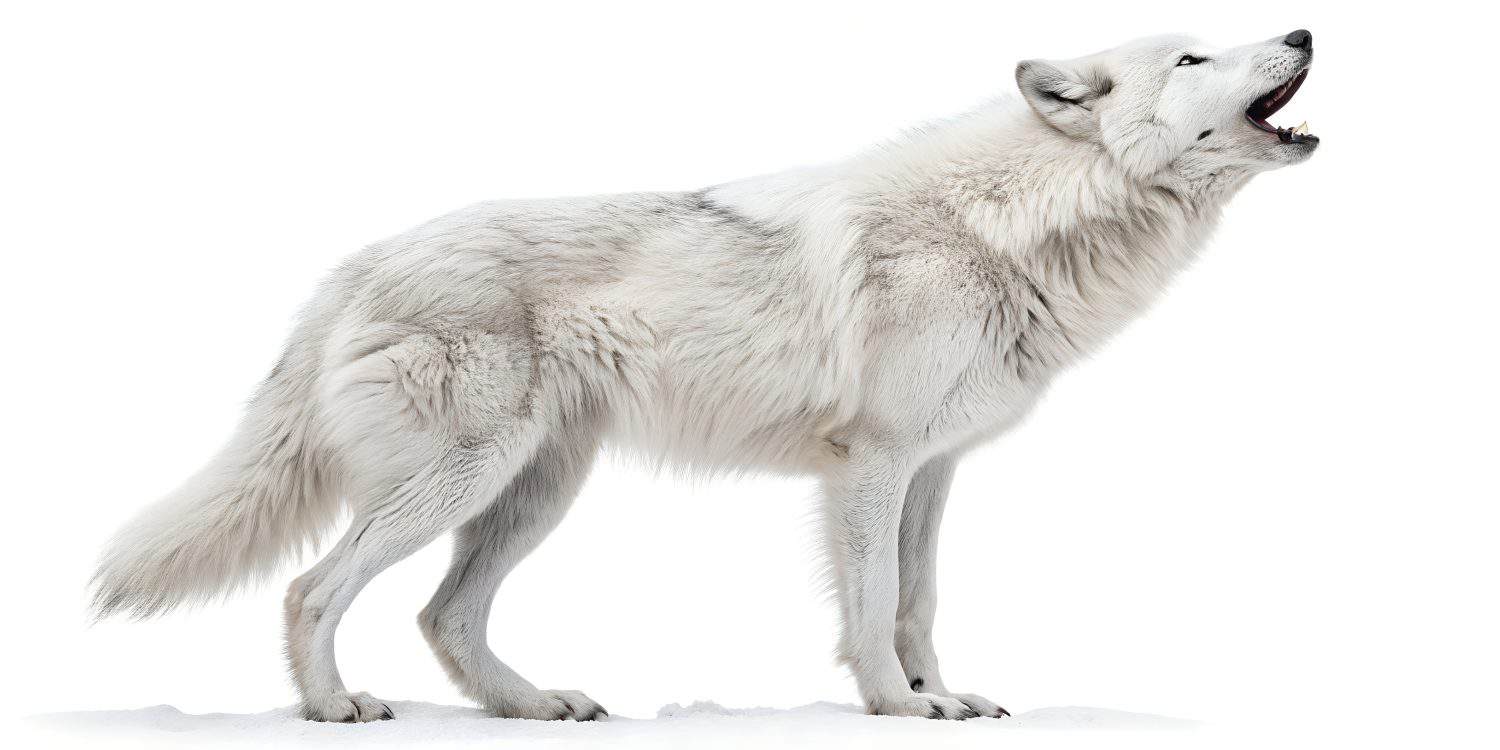
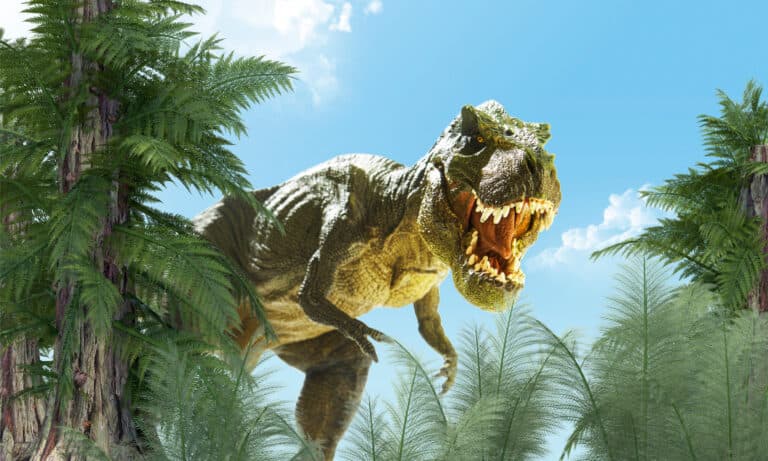
Rendering of a dire wolf. Colossal Biosciences found genes showing that dire wolves have white fur.
©Shahfahd/Shutterstock.com
Despite this big splash and media frenzy, many scientists weren’t convinced. Dr. William Ripple, Distinguished Professor of Ecology at Oregon State University, a prominent wildlife biologist who has studied the ecological role of gray wolves for decades, especially in the Yellowstone ecosystem, says, “I would not consider these animals to be real dire wolves.”

Prominent wildlife biologist Dr. William Ripple has studied the ecological role of gray wolves for decades.
©William Ripple
As a scientist myself, the headlines I was seeing from others in the scientific community were quite different from the ones from new stories told. My feed was flooded with posts warning others: “Not so fast…” After reading about the science behind the news and looking into this so-called de-extinction event, it seemed that most felt the genetic technological processes behind the de-extinction event couldn’t support such bold claims, and that Colossal Biosciences was overstepping its bounds in saying this Pleistocene mammal was back.
So what is really going on? Are dire wolves actually de-extinct? What is de-extinction exactly? And does it help conservation?
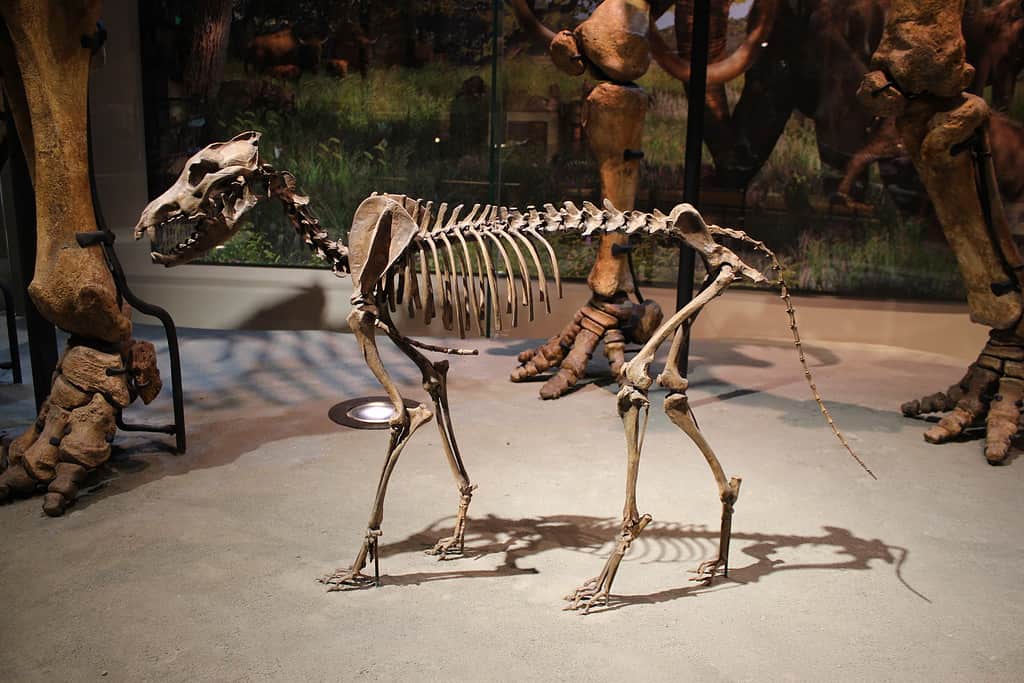
Reconstructed skeleton of the dire wolf from the La Brea Tar Pits. Dire wolves have been extinct for over 10,000 years.
©Rodney, CC BY 2.0 via Wikimedia Commons – Original / License
What Is De-Extinction?
De-extinction is a term coined to describe the process of using modern technological advancements in genetics or genomics to reverse species extinctions. That is, scientists bring back living individuals of a species that no longer exists today, and often have not existed for hundreds or even thousands of years.
How Does De-Extinction Work?
De-extinction could theoretically work in several ways. One way is by cloning an individual from an intact cell, or in other words, creating a genetically identical copy. Scientists clone animals by taking a mature cell and transferring the DNA into an egg cell, where the nucleus containing the original DNA has been removed. After the egg with the new DNA develops into an embryo, it is implanted into the womb of a female animal, who then gives birth to the animal.

De-extinction describes the process of bringing extinct species, like the woolly mammoth, back to life through genetic technological advancements.
The problem with animals that are extinct for long periods of time is that intact cells are difficult to find due to the natural DNA degradation process that happens over time. High-quality DNA comes from blood or tissue samples, but these biodegrade quickly and are therefore not well preserved. Even with recently extinct species like the thylacine, where scientists have access to tissue samples, UV light and bacteria have still broken the DNA into fragments.
With species that went extinct hundreds or thousands of years ago, even more degradation has occurred, and DNA almost always comes from bone, a more degraded source, and therefore, the genome is missing pieces. Part of the de-extinction process involves filling in those missing pieces, which frequently involves comparing extinct species to their closest living relatives.
With species that went extinct hundreds or thousands of years ago, DNA almost always comes from bone, a more degraded source, and therefore, the genome is missing pieces. Part of the de-extinction process involves filling in those missing pieces, which frequently involves comparing extinct species to their closest living relatives.
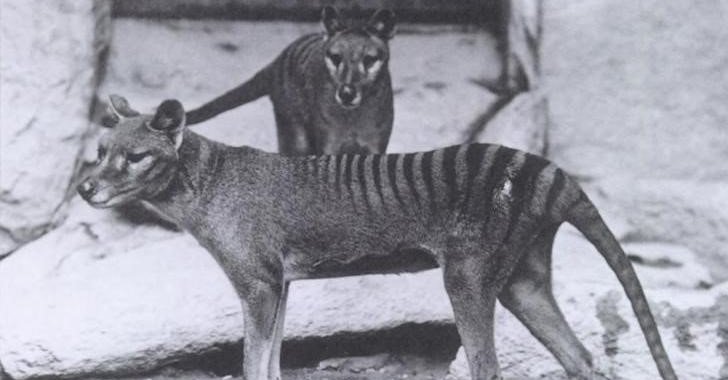
The Thylacine, or Tasmanian tiger, is a more recently extinct species that scientists have been trying to bring back to life.
Ultimately, scientists would use the cells from the living species and edit the DNA to match the extinct species, but technology hasn’t allowed for that many edits to take place yet. Then the cells need to be turned into an embryo and implanted into a surrogate species. These are all steps scientists have not yet been able to successfully accomplish.
Colossal Biosciences’ Approach to De-Extinction
When it came to the dire wolves, Colossal Bioscience’s approach to de-extinction was to analyze the ancient DNA of the extinct species in relation to their closest living relative and look for key mutations that made the extinct species unique. They would take the DNA of the living relatives and alter it with the key mutations they identified and deemed important in making the de-extinct species.
Therefore, the “de-extinct” animals would not have the same DNA as the extinct species, or even close to it. The genome of the de-extinct animal would mostly consist of the closest living relative species, but with some different genes that make it more like the extinct animal.
For the dire wolves specifically, scientists at Colossal Biosciences first identified gray wolves as the dire wolves’ closest living relative. They claim they are 99% genetically similar to dire wolves and identified 80 genes on dire wolves that were dramatically distinct from those of gray wolves. These genes impacted traits like size, white coat color, and thickness.
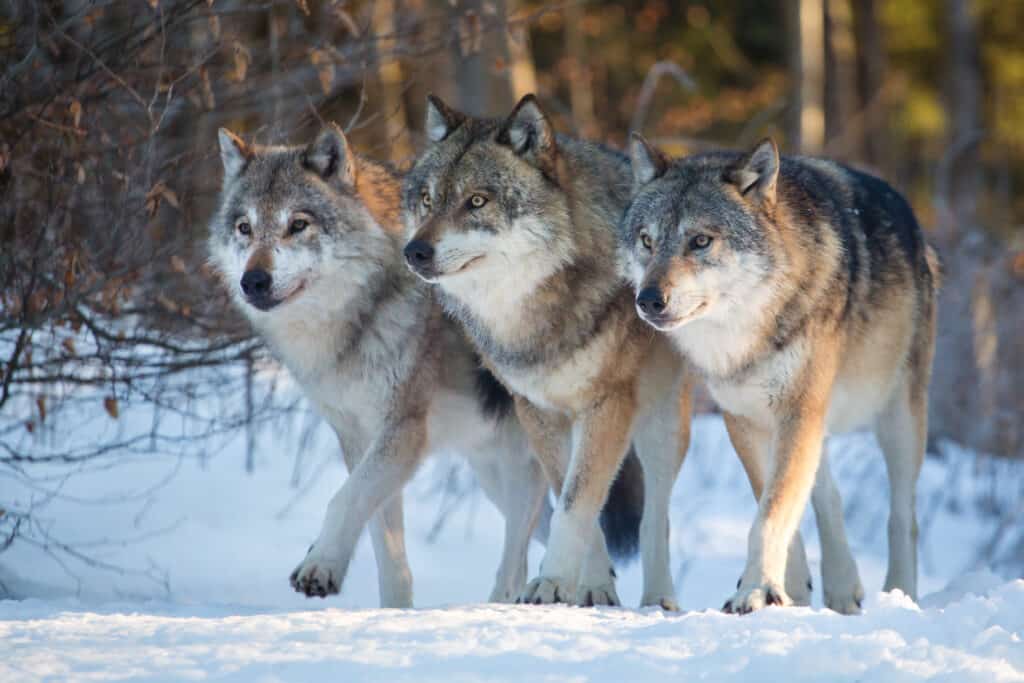
Scientists at Colossal Biosciences edited 14 genes in gray wolves with dire wolf DNA to resurrect dire wolves from extinction.
©David Dirga/Shutterstock.com
To get physical dire wolf pups, Colossal Biosciences first isolated cells from gray wolves, grew them in a dish, and then made 20 edits across 14 genes. They decided to leave out those that were previously shown to cause deafness and blindness in gray wolves. Then the edited DNA was inserted into empty dog eggs, which were implanted into large female dogs used as surrogates that eventually gave birth to four pups.
Are the Dire Wolves Engineered by Colossal Biosciences Real Dire Wolves?
The wolves that Colossal Biosciences claims to be dire wolves were created from gray wolf cells with edits to over a dozen genes using dire wolf DNA. Many scientists are not convinced that these wolves are dire wolves, but rather genetically modified gray wolves.
Are Gray Wolves the Real Closest Living Relatives to Dire Wolves?
First, scientists disagree with Colossal Biosciences that the gray wolf is the closest living relative of the dire wolf and refer to a study in 2021 that claims it is more closely related to the African jackal.
For other reasons mentioned below, scientists already disagree that the model that Colossal Biosciences is using to claim a species is de-extinct is actually de-extinction, but choosing a reference species that is more genetically different than the one they are trying to resurrect, makes the case even weaker.
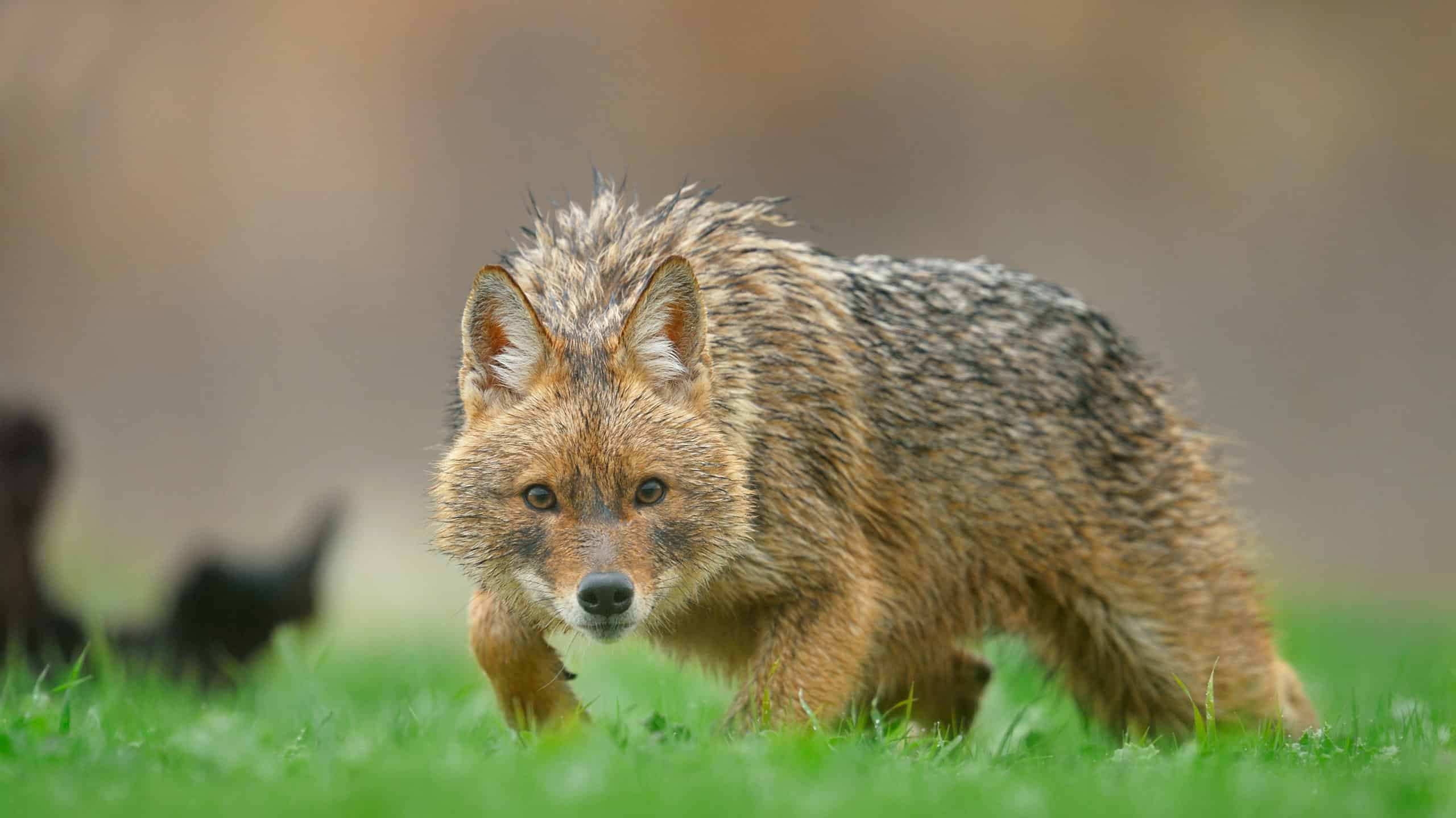
A 2021 study shows that dire wolves are more closely related to African jackals than to gray wolves.
©Vladimir Kogan Michael/Shutterstock.com
Ben Lamm, founder and CEO of Colossal Biosciences, addressed this concern on the Joe Rogan Experience podcast, stating that his scientists had access to a higher-quality sample of dire wolf than the one used in the 2021 study, making it out of date and the jackal reference obsolete. However, this research has not been published through the peer review process, the gold standard in the scientific community, and has therefore not been verified by experts in the field.
Are Multiple Gene Edits Enough to Make a Species?
Although what the scientists at Colossal Biosciences did is a major step forward in genetics research, being the largest number of gene edits done on a species at once, many scientists don’t think it’s enough to make a dire wolf a dire wolf, claiming they are resurrecting ancient genes rather than a whole species. Ripple says, “What we are seeing are genetically modified gray wolves that have been altered to express a handful of traits inferred from ancient DNA. That is very different from recreating an extinct species with its full genetic makeup, evolutionary history, and ecological role.”
Although these genes were chosen due to their dire wolf traits, these gene edits don’t likely represent enough of the diversity of the species. For example, the genome between human beings and chimpanzees is approximately 98.8% the same, yet we are very different from chimps. There are roughly three billion base pairs in the human genome, and the differences between humans and chimpanzees lie in 1.2% of three billion, equating to approximately 36 million base pair differences.
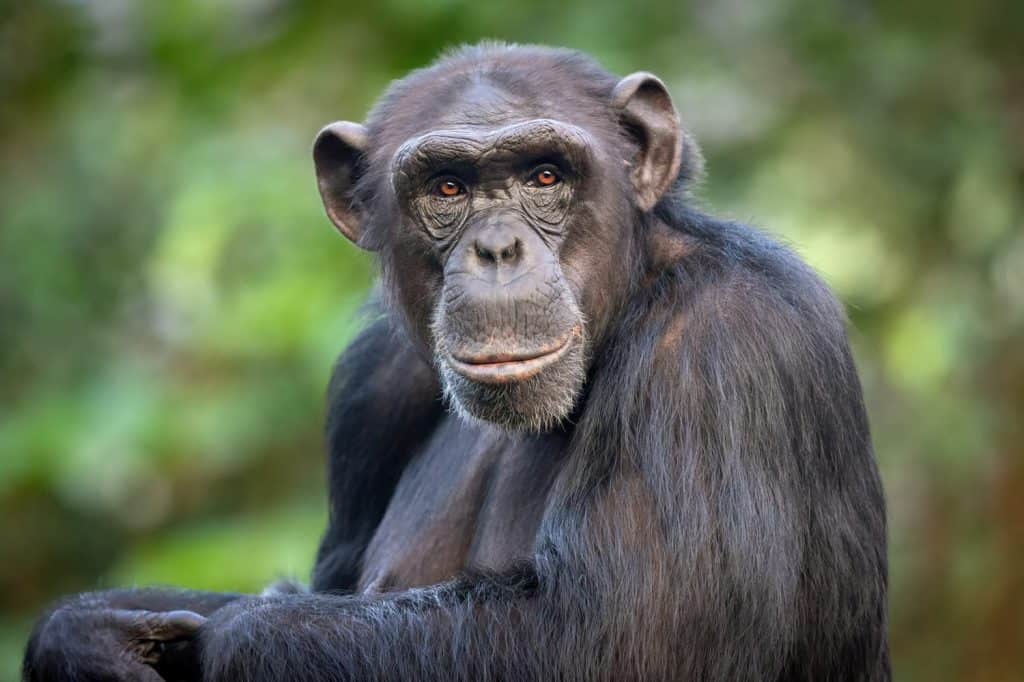
Chimpanzees and humans are nearly 99% the same genetically, yet are vastly different species in appearance and behavior.
©KensCanning/Shutterstock.com
If humans and chimpanzees have differences in millions of base pairs, would making a dozen or more gene edits to chimpanzee DNA make them human or vice versa? You might get closer to the species, but you would likely be missing out on a lot of genetic information that truly makes human beings, human beings, and chimpanzees, chimpanzees.
Also, just because different species have identical genes doesn’t mean that they use them in the same way. A gene’s expression creates a product, often proteins, that can be turned on or off, or up or down, similar to the volume dial on a television or radio. Therefore, when comparing the DNA of dire wolves to gray wolves, in the areas that look the same, there may be big differences when the dire wolves are alive. These genes may be turned off or have a very low expression, creating further differences between gray wolves and dire wolves. Yet using the Colossal Biosciences approach, scientists would miss these areas because when comparing genomes, they look the same.
Additionally, it appears that scientists at Colossal Biosciences are choosing traits based on what we know morphologically about dire wolves and in reference to gray wolves. Since dire wolves are extinct and no one can observe them, they may be missing out on key features that you cannot pick up on from just looking at specimens of bone, skin, and fur, such as dire wolf behavior. There are many species in nature that look nearly identical, yet have different behaviors that differentiate them, such as nearly identical-looking frogs and insects having different calls.
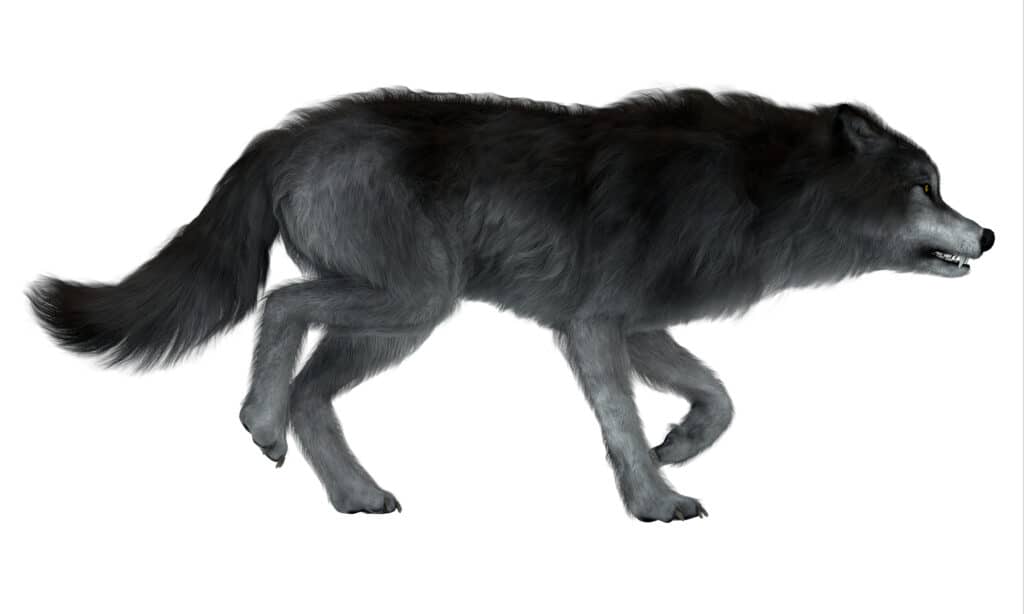
Dire wolf genes may look identical to gray wolf genes, but they are likely expressed differently in living animals.
©Catmando/Shutterstock.com
On the Joe Rogan podcast, Lamm himself equates resurrecting an ancient species to buying a jigsaw puzzle from a garage sale in that you don’t have all of the pieces or even a picture on the box to follow, so you don’t know exactly what you are making.
What we are seeing are genetically modified gray wolves that have been altered to express a handful of traits inferred from ancient DNA. That is very different from recreating an extinct species with its full genetic makeup, evolutionary history, and ecological role.
Dr. William Ripple, Distinguished Professor of Ecology at Oregon State University
The Influence of Behavior and Environment on DNA
Lamm and Colossal Biosciences are also ignoring the role that external factors, such as behavior and the environment, play in making a species the way it is. In addition to the natural differences that exist between different species in gene expression, environmental and behavioral factors also greatly influence gene expression (epigenetics). For example, when mother rats don’t lick and groom their pups, the pups are less likely to be able to cope in stressed conditions and be good rat mothers themselves, and the diet of the mom can even alter coat color in the womb.
The dire wolves that Colossal Biosciences created were not raised by dire wolf mothers, living in dire wolf packs, or in the same environmental conditions that existed when the species existed. Dire wolves roamed the planet largely during the Pleistocene, when the climate was vastly different from what it is today. They also are not eating the same diet as dire wolves, which included extinct horses, bison, and potentially mammoths, or accumulating ancient microbes.
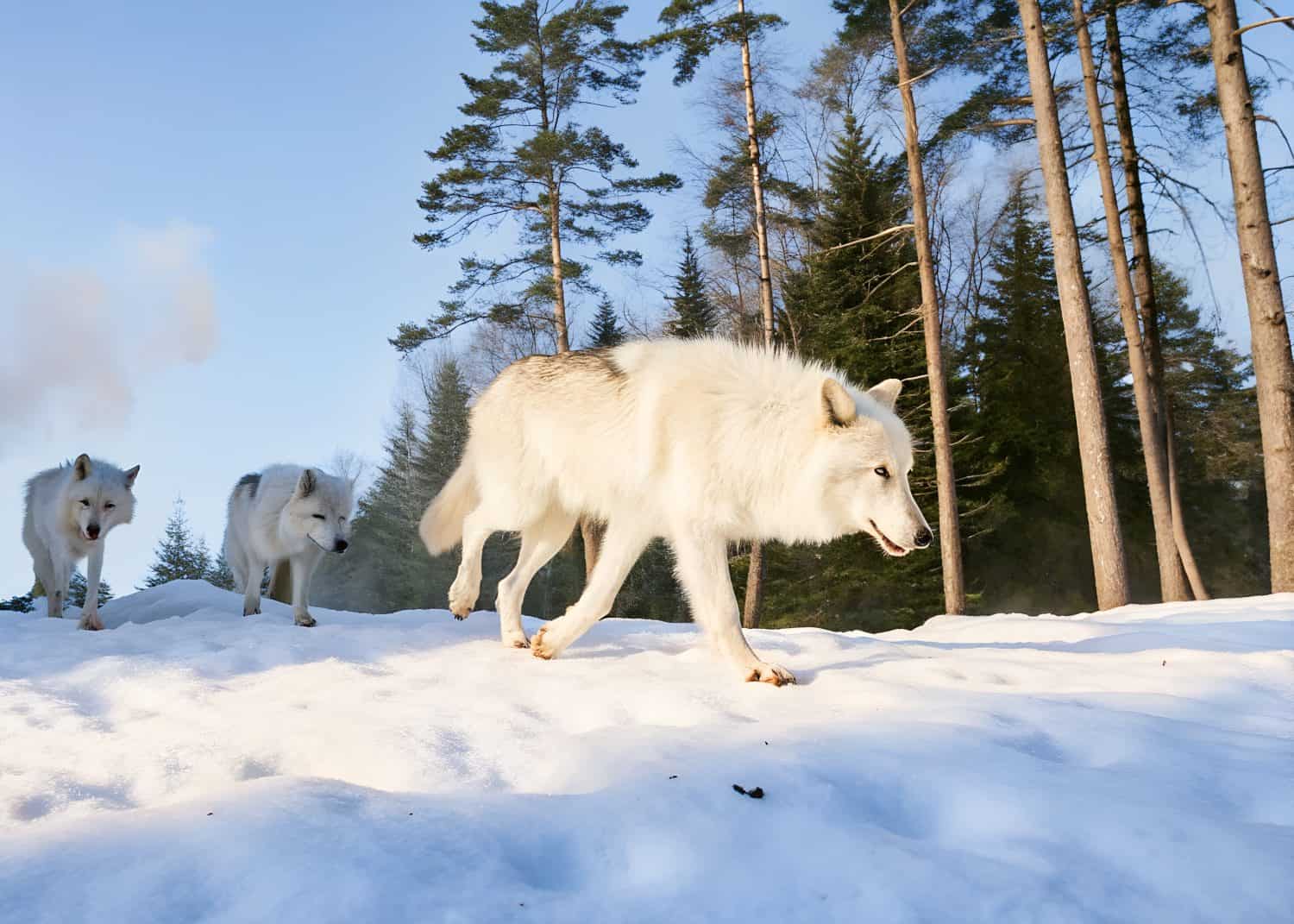
Dire wolves brought back through de-extinction would not be living in the same environment as extinct dire wolves.
©Shahfahd/Shutterstock.com
Ripple adds, “Are they real, living animals? Yes. They are biologically real, sentient organisms, and that matters ethically. But they are not wild in the evolutionary sense. They did not arise through natural selection, they did not coevolve with Ice Age ecosystems, and they are not embedded in the complex ecological relationships that defined dire wolves thousands of years ago.”
Are These Dire Wolves Helping Conservation?
Ripple says, “From a conservation standpoint, I am skeptical. De-extinction projects risk diverting attention, funding, and public imagination away from the urgent work of conserving species and ecosystems that are still here and rapidly disappearing.”
Ben Lamm argues that the resurrected dire wolves can fulfill empty ecological niches that have gone extinct with the dire wolves. While it’s true that apex predators like dire wolves have profound impacts on ecosystems, as did gray wolves when they were reintroduced to Yellowstone National Park and influenced the landscape, it is unlikely that dire wolves would have a different impact, as they fulfill a similar ecological niche to gray wolves.
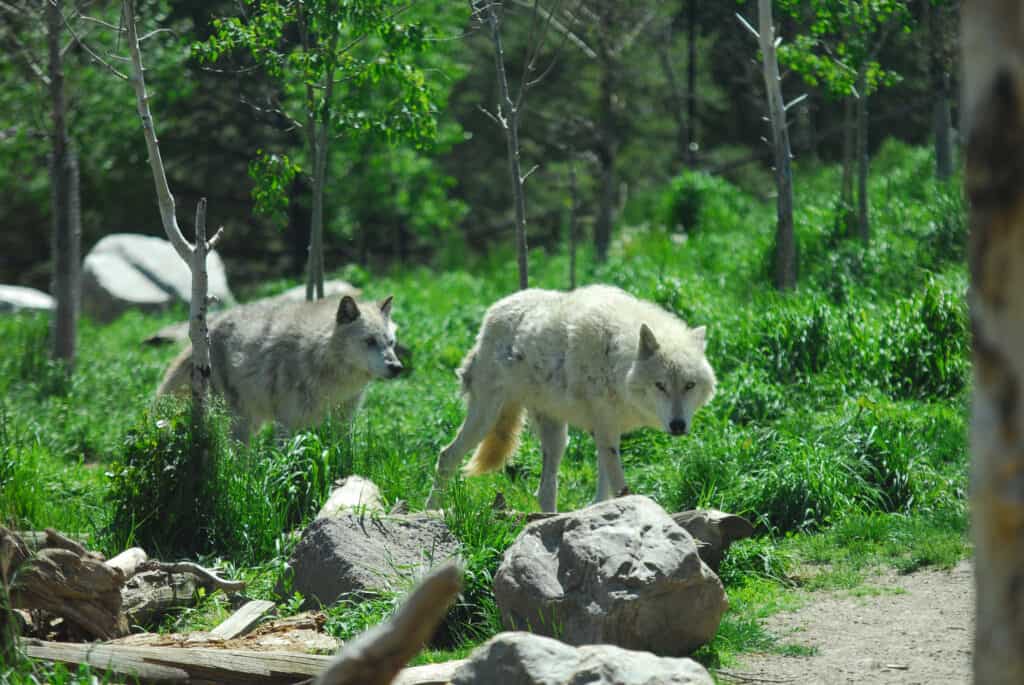
The reintroduction of gray wolves in Yellowstone National Park altered the landscape.
©MedstockPhotos/Shutterstock.com
Additionally, the conservation problems associated with gray wolves, namely human-wolf conflict and the low tolerance of people to accept wolves where they live, make it unlikely that people would be willing to accept dire wolves as free-roaming animals. Ripple goes on to say, “We are struggling to protect wolves, forests, grasslands, and biodiversity right now. Framing genetic engineering as conservation can blur that priority.”
Does Gene Editing Help Conservation?
While many scientists don’t think that these dire wolves help conservation, the advancements from the techniques used could be used to help other species. If a species were having a difficult time reproducing, then one could bring the same kind of genetic methods to clone individuals or to tweak genetic diversity so that more individuals could be released into the landscape. There are species where there are only a dozen or fewer individuals, and genetic diversity is critical to ensure a viable population.
When CRISPR (Clustered Regularly Interspaced Short Palindromic Repeats), a gene editing technology where an RNA enzyme can target specific locations on a gene to delete, insert, or alter DNA, was developed, some scientists argued it could be used to help endangered species cope with threats or make them more resilient to disease. For example, scientists at the SUNY College of Environmental Science and Forestry used genetic engineering to produce an American chestnut tree that is resistant to a fungal blight pathogen introduced from Asia that has caused the species to go nearly extinct.
In the Joe Rogan Experience interview, Lamm talks about how the kind of gene editing done on the dire wolves could help save critically endangered species like the red wolf in the United States, where there are only roughly 30 individuals, by producing hundreds or even thousands of red wolves.
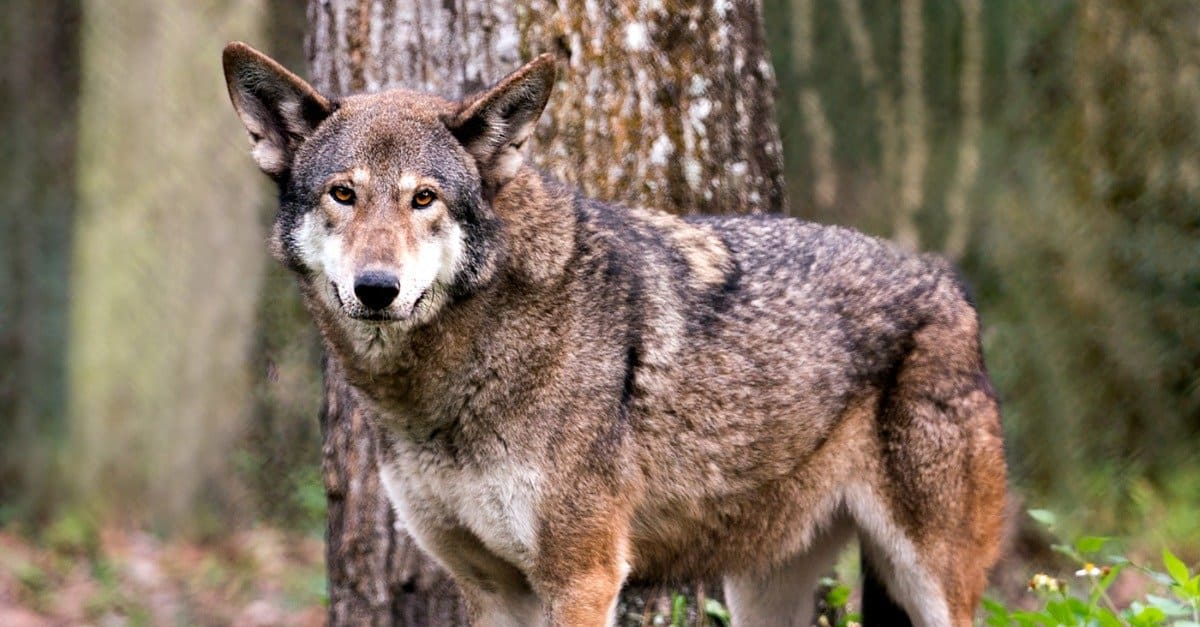
Gene editing could help critically endangered species like the red wolf; however, it does not solve threats like illegal shootings, roadkills, and habitat loss.
©Rejean Bedard/Shutterstock.com
This approach could work for some species, like the Sumatran rhino, which have been difficult to reproduce in captivity. The fewer than 100 individuals are spread over multiple breeding facilities, making it difficult not only to get them to reproduce but also reproduce with the right individuals to ensure genetic diversity. Cloning and gene editing could help resolve these problems.
However, what Lamm fails to address is that the conservation problem for red wolves, like a majority of endangered species, does not entirely lie in their reproduction, but rather the environmental conditions the species must endure. For red wolves, this is largely a lack of suitable habitat, the low tolerance of the species on private lands by residents, people mistaking red wolves for coyotes and shooting them, and the hybridization between red wolves and coyotes.
Another benefit is that the sensational factor associated with the de-extinction process could attract more funding to conservation. Lamm notes in the Joe Rogan interview that Colossal Biosciences made the largest investment in marsupial research, even more than the Australian government. Wildlife biologist Ripple acknowledges, “If these projects help people care more deeply about nature and extinction, that could be a positive outcome.” He also warns, “But they should not be confused with conservation, and they should not distract us from preventing the next extinctions, which is where the real moral and scientific challenge lies.”
De-Extinction: A Threat to Conservation?
While there are potential conservation benefits, many scientists worry that de-extinction poses a threat to conservation efforts. Wildlife biologist Ripple believes, “There is also a danger of creating a false sense of technological optimism, the idea that we can afford to lose species today because we might recreate something like them tomorrow.” If species can be brought back from extinction, this may weaken the case to conserve them, as lawmakers and the public adopt the perception that extinction is not forever and that technology can just bring them back.
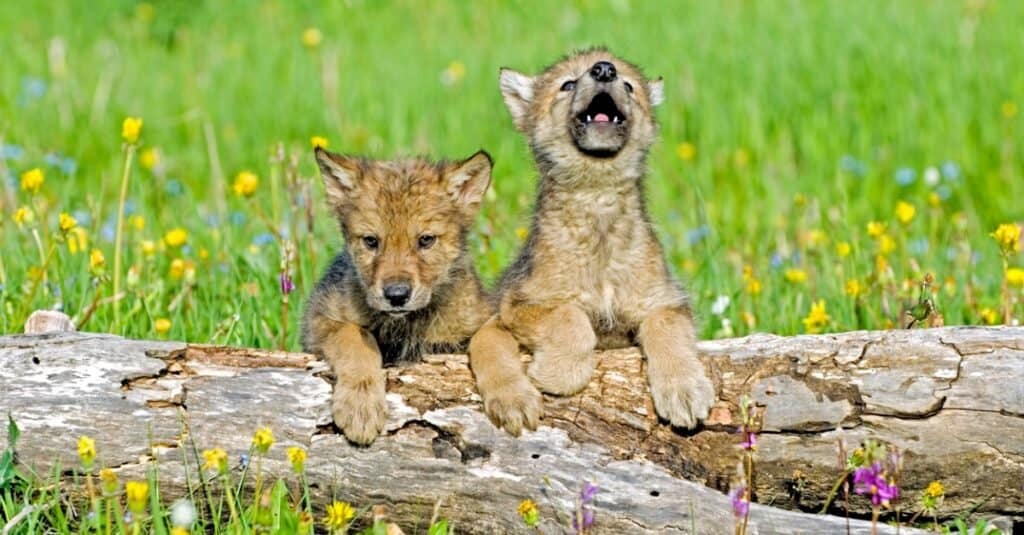
The Endangered Species Act has helped protect threatened species like gray wolves.
©iStock.com/JohnPitcher
In the United States, this has started to play out in policy. Shortly after the dire wolf de-extinction was announced, Secretary Doug Burgum of the Fish and Wildlife Service under the Trump administration, which has not been favorable toward the Endangered Species Act, released a statement saying, “The marvel of ‘de-extinction’ technology can help forge a future where populations are never at risk. Since the dawn of our nation, it has been innovation – not regulation – that has spawned American greatness.” Scientists state is setting up the stage to cut funding from and weaken the Endangered Species Act.
Finally, de-extinction goes beyond just a one-species fix. It has widespread impacts that reverberate through the ecosystem. Ripple states, “Extinction is irreversible in any meaningful ecological sense. You can’t reassemble lost food webs, cultures, and evolutionary pathways with a few genetic edits.”