Quick Take
- One animal on this list exists nowhere else on Earth except West Virginia's high-elevation forests, and it is currently fighting to survive. Meet the endemic salamander →
- One predator here regularly hunts an animal famous for making that a very painful mistake, and it pulls it off. See the porcupine hunter →
- West Virginia's highest peak once harbored a large feline predator, though only one cat roams these forests today. The reason the other vanished is worth knowing. Discover West Virginia's only cat →
- One creature on this peak actually needs brutal winters to survive, which makes climate change a direct, species-level threat unlike any other animal here. Read about the cold-dependent hare →
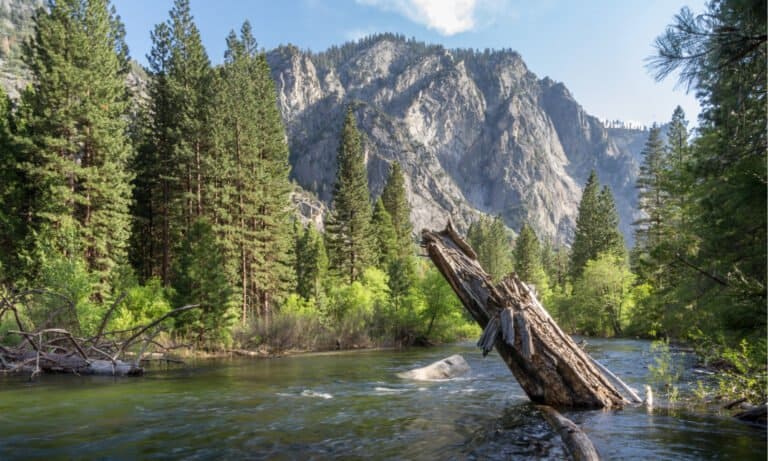
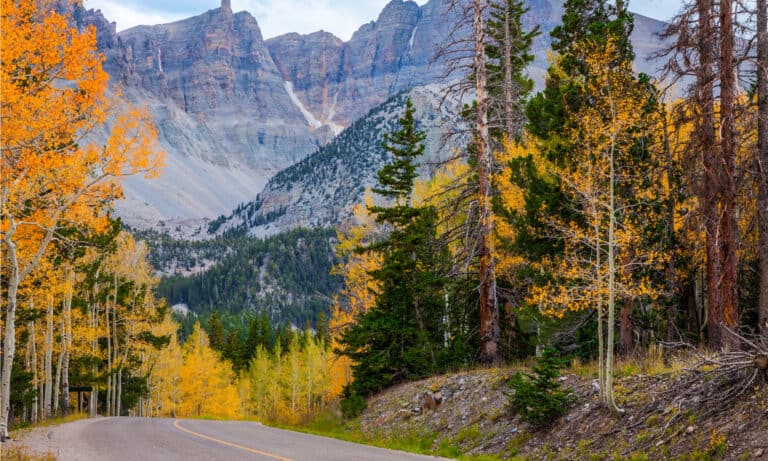
Spruce Mountain is the tallest mountain in West Virginia, with Spruce Knob Peak standing 4,863 feet above sea level. The mountains and foothills offer hiking and camping for outdoor enthusiasts, providing them with breathtaking views of the surrounding scenery. Although the climate is harsh, with strong winds and winters with up to 180 inches of snow, the area supports an abundance of wildlife. Read on to discover the animals that are thriving atop West Virginia’s highest peak.
1. Red Fox (Vulpes vulpes)
Red foxes occur all over Virginia except the areas of the southeast corner. They make their dens under rock crevices or under the root systems of red spruce. These foxes are similar in size to a small dog, measuring approximately 12–46 inches long and weighing up to 30 pounds. They have pointed noses, prominent, erect ears, and a bushy tail ending in a white tip. Red foxes have long, soft fur and derive their names from the reddish appearance of their coats.
Red foxes are primarily nocturnal and non-migratory, so they usually stay in the same area for their entire lives. These small predators are notorious for their sly nature, as they are experts at hiding from predators. Red foxes are omnivores, but their diet primarily consists of small mammals such as rodents, squirrels, and rabbits. However, they may also consume birds and bird eggs, amphibians and insects, and some vegetation.
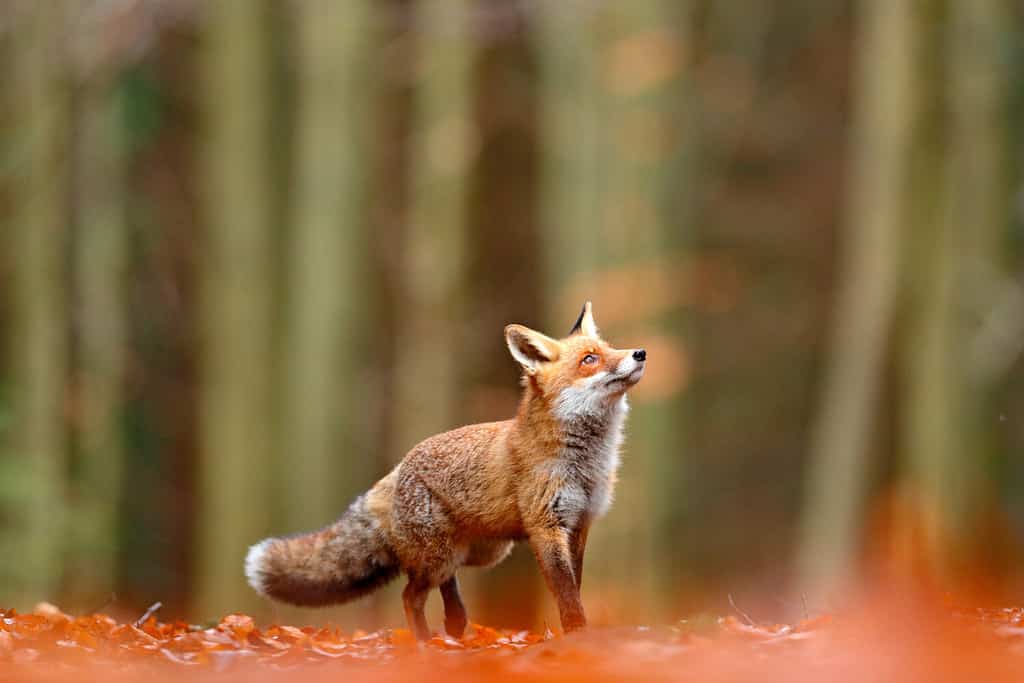
Red foxes have long, soft fur and derive their name from the reddish appearance of their coats.
©Ondrej Prosicky/Shutterstock.com
2. Snowshoe Hare (Lepus americanus)
Snowshoe hares occupy areas above 3,000 feet in West Virginia, but populations are restricted to the northern hardwood and spruce forests. Unfortunately, their numbers are declining as they depend on snowfall to survive the winter, and global warming has severely affected their environment. As a result, their population density and extent of their range are unknown in West Virginia.
Snowshoe hares measure around 20 inches long and weigh approximately 3 to 4 pounds. During the summer, their coats are thinner and are a rusty brown color. During the their winter their coats become thicker and turn white. Snowshoe hares are primarily herbivores. They generally eat grasses, leaves, clover, and ferns during the warmer months, switching to more woody vegetation like twigs and tree bark during the fall and winter.
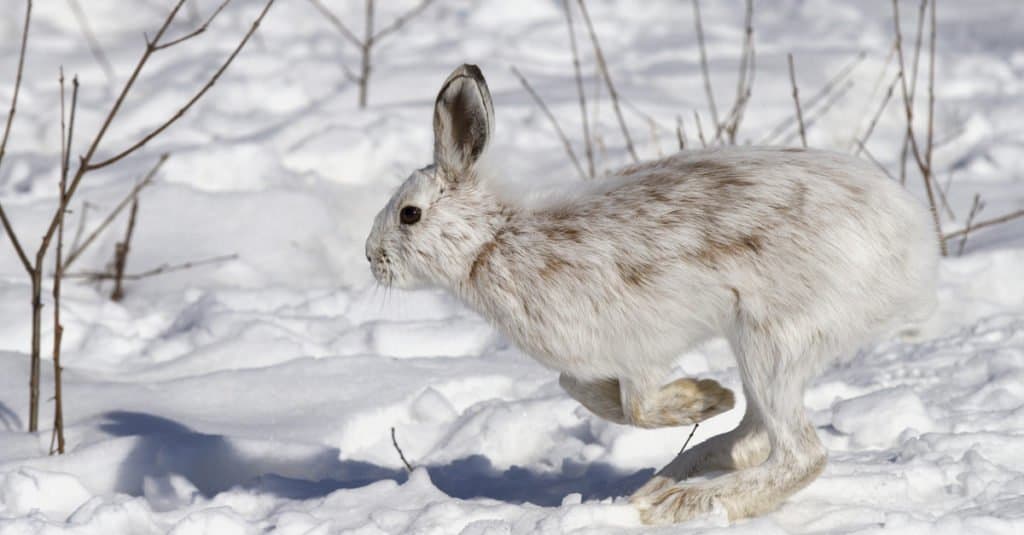
Snowshoe hares switch to more woody vegetation like twigs and tree bark in the fall and winter.
©Jim Cumming/Shutterstock.com
3. Bobcat (Lynx rufus)
The only feline predator native to West Virginia is the bobcat. However, this cat wasn’t always the only feline predator in the state. The mountain lion once roamed through the Mountain State but is now extinct in the area. Bobcats are bigger than average-sized house cats, weighing between 15 and 35 pounds. They derive their name from their bobbed tails. Bobcats live in the high-elevation forests of West Virginia, including Spruce Knob.
These cats have grayish-brown to yellow fur, with black spots and stripes covering their bodies. They also have white necks and bellies. However, their most distinguishing feature is their pointy ears with one-inch black tufts on the tips. Bobcats are opportunistic carnivores that primarily eat rabbits, hares, and rodents. They may also hunt reptiles, ground-nesting birds, and young deer.
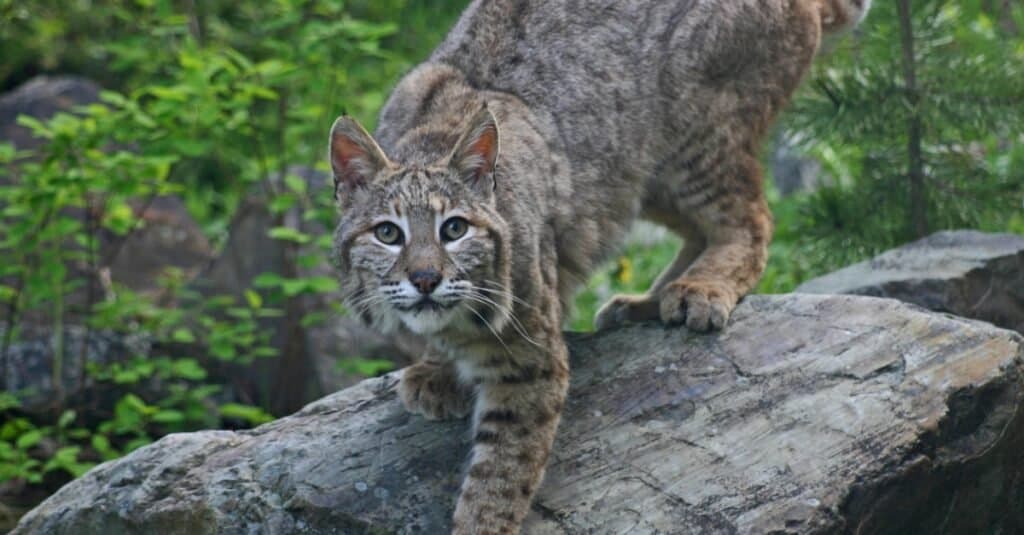
Bobcats are bigger than an average-sized house cat, weighing between 15 to 35 pounds.
©iStock.com/Anita Elder Design
4. Fisher (Pekania pennanti)
Fishers are solitary and elusive, so they are rarely seen, but they inhabit the high-elevation red spruce forests of the Monongahela National Forest. They are generalist predators and eat whatever they can catch. They hunt for small mammals on the forest floor, such as ground squirrels, voles, rodents, and even porcupines. However, they also consume fungi and fruit. Fishers are expert tree climbers and are faster in the trees than on the ground. They can rotate their hind feet 180°, allowing them to climb down trees head first. They use the trees to hunt for arboreal prey like tree squirrels and birds, as well as escape predators. Fishers also use tree cavities for dens.
Fishers are mustelids, like weasels, minks, otters, badgers, and many others. Like many other mustelids, they have long bodies with short legs and long, bushy tails. They have dense, glossy dark brown to black coats, rounded ears, and a tapered muzzle. Male fishers are much larger than females, measuring 3 to 4 feet long and weighing 8 to 16 pounds, while females measure just 2 to 3 feet long and only weigh 4 to 6 pounds.
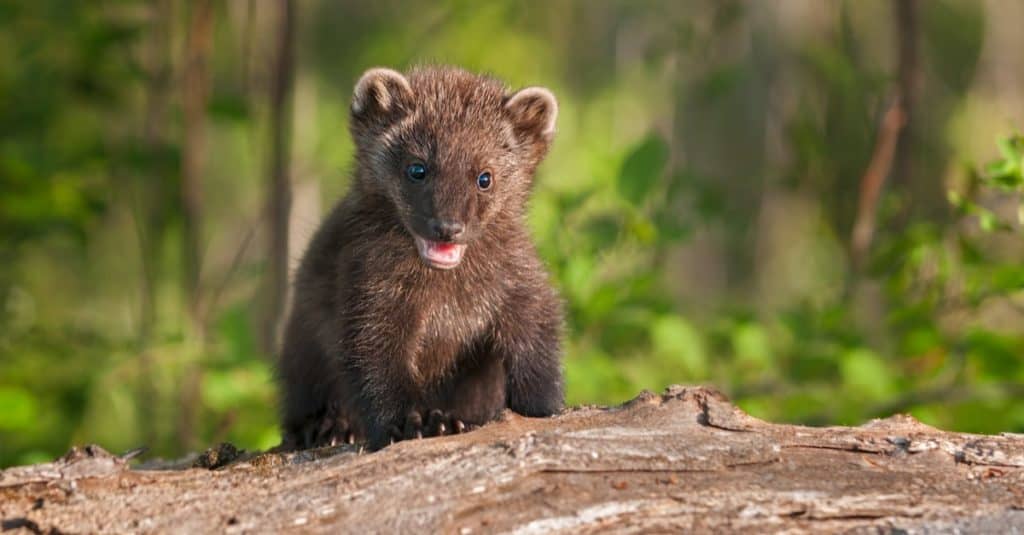
Fishers are terrestrial and arboreal predators and are the fastest tree climbing mammals in North America.
©Holly Kuchera/Shutterstock.com
5. Cheat Mountain Salamander (Plethodon nettingi)
The Cheat Mountain salamander can only be found in high elevation red and yellow spruce forests in West Virginia, including Spruce Mountain. These salamanders generally favor areas above 3,500 feet with cool, moist ground cover and plenty of leaf litter and fallen logs. Since they have specific habitat requirements, there are at least 60 separate, isolated populations in the 4-5 counties that make up their entire range.
Cheat Mountain salamanders typically reach a length of around 4 inches from the snout to the end of the tail. Their tails are the same length as their bodies. These salamanders are dark brown to black, with silvery or bronze speckles on their upper bodies and uniform dark grey underneath. They also have 17 to 19 vertical grooves along their sides. Cheat Mountain salamanders eat a wide variety of insects, including flies, mites, ants, and small beetles. They are listed as a threatened species by the U.S. Fish and Wildlife Service.
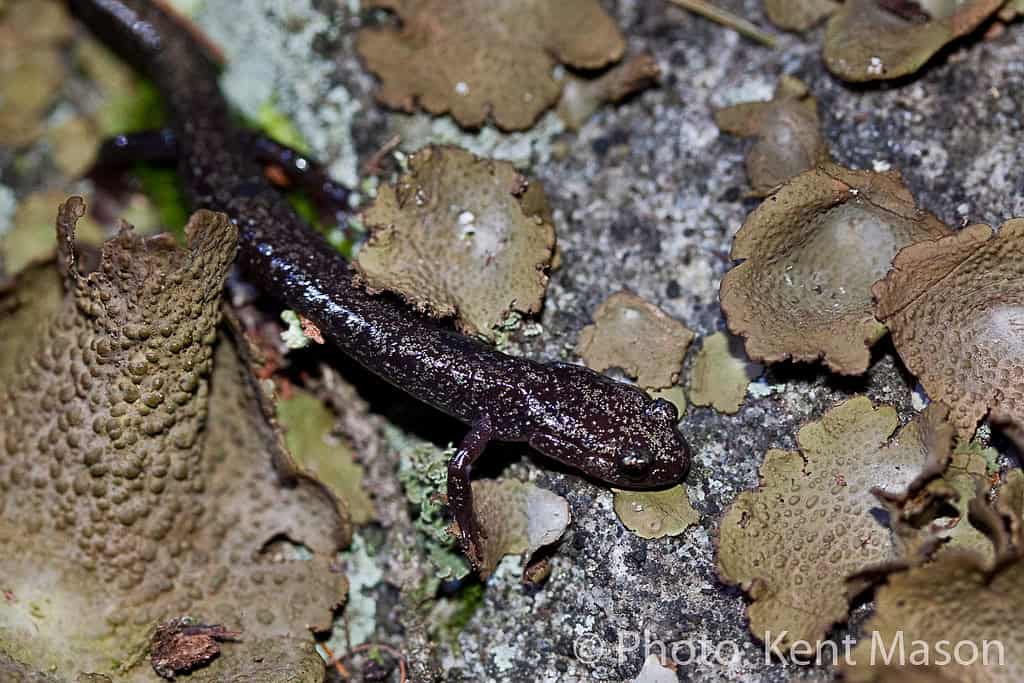
Cheat Mountain salamanders are a federally threatened species native to West Virginia.
©Kent Mason (U.S. FWS) / Public Domain CC0 1.0 – Original / License
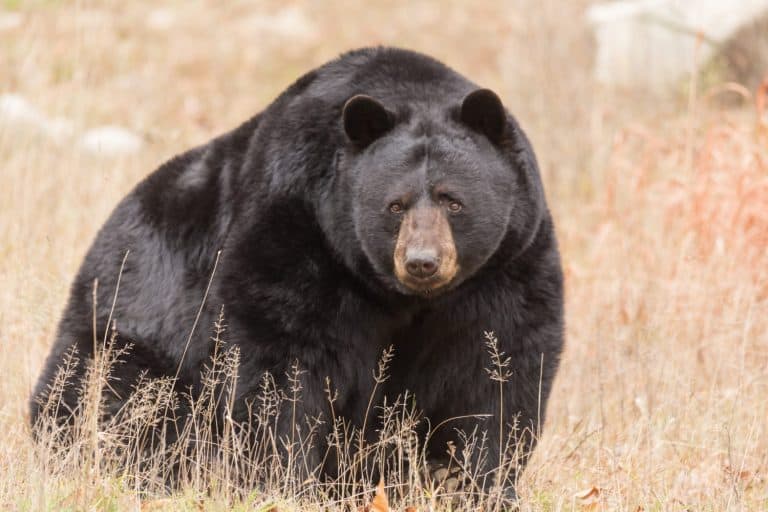
6. Black Bear (Ursus americanus)
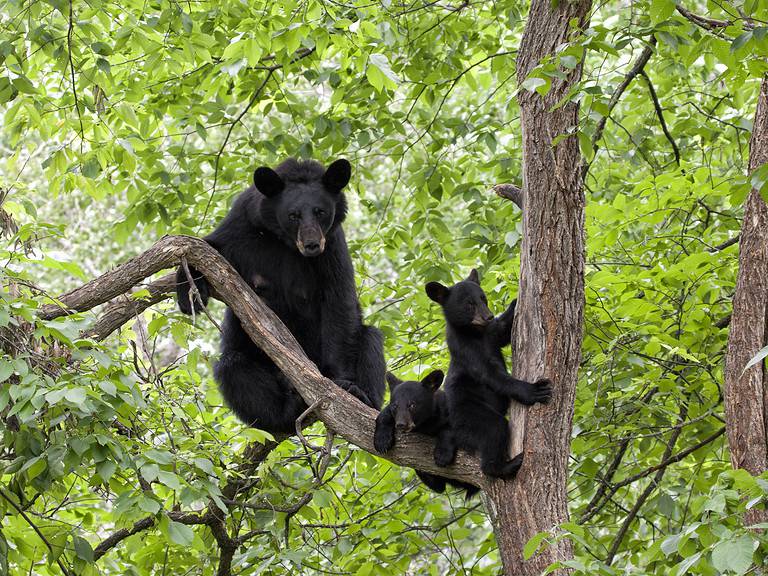
The black bear is the only bear species that occurs in West Virginia, and they can be found statewide. Although they are not as common on Spruce Knob as they are in the wooded valleys below, they are occasionally observed in the area. Black bears are the smallest bears in North America, with adult males in the state typically weighing from 150 to 450 pounds, although some state records have exceeded 600 pounds. Females typically range from 100 to 300 pounds.
The black bears in West Virginia are primarily a uniform black color. They are opportunistic omnivores, but they heavily rely on plant matter such as roots, berries, grass, hard mast (acorns, hickory nuts, and beech nuts), and soft mast (dogwood and black cherry). These bears hibernate in the winter, entering their dens in mid-November and re-emerging in mid-March.
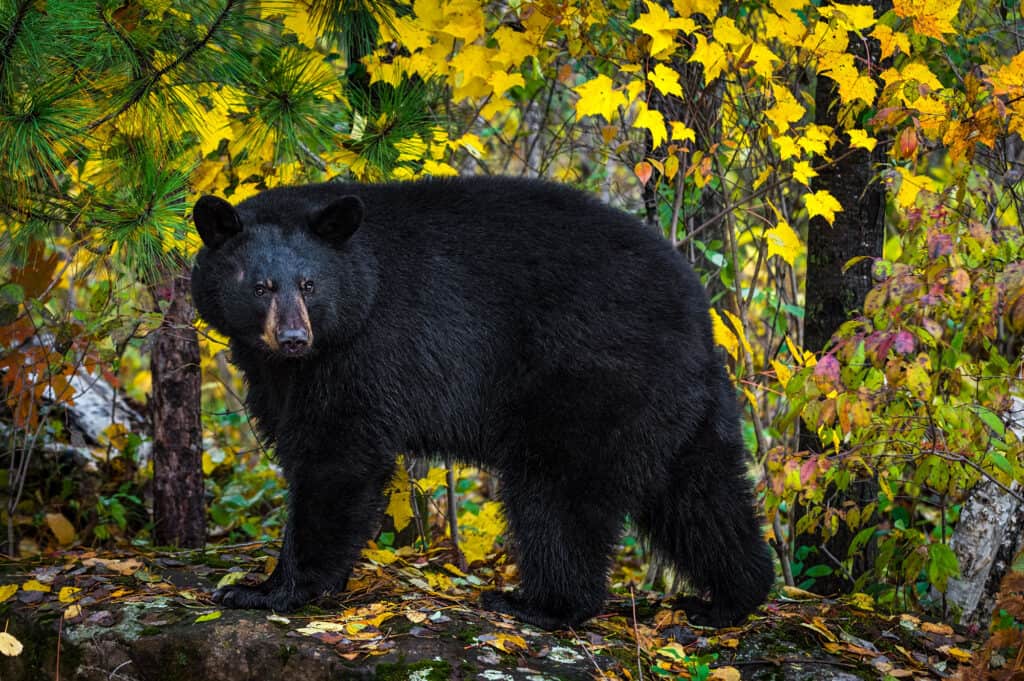
Black bears enter their dens in mid-November and re-emerge in March.
©Holly Kuchera/Shutterstock.com
7. Red-Tailed Hawk (Buteo jamaicensis)
Red-tailed hawks are year-round residents of West Virginia. They use thermal updrafts to soar along the high-elevation ridges and rocky outcroppings, especially around Spruce Knob Peak. When they are not in the air, they can be seen perched on tall dead trees, electrical lines, and fence posts in the valleys of the Monongahela National Forest below. These raptors also hunt for small mammals, such as rabbits, squirrels, voles, and other rodents, in the high-altitude clearings.
Most red-tailed hawks have brown plumage on their upper parts with pale underparts. They have a streaked pattern on their bellies and a darker band on their wing tips and flight feathers. Their tails are typically a cinnamon-red color on top and pale underneath. They have wide, rounded wings and a short, broad tail. Females measure 19.7-25.6 inches in length and weigh up to 3.2 pounds, while males measure 17.7-22.1 inches in length and weigh up to 2.9 pounds. Both sexes have a wingspan of up to approximately 4.4 feet.
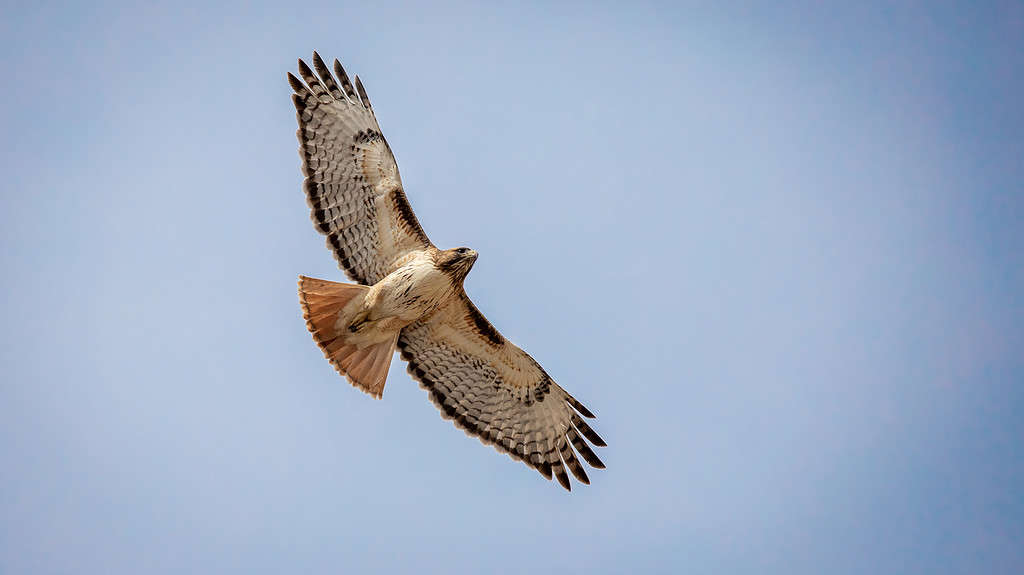
Red-tailed hawks soar along the ridges of Spruce Knob Peak.
©Joseph Webber/iStock via Getty Images
8. North American Porcupine (Erethizon dorsatum)
The North American porcupine is a native resident of the Spruce Knob area in West Virginia’s Monongahela National Forest. These porcupines weigh around 20 pounds and measure 2 to 3 feet in length. Their bodies are covered by needle-like modified hairs called quills, which they use to defend themselves from predators. However, they cannot shoot their quills; the quills easily come off when they are attacked by a predator.
North American porcupines are herbivores, and their diet consists of stems, tree bark, and leaves. While these critters look awkward on the ground, they are excellent climbers and spend a great deal of time in trees. They are also good swimmers. Porcupines tend to be nocturnal and make their retreats in shelters like caves, rocky outcroppings, dense brush, and hollow trees.
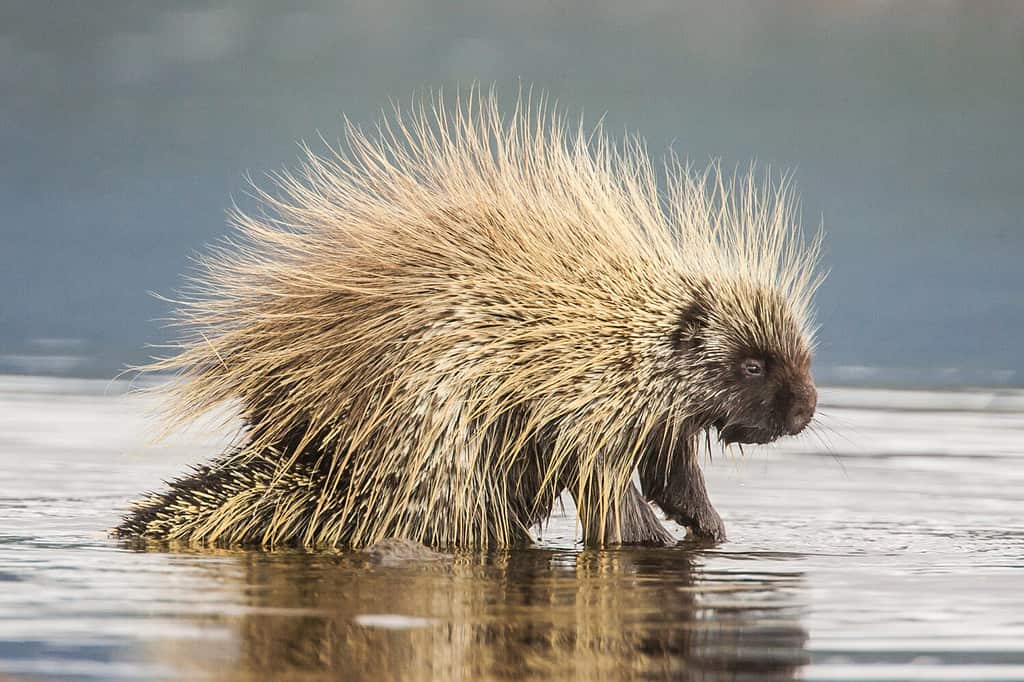
North American porcupines are herbivores, and their diet mainly consists of stems, tree bark, and leaves.
©Jukka Jantunen/Shutterstock.com
The Plants and Trees of Spruce Knob Peak
The isolated fragment of red spruce forest on Spruce Knob Peak is a reflection of its harsh environment. There are one-sided red spruce trees on high, rocky ridges that grow asymmetrically due to exposure to the fierce westerly winds. In the most exposed areas, the trees only grow to shrub height.
Under the spruce trees are ericaceous shrubs, with blueberry and huckleberry being the most common. The forest floor is covered in ferns and moss, such as the bracken fern and club mosses. According to the National Park Service, the vegetation is a relic of a boreal forest from the last ice age that has been preserved by Spruce Knob Peak’s distinctive climate.