Quick Take
- Shaving a Keeshond to keep it cool seems logical, though it can permanently backfire in ways most owners don't expect. Why shaving backfires →
- The rarest Keeshond coat color is hidden in plain sight. Carrier parents show zero signs of it, yet it can still appear in their litter. The rarest recessive color →
- Not every purebred Keeshond wears the breed's signature look, as a rare genetic quirk can strip away the classic color pattern entirely. Rare single-color variants →
- One Keeshond color dates back to the breed's spitz origins, though wearing it today gets a dog banned from the show ring. The disqualifying tawny coat →
Originating in the Netherlands as the Dutch barge dog, the Keeshond bounced back from the brink of extinction in the 1920s. The breed’s resurgence aligned with their introduction to North America, where the first litter was born in 1921. The breed gained official recognition from the American Kennel Club (AKC) in 1930. Today, this sturdy 17-to-18-inch, 35-to-45-pound spitz is known for its somewhat unruly black, grey, and cream coat. Keeshonds are recognized for their thick double coat, which, according to the AKC, should be a mixture of gray, black, and cream. Continue reading to learn about the keeshond’s coat and the three standard colors and two non-standard colors recognized by the AKC.
What Kind of Coat Does a Keeshond Have?
The Keeshond has a double coat consisting of a soft undercoat and a longer, coarse outer layer. This natural insulation protects them from extreme temperatures (both hot and cold), but their dense fur can easily trap dirt. Regular brushing is required to remove debris, prevent matting, and keep their coat healthy.
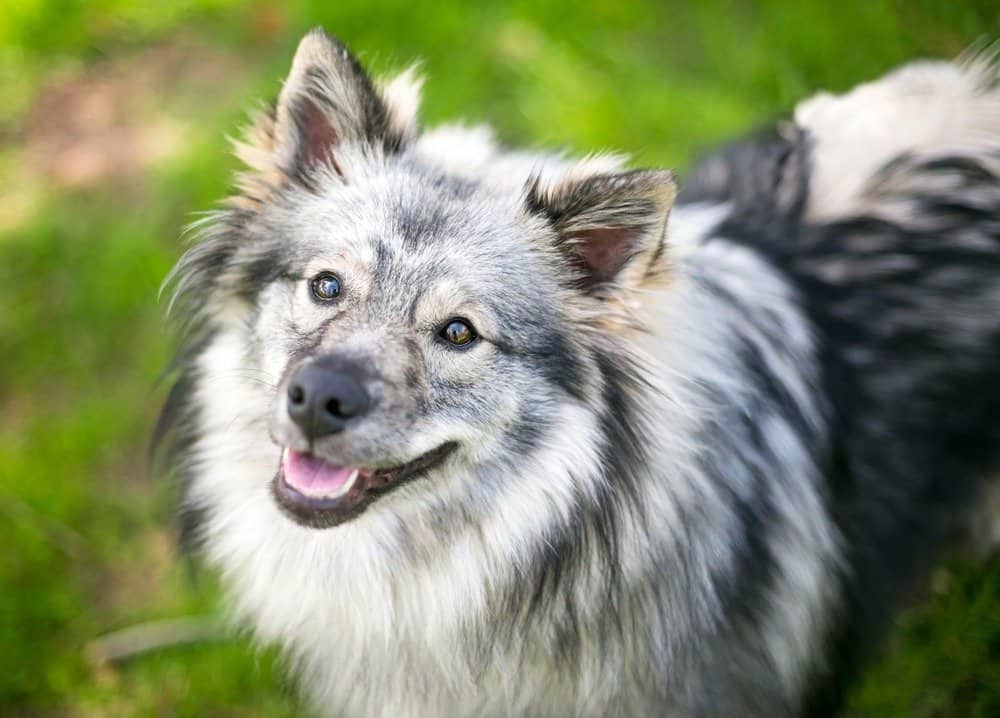
The keeshond’s double coat keeps it warm in the winter and cool in the summer.
©Mary Swift/Shutterstock.com
While their shedding is manageable with weekly brushing, keeshonds experience intense seasonal shedding once or twice a year, in which they shed their entire undercoat. These times require daily brushing to remove loose fur and prevent painful matting. The keeshond coat should never be shaved.
Their double coat insulates against both heat and cold, which is why it is strongly advised never to shave a keeshond. Shaving removes this vital temperature regulation and can permanently damage the coat’s texture and color.
What are the Three Standard Keeshond Colors?
The keeshond coat consists of three colors: gray, black, and cream. The AKC breed standard describes the ideal Keeshond as a mixture of gray, black, and cream, with dramatic markings, but does not require all three colors to be present in every individual.
The gray, black, and cream keeshond has a gray base coat, cream fore and back legs, and black markings on its back, face, and ears. This standard color combination has black-tipped fur.
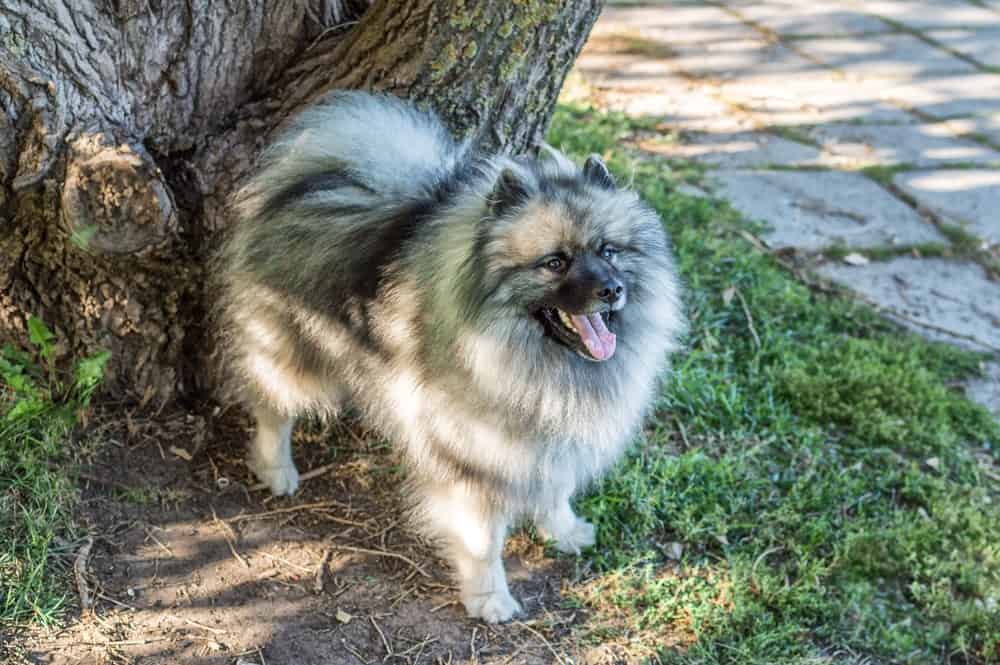
Keeshonds look much larger than they actually are, thanks to their abundant fur.
©Anastasiya Tsiasemnikava/Shutterstock.com
Due to rare genetic variations, some purebred keeshonds are born with only one or two of the standard colors. While the majority of the breed carries the standard tri-color mix, genetic anomalies can cause a dog to deviate entirely from this pattern.
Some purebred keeshonds have almost no cream undercoat or leg markings. They look black and dark gray, lacking lighter contrasts. Although these dogs are perfectly healthy, they are not eligible to compete in AKC conformation shows but may still be registered and participate in other AKC events.
Non-standard Keeshond Colors
Tawny and white are disqualifying colors for keeshonds according to the AKC breed standard. Tawny, a reddish, rusty-brown color, is an original spitz coat color, but is disqualified in the official AKC breed standard. While tawny keeshonds may occasionally pop up, the majority of keeshonds are a mixture of gray, black, and cream.
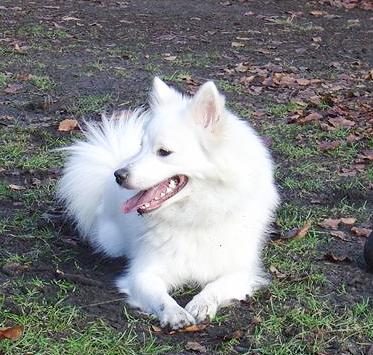
A recessive genetic trait makes white keeshonds the rarest.
A solid white coat is the rarest coat color for a keeshond. Both parents must be carriers of a recessive gene to have a white puppy. Because the standard wolf-gray gene is dominant, carrier parents show no physical signs of the white trait. Even when both parents are carriers of the gene, there is still only a 25% chance that they will have an all-white puppy.
Tawny and white keeshond puppies are disqualified from AKC conformation shows, but can still be registered and participate in other AKC events.