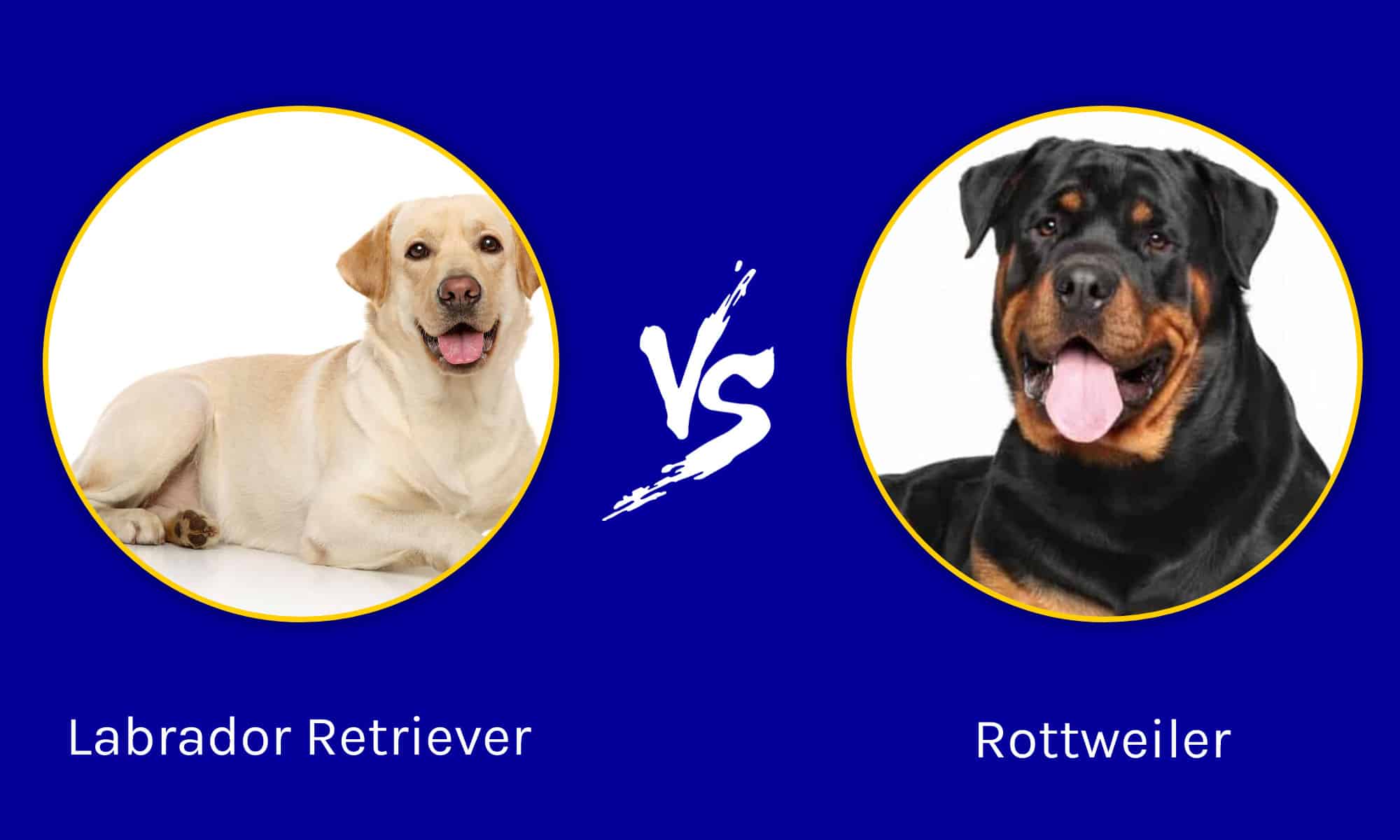

Dogs are our best friends and loyal companions. They can be loving, playful, protective, and everything in between. And if you’ve ever owned multiple dog breeds, you probably know how different each dog’s personality can be. Each dog brings something different into our lives and has different needs. Some are low-maintenance and low-energy, while others keep us moving. Discover the key differences between the Labrador retriever vs. rottweiler, including their personalities, grooming needs, and energy requirements.
Labrador Retriever vs. Rottweiler: A Comparison
| Comparison | Labrador Retriever | Rottweiler |
|---|---|---|
| Height | 21.5 to 24.5 inches | 22 to 27 inches |
| Weight | 55 to 80 pounds | 80 to 135 pounds |
| Coat Type | Short, thick, double coat | Medium-length, smooth, double coat |
| Shedding | Heavy | Moderate |
| Drooling | Low to moderate | Moderate |
| Colors | Black, chocolate, yellow | Black, rust, mahogany, tan |
| Temperament | Outgoing, energetic, affectionate | Loyal, loving, intelligent |
| Barking | Moderate | Light |
| Energy and Social Needs | Very playful, high energy; needs lots of mental stimulation | Moderately playful and energetic; needs lots of mental stimulation |
| Training | Easy | Easy |
| Life Expectancy | 11 to 13 years | 9 to 10 years |
The Key Differences Between a Labrador Retriever and a Rottweiler
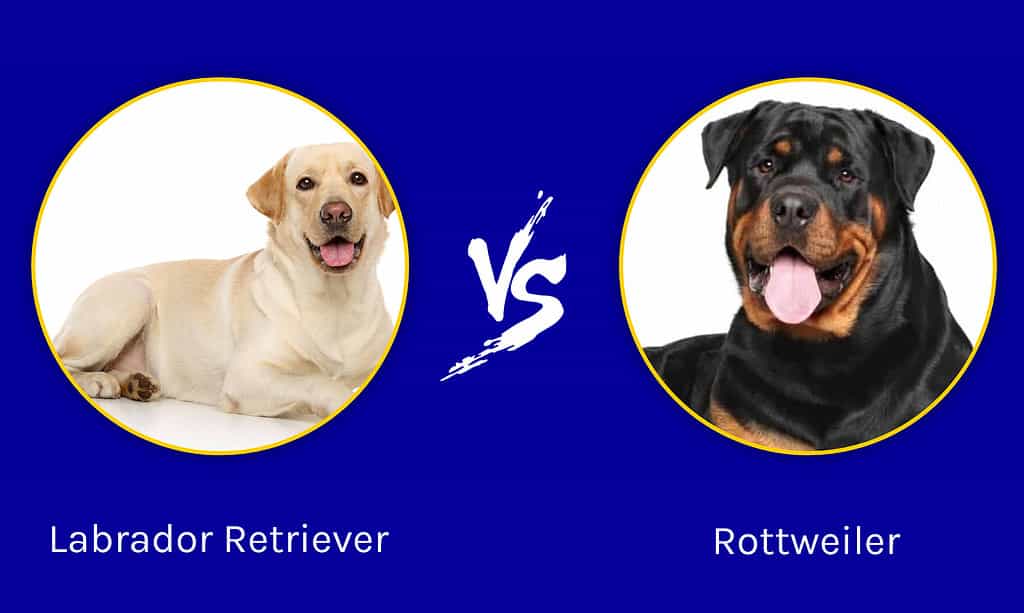
There are four key differences between Labrador retrievers and rottweilers: appearance, personality, size, and maintenance. Because each dog is unique in its own way, a Lab or rottweiler can be an excellent pet for the right family. Apart from their obvious differences in appearance and size, each dog has its own distinct personality. Both are loving and affectionate, but Labs are more outgoing and friendly, while rottweilers are excellent guardians that stay consistently loyal to their families. These breeds also have differing grooming and energy requirements. Let’s delve further into the topic below!
Appearance
Labrador Retriever vs. Rottweiler: Height and Weight
Labrador retrievers are sturdy and sporty dogs with wide heads and thick, tapered tails. These dogs measure between 21.5 and 24.5 inches tall and weigh an average of 55 to 80 pounds. Males are typically a couple of inches taller and around 10 to 15 pounds heavier than females. Because these family-friendly dogs are muscular and athletic, they require lots of exercise.
Rottweilers are muscular working dogs with large chests and slim waists. This breed measures between 22 and 27 inches tall and weighs 80 to 135 pounds. Males are usually a few inches taller and weigh 15 to 30 pounds more than females. Rottweilers are powerful dogs with strong hindquarters. They are larger in weight and height than Labs.

Labrador retrievers are sturdy, sporty dogs.
©sanjagrujic/Shutterstock.com
Labrador Retriever vs. Rottweiler: Coat Type and Colors
The Labrador retriever has a short, thick double coat. Their outer coat is dense, hard, and waterproof to protect their skin from moisture and extreme temperatures. These dogs come in three colors: black, chocolate, and yellow. Due to their double coats, Labs are heavy shedders throughout the year and they blow their coats twice annually. Because they have low to moderate grooming needs, they need occasional baths and a good brushing every week. Additionally, Labrador retrievers are low to moderate droolers.
Rottweilers have medium-length, smooth double coats. However, their hair is shorter on their legs, heads, and ears. While the straight and coarse outer coat covers their entire body, the undercoat is only present on the neck and thighs. They typically come in variations of black or rust, as well as mahogany and tan. These dogs are moderate shedders, with shedding increasing during the season changes. While they are low-maintenance breeds that typically only require monthly to weekly brushing and regular baths, rottweilers are moderate droolers.
Characteristics
Labrador Retriever vs. Rottweiler: Temperament and Social Needs
Outgoing, energetic, and affectionate, the Labrador retriever is one of the most popular family dogs in America. These eager and friendly dogs love everybody they see, especially their families, with whom they are super affectionate. Labs are also excellent with children of all ages and other pets. While they have a moderately watchful nature, they are very open to strangers, instantly becoming best friends with everyone. And because their playfulness is through the roof, this breed will have no problem keeping up with busy kids. They need lots of exercise and mental stimulation. Thankfully, Labrador retrievers are easy to train.
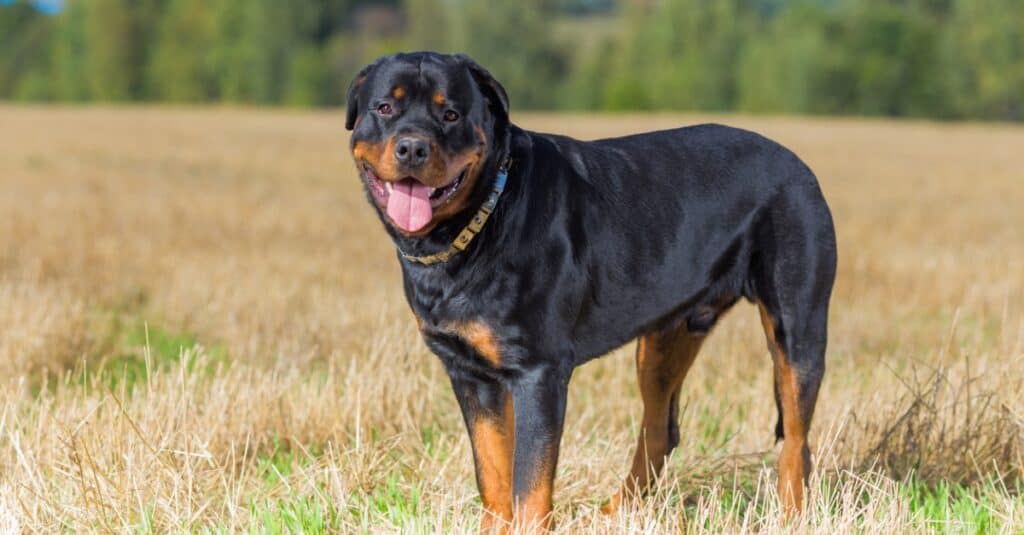
The rottweiler was originally bred to herd livestock and pull carts.
©iStock.com/Ideas_Studio
Rottweilers are loyal, loving, and intelligent. These big teddy bears absolutely adore their families. But they do better in families with older children and need to be socialized around other dogs at a young age. Due to their protective nature, rottweilers are more reserved around people they don’t know. However, they adapt easily to new situations. And they are very playful, although not as much as the Lab. Rottweilers have well-balanced energy needs, but they need lots of mental stimulation to keep them from becoming destructive. Like the Labrador, rotties are very easy to train and eager to please.
Health Factors
Labrador Retriever vs. Rottweiler: Life Expectancy and Health Problems
While Labrador retrievers and rottweilers have comparable lifespans, Labs live slightly longer on average.
Labrador retriever lifespan: 11 to 13 years
Rottweiler lifespan: nine to 10 years
Labrador retriever’s common health problems: elbow and hip dysplasia, heart disorders, muscle weakness, eye conditions, bloat, and exercise-induced collapse (EIC).
Rottweiler’s common health problems: hip dysplasia, eye diseases, heart conditions, and cancer.