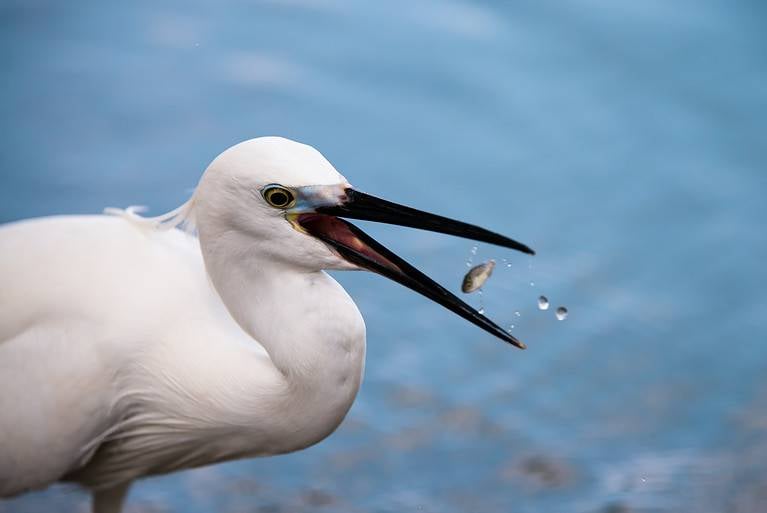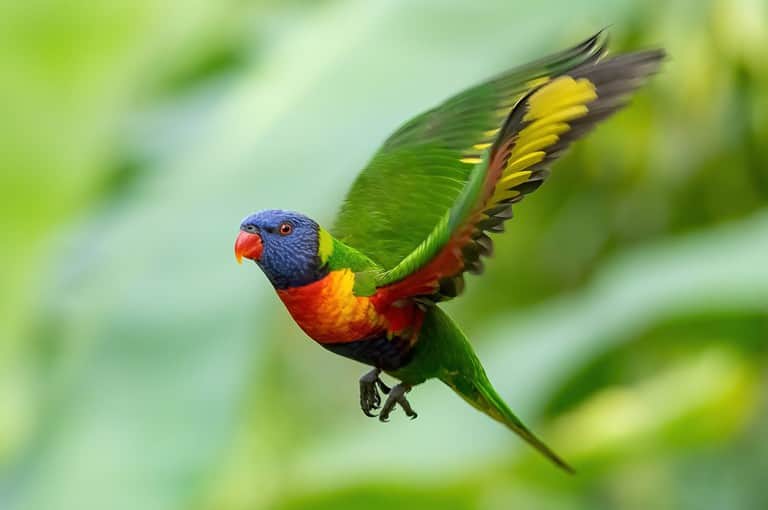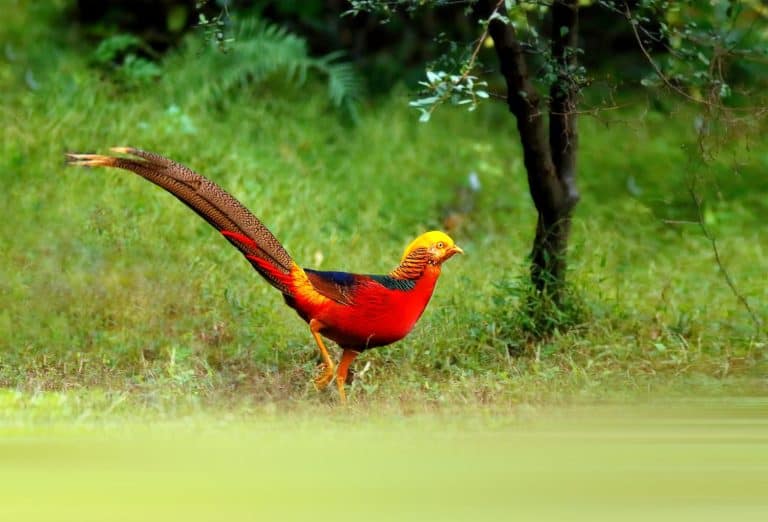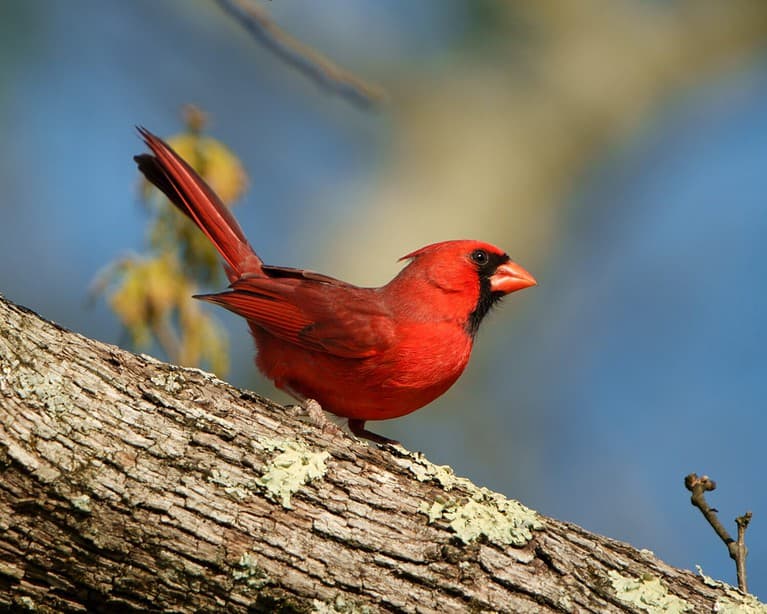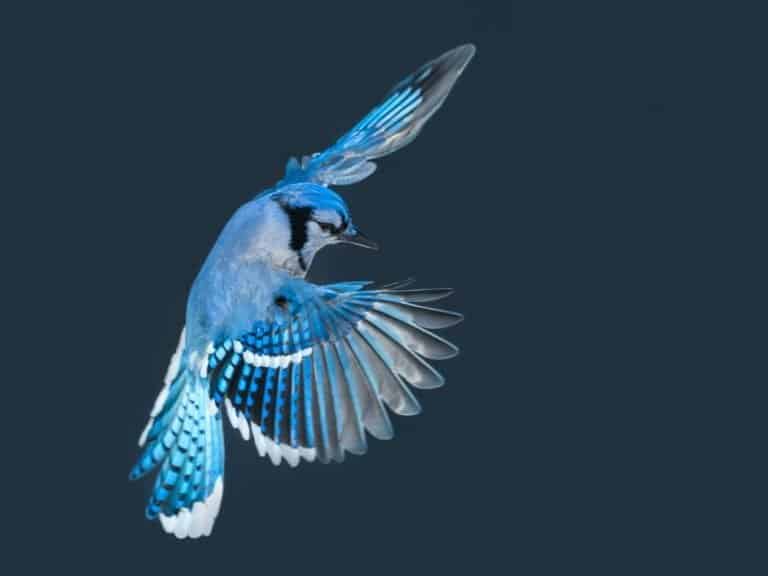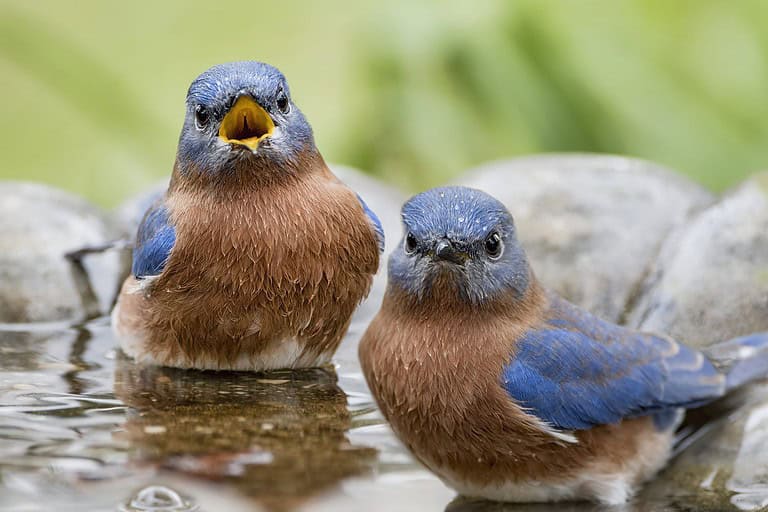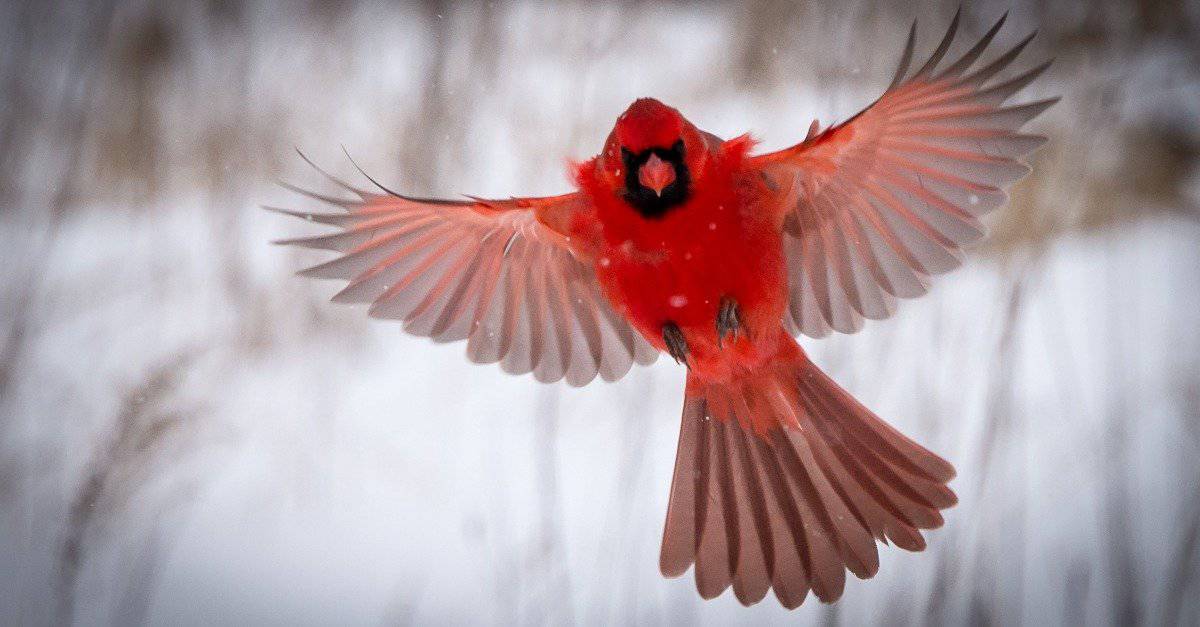

Birds come in a wide variety of colors. Some feature relatively dull plumage, while others sport brightly colored feathers. Birds with bright feathers usually evolved specific colors to help them attract mates. Depending on the environment where they live, a bird’s coloration can also help camouflage it from predators. In addition, many birds get their color from foods in their diet. Among birds with colorful plumage, many display shades of red. These fiery birds stand out even among other eye-catching birds. Red birds are found all over the world. Many fall into the songbird family of smaller birds, while some are classified as parrots or wading birds. Continue reading to learn about 10 of them.
10. Crimson Sunbird
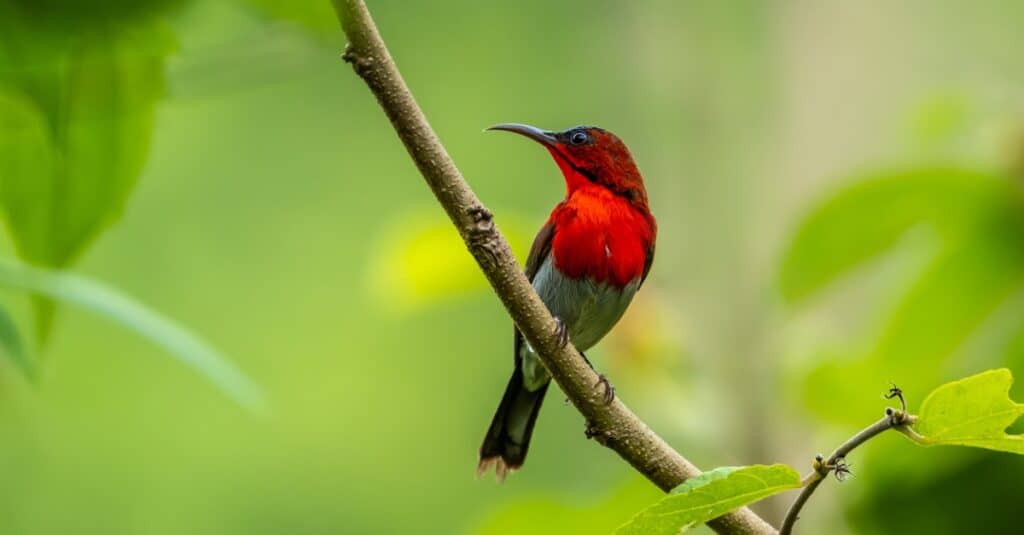
The crimson sunbird often gets mistaken for a hummingbird due to its speed, long bill, and bright plumage.
©iStock.com/chirawan
A member of the sunbird family, Nectariniidae, the crimson sunbird totally deserves its name. Males of this species feature a bright crimson breast and back. Their belly appears light green, and their tail is a burnt yellow color. Crimson sunbirds range throughout South and Southeast Asia and prefer to live in tropical forests. These tiny 4-inch-long birds build suspended nests on tree branches to house their eggs. Sunbirds primarily live off of nectar that they gather from flowers, and the crimson sunbird is no different. A fast flyer, the crimson sunbird often gets mistaken for a hummingbird because of its ability to hover. In addition, it also eats a wide variety of insects. On occasion, sunbirds are also called spiderhunters due to their habit of hunting spiders. Due to its widespread distribution, the IUCN lists the crimson sunbird as a species of Least Concern.
9. Scarlet Ibis
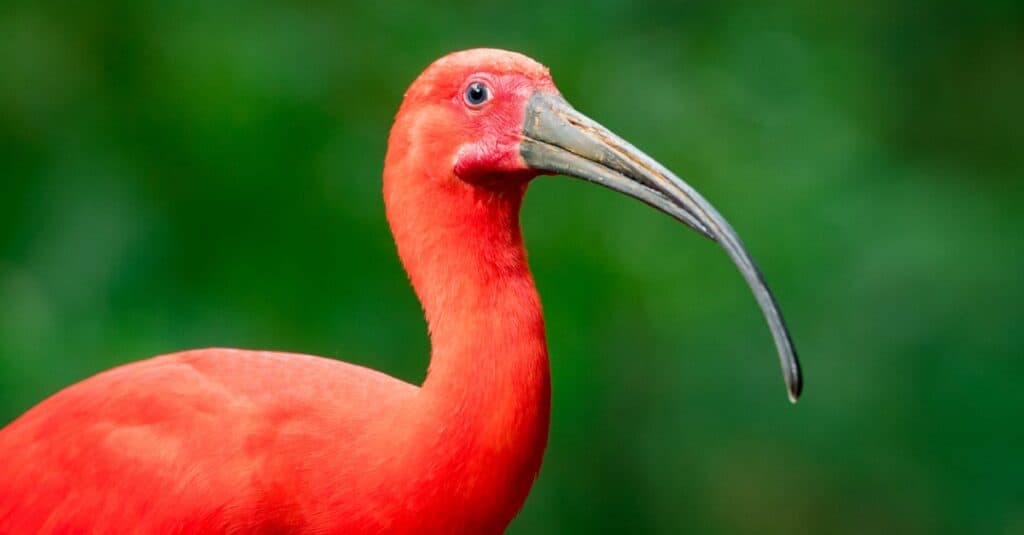
The scarlet ibis is completely red from head to toe.
©iStock.com/dabldy
The scarlet ibis is a member of the family Threskiornithidae. It stands apart from other ibises thanks to its bright scarlet coloration, which is where it gets its name. Virtually every part of its body is scarlet, from its head all the way to its toes. To find food, they use their long curved bills to dig in the mud, although they will also steal food from other animals. They get their red color from their diet of crab, shrimp, and other red shellfish. Scarlet ibises range throughout South America and the Caribbean and primarily live in wetland and coastal areas. Even outside of the breeding season, scarlet ibises live in large social groups. Currently, the IUCN lists the scarlet ibis as a species of Least Concern.
8. Summer Tanager
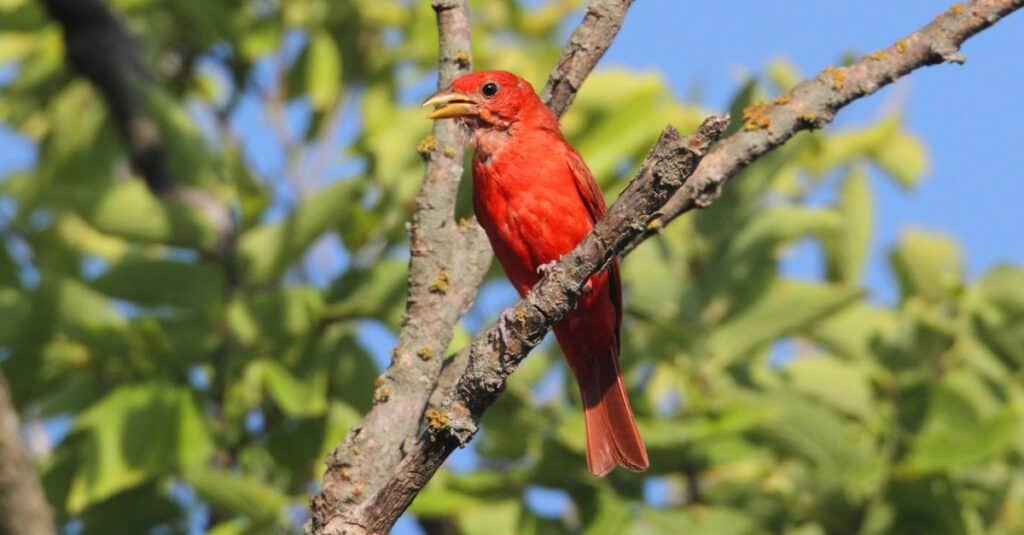
The summer tanager is a bright red songbird that loves insects, including bees.
©iStock.com/SteveByland
Despite its name, the summer tanager is a songbird in the cardinal family, Cardinalidae. Its name comes from its bright red color that covers its entire body and evokes associations of warm summer days. Although their color varies, male summer tanagers usually grow rose-red feathers, while the females appear yellowish-green. Their red color comes from their diet, which consists of a variety of berries and insects, especially bees. They range throughout the Southern United States and Mexico in the summer, and Central and South America in the winter. Typically, they live in woodland areas with plenty of trees where they can build their nests. Summer tanagers measure around 6.7 inches long and weigh about 1 ounce. If you encounter one outdoors, you may find that its vocalizations sound similar to an American robin’s. At this time, the IUCN lists the summer tanager as a species of Least Concern.
7. Red-Billed Firefinch
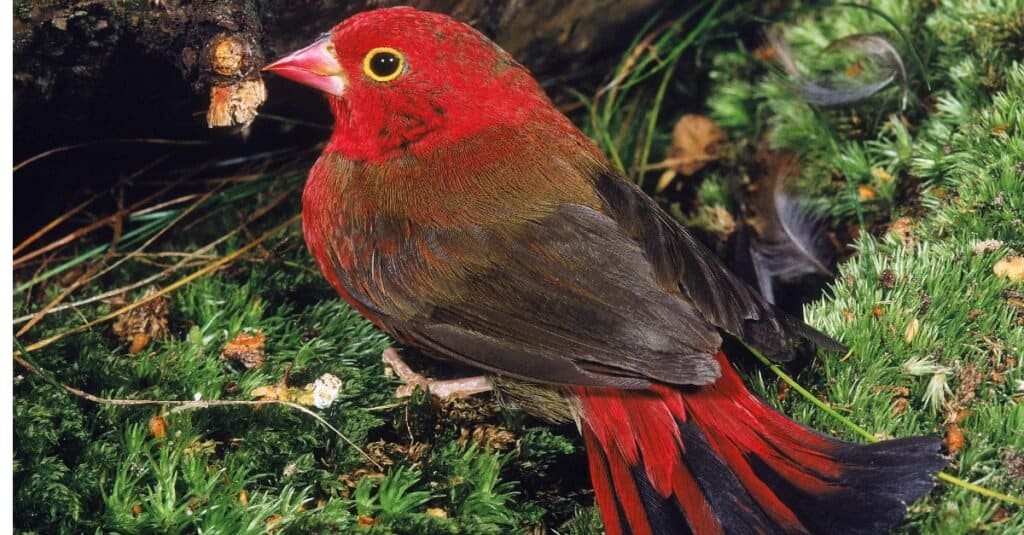
The red-billed firefinch gets its name from its pinkish-red bill.
©slowmotiongli/Shutterstock.com
Red-billed firefinches belong to the Estrildidae family of finches and are endemic to Sub-Saharan Africa. Also known as the Senegal firefinch, males feature dull scarlet feathers, although their wings appear more rufous or brown than red. Females appear more brown than red but do have a red patch of feathers on their faces. However, both males and females feature a pink bill and yellow rings around their eyes. They live in grasslands as well as cultivated areas and often live close to humans. Their diet primarily consists of seeds, but they will also dine on certain locally grown grains. Red-billed firefinches build unique domed nests made of grasses in which they lay their eggs. Given their massive range and numbers, the IUCN lists them as a species of Least Concern.
6. Scarlet Tanager
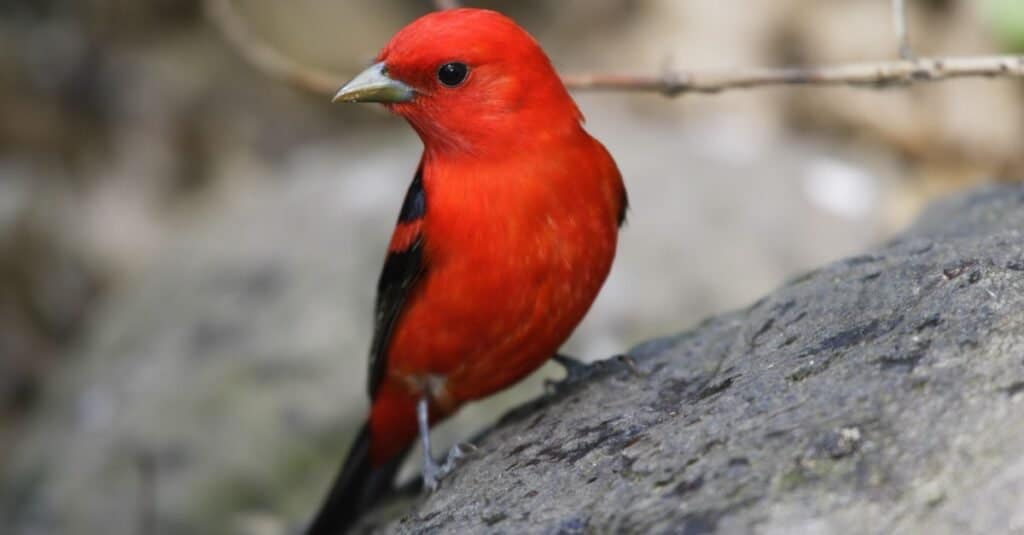
The scarlet tanager sports striking scarlet plumage.
©Stubblefield Photography/Shutterstock.com
The scarlet tanager is another member of the Cardinalidae family, the same as the summer tanager. It gets its name from the distinctive crimson or scarlet coloring that the males display during the summer. While males appear predominantly red, their wing and tail feathers look black. On the other hand, the females appear yellowish-green year-round. Generally, scarlet tanagers measure 6.3 to 7.5 inches long and weigh around 1 ounce. They range throughout the Eastern United States, Canada, and Mexico, and spend the winter in South America. Unlike other cardinals, the scarlet tanager has a rather thin bill. This means it eats fewer seeds than other cardinals, preferring instead to hunt insects. They can catch insects in flight or on the ground, and eat a wide variety, including bees, wasps, and spiders. For now, the IUCN lists the scarlet tanager as a species of Least Concern.
5. Red Crossbill
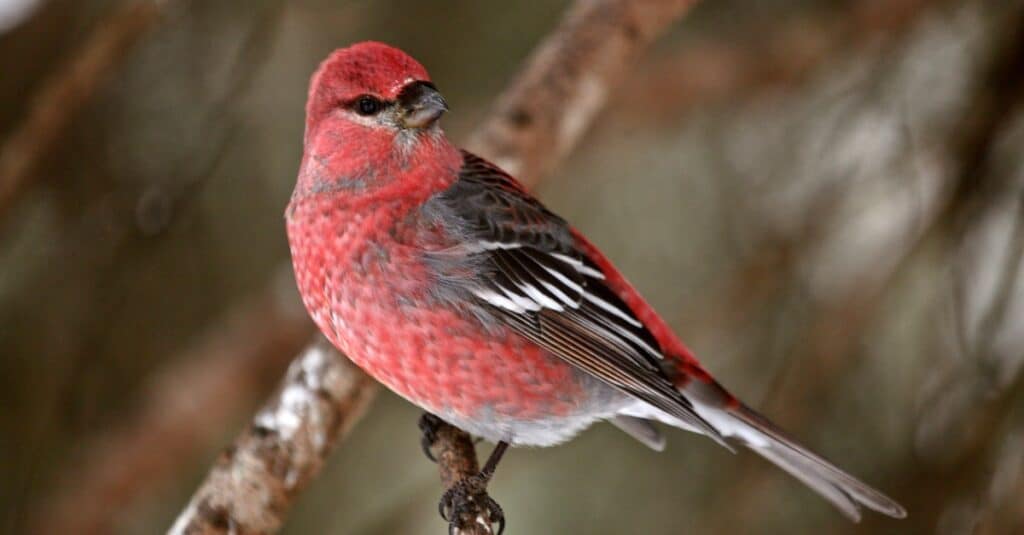
The red crossbill has a very unique beak, which allows it to open sources of food easily.
©iStock.com/bobloblaw
The red crossbill or common crossbill is a member of the finch family Fringillidae. Males feature either bright red or orange feathers, while females typically appear yellow or green. Their coloration can vary considerably in the wild. Their wings appear darker brown compared to the rest of their plumage. The crossbill part of its name refers to the shape of its beak. The top of the red crossbill’s bill overlaps the bottom. This overlapping design allows the red crossbill to feed primarily on hard conifer seeds and other fruits. Red crossbills live in coniferous forests throughout North America, Europe, and Asia. Given its abundance and widespread distribution, the IUCN lists the red crossbill as a species of Least Concern.
4. Vermilion Flycatcher
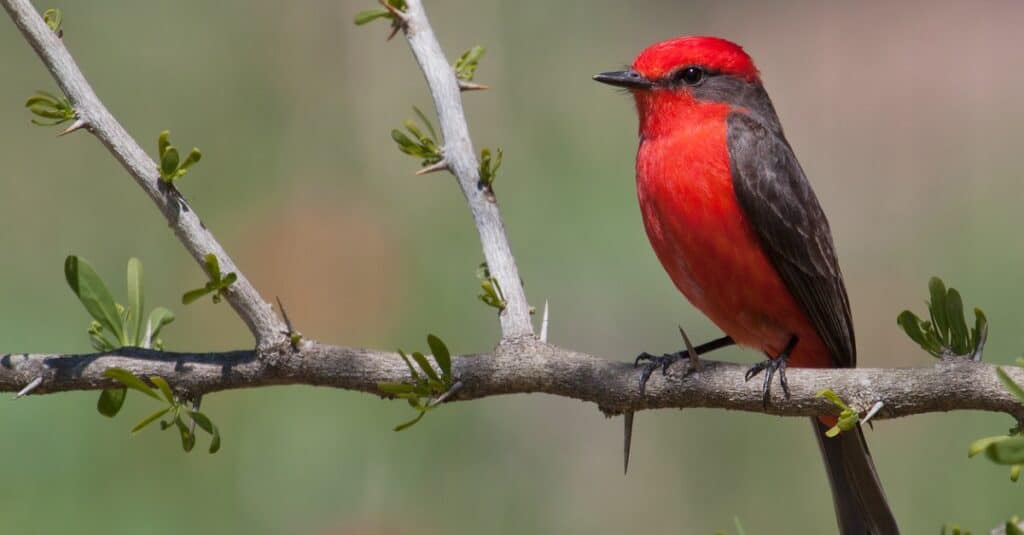
The male vermilion flycatcher is vibrant red, while the female is much less vibrant.
©iStock.com/jsdeoliv
The vermilion flycatcher is a striking example among birds that are red. This tiny bird is a member of the tyrant flycatcher family, Tyrannidae. The first part of its name, vermilion, refers to the bright vermilion-red color on the breast, belly, and crest of the males. The second part of its name alludes to its habit of catching flies in midair. Aside from their red plumage, male vermilion flycatchers also feature brown tail and wing feathers. Most vermilion flycatchers measure between 5.1 to 5.5 inches long and weigh less than 0.5 ounces. They range throughout the southern United States, Mexico, and parts of South America. In addition to insects, their diet also includes a number of different grains. With a total population numbering in the millions, the IUCN lists the vermilion flycatcher as a species of Least Concern.
3. Red-and-Green Macaw
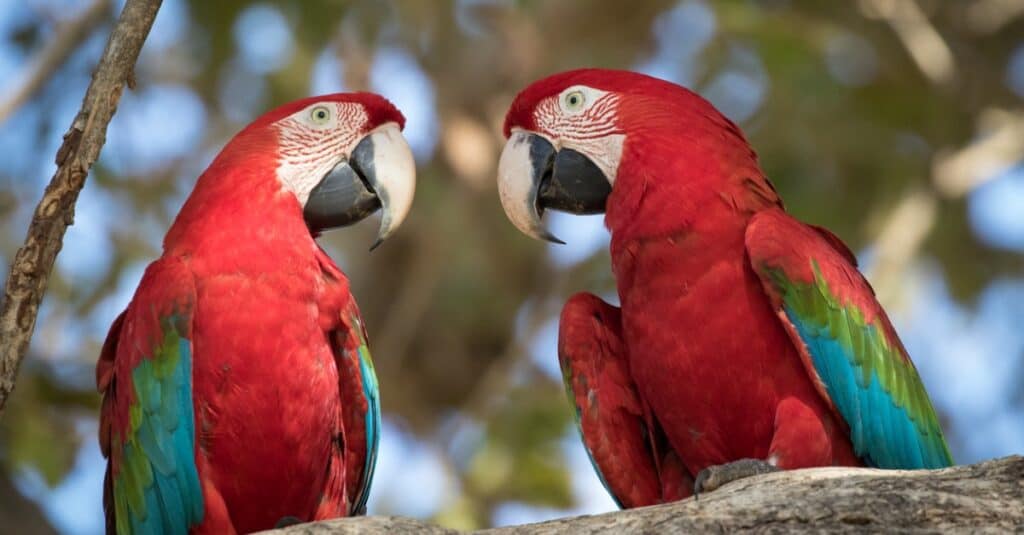
The red and green macaw gets its name from its bright red plumage and green wings.
©iStock.com/Pedro Ferreira do Amaral
Also known as the green-winged macaw, the red-and-green macaw is a large parrot in the family Psittaciformes. The red-and-green macaw gets its name from its plumage. The chest, head, shoulders, and parts of the tail feathers all appear bright red, while their wings are green and blue. Red-and-green macaws range between 35 to 37 inches long and weigh from 2.3 to 3.7 pounds. Due to their distinctive appearance, they rank among the most recognizable red birds. You can find them in the wild throughout their native range in Brazil, Colombia, Bolivia, Ecuador, Peru, and Paraguay. Due to habitat loss and illegal trafficking, the wild population of red-and-green macaws is in decline however, the IUCN lists the red-and-green macaw as a species of Least Concern.
2. Northern Cardinal
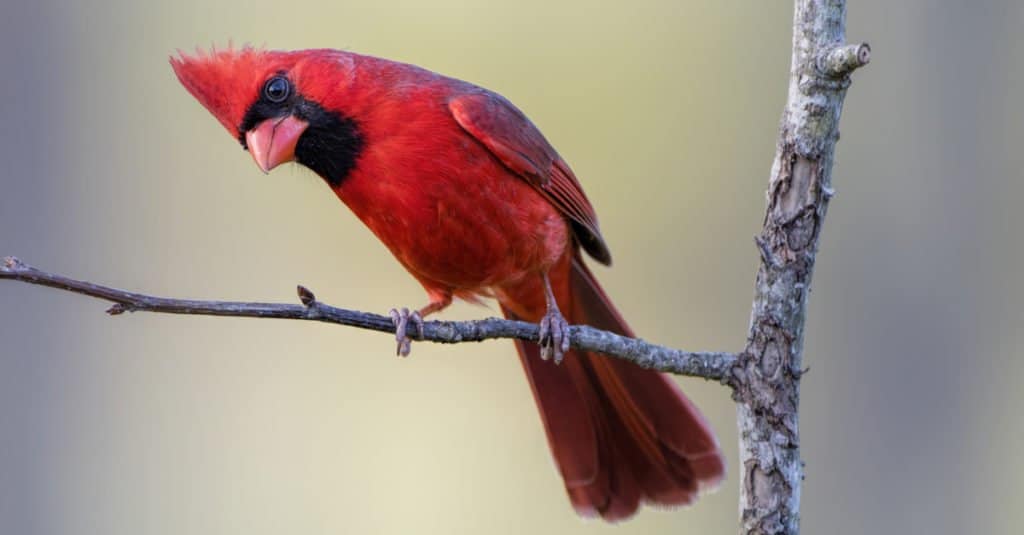
Northern cardinals feature a large crest and striking red plumage.
©Bonnie Taylor Barry/Shutterstock.com
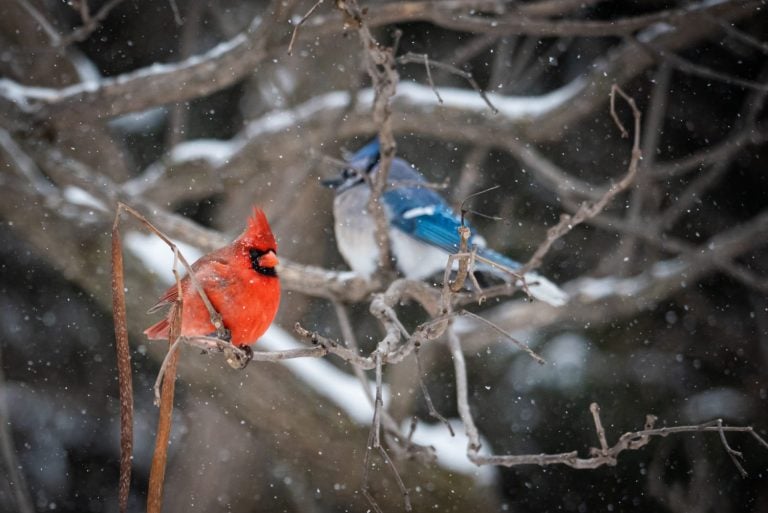
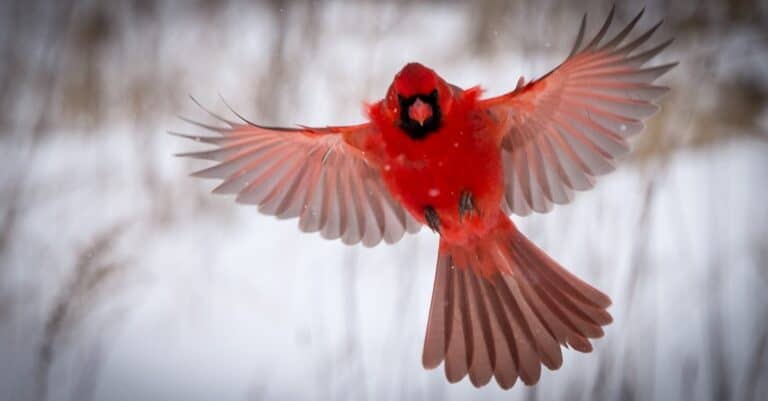
Like the scarlet and summer tanager, the Northern cardinal belongs to the cardinal family, Cardinalidae. Of all the red birds, the Northern cardinal is one of the most well-known. Males are easily recognized by their bright red plumage, large crest, and black face mask. On the other hand, females look drabber, although they feature some red coloring on the tail, breast, and crest. Northern cardinals range throughout North America, though mostly in the Eastern United States and Mexico, and a small portion of Southeastern Canada. Their preferred habitats include woodlands, wetlands, scrubland, and urban areas. While they predominantly eat grain, northern cardinals also consume some berries and insects. Once threatened by the pet trade, it’s now protected under the Migratory Bird Treaty Act of 1918, and the IUCN lists it as a species of Least Concern.
1. ‘I’iwi
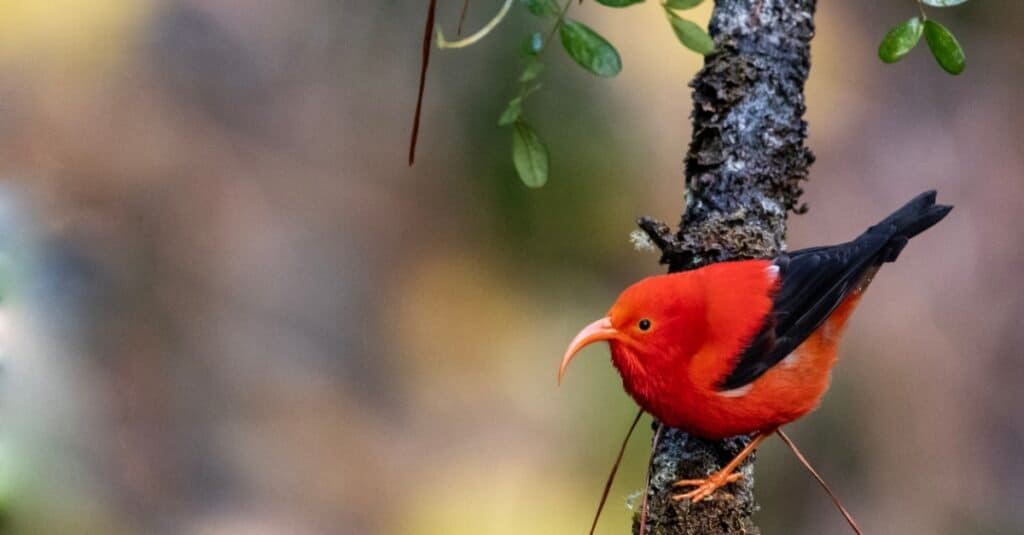
The ‘I’iwi is a beautiful red bird found only in the Hawaiian Islands.
©iStock.com/Mason Maron
The ‘I’iwi is the final entry in our list of birds that are red. Also known as the scarlet honeycreeper, it belongs to the finch family Fringillidae. It features bright scarlet feathers on its head, breast, and undersides, although its tail and wings look black. The ‘I’iwi uses its long, pink bill to drink nectar from flowers, which makes up most of its diet. They also eat a variety of arthropods. I’iwis live only in the Hawaiian Islands, where they rank as the third most abundant native bird species. They build cup nests made of twigs, flower petals, and feathers in the branches of trees. Currently, they face several threats due to habitat loss from farming and cultivation, as deforestation destroys both their homes and food sources. As a result, the IUCN lists the ‘I’iwi as a Vulnerable species globally, while it is considered Endangered at the state level in Hawaii.