
Quick Take
- Wisconsin winter bird feeding draws a lively mix of species when natural foods are buried by snow.
- Common winter visitors include chickadees, downy woodpeckers, cardinals, goldfinches, blue jays, and nuthatches.
- Offer multiple foods and feeder styles and keep feeders clean to attract more species.
Wisconsin winters don’t play around. Long stretches of deep snow, icy winds, and subfreezing temperatures shape the rhythm of life across the state. But those same tough conditions also create some of the best backyard bird watching in the Midwest. Once natural food sources are buried under snow or sealed behind layers of ice, feeders become vital refueling stations for the birds hardy enough to tough out the season. Any place you live in Wisconsin, winter feeders draw a lively, colorful mix of birds all season long. Our list of some of the most frequently seen birds in Wisconsin winters can help you know what to expect and what kind of feeder and seed to use to attract them.
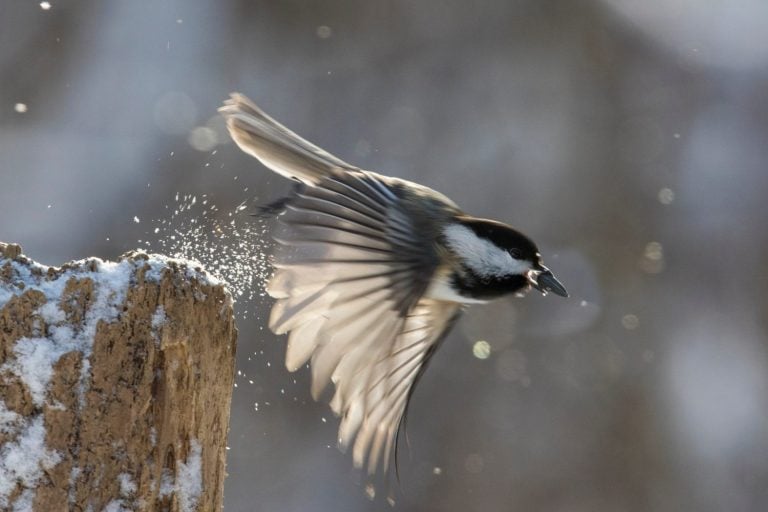
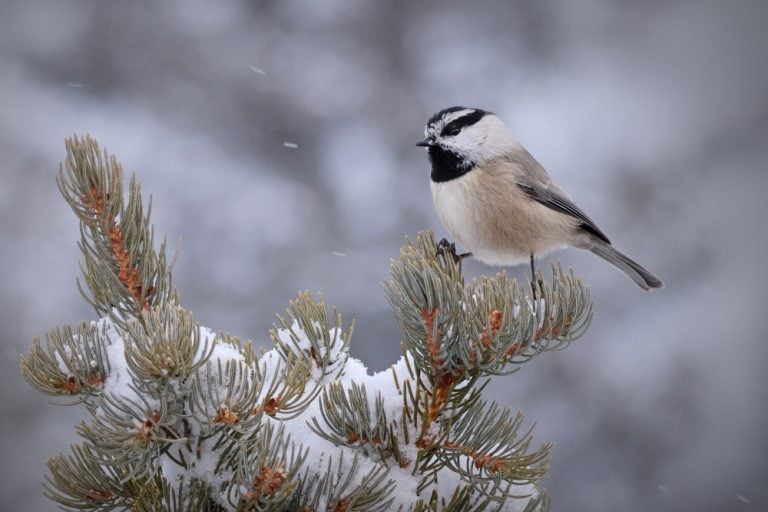
Black-Capped Chickadee (Poecile atricapillus)
Black-Capped Chickadee (Poecile atricapillus)
©Rabbitti/Shutterstock.com
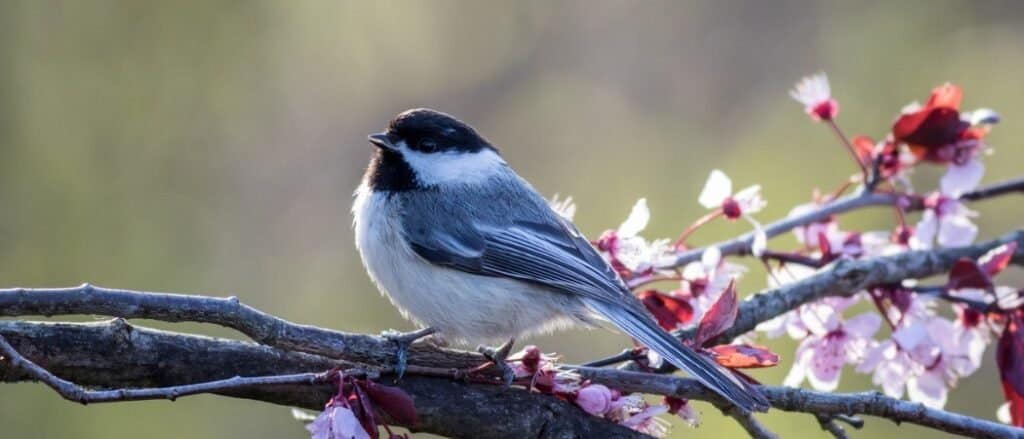
If Wisconsin had a winter mascot, the black-capped chickadee might be it. These tiny, round birds are instantly recognizable with their black caps and bibs, white cheeks, gray backs, and warm buff sides. Chickadees live year-round throughout the state, from deep pine forests to busy cities, and they handle cold far better than you might expect from a bird their size.
Around feeders, chickadees are fearless. They dart in quickly, grab a sunflower seed or peanut piece, and disappear to crack it open or stash it for later. They also visit suet feeders and mixed seed offerings, often moving with nuthatches and downy woodpeckers in small mixed flocks. Their crisp calls and soft, whistled “fee-bee” song brighten even the darkest winter mornings and often signal that other species are following close behind.
Downy Woodpecker (Dryobates pubescens)
Downy Woodpecker (Dryobates pubescens)
©Brent Barnes/Shutterstock.com
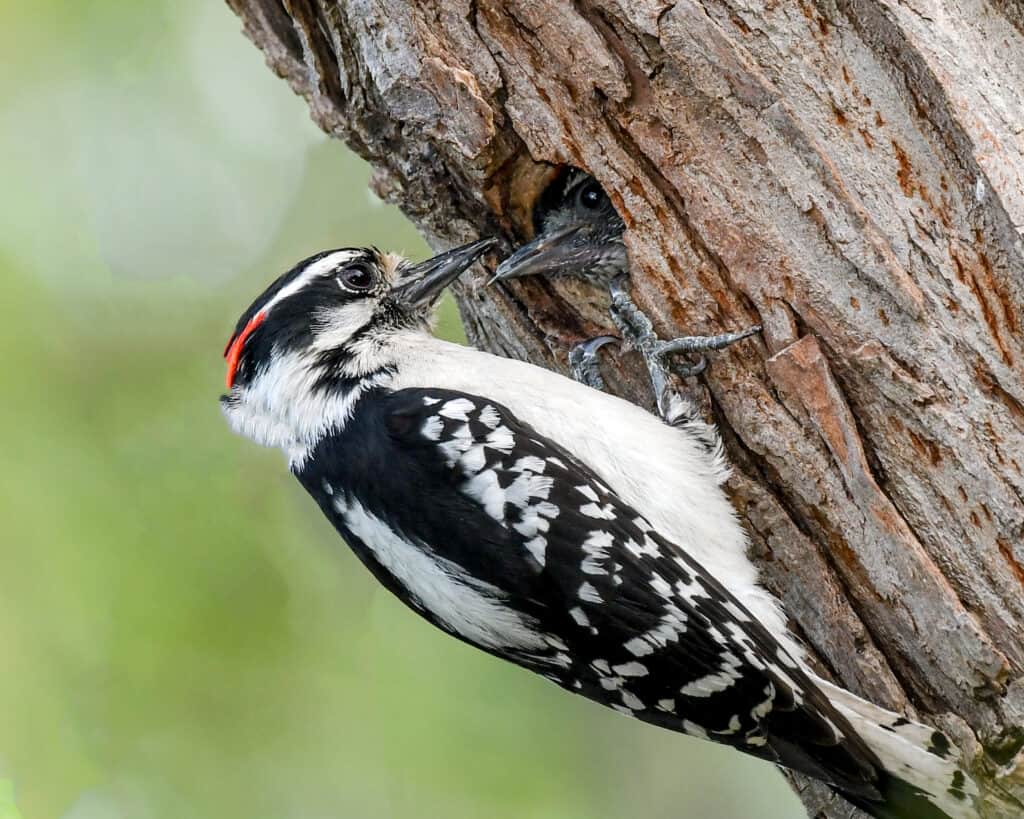
The downy woodpecker is Wisconsin’s smallest woodpecker and one of the state’s most reliable winter visitors. Males and females share the same black-and-white pattern, though males feature a small red patch on the back of the head. They live everywhere from thick forests to rural fence lines to older neighborhoods with big shade trees.
In nature, downies probe bark for insects and larvae, tapping lightly along trunks and branches. In winter, they become enthusiastic suet feeders, but they’ll also take sunflower seeds and peanut bits. They look a lot like the larger hairy woodpecker, but downies have shorter bills and a more compact build. Their easygoing behavior, steady tapping, and loyalty to suet feeders make them one of the most common and enjoyable winter woodpeckers to watch across the state.
Some people worry that hosting woodpeckers might lead to damage around the house, but downies are rarely the culprits. Most tapping you hear is simple drumming or light foraging. If a woodpecker ever does target siding, it’s often a sign of insects beneath the surface, not mischief. In that way, the bird is more of a feathery home inspector than a threat to your walls.
House Finch (Haemorhous mexicanus)
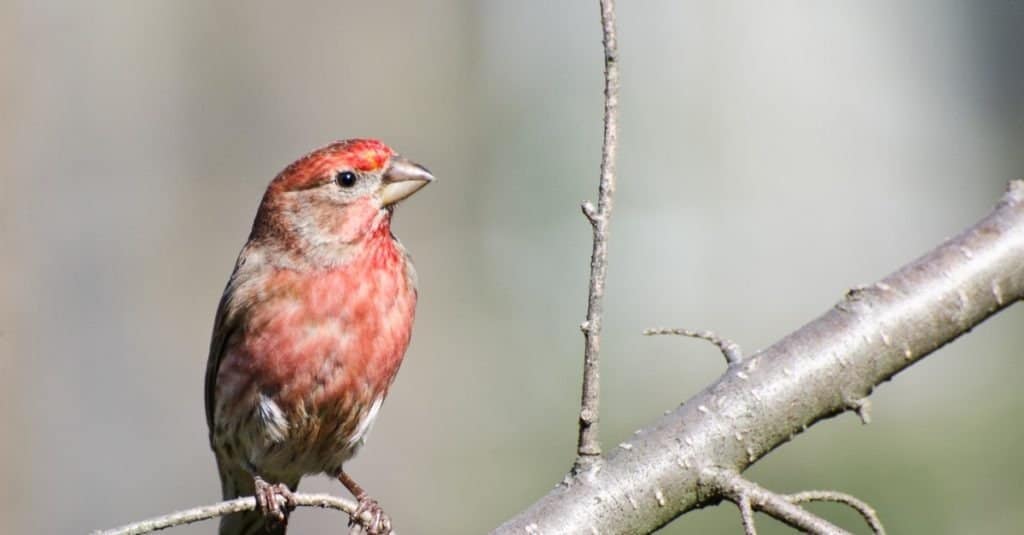
House Finch (Haemorhous mexicanus)
©rck_953/Shutterstock.com
House finches add warm splashes of color to winter feeding stations across Wisconsin. Males show shades of red — sometimes leaning orange — on the head, chest, and rump, while females are streaked brown with plainer faces. These birds thrive around human development, making themselves at home in towns, suburbs, and farms.
They do well in these places because the features we build — ornamental shrubs, backyard feeders, open edges, and scattered trees — accidentally mimic the patchy, semi-open habitats they evolved to use. Human landscapes offer steady food sources and plenty of nesting options, from porch beams to dense bushes, so house finches simply take advantage of what’s available. It doesn’t mean they prefer development over untouched nature; it means they’re flexible birds that can succeed in both habitats, adjusting their behavior to wherever the resources are strongest.
They visit tube and hopper feeders throughout winter, favoring black oil sunflower seeds, sunflower chips, and mixed blends. House finches often appear in small flocks and chatter constantly while they eat. Their frequent visits and nonstop social sounds keep feeders lively, especially during stretches of cold, still weather.
American Goldfinch (Spinus tristis)
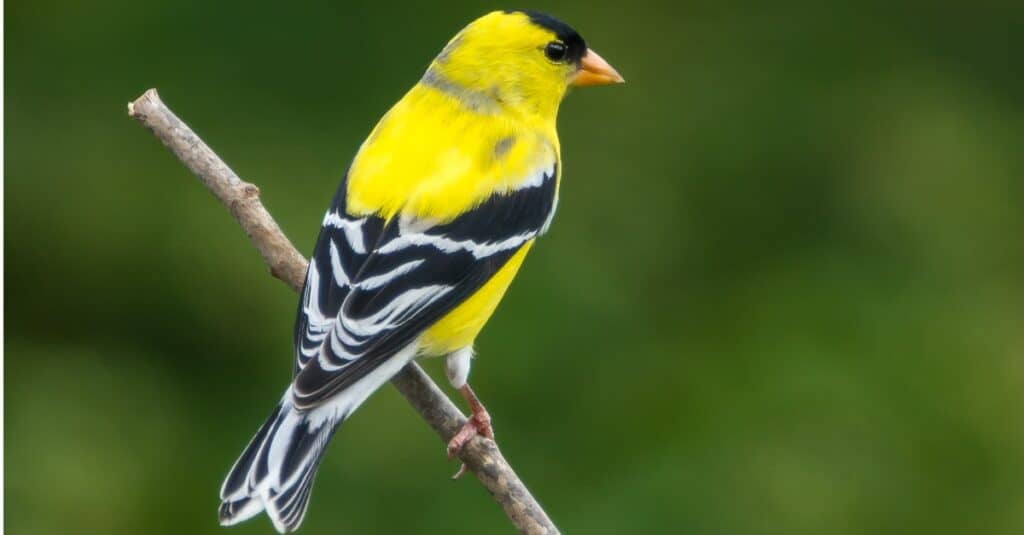
American Goldfinch (Spinus tristis)
©iStock.com/impr2003
Year-round residents in Wisconsin, American goldfinches get a whole new look in the winter. Gone is the bright lemon-yellow of breeding males. Instead, both sexes shift to olive-brown tones above and pale underparts below. Only the bold wing bars and dark wings hint at the bird’s summer brilliance. This seasonal color change happens because goldfinches undergo a complete molt after breeding. Their duller winter plumage helps them blend into their surroundings when they’re not trying to attract mates, saving energy and reducing their visibility to predators. When spring returns, they molt again, replacing those muted feathers with the showy yellows that signal readiness for breeding.
Goldfinches remain loyal to feeders that offer nyjer (thistle) seed, especially in narrow tube feeders designed to keep the seed dry. They also enjoy small sunflower chips and will gather in flocks that bounce between weedy fields and backyard feeding stations. Their soft, musical calls continue all winter and bring a gentle, cheerful background sound to quiet days. Leaving coneflower heads or other native seed-bearing plants standing through winter offers goldfinches additional natural food sources and can increase your chances of seeing them up close.
Northern Cardinal (Cardinalis cardinalis)
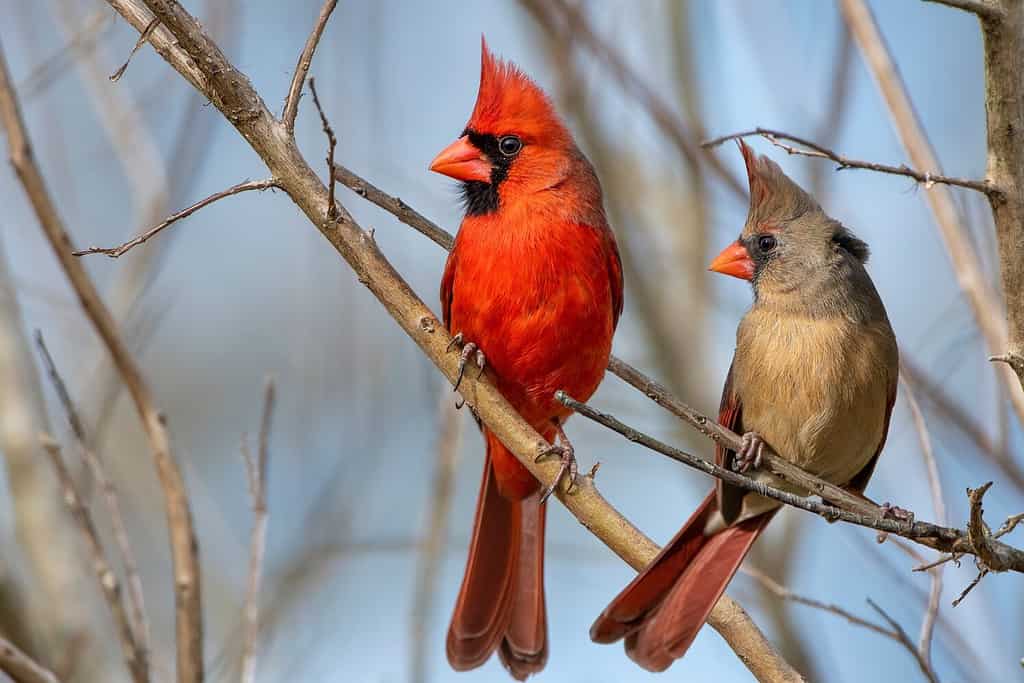
Northern Cardinal (Cardinalis cardinalis)
©Bonnie Taylor Barry/Shutterstock.com
Few winter scenes in Wisconsin are as striking as a male northern cardinal perched on a snowy branch. The bright red feathers seem to glow against the white, and females — with warm brown tones and soft red touches — bring their own quiet beauty. One reason people adore cardinals is how easy they are to identify; that vivid coloring stands out even on the grayest winter morning. Very few creatures on this planet have a fan club as universal as the northern cardinal. They’re handsome, polite, and they show up when the weather is garbage just to brighten the mood.
Of course, even fan favorites have quirks. At feeders, cardinals can dominate the platform like they’re running the place, which can annoy birders hoping to give their goldfinches or chickadees some space. And a male cardinal occasionally sees his reflection in a window and goes full WWE against the glass for days. To a homeowner trying to sleep… yeah, that can get old. Still, most people welcome these bright, bold birds with their clear whistles.
Red-Bellied Woodpecker (Melanerpes carolinus)
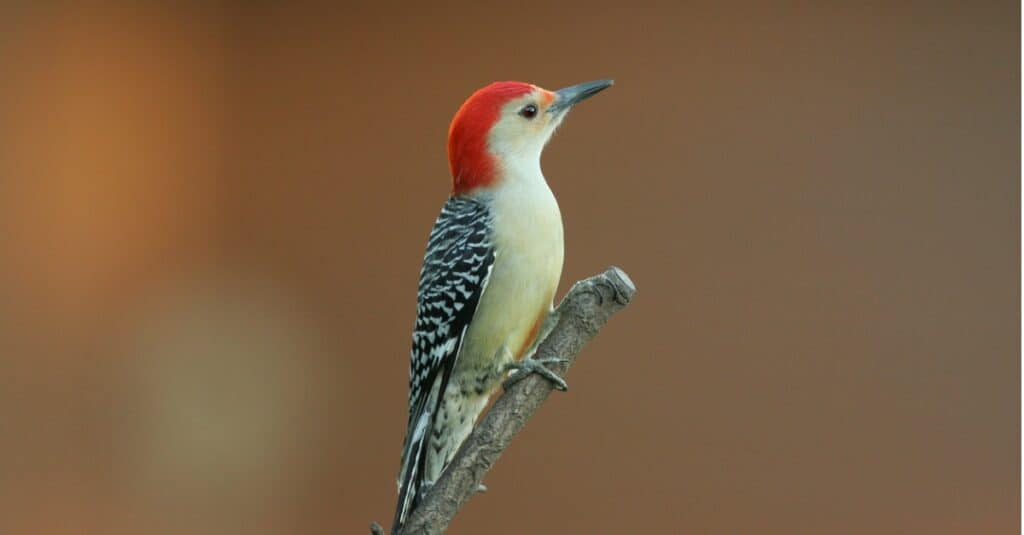
Red-Bellied Woodpecker (Melanerpes carolinus)
©iStock.com/Flatcoater
Let’s get this out of the way first: the name of this bird is almost criminally wrong as one glance at it will tell you it should be the red-headed woodpecker. The problem is that another species already owns that name and it suits them even better. So early naturalists (who perhaps needed a little more imagination, if we’re honest), noticed it had a slightly reddish belly and just went with that instead. And modern ornithology tends not to rename species unless absolutely necessary. So, we’re sorta stuck with a name that makes little sense.
This misnomered bird was once uncommon this far north, but red-bellied woodpeckers are now widespread year-round throughout much of Wisconsin, especially in the southern and eastern regions. They favor deciduous woods, river corridors, and wooded suburban areas.
In winter, red-bellies become enthusiastic suet eaters. They also take peanuts and sunflower seeds, sometimes raiding platform feeders. Their bold behavior, loud rolling calls, and drumming make them easy to spot and hear. When one shows up at a feeder, you don’t just get a bird — you get a whole display of woodpecker confidence.
Blue Jay (Cyanocitta cristata)
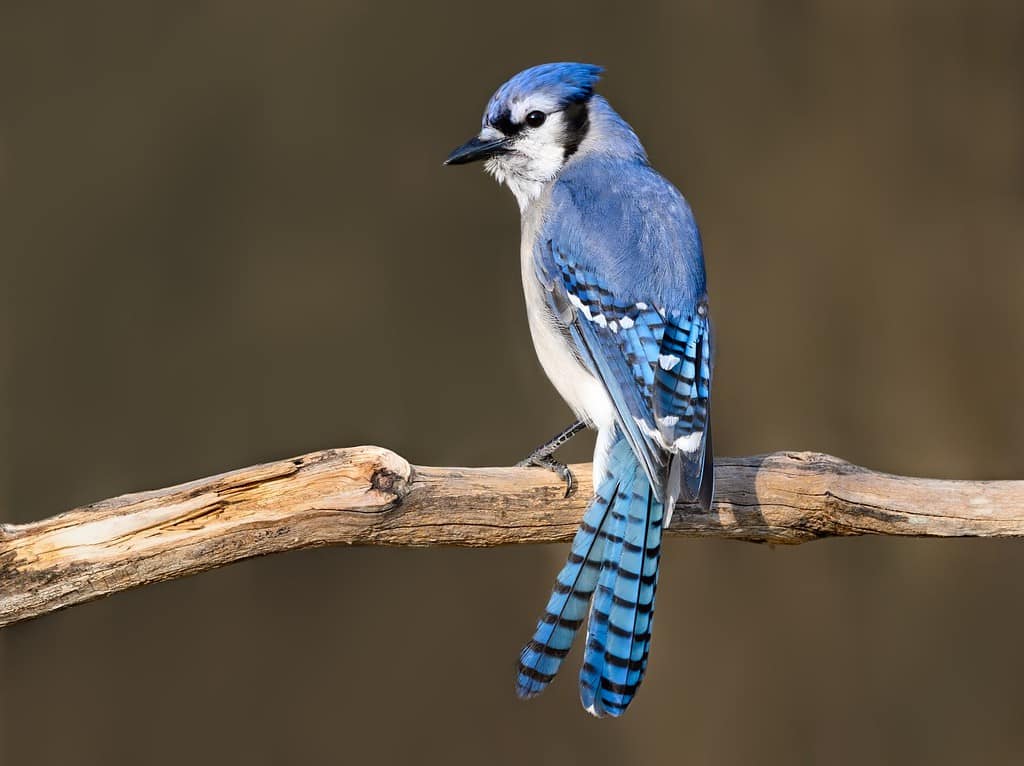
Blue Jay
©FotoRequest/Shutterstock.com
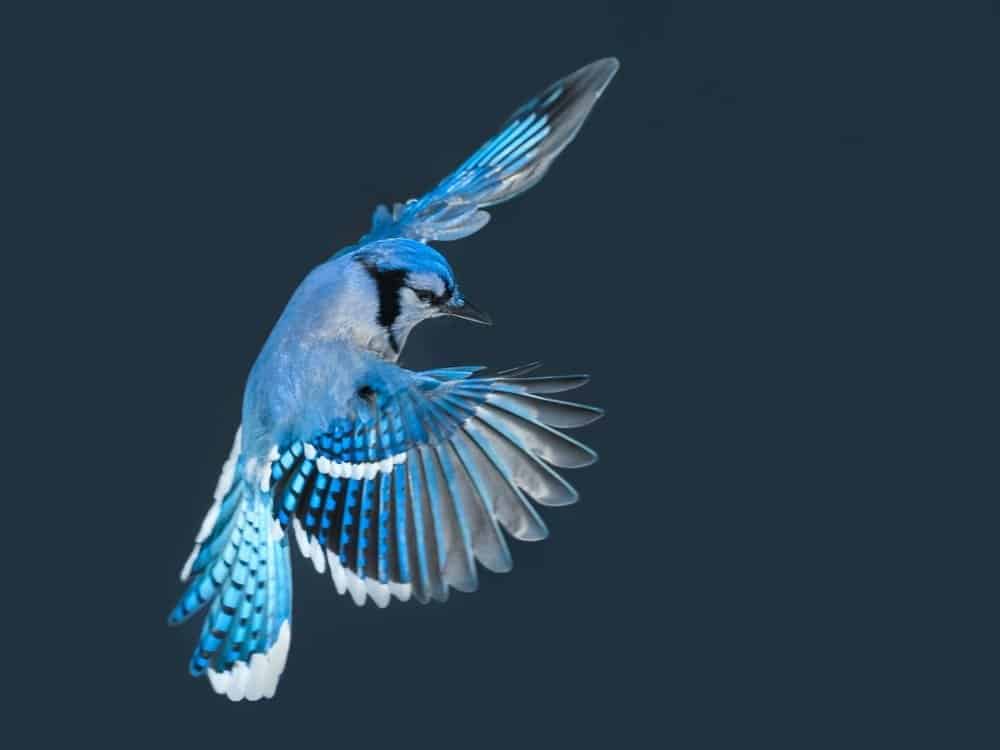
Blue jays are impossible to miss — colorful, loud, clever, and full of personality. Their bright blue wings, white face, black necklace, and bold crest give them one of the most recognizable looks in Wisconsin bird life. They remain in the state year-round and regularly visit backyard feeders.
Blue jays can be assertive, sometimes clearing smaller birds away temporarily when they swoop in. They particularly enjoy whole peanuts, sunflower seeds, and corn, and their strong bills make quick work of cracking tough shells. In natural habitats, they help plant oak trees by caching acorns in soil or leaf litter.
They’re common in forests, mixed edges, and suburban neighborhoods across the state. Their varied calls — from whistles to harsh cries to uncanny imitations — bring a sense of drama and humor to winter yards, especially when small groups arrive together.
White-Breasted Nuthatch (Sitta carolinensis)
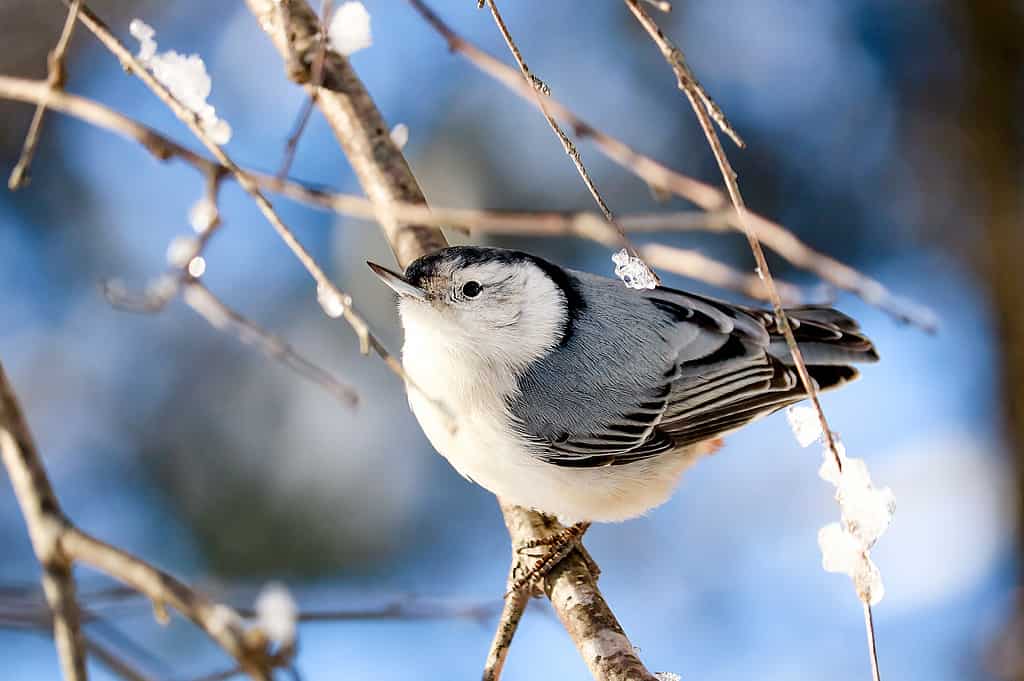
White-Breasted Nuthatch (Sitta carolinensis)
©lauraag/iStock via Getty Images
White-breasted nuthatches add acrobatic flair to Wisconsin feeders. These compact birds often move headfirst down tree trunks, probing bark crevices with their slightly upturned bills. They have blue-gray backs, clean white faces and underparts, and dark caps. A small rusty patch near the lower belly adds a bit of warmth to their look.
Nuthatches live year-round in Wisconsin’s deciduous and mixed forests, wooded parks, and older neighborhoods with large trees. In winter, they often travel with chickadees and downy woodpeckers in small, roaming mixed flocks.
At feeders, nuthatches love suet, sunflower seeds, and peanuts. Rather than eating on the spot, they frequently take a seed and tuck it into a bark crack for later. Their loud, nasal “yank-yank” calls carry through cold woods and make it easy to know when a flock is approaching.
Best Practices for Winter Bird Feeding
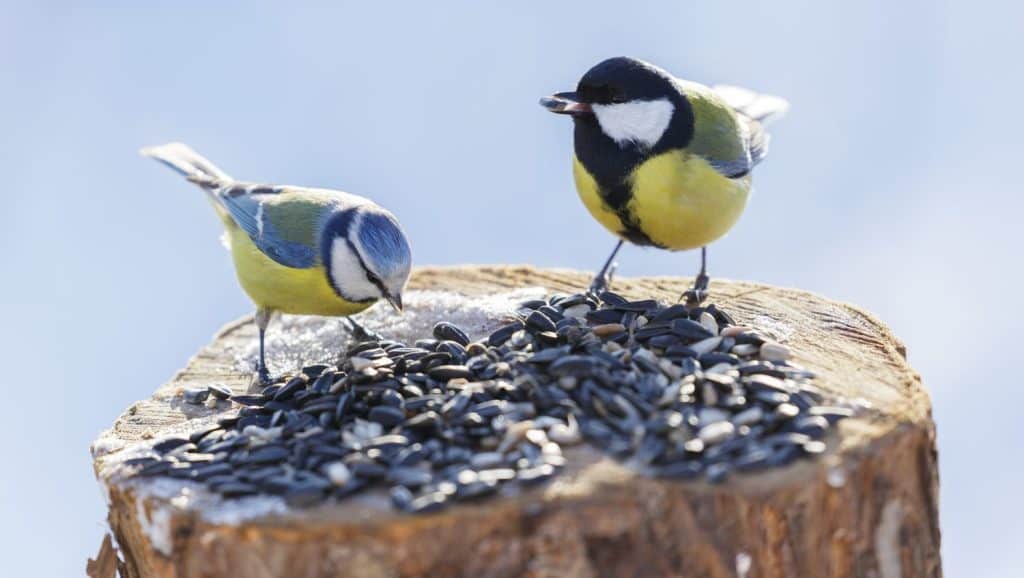
High-quality food keeps birds healthy and attracts a greater variety of species.
©Nitr/Shutterstock.com
Feeding birds through a Wisconsin winter works best when feeders are clean, safe, and regularly supplied. Start by washing feeders every so often with a mild bleach solution, rinsing well, and letting them dry completely. This helps prevent the spread of disease among birds that gather closely at shared food sources. Always throw away any seed that’s wet, moldy, or clumped together. High-quality food keeps birds healthy and attracts a greater variety of species.
Offering several different foods in various feeder styles helps draw in a full winter crowd:
• Black oil sunflower seeds for chickadees, titmice, cardinals, and finches
• Nyjer seed for goldfinches
• Suet cakes for woodpeckers and nuthatches
• Peanuts for jays, woodpeckers, and nuthatches
Place feeders where birds can reach natural cover quickly — evergreens and dense shrubs are ideal — but avoid putting them directly in thick brush where predators can hide. To reduce window collisions, apply decals, patterned films, or exterior screens, and keep feeders either very close to windows or well beyond ten to twelve feet.
A Winter Season Full of Life
Wisconsin’s winter birds transform cold, quiet days into something far richer. Black-capped chickadees survive subzero temperatures with incredible resilience. Woodpeckers drum and forage in ways that reveal the hidden life of trees. Cardinals flash bright red against fresh snow, and blue jays arrive with their vibrant colors and unmistakable personalities.
By keeping feeders stocked and thoughtfully placed, you help these species conserve energy during the most challenging months of the year. In return, they offer daily window side moments — small encounters that make winter feel more alive, colorful, and far more connected to the natural world moving through it.