
Quick Take
- Winter bird feeding in North Carolina brings a steady stream of colorful, hardy species across coastal, Piedmont, and mountain regions.
- Use varied foods and feeder types to attract cardinals, chickadees, titmice, nuthatches, juncos, and more.
- Maintain cleanliness, check seed quality, and place feeders near shrubs to reduce disease, spoilage, predation, and window strikes.
North Carolina’s winters fall into this interesting middle ground — chilly and damp along the coast, crisp and occasionally snowy through the Piedmont, and genuinely frigid once you reach the Appalachians. Even when insects disappear, and trees stand bare, many birds stay active, moving through yards, neighborhoods, and wooded edges in search of dependable food. Backyard feeders become little hubs of life during these months, offering quick energy and drawing birds close enough for you to enjoy from a warm window. Once you know who’s likely to show up, you can choose the foods and feeder setups that keep them visiting all season long. Here’s a little sample of some of the birds you are most likely to see.
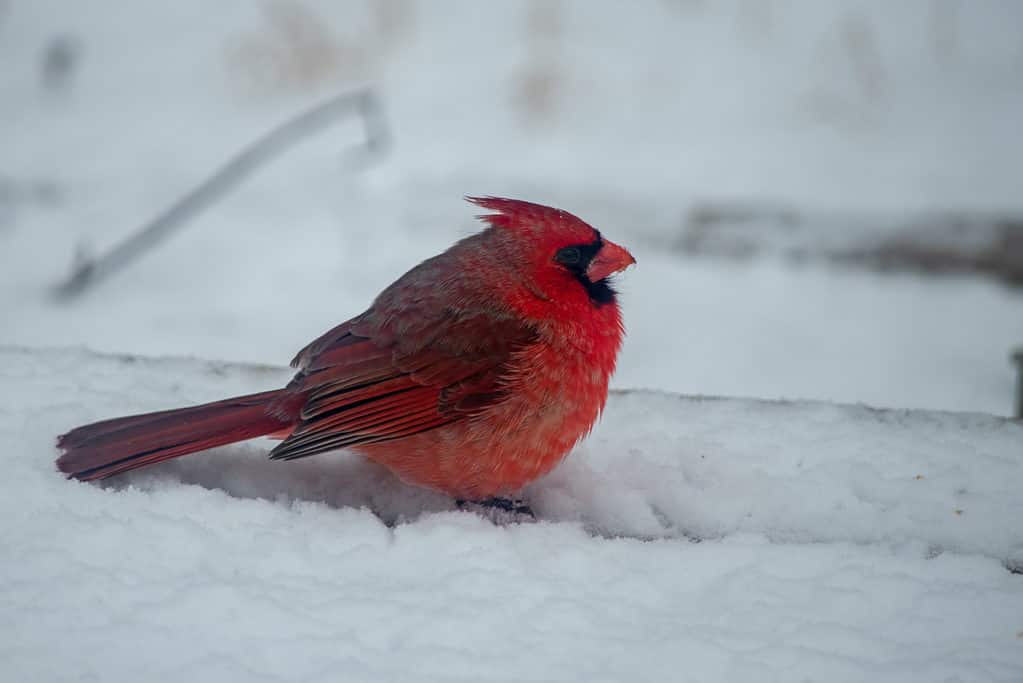
Northern Cardinal (Cardinalis cardinalis)
Northern cardinal (Cardinalis cardinalis)
©iStock.com/Diane079F
The northern cardinal is North Carolina’s state bird, and for many people, it’s the first species they ever recognize. It’s no wonder. How could you miss it? The male’s feathers are stop-sign red, even more vivid against the white snow. The female’s colors are a more subdued brown to help her stay camouflaged on the nest with her babies, but she is still just as easy to recognize with the same kind of topknot and orange beak as the male.
Cardinals live everywhere in North Carolina, from the Outer Banks and coastal plain straight through the Piedmont and into the lower mountain valleys. And they don’t migrate, so you’ll see them every season of the year. In winter, they often travel in pairs or small family groups. If you stock your platform feeder or hopper feeder with black oil sunflower seeds or a quality mixed blend, you’ll almost certainly see them.
Carolina Chickadee (Poecile carolinensis)
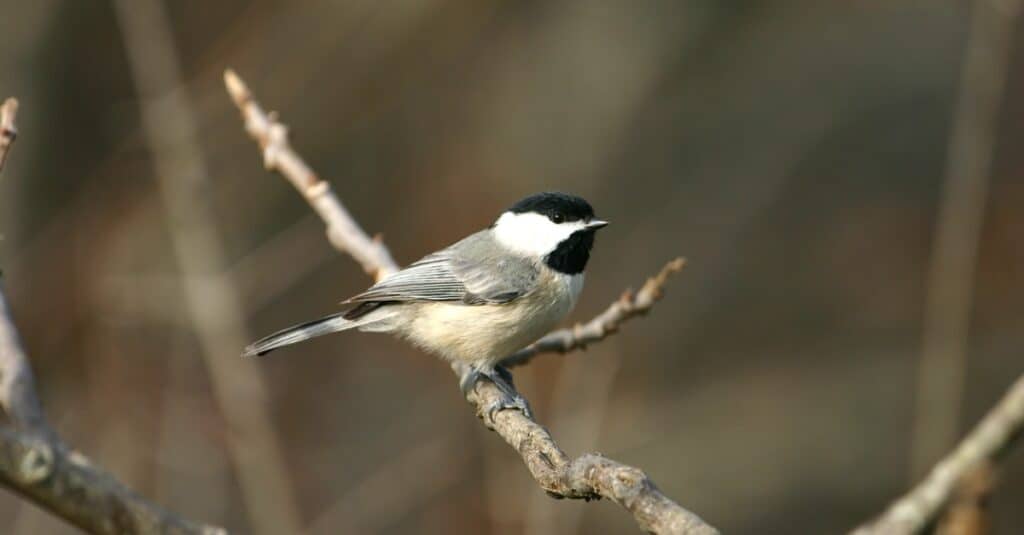
Carolina chickadee (Poecile carolinensis)
©iStock.com/lgunderson
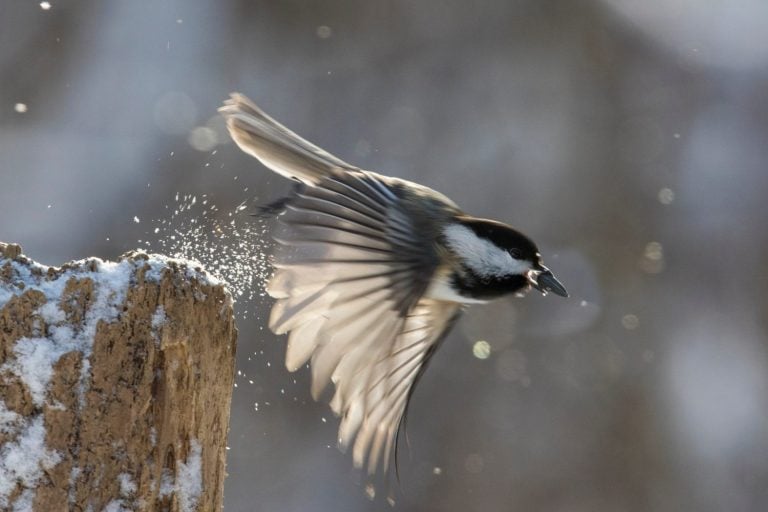
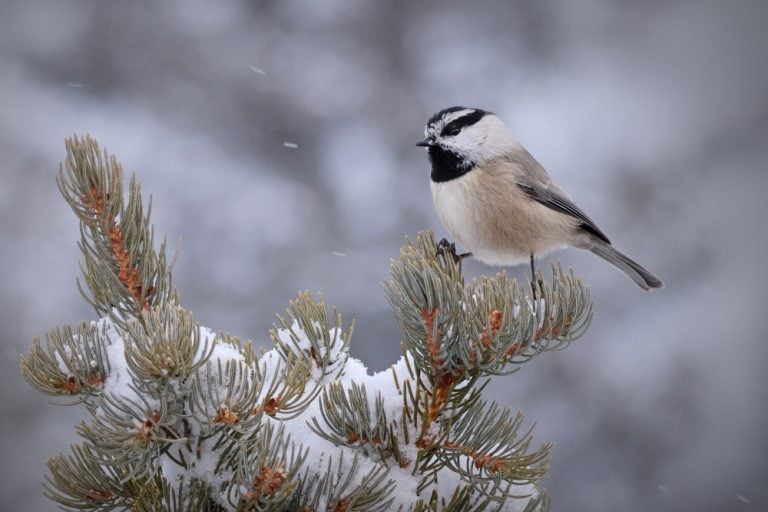
These tiny birds move so quickly that it sometimes looks like they’re running on pure caffeine. Their crisp black cap and bib, white cheeks, and gray wings make them easy to spot once you learn the pattern. They live year-round across most of North Carolina, especially in the Piedmont and coastal plain. In the highest mountain elevations, they’re replaced by black-capped chickadees, but for most of the state, the Carolina chickadee is the familiar face at the feeder.
They like wooded neighborhoods, parks, and yards filled with shrubs and mature trees where insects hide through much of the year. At feeders, they’re focused and decisive: they grab one sunflower seed, peanut piece, or bit of suet, then dart to a branch to eat or store it. Their buzzy calls and sharp scolding notes let you know they’re around even before you see them.
Brown Thrasher (Toxostoma rufum)
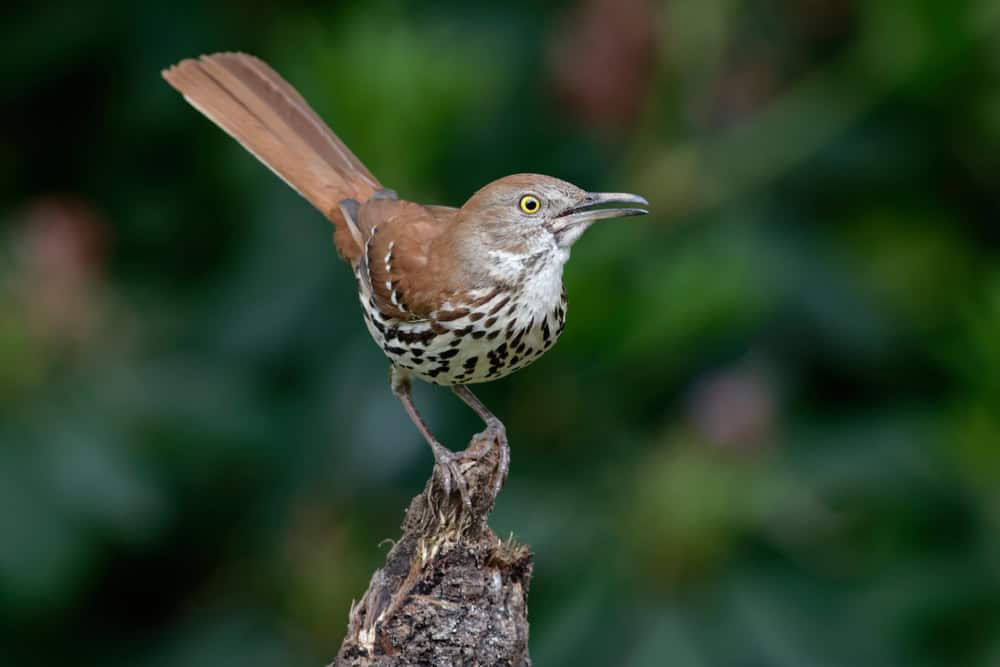
Brown thrasher (Toxostoma rufum)
©R.C. Bennett/Shutterstock.com
The brown thrasher is a large, long-tailed songbird with warm reddish-brown upperparts, a pale belly marked with bold dark streaks, and bright yellow eyes that stand out at close range. In North Carolina, it favors dense shrubs, hedgerows, woodland edges, and overgrown yards, where it spends most of its time on the ground sweeping its long bill through leaf litter for insects, seeds, and fallen fruit.
Brown thrashers do visit backyard feeding areas in winter, but they usually stay low, taking cracked corn, sunflower pieces, and other seeds that fall from elevated feeders or that are offered on low platforms. They are naturally cautious and prefer yards with thick vegetation nearby, retreating quickly if disturbed. Quiet corners of shrub-filled yards are far more likely to attract them than open, exposed feeder setups.
Eastern Towhee (Pipilo erythrophthalmus)
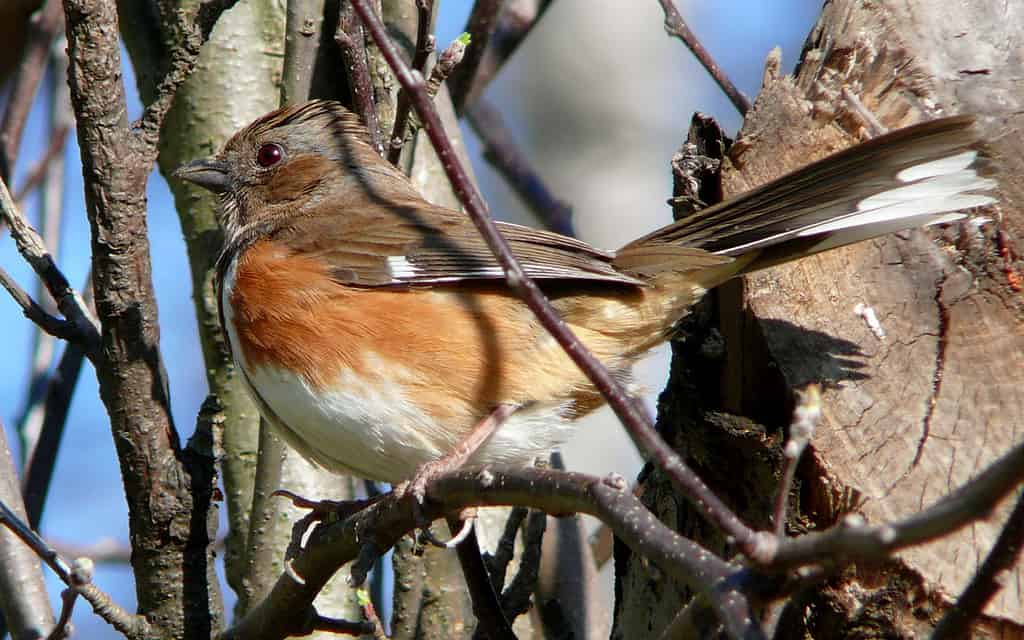
Eastern towhee (Pipilo erythrophthalmus)
The eastern towhee is a bold-looking, ground-dwelling bird about the size of a rotund sparrow and with colors similar to a robin. Males in the Southeast have a black head, back, and throat, rich brownish-red sides, and a clean white belly, while females show the same pattern but replace the black with warm brown. Towhees live in dense understory vegetation, shrubby edges, and overgrown fields, where they use a distinctive double-scratch—hopping forward, then kicking both feet back—to uncover seeds and insects. In winter, they often visit backyards with good cover, slipping out to pick up fallen sunflower seeds, cracked corn, or mixed seed from the ground or from low platforms. More often than not, they stay near the edges of feeding areas rather than out in the open, darting back into the brush whenever they feel exposed.
Pine Warbler (Setophaga pinus)
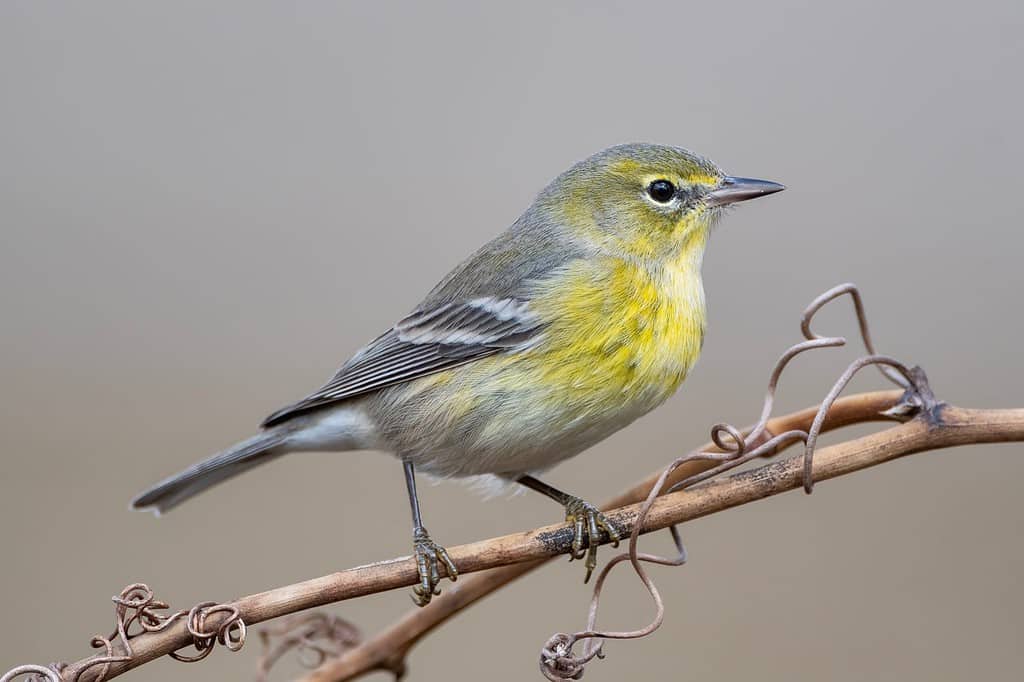
Pine warbler (Setophaga pinus)
©Bonnie Taylor Barry/Shutterstock.com
The pine warbler is unusual among warblers because it spends winter in the southeastern United States and eats seeds more readily than most of its relatives. Adult males show olive-green backs, yellowish breasts, faint streaking, and white wing bars, while females and young birds are duller but share the same general appearance. As its name suggests, this species is closely tied to pine trees and is common in pine-dominated forests, mixed pine–hardwood stands, and neighborhoods with mature pines throughout much of North Carolina. In winter, pine warblers often join mixed flocks and visit backyard feeders for suet as well as seeds such as millet, cracked corn, sunflower pieces, and peanuts.
Carolina Wren (Thryothorus ludovicianus)
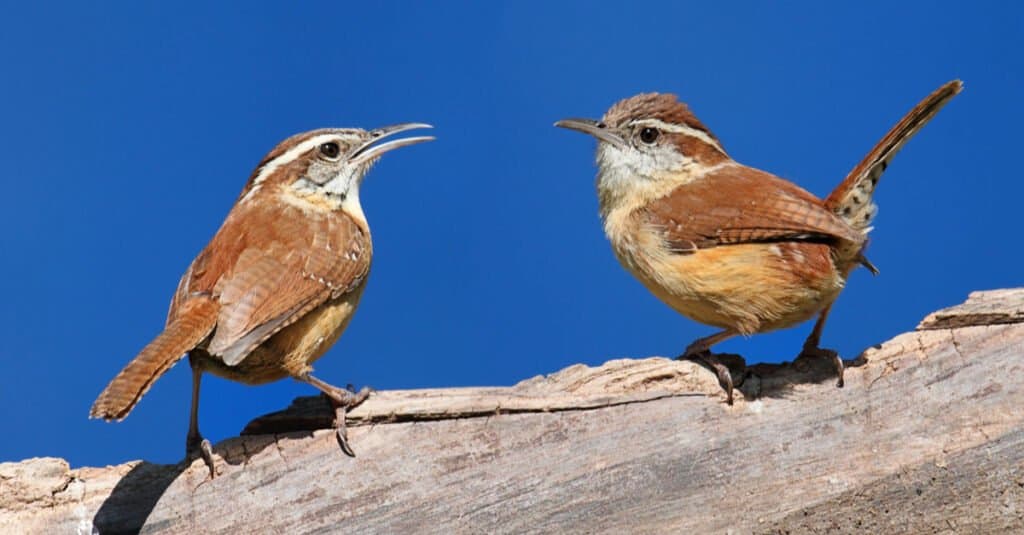
Carolina wren (Thryothorus ludovicianus)
©Steve Byland/Shutterstock.com
The Carolina wren may be small, but it carries a voice three times its size. With rich reddish-brown upperparts, buff underparts, and a bold white eyebrow stripe, it looks lively and alert, always flicking that curved little tail as it zips through brush or explores porch corners. These wrens stay in North Carolina year-round, slipping into thickets, woodpiles, sheds, and vine tangles for shelter. Winter can be tough, so suet, peanuts, mealworms, and sunflower chips give them an important energy boost when the cold bites in.
What makes their sound so startling is the bird’s built-in sound system. Like other songbirds, the Carolina wren has a syrinx tucked low in its throat where the windpipe splits, and this structure is wildly efficient at producing strong, clear notes. Their hollow bones and air sacs act as resonating chambers that amplify each call, letting a bird that weighs less than an ounce blast a song that fills the whole yard.
Tufted Titmouse (Baeolophus bicolor)
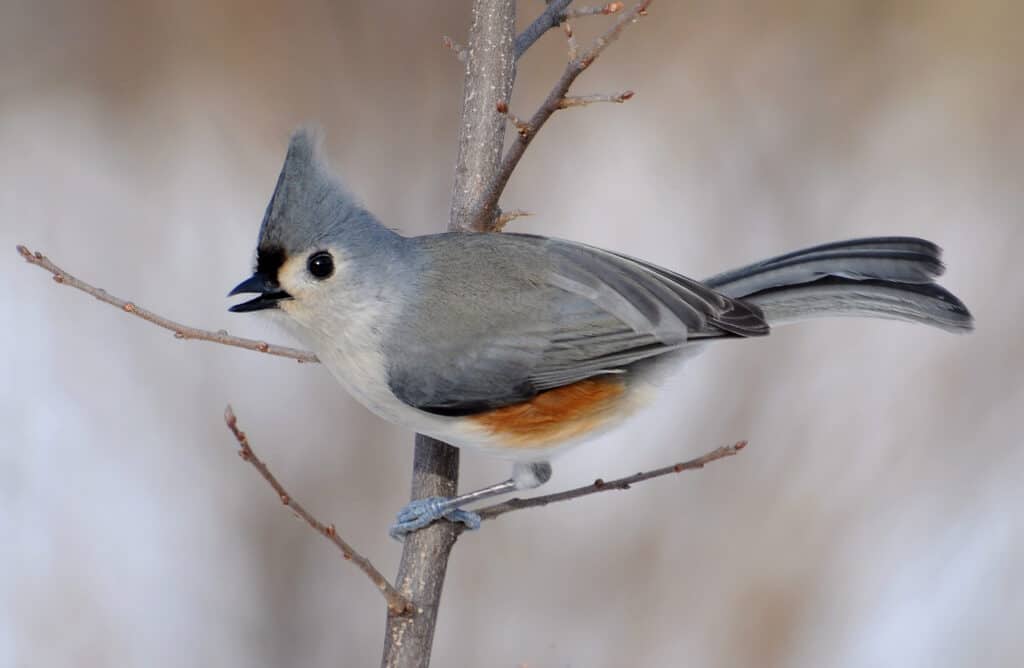
Tufted titmouse (Baeolophus bicolor)
©Brian A Wolf/Shutterstock.com
The tufted titmouse is a familiar winter presence throughout North Carolina’s wooded regions. With gray upperparts, pale underparts, peachy flanks, and a pointed crest on its head, it has a bright, expressive look that makes it easy to recognize. The large dark eye gives it an alert, curious expression.
Titmice are year-round residents that thrive in mature forests, riparian areas, and neighborhoods with plenty of large trees. A nice thing about these birds is that they often travel with chickadees and nuthatches, forming roaming flocks that move quickly from yard to yard. So if you see one titmouse, you’ll likely see several, often accompanied by other species as well.
At feeders, titmice love sunflower seeds, suet, and peanuts. They often grab a single seed and fly to a nearby branch to crack it open or hide it. Their clear “peter-peter-peter” calls often announce their arrival before you see them.
Dark-Eyed Junco (Junco hyemalis)
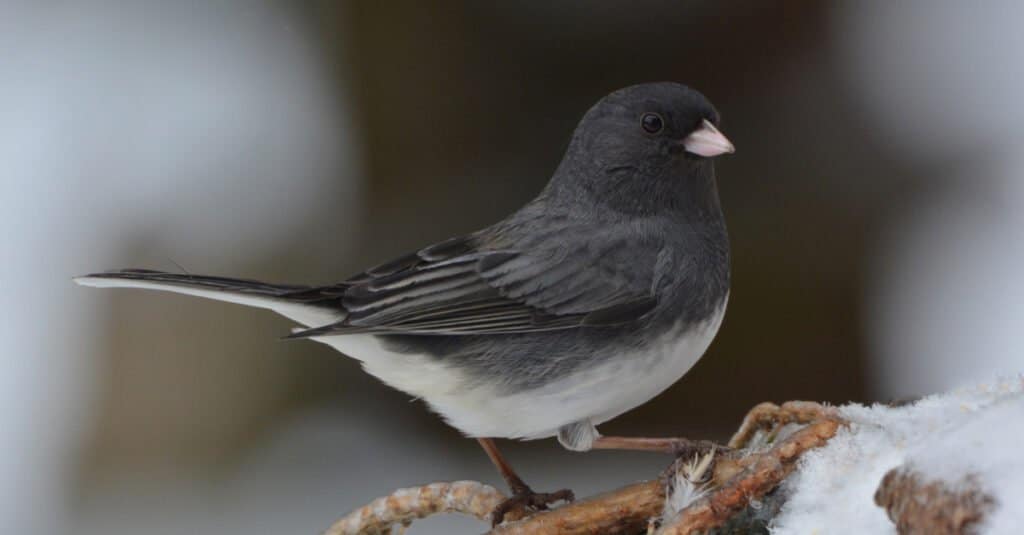
Dark-eyed junco (Junco hyemalis)
©C. Hamilton/Shutterstock.com
Across North America, this species comes in several regional “styles” — Oregon, Slate-colored, Pink-sided, White-winged, and more — all still considered the same bird. North Carolina mostly sees the Slate-colored type, but you might spot variations if you travel. They also have a funny social habit: winter flocks operate like tiny feathery high schools. Each flock has a pecking order, and dominance is based partly on age and sex. Adult males are highest, then adult females, then young birds. The result? You can literally watch the teenagers get bossed around at the feeder.
Their feeding style is also sneakily clever. That double-footed scratch they do isn’t random — it’s a practiced technique called “double-scratching,” and it’s so fast and rhythmic that scientists study it to understand movement patterns. Juncos also switch diets seasonally: mostly seeds in winter, but in summer, they hunt insects like little woodland assassins. And one more charming quirk: when they’re relaxed, they often make soft tic-tic-tic notes, almost like a tiny Geiger counter, letting you know they’re comfortable hanging out in your yard. Watching a flock of them under a feeder isn’t just a winter scene — it’s a whole teenage drama happening right at your feet.
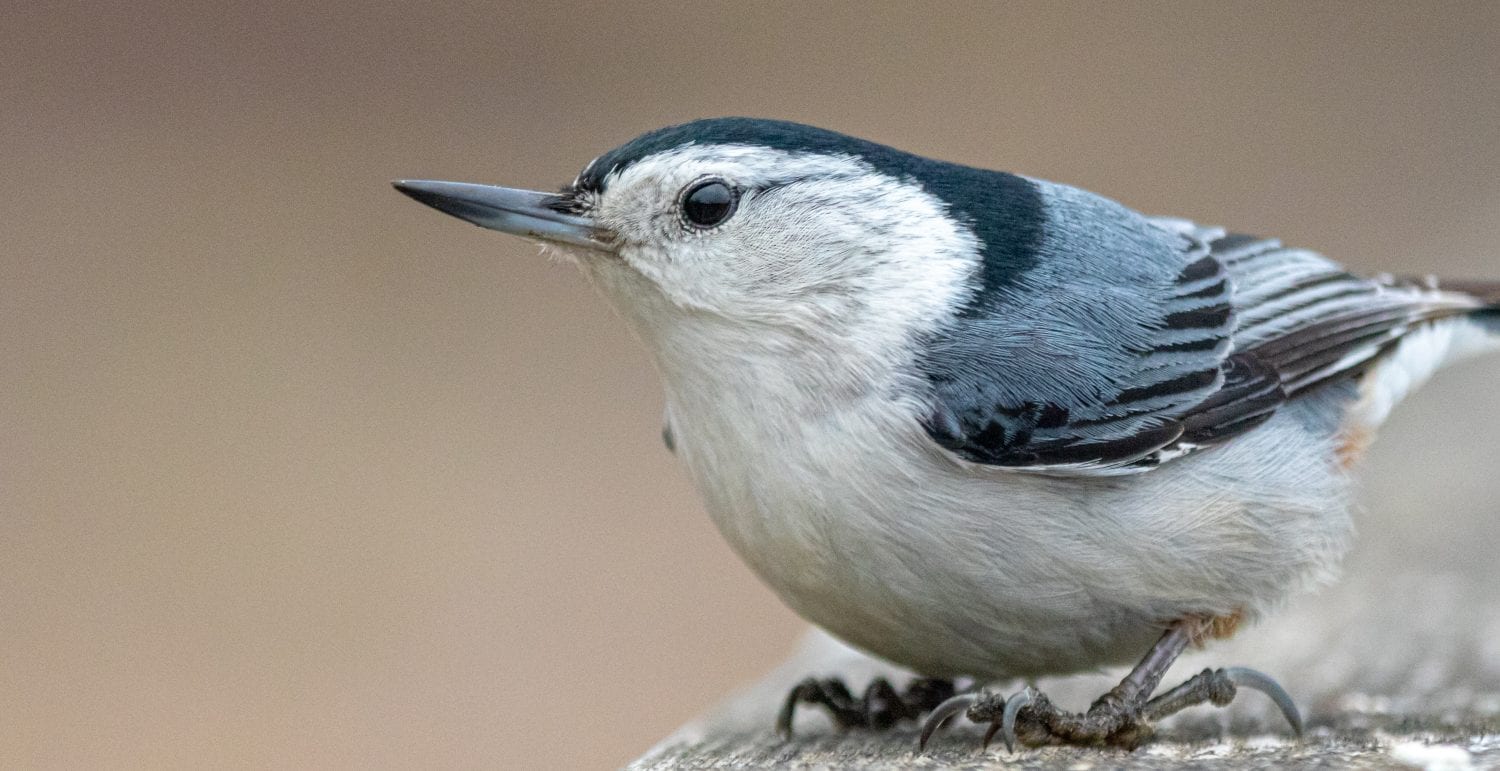
White-Breasted Nuthatch (Sitta carolinensis)
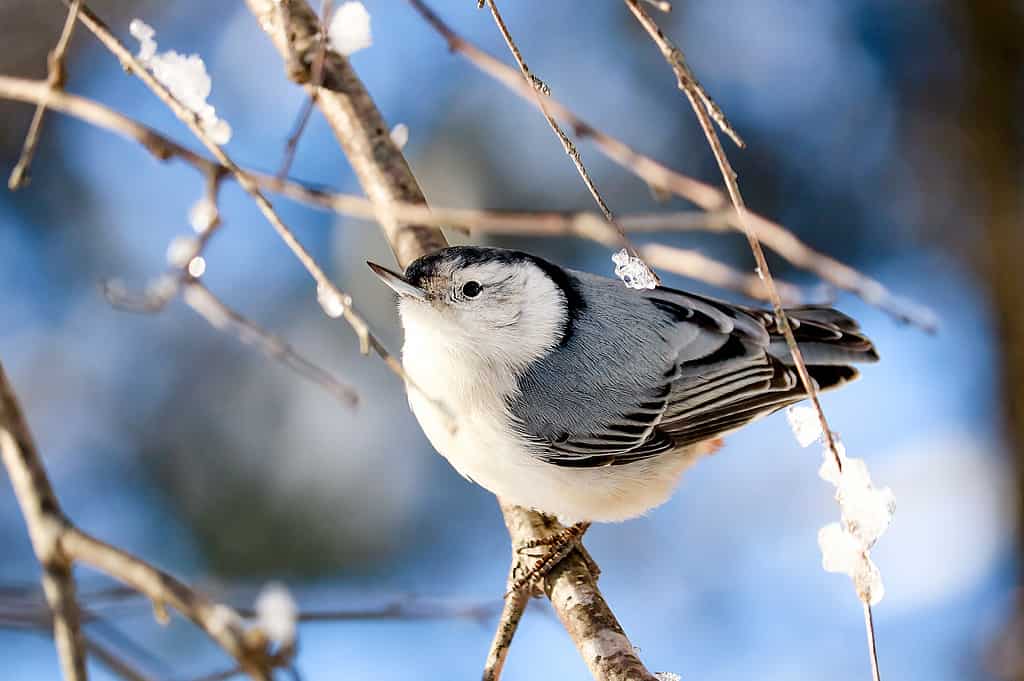
White-breasted nuthatch (Sitta carolinensis)
©lauraag/iStock via Getty Images
These birds bring a ton of character to winter feeders, especially with their signature move: climbing down tree trunks headfirst like ninjas. Very few birds can do this, and it gives nuthatches a foraging advantage. Woodpeckers and most other tree-creeping birds work their way up the trunk, spotting insects from below. Nuthatches flip the script — by coming down the trunk at a different angle, they catch bugs the others miss. Their strong legs, long claws, and low center of gravity let them cling to bark like little feathered rock climbers. Add their blue-gray backs, white faces, and sharp dark caps, and you get a bird that’s both stylish and acrobatic.
They live across North Carolina all year, especially in mature forests and older neighborhoods with big trees. In winter, they often roam with chickadees, titmice, and downy woodpeckers, dropping by feeders as they travel through their patch. They love sunflower seeds, suet, and peanuts — usually grabbing one piece and tucking it into bark for later. Their nasal “yank-yank” calls echo through the cold trees, letting you know they want their snack and they want it now.
Best Practices for Winter Bird Feeding
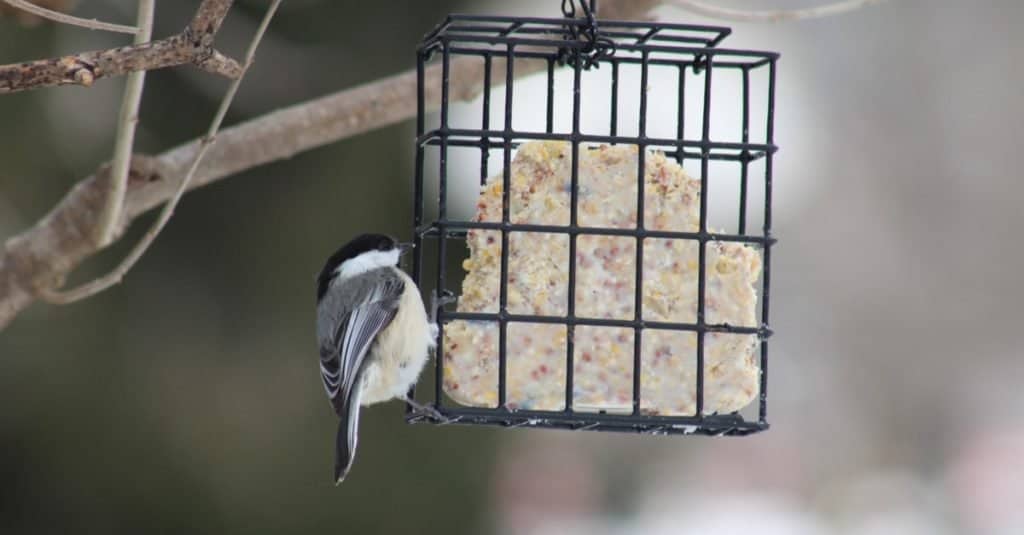
Chickadee feasting on suet at a bird feeder.
©Wade Lamb/Shutterstock.com
Winter bird feeding works best when you match the right foods to the right feeder styles. Tube feeders keep seed dry and are perfect for small birds like titmice, chickadees, and nuthatches. Hopper feeders offer more space and appeal to cardinals and finches. Platform feeders are ideal for birds that prefer an open perch, while suet cages attract woodpeckers and wrens. Keeping these feeders clean is essential — wash them occasionally with a mild bleach solution, rinse well, and let them dry fully before refilling. Clean feeders and fresh seed help prevent illness in species that gather closely in winter.
Once your hardware is set, focus on the foods that fit each style. Black oil sunflower seeds work well in tube and hopper feeders. Nyjer seed is best used in fine-mesh tube feeders for goldfinches, and suet blocks should be placed in cages hung from a branch or shepherd’s hook. Check the seed often and discard anything wet, moldy, or clumped. Good placement ties everything together: keep feeders near shrubs or small trees so birds have quick cover, but leave enough open space to prevent cat ambushes. To avoid window strikes, add decals or patterned film and position feeders either very close to the glass or well beyond ten to twelve feet.
A Bright and Busy Winter Yard
Even in the coldest months, North Carolina’s winter birds bring energy, color, and sound to the landscape. Scarlet cardinals, lively chickadees, bold titmice, and curious wrens all add personality to the yard. With clean, stocked feeders and a little thoughtful placement, you can create a small refuge that helps these birds through winter while letting you enjoy a front-row view of their daily routines.