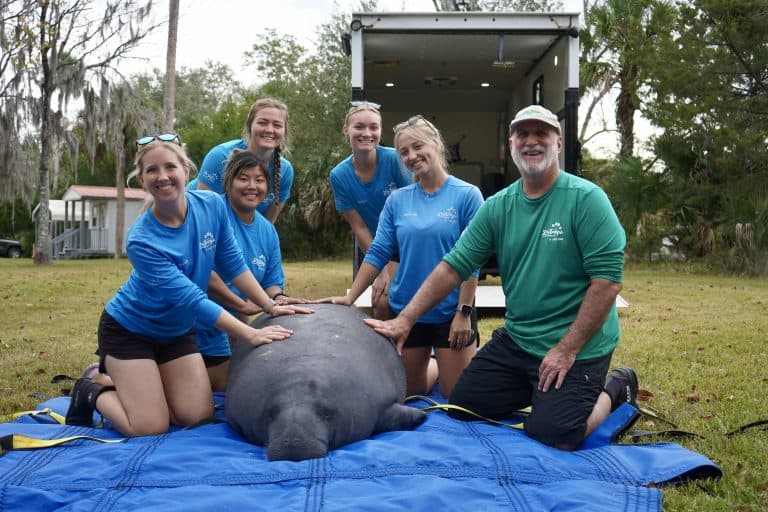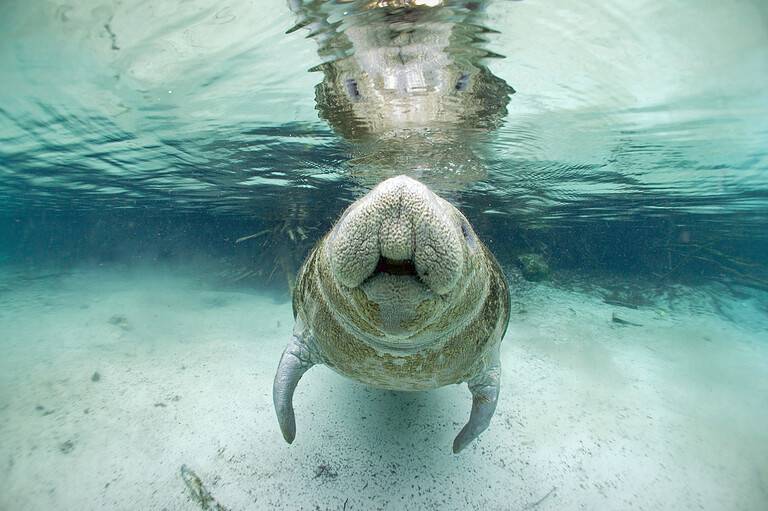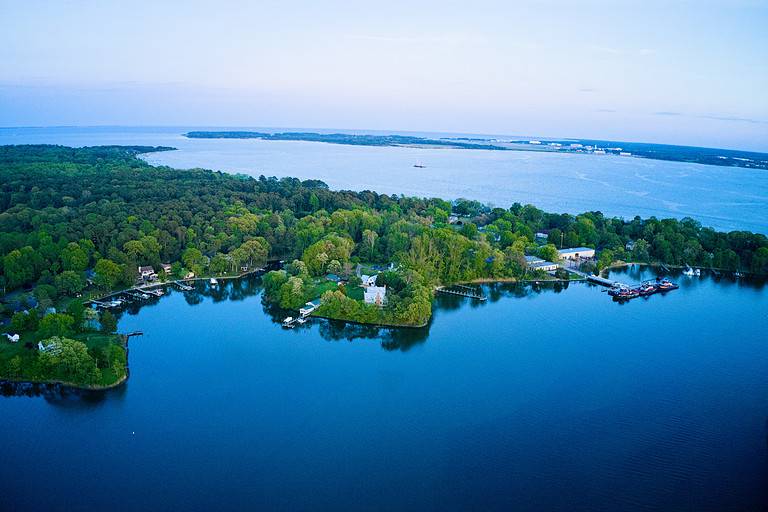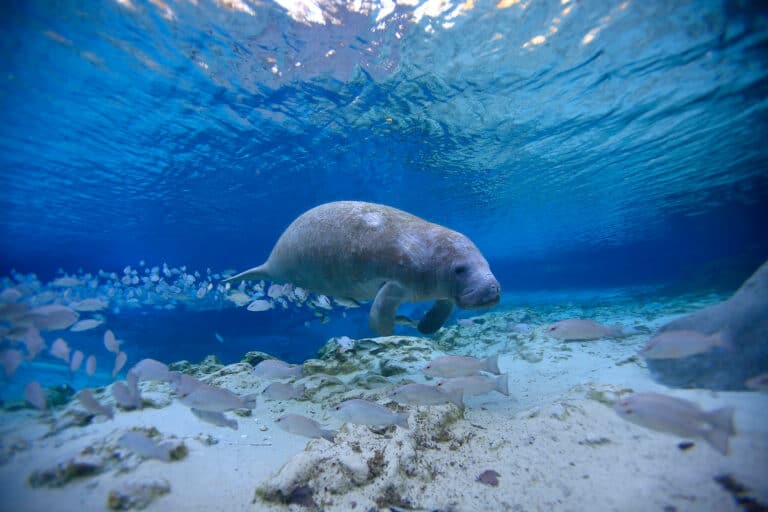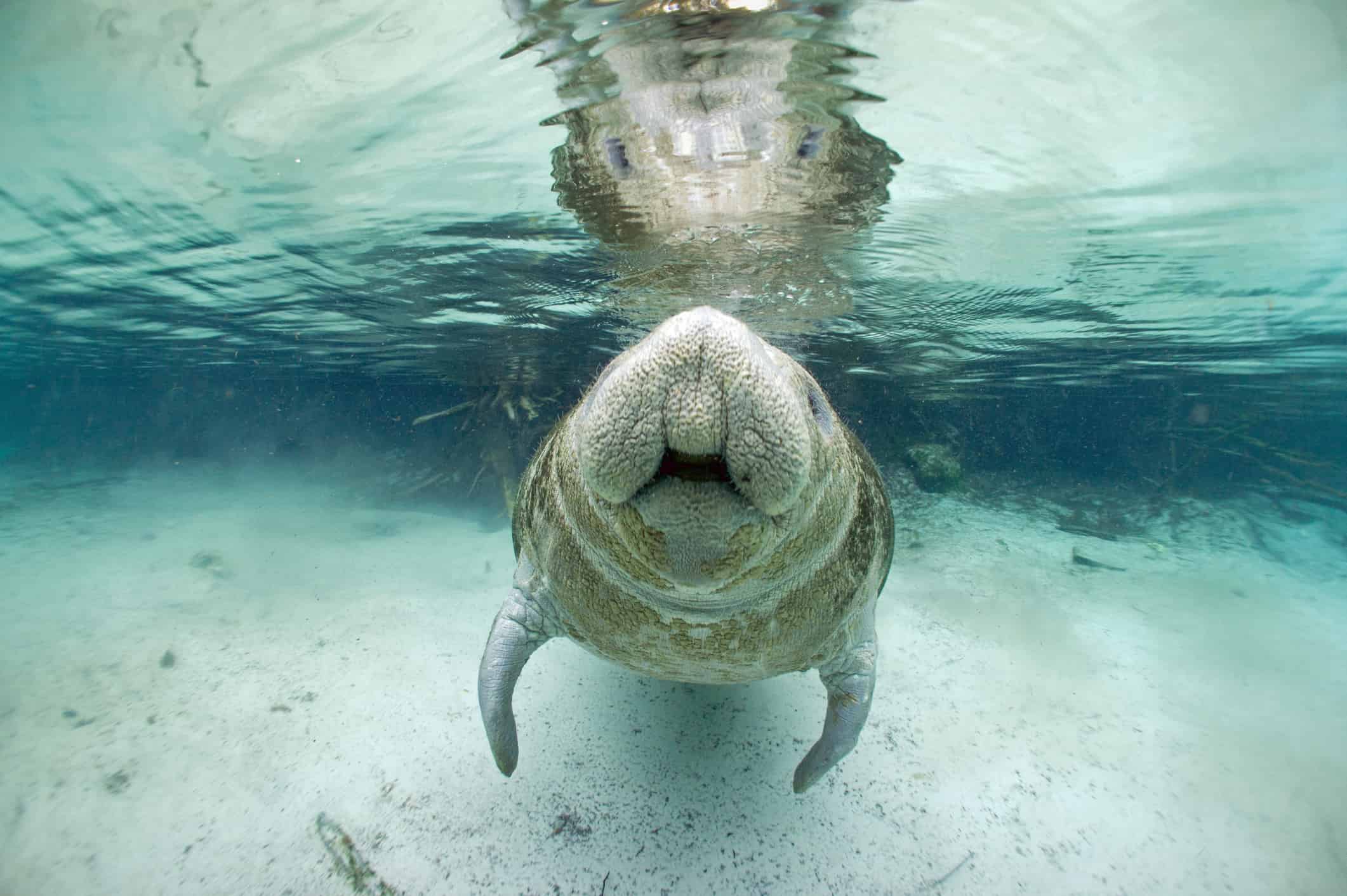

A surprising new guest just made its way to the Chesapeake Bay area. The Potomac Riverkeeper Network recently confirmed that a manatee has been sited in the St. Mary’s River near where the Potomac River and Chesapeake Bay join, reports The Baltimore Banner.
Manatees are common enough in Florida‘s coastal waters, but seeing one so far north is a rare occurrence. However, manatees do pass through the Lower Potomac River area from time to time.
“It’s an amazing area that’s part of the Chesapeake Bay,” Lower Potomac Riverkeeper Dean Naujoks told the news outlet. “It’s not surprising that we have abundant wildlife coming in and feeding and breeding and spending time in these waters.”
Naujoks added that the river’s increased salinity this year has been attracting a number of wildlife, including dolphins and bull sharks.
Why Do Manatees Travel North?
So what could have caused this manatee to make its way so far north? Manatees are herbivores that feed on a number of aquatic vegetation.
They enjoy freshwater plants such as eelgrass and coontail, and saltwater plants such as the aptly named manatee grass, shoal grass, and turtle grass.
According to the Baltimore Banner, grasses found in the Chesapeake Bay have been thriving in recent years. Perhaps these grasses enticed the manatee to swim outside of its typical environment.
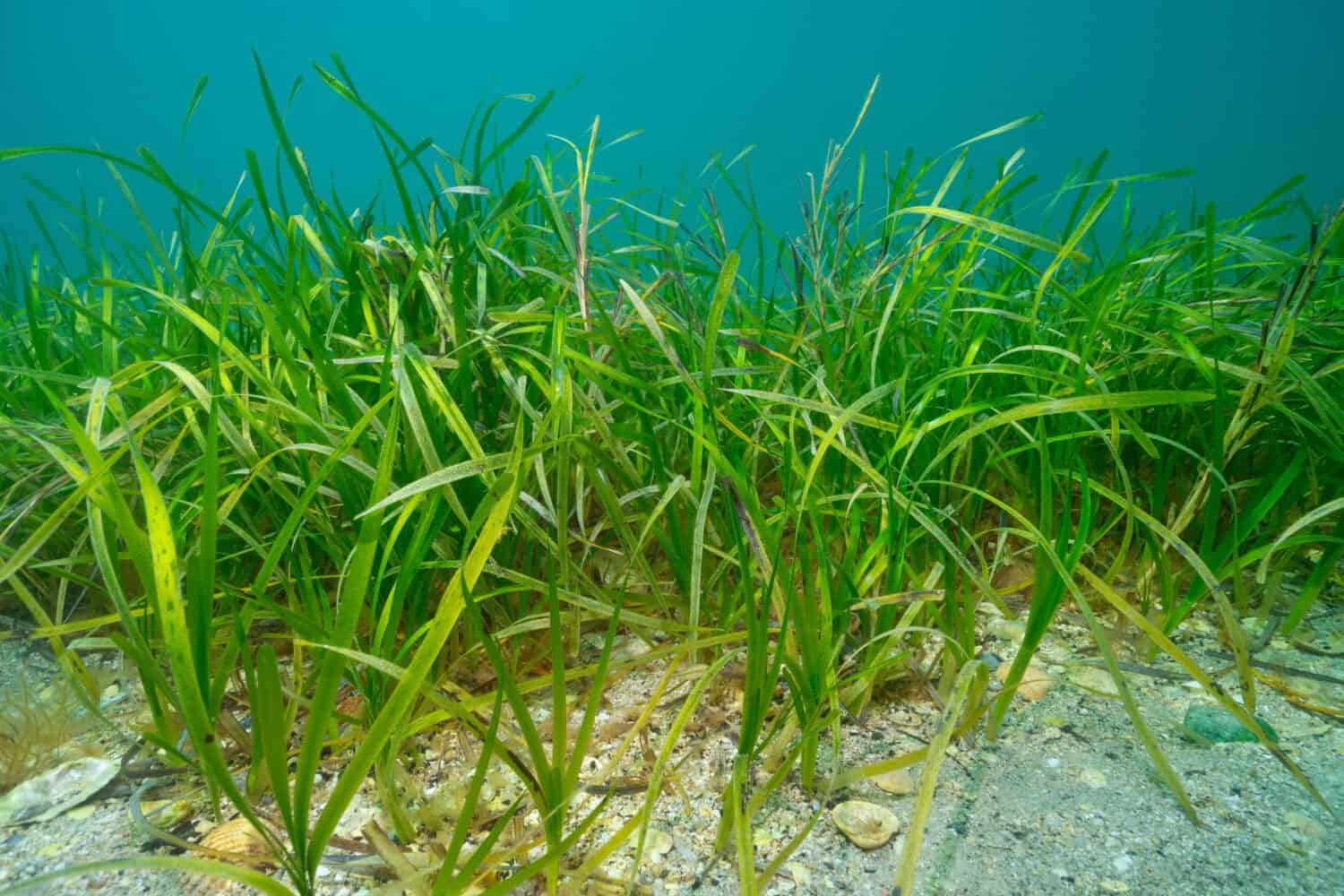
Manatees feed on aquatic vegetation such as eelgrass.
©Damsea/Shutterstock.com
Where Do Manatees Typically Live?
Manatees have the unique ability to survive in fresh, brackish, or saltwater environments. They may inhabit rivers, bays, canals, estuaries, and coastal areas. Manatees are mammals and they do not live in the deepest parts of the ocean.
One reason for this is that manatees prefer warm, coastal waters. In fact, according to the Florida Fish and Wildlife Conservation Commission, manatees cannot survive in cold water (below 68º F).
Prolonged exposure to water temperatures below 68° F can cause manatees to lose body heat and inadequately digest their food. This causes a condition known as “cold stress” which could eventually kill the manatee. For this reason, manatees migrate to warmer areas of the world during the winter months.
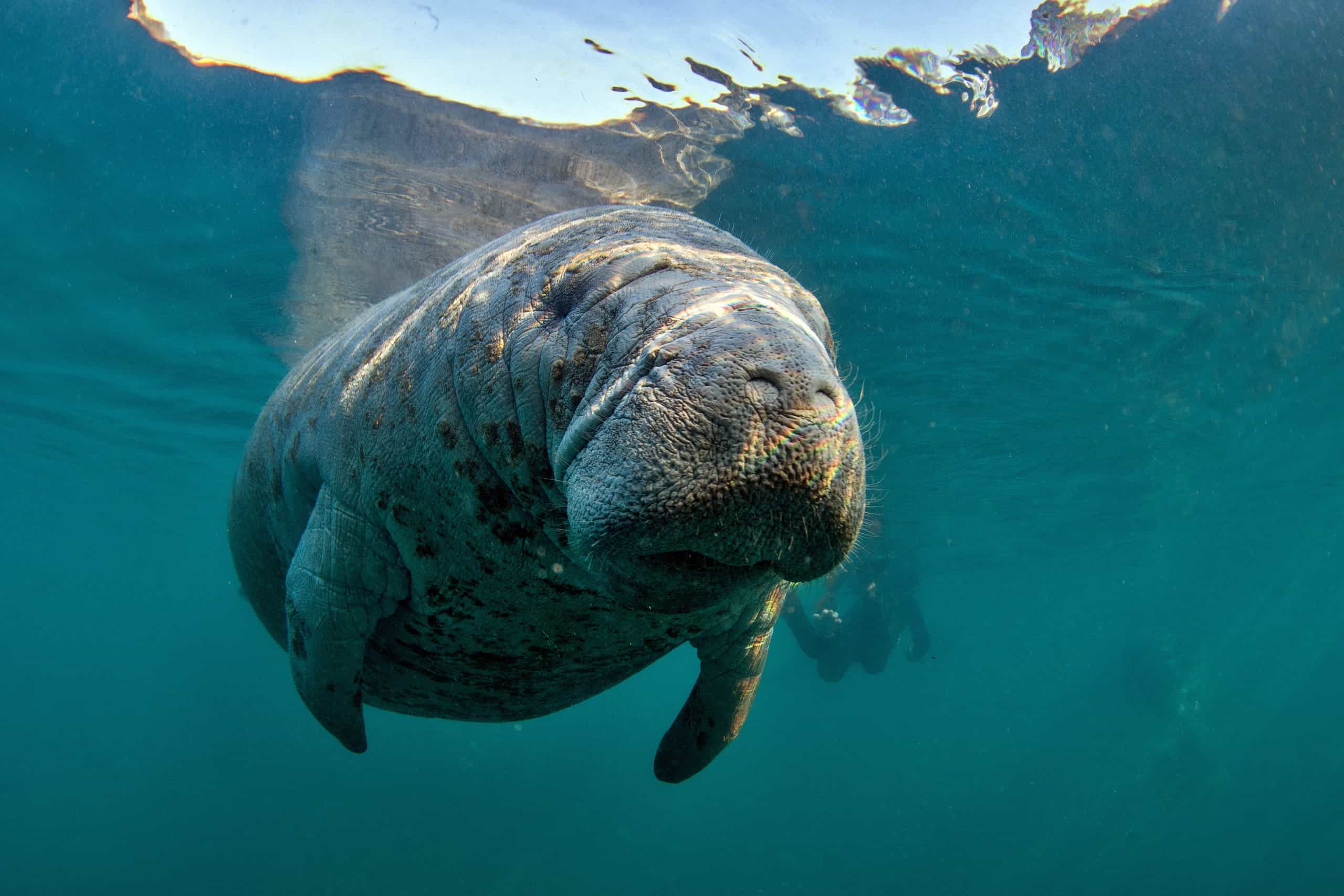
Manatees cannot survive temperatures below 60 °F (15 °C).
©Tomas Kotouc/Shutterstock.com
Other Sitings of Manatees Near the Potomac River
The recent manatee siting isn’t the first to occur near the Potomac River. The Baltimore Sun reported the appearance of a young manatee near Havre de Grace in 2009.
A Florida manatee named Chessie has made frequent trips to the Chesapeake Bay since 1994. During one of these trips, Chessie found himself caught in an unusual weather system that caused the Bay’s water temperature to drop suddenly.
The cold water put Chessie’s life at risk, but the Maryland Department of Natural Resources stepped in to get him safely back home to Florida. Even after this experience, Chessie has since returned to the Bay.