
Quick Take
- The blue crab represents Maryland’s culture, economy, and long relationship with the Chesapeake Bay.
- Its population reflects the health of the bay and the effects of fishing and habitat management.
- The state symbol emphasizes the need to protect the bay while supporting working watermen.
Marylanders and visitors love the blue crab as a seafood delicacy, but they chose it as the state crustacean for more than that. It’s a species that reflects the working life, history, and ecology of Chesapeake Bay. For centuries, blue crabs have supported shoreline communities, provided steady work for watermen, and shaped social traditions tied to shared meals. Newspaper-covered tables, wooden mallets, and long summer afternoons remain familiar scenes across the state. When lawmakers named the blue crab the official state crustacean in 1989, they recognized an animal that connects food, labor, and environment in a single symbol, and the close link of the state to the Bay.
The Blue Crab (Callinectes sapidus)
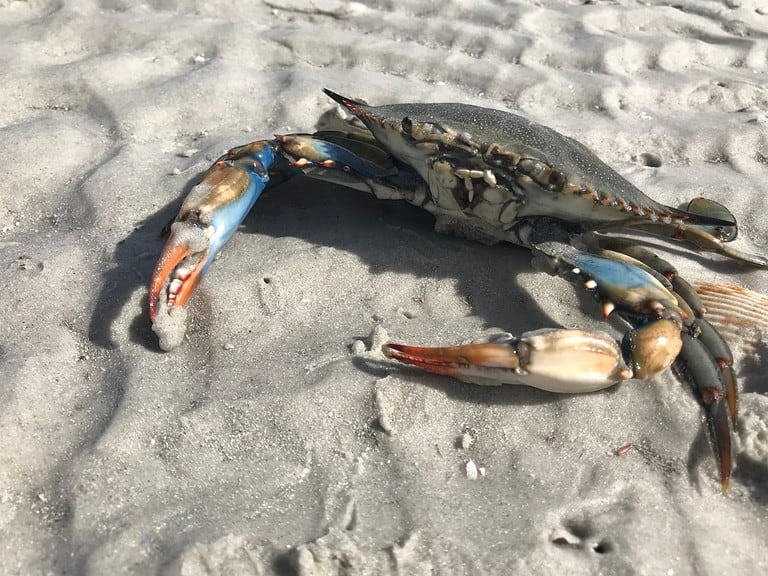
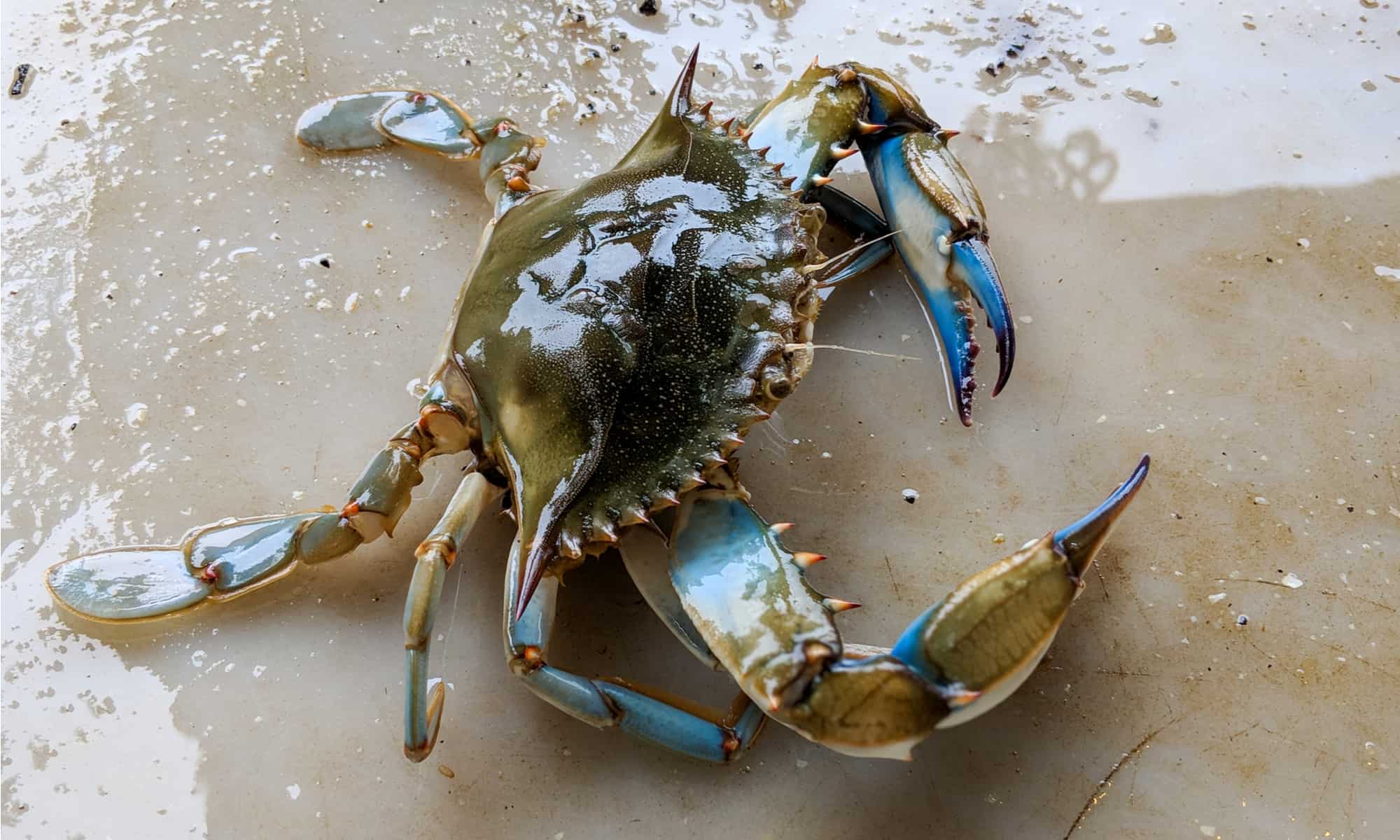
Known for its blue-tipped claws and flattened body, the blue crab is well-suited for life in shallow, brackish water. Its scientific name, Callinectes sapidus, translates roughly to “savory swimmer.” This name encapsulates its active movement through the water and its long-standing role as food.
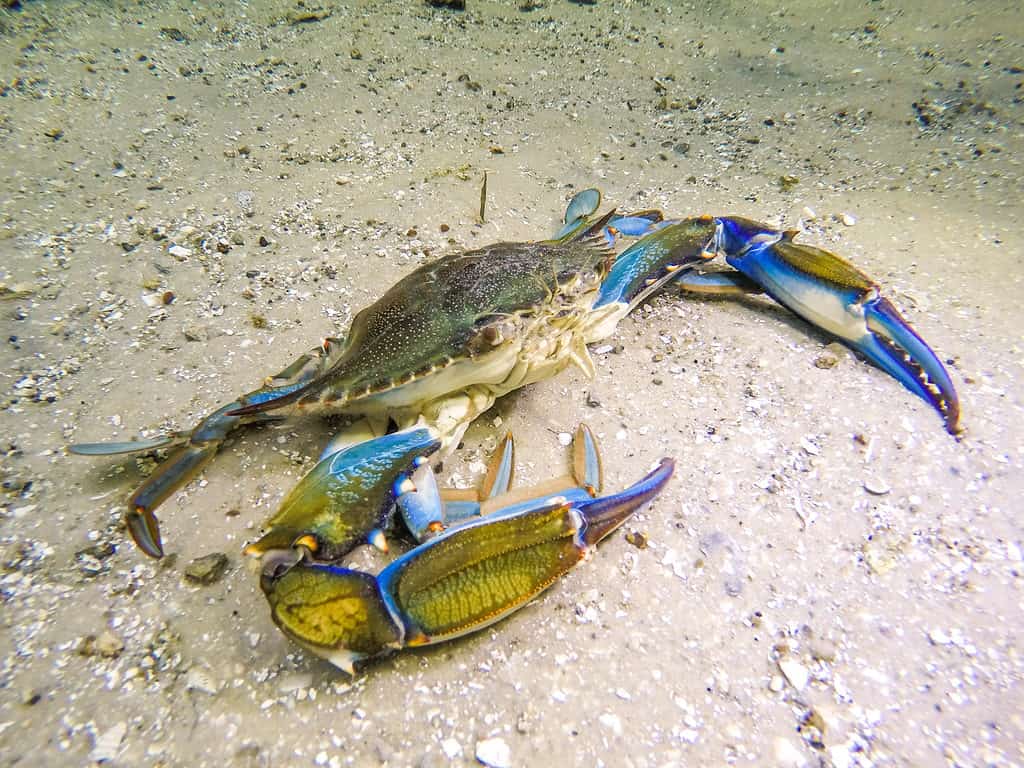
The blue crab (Callinectes sapidus) is adapted to shallow, brackish habitats, where it plays a central role in the food web as both predator and prey.
©Jen Helton/Shutterstock.com
Blue crabs are opportunistic predators that feed on clams, worms, small fish, and other crustaceans. At the same time, they serve as prey for striped bass, red drum, and wading birds. This position near the center of the food web makes the species sensitive to changes in water quality and habitat. Population shifts often reflect broader conditions within the Chesapeake Bay ecosystem.
Habitat Within the Chesapeake Bay
Chesapeake Bay forms one of the largest estuaries in North America. Its mix of fresh and salt water creates a range of habitats that blue crabs use throughout their lives. Adults tolerate wide swings in temperature and salinity, allowing them to move between rivers, open bay waters, and deeper channels as conditions change. Female crabs migrate toward saltier waters near the bay’s mouth to release eggs. The larvae drift in coastal currents before returning inland as juveniles. Shallow grass beds and muddy creeks provide shelter during these early stages, making habitat protection essential for sustaining Maryland’s crab population.
Early Use by Indigenous Communities
Long before European settlement, Native peoples around the Chesapeake harvested blue crabs as part of a seasonal diet. Archaeological sites show crab shells mixed with other food remains, indicating regular use rather than occasional consumption.
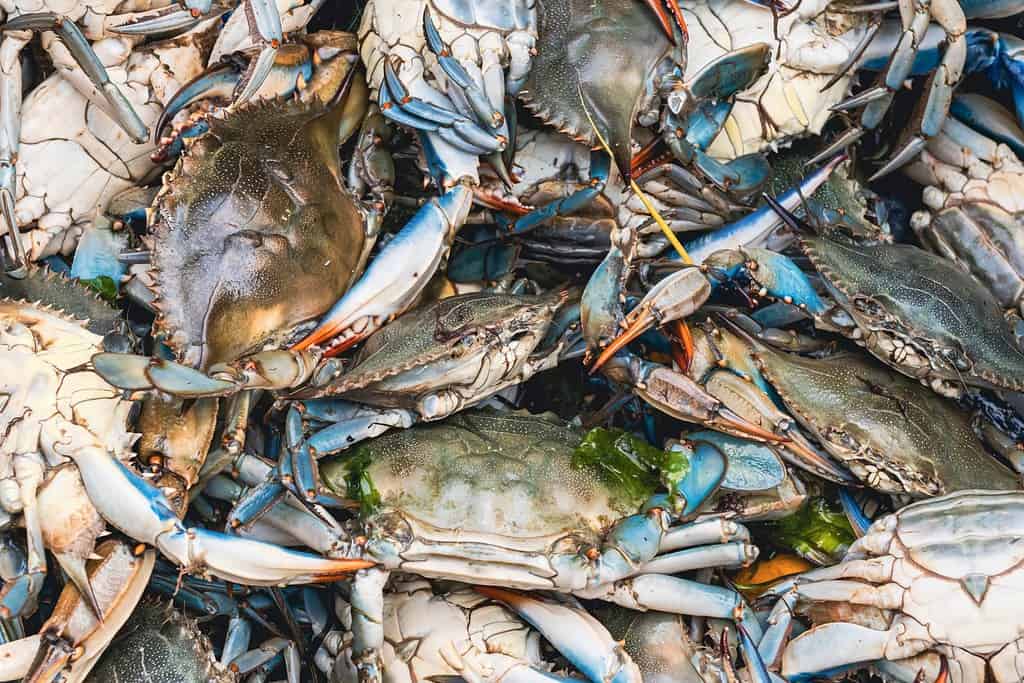
Blue crabs harvested for food began with Native peoples long before European settlement.
©Marco Lissoni/Shutterstock.com
Groups such as the Piscataway and Powhatan likely gathered crabs by hand or with simple traps in shallow waters. These practices fit well with tidal rhythms and local geography. Knowledge about when and where crabs appeared passed through generations. This long relationship between people and crabs established patterns of use that later settlers would adopt and expand, tying the species to human life along the bay for hundreds of years.
Adoption During the Colonial Period
When English colonists arrived in the seventeenth century, they quickly incorporated blue crabs into their diets. They learned local harvesting methods and added crab dishes to early American cooking traditions. Written accounts from the colonial era mention crabs as a common coastal food, especially during warmer months. As towns grew, small-scale trade developed around seafood, including crabs. Over time, techniques improved, and harvests increased. What began as local subsistence gradually shifted toward market-based fishing. This transition laid the foundation for the commercial crab industry that would later shape Maryland’s economy and reinforce the crab’s cultural importance.
Growth of a Commercial Fishery
By the late nineteenth century, blue crabbing had become a major industry in Maryland largely because of the crab’s reputation as an exceptional food. Compared with other crabs, blue crab meat is prized for its balance: sweet without being heavy, rich without being greasy, and delicate enough to stand on its own rather than relying on butter or sauces. This flavor made it especially well-suited to regional dishes like crab cakes and soups, where the crab itself is meant to be the centerpiece. As demand grew, watermen adopted trotlines and later wire crab pots to harvest large numbers during peak seasons, and in some years statewide landings reached tens of millions of pounds.
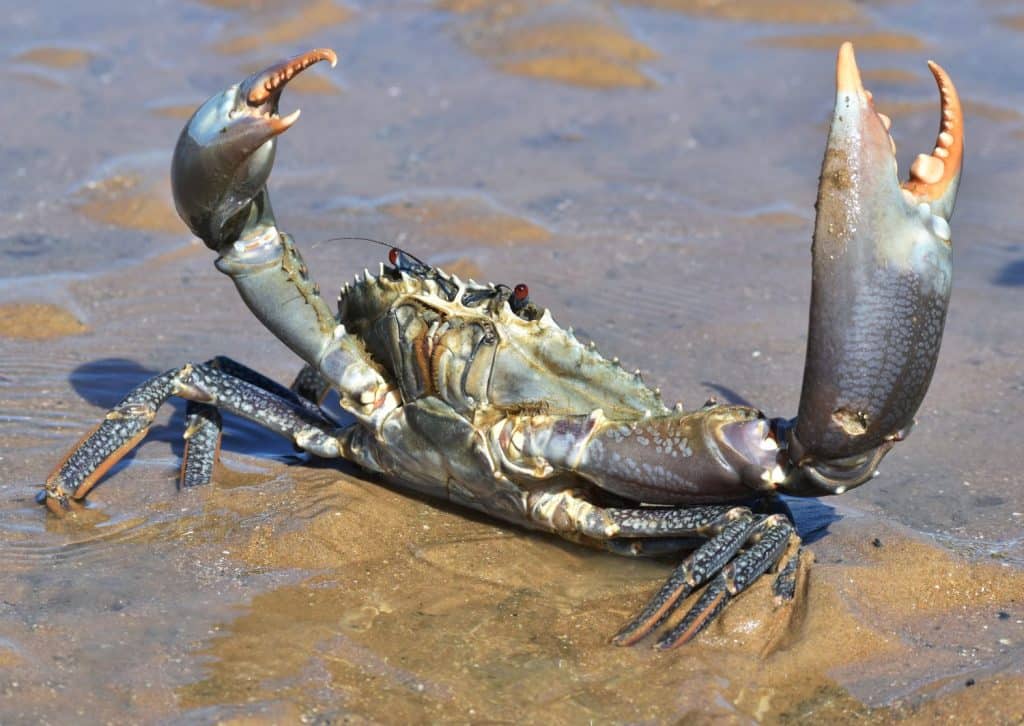
Blue crabs are the foundation of the Chesapeake Bay’s most valuable commercial fishery.
©Rheanna Brett/Shutterstock.com
Even today, blue crabs remain the most valuable commercial fishery in the Chesapeake Bay by dockside value. The industry supported processing plants, boatyards, and equipment suppliers, many located in small waterfront towns. Because family income often depended on seasonal crab harvests, fluctuations in crab numbers affected entire communities, strengthening public interest in management and conservation.
Cultural Traditions Around the Table
Beyond economics and taste, blue crabs hold a strong place in daily life and social customs for people living around the Bay. The traditional crab feast centers on shared effort rather than quick eating. Friends and relatives gather around long tables covered with paper, working slowly through steamed crabs seasoned with spices. Conversation becomes part of the meal, and the pace encourages lingering. These gatherings appear at family reunions, church events, and neighborhood celebrations. Over time, the image of the blue crab spread into art, clothing, and public signage. The species became a shorthand for Maryland itself, recognized far beyond the state’s borders.
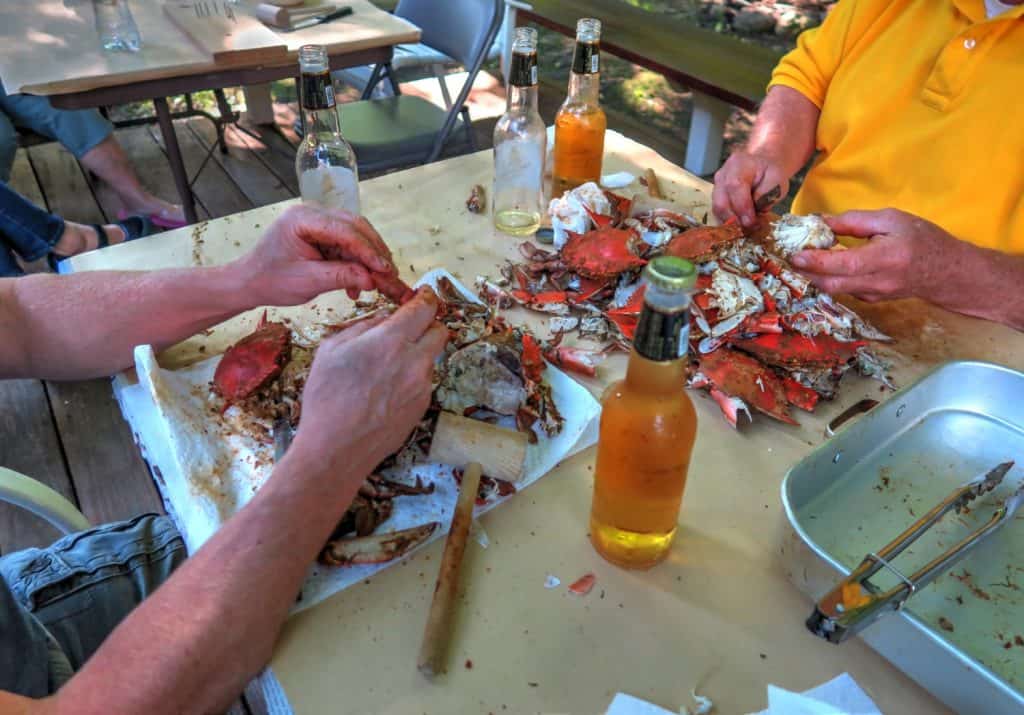
Crab feasts are a messy and delicious part of Maryland culture.
©Lynne Neuman/Shutterstock.com
Recognition Through State Law
In 1989, the Maryland General Assembly passed legislation designating the blue crab as the official state crustacean. The law, enacted as Chapter 724 of the Acts of 1989, moved through the legislature with little controversy, reflecting broad agreement rather than debate. By that time, the blue crab was already widely accepted as a defining symbol of Maryland because of its deep ties to working watermen, local food traditions, and the Chesapeake Bay economy. Lawmakers faced no serious opposition or rival candidates, and the measure was seen as a formal recognition of an identity the state already embraced.
Management and Conservation Efforts
The timing also aligned with renewed efforts to restore the bay and protect its living resources, reinforcing the connection between symbolism and responsibility. During the twentieth century, concerns grew about over-harvesting and habitat loss as scientific assessments showed that heavy fishing pressure and declining water quality threatened blue crab populations.
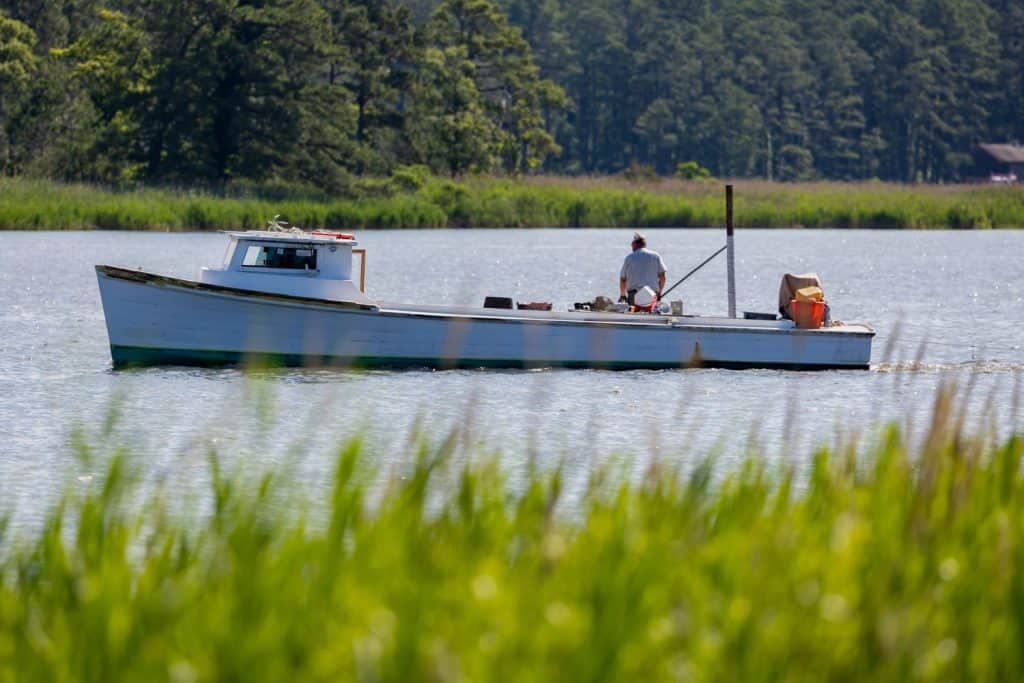
Crabbing boats like this have supported Bay residents for generations.
©Wirestock Creators/Shutterstock.com
In response, Maryland expanded conservation and management efforts in cooperation with neighboring states through regional bodies such as the Chesapeake Bay Commission. Harvest limits, seasonal closures, and size restrictions were introduced. This was supported by a Bi-State Blue Crab Advisory Committee that helped coordinate policy between Maryland and Virginia. These measures aimed to balance economic dependence on the fishery with long-term sustainability.
Experiencing Blue Crabs For Yourself
One of the easiest and most reliable places to see live blue crabs is the National Aquarium in Baltimore. The aquarium features Chesapeake Bay–focused exhibits. There are outdoor wetland habitats along the Inner Harbor where blue crabs and other native species are often visible. Rather than being presented as isolated specimens, the crabs are shown as part of a larger estuarine ecosystem, helping visitors understand how they interact with grasses, fish, and changing water conditions. This setting makes the aquarium especially useful for learning how blue crabs live and why bay conservation matters.
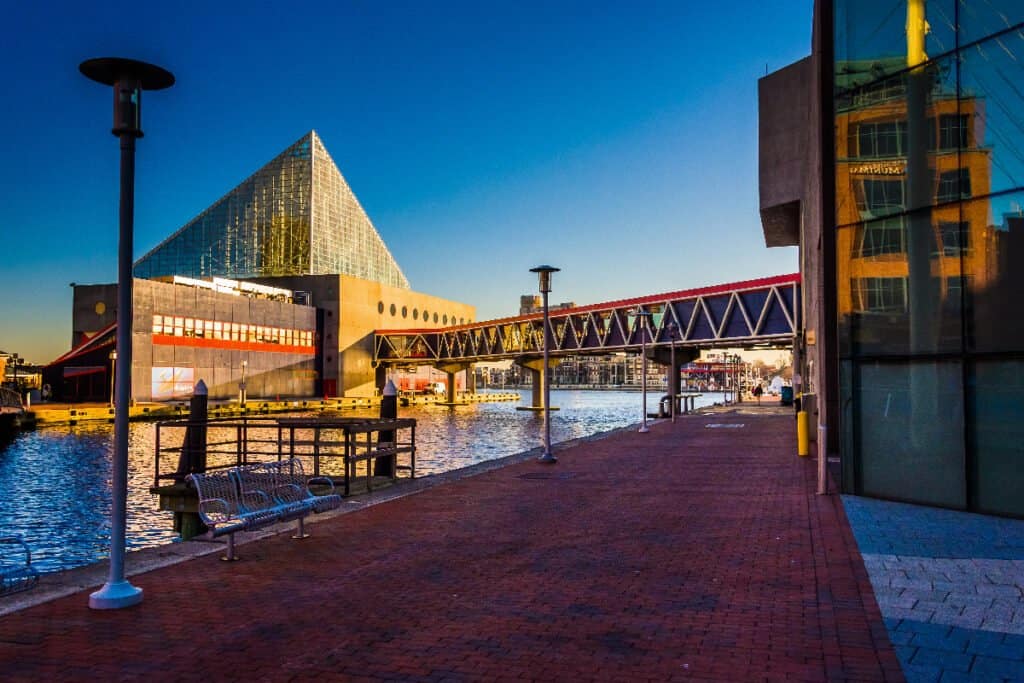
The National Aquarium in Baltimore is a good place to get a good look at living blue crabs.
©ESB Professional/Shutterstock.com
For a more natural experience, blue crabs can also be seen in the wild along the Chesapeake Bay and its tributaries, particularly in shallow tidal creeks, marsh edges, and sandy shorelines. Places such as Sandy Point State Park and other public access areas around the bay give visitors a chance to spot crabs moving through eelgrass beds or scuttling along the bottom at low tide.
Observing blue crabs does not require commercial fishing access. Kayakers and anglers often spot them in shallow water near docks or grass beds during summer. Public piers and boardwalks along the Eastern Shore and western bay tributaries offer opportunities to watch crabs moving along the bottom. For those interested in harvest, in Maryland, recreational crabbing with hand lines or dip nets does not require a license, but a license is required for using traps such as crab pots or trotlines in designated areas.
A Living Connection Between Past and Future
The blue crab earned its place as Maryland’s state crustacean because it bridges history, economy, and ecology. From Indigenous harvests to modern management plans, the species reflects changing relationships between people and the bay. Its presence at work sites and dinner tables keeps environmental issues close to home. As long as Marylanders continue to value the waters that sustain blue crabs, the symbol remains active rather than symbolic alone. The crab’s story shows how a single species can carry lessons about stewardship, cooperation, and the costs of neglect across generations.