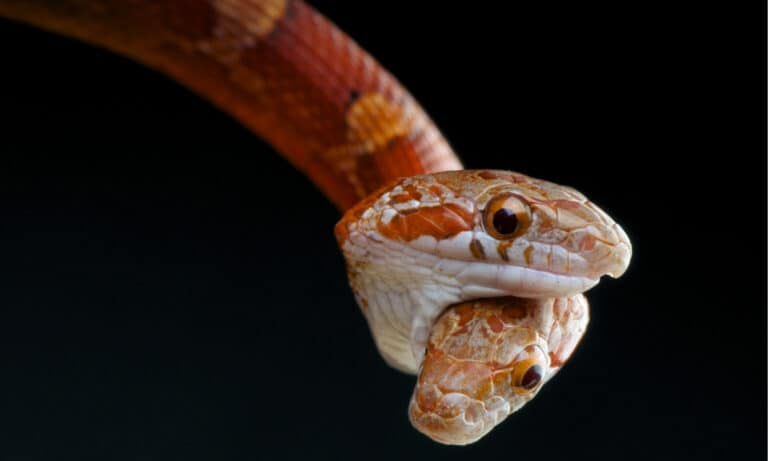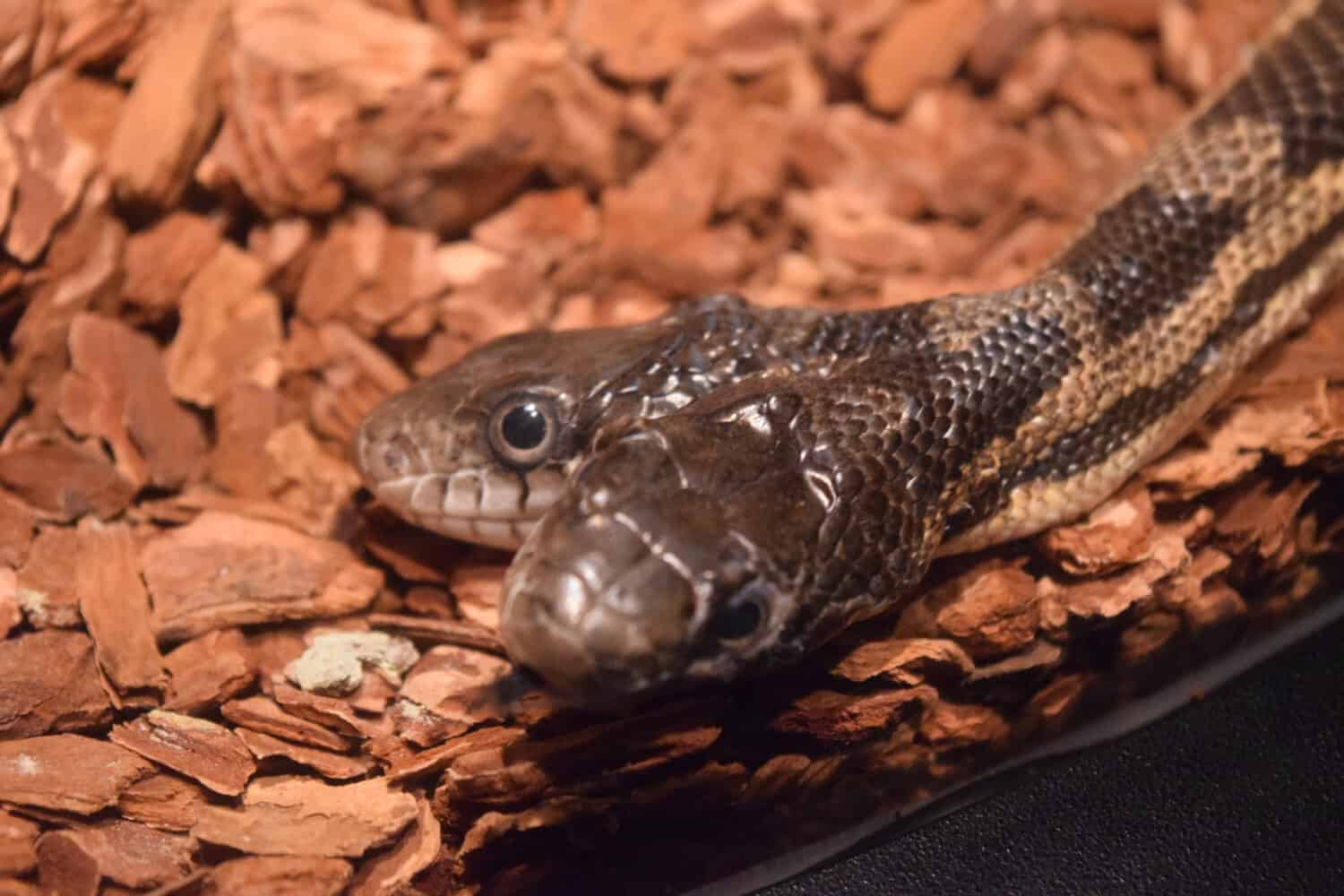

Pancho and Lefty. The names sound like something out of an old Western movie! However, they’re the names of each head of a two-headed western rat snake at the Cameron Park Zoo in Waco, Texas, after more than two years off exhibit.
In 2016, a family outside of Waco, Texas, spotted the unusual serpent in their yard. After capturing the confused creature, they donated him to the Cameron Park Zoo.
Two-headed animals don’t often survive long in nature. In many cases, they have two brains that have conflicting ideas on which way to go next! Sometimes, they have difficulty feeding because of problems with how some of the internal parts grew before they were born or hatched.
Even though two heads are usually better than one, this is kind of an exception. However cool-looing a two-headed western rat snake is, disagreements between the two heads often lead to the body getting stuck on tree branches and other obstacles.
So, in February 2021, when keepers discovered an injury on the snake’s left neck, they took him off from exhibit. Because of a snake’s skin design, they’re often more prone to re-injuring themselves before they can completely heal. To prevent this and make sure he was completely healed, keepers and vets kept a very close eye on the wound, keeping it clean to prevent infection.
Finally, after over two years of special care, the special little reptile went back on display.
Two-Headed Western Rat Snake Breeding: How Does it Happen?
Perhaps better described as conjoined twins, two headed snakes happen more frequently than you would expect! Just like mammalian species, sometimes the egg splits after it’s fertilized, creating an identical twin. However, when it splits is what determines whether and where the twins are connected. The later it splits, the more of their bodies stay together.
Breeders see twin snakes fairly regularly. Where twin birds would have great difficulty surviving, a snake egg’s softer shell and limbless inhabitants make their survival easier.
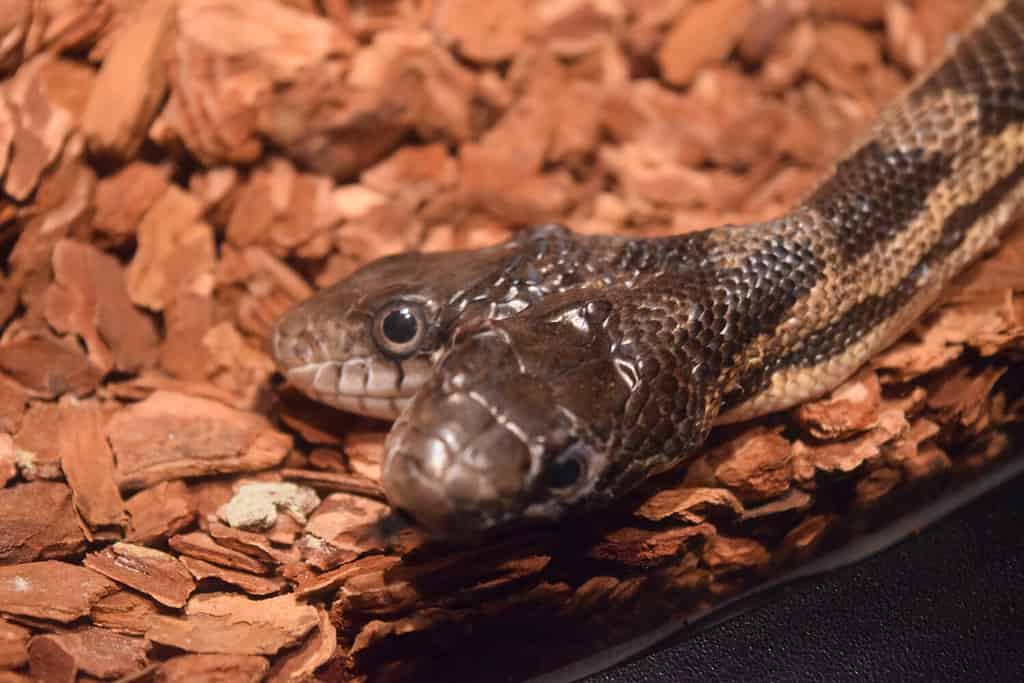
Animals with two heads happen more than you would expect.
©Amare Marketing Group/Shutterstock.com
Where Do Western Rat Snakes Live?
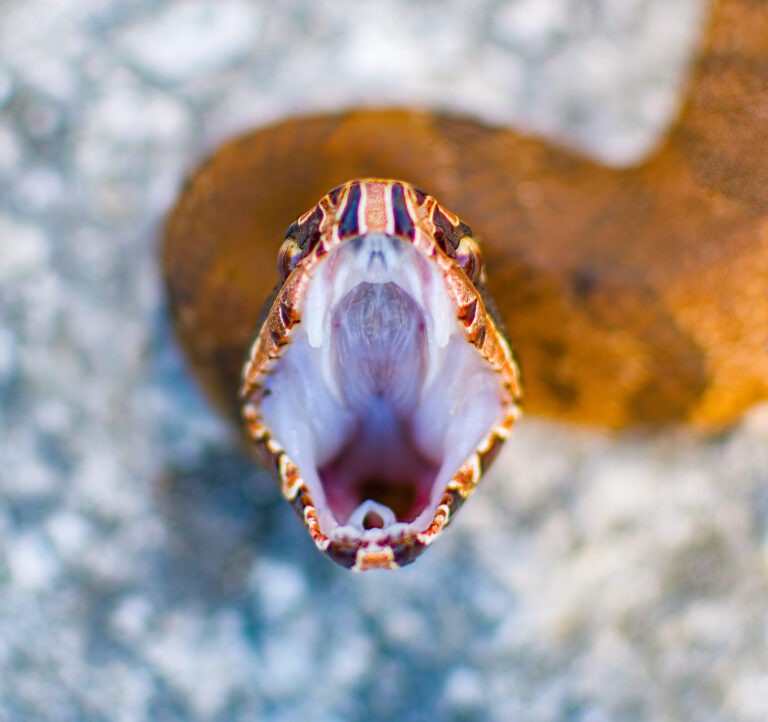
Western rat snakes are native to the United States, from Texas to Wisconsin, east to the Mississippi River. They’re common throughout most of their range and have no trouble living right alongside people in suburban areas. Western rat snakes are in wooded and open areas, wherever they can find food. These snakes are excellent climbers that can slither through the trees and head right into your garage rafters after prey.
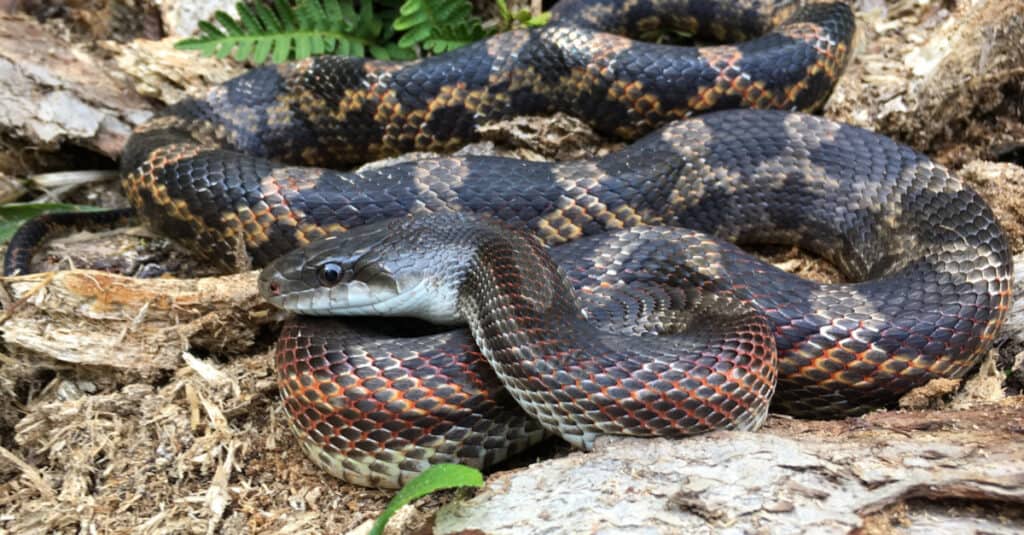
Western rat snakes are adventurous and excellent climbers. These snakes often find themselves in odd predicaments but are fantastic rodent control!
©Joe Farah/Shutterstock.com
What Do Western Rat Snakes Normally Eat?
These mainly eat are happy to eat any warm-blooded prey, including birds and rodents, plus the occasional lizard. They’re active, diurnal snakes that eat more frequently than other less active species, so you don’t find them coiled up sleeping as often as you see them cruising.