
Quick Take
- Moving six giraffes required a method so unconventional that even experienced wildlife rangers had to improvise, and the Nile crossing was only half the challenge. See the Nile crossing →
- The entire population of Nubian giraffes in this region faced a threat most people wouldn't think to worry about. A river crossing turned out to be the answer. How the river crossing helped →
- Hippos aren't transported in water, rhinos aren't always sedated for the journey, and adult giraffes can almost never fly. Large-animal transport breaks every assumption you'd make. Explore large-animal transport →
- A few giraffes licked the crew during the four-hour drive, and what that behavior actually signals might surprise you. Read about the four-hour drive →
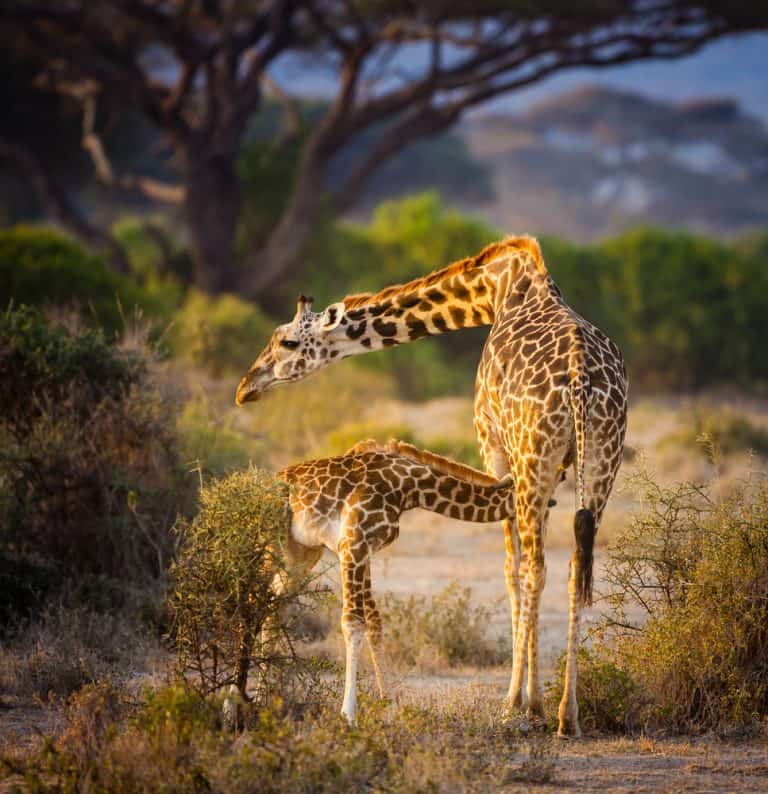
How do you move six Giraffes? Very carefully! This footage comes from the 2016 PBS Nature documentary Giraffes: Africa’s Gentle Giants. It follows a wildlife team transporting six giraffes in a specially built, open-topped vehicle. The wild animals had been captured under veterinary supervision and held briefly in an enclosure called a boma before the trip. Rangers covered the truck with leafy branches, giving the giraffes something to browse on and a welcome distraction during the drive.
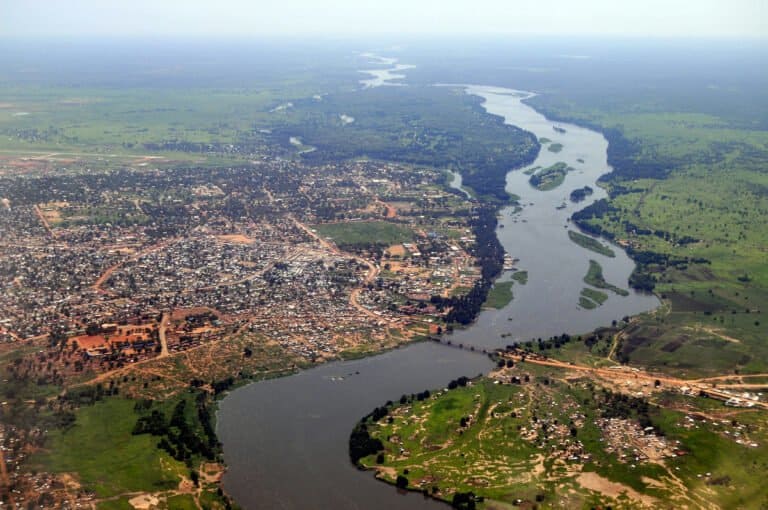
The critically endangered Nubian giraffes were moved from the northern bank of the Victoria Nile to the southern sector of Murchison Falls National Park in Uganda. The Uganda Wildlife Authority and the Giraffe Conservation Foundation moved 18 giraffes across the river during Operation Twiga I in January 2016, establishing a second free-ranging population inside the park. This reduced the risk of keeping nearly the entire population in one area threatened by poaching and planned oil development. During the slow drive, the video cuts to children and park wildlife—including a monkey and a distant elephant—watching the unusually tall convoy go by.
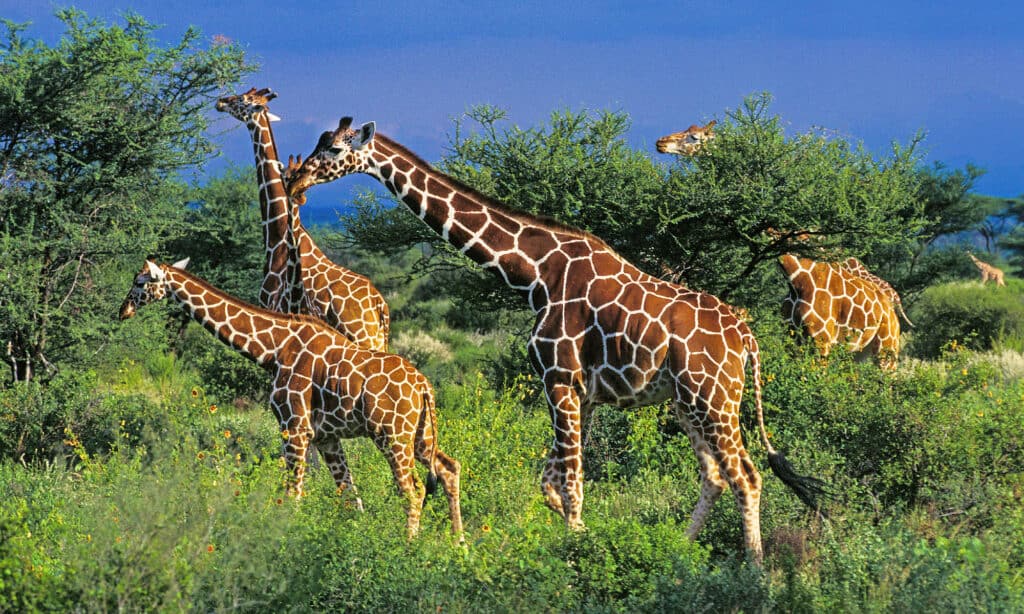
Habitat destruction is forcing giraffes to permanently move from certain areas!
©iStock.com/slowmotiongli
Six Giraffes Cross the Nile by Ferry
Eight members of the team ride alongside the giraffes to keep a constant watch on them. Bars placed between the animals help them remain upright as the truck travels for four slow hours. A few of the giraffes lick nearby crew members with their long tongues. Amusing, certainly, although there is no reason to interpret the licks as a formal thank-you. When the convoy reaches a calmer stretch of the Victoria Nile, the entire truck is driven onto a ferry.
The six giraffes remain standing as the ferry carries them across the river. Once the truck reaches the southern bank, the crew removes the dividing bars, opens the vehicle, and gives the animals room to leave. All six make it safely into their new habitat. Another 19 Nubian giraffes were moved across the Nile in 2017, bringing the two phases of the project to 37 animals. Later peer-reviewed monitoring found high survival and subsequent population growth among Uganda’s translocated giraffe populations.
How Are Other Large Animals Transported?
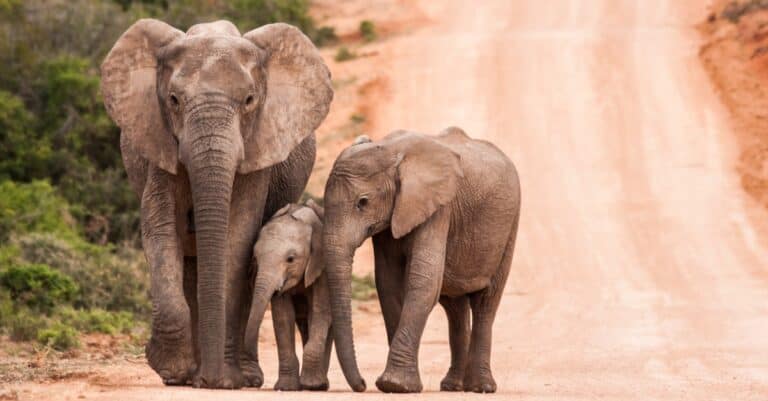
There is no one-size-fits-all moving van for elephants, rhinos, hippos, and giraffes. The animal’s species, size, health, temperament, destination, and length of the journey all affect the plan. For African elephants, conservation guidelines call for purpose-built, reinforced transport crates with secure doors, ventilation, drainage, non-slip flooring, and access for veterinary monitoring. The vehicle must be able to handle the weight and the planned route, while the driver needs to take rough roads and sudden movements seriously.
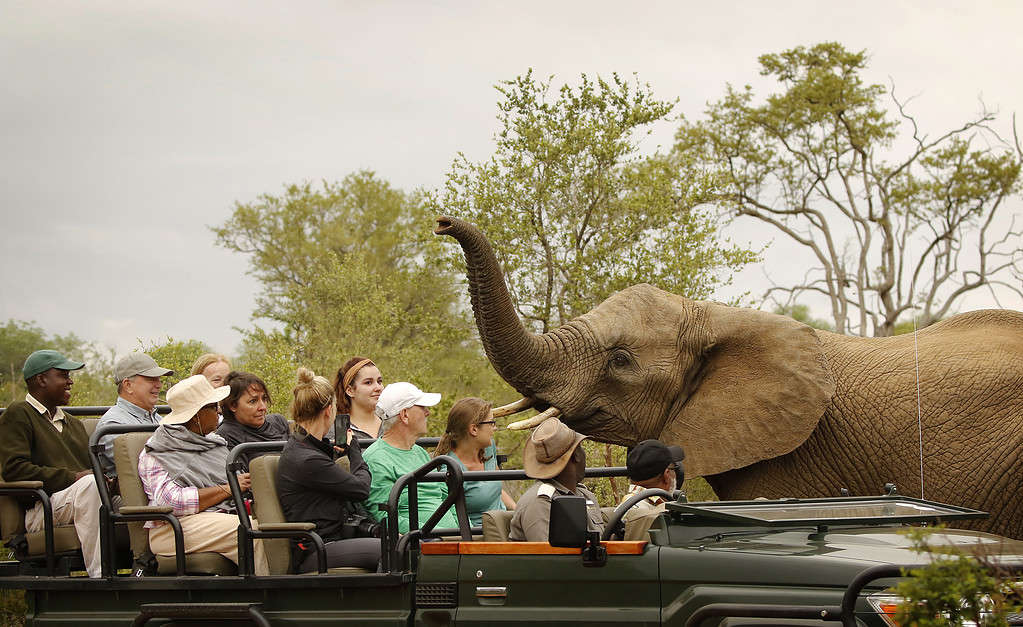
Seeing how this huge elephant dwarfs a safari jeep underlines just how big and well built a truck transporting it would need to be!
©jacobeukman/iStock via Getty Images
Rhinos are generally moved in strong individual crates carried by trucks. Depending on the operation, a rhino may be chemically immobilized for examination and loading, then given an antidote so it can stand during the journey. Capture teams may cover the animal’s eyes while it is being handled to reduce visual stimulation and help keep it calm. Cranes, hydraulic lifting arms, or winches are commonly used to place the heavy transport crates onto vehicles.
Hippos are semi-aquatic mammals, but they are not normally transported in water-filled tanks. They travel in heavily reinforced, ventilated crates with secure doors and non-slip, leakproof flooring. Their skin must be kept moist, and handlers may shower them during a journey when practical. Careful temperature control is also important because overheating and dehydration can become serious problems.
Giraffes usually travel over land in tall, purpose-built trucks or crates, with their route checked in advance for bridges, power lines, trees, and other overhead hazards. Air transport is possible for young giraffes that are short enough to fit safely inside a suitable aircraft, but the height of an adult generally rules it out. For a move like the one inside Murchison Falls National Park, an open-topped vehicle and a ferry were the practical answer. Not exactly simple, but considerably easier than finding a giraffe-sized airplane.