










Quick Take
- Rhino horns aren't made of what most people think they are, and learning the truth changes how you understand why poachers want them so badly. Horn composition explained →
- A single political decision decades ago triggered a poaching crisis that nearly wiped out an entire rhino species, and demand has never fully recovered since. Poaching crisis history →
- Despite roaming most of Africa and Asia historically, the overwhelming majority of the world's rhinos now live in just one country. Where rhinos live now →
- One rhino species was trimmed with a chainsaw, which is actually a sign of something going right for conservation. Conservation success stories →
The rhinoceros is an animal that was once found in Southeast Asia and across Africa. Today, three rhino species are listed as “Critically Endangered” and are clinging to small pockets of habitat.
With its distinctive horn and massive size, the rhino is one of the most remarkable animals on Earth. However, heavy poaching for its horn threatens several rhino species today.

Classification and Scientific Name
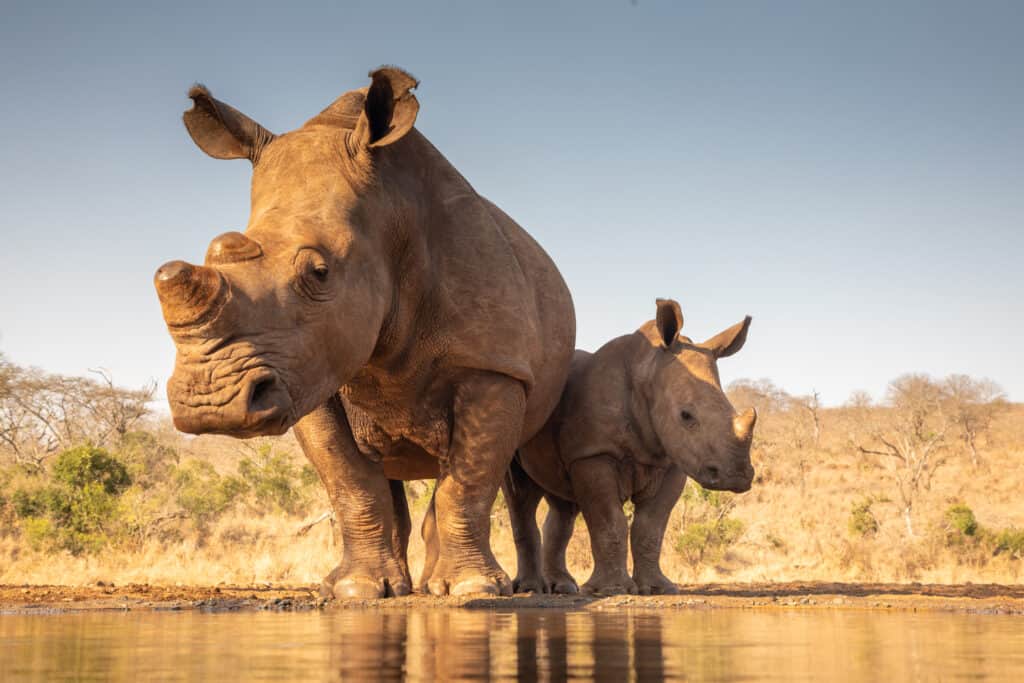
The name rhinoceros is derived from the Greek words that mean “Nose-horn”: Rhinocerotidae
©iStock.com/PeterVanDam
The name rhinoceros is derived from the Greek words that mean “Nose-horn.” The Rhinocerotidae family has five species with the following scientific names:
- Black Rhinoceros (Diceros bicornis)
- White Rhinoceros (Ceratotherium simum)
- Indian Rhinoceros (Rhinoceros unicornis)
- Sumatran Rhinoceros (Dicerorhinus sumatrensis)
- Javan Rhinoceros (Rhinoceros sondaicus)
Types of Rhino – The 5 Rhino Species
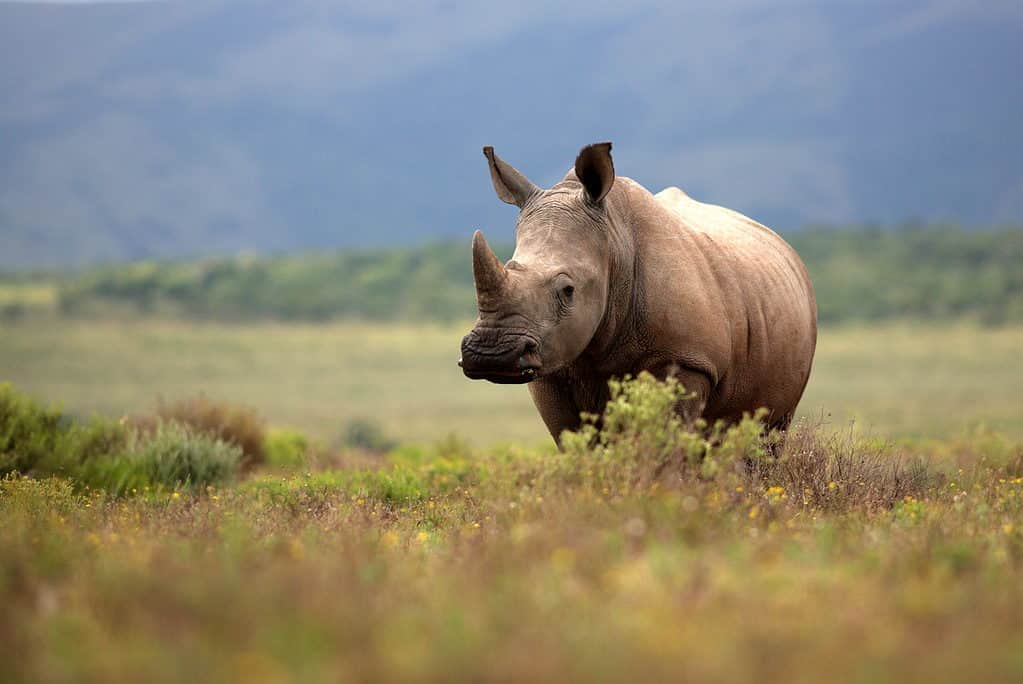
There are five separate species of rhino.
©JONATHAN PLEDGER/Shutterstock.com
There are five separate species of rhino that vary dramatically in size and anatomy. Today, the rhino is an animal that lives across Africa and Asia.
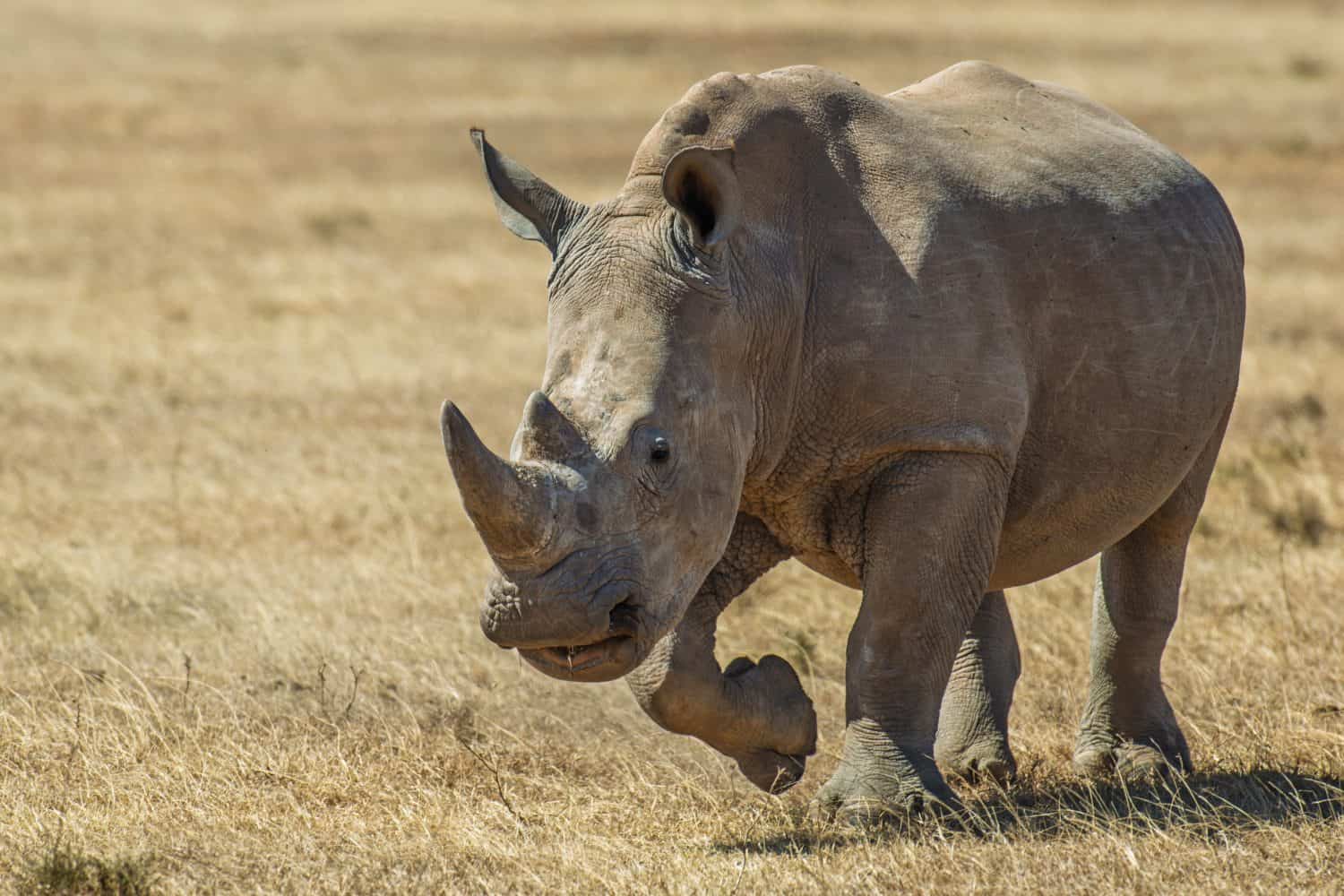
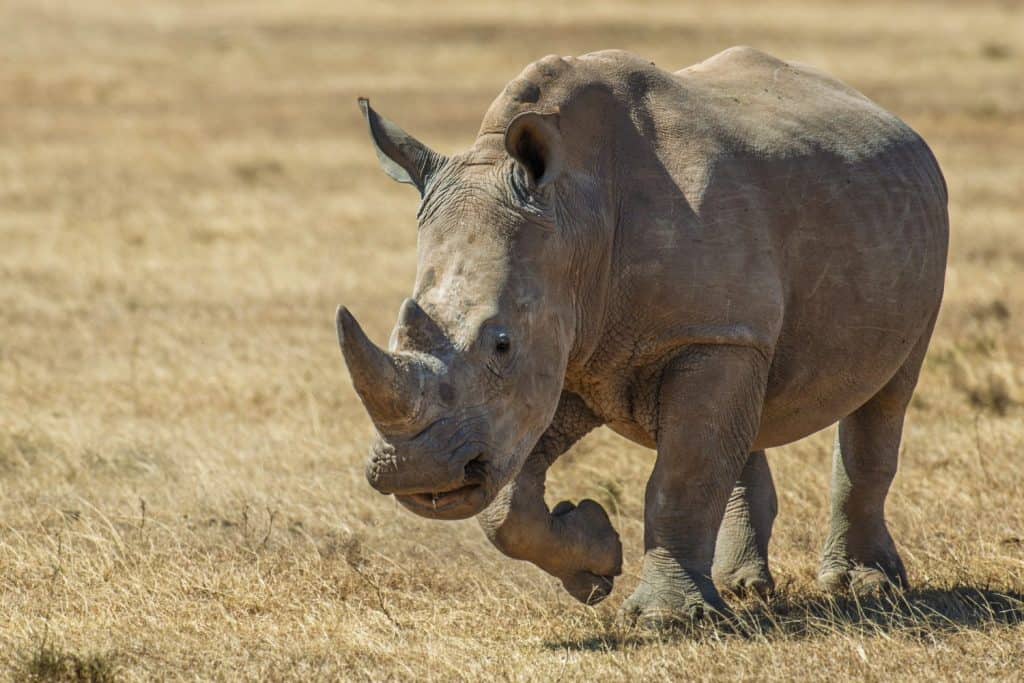
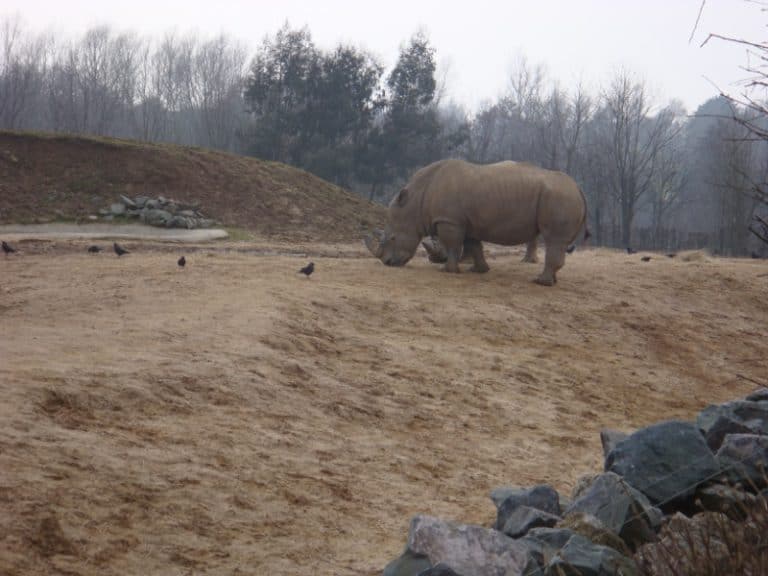
The largest species of rhino, the white rhinoceros, is an animal that is native to Africa. While the Southern white rhino has rebounded from the brink of extinction today, the Northern white rhino is now functionally extinct after the last male died in 2018.
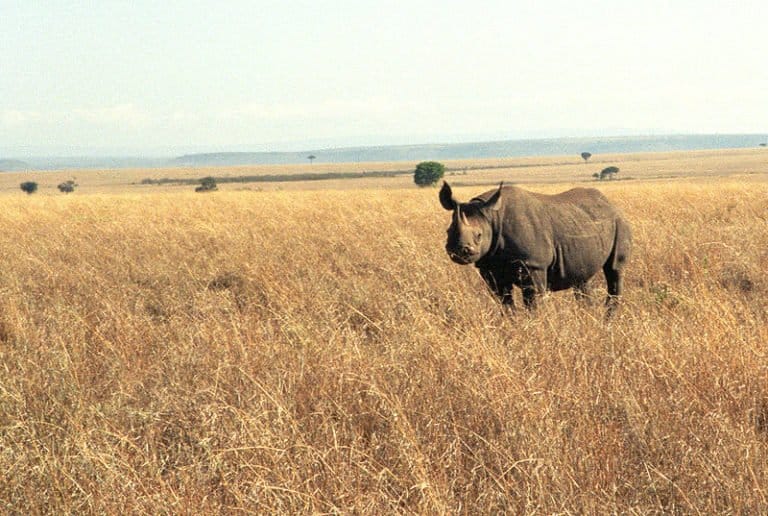
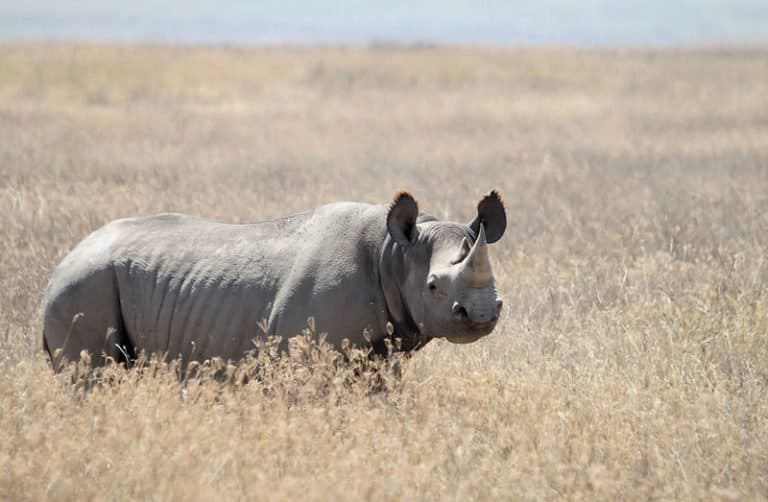
Known for its triangular upper lip, the black rhinoceros is an animal that once roamed across nearly all of sub-Saharan Africa. However, today it’s critically endangered.
The largest rhinoceros native to Asia, the Indian rhinoceros has a range that extends across the foothills of the Indian subcontinent. The Indian rhinoceros has a distinct appearance with a single horn and skin that has the appearance of “body armor.”
Once found from India to the island of Borneo, today the Sumatran rhinoceros is critically endangered and located in just a few isolated pockets deep inside jungles.
While the Sumatran rhinoceros can still weigh up to 1,000 kilograms (2,200 pounds), it’s the smallest species of rhinoceros in the world. Sumatran rhinos are known for their prehistoric appearance, with hair that can cover their entire bodies.
Once roaming across Southeast Asia, the Javan rhinoceros today is limited to a single nature preserve in Indonesia named Ujung Kulon National Park.
Appearance and Behavior
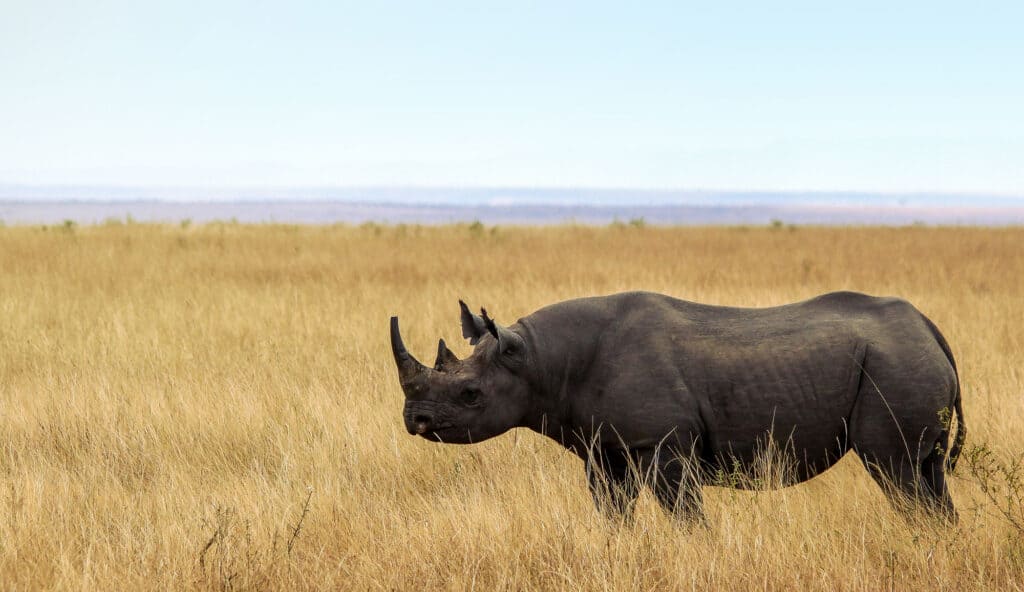
Rhinos are the second largest land animal, behind only the elephant.
©iStock.com/Black Rhinoceros, Rhinoceros, Savannah, Tanzania, Animal
Rhinos are the second largest land animal, behind only the elephant. The species first evolved during the Eocene — an era that ended about 33.9 million years ago — and are one of the last surviving “megafauna.” That is, animals that are massive by today’s standards.
They have a robust, cylindrical body with a large head, relatively short legs, and a short tail. The characteristic feature of these animals is a large horn in the middle of their faces; some species have a second, smaller horn.
Rhinos have brilliant hearing and a keen sense of smell, but are well known for having extremely poor eyesight. They are usually grey, black, or brown (though one species is called the “white rhino”; this has nothing to do with its color).
Rhinos generally live a solitary lifestyle. Black rhinos will more aggressively defend their territory, while Indian and Javan rhinos have more loosely defined territory that may overlap. Sumatran rhinos, which live in more dense forests and vegetation, are diligent about marking trails with feces and urine.
Groups of rhinos
While most rhino species are solitary, the white rhino is the most social of all species. Groups of a dozen or more white rhinos will often form. This behavior is particularly common among females with calves, as it can help mothers protect their offspring at a time they face greater threats from predators.
A group of rhinos is called a “crash.”
Weight
Rhino species vary widely in length and weight but average about 1.5 tons (1,360 kg) in weight as adults. The largest species, the white rhino, can weigh up to 3,600 kg (7,920 pounds), which makes it nearly four times the weight of the smaller Sumatran rhinoceros on average.
- White rhino: 1,440 – 3,600 kg (3,168 – 7,920 lbs)
- Black rhino: 800 -1,400 kg (1,800 – 3,100 lbs)
- Indian rhino: 2,200 – 3,000 kg (4,900 – 6,600 lbs)
- Javan rhino: 900 – 2,300 kg (2,000 – 5,100 lbs)
- Sumatran rhino: 500 – 800 kg (1,100 – 1760 lbs)
Rhino Horn
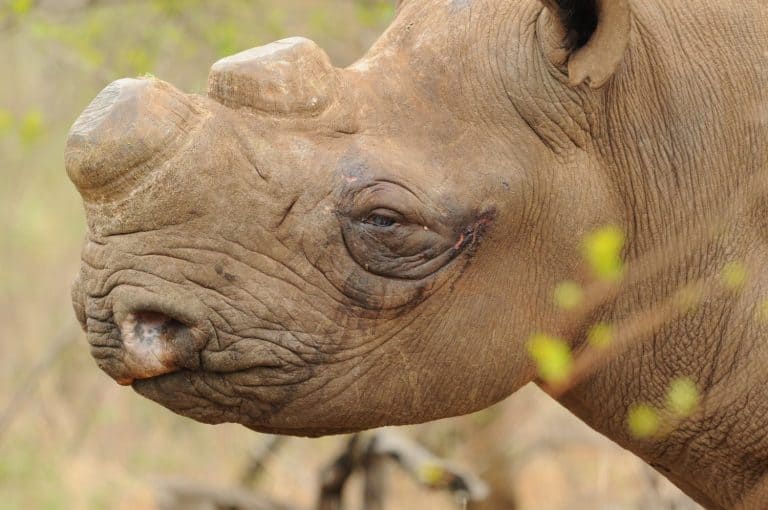
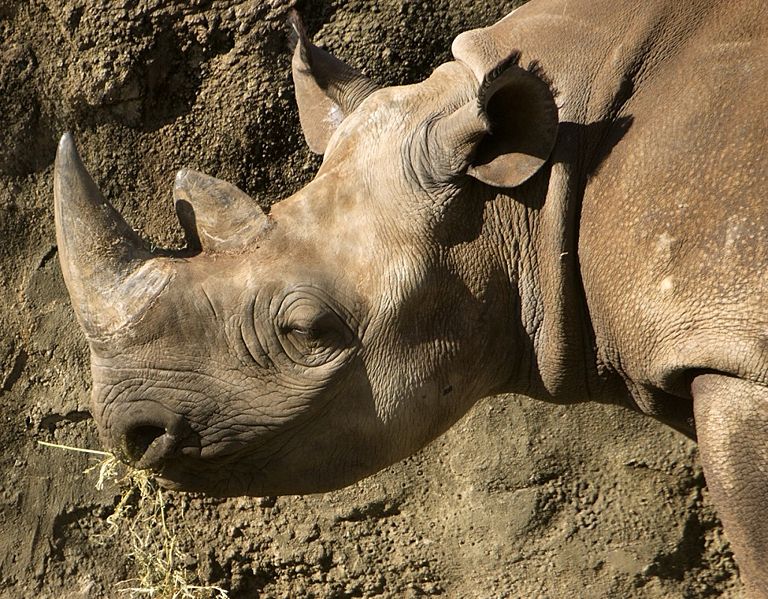
The most notable features of rhinos are the large horns that grow from their heads. The horns of a rhinoceros are made of keratin, the same type of protein that makes up hair and fingernails in most animals, including humans.
Both the African species of rhino and the Sumatran rhinoceros have two horns, while the Indian rhino and Javan rhinoceros have just one horn. Female Javan rhinos are notable in that they often lack a horn or have a smaller “bump” on their nose.
Unfortunately, rhinos face incredible pressure from poaching as their horn is desired for both traditional Chinese medicine and as a status symbol.
In 2006, Dr. Nico van Strien conducted a study on the longest rhino horns by species.
- White rhino: 59 inches (150 cm)
- Black rhino: 51 inches (130 cm)
- Sumatran rhino: 32 inches (81 cm)
- Indian rhino: 23 inches (57 cm)
- Javan rhino: 11 inches (27 cm)
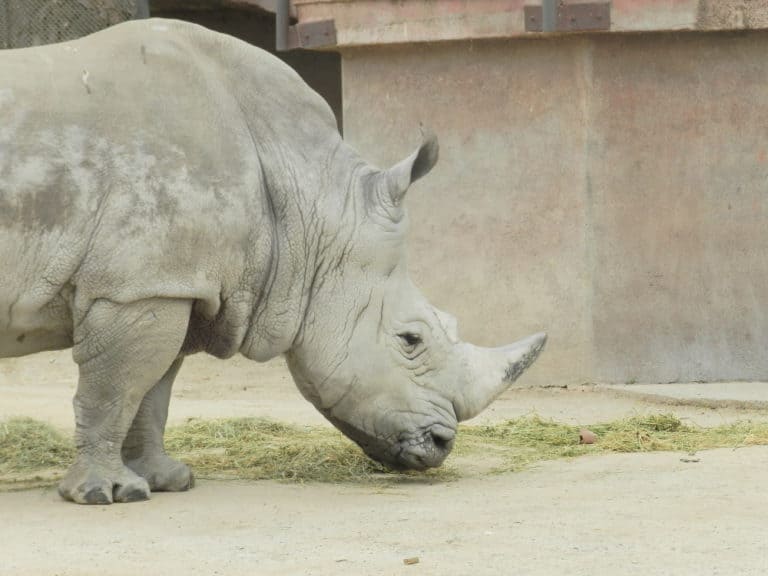
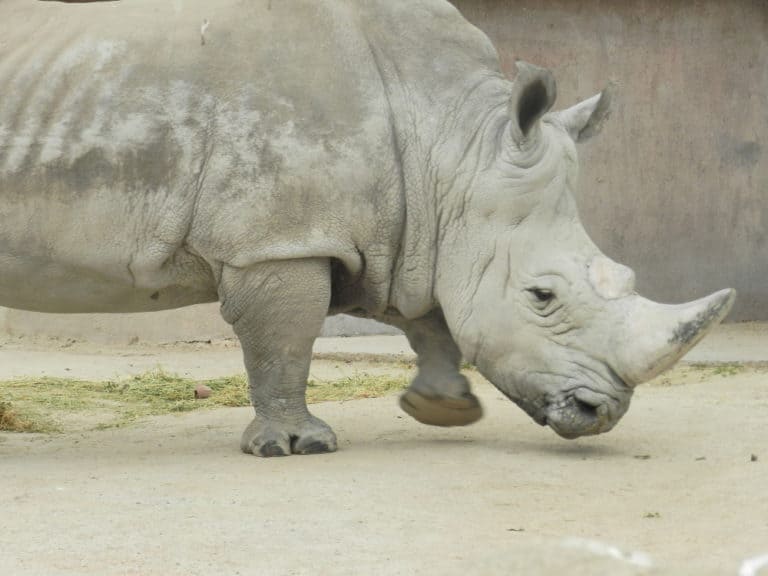
Rhino horns can grow in a variety of shapes. For example, a white rhino held in captivity in Sequim, Washington, had a horn that grew to more than four feet in size and grew parallel to the ground. The horn grew so large it had to be trimmed twice using a chainsaw.
Habitat
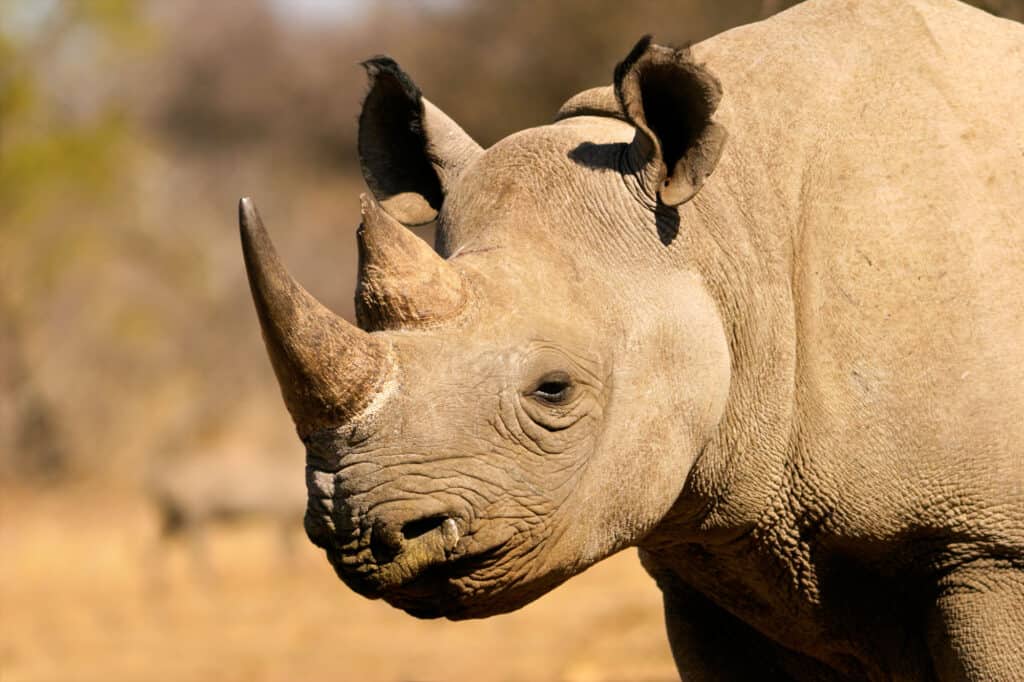
The rhinoceros is generally found in thick forests and savannas where there is plenty of food to eat and lots of cover for the rhino to hide in.
©iStock.com/EcoPic
The rhinoceros is generally found in thick forests and savannas where there is plenty of food to eat and ample cover for the rhino to hide in. Rhinoceroses once had a range that spanned across the majority of Africa and Southeast Asia; however, today their range has been significantly reduced.
In Africa, the rhinoceros’ historical range was on grasslands and savannahs stretching across most of sub-Saharan Africa. Today, while black rhinos can still be found in an area stretching from Ethiopia to South Africa, their populations are limited to smaller pockets on nature preserves and other protected areas.
The Sumatran and Javan rhinos live in denser forests and once saw their range extend across all of Southeast Asia; however, today the Javan rhino can be found in only a single nature preserve while the Sumatran rhino survives in only a few remaining population pockets.
Like other rhino species, the Indian rhinoceros has seen its range dramatically decrease. It lives in tall grasslands and forests near the foothills of the Himalayas mountain range.
Population
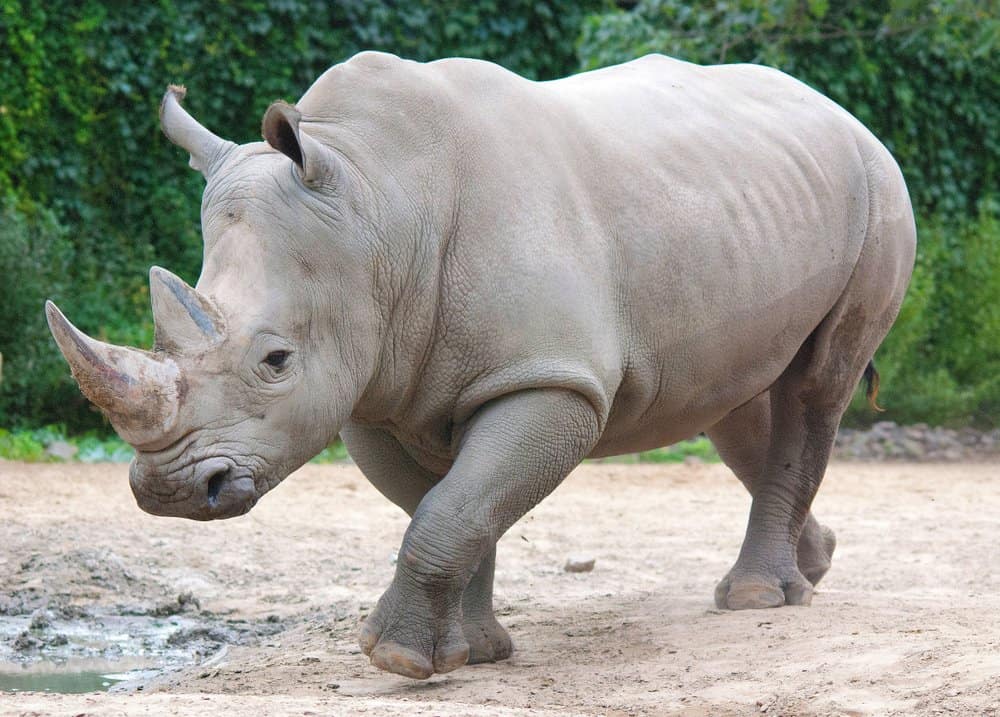
The white rhino is Near Threatened.
©meunierd/Shutterstock.com
Three rhino species — the black, Sumatran, and Javan — are listed as “Critically Endangered,” while the Indian rhinoceros is listed as “Vulnerable,” and the white rhino is “Near Threatened.”
According to the International Rhino Foundation, in 2019 the estimated populations of each species were as follows:
- White rhino: 18,000
- Black rhino: 5,500
- Indian rhino: 3,600
- Sumatran rhino: 80
- Javan rhino: 72
Four out of the five rhino species have seen their populations increase between 2009 and 2019. The lone exception is the Sumatran rhino, which lives in isolated pockets and continues to suffer from poaching. Between 2009 and 2019, it saw its population decrease from an estimated 250 individuals to fewer than 80.
Evolution and Origin
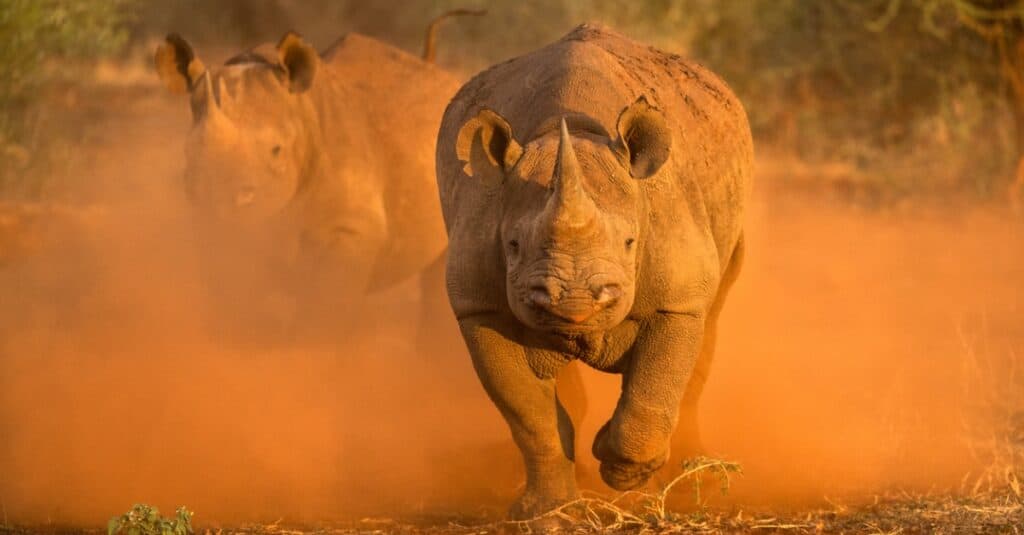
A rhino can gore an adult lion with its horn.
©iStock.com/Udo Kieslich
The rhino has been on Earth for a very long time. The family diverged from the tapir family about 55 to 60 million years ago. The family then evolved into around a hundred different species around the world. Only nine of them survived to the Late Pleistocene.
The species first appeared in the late Eocene in Eurasia. In fact, in contrast to their weight and size today, the earliest rhinos were actually small with a large population. 26 species of small ancient rhinos lived in Eurasia and North America. This was until a wave of extinctions in the middle Oligocene wiped out many of the smaller species.
Extinct Species
No full species of modern rhinoceros has gone extinct; only subspecies have. However, numerous subspecies of rhinos have gone extinct in recent years. Historically, there were three subspecies of the Javan rhino, but only one remains after the last surviving Vietnamese Javan rhino was killed in 2010.
The Sumatran rhino subspecies in Malaysia was declared extinct in November 2019 after the last male and female died that year. The Northern white rhino is now functionally extinct after the last surviving male died in 2018. In 2011, the Western black rhino was declared extinct. There had been no sighting of the subspecies since 2001.
The last rhino species to go extinct was the Woolly rhinoceros (Coelodonta), which is believed to have gone extinct around 8,000 BC.
Predators
Rhinos face few predators in the wild, while juveniles can be attacked by large cats like lions in addition to crocodiles and other larger predators.
Beyond the rhino’s imposing horn and significant size, the species also has a thick skin that serves as a form of natural “body armor.”
The number one threat to rhinos remains poachers. In South Africa alone, 769 rhinos were poached in 2018. Rhino poaching varies by species, with no Javan rhinos having been poached in more than 25 years as of 2019.
Diet: what does the animal eat?
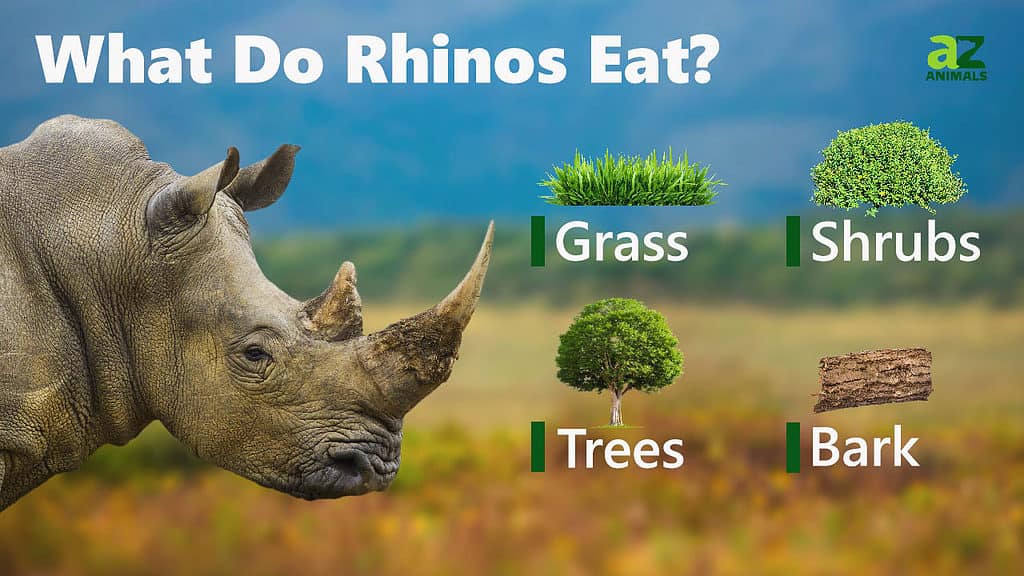
The rhinoceros is a herbivore and eats grasses, leaves, shoots, buds, and fruits to gain the nutrients it needs to grow and survive.
Although the rhino is a herbivore, it is known for its aggressive nature and will often charge toward oncoming predators in order to scare them away. Most rhinoceros individuals that are killed by poachers are caught out when they are quietly drinking from a water hole and therefore drop their guard.
Reproduction and Life Cycles
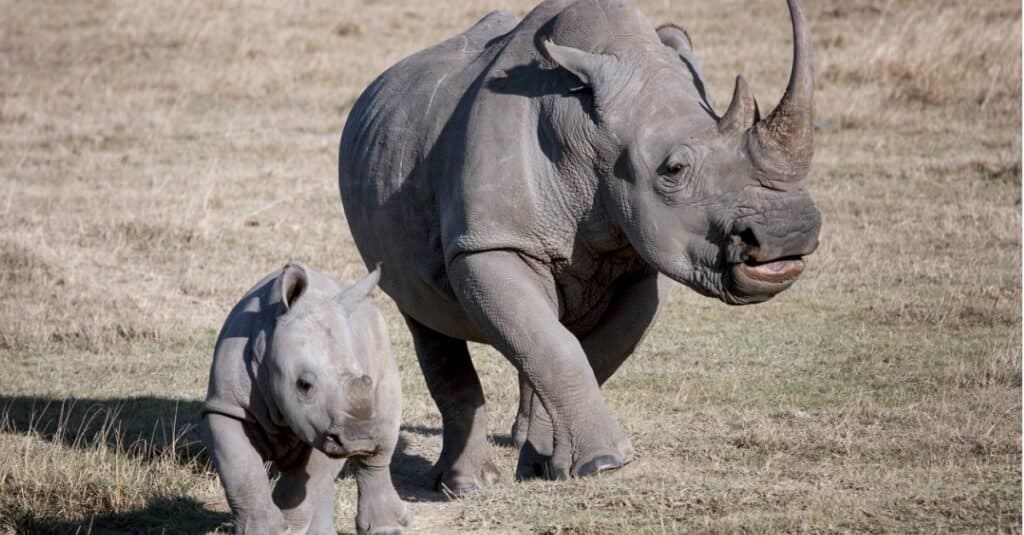
Rhinos are pregnant for about a year and a half.
©iStock.com/robru
Rhinos have one of the longest gestation periods of all animal species at about 450 days. The longest reported captive gestation period was a white rhinoceros that was 548 days of gestation (about 18 months).
This long gestation period means that rhinos typically don’t give birth again for an additional 3 to 5 years. This long gestation period and extended interval between births have made repopulating rhinoceroses an especially challenging problem.
How long do white rhinos live? The oldest white rhino in captivity lived to 55, while the oldest record of a black rhino was 52 years, and the oldest Indian rhino lived to 48. Generally, rhino species can live to be between 35 and 50 years old.
Incredible Rhino Facts
- An “armored” animal. Rhinos have unique skin structures and materials that set them apart from most mammals. Compared to their body size, rhino skin is three times thicker than predicted and contains crosslinked collagen fibers. At its thickest, rhino skin can be about 2 inches (5 cm) thick.
- What’s in a rhino horn? The horn of a rhino is made of hair grown tightly together, while a natural “glue” from glands on the rhino’s nose packs these hairs tightly together. You may have heard that rhino horns are made of the same material as your fingernails; that’s because rhino horns contain keratin tubules, a protein found in hair, skin, and nails.
- Today, 85% of rhinos live in just one country. While rhinos historically roamed across most of sub-Saharan Africa and SE Asia, today an estimated 85% of living rhinos are located in just one country: South Africa.
- From a million black rhinos to 5,500 today. It was estimated that at the beginning of the 20th century, more than a million black rhinos lived across Africa; today their population numbers just 5,500 individuals. While that population loss is staggering, the black rhino population continues to rebound.
- Why did rhino poaching skyrocket? Between 1960 and 1995, 98% of black rhinos were killed by poachers. This upsurge in poaching can be traced to China’s Chairman Mao Zedong, who promoted the return of traditional Chinese medicine, which utilized rhino horns as a cure. Today, strict bans have slowed rhino horn trade in China, while demand in Vietnam has led to a spike in poaching.
- Two of the most critically endangered large mammals in the world. With fewer than 100 individuals each, the Sumatran rhinoceros and Javan rhinoceros are two of the most critically endangered large mammals in the world. While the Javan rhino population has stabilized in recent decades, some estimates believe there could be as few as 30 Sumatran rhinos surviving today.
- There is hope for even the most endangered species. Thanks to incredible conservation efforts, there is hope for rhino species. The population of black rhinos has doubled this century. White rhinoceros populations have rebounded from about 50 rhinos to nearly 20,000 individuals. In addition, the Indian rhino has rebounded from fewer than 100 individuals to a population of about 3,600 today.
- Nearly a quarter of rhinos live on private game reserves. Today, more than 5 million acres of private game reserves house 6,500 rhinos or about ¼ of the entire rhino population.
- Illegal rhino horn trade goes beyond poaching. While the illegal trade in rhino horns has led to significant poaching over the past decade, thieves have targeted rhino horns from unusual places. In 2011, thieves robbed a museum in Dublin, stealing four rhino horns from a museum. It’s estimated the robbed items could be sold for $650,000 on black markets. In addition, in 2011, a rhino horn was stolen from a museum in Ipswich, England. Between 2002 and 2011, there were more than 20 reported cases of thieves robbing rhino horns from museums.
- Fighting Back. Beyond protecting rhinos on reserves where rangers and other (often armed) guards can protect rhinos, there are conservation efforts underway to protect rhinos in unique ways like dyeing their horns with red dyes, 3D printing horns to depress the price of rhino horns, and even introducing rhinos into new environments and private reserves.
- You can help with the fight to save the rhino. There are numerous organizations dedicated to helping rhino conservation efforts. These efforts include Save the Rhino (savetherhino.org) and the WWF (worldwildlife.org).
Rhinoceros Pictures
View all of our Rhinoceros pictures in the gallery.

Matthew Field http://www.mattfield.com, CC BY 2.5, via Wikimedia Commons
Sources
- David Burnie, Dorling Kindersley Animal, The Definitive Visual Guide To The World's Wildlife / Accessed December 5, 2008
- Tom Jackson, Lorenz Books The World Encyclopedia Of Animals / Accessed December 5, 2008
- David Burnie, Kingfisher The Kingfisher Animal Encyclopedia / Accessed December 5, 2008
- Richard Mackay, University of California Press The Atlas Of Endangered Species / Accessed December 5, 2008
- David Burnie, Dorling Kindersley Illustrated Encyclopedia Of Animals / Accessed December 5, 2008
- Dorling Kindersley Dorling Kindersley Encyclopedia Of Animals / Accessed December 5, 2008
- David W. Macdonald, Oxford University Press The Encyclopedia Of Mammals / Accessed December 5, 2008