



H
Species Profile

Hippopotamus

Hippopotamus amphibius

Big river grazer, bigger attitude
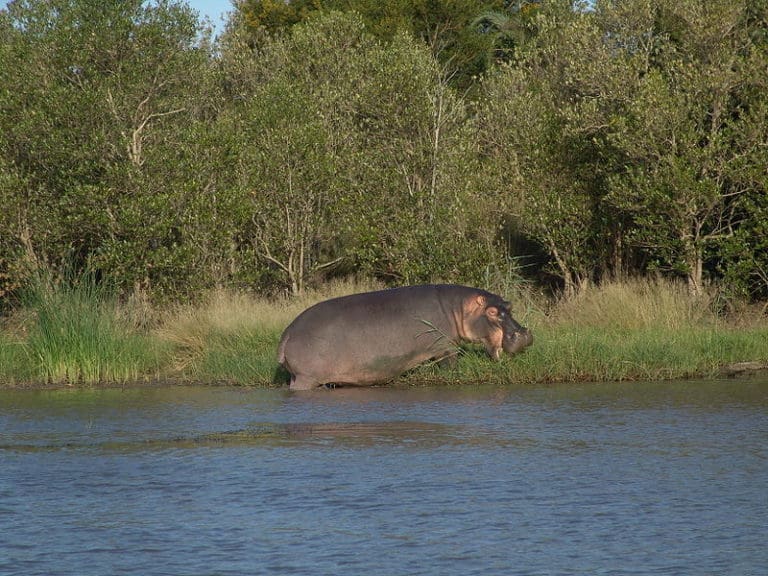
Scott Harrison / Creative Commons

Hippopotamus Distribution

Click a location to explore more animals from that region

Invasive Species
Loading map...

Size Comparison

Human 5'8"
Hippopotamus 4 ft 11 in

Hippopotamus stands at 87% of average human height.

At a Glance

Wild Species
Also Known As Hippo, Hippopotamus, River horse, Kiboko, Seekoei
Diet Herbivore
Activity Diurnal+
Lifespan 40 years
Weight 3200 lbs
Status Vulnerable
Did You Know?

Adults are among the heaviest living land mammals: typically ~1,300-1,500 kg; large males can exceed 3,000 kg (field and zoo records).

Scientific Classification

A large semiaquatic African mammal known for spending much of the day in rivers and lakes and grazing on land at night; among the heaviest living terrestrial animals.

Kingdom
Animalia
Phylum
Chordata
Class
Mammalia
Order
Artiodactyla
Family
Hippopotamidae
Genus
Hippopotamus
Species
amphibius

Distinguishing Features

  • Massive barrel-shaped body with very short legs and a broad muzzle
  • Semiaquatic lifestyle: rests submerged by day, grazes on land at night
  • Enlarged tusk-like canines and incisors used in display and combat
  • Thick skin with glandular secretions sometimes described as “blood sweat” (protective pigmentation/antimicrobial)

Physical Measurements

Males and females differ in size

Height
4 ft 11 in (4 ft 3 in – 5 ft 3 in)
4 ft 7 in (4 ft 3 in – 4 ft 11 in)
Length
12 ft 6 in (10 ft 12 in – 13 ft 4 in)
11 ft 10 in (10 ft 8 in – 13 ft 3 in)
Weight
1.9 tons (1.7 tons – 2.2 tons)
1.4 tons (1,984 lbs – 1.7 tons)
Tail Length
0 in (0 in – 0 in)
1 ft 5 in (1 ft 2 in – 1 ft 8 in)
Top Speed
19 mph
Around 30 km/h

Appearance

Primary Colors
Secondary Colors
Skin Type Common hippopotamus (Hippopotamus amphibius) has very thick, mostly hairless skin (~4–6 cm) with sparse bristles. Skin makes a sticky secretion that sunscreens, fights microbes, reduces water loss; hippos need daily submerging and wallowing.
Distinctive Features
  • Massive barrel-shaped body with short, pillar-like legs; body length typically ~3.3-5.2 m (head-body), shoulder height ~1.3-1.6 m (species accounts e.g., Nowak 1999; Eltringham 1999).
  • Extremely large head and gape; enlarged lower canines/incisors form tusks used in intraspecific combat-adult canines can exceed ~50 cm in length (reported maxima in anatomical/species references).
  • Eyes, ears, and nostrils set high on the skull, enabling breathing/seeing/hearing while most of the body is submerged (semiaquatic adaptation).
  • Four-toed feet with slight webbing; in water it commonly walks or bounds along the bottom rather than truly swimming like many aquatic mammals (behavioral ecology descriptions; Eltringham 1999).
  • Freshwater dependence: spends much of daylight hours in rivers/lakes/pools to prevent overheating and dehydration; emerges mainly at night to graze.
  • Herbivorous grazer with nighttime foraging; individuals commonly travel several kilometers from water to feed before returning by dawn (typical ecological pattern reported across populations).
  • Social structure: forms daytime groups ('pods') in water; adult males are strongly territorial in water and along shorelines, with aggressive displays and fights.

Sexual Dimorphism

Sexual dimorphism is primarily in overall size and weapon (tusk) development: males are heavier and have proportionally larger heads and canines; females are smaller on average (species accounts; e.g., Nowak 1999; Eltringham 1999).

  • Larger average mass: commonly ~1,500 kg (with large males substantially heavier; ranges in many references extend to >3,000 kg in exceptional individuals).
  • More massive skull/neck and broader muzzle; more prominent scars from male-male combat.
  • Longer/thicker lower canines and incisors; more pronounced jaw musculature and gape display.
  • Smaller average mass: commonly ~1,300 kg (adult females typically lighter than adult males).
  • Canines/incisors less massive on average; head appears relatively less blocky than mature males.
  • Often found with calves within pods; lactation-associated body condition changes may be visible seasonally.

Did You Know?

Adults are among the heaviest living land mammals: typically ~1,300-1,500 kg; large males can exceed 3,000 kg (field and zoo records).

Despite the name "river horse," hippos don't truly swim; they usually walk or "bounce" along the bottom and push off to glide.

They can hold their breath underwater for ~5 minutes and may surface automatically even while sleeping.

A hippo's mouth can open to about 150°; the lower canines (tusks) can reach ~50 cm and are used mainly for fighting, not feeding.

Mostly nocturnal foragers: they often leave water after dusk and may eat ~35-50 kg of grass in a night (reported in ecological field studies).

Their reddish skin secretion ("blood sweat") is a mix of pigments (not blood) that helps block UV and inhibits some bacteria.

Calves are commonly born in or near water after ~8 months gestation (about 240-245 days); newborns are typically ~25-50 kg.

Unique Adaptations

  • Semiaquatic anatomy: eyes, ears, and nostrils sit high on the skull, allowing breathing/hearing/seeing while most of the body stays submerged.
  • Closable nostrils and ears: muscular valves help keep water out during submergence.
  • Dense, heavy bones: act as ballast for bottom-walking in water rather than buoyant swimming.
  • Specialized skin chemistry: secretion containing hipposudoric and norhipposudoric acids (the "red/orange sweat") provides sunscreen-like and antimicrobial effects.
  • Thermoregulation via water dependence: limited sweat glands and thick skin make regular immersion and mud-wallowing essential to prevent overheating.
  • Tusks and jaw mechanics for combat: enlarged canines and powerful jaw muscles are adapted for dominance fights; severe wounds are common in adult males.
  • Underwater nursing/birthing capability: calves can suckle in shallow water and are kept close to the mother within pods for protection.

Interesting Behaviors

  • Daytime "rafting": groups rest shoulder-to-shoulder in rivers/lakes to stay cool and keep skin moist; they must re-wet frequently to avoid dehydration and sun stress.
  • Pod social structure: mixed groups often ~10-30 individuals (but can be much larger in dry seasons); females and young cluster while a dominant male typically controls prime water space.
  • Male territoriality in water: dominant bulls patrol and defend sections of riverbank/water, using yawning displays, head shakes, and aggressive charges.
  • Dung "tail-wag" spraying: hippos defecate and rapidly flick the tail to scatter dung-used in scent-marking and social signaling.
  • Vocal communication above and below water: they produce loud "wheezes/honks" and can transmit calls through air and water, helping coordinate groups in turbid rivers.
  • Night grazing and commuting: individuals often follow habitual paths ("hippo highways") from water to grazing lawns; trips commonly span a few kilometers and can extend farther when grass is scarce.
  • High-risk interactions with humans: many attacks occur when hippos are surprised on land at night or when boats cross between a hippo and deep water.

Cultural Significance

Common hippopotamus (Hippopotamus amphibius) was seen in Ancient Egypt as both feared for Nile damage and respected through Taweret, a pregnant-hippo goddess who protected mothers and homes. River communities tell of hippos as water guardians, dangerous if bothered.

Myths & Legends

Ancient Egypt: Taweret-depicted as a hippopotamus with a swollen belly-was invoked as a protective household deity, especially for mothers and infants; amulets and household objects bore her image.

Ancient Egypt: In temple mythic scenes tied to kingship and cosmic order, a chaotic hippo form (often linked with Seth) is ritually hunted or speared, symbolizing the defeat of disorder threatening the Nile's stability.

African folktales explain why the Common Hippopotamus (Hippopotamus amphibius) fled a land fight and took refuge in the river, so it grazes ashore at night and hides in water by day.

Southern African Khoisan/San storytelling traditions include river-animal tales where the hippo appears as a formidable water-being whose temper and strength demand careful respect from people and other animals.

West and East African trickster-style stories sometimes cast the hippo as a powerful but easily provoked neighbor of the river-teaching lessons about boundaries, pride, and the consequences of startling a dangerous animal.

Conservation Status

VU Vulnerable

Facing a high risk of extinction in the wild.

Population Decreasing

Protected Under

  • CITES Appendix II (international trade regulated)
  • Occurs in numerous national parks/game reserves and other protected areas across its range (site protection varies in effectiveness)
  • Protected under national wildlife legislation in many range states; enforcement capacity and protection effectiveness are variable

Life Cycle

Birth 1 calf
Lifespan 40 years

Lifespan

In the Wild
30–50 years
In Captivity
40–65 years

Reproduction

Mating System Polygyny
Social Structure Harem Based
Breeding Pattern Transient
Fertilization Internal Fertilization
Birth Type Internal_fertilization

Common hippopotamus (Hippopotamus amphibius) is polygynous: dominant males hold water territories and mate with many females in a harem-like group. Mating in water. Pregnancy ~8 months, usually one calf; birth every ~2 years. Females mature ~7 years; lifespan ~40–50 years.

Behavior & Ecology

Social Pod Group: 20
Activity Diurnal, Nocturnal, Crepuscular
Diet Herbivore Short, heavily grazed C4 grasses (grazing-lawn grasses); stable-isotope studies commonly find the diet dominated by C4 grasses (often ~>90% of assimilated diet in many East African populations; e.g., Cerling et al., stable carbon isotopes).

Temperament

Highly social but dominance-structured in water; aggressive contests (threat yawns, open-mouth displays, biting) are most intense among males over access to territories and females (Eltringham 1999).
Territoriality is strongest in males in water (defended pools/river stretches), while most nocturnal grazing on land is less spatially defended; individuals may show route fidelity between day refuges and night foraging areas (Estes 1991).
Maternal behavior is strongly protective; females with calves can be particularly defensive, and calf-guarding/positioning within pods reduces predation risk (Eltringham 1999).
Hippopotamus amphibius form daytime refuges around deep water or shade, with close resting and stable dominance. When water is plentiful, groups are smaller and spread out. Drought crowding raises fights and injuries.

Communication

Loud aerial calls described as honks/grunts/roars Often in sequences) used in dominance displays, spacing, and group cohesion; calling rates increase during social tension and male-male interactions (Eltringham 1999
Amphibious vocal signaling with components transmitted both in air and underwater, enabling communication among submerged individuals within pods Barklow 2004
Chemical/scent marking via tail-wagging defecation "dung showering") and midden use, especially by males, to advertise presence and status along shorelines and territorial boundaries (Eltringham 1999
Visual displays: wide-gape 'yawn', head-high postures, lunging, and water-splashing as threat/assessment signals during conflicts Estes 1991
Tactile/close-contact behaviors during resting Body contact, nudging), particularly among females and young within dense daytime aggregations (Eltringham 1999

Habitat

Biomes:
Freshwater Wetland Savanna Tropical Dry Forest
Terrain:
Riverine Valley Plains Muddy Sandy
Elevation: Up to 6561 ft 8 in

Ecological Role

Large-bodied nocturnal grazer and major land-to-water nutrient transporter in African river/lake ecosystems.

Maintains and expands short-grass grazing lawns through repeated cropping, influencing plant community structure and supporting other grazers Transfers substantial organic matter and nutrients to aquatic systems via dung and urine ("hippo subsidy"), affecting productivity, oxygen dynamics, and food webs Creates and maintains trails and access channels between water and grazing areas, altering riparian habitat structure and hydrology Bioturbation and bank disturbance can reshape shorelines and influence sediment redistribution, with cascading effects on aquatic habitats

Diet Details

Other Foods:
Short C4 savanna grasses Sedges and other graminoids Forbs and herbaceous dicots Reeds and riverbank grasses

Human Interaction

Domestication Status

Wild

Common hippopotamus (Hippopotamus amphibius) has no history of domestication. It has been kept in captivity (royal menageries, modern zoos) but is not suited to being bred to be tame. People mainly meet hippos along waterways and floodplains, in conflict, hunting, and tourism. IUCN: Vulnerable; threats: habitat loss, illegal killing. Trade: CITES Appendix II.

Danger Level

Extreme
  • High fatality risk during surprise encounters near water (defensive/territorial charges in water or on banks).
  • Boat/canoe attacks: hippos may ram, capsize, and bite small craft on rivers/lakes.
  • Night-time land encounters: hippos graze on land after dusk and may charge people on paths, farms, or near crops.
  • Severe trauma from bites/crushing: adults have very large canines/incisors and can inflict amputations and lethal hemorrhage; encounters often require emergency surgical care.
  • Human-hippo conflict hotspots occur where settlement, fishing traffic, or agriculture overlaps hippo waterways; risk increases during drought/low water when animals concentrate.

As a Pet

Not Suitable as Pet

Legality: Common Hippopotamus are generally not legal or practical as private pets. Where allowed they need many permits; US often bans private ownership. International trade is controlled by CITES Appendix II and is usually only between approved zoos.

Care Level: Expert Only

Purchase Cost: $30,000 - $150,000
Lifetime Cost: $1,000,000 - $6,000,000

Economic Value

Uses:
Ecotourism and wildlife viewing Zoological exhibition and education Subsistence and illegal hunting (localized) Ecosystem engineering value affecting fisheries and river nutrient cycling
Products:
  • tourism revenue (safari/river viewing)
  • historical use of canine teeth as "ivory" and hides for leather (now widely restricted/illegal)
  • meat in some regions (often illegal or regulated depending on jurisdiction)

Relationships

Related Species 4

Pygmy Hippopotamus
Pygmy Hippopotamus Choeropsis liberiensis Shared Family
Giant Hippopotamus
Giant Hippopotamus Hippopotamus gorgops Shared Genus
European Hippopotamus Hippopotamus antiquus Shared Genus
Whales and dolphins Cetacea Shared Order

Classification and Evolution

The hippopotamus is a large semi-aquatic mammal that is found wallowing in the rivers and lakes across sub-Saharan Africa. Despite its appearance, the hippopotamus is an animal that is actually thought to be most closely related to whales, as the two are thought to have had a common ancestor that existed roughly 54 million years ago. Also known as the common hippopotamus, it is one of two hippo species that are found on the African continent, with the other being the solitary and forest-dwelling pygmy hippopotamus, which is only found in western Africa and is now critically endangered. There are only 3,000 pygmy hippos left in existence. Although the common hippopotamus remains an abundant and widespread animal throughout its current range, numbers are reportedly declining due to both hunting and habitat loss.

Hippopotamus Infographic
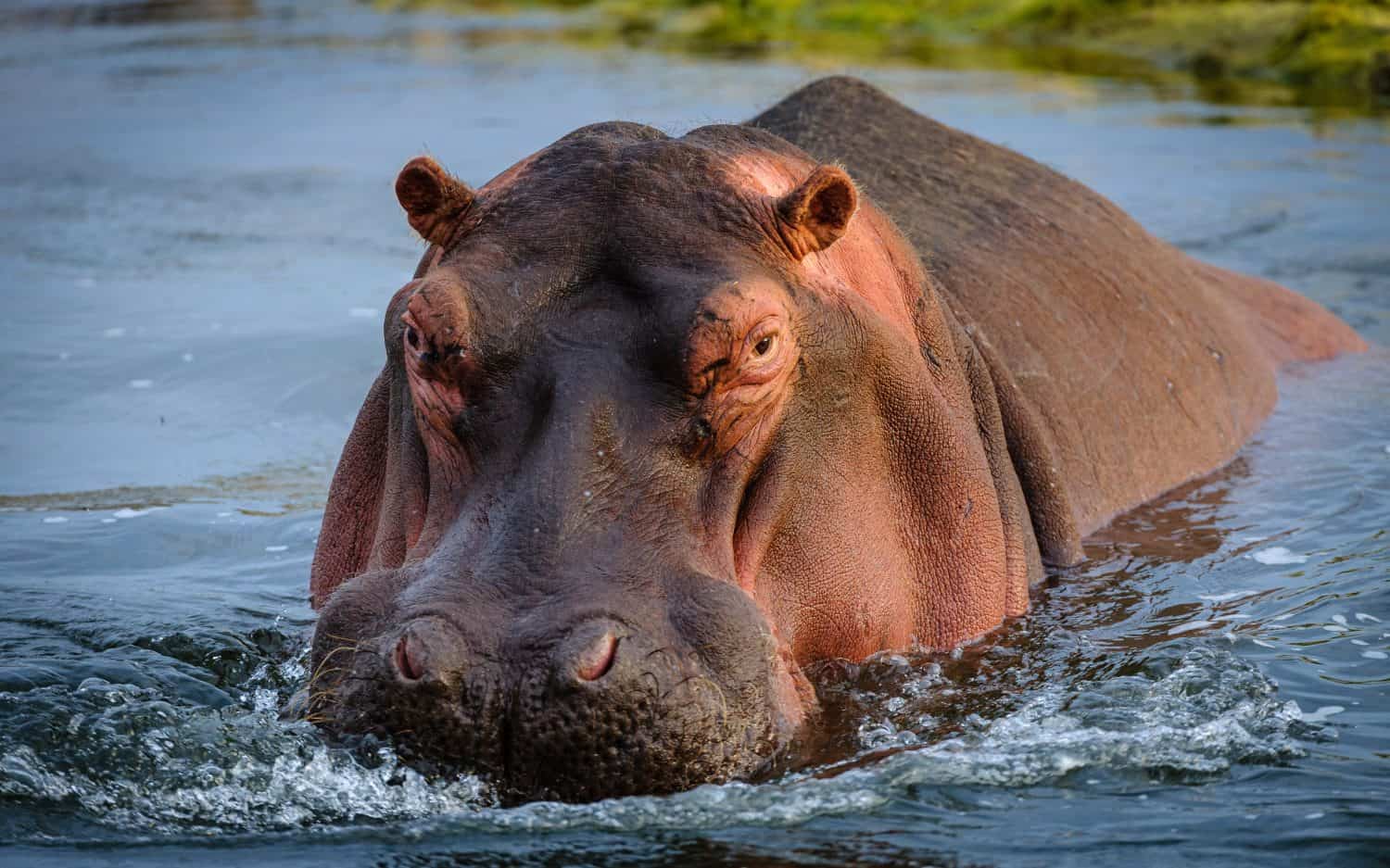
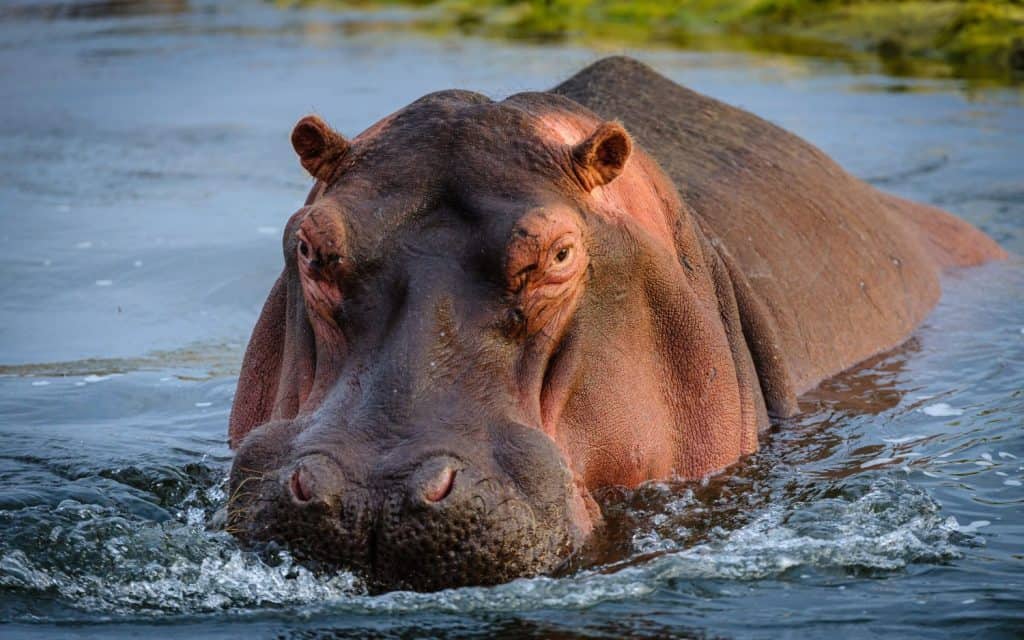
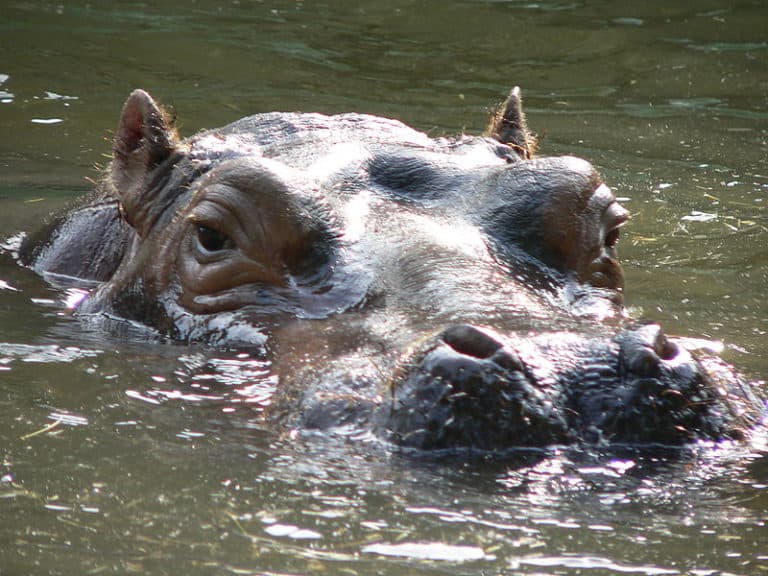
Hippos are definitely adapted for life in the water and are found living in slow-moving rivers and lakes in Africa. With their eyes, ears, and nostrils on the top of the head, hippos can hear, see, and breathe while most of their body is underwater.

Anatomy and Appearance

The hippopotamus has an enormous grey barrel-shaped body that can measure up to 16 feet in length and weigh more than four tons, and which is held up by short and stocky legs. One of the hippopotamus’s most distinctive features is its enormous jaws which contain two long canine teeth (tusks) which can grow up to 20 inches long and are used for fighting. Due to the fact that the hippopotamus is an animal that spends most of its life resting in the water, they have a number of excellent adaptations to aid its semi-aquatic lifestyle, including four webbed toes on each foot that help with swimming and walking on slippery banks, and the eyes, ears, and nostrils of the hippopotamus are situated on the top of its head. This means that when the hippopotamus’s body is immersed in the water, they are still able to see, hear, and breathe whilst keeping cool in the hot sun.
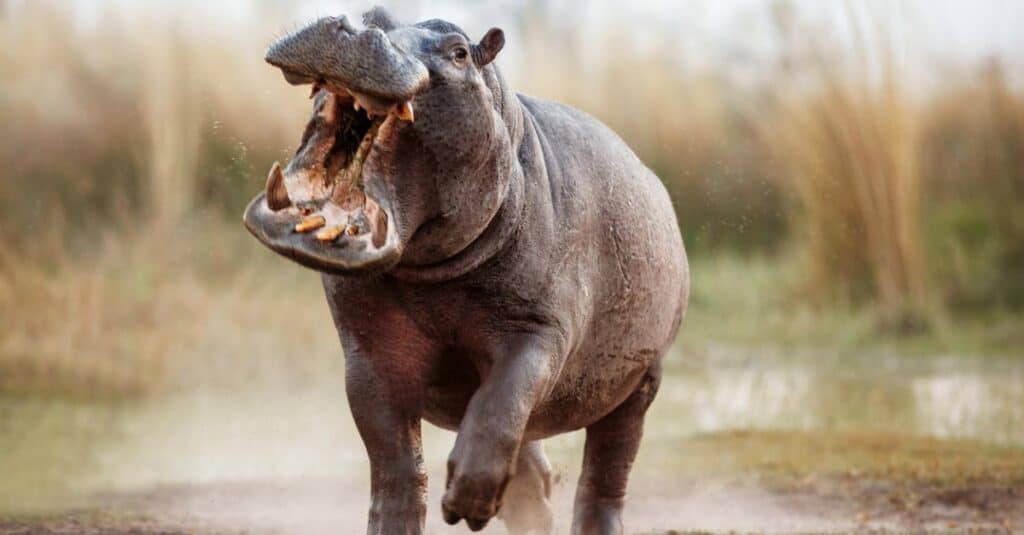
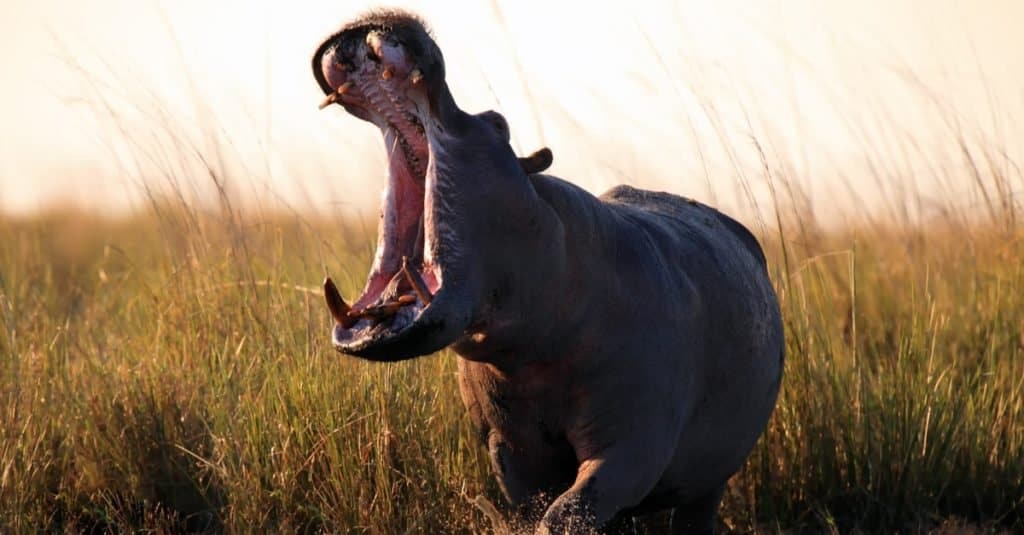
hippo charging towards camera with mouth open

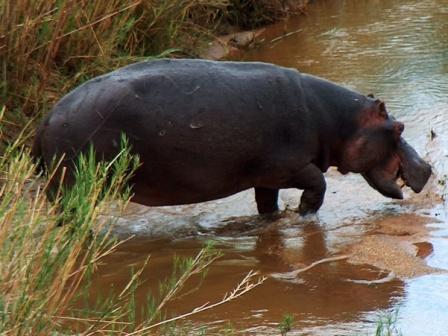
The Hippopotamus has an enormous grey barrel-shaped body that can measure up to 16 feet in length and weigh more than four tons, and which is held up by short and stocky legs.

Distribution and Habitat

Although historically, the hippopotamus would have once been found across Europe and Asia, today, they are confined to Africa south of the Sahara Desert. The hippopotamus is always found close to the water and tends to prefer areas close to grasslands, where they feed during the night. Hippos are most commonly found in the deep and slow-moving rivers and lakes in eastern and southern countries, with only a few smaller and more isolated populations still found in the west. The hippopotamus is also a resident of the seasonal wetlands, where they wade through the swampy waters by day and graze on the small islands at night. Although the hippopotamus is still common throughout much of sub-Saharan Africa, their numbers have been declining, with one reason being the loss of their natural habitats, mainly caused by land clearance for agriculture.
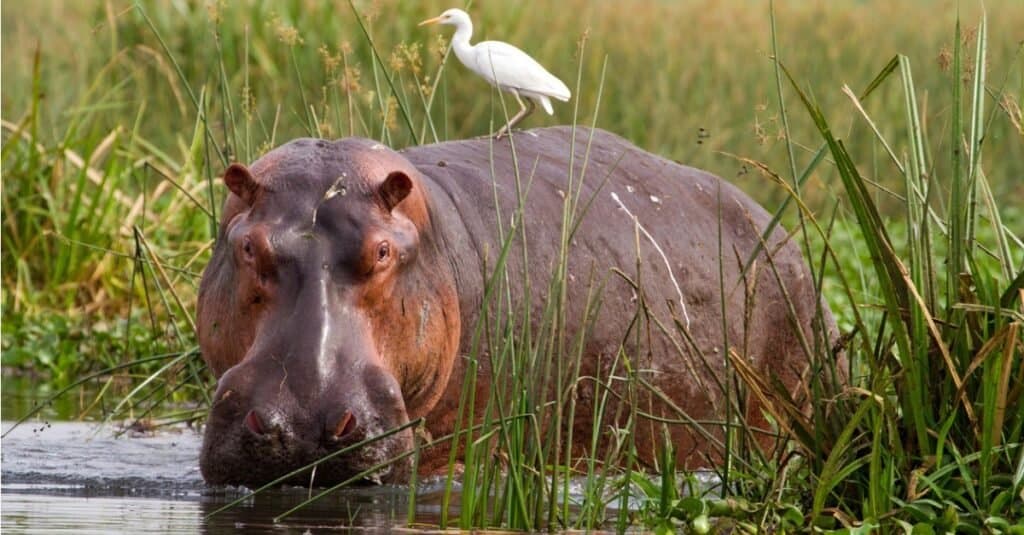
What Do Hippos Eat

The hippopotamus (Hippopotamus amphibius) is confined to African south of the Sahara desert.

Behaviour and Lifestyle

The hippopotamus spends up to 18 hours a day in the water to keep cool, but when darkness falls, they venture out onto land and follow well-trodden paths to their feeding grounds before returning to the water in the morning. The hippopotamus is one of the largest and most feared animals in Africa, as both males and females are known to be incredibly aggressive at points. The hippopotamus tends to live in small herds containing between 10 and 20 individuals that are comprised of females with their young. The herd is led by the dominant male, who will fiercely guard his stretch of river bank from both intruders and rival males, threatening them by opening his enormous mouth to expose the 18-inch long tusks. If this fails, the two will fight, and deadly injuries are often caused. Although the dominant male will allow other males to enter his territory, providing they are well-behaved, he holds the breeding rights with the females in the herd.
You can check out incredible hippopotamus facts.

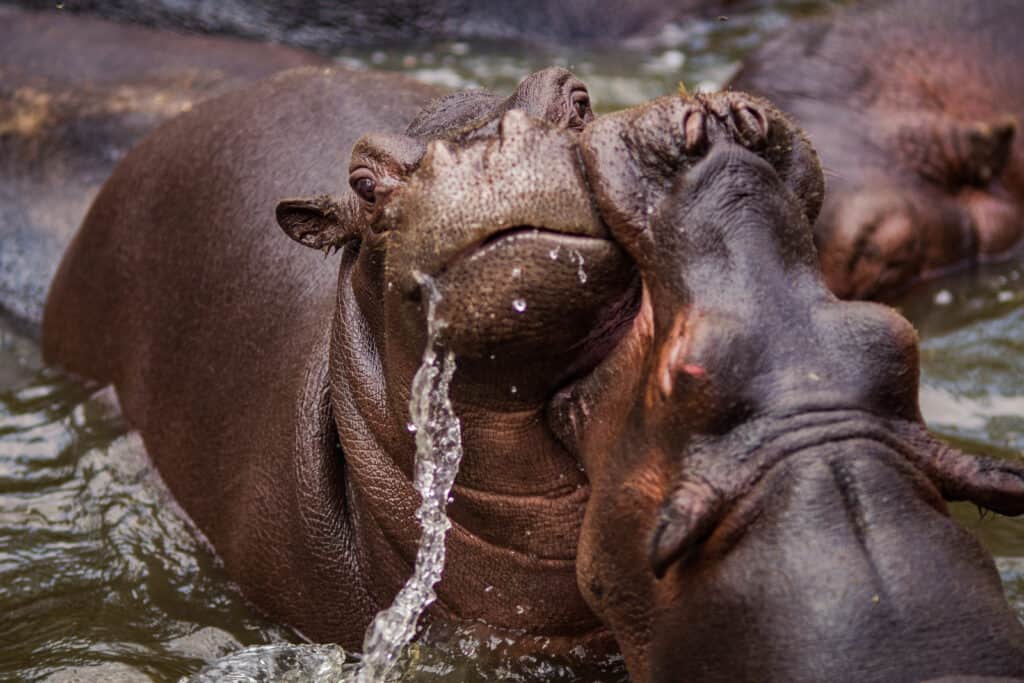
Hippos Fighting in Water

The hippo herd is led by the dominant male, who will fiercely guard his stretch of river bank from both intruders and rival males.

Reproduction and Life Cycles

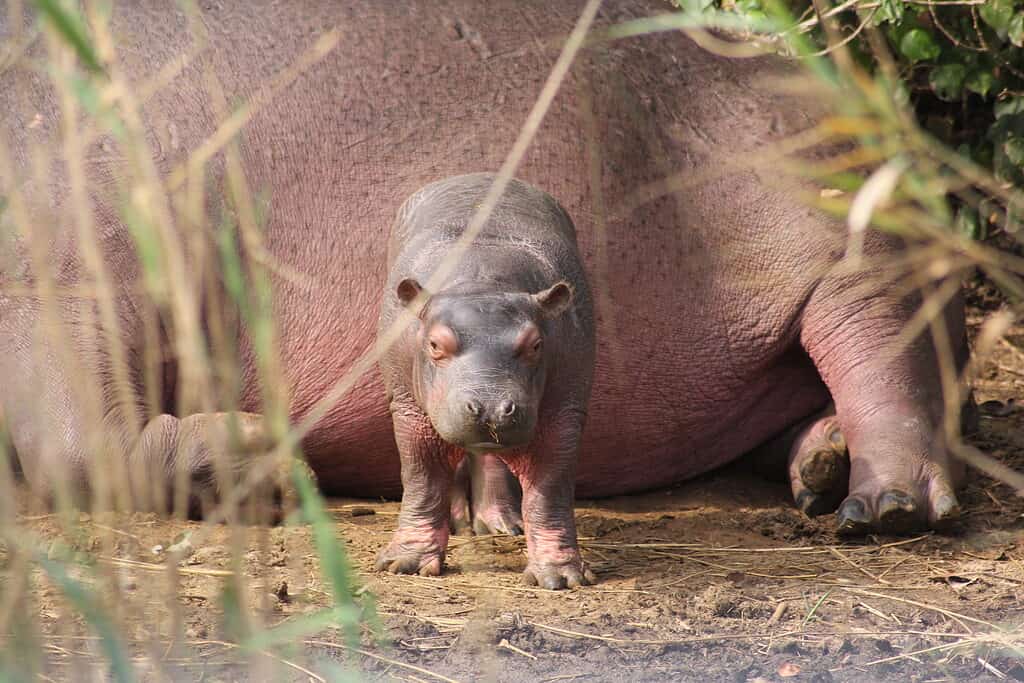
After a gestation period that lasts for around eight months, the female hippopotamus gives birth to a single calf, generally during the rainy season. Although like many other activities (including mating), the hippopotamus often gives birth in the water, it is not actually that uncommon for their young to be born on land. The female protects her calf fiercely, and it rides on her back to keep it safe. Hippopotamus calves are fully weaned by the time they are 18 months old but tend to remain with their mother until they are fully grown, often not leaving her until they are 7 or 8 years old. Although young males will become more independent and find their own patch of the bank to patrol, females will join a herd of other females and young. Despite this seemingly sociable behavior, they do not seem to interact socially and will even graze on their own when they leave the water at night.
Read more about the hippo’s lifespan here.

Hippopotamus baby with mother

Baby hippos are fully weaned by 18 months old.

Diet and Prey

The hippopotamus is a herbivorous animal, meaning that despite its enormously long and sharp teeth, they are vegetarians. Different species of grasses are the main source of food for the hippopotamus that is found growing on plains relatively close to water. When they come onto land at night, hippos may travel up to three miles during the night to get to their feeding grounds which they do by following paths that are marked with dung. Oddly enough, the hippopotamus doesn’t even use its large canines for eating at all but instead has strong lips that are used to clip the grasses and cheek teeth which then grind them up. Despite its large size, the hippopotamus only eats around 88 pounds of food a night as it uses very little energy whilst floating in the water for most of the day. In areas that are close to human settlements, hippos have also been known to invade crops consuming mainly rice plants and simply trampling over others. For a complete list of the food a hippopotamus eats, have a look at our “What Do Hippos Eat?” page!
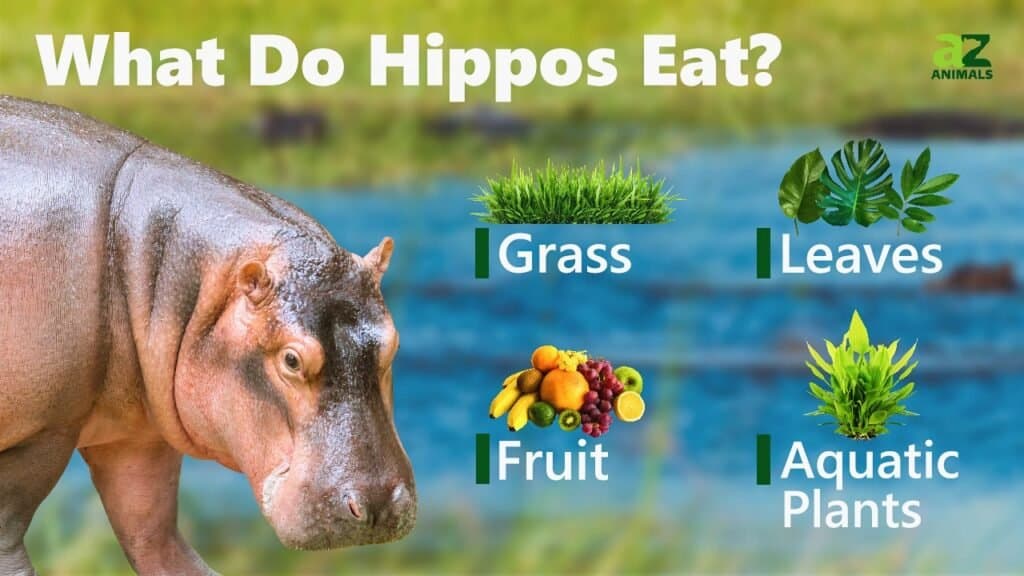
What Do Hippos Eat
The hippopotamus consumes a mostly herbivorous diet in the wild, with grass, leaves, fruit, and aquatic plants making up most of their diet.

Predators and Threats

The hippopotamus is one of the largest mammals on the African continent. Although mature adults are much harder for predators to kill, they are still preyed on by a number of predators throughout the wetlands. Big cats such as lions and other animals like hyenas and crocodiles are the most common predators of the hippopotamus, particularly of young or sick individuals. It is because of this that females are thought to congregate in herds, as larger numbers are more intimidating to hungry carnivores. The hippopotamus is also threatened by people, not only from the loss of their natural habitats but also from hunting. The hippopotamus has been hunted by people for both its meat and its teeth which are made of ivory. Since the ban on trading elephant ivory, the number of hippos killed for their teeth has risen dramatically.
Big cats such as lions and other animals like hyenas and crocodiles are the most common predators of the hippopotamus.

Interesting Facts and Features

The hippopotamus has an enormous head that makes up around a third of its total body weight, with its vast mouth being able to open up to 150 degrees and revealing its large tusks, which can weigh up to 6 pounds each. Due to the way that the skin of the hippopotamus is made up, the animal cannot sweat, so when it comes into contact with air, the skin easily dries up. Although this is not a problem in the water, to combat this the rest of the time, a pink, oily substance is secreted through glands in the skin, which is not only thought to prevent sunburn but also may have anti-bacterial properties that help to keep wounds clean and prevent infection from the dirty water. Even though the hippopotamus looks like it would be slow on land thanks to its short and stubby legs, they are actually able to run at quite remarkable speeds and are capable of reaching 30 miles per hour when running.

Aggressive Animal: Hippopotamus

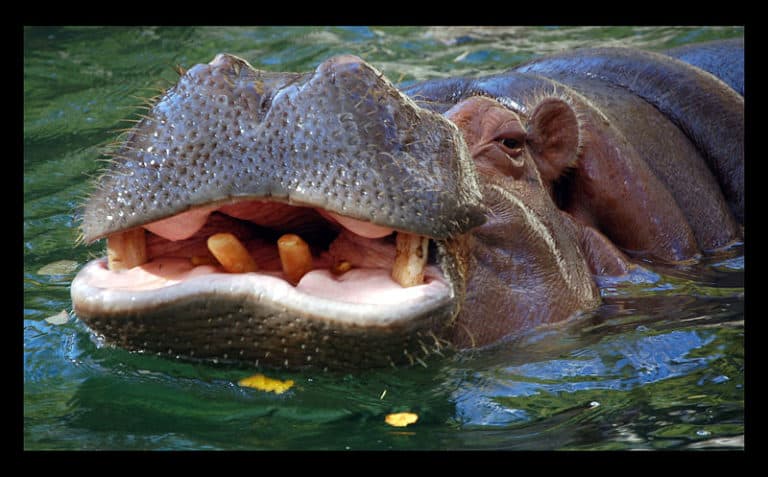
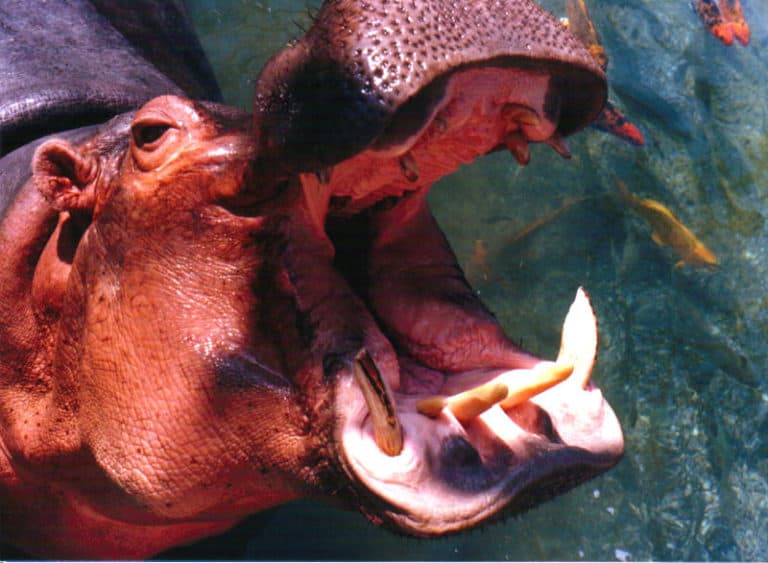
Hippos can open their mouths 150 degrees, and their tusks can weigh up to 6 pounds each.

Relationship with Humans

The hippopotamus can be found in all kinds of ancient African folklore, with its name in Greek actually meaning “Water Horse.” Despite this fascination with the hippopotamus, hunting them for their meat and tusks has wiped them out from vast areas of their once large natural range, and numbers continue to fall, particularly in certain areas due to habitat loss. In these areas where the hippopotamus is often forced to raid crops in order to find food, they are seen as pests by farmers who do not only fear for their livelihood but also for their lives themselves. The hippopotamus is known to be an aggressive animal that is considered by many to be among Africa’s most dangerous mammals, as attacks on people (particularly fishermen) are not unheard of.
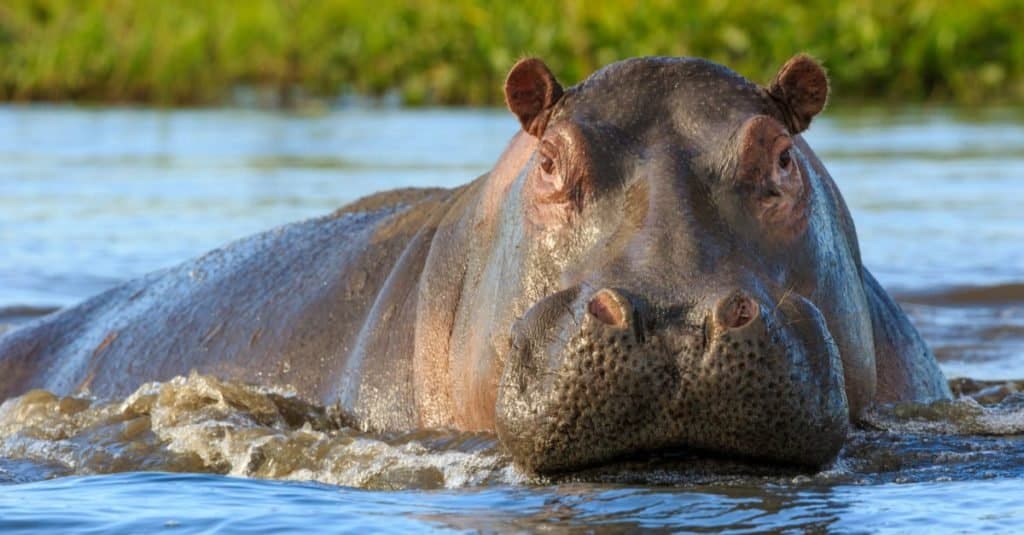
Heaviest Animals: Hippopotamus

A Hippopotamus is known to be an aggressive animal.

Conservation Status and Life Today

Today, the hippopotamus is listed by the IUCN as an animal that is Vulnerable in its natural environment. Over the past 10 years, their populations have declined by 7-20%. However, the hippopotamus is still considered to be abundant throughout much of its current natural range, with the exception of populations in western Africa that are becoming more and more isolated. Although hippopotamus populations are considered stable in a number of countries in the south and the east of the continent, they are declining in many others. They are particularly threatened by continuing poaching of them for their tusks.
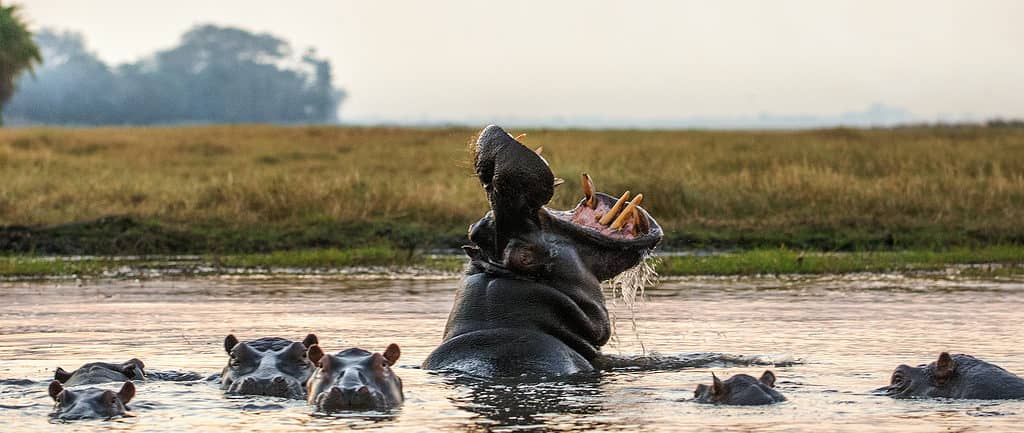
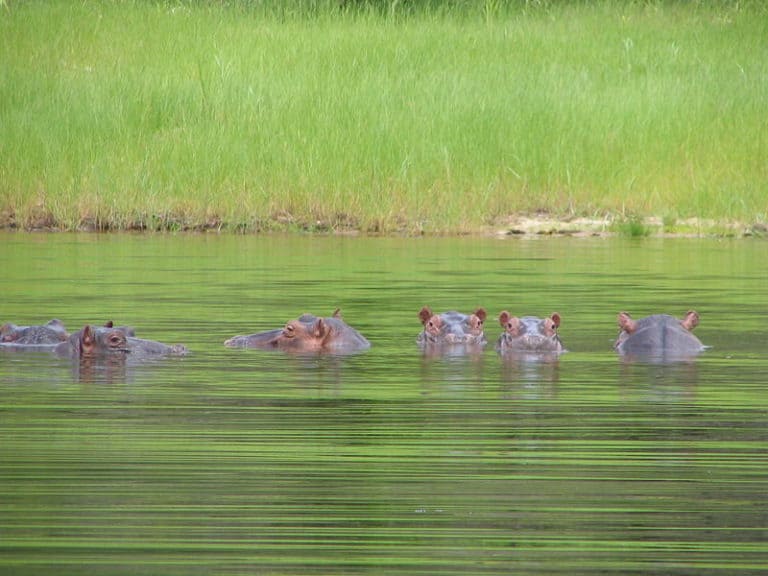
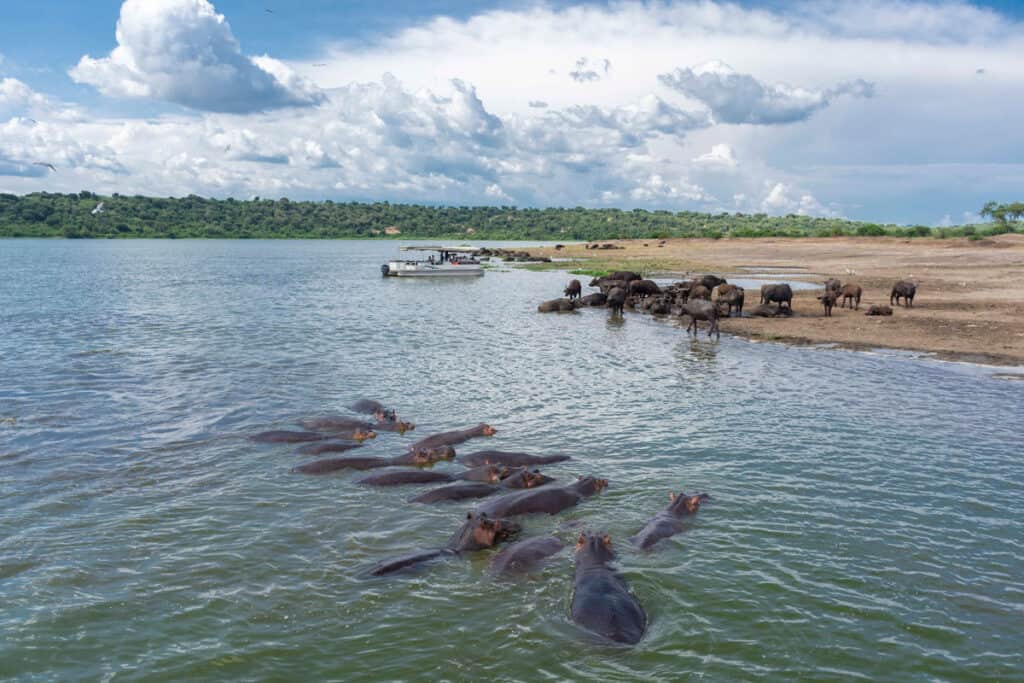
Group of Hippos in the water

Currently, hippos are confined mostly to protected areas, and over the past 10 years, their populations have declined by 7-20%

2 Types of Hippopotamus

There are two hippo species, both found in Africa. The common hippopotamus (also called the large hippopotamus) and the pygmy hippopotamus.

Large/Common Hippopotamus: The common hippopotamus (Hippopotamus amphibious) is native to sub-Saharan Africa and is one of the largest land mammals. An adult hippo can weigh 3,300 pounds and stand 5.5 feet tall at the shoulder.

Pygmy hippopotamus: The pygmy hippo (Choeropsis liberiensis) is a much smaller species of hippo, about half as tall as the common hippo. Adults stand a little over three feet tall and are 400-600 pounds. They are limited to protected areas in West Africa that are forested. Shy and reclusive, this hippopotamus is mostly nocturnal.
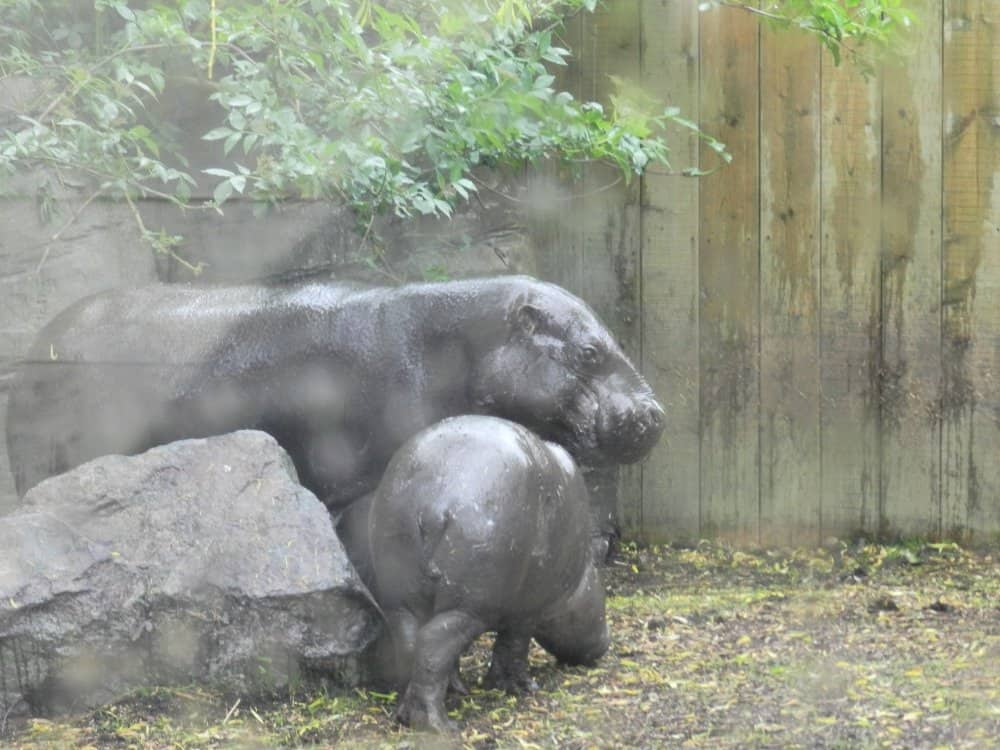
Pygmy Hippos are half the height and weight of common hippos.

More on Hippopotamus

  • Hippo Mouth: Size and Facts
  • How Fast Can a Hippo Run?
  • What was the Largest Prehistoric Hippo?
View all 288 animals that start with H
How to say Hippopotamus in ...
Bulgarian
Хипопотам
Catalan
Hipopòtam
Czech
Hroch obojživelný
Danish
Flodhest
German
Flusspferd
Estonian
Jõehobu
Spanish
Hippopotamus amphibius
Esperanto
Amfibia hipopotamo
French
Hippopotamus amphibius
Croatian
Nilski konj
Indonesian
Kuda Nil
Italian
Hippopotamus amphibius
Hebrew
היפופוטם
Latin
Hippopotamus
Hungarian
Nílusi víziló
Malay
Badak air
Dutch
Nijlpaard
Japanese
カバ
English
Vanlig flodhest
Polish
Hipopotam nilowy
Portuguese
Hipopótamo
Slovenian
Veliki povodni konj
Finnish
Virtahepo
Swedish
Flodhäst
Vietnamese
Hà mã
Turkish
Suaygırı
Chinese
河馬

Sources

  1. David Burnie, Dorling Kindersley (2011) Animal, The Definitive Visual Guide To The World's Wildlife / Accessed November 10, 2008
  2. Tom Jackson, Lorenz Books (2007) The World Encyclopedia Of Animals / Accessed November 10, 2008
  3. David Burnie, Kingfisher (2011) The Kingfisher Animal Encyclopedia / Accessed November 10, 2008
  4. Richard Mackay, University of California Press (2009) The Atlas Of Endangered Species / Accessed November 10, 2008
  5. David Burnie, Dorling Kindersley (2008) Illustrated Encyclopedia Of Animals / Accessed November 10, 2008
  6. Dorling Kindersley (2006) Dorling Kindersley Encyclopedia Of Animals / Accessed November 10, 2008
  7. David W. Macdonald, Oxford University Press (2010) The Encyclopedia Of Mammals / Accessed November 10, 2008
  8. Hippopotamus Information / Accessed November 10, 2008
Heather Hall

About the Author

Heather Hall

Heather Hall is a writer at A-Z Animals, where her primary focus is on plants and animals. Heather has been writing and editing since 2012 and holds a Bachelor of Science in Horticulture. As a resident of the Pacific Northwest, Heather enjoys hiking, gardening, and trail running through the mountains with her dogs.

Thank you for reading! Have some feedback for us?


Hippopotamus FAQs (Frequently Asked Questions)

The most obvious difference that separates hippos vs. rhinos is the fact that rhinos have horns on their heads while hippos have sharp teeth in their mouth. The two animals are a similar size and can even run at similar speeds.