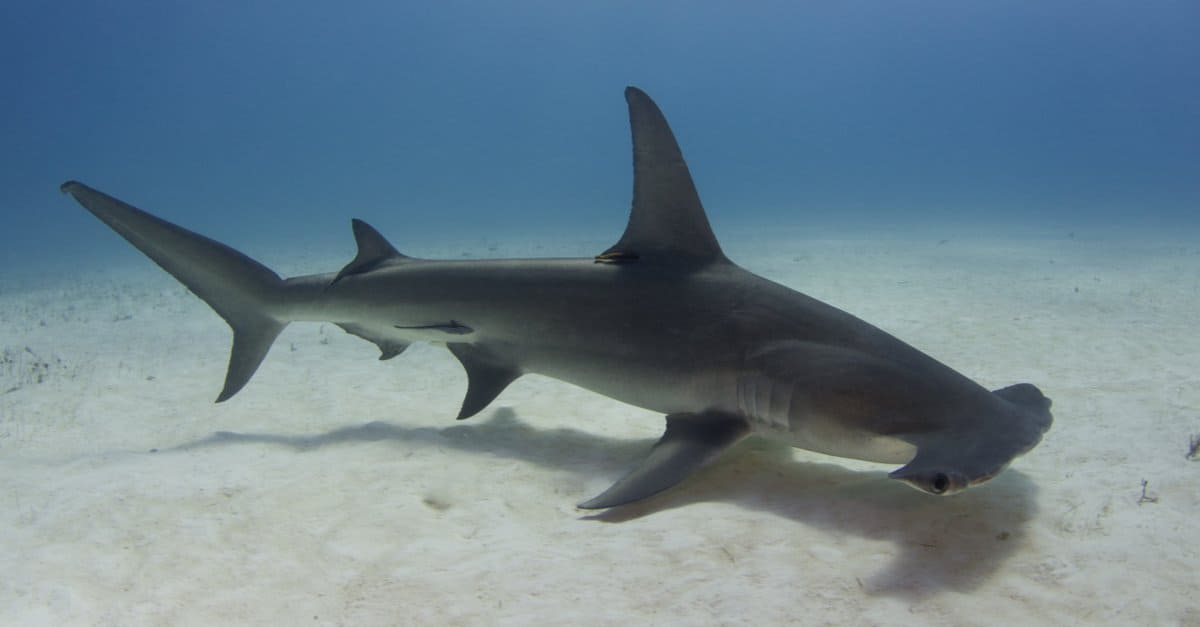

When identifying sharks, the hammerhead stands out thanks to its hammer-shaped head. The great hammerhead shark is estimated to have evolved around 20 million years ago, making it a relatively recent addition compared to some ancient shark lineages.
Since that time, multiple species of hammerhead sharks have been identified. The largest of all is the great hammerhead. These sharks can be intimidating, as noted by the person who caught the largest hammerhead shark on record. But, unlike other sharks, hammerheads are not known for attacking humans, with just 16 attacks since 1900. Therefore, some of the species may be massive, but they would prefer to be left alone rather than have any issues with those who have led to their species’ demise over the last several decades.
The Largest Hammerhead Shark On Record Was 20 Feet Long

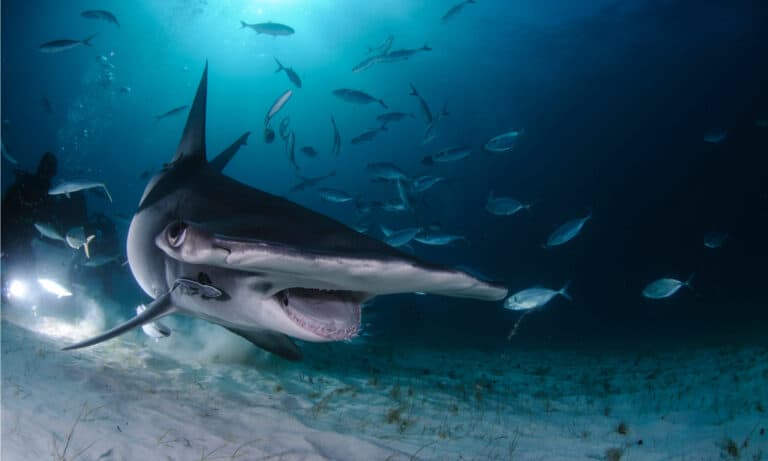
Great hammerhead sharks are said to grow up to 20 feet long, though the largest one on record is significantly shorter.
©michaelgeyer_photography/Shutterstock.com
Hammerhead sharks are known for their unique looks. What many do not know is that the great hammerhead sharks are known for their size as well.
Great hammerhead sharks are the largest of all hammerhead sharks. With many reaching 13 feet or more, they are significantly larger than any other hammerhead shark species. However, there was one great hammerhead shark that far surpassed this size, making it the largest hammerhead shark in history.
In 1905, a massive great hammerhead shark was spotted off the coast of the Everglades. The captain, Charlie Thompson, went after the great hammerhead and caught the shark. The great hammerhead shark was said to have been 20 feet long and weighed 2,169 pounds.
There are no official records of this massive shark being caught. Instead, the size and weight are based on eyewitness accounts. Therefore, when many discuss the largest hammerhead shark on record, that shark is significantly smaller.
In 2006, a 14.5-foot female great hammerhead shark was caught off the coast of Boca Grande, Florida. The shark was also the heaviest ever reeled in, weighing close to 1,280 pounds. This hammerhead shark was the largest ever recorded, with the record recently broken in 2019 by a very unexpected angler.
Pro golfer Greg Norman was out for a day of fishing when he caught a massive shark on his line. It was not until the great hammerhead shark was brought closer to the boat that everyone aboard realized just how truly large the shark was.
After getting the great hammerhead close to the boat, quick measurements were done, and it was determined that the hammerhead was 14 and 7 3/8 inches long. This made the great hammerhead shark the largest ever on record.
The shark was ultimately given some time to recover on the side of the boat before it was released, where it is believed it went on to swim through the ocean off the coast of Florida.
How The Largest Hammerhead Shark Compares To Others Of Its Species
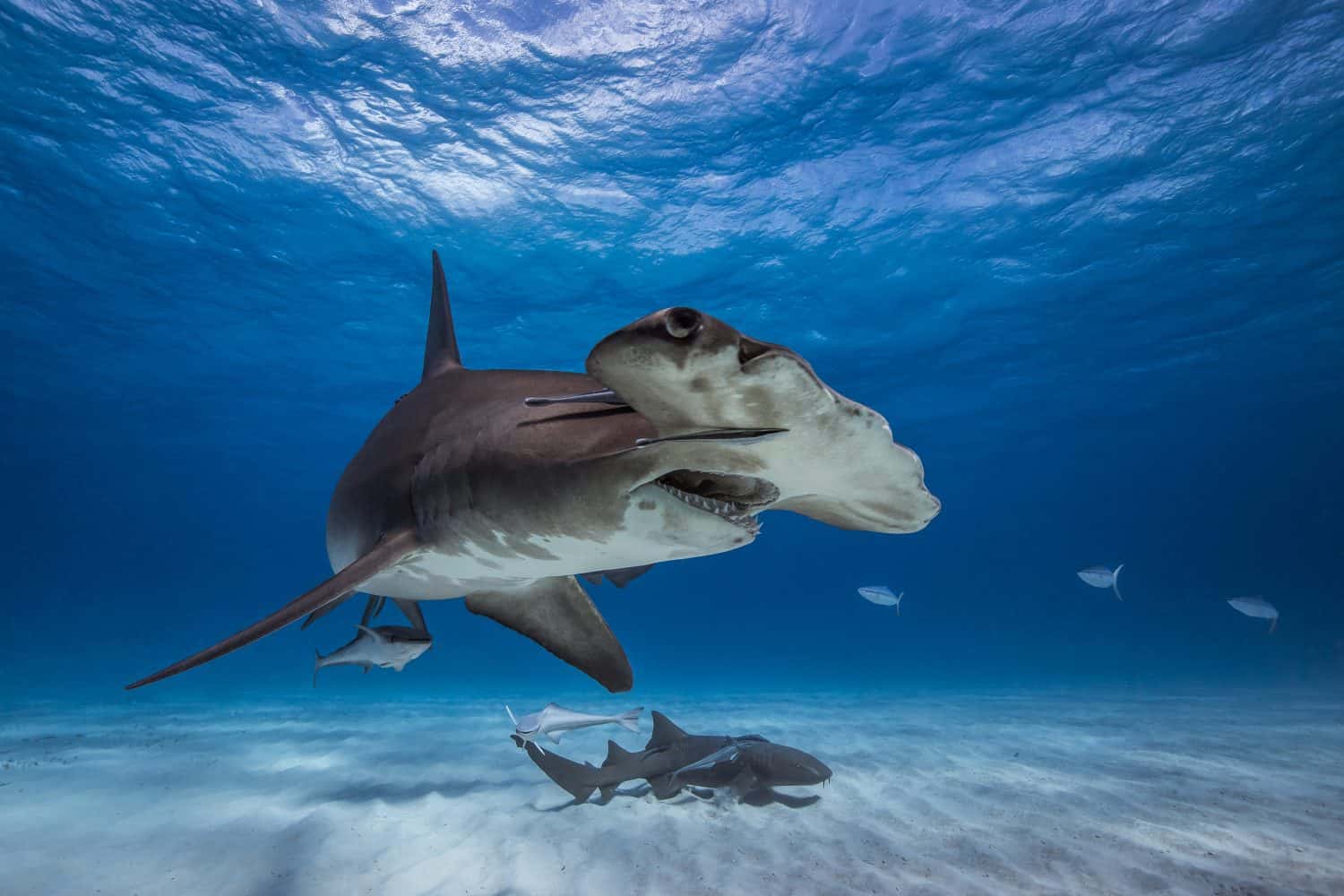
The average great hammerhead shark is just over 13 feet long, weighing 500 pounds.
©Carlos Grillo/Shutterstock.com
There are nine different species of hammerhead sharks. Each of the different species varies in size from one another, with the great hammerhead shark being the largest. Therefore, it is no surprise that the great hammerhead shark comprised the largest of all hammerheads ever recorded.
While the largest known great hammerhead was 20 feet long, the average length of this species of hammerhead is 13.1 feet long. This is not to say that great hammerheads, on average, cannot grow to 20 feet. But hammerhead sharks that size are not seen often.
Additionally, the average weight for great hammerhead sharks is approximately 500 pounds. This is significantly less than the massive female that was discovered in 2006, weighing 1,280 pounds. (It should be noted that the great hammerhead was pregnant at the time.)
Just how large a great hammerhead shark will be is all based on age and sex, with females being larger than males. However, these giants are not always seen as they swim through the oceans, migrating across oceans throughout the world.
Where Great Hammerhead Sharks Typically Live
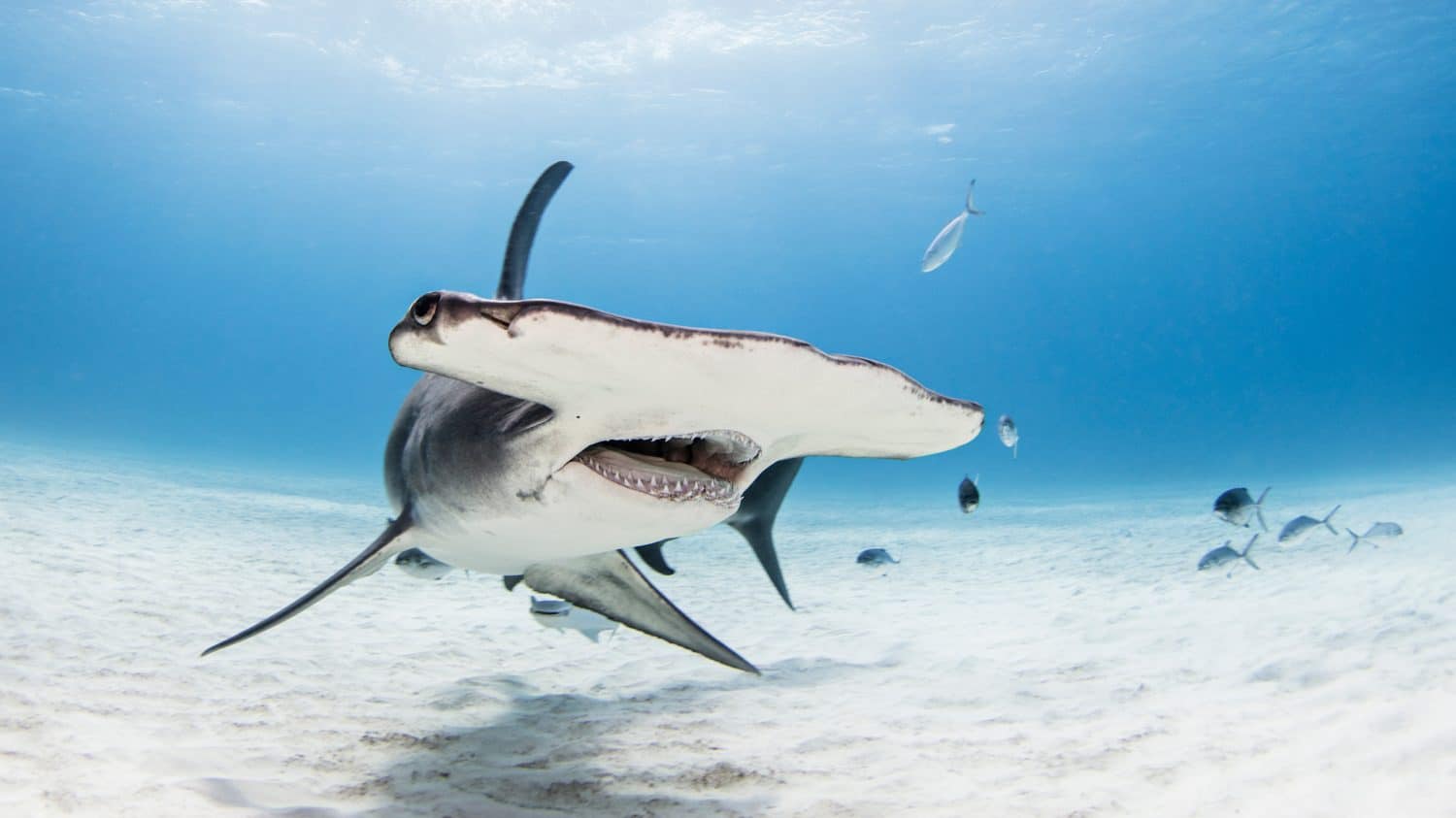
Great hammerhead sharks live in the Atlantic, Pacific, and Indian Oceans.
©Ken Kiefer/Shutterstock.com
The great hammerhead shark is a species that is highly nomadic. They are migratory, like other hammerheads, but are solitary. Therefore, it is likely that when a great hammerhead is spotted, it will likely be alone, versus in a school like other hammerhead species.
Given the great hammerheads’ propensity to travel long distances, the sharks can be found in the Atlantic, Pacific, and Indian Oceans. The great hammerheads prefer to live near coral reefs. However, it is not uncommon to find them in shallow waters of just about three feet in lagoons and off the coast of islands, as well as swimming in deeper water near the continental divides.
In more recent years, great hammerheads have been spotted off the coast of dozens of countries around the world. More surprisingly, the sharks have been swimming closer to the Arctic and Antarctica than ever before, given that climate change is causing their traditional habitats to become too warm during the summer.
Given the vast amount of ocean the great hammerheads travel, these sharks are constantly on the hunt for their next meal. With their successful hunting skills as apex predators, it is no surprise that they are the longest living of all hammerhead species.
How Long Great Hammerhead Sharks Live
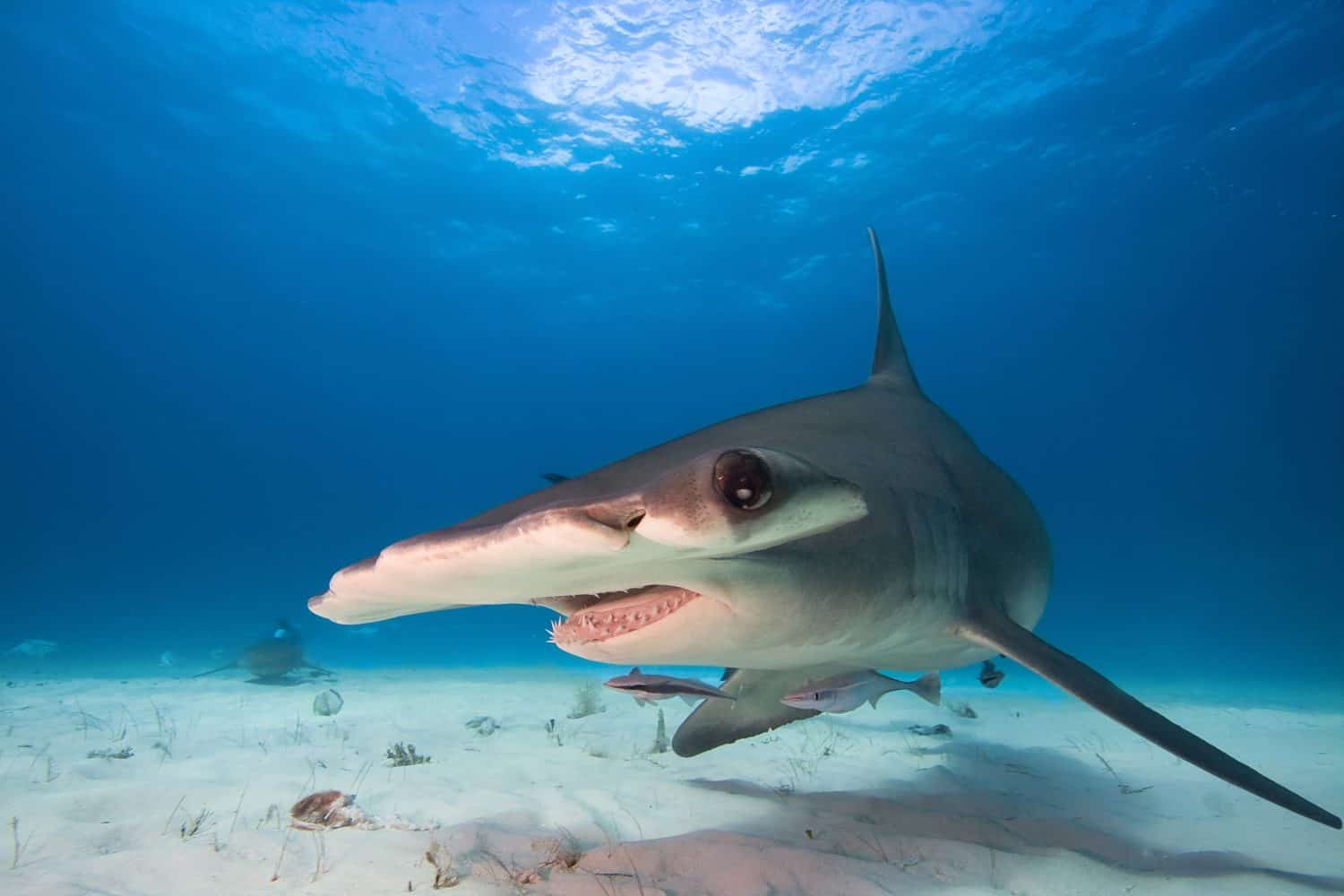
Great hammerhead sharks can live up to 30 years.
©frantisekhojdysz/Shutterstock.com
Hammerhead shark lifespans all vary by species. The great hammerhead shark is not only the largest of all hammerheads, but it also lives the longest.
Typically, great hammerhead sharks will live for 20 to 30 years. The next closest hammerhead is the scalloped hammerhead, which is significantly smaller and weighs a great deal less than the great hammerhead. This species of hammerhead lives for 20 to 25 years.
While the great hammerhead shark can live for up to three decades, it is one of the youngest shark species to have evolved. The species has only been swimming through the oceans for 20 million years. Compare that to the Greenland shark, which lives significantly longer and has, as a species, been alive for at least 100 million years, and the great hammerhead shark is just a baby.
Unfortunately, with there being significantly fewer great hammerhead sharks alive today, the chances of these sharks making it to old ages are becoming slimmer. In fact, given the status of the great hammerhead shark, there is a significant chance the species could go extinct, with 80% of the population having disappeared over the last seven decades.
Great Hammerhead Sharks Are An Endangered Species
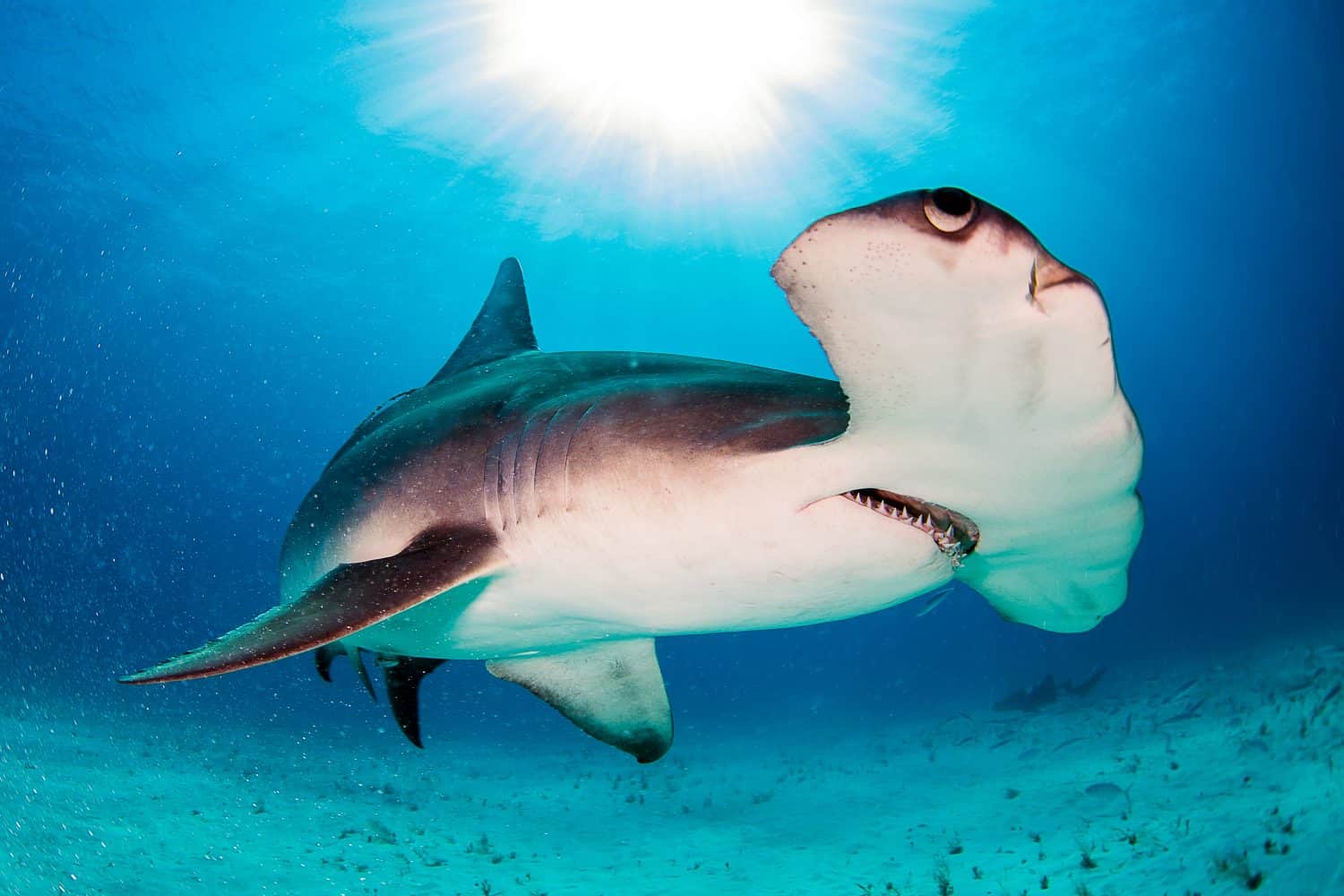
Great hammerhead sharks are endangered, with the species continuing to decline.
©NadiaAly/Shutterstock.com
Unfortunately, given that hammerhead sharks are an endangered species, finding ones that are anywhere near the length of the two 14-plus-foot sharks in the future is going to be difficult to do.
Every species of hammerhead shark is experiencing population decline. If not endangered, the species is critically endangered. When it comes to the great hammerhead, the species is endangered, according to the IUCN. While a “severely fragmented” population is leading to fewer mature adult sharks who can reproduce, there are other factors that are leading to the population decline as well.
One of the biggest reasons that the great hammerhead shark population is declining is due to overfishing. Despite the hammerhead species being protected by the Convention on the International Trade in Endangered Species of Fauna and Flora (CITES), the great hammerhead shark is still illegally hunted for its fins. The shark is captured, its fins removed, and it’s left to die a slow, painful death, all for the enjoyment of shark fin soup or the believed medicinal purposes the shark fins have.
In addition, the great hammerheads are often a product of bycatch. The sharks are easily entangled in fishing gear. If they are unable to escape, they either drown or are brought aboard the ship looking to catch a different species entirely. However, even those who are released have a 90% mortality rate, given that these sharks are only able to stay out of the water for a matter of minutes before a lack of oxygen causes hypoxia or brain damage. Therefore, when great hammerhead sharks are caught in fishing gear, it is essentially a death sentence for the shark.
While the largest of the great hammerhead sharks were discovered within the last few decades, the likelihood of massive ones being seen or caught in the future is going to be rare. Without drastic changes to the way fishing is done or the illegal shark fin trade, the great hammerhead sharks and others of their species are likely to share the fate of those before them who have gone extinct. Unfortunately, as apex predators are removed, habitats cannot be sustained, and the ocean as a whole will suffer for it.