Quick Take
- One shark on this list is so docile that tourists pay to hand-feed it, and yet it is also one of the ocean's largest apex predators. See the hand-feeding apex predator →
- A shark with 67 teeth has been spotted letting divers pet it. Find out which species pulls that off. Meet the 67-toothed gentle shark →
- The scariest-looking shark on this list actually can't open its mouth wide enough to fatally bite a human. Discover the deceptively scary species →
- One species on this list has had exactly one documented attack on humans, a single incident recorded over 160 years ago. Its habitat explains why. Explore the near-attack-free Arctic shark →
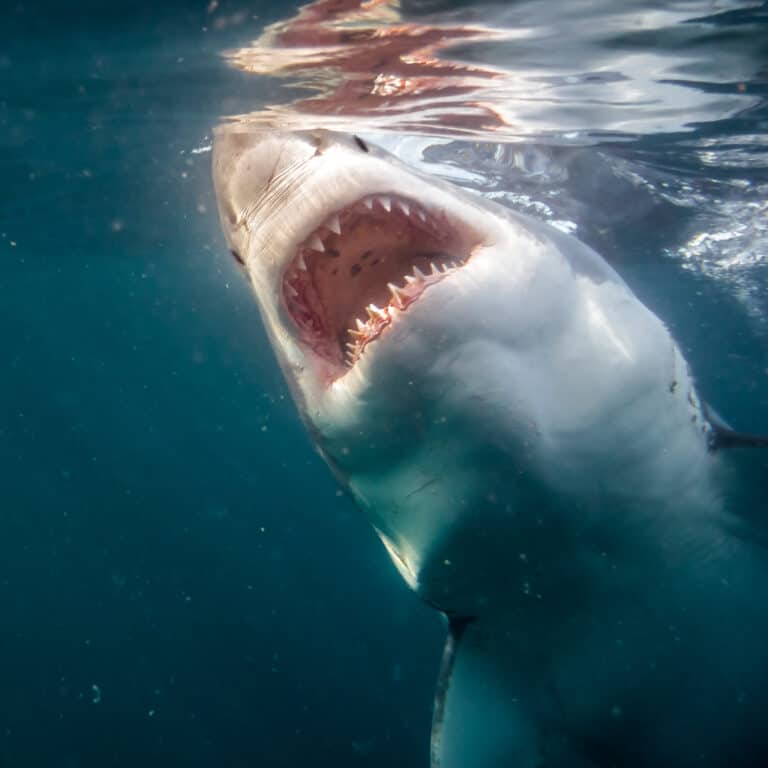
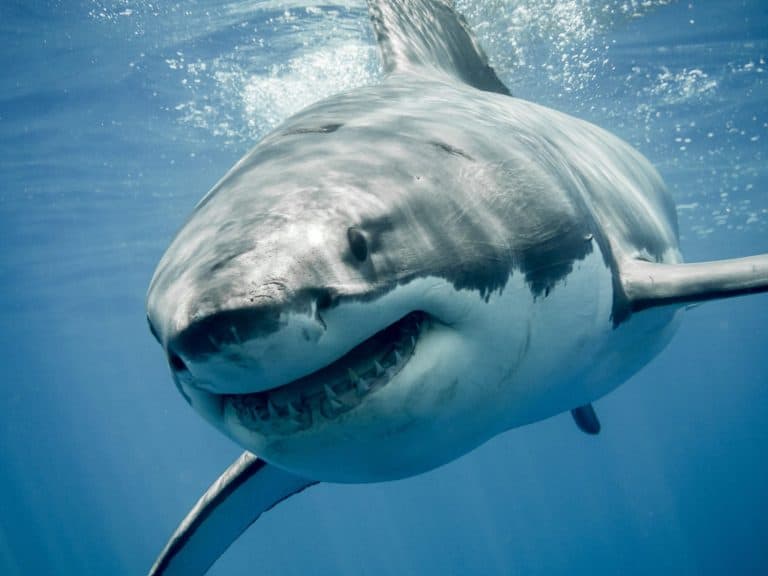
Sharks (class Chondrichthyes) have a reputation for being bloodthirsty creatures thanks to movies like Jaws and television programming such as Shark Week. However, contrary to popular belief, not all shark species are a threat to humanity. In fact, most sharks swimming in the oceans are harmless and present no risk to humans. Only a few aggressive species, such as the tiger shark (Galeocerdo cuvier) and the great white shark (Carcharodon carcharias), have been associated with unprovoked and provoked shark attacks, and even these attacks occur infrequently. Continue reading to discover the 10 most harmless sharks in the world.
Whale Shark
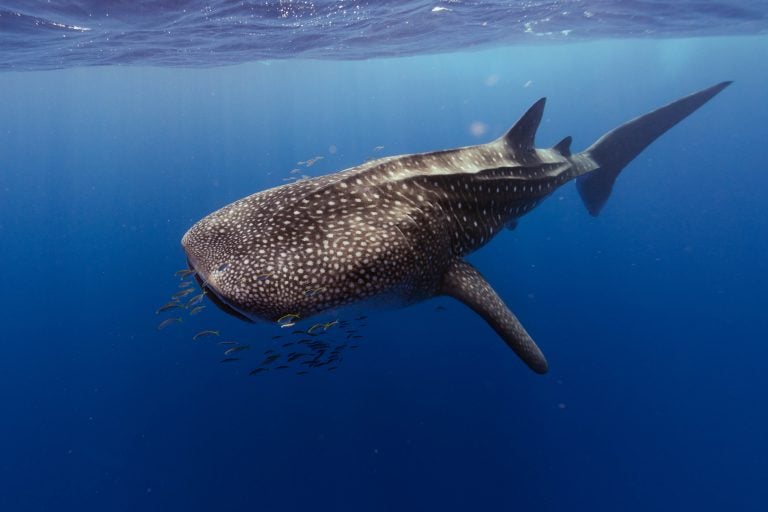
Whale sharks (Rhincodon typus) found in open waters of tropical oceans are very large species, growing more than 30 feet in length. They are filter feeders with tiny teeth that feed almost exclusively on plankton and small fish.
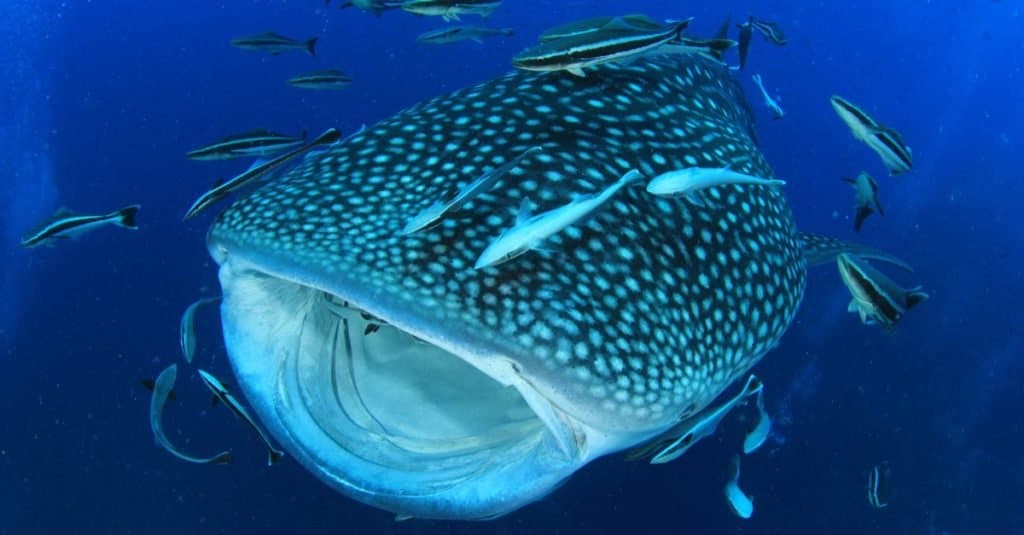
Despite the whale shark’s large size, they do not pose a threat to humans.
©Rich Carey/Shutterstock.com
Despite their large size, whale sharks do not pose a threat to humans. They are docile and sometimes even allow swimmers to ride on their backs. However, this practice has been discouraged due to the disturbance it causes to the sharks. Baby whale sharks are gentle and can also play with divers. Despite their enormous size as the largest shark in the ocean, whale sharks are as harmless as they come.
Common Angel Shark
The common angel shark (Squatina squatina) has a flattened body with wide, wing-like pectoral fins that make it resemble a ray more than a typical shark. While sizes vary by species, the common angel shark can grow up to around 8 feet long, though some sources suggest a maximum closer to 6 feet.
Angel sharks are found in temperate and tropical marine waters worldwide, with different species inhabiting the Atlantic, Pacific, and other oceans, where they dwell on sandy ocean floors to ambush prey.

To match their surroundings, angel sharks can actively change their skin coloring and mottling pattern to blend in with the texture of the sediment on which they are resting.
©LuisMiguelEstevez/Shutterstock.com
Angel sharks usually remain still or swim away when approached underwater. During the day, they lie motionless on the seafloor, burying themselves under a layer of sediment with only their eyes showing.
At night, the angel shark becomes more active and may sometimes be seen swimming above the bottom. However, this species can deliver a severe bite if disturbed or stepped on, even though this does not occur commonly. Otherwise, they are generally not aggressive towards humans.
Nurse Shark
Nurse sharks (Ginglymostoma cirratum) are typically an inshore bottom-dwelling species. They are solitary, nocturnal animals that rifle through bottom sediments in search of food at night but often gather in large sedentary groups during the day.

The average adult nurse shark is around 7 to 8 feet long, though some individuals can grow up to 14 feet in length.
©Maui Topical Images/Shutterstock.com
Nurse sharks present no threat to humans and have been known to attack only when directly antagonized or threatened.
Leopard Shark
The leopard shark (Triakis semifasciata) is found along the Pacific coast of North America, most often encountered in muddy or sandy flats within enclosed bays and estuaries. They generally swim close to the bottom of the water and feed mainly on clams, crabs, shrimp, and bony fish.

No fatal leopard shark attack has been reported.
©evantravels/Shutterstock.com
The average adult leopard shark is 4 to 5 feet long and weighs up to about 20 pounds, though the species can reach a maximum of around 41 pounds. Despite how often they are encountered in the same shallow waters that humans swim in, there have been no fatal leopard shark attacks on record. They are wary and quick to flee when they encounter humans.
Caribbean Reef Shark
The Caribbean reef shark (Carcharhinus perezi) is one of the ocean’s largest apex predators and feeds on various fish and cephalopods. They are often seen resting motionless at the bottom of the sea, which is considered unusual behavior for an active-swimming shark.
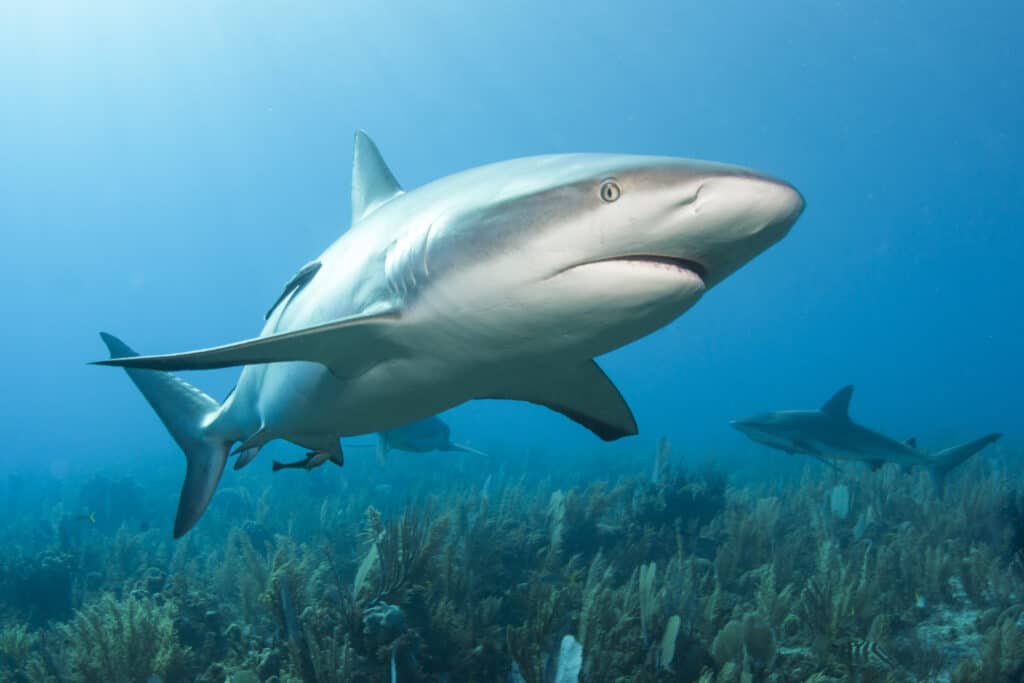
The average adult Caribbean reef shark typically ranges from 6.5 to 9.8 feet in length and weighs between 130 and 154 pounds.
©Konstantin Novikov/Shutterstock.com
the Caribbean reef shark has a reputation for being safe around humans, so much so that some ocean guides have turned feeding them into a popular tourist attraction. However, this practice is considered controversial.
Basking Shark
Basking sharks (Cetorhinus maximus) are the second-largest living shark in the ocean, with adults reaching more than 26 feet in length and weighing 9,300 to 10,200 pounds.
The basking shark is found globally in temperate and boreal (cold-temperate) oceans. They prefer coastal and shelf waters but are highly migratory and frequently cross deep ocean basins and the equator to reach different feeding grounds.
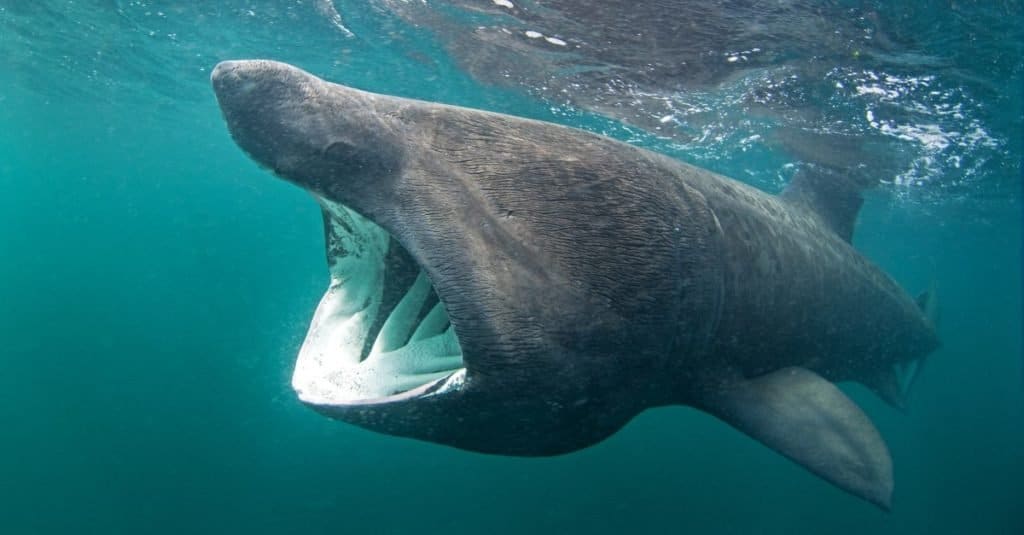
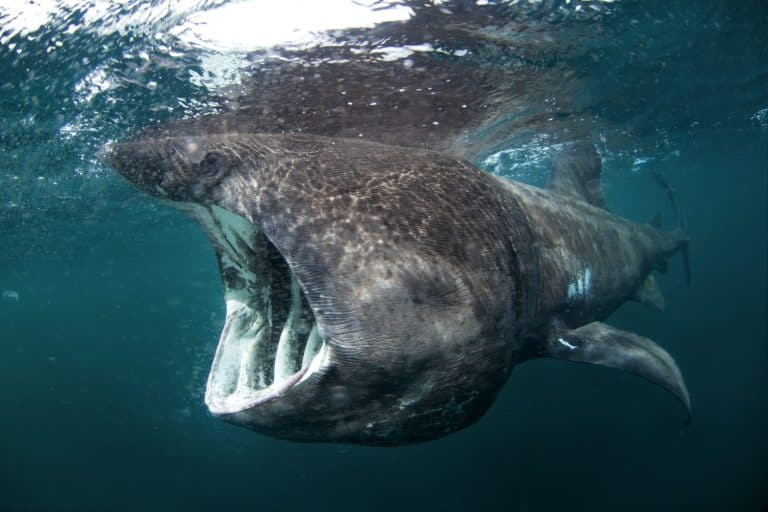
The most impressive feature of the basking shark is its mouth, which opens up to one meter wide.
©Martin Prochazkacz/Shutterstock.com
Despite their giant size and threatening appearance, basking sharks are not an aggressive species, and they are harmless to humans. Basking sharks have no problem with boats and divers approaching them and may even circle divers, making them a significant attraction for dive tourism in areas where they are common.
Sand Tiger Shark
The sand tiger shark (Carcharias taurus) is found in subtropical and temperate waters worldwide. It has a short head with sharp, protruding teeth and a bulky body, reaching up to 10.5 ft in length. Large, mature females are typically larger than males and can occasionally reach a maximum weight of over 500 pounds.
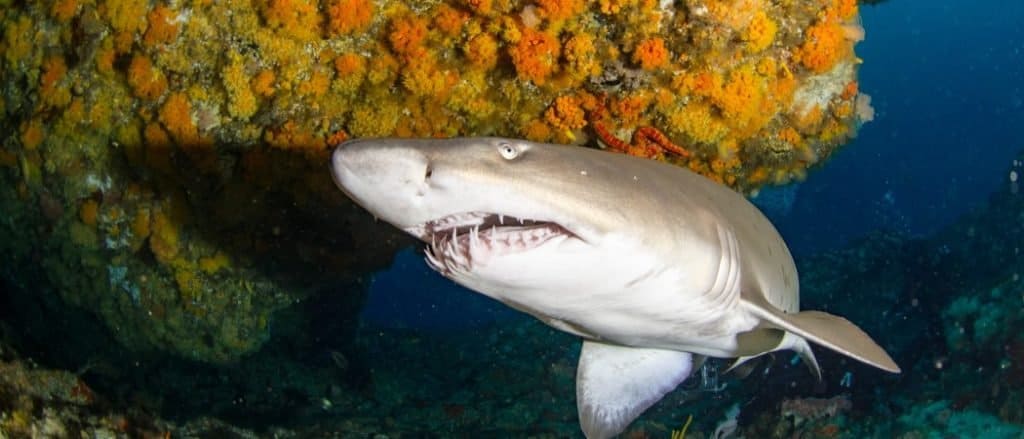
Giant sand tiger sharks feed on crustaceans, bony fish, skates, and squid.
©Stefan Pircher/Shutterstock.com
Despite its frightening appearance and powerful swimming ability, the sand tiger shark is a relatively gentle, slow-moving shark that poses no threat to humans. It feeds on crustaceans, bony fish, skates, squid, and other sharks, but their mouths are not large enough to deliver a fatal bite to a human.
Sand tiger sharks are widely displayed in public aquariums worldwide due to their large size and docile temperament.
Whitespotted Bamboo Shark
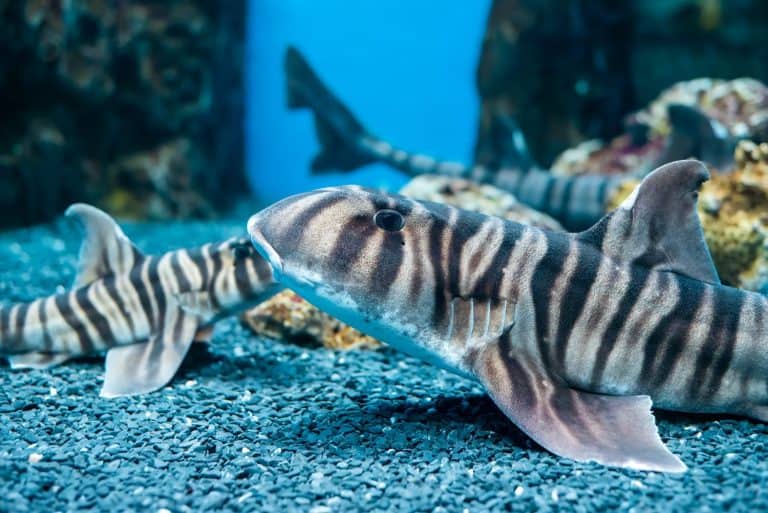
The whitespotted bamboo shark (Chiloscyllium plagiosum) is a relatively small, slow-moving shark measuring about 48 inches in length and weighing between four and nine pounds.

Bamboo sharks may have as many as 67 teeth, but they are harmless to humans.
©Josephine Julian/Shutterstock.com
Whitespotted bamboo sharks are bottom dwellers that rest in reef crevices by day and feed at night. Like most harmless sharks, they are docile and non-aggressive. Whitespotted bamboo sharks pose no threat to humans and have been observed allowing divers to pet them.
Greenland Shark
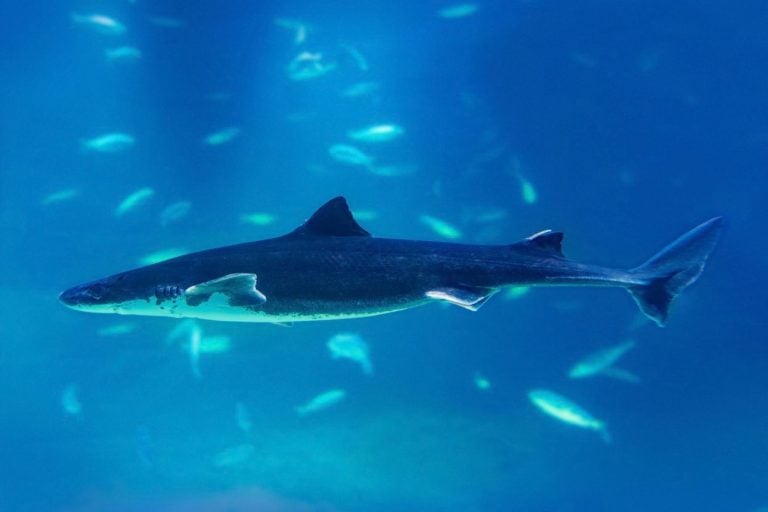
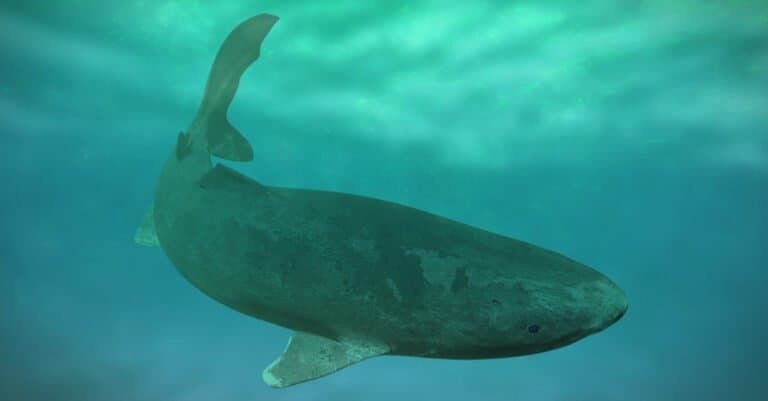
The Greenland shark (Somniosus microcephalus) is distributed in the waters of the North Atlantic Ocean and the Arctic Ocean. A mature Greenland shark averages between 8 and 14 feet in length and can weigh up to 900 pounds.
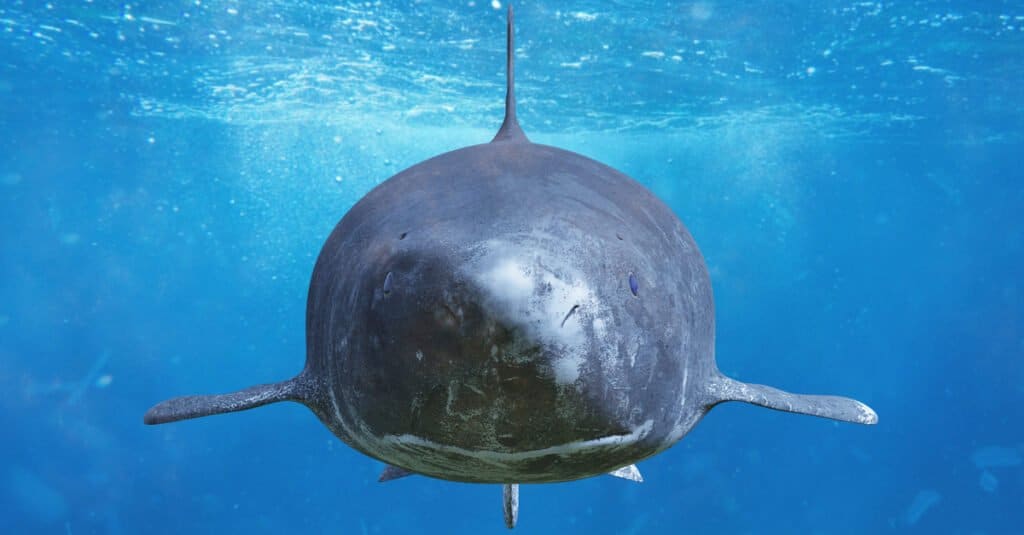
Greenland sharks were once killed and used to make machine oil.
©Dotted Yeti/Shutterstock.com
Greenland sharks typically live in the cold depths of the Arctic and North Atlantic, isolated from human activity and therefore not known to pose a threat to humans. The frigid waters make attacks on humans very unlikely; only one attack, recorded 163 years ago, has ever been documented. Greenland sharks prefer to feed on prey such as eels, herring, skates, lumpfish, smaller sharks, and many other fish.
Pelagic Thresher Shark
The pelagic thresher shark (Alopias pelagicus) is widely considered the most gentle and approachable of the three extant thresher shark species. The pelagic thresher shark is the smallest of all the thresher species, with an average adult length of 10 feet and an average weight of 153 pounds.

Thresher sharks are solitary creatures that like to keep to themselves and do not appear to be a threat to humans.
©bearacreative/Shutterstock.com
Pelagic thresher sharks are occasionally sighted in shallow coastal waters, although they prefer the open ocean at depths of less than 500 meters. Their name derives from their exceptionally long tails, which they use to stun their prey. Despite their somewhat aggressive hunting characteristics, thresher sharks are solitary creatures that keep to themselves and do not appear to be a threat to humans.