
Quick Take
- Deer can jump remarkably high, so it raises the question of why these two didn't simply leap over the fence and escape instantly. See why they didn't jump →
- Rushing to help a trapped deer can make things dramatically worse, and there is a safer instinct that needs to be overridden first. Watch the trapped deer →
- White-tailed deer have a speed and jumping ability that makes most fences look like suggestions, and the numbers are genuinely hard to believe. See the speed and jump stats →
- The deer didn't wait for help. They engineered their own exit, and the method isn't what you'd expect. See how they escaped →
Seeing a wild animal trapped can make you want to jump in and help immediately, but that is not always the safest move. A frightened deer is powerful, unpredictable, and capable of injuring itself or anyone who gets too close. When wildlife is injured or genuinely unable to free itself, the safest option is usually to give the animal space and contact a wildlife professional rather than trying to handle it yourself.
In this case, the two deer do not need anyone to pull them out. The video shows them searching for a way out of a small fenced enclosure before eventually creating an exit of their own.
Deer Get Trapped Behind a Fence
The short clip at the top of this post shows two deer inside what appears to be a small fenced enclosure. There is a small shelter and a pool of water inside, but no dogs in sight. Exactly how the deer ended up inside is not clear from the video. What is obvious is that both animals are trying to find a way back out.
Why Don’t They Just Jump the Fence?
As the video continues, the deer repeatedly move along the fence and push against it while looking for an exit. At first glance, you might wonder why they do not simply jump over it. Deer are excellent jumpers, but the layout of an enclosure can matter. The University of Arizona recommends fencing about 8 feet high when the goal is to keep deer out. It also notes that shorter fencing can sometimes work around small enclosed areas because deer can be reluctant to jump when there is limited space on the other side.
There also appears to be a covering or tarp above part of the enclosure, which may limit the amount of open space the deer have for a jump. Whatever the reason, these two choose a different route. After several attempts against the fence, they manage to force their way out and immediately run from the area.
How Fast Can Deer Run?
Deer are herbivore eaters.
©Tom Reichner/Shutterstock.com
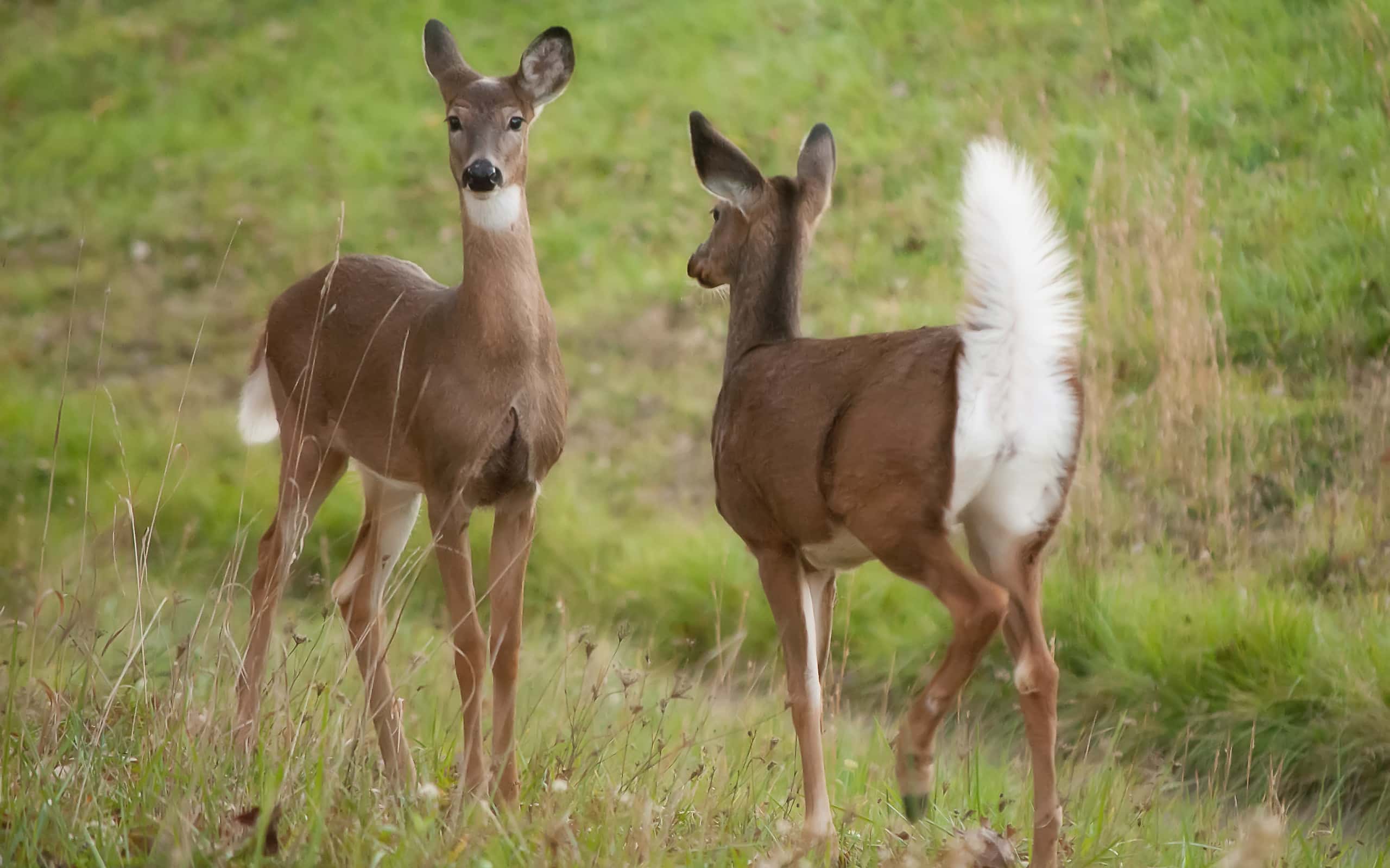
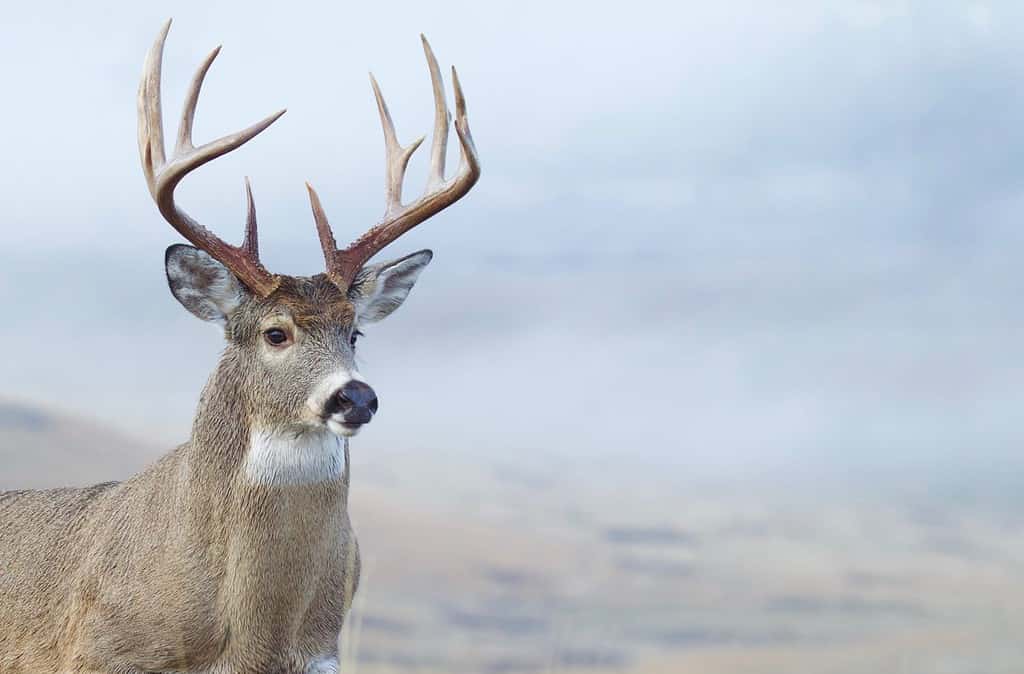
Running speed varies among deer species, so there is no single number that applies to every deer in the world. For comparison, the Maryland Department of Natural Resources reports that white-tailed deer can reach about 35 miles per hour for short distances. They can also clear a 7-foot fence from a standing position and an 8-foot fence while running. Speed and jumping ability help deer get around obstacles and escape danger.
Deer also rely on sharp hearing, eyesight, and a keen sense of smell to detect potential threats. Predators vary depending on the species and where the deer lives, but those senses can give a deer valuable warning before it has to rely on its speed. In this video, once the two deer finally find an opening, they do not waste much time hanging around.