
Quick Take
- One wrong assumption about how constrictors kill their prey turns out to be surprisingly widespread, and the truth changes how dangerous these snakes really seem. See how constriction works →
- The declines in native Everglades wildlife since pythons arrived are far worse than most people would guess, with researchers reporting numbers that are genuinely alarming. See the alarming decline data →
- How a pet-trade snake ended up dominating one of America's most iconic ecosystems is a stranger story than it sounds. Trace the invasion's origins →
- Handling a nonvenomous snake sounds relatively safe, yet a python this size carries risks most people never consider. Understand the capture risks →
Trying to control a 17-foot snake would be intimidating enough on dry land. Now imagine doing it while standing in the water, where the enormous reptile has plenty of room to twist, thrash, and fight against being restrained. That’s the situation facing three python hunters in this remarkable footage from the Florida Everglades. As the men struggle to pull an enormous Burmese python from the water, the snake makes it clear that it isn’t going anywhere without a fight. But why are hunters removing these massive snakes from Florida’s wetlands in the first place?
Watch Three Hunters Struggle to Control This Giant Python
An Enormous Python Puts Three Hunters to the Test
The footage, shared by the Instagram account @thesnakeaholic, captures a tense encounter between three python hunters and an enormous Burmese python in the Florida Everglades. The account, operated by a professional python hunter, describes the snake as measuring approximately 17 feet long, although that measurement cannot be independently confirmed from the video alone.
As the clip unfolds, the three men work together to control the massive reptile while standing in the water. The python twists and struggles against their grip, making the capture considerably more difficult than simply picking up a snake and carrying it away. With an animal this large, even experienced handlers have to be careful about its strength and ability to wrap around anything within reach.
Eventually, the hunters manage to bring the python out of the water. It’s an impressive sight, but there’s a much bigger story behind the encounter. These hunters aren’t simply searching for giant snakes. They’re participating in efforts to remove one of the most destructive invasive predators threatening South Florida’s native wildlife.
Why Are Burmese Pythons Living in the Everglades?

Burmese pythons became established in South Florida after captive snakes escaped or were deliberately released into the wild.
©Sumeth anu/Shutterstock.com
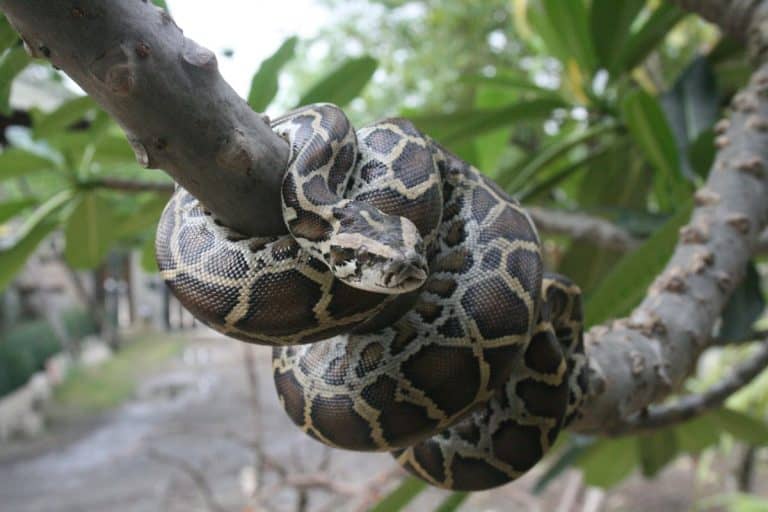
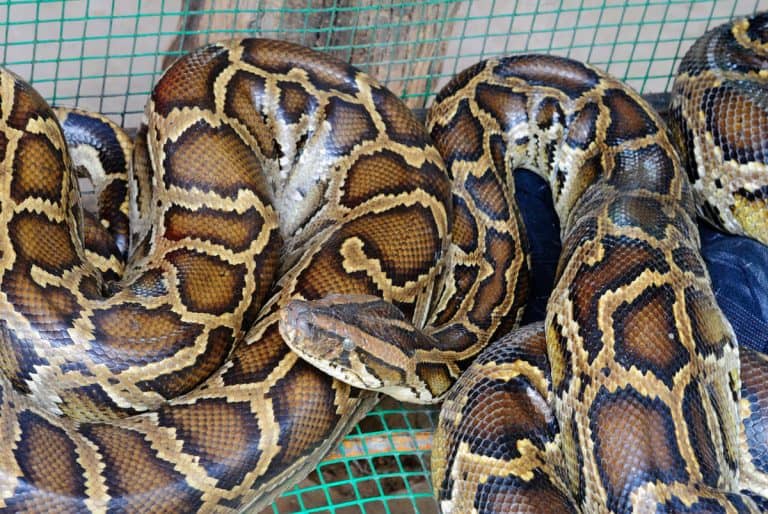
Burmese pythons (Python bivittatus) are native to parts of South and Southeast Asia, including regions of India, southern China, and the Malay Peninsula. They inhabit a variety of environments, including forests, grasslands, marshes, and wetlands. However, they are not native to North America, and their presence in the Florida Everglades has become a serious ecological problem.
According to the Florida Fish and Wildlife Conservation Commission, Burmese pythons are an established invasive species in South Florida. Their introduction is closely associated with the exotic pet trade, as captive animals escaped or were intentionally released into the wild. Sightings date back decades, and breeding populations were established by around 2000.
Unfortunately, South Florida provides an almost ideal environment for these enormous constrictors. The region’s warm temperatures, extensive wetlands, and abundant prey allow them to survive and reproduce. Adult females can lay dozens of eggs at a time, helping their populations expand through suitable habitats.
Because Burmese pythons are extremely difficult to detect in dense vegetation and waterways, determining exactly how many live in the Everglades remains a significant challenge. Wildlife managers continue using trained removal contractors, research programs, and public reporting efforts to locate and remove the invasive snakes.
What Do Burmese Pythons Eat?
One reason Burmese pythons have become such a serious problem is their ability to consume an astonishing variety of prey. These powerful carnivores feed on mammals, birds, and other vertebrates, swallowing animals whole after overpowering them through constriction. Contrary to a common misconception, constrictors don’t simply crush their prey. Their coils interfere with circulation, causing the animal to lose consciousness.
In their native habitats, Burmese pythons eat animals ranging from rodents and birds to larger mammals. In Florida, their diet includes raccoons, opossums, rabbits, wading birds, and other native wildlife. Particularly large individuals can even consume sizable prey, including deer and alligators.
Adult Burmese pythons have relatively few natural predators in South Florida, although alligators and some other native animals are capable of killing them. Their ability to consume such a wide range of species makes them a serious threat to the balance of the Everglades ecosystem.
How Much Damage Have Pythons Caused in the Everglades?
The impact of invasive Burmese pythons is more than just a theory. Researchers have documented dramatic declines in sightings of several native mammal species in parts of Everglades National Park where the snakes have become established.
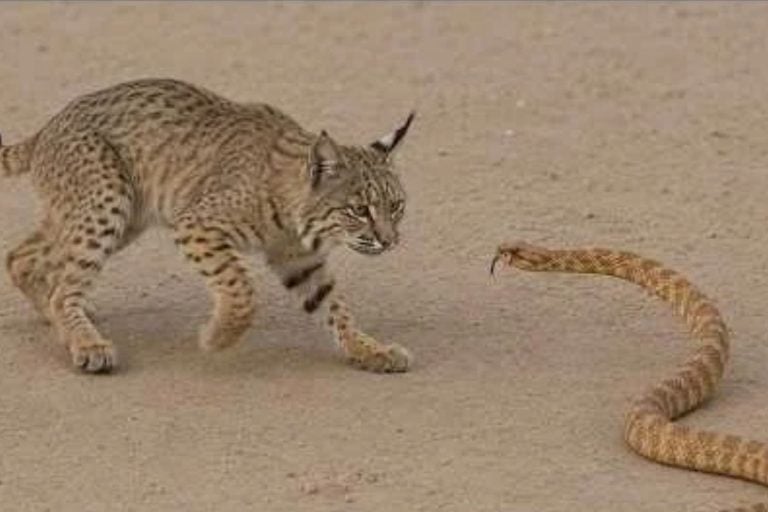
A 2012 study published in the Proceedings of the National Academy of Sciences compared wildlife observations before and after Burmese pythons became widespread. Researchers found that roadside observations of raccoons declined by 99.3%, opossums by 98.9%, and bobcats by 87.5%. They also recorded no foxes or rabbits during their later surveys.
Importantly, those percentages describe changes in how frequently animals were observed during surveys, rather than direct measurements of their total populations. Nevertheless, the findings revealed an alarming pattern. Subsequent research has provided further evidence that python predation contributes to severe declines in native wildlife, particularly small and medium-sized mammals.
That’s why the hunters in this footage are doing more than simply capturing an unusually large snake. Removing invasive pythons is one part of a broader effort to protect the Everglades and the species that depend on its fragile ecosystem.
Is It Safe to Capture a Burmese Python?
Although Burmese pythons are nonvenomous and attacks on humans are uncommon, handling a snake of this size can be extremely dangerous without proper training. Large individuals possess powerful muscles, sharp backward-curving teeth, and the ability to strike or wrap around a person attempting to restrain them.
Florida allows Burmese python removal under specific rules, but that doesn’t mean an inexperienced person should attempt to wrestle a giant snake out of the water. Anyone encountering a suspected invasive python can report the sighting to the Florida Fish and Wildlife Conservation Commission at 888-IVE-GOT1 (888-483-4681).
The encounter captured in this video is certainly impressive, but it also illustrates how challenging invasive-species management can be. And with Burmese pythons continuing to threaten native wildlife, the effort to protect the Everglades is far from over.