





Quick Take
- Burmese pythons can do something most reptiles cannot, which is reproduce entirely without a mate. The mechanism behind it is stranger than you'd expect. Parthenogenesis explained →
- These snakes are apex predators capable of taking down alligators, yet something surprisingly mundane is their biggest threat. Their biggest threats →
- Their genome is teaching scientists something unexpected about human disease, a process that all starts the moment they swallow a meal. Genome and disease research →
- Florida's Burmese python problem didn't start in the wild, and the real origin story is more irresponsible than most people realize. Florida invasion origins →
Burmese pythons have beautifully patterned skin and a rapid growth rate. For anyone looking to adopt a new reptile, the Burmese python should be reserved for individuals who have more experience with this type of animal. Far too many adopters end up neglecting them, releasing them into the wild instead.
By nature, the Burmese python won’t seek out humans to hunt and kill them. However, if they are mishandled or threatened, there is a risk of attack (though it is admittedly low). Of all of the Burmese pythons that live in Florida (where they are an invasive species), no human deaths have been reported. That said, you can consider them one of the world’s top apex predators.
They are one of the largest snake species in the world. The lifespan of Burmese pythons is around 20 years, but the record for the longest life was 28 years. Albino Burmese pythons are among the most popular color variations.

5 Incredible Burmese Python Facts
- The Burmese Python can have a girth as wide as a telephone pole.
- They have beautifully patterned skin, though the albino Burmese pythons are known to be the most popular.
- Burmese pythons might not be the best snake choice for potential reptile owners since they require experience to raise them properly.
- In Florida, Burmese pythons are an invasive species, which means that they are not native to the area and can cause major harm to the economy or environment.
- They are endangered due to the high demand for their skin and flesh in the market.
Evolution and Origins
The Burmese python has undergone incredible evolutionary adaptations that enable it to consume prey as large as their own body. This is accomplished through their genetic ability to alter their metabolism and enlarge their organs post-meal. Additionally, they have evolved to become long, limbless creatures with a hinged jaw, a reduced lung, and an elongated skeleton, . They also are able to adjust their metabolism depending on the availability of food.
Researchers from multiple nations studied the genetic makeup of the Burmese python and the king cobra. They compared the two, as well as pieces of the genomes of other reptiles, birds, amphibians, and mammals, to examine how the snake uses the same genes that humans have to do things that no other vertebrates can do. This incredible evolution was explored in order to gain insight into how pythons are such remarkable eaters.
By comparing the snake genome, scientists were able to observe how beneficial traits, like the Burmese python’s ability to open its jaws wide, have been rapidly adopted over time. This speed is an unprecedented occurrence in the evolutionary history of animals.
Snakes possess their unique characteristics due to a combination of mutations in DNA, alterations of how the instructions in DNA are interpreted in the body, and changes in the reptile’s proteins. After eating, thousands of genes must coordinate in order to bring about changes in the python’s body. The genes involved are like the blueprints for the proteins that form the body’s tissues, and the process of carrying out these genetic plans is referred to as gene expression. There is an increase in gene activity after a python consumes food. Some genes that have been dormant become more active and produce large amounts of proteins that promote growth or metabolism.
The Burmese python is known for its remarkable physiology, and its genome provides an opportunity to further explore the molecular processes that enable it to significantly enhance its metabolic rate, expand the size of its organs, and suppress acid production. This research has potential implications for the treatment of metabolic diseases and cancer in humans.
Classification and Scientific Name
Burmese pythons go by the scientific name Python bivittatus. They belong to the kingdom Animalia and phylum Chordata. The class is called Reptilia, and the order is called Squamata. Meanwhile, the suborder is called Serpentes, and the family is called Pythonidae. The genus is called Python, and the species is called P. bivittatus.
The word “bivittatus” comes from Latin and means “having two bands or stripes.” Considering the pattern of the Burmese python’s scales, it is easy to see how this description matches them well.
Appearance
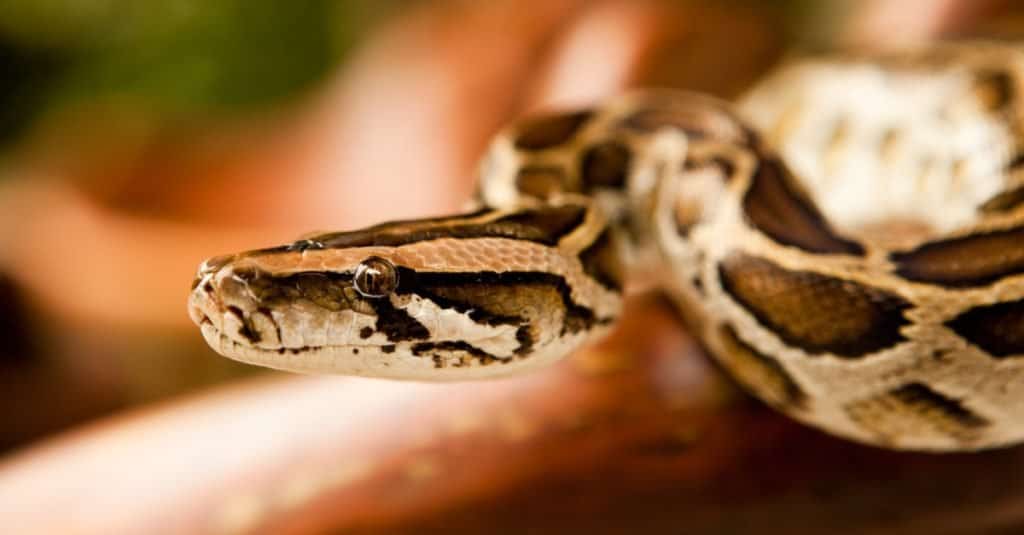
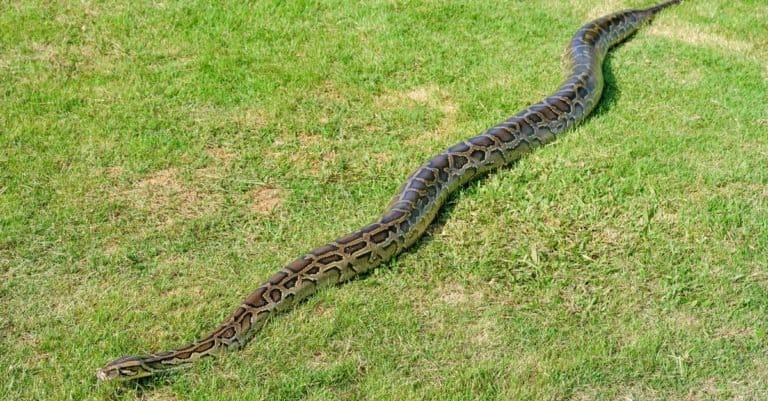
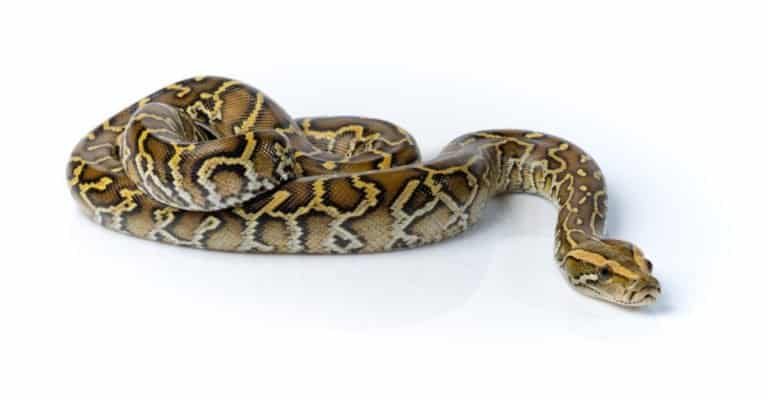
Burmese pythons can weigh up to 200 pounds.
©lunadoc/Shutterstock.com
Burmese pythons are known to be one of the largest snake species in the world. These snakes can often reach up to 23 feet in length (though reaching a length of 15 to 20 feet is more typical), and they can weigh up to 200 pounds. One of their most striking characteristics is their girth, which can be as wide and thick as a telephone pole. However, when they are born as hatchlings, the Burmese pythons are only about two feet long.
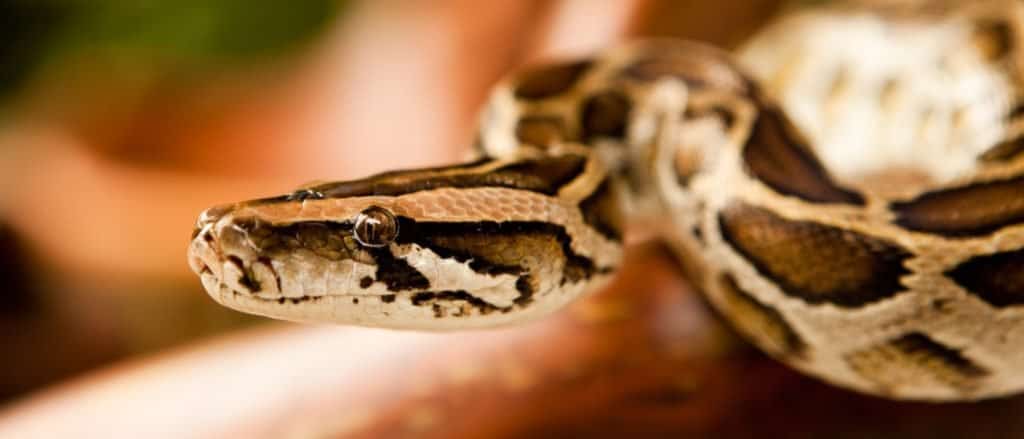
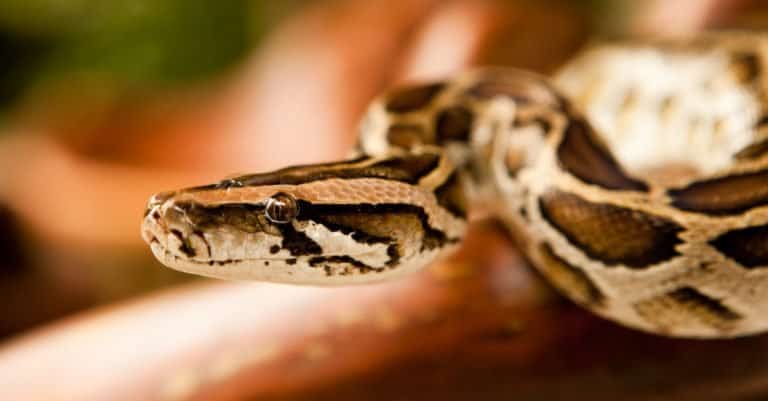
Burmese pythons are tan in color and have dark spots on the back and sides of their bodies, mimicking the same pattern that is commonly found on the giraffe. These patches, however, are not placed uniformly over their skin and can often look like puzzle pieces put together.
The Burmese pythons that are found in Florida usually grow to be only 6 to 10 feet long, and the adults can reach the same size as native snakes. The albino Burmese pythons are known to be the most popular.
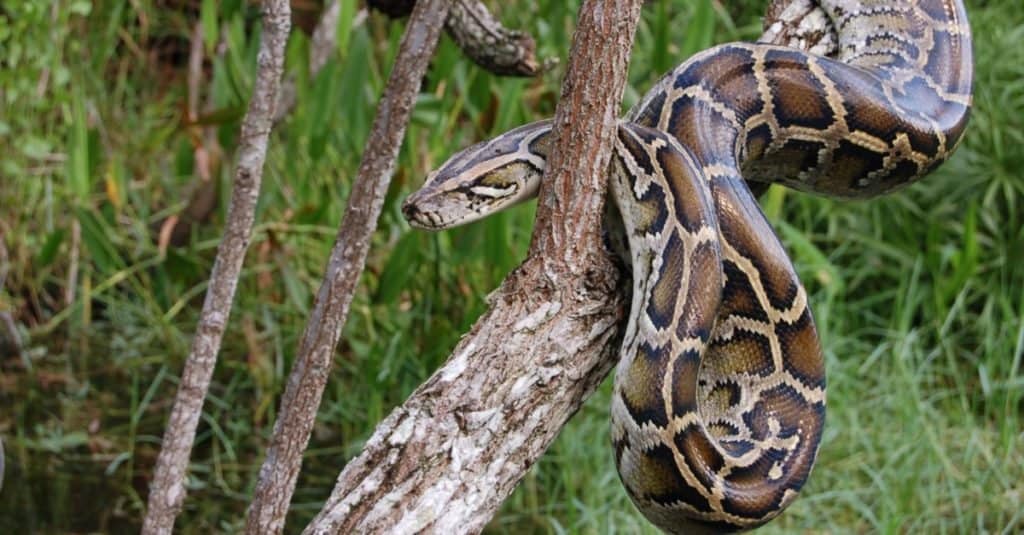
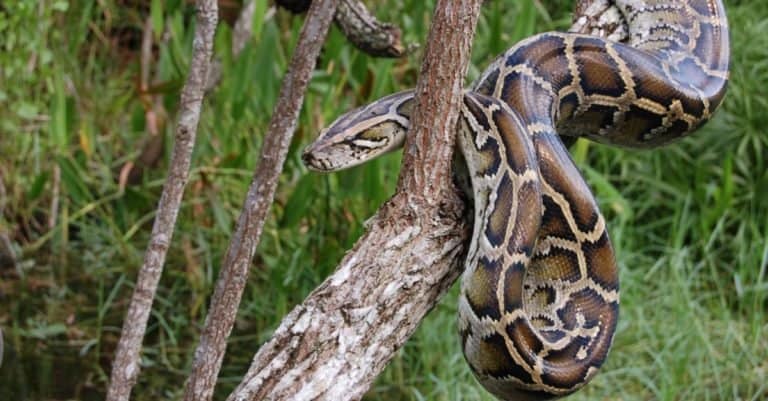
Burmese Python hanging in a tree, waiting for prey.
©Heiko Kiera/Shutterstock.com
Behavior
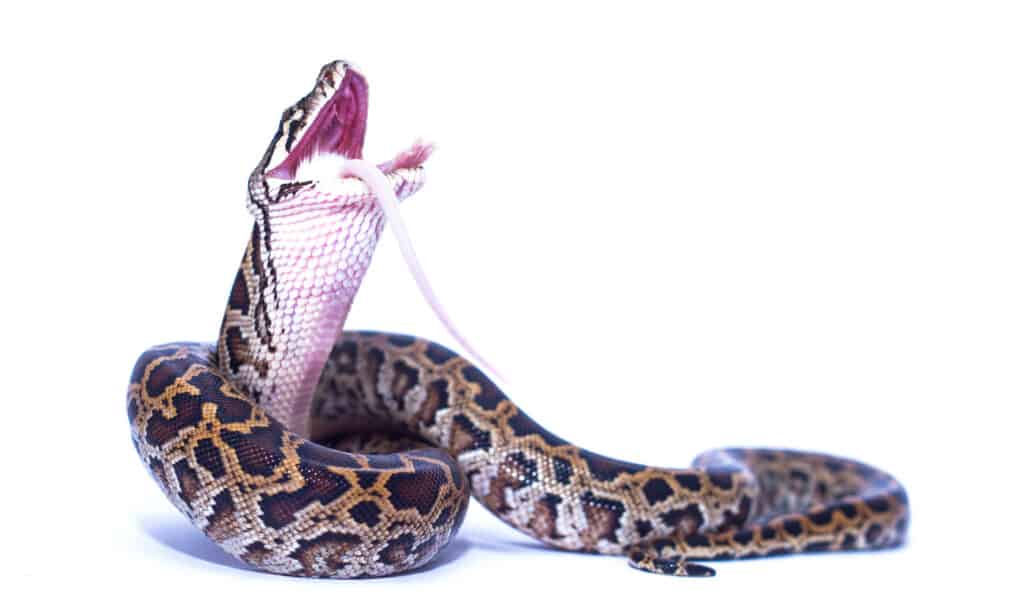
Young Burmese pythons like to spend time in trees, but older ones are usually too heavy.
©Firman Wahyudin/Shutterstock.com
Young Burmese pythons like to spend their time in trees. However, as they mature and grow older, their height and weight can make it difficult to climb to the same heights, leading them to spend most of their time on the ground or in other low-level habitats.
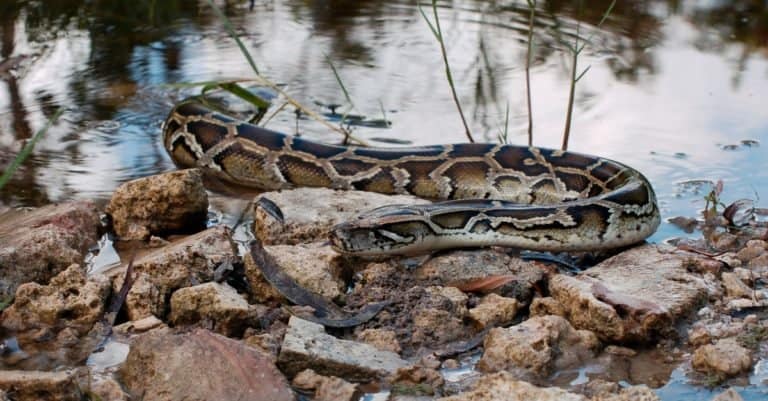
When not on land, these pythons are excellent swimmers and can stay underwater for up to 30 minutes before they have to come up for air. Despite being capable of moving in many ways, these pythons are solitary animals. The only time that the Burmese python is typically seen with another one of its kind is during mating season, which typically occurs in the spring. They are relatively easy to breed in captivity.
The Burmese pythons are known to be an invasive species in Florida since they are not native to the area. Unfortunately, they are often found in the region because they are released by reptile owners who can’t take care of them, which is harmful to the area’s ecology. These pythons can severely damage the ecosystem by hunting mammals, which can cause major population declines. These pythons have such power and strength that they can even feed on alligators, leading local researchers to take notice of the unnatural preying and feeding on native animals by the Burmese python.
Habitat
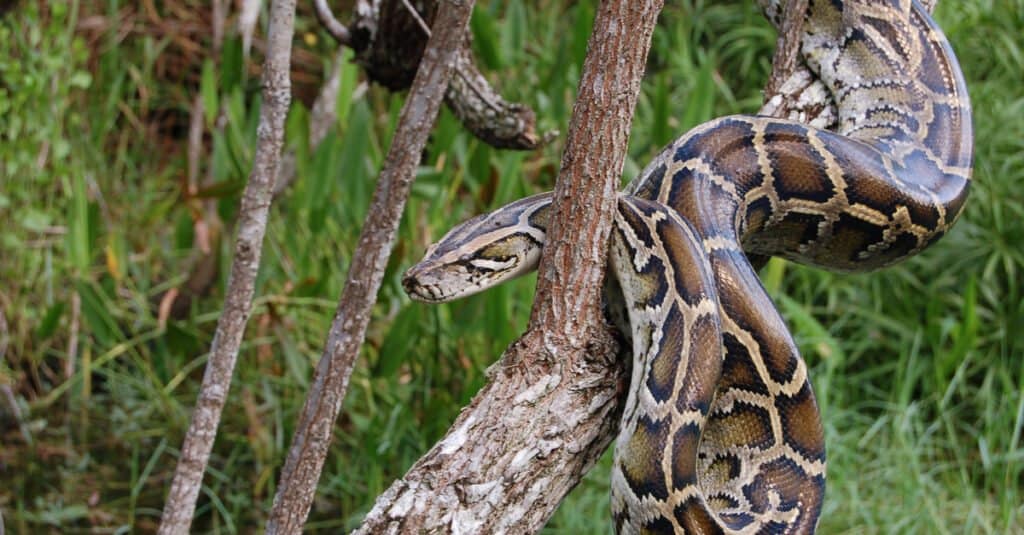
Since pythons do not close their eyes while sleeping, it is difficult to assess whether or not the snake is awake at any given moment.
©Heiko Kiera/Shutterstock.com
Typically, these pythons are native to jungle areas and grassy marshes of Southeast Asia. These snakes are native to Asia and can be found from eastern India through Vietnam and southern China. They are also found in Florida, though the release from former owners has wreaked havoc on the environment, which is why they are considered an invasive species.
Due to the extreme weather, these pythons are not often found in southern Thailand, Myanmar, or the western parts of Malaysia. Instead, it is easier to locate them in the islands of Java, Bali, small parts of Sulawesi, and Sumbawa.
Diet
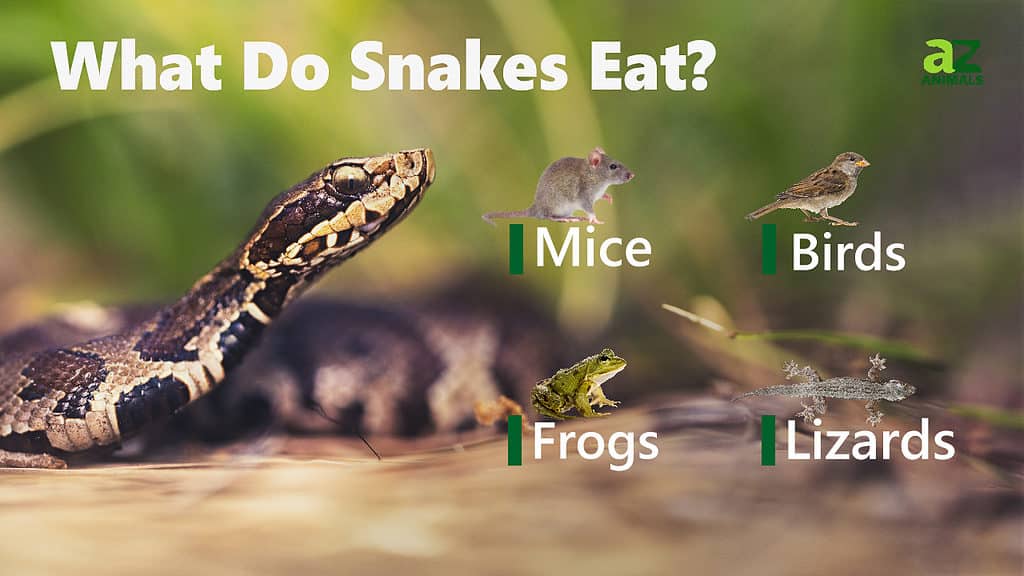
These pythons are carnivorous, primarily surviving on small mammals and birds. These snakes have poor eyesight and stalk their prey using chemical receptors in their tongues. They also use heat sensors along their jaws, and they move slowly. In fact, these animals only move at a pace of about a mile per hour, giving them plenty of time to sense their surroundings.
These pythons are known to grasp their prey with their sharp teeth and coil their bodies around the prey. They then squeeze the prey until it suffocates. These reptiles have very stretchy ligaments that allow them to swallow their food whole.
These pythons eat pinky mice when they are babies, though pet owners can still feed them adult mice and rabbits when they mature. Their powerful jaw and bodies make it easy to consume an entire chicken by themselves.
While the pythons make an important part of the food chain, they have also been responsible for the disruption of the ecosystem. This happens when these reptiles eat unnatural amounts of their prey species, causing local prey populations to decline. The ecosystem is then disrupted.
Predators and Threats
Because they are massive in size, these pythons do not have a lot of predators. However, several alligators and humans tend to be some of the predators they do have. Human activities like industrialization and urbanization also impact the local populations of these pythons negatively.
These snakes are now considered vulnerable because their habitat has been depleted and demand for them as pets and even as a culinary delicacy is high. People hunt them down for authentic Burmese python skin, which is why their demand in the market remains so high.
Reproduction and Life Cycle
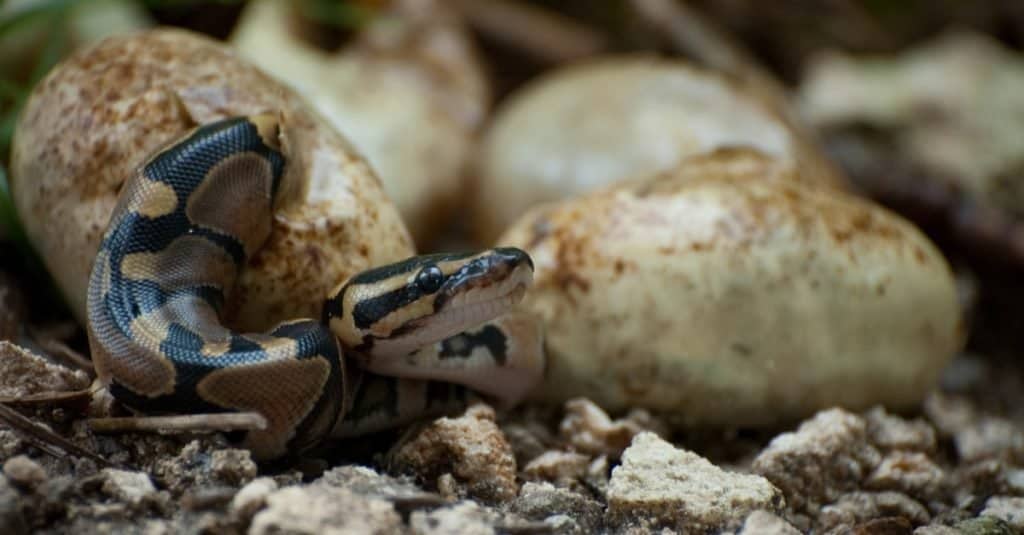
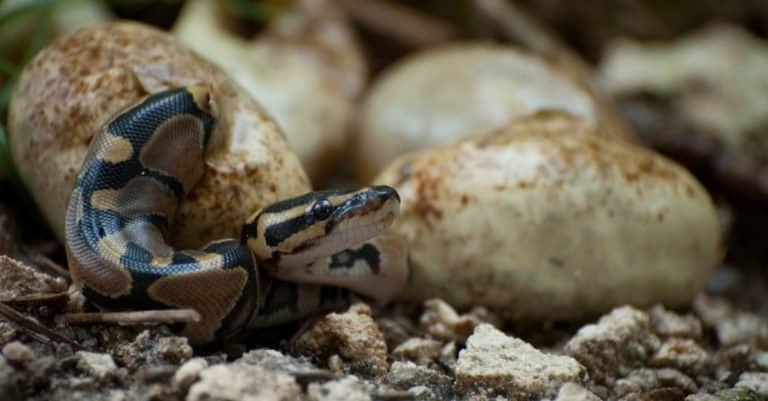
Burmese Pythons can incubate up to 100 eggs at a time.
©Heiko Kiera/Shutterstock.com
One of the most remarkable characteristics that scientists have discovered about this animal is that these pythons can, unlike most reptiles, reproduce via parthenogenesis (i.e., asexually). Isolated females in captivity without any contact with the male Burmese pythons can still produce viable eggs. After genetic analysis, researchers ultimately found that the hatchlings produced from this type of reproduction were genetically identical to their mothers.
These pythons are not creatures that can be seen in groups. They are usually solitary and come together only during spring mating time. Female Burmese pythons can lay clutches of up to 100 eggs, incubating them for up to three months before the hatchlings emerge. In a bid to keep their eggs warm, the female Burmese pythons continually shiver and contract their muscles.
These pythons are easy to breed in captivity. The lifespan of these snakes is about 20 years.
Population
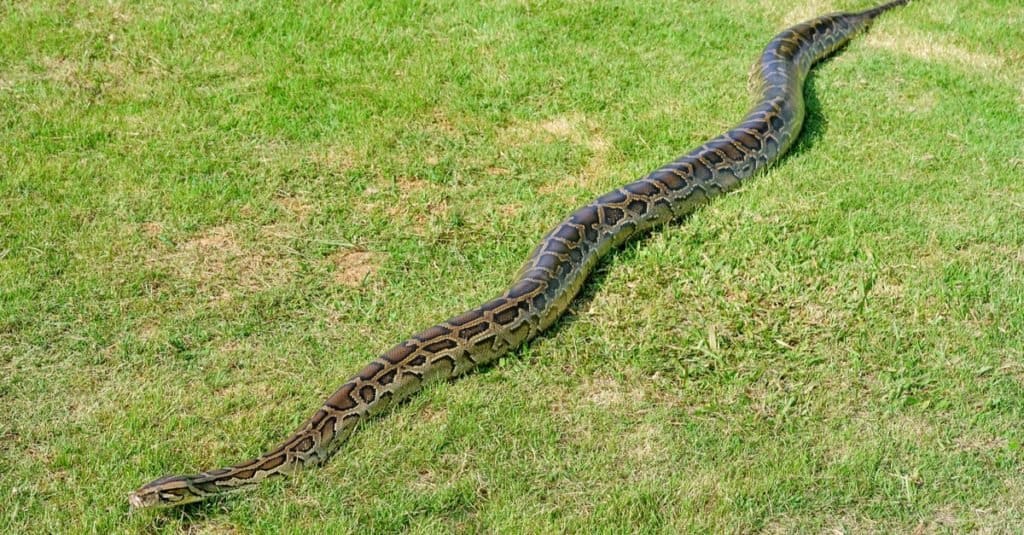
Burmese Pythons are vulnerable to extinction because of humans.
©Yatra/Shutterstock.com
While it is not possible to determine exactly how many of these pythons there are in the world currently, rough estimates suggest that there are about 30,000 or more. However, over time, their high demand has put them on the list of endangered reptile species because of human activities. They are in high demand as people hunt them down for skin and flesh.
The Burmese python population is estimated to be declining. They are listed as vulnerable on the International Union for Conservation of Nature (IUCN) Red List due to a variety of threats, including illegal hunting, habitat loss from deforestation, being killed by cars on roads, and being killed as pests or predators.
Deforestation due to animal agriculture has a large impact on Burmese python populations because it reduces available habitat for the species. The destruction of forests also eliminates shady hiding spots where pythons like to warm up during cold nights. Additionally, increased agricultural activity has led to more human-python interactions, which can result in the death of both humans and snakes. In order to help conserve Burmese pythons, conservation efforts should focus on protecting existing habitats while also working with local communities and governments toward reducing deforestation caused by animal agriculture.
Burmese Python Pictures
View all of our Burmese Python pictures in the gallery.

lunadoc/Shutterstock.com
Sources
- National Geographic / Accessed June 11, 2021
- Everglades Cooperative Invasive Species Management Area / Accessed June 11, 2021
- Wikipedia / Accessed June 11, 2021
- Empora Pets / Accessed June 11, 2021
- Burmese Python Care / Accessed June 11, 2021
- USGS / Accessed June 11, 2021