
Quick Take
- Crested geckos are small lizards that are native to New Caledonia.
- The crested gecko, once thought to be extinct, has made a remarkable comeback as a popular pet.
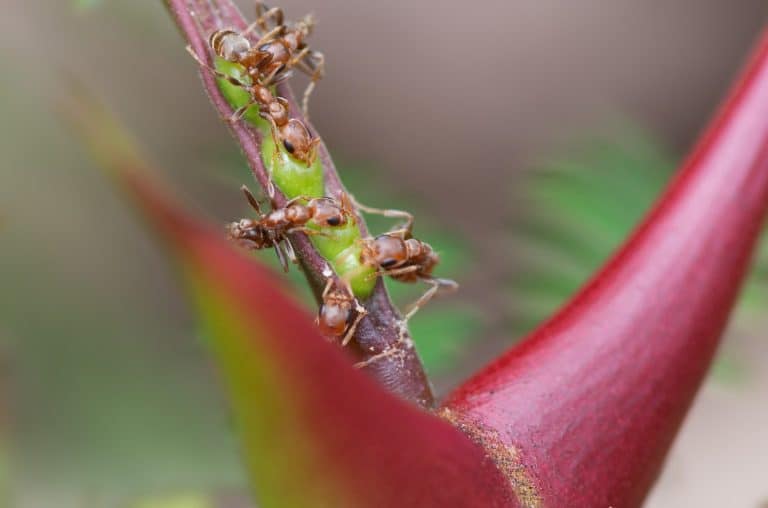
- Unintentionally introduced to New Caledonia in the early 1960s, little fire ants pose a threat to crested geckos.
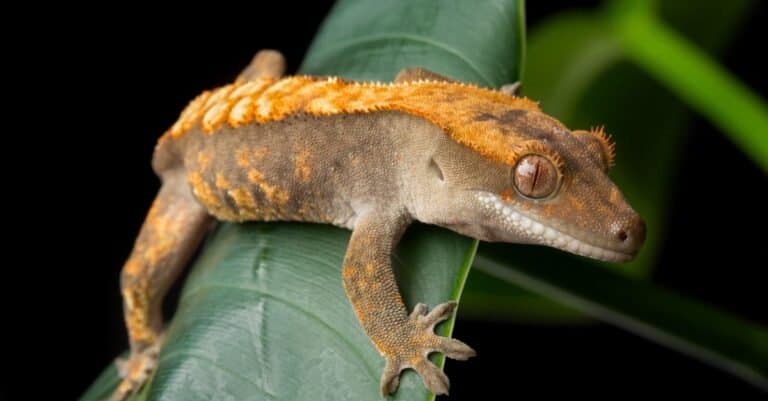
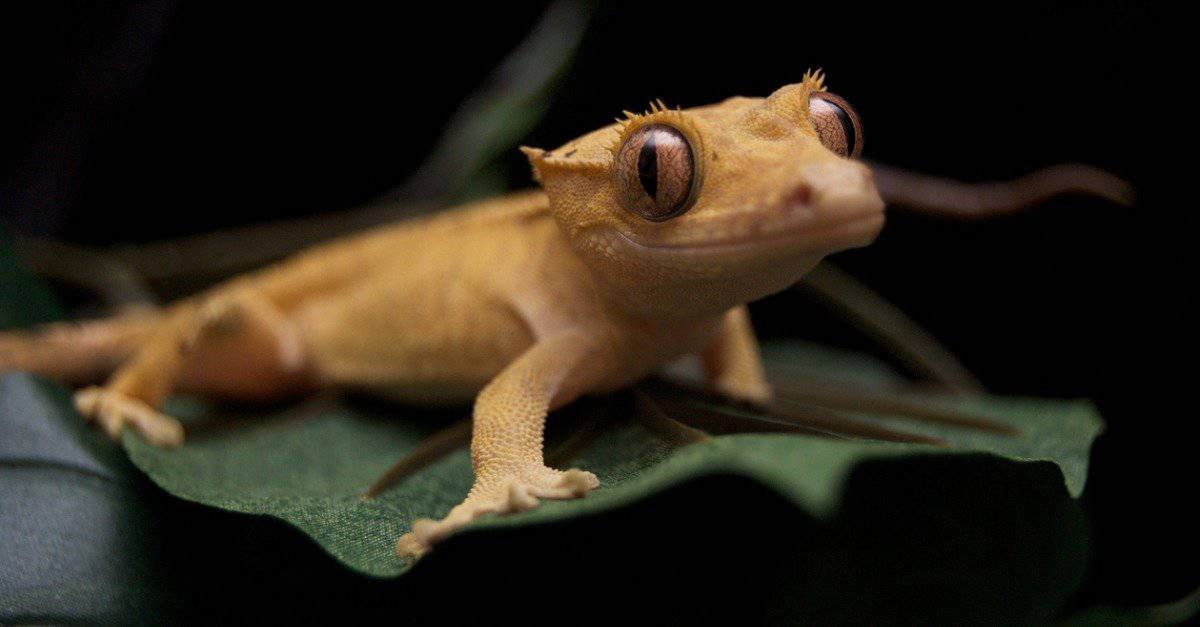
Crested geckos (Correlophus ciliatus) are small lizards known for their unique appearance. They are sometimes referred to as eyelash geckos because the small crests around their eyes give them the appearance of having voluminous eyelashes. Adult crested geckos are between 8 and 10 inches long (including their tail) and weigh between one and two ounces. In the wild, crested geckos are omnivores that consume a varied diet of insects, overripe fruit, and nectar. Native to New Caledonia, crested geckos are nocturnal foragers that hunt insects like crickets and spiders, while also consuming ripe fruit found in the rainforest canopy. Continue reading to discover everything you need to know about what crested geckos eat.
What Do Crested Geckos Eat?
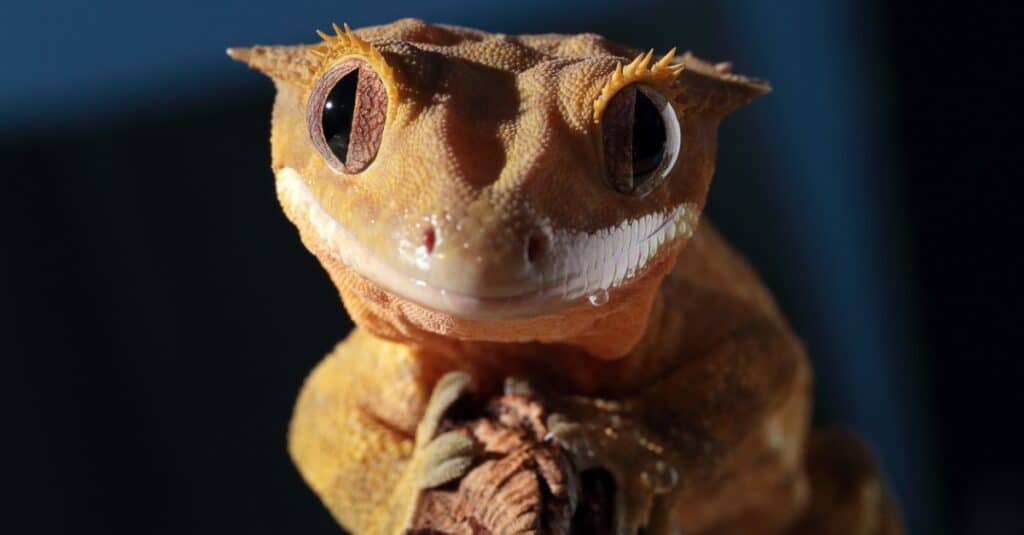
Crested geckos eat crickets, grasshoppers, spiders, fruit, and worms.
©iStock.com/MattiaATH
As lizards, crested geckos eat numerous varieties of small insects and fruit. In the wild, crested geckos eat crickets, grasshoppers, spiders, fruit, and worms. In captivity, pet crested geckos typically eat insects, specially formulated pellets, and fruit.
Crested geckos are omnivores, meaning they eat both plant and animal matter in the wild. Their diet includes a variety of insects, overripe fruit, and, in captivity, commercial substitutes from pet stores. However, it’s important to keep in mind that the diets of wild crested geckos haven’t been intensely studied; there are, however, plenty of sources that explore food sources for pet crested geckos.
Crested geckos also eat fruit. While certain conditions must be met for a gecko to eat fruit, it is a common supplement to their diet. The main requirement for a crested gecko to eat fruit is that the fruit is soft. Soft and overripe fruits are a tasty treat for crested geckos, and they commonly find these fruits in the wild. Crested geckos eat mangos, bananas, grapes, figs, strawberries, and watermelon.
Here is a list of common foods that crested geckos eat:
- crickets
- grasshoppers
- mealworms
- waxworms
- silkworms
- grubs
- roaches
- ants
- flies
- spiders
- mango
- watermelon
- bananas
- figs
- grapes
- strawberries
- nectar
- pollen
In captivity, crested geckos are typically fed about three times a week.
Crested Geckos in the Wild
The crested gecko is native to New Caledonia, a French-owned island off the northeastern coast of Australia. They have an extremely small range in the southern part of the island. The species was believed to be extinct until an expedition by Robert Seipp was launched in 1994, in which viable populations were discovered.
An animal’s habitat influences its dietary habits, so it’s important to be familiar with an animal’s natural habitat to provide proper pet care. Crested geckos are arboreal, meaning they live in trees for most of their lives. Their native habitat is rainforest. Crested geckos are nocturnal and will spend the daytime hiding and sleeping in branches, away from predators.
What Do Pet Crested Geckos Eat?
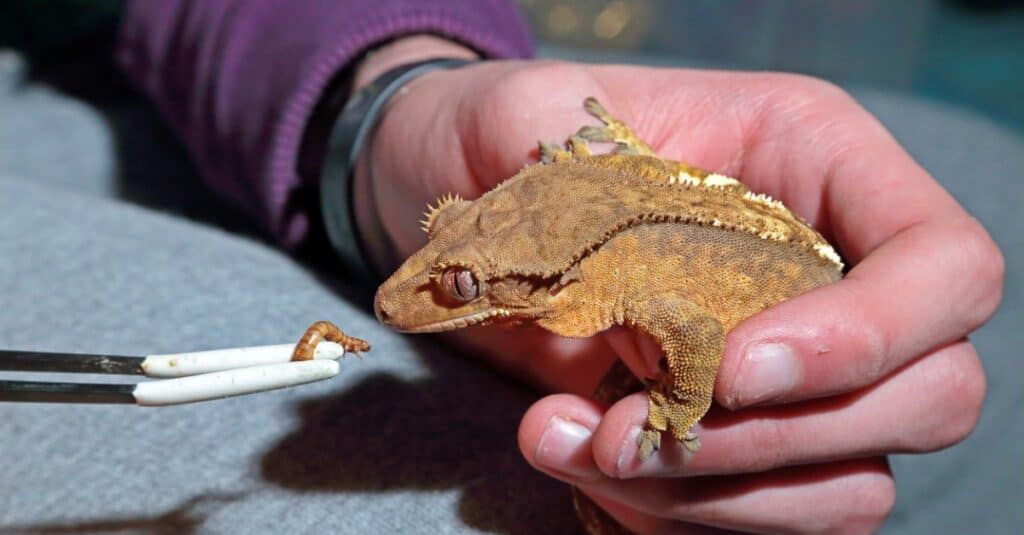
If your gecko needs help, you can use a pair of metal tongs to assist with feeding.
©iStock.com/MattiaATH
Pet and wild crested geckos often have different diets. When caring for a captive crested gecko, the most important consideration is its diet. There are three main ways to feed your crested gecko:
- Live insects
- Meal replacement powders and pellets
- Fruits
When it comes to live insects, you can feed your gecko crickets and dubia roaches as a primary food source. Simply place the insects in the tank and allow the gecko to hunt as it would in the wild. Gut-loading and dusting are other common methods of providing extra nutrients to your gecko. Gut-loading involves feeding prey insects a nutritious diet before offering them to your gecko, increasing the nutritional value of the prey. Dusting refers to coating the insects with a nutrient powder before feeding them to your gecko.
Meal replacement powders (MRP) and pellets contain a proper balance of necessary nutrients to ensure a pet gecko’s health.
Fruit can be used as a meal supplement or treat. While crested geckos enjoy fruit, it should only be offered occasionally due to its high sugar content and low nutritional value.
Who competes with crested geckos for food?
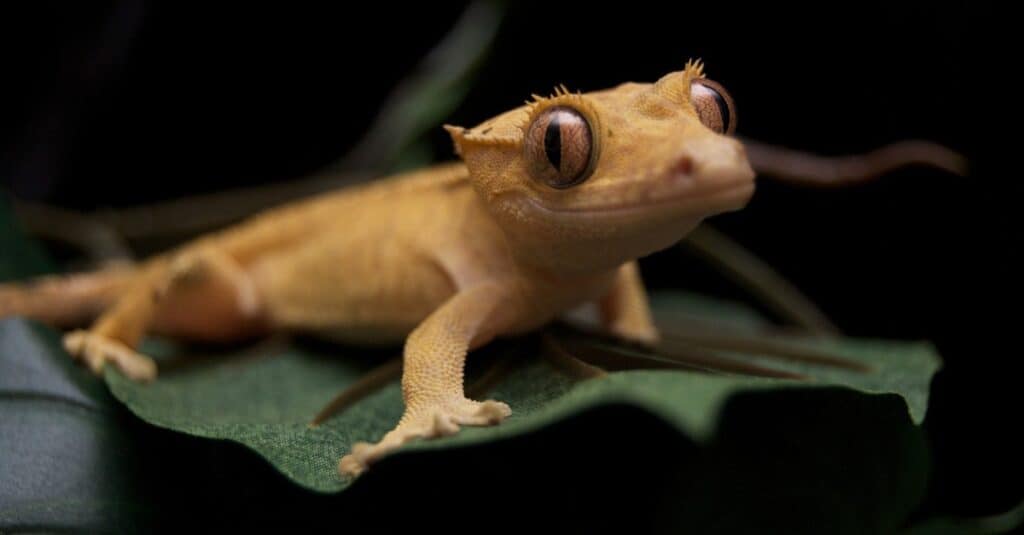
Fire ants are the main competition and threat for crested geckos.
©iStock.com/ajbulla
In captivity, there isn’t competition for food as human caretakers maintain steady diets. Additionally, crested geckos are solitary in the wild and can become aggressive when paired with a tankmate. In captivity, there is no competition for food because human caretakers provide a consistent diet. Crested geckos are solitary in the wild and can become aggressive if housed with others, so it is best to keep them alone in captivity to avoid competition.
In the wild, however, competition is common. Crested geckos often compete with other geckos for food, and upon occasion are prey for larger geckos. One of the reasons crested geckos are arboreal is to hide from larger geckos that would likely prey on them. Most geckos have similar diets and feed on soft fruits and small bugs, making competition among reptiles extremely common.
The biggest threat to wild crested geckos is the little fire ant (Wasmannia auropunctata), also called the electric ant. This invasive species was unintentionally introduced to New Caledonia through human activity, such as the transport of infested soil, firewood, and agricultural products. The ants compete for food by consuming the same insects and arthropods that geckos eat, and their presence can alter habitats and put significant pressure on native lizard populations, including crested geckos.