
Quick Take
- Scientists wrote off pink katydids as genetic misfits doomed to be eaten, but it turns out the color is part of a strategy no one had imagined. See the erythrism backstory →
- Why would a camouflaged insect want to blend in with leaves that aren't even worth eating? The katydid's answer is surprisingly clever. Discover the clever strategy →
- A plant behavior called 'delayed greening' may hold the key to why this katydid turns pink in the first place. Uncover the plant connection →
Camouflage is a widely studied antipredator technique that we thought we understood. A rainforest insect, however, is rewriting the textbooks on the subject as it reveals previously unseen behavior. Over the space of 11 days, a katydid in Panama transformed from hot pink to green, mimicking the appearance of tropical leaves. We explain why this remarkable discovery is so significant.
Katydids in Panama
The tropical insect in question is Arota festae, a katydid also known as a “bush cricket,” native to Panama, Colombia, and Suriname. It is a medium-sized insect, about one inch long. Typically, they are light green in color with broad, rounded forewings (tegmina) that resemble early-stage local vegetation. This provides an excellent camouflage strategy in their forest habitats.
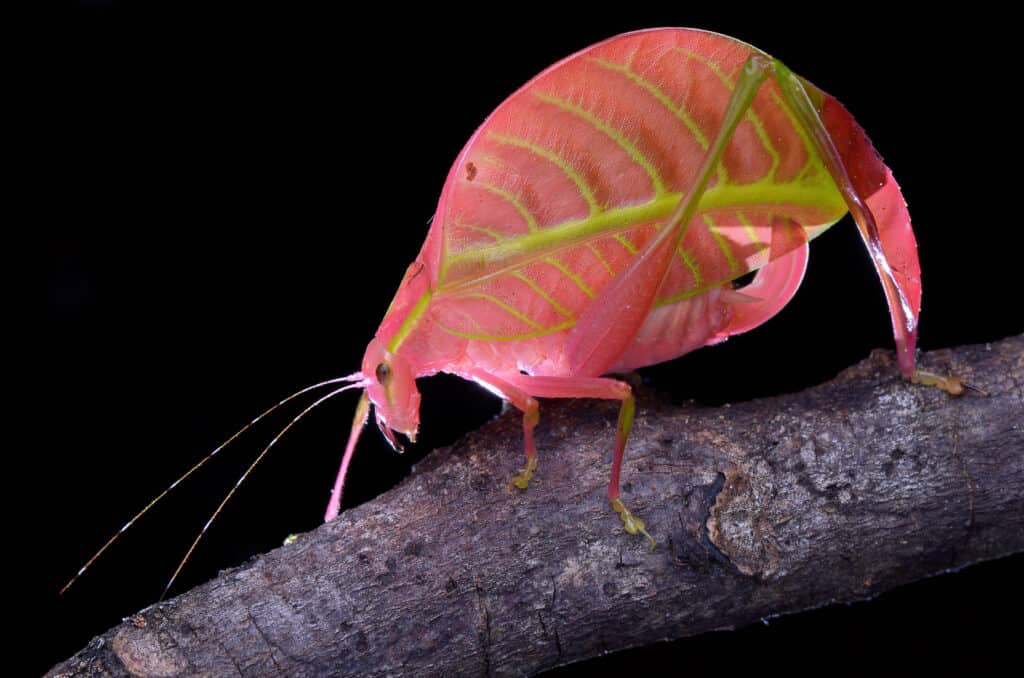
Pink katydids are rarely found.
©Simm Shim/Shutterstock.com
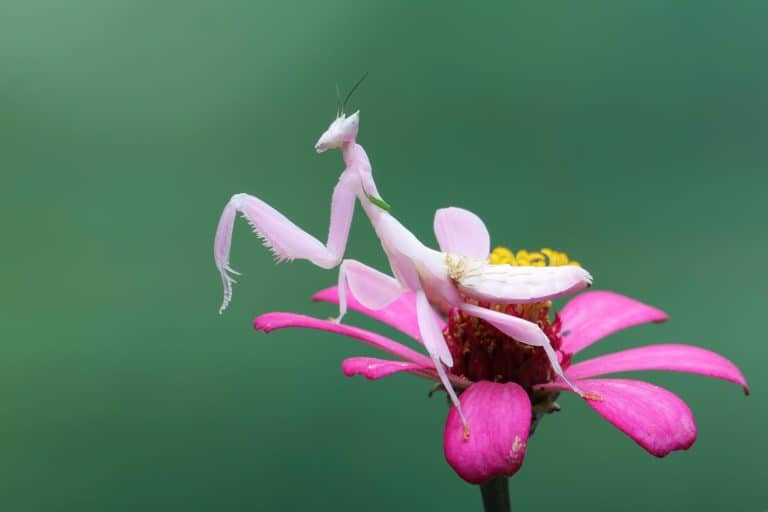
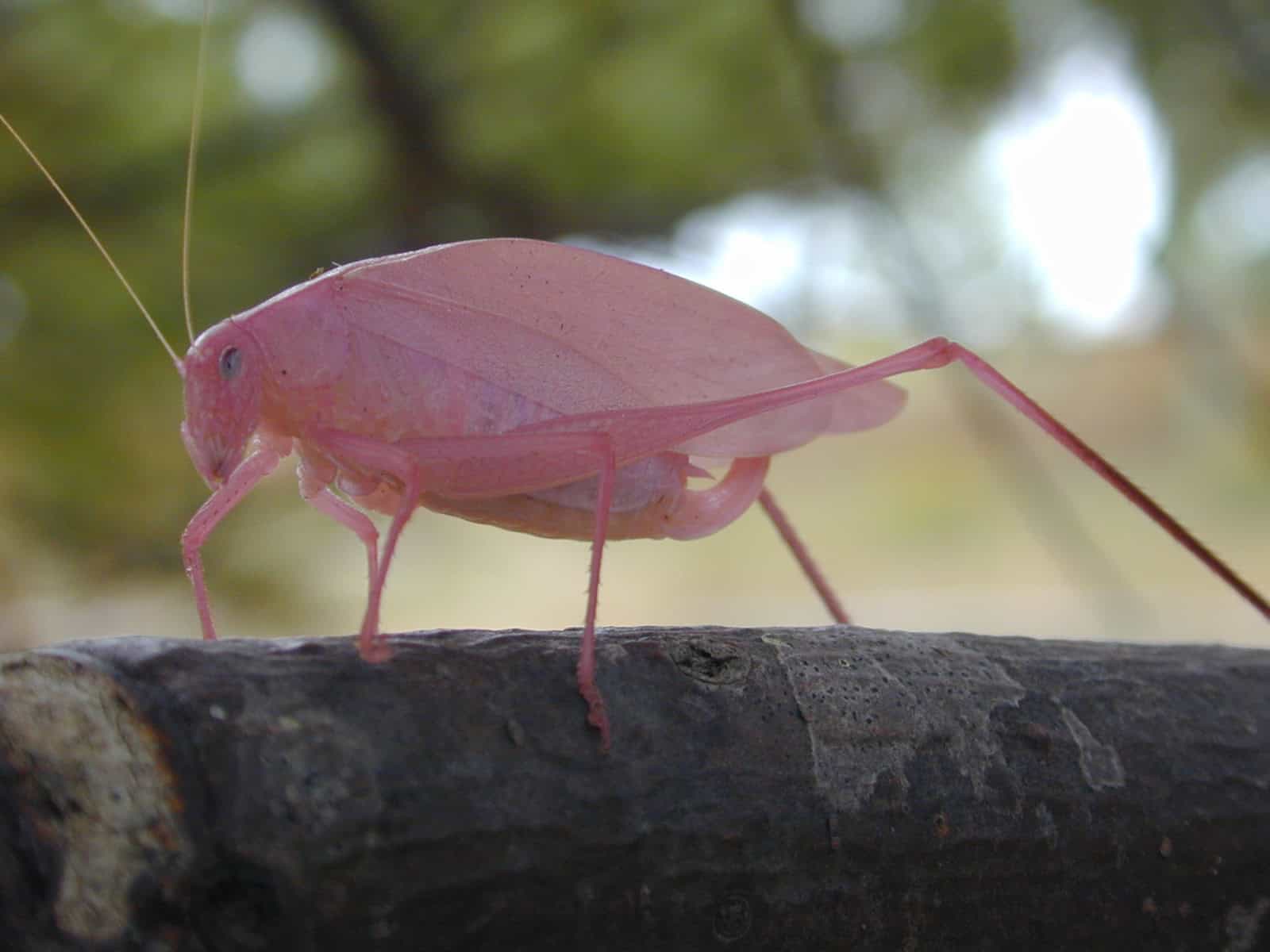
Very occasionally, you find a bright pink one! This was thought to be a condition called erythrism, which is a congenital condition causing an abnormal reddish pigmentation in animals. It’s caused by a genetic mutation and was not previously viewed as advantageous. How could this creature blend in now? Many assumed it would be quickly eaten by a predator. It turns out that this insect knows exactly what it is doing, and the pink color is part of a clever adaptation.
Where Was the Bright Pink Katydid Found?
In a study published in March 2026, researchers describe how they found the unusual katydid at the Smithsonian Tropical Research Institute’s field station on Barro Colorado Island in Panama. The female was found on March 27, 2025, at 11:12 pm. underneath a research station light and very close to a primary tropical rainforest.
She was reared by the team, fed mixed green vegetation, apples, and water in a cage with others of her species. The difference is that they were the regular green color. Green vegetation was also collected from the locality and spread around the cage.
Stunning Transformation
After four days in captivity, her bright pink color faded to a lighter pastel pink. Alerted to something incredible happening, the team proceeded to photograph her every 24 hours. After another 7 days (11 days in total), she had turned completely green. At this point, she was indistinguishable from her green cage mates. She remained green until she died of natural causes a few weeks later.
This expedition was very fruitful for the scientists. In addition to finding this pink version of Arota festae, they also discovered one that resembled a rotting leaf (necrosis). This patterning had never been reported before.
What This Tells Us About Camouflage
It is very rare to find bright pink insects. It is not rare, however, to find insects that take on the color, shape, texture, venation (vein patterning), and orientation of plant leaves to hide in plain sight from predators. Bright pink katydids have been recorded in the past. Changing color is also not unheard of in the animal world. Take the chameleons and octopuses, for example. These animals tend to change color rapidly as they move across different surfaces.
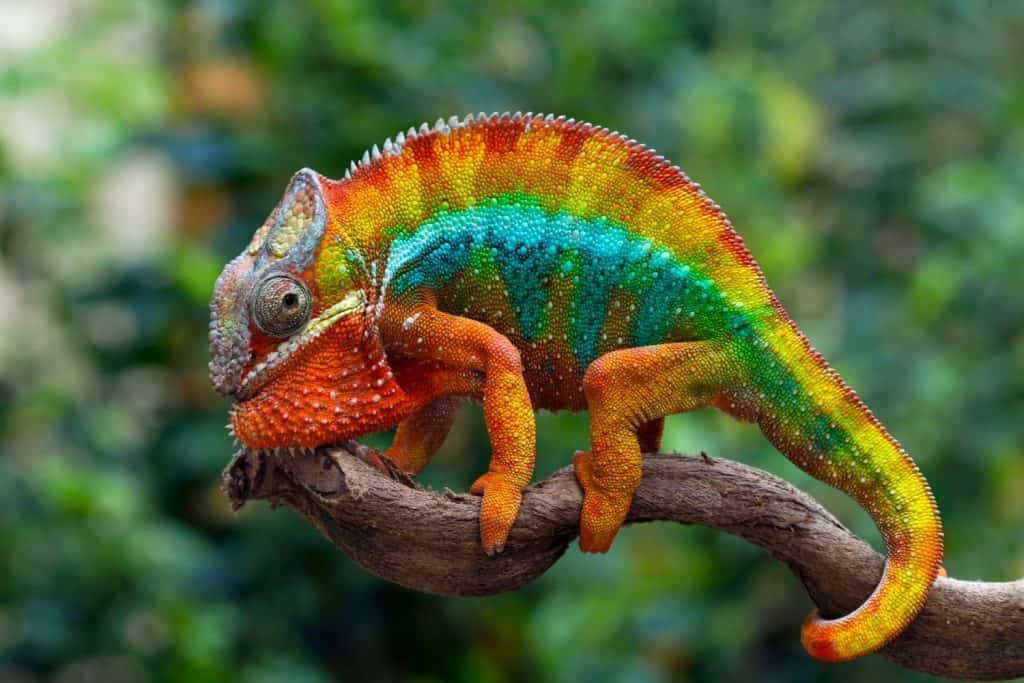
Chameleons tend to change color fast.
©Kurit afshen/Shutterstock.com
The color change observed in the katydid was much more gradual, but it still occurred within a single life stage. The slow color transition in the katydid is likely caused by the gradual degradation, chemical modification, or acquisition of pigments, rather than by neuronal mechanisms. The triggers that initiate this color change are less clear. It could have been a change in diet or the background color of the leaves placed in the cage.
The Motivation Behind the Color Change
The scientists suggest that it could be an evolved adaptation to blend in with the local vegetation. The phenomenon of ‘delayed greening’ is seen in some local plants, where young leaves display vivid colors (reds and pinks) due to reduced chlorophyll content. This reduces their nutritional value and makes them less likely to be eaten by herbivores. This happens year-round and, for an animal trying to hide, presents an opportunity for camouflage. We know from previous studies that Arota festae feed on this type of plant.
How Does Changing From Pink to Green Help the Katydid?
Katydids eat foliage, but as already noted, the brighter pink foliage is not very nutritious. So, why would they want to camouflage themselves to remain near it? One explanation is that leaves close to the pink ones are both nutrient-rich and highly palatable. Therefore, the katydid could move short distances to feed or rest on green leaves during the day while remaining camouflaged.
When it comes to camouflage, context is important. A pink katydid could gradually change its color to green to blend in as the plant’s leaves mature. This is a rare ability in the animal kingdom. More importantly, this discovery has the potential to advance knowledge in the field of adaptive color change and could help us better understand the intricate web of interactions within tropical forest communities.